Last updated 2026-07-26
TL;DR
A city rental inspection is a walk-through by a code official checking life-safety items: smoke and CO alarms, secondary exits, electrical panels, plumbing leaks, heating, and pest or mold signs. Most take 20-45 minutes per unit. You'll get a checklist in advance, a pass/fail or list of violations, and a re-inspection window (often 30 days) to fix anything cited.
What does a city rental inspection actually check?
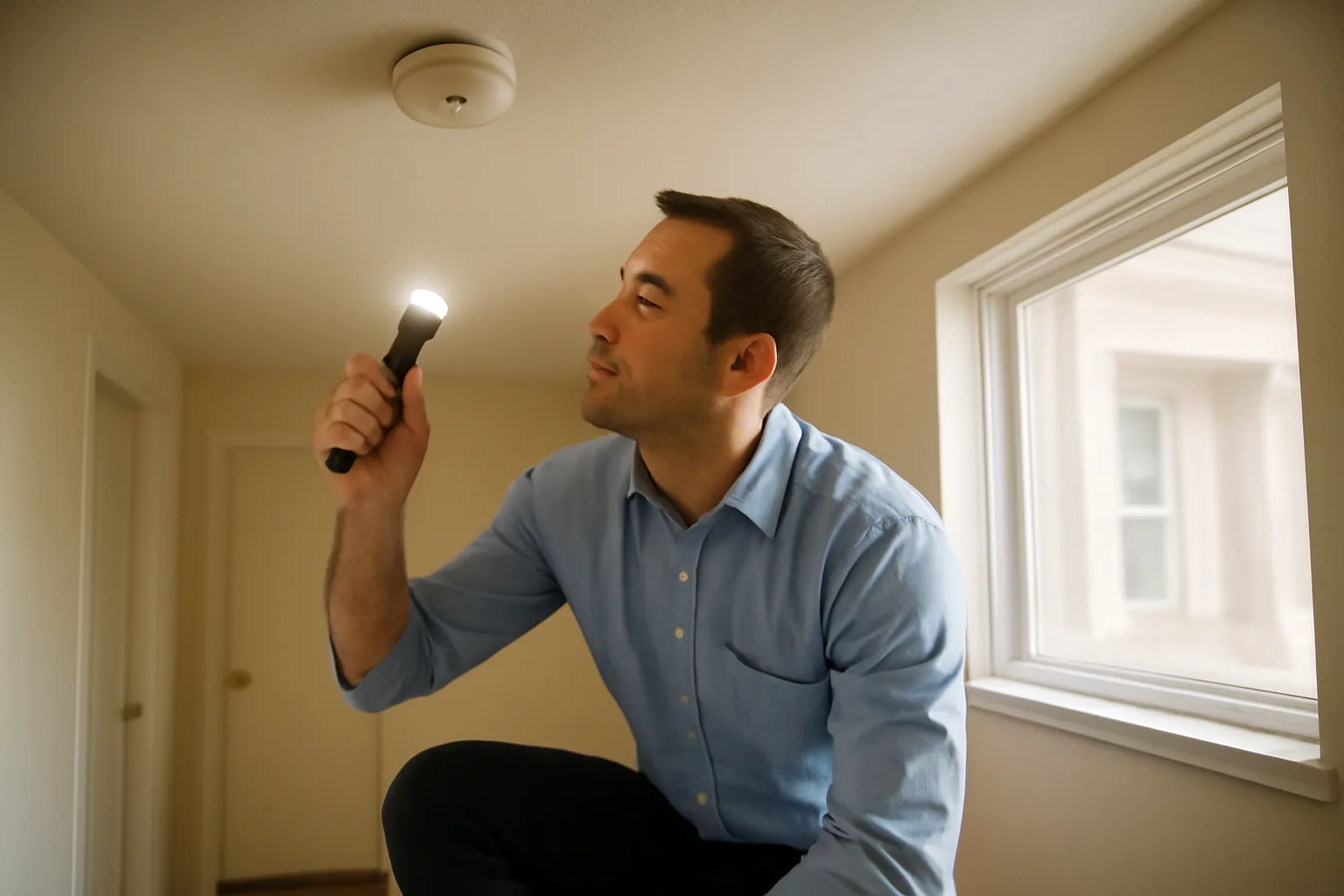
A city rental inspection is a code-compliance walk-through, not an appraisal and not a tenant background check. An inspector from the building or housing department (sometimes fire department staff handle smoke alarm checks separately) walks each room looking for life-safety hazards and basic maintenance failures. Most municipal programs use a standard checklist tied to the local housing code or an adopted version of the International Property Maintenance Code (IPMC) [1]. The core items on nearly every city's list: working smoke alarms in the right locations, a carbon monoxide alarm if there's fuel-burning equipment or an attached garage, two ways out of the unit (or a compliant window well/fire escape), no exposed wiring, functioning heat, no active leaks, and no obvious pest infestation or mold. Inspectors also check that windows open and lock, handrails are secure on stairs with more than a few steps, and smoke detectors aren't expired (most have a 10-year replacement date printed on the back) [2]. What inspectors generally do not do: evaluate paint color, judge furniture or cleanliness style, ask about your tenant's income or lease terms, or run financial checks on you or the renter. If an inspector starts asking about rent amounts or immigration status, that's outside the scope of a habitability inspection and you can ask them to confirm it's required under the specific ordinance. Because programs vary this much city to city, always confirm the exact checklist with your city rental licensing office before the visit. Some cities publish the actual inspection form online; use it as your own pre-inspection checklist.
What can a landlord look at during an inspection?
This flips the usual question: what can the landlord (not the inspector) look at when doing a routine unit inspection or a walkthrough between tenants? Landlords conducting their own periodic inspections (checking HVAC filters, testing alarms, or looking for leaks) can generally look at the condition of the unit itself, not the tenant's personal belongings, and only after giving proper notice. California's Civil Code Section 1954 lays out when a landlord can enter: to make necessary repairs, show the unit to prospective tenants or buyers, in an emergency, or when the tenant has abandoned the property, and generally requires "reasonable notice," presumed to be 24 hours in writing [3]. A pre-move-out inspection is separately addressed under Civil Code 1950.5(f), which lets a tenant request an initial inspection of the unit before vacating so they get a chance to fix deficiencies before move-out charges hit the security deposit [4]. So a landlord's own inspection can cover: smoke/CO alarm function, visible plumbing and electrical condition, signs of unauthorized occupants or pets, obvious lease violations visible in common areas, and general upkeep. It should not extend to opening drawers, closets, or personal storage without a specific reason (like checking for a leak source) and it should always be during reasonable hours.
Who is responsible for the rental property walkthrough inspection in California?
In California, responsibility splits three ways depending on which inspection you mean. For the standard move-in/move-out condition documentation, the landlord (or their agent/property manager) is responsible for conducting the walkthrough and completing an itemized statement, though the tenant has the right to be present for both. For the pre-move-out inspection under Civil Code 1950.5(f), the landlord must notify the tenant of the right to request this inspection, and if requested, the landlord conducts it within a reasonable time before the lease ends and gives the tenant an itemized list of deficiencies with a chance to fix them [4]. For city-mandated rental inspections tied to licensing or registration (many California cities including Los Angeles, San Francisco, and Oakland have their own rental inspection or Systematic Code Enforcement Program requirements), a city building or housing inspector conducts the walkthrough, not the landlord. Los Angeles runs its Systematic Code Enforcement Program (SCEP) inspections roughly every four years on registered rental properties [5]. The landlord's job in that case is to schedule access, be present or arrange access, and fix anything cited within the deadline given. If you're unsure which type applies to your property, confirm with your city rental licensing office and separately check your county or city's tenant-landlord ordinance for the deposit/move-out inspection rules, since those are usually separate from any licensing inspection.
How much notice does a landlord have to give before an inspection?
For routine entry to inspect, repair, or show a unit, most states set the standard at 24 hours' written notice, though the exact number and required format vary by state and by city ordinance. California's default is "reasonable notice," which the statute presumes to be 24 hours absent circumstances suggesting otherwise [3]. City-mandated licensing or code inspections often work differently: the city typically mails or emails the property owner a scheduled inspection date weeks in advance, sometimes with a window to request rescheduling. That notice period is set by the specific ordinance, not by general landlord-tenant law, so check your city's rental registration page for the actual number of days. Emergency entry (fire, flooding, gas leak) generally requires no advance notice under most state laws, since the health-or-safety exception overrides the standard notice rule. But routine "I just want to check on things" visits do require notice almost everywhere that has a statute on point. A practical note: giving more notice than the legal minimum, and offering a couple of time-window options, cuts down on access disputes and no-shows. It costs you nothing and it's the single easiest thing to get right before either a city inspection or your own periodic check.
How to become a landlord (the basic path)
Becoming a landlord isn't licensed the way becoming a contractor or real estate agent is, in most states there's no personal license requirement just to rent out a property you own. What you actually need to handle: property ownership or the legal right to sublease, compliance with your city or county's rental registration/licensing rules if they exist, a lease that meets state-specific disclosure requirements, and enough cash reserves to cover vacancy and repairs. The realistic steps: buy or already own a property zoned for rental use, check whether your city requires a rental license or registration (a growing number do, especially for 1-4 unit properties in older housing stock), get the property inspection-ready (smoke/CO alarms, no code violations), set a legally compliant lease, screen tenants under fair housing rules, and collect security deposit within your state's cap and handling rules. A lot of new landlords underestimate two things: the time cost of maintenance requests, and the cash reserve needed for a bad year (a burst pipe, an eviction, three months of vacancy). The BiggerPockets and NOLO landlord guides both recommend budgeting 1-2% of the property value annually for maintenance as a rough planning number, though actual costs vary heavily by property age. If you're operating in a city with mandatory licensing, build the compliance step into your timeline before you list the unit, not after a tenant moves in. Retrofitting alarms or fixing egress issues with a tenant already living there is more expensive and more disruptive than doing it during a vacancy.
What is landlording and what is a landlord, exactly?
A landlord is the legal owner (or authorized agent of the owner) of a residential or commercial property who leases it to a tenant in exchange for rent. "Landlording" is the informal term for the ongoing work of managing that relationship: collecting rent, handling maintenance, following notice and eviction procedures, keeping the unit compliant with local housing code, and managing the lease itself. Legally, most states define "landlord" within their landlord-tenant statutes, often as the "lessor" or "owner" in the relevant chapter (for example, many states adopt language from the Uniform Residential Landlord and Tenant Act). The specific duties, like maintaining habitability, follow from that statutory definition, not from a separate license or certification. Day to day, landlording covers rent collection, unit turnover, responding to repair requests (often within a legally required timeframe, like Ohio's requirement to make repairs to keep the unit fit and habitable under Ohio Revised Code 5321.04) [6], and staying current on any city rental licensing renewal. For someone with 1-10 units, most of this is doable without a property manager, but it does require tracking deadlines: license renewal dates, inspection cycles, and lease renewal notices, all separately.
What rights do tenants have without a lease?
A tenant without a written lease still has real legal protections, they're just governed by state law and the terms implied by however rent is paid, rather than by a signed document. Most states treat a tenant paying rent monthly with no written lease as a month-to-month tenant, which still carries the full protection of state landlord-tenant law: the right to habitable housing, the right to proper notice before entry, and the right to proper notice before termination. Under Ohio Revised Code 5321.04, for instance, landlord obligations like keeping the unit in compliance with building codes, keeping common areas safe, and maintaining the electrical, plumbing, and heating systems apply regardless of whether there's a written lease [6]. A verbal agreement to pay rent on a recurring basis, plus actually paying it, generally creates an oral month-to-month tenancy that most states legally recognize. What tenants without a lease typically don't have: fixed-term protections (a guaranteed year at a set rent), specific clauses that would only exist in writing (like an agreed pet policy or a specific maintenance responsibility split). But basic habitability, notice-before-entry, and notice-before-termination rights come from state statute, not the lease document, so they apply either way. For landlords: not having a written lease is a bad practice regardless of what state law provides as a floor, because it leaves rent amount, due date, and responsibilities ambiguous and much harder to enforce.
What can a landlord not do in Ohio?
Ohio landlord-tenant law, primarily Ohio Revised Code Chapter 5321, sets specific limits on landlord conduct. A landlord cannot shut off utilities, change locks, or remove a tenant's belongings to force them out ("self-help eviction"), instead they must go through the court eviction process (forcible entry and detainer action) [6]. A landlord also cannot enter the rental unit without reasonable notice except in an emergency. Ohio Revised Code 5321.04 requires landlords to give "reasonable notice" of intent to enter and to enter only at reasonable times, and while the statute doesn't fix an exact number of hours, most Ohio courts and practitioners treat 24 hours as the reasonable benchmark [6]. Ohio law also prohibits retaliatory conduct: a landlord can't raise rent, decrease services, or threaten eviction specifically because a tenant complained to a housing authority about code violations or exercised another legal right, under ORC 5321.02 [7]. And landlords can't withhold a security deposit deduction list beyond 30 days after termination of the rental agreement without providing an itemized, written explanation of deductions, per ORC 5321.16 . Separately, a landlord in Ohio can't discriminate in rental decisions based on protected classes under the federal Fair Housing Act (race, color, religion, sex, national origin, familial status, disability), which applies regardless of state-specific landlord rules .
Why do landlords require renters insurance?
Landlords require renters insurance mostly to shift liability and personal-property risk away from themselves and their own insurance policy. A landlord's property insurance covers the building itself, not the tenant's belongings, and typically doesn't cover a tenant's liability if, say, the tenant's negligence starts a kitchen fire that damages neighboring units. Requiring renters insurance (commonly $100,000 in liability coverage, sometimes with the landlord named as an "interested party" so they're notified if the policy lapses) reduces the odds that a landlord ends up covering a tenant-caused loss out of pocket or fighting it through their own claim, which can raise the landlord's premium regardless of fault. The Insurance Information Institute notes renters insurance is relatively inexpensive, commonly running in the range of roughly $15-$30 a month depending on coverage and location, which is part of why it's an easy lease requirement to justify . Requiring it is generally legal as a lease condition in most states as long as it's applied consistently to all tenants (to avoid fair housing issues) and disclosed clearly in the lease. It's one of the cheaper risk-reduction moves a landlord with 1-10 units can make, cheaper than most named-perils riders or umbrella policy increases that would otherwise be needed to cover tenant-caused losses.
How do rental license inspections differ from move-in/move-out inspections?
| Who conducts it | City building/housing inspector | Landlord or property manager | |
|---|---|---|---|
| Purpose | Code compliance, life-safety, licensing renewal | Document unit condition, deposit deductions | |
| Frequency | Set by ordinance, often every 1-4 years or at tenant turnover | Every move-in and move-out | |
| Legal basis | Local housing code / IPMC-based ordinance | State security deposit statute | |
| Consequence of failure | Fines, license denial or revocation, re-inspection order | Deposit disputes, small claims exposure | |
| Tenant required present | Usually not, landlord provides access | Tenant has right to be present | The city inspection determines whether you can legally keep renting the unit. The move-in/move-out inspection determines what happens to the security deposit. Confusing the two is common but they run on completely separate timelines and separate legal authority, so a clean pass on one doesn't affect the other. |
These are two different processes that get confused constantly, especially by first-time landlords getting an ordinance notice for the first time. | Feature | City license/registration inspection | Move-in/move-out inspection |
What happens if a rental unit fails inspection?
Failing a city rental inspection almost never means immediate loss of your license. Most ordinances give the owner a formal notice of violation listing each cited item, a re-inspection deadline (commonly 30 days, though this varies heavily by city, some give as little as 10 days for urgent life-safety items like a missing smoke alarm), and a re-inspection fee if a second visit is required. Common reasons units fail: missing or expired smoke/CO alarms, blocked secondary egress, exposed electrical wiring, active plumbing leaks, broken handrails, and pest evidence. Repeat or unaddressed violations can escalate to daily fines, a hold on license renewal, or in serious cases referral to a housing court, but that escalation path takes time and multiple notices in almost every jurisdiction, it isn't a same-day consequence. The cheapest fix is prevention: walk your own unit with the city's published checklist (if available) before the scheduled date. This is exactly the kind of prep gap our $79 City Rental License & Inspection Prep Packet is built to close, a straightforward checklist and document organizer so you're not guessing what the inspector will actually check. If you do fail, request the specific code section cited (more than "electrical issue") so you're fixing the actual problem, not guessing. Ask the inspector's office directly whether a licensed contractor's invoice or photo documentation of the fix is enough to close the item without a full re-inspection; many cities allow this for minor items.
How should a landlord prepare for a rental inspection?
Preparation is mostly mechanical: test every smoke and CO alarm, replace batteries and any unit past its 10-year expiration date, check that every bedroom has a second way out, and walk every faucet, drain, and water heater looking for slow leaks. Then check exterior items: handrails, steps, exterior lighting, and any obvious pest entry points. Bring your own copy of the city's checklist if one's published, and bring proof of any prior repairs (invoices, permit closures) in case the same item was flagged before. If your city requires a rental license number posted or a smoke/CO alarm affidavit signed annually (some cities require this even between full inspections), have that documentation ready too. Give your tenant proper notice of the scheduled inspection under your state's entry-notice rules, separate from whatever notice the city itself sends. And if a violation is something structural (foundation, roofline, major electrical panel work), get a licensed contractor's quote before the inspection date so you're not scrambling on the re-inspection deadline. For landlords managing this across their first license cycle, keeping a simple folder (physical or digital) with your license number, alarm affidavit, past inspection reports, and repair invoices saves real time at renewal. Related reading on tenant-facing obligations during this process is covered in our guides on tenants rights and renters rights.
Frequently asked questions
What does a city rental inspection consist of?
A city rental inspector checks smoke and CO alarms, secondary exits, exposed wiring, plumbing leaks, working heat, and pest or mold signs, using a checklist tied to the local housing code. Most units are inspected in 20-45 minutes. You'll usually get the checklist in advance; confirm the exact one with your city rental licensing office.
How to become a landlord?
Buy or already own a rentable property, check for city rental registration or licensing requirements, get the unit inspection-ready (alarms, egress, no code violations), draft a compliant lease, screen tenants under fair housing law, and handle the security deposit within your state's rules. No personal license is typically required, but city compliance steps often are.
Who is responsible for the rental property walk-through inspection in California?
It depends on the type: landlords handle move-in/move-out condition walkthroughs and the optional pre-move-out inspection under Civil Code 1950.5(f). City-mandated licensing inspections (like LA's SCEP program) are conducted by a city building or housing inspector, with the landlord responsible for providing access.
What is landlording?
Landlording is the ongoing work of owning and managing a rental property: collecting rent, maintaining habitability, following notice and entry rules, and staying compliant with city licensing and inspection cycles. It's not a licensed profession itself, but it carries real legal duties defined by state landlord-tenant statutes.
What is a landlord?
A landlord is the legal owner of a rental property, or their authorized agent, who leases it to a tenant for rent. State landlord-tenant statutes define the landlord's obligations, commonly including habitability, proper notice before entry, and lawful security deposit handling.
What rights do tenants have without a lease?
A tenant without a written lease who pays rent regularly is usually a month-to-month tenant under state law, with the same core rights as any tenant: habitable housing, proper notice before entry, and proper notice before termination. Fixed-term or lease-specific terms simply don't exist without a written agreement.
Why do landlords require renters insurance?
Renters insurance shifts liability for tenant-caused damage and personal property loss away from the landlord's own policy. It's relatively cheap, often in the range of $15-$30 a month per the Insurance Information Institute, making it an easy lease requirement that reduces the landlord's financial exposure.
How much notice does a landlord have to give before entering or inspecting?
Most states default to roughly 24 hours' written notice for routine entry, though the exact rule varies by state statute. Emergencies (fire, flooding, gas leak) generally allow entry without advance notice. City-mandated inspections are usually scheduled weeks ahead by the city itself, separate from this state entry-notice rule.
What can a landlord look at during an inspection?
A landlord's own periodic inspection can cover alarm function, visible plumbing/electrical condition, signs of unauthorized occupants or pets, and general unit upkeep, always after proper notice. It shouldn't extend to opening drawers or personal storage without a specific reason tied to a repair or safety issue.
What can a landlord not do in Ohio?
Ohio landlords can't perform self-help evictions (shutting off utilities or changing locks), can't enter without reasonable notice except in emergencies, can't retaliate against tenants who report code violations, and must provide an itemized deposit deduction statement, all under Ohio Revised Code Chapter 5321.
How long does a city rental inspection usually take?
Most single-unit inspections take 20-45 minutes, longer if violations require detailed documentation or the property has multiple units. Multi-unit buildings inspected under a citywide cycle can take longer per visit since each unit and common area gets checked separately.
What happens if my rental unit fails the city inspection?
You'll typically get a written notice listing each violation and a re-inspection deadline, often around 30 days depending on the city and severity. Fines and license holds usually only follow repeated or unaddressed violations, not a single failed inspection, but exact escalation rules vary by ordinance.
Do I need a lawyer to handle a rental license inspection or violation notice?
Not usually, for straightforward code items (alarms, minor repairs), most landlords can resolve a violation notice directly with the inspection office. For serious disputes, license denial, or if you're facing daily fines, consult a local landlord-tenant attorney since this article isn't legal advice.
Sources
- California Civil Code Section 1954: California landlords must give reasonable notice, presumed 24 hours, before entering a rental unit for repairs or inspection
- California Civil Code Section 1950.5: California tenants have the right to request a pre-move-out inspection before the landlord assesses deposit deductions
- Ohio Revised Code Section 5321.04: Ohio landlords must maintain premises in compliance with building codes and give reasonable notice before entry
- Ohio Revised Code Section 5321.02: Ohio law prohibits landlord retaliation against tenants who report code violations or exercise legal rights
- Ohio Revised Code Section 5321.16: Ohio landlords must provide an itemized written list of security deposit deductions within 30 days of termination
- U.S. Department of Housing and Urban Development, Fair Housing Act overview: Federal Fair Housing Act prohibits rental discrimination based on race, color, religion, sex, national origin, familial status, and disability
- Insurance Information Institute, renters insurance facts and statistics: Renters insurance is relatively low-cost, commonly cited in the range of roughly $15-$30 per month