Last updated 2026-07-26
TL;DR
A rental inspection typically checks smoke and CO detectors, electrical panels and outlets, plumbing leaks, water heater safety, window and door egress, handrails, and pest or mold signs. Most cities require advance written notice (often 24 to 48 hours) before entry. Inspectors are checking for code violations, not judging your decorating.
what does a rental inspection entail, exactly?
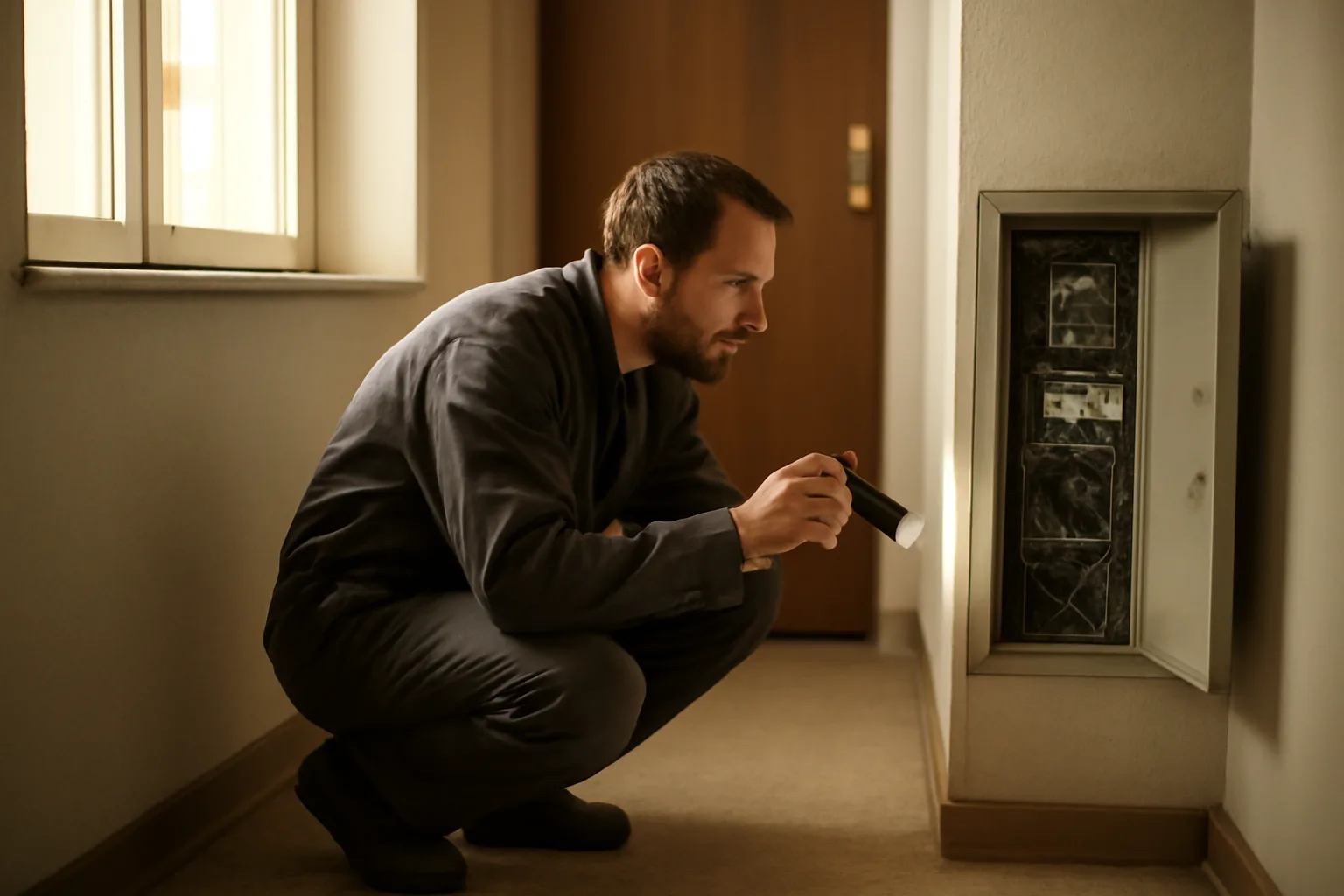
A rental inspection is a walk-through, usually done by a city code inspector or fire marshal, to confirm a rental unit meets minimum housing and safety standards before a license is issued or renewed. It's not the same as a lease walk-through your tenant does when moving in or out. City rental inspections exist because local governments have decided that habitability shouldn't rely only on tenants complaining after something breaks. Most programs check three broad categories: life safety (smoke alarms, carbon monoxide alarms, egress windows, fire extinguishers in common areas), structural and mechanical condition (roof, foundation, plumbing, electrical, HVAC), and general habitability (working locks, adequate heat, no pest infestation, functioning hot water). Some cities also check exterior items: peeling exterior paint (especially in pre-1978 housing, tied to lead paint rules under 24 CFR 35 [1]), broken steps, overgrown yards, or unregistered vehicles on the property. The exact checklist varies by city because there's no single national rental inspection code. Many municipalities adopt some version of the International Property Maintenance Code (IPMC) as their baseline, which HUD and many state agencies reference for minimum property standards [2]. But cities amend it, add local sections, and enforce it with different intensity. A city in Ohio with 40,000 rental units and three inspectors is not going to run inspections the same way a small suburb with one inspector on staff does. If you own in a city with a licensing program, always confirm the specific checklist with your city rental licensing office before the inspection date. Ask if they publish an inspection checklist or pre-inspection self-certification form; a lot of cities do, and it will save you a failed inspection and a re-inspection fee.
what can a landlord look at during an inspection?
During a city rental inspection, the inspector (not the landlord) is the one doing the looking, but landlords should know what's fair game so they can prep the unit. Typical items on the list: - Smoke alarms in every bedroom and on every level, and carbon monoxide alarms near fuel-burning appliances or attached garages. Many states set specific alarm placement rules by statute; for example, some require alarms within a set distance of bedroom doors.
- Electrical panels: no double-tapped breakers, no missing panel covers, no visible exposed wiring, GFCI outlets in kitchens and bathrooms.
- Plumbing: no active leaks under sinks, functioning water heater with a properly routed temperature-pressure relief valve, adequate hot water pressure.
- Egress: every bedroom needs a way out, either a door to the exterior or a window that meets minimum size and sill-height rules. This is one of the most commonly cited violations in older housing stock, especially converted basements.
- Handrails and guardrails on stairs with more than a few steps, and on porches or decks above a certain height.
- Interior condition: no holes in walls or ceilings, functioning locks on all exterior doors, windows that open and lock, no evidence of active pest infestation.
- Exterior: roof condition, gutters, foundation cracks, peeling paint, and sometimes a check that the address number is visible from the street for emergency responders. Inspectors generally do not evaluate your furniture, your tenant's cleanliness habits, or cosmetic paint colors. They're checking systems and safety, not taste. If a unit is cluttered to the point that the inspector can't reach an outlet or the water heater, though, that itself can become a problem, so ask your tenant to clear access paths before the appointment. For a broader look at how inspections differ from city to city, see our city guides covering local rental registration and inspection programs.
who is responsible for a rental property walk-through inspection in California?
In California, there's a difference between the move-in/move-out walk-through and a city rental inspection program, and the responsibility splits differently for each. For the move-in and move-out condition walk-through, California Civil Code Section 1950.5 gives tenants the right to request an initial inspection before move-out, done at a reasonable time, with at least 48 hours' written notice from the landlord about the date and time [3]. The landlord (or their agent) conducts that walk-through, and the tenant has the right to be present. Its purpose is mainly about the security deposit: giving the tenant a chance to fix deficiencies before move-out so they aren't charged for them later. For city-level rental inspections, which many California cities run under local rental housing ordinances (sometimes called Rental Housing Inspection Programs, RHIP, or similar), it's the city's code enforcement or housing department that conducts the inspection, not the landlord. The landlord is responsible for scheduling it, paying the associated fee, granting access, and fixing anything cited. California doesn't have one statewide rental inspection law; it's a patchwork of city ordinances (Los Angeles's Systematic Code Enforcement Program is one well-known example), so confirm the specific process with your city rental licensing office. So the short answer: for security-deposit walk-throughs, the landlord conducts it under Civil Code 1950.5. For city licensing inspections, a government inspector conducts it, and the landlord just has to make it happen.
how much notice does a landlord have to give before an inspection?
Notice requirements depend on whether we're talking about the landlord entering for a routine check or a scheduled city inspection, and the number varies by state. Most states require landlords give reasonable advance written notice before entering an occupied unit for non-emergency reasons, commonly 24 hours. California requires "reasonable notice," which the Civil Code presumes to be 24 hours in writing for most purposes [3]. Other states set it differently: for example, some set 24 hours as the floor, others allow shorter or longer windows depending on the reason for entry. There's no single number that's true everywhere, so check your specific state landlord-tenant statute. City rental inspections work on a separate notice track. Many cities require the property owner get written notice of a scheduled inspection date, often 7 to 30 days out, and then the owner is responsible for notifying the tenant so they're home or the unit is accessible. If a tenant refuses entry for a lawful inspection with proper notice, most ordinances allow the city to seek an inspection warrant, but that's a slower, more expensive path everyone tries to avoid. A practical note: give your tenant more notice than the legal minimum when you can. A 24-hour notice for a city inspection is often technically legal, but a tenant who gets a week's notice is more likely to tidy up, secure pets, and be cooperative than one who feels ambushed.
what happens if you fail a rental inspection?
Failing usually means the inspector issues a written notice of violation listing each cited item, along with a re-inspection deadline, commonly somewhere between 15 and 60 days depending on severity and your city's ordinance. Life-safety items (no smoke alarms, blocked egress, active gas leaks) typically get shorter deadlines, sometimes immediate correction, than cosmetic issues. Most cities charge a re-inspection fee if you don't pass the first time, and that fee stacks each time you fail again. Some cities also refuse to issue or renew your rental license until every violation clears, which means you legally can't rent the unit (or renew an existing tenancy in some ordinances) until you're compliant. That's the real cost of failing: it's more than the fee, it's the operating disruption. Repeat or unaddressed violations can escalate to civil citations, daily fines, or in serious health and safety cases, a vacate order. Ohio's building and housing codes, for instance, give local jurisdictions authority to condemn units found unsafe for occupancy under the state's adopted building code framework [4]. The fix is almost always the same: read the violation notice carefully, prioritize life-safety items first, get a licensed contractor if the fix involves electrical or gas work, and document everything with photos and dated receipts before your re-inspection. If you're new to a city's licensing cycle, our rental packet builder tool walks through a $79 one-time prep packet built around common city inspection checklists, so you're not guessing what the inspector will flag.
what a landlord cannot do in ohio
Ohio's landlord-tenant law is mostly codified in Ohio Revised Code Chapter 5321. A few things landlords legally cannot do: - Enter the rental unit without reasonable notice, except in an emergency. ORC 5321.04 requires landlords to give tenants "reasonable notice" of intent to enter and to enter only at reasonable times, with entry for inspection, repairs, or showing the unit generally accepted as reasonable purposes [5].
- Shut off utilities, change locks, or remove a tenant's belongings to force them out. This is a "self-help eviction" and Ohio law requires landlords go through the court eviction (forcible entry and detainer) process instead.
- Retaliate against a tenant for reporting a code violation or joining a tenant organization. ORC 5321.02 prohibits retaliatory conduct like eviction, rent increases, or service reductions in response to a tenant's good-faith complaint to a government agency [6].
- Fail to maintain the unit in a habitable condition. ORC 5321.04 also requires landlords to keep the premises fit for habitation and to comply with applicable building, housing, and health codes.
- Withhold a security deposit without an itemized, written list of deductions. ORC 5321.16 requires landlords return the deposit or a written itemization within 30 days of termination of the rental agreement, and a landlord who wrongfully withholds a deposit in bad faith can be liable for double the amount wrongfully withheld, plus reasonable attorney fees . These are Ohio-specific. If you own in another state, don't assume the same rules apply; landlord-tenant law is state law, not federal, and every state's chapter reads differently.
what rights do tenants have without a lease?
A tenant without a signed lease isn't unprotected. If rent is being paid and accepted on a regular basis, most states treat this as a month-to-month periodic tenancy, governed by the same landlord-tenant statute that would apply if there were a written lease, just without the specific terms a lease would otherwise spell out (like a fixed end date or renewal clause). Without a written lease, tenants generally still have the right to: - A habitable unit that meets local building and health codes.
- Advance notice before the landlord enters, under the same notice rules that apply to leased units in that state.
- Advance written notice before the tenancy is terminated, commonly 30 days for month-to-month tenancies, though some states or cities require more (and some just-cause eviction ordinances require even longer, plus a stated reason).
- Return of any security deposit collected, following the same state timelines and itemization rules that apply with a written lease.
- Protection from retaliatory or discriminatory eviction. The federal Fair Housing Act (42 U.S.C. § 3601 et seq. ) protects against discrimination based on race, color, national origin, religion, sex, familial status, or disability, regardless of whether there's a written lease. What a tenant without a lease usually doesn't have is a locked-in rent amount or term length; a landlord can typically change rent or terms with proper notice going forward, since there's no written agreement fixing those terms. For more detail on baseline protections, see our tenants rights and renters rights guides.
why do landlords require renters insurance?
Landlords require renters insurance mainly to shift liability and property-damage risk away from their own policy and onto the tenant's. A landlord's own dwelling insurance typically covers the building structure, not the tenant's personal belongings, and it may not fully cover claims arising from a tenant's negligence, like a stovetop fire or a bathtub overflow that damages the unit below. Renters insurance commonly covers the tenant's personal property, liability if someone is injured in the unit, and additional living expenses if the unit becomes temporarily uninhabitable. When a landlord requires it as a lease condition, it reduces the odds the landlord ends up eating the cost of tenant-caused damage or a slip-and-fall claim that a general liability policy alone doesn't cleanly cover. Most states allow landlords to require renters insurance as a lease condition as long as it's disclosed and applied consistently (it can't be used as a pretext for discriminatory screening). Requiring it doesn't remove the landlord's own obligation to carry adequate property and liability coverage; it's a supplement, not a substitute. This is a landlord-basics topic worth reading in full before you set your own policy, since some cities' rental licensing programs also ask you to disclose your insurance requirements as part of registration.
how to become a landlord (what actually has to happen)
Becoming a landlord isn't a licensed profession in most states the way being a real estate agent is, but there are real legal and administrative steps, and skipping them is how new landlords end up with a fine before their first tenant even moves in. 1. Confirm the property is legally allowed to be a rental. Check local zoning, and if it's a condo or HOA property, check the governing documents for rental restrictions or caps. 2. Register or license the rental with your city, if required. A growing number of cities mandate rental registration or licensing before you can legally lease a unit, often with an inspection tied to the first license and renewal. Fees and cycles vary widely, so confirm with your city rental licensing office. 3. Get the unit inspection-ready: smoke and CO alarms, working locks, no obvious code violations. See our earlier section on what an inspection actually checks. 4. Get appropriate insurance: landlord (dwelling) policy, and consider requiring tenants carry renters insurance. 5. Learn your state's landlord-tenant law, at minimum: notice periods for entry, notice periods for termination, security deposit handling and timelines, and habitability obligations. 6. Screen tenants consistently and in compliance with the federal Fair Housing Act and any state or local fair housing additions. 7. Use a written lease. It's not always legally required for a valid tenancy, but operating without one invites disputes over rent amount, term, and responsibilities. None of this requires a real estate license just to rent out your own property in most states, though property management for other owners' properties usually does require a real estate broker's license.
what is landlording, and what is a landlord?
A landlord is the owner (or the owner's authorized agent) of real property who leases that property to another person, the tenant, in exchange for rent. It's a legal role defined by the landlord-tenant relationship, not a job title you apply for. "Landlording" is the informal term for the ongoing work of being a landlord: collecting rent, maintaining the property, handling repairs, screening and communicating with tenants, staying current on local ordinance changes, and complying with state landlord-tenant law. It's part legal compliance, part maintenance management, part customer service, and for a lot of small owners it's a part-time job layered on top of a full-time one. The legal definition matters because it triggers specific duties: habitability obligations, notice requirements before entry, security deposit rules, and (in mandatory licensing cities) registration and inspection requirements. Someone renting out a single room in their own home may fall under a different legal category in some states (a lodger, not a tenant), with fewer formal protections, so the line matters if you're renting out part of an owner-occupied property. For a plain overview of these baseline duties and terms, see our landlord and landlord landlords guides.
how to be a landlord day to day (the ongoing part)
Getting set up is one thing. Staying compliant year over year is the part that trips people up, especially in a city with a rental licensing program that renews annually or every few years. Build a simple compliance calendar: license renewal date, inspection window, insurance renewal, and any lead paint or smoke alarm re-certification your city requires. A lot of violation notices happen simply because an owner forgot a renewal deadline, not because the unit was actually unsafe. Respond to maintenance requests promptly and document them. Habitability law in most states (and Ohio's ORC 5321.04 specifically [5]) makes timely repairs a legal duty, more than good customer service. A paper trail of when you were notified and when you fixed it protects you if a tenant later claims you ignored a problem. Keep records of every notice you give and every entry you make, even routine ones. If a tenant later disputes an inspection or an entry, having dated written notice (text, email, or a physical notice with a photo of it posted) is worth more than your memory of the conversation. Re-read your city's ordinance periodically. These change: cities raise fees, add registration requirements, or tighten inspection cycles more often than most owners expect. What was true when you got your first license three years ago may not be true at renewal.
Frequently asked questions
What does a rental inspection entail exactly?
A rental inspection is a walk-through by a city code inspector checking smoke and CO alarms, electrical panels, plumbing, water heater safety, window and door egress, handrails, and pest or structural issues. It confirms the unit meets minimum housing code standards before a license is issued or renewed. The exact checklist varies by city, so confirm with your local rental licensing office.
How much notice does a landlord have to give before an inspection?
For routine landlord entry, most states require 24 hours' written notice, though the exact wording and timeframe vary by state statute. For city licensing inspections, cities often notify the owner 7 to 30 days ahead, and the owner then arranges tenant access. Always check your specific state and city rules rather than assuming one number applies everywhere.
Who is responsible for a rental property walk-through inspection in California?
For move-out condition walk-throughs, California Civil Code 1950.5 has the landlord conduct the inspection with at least 48 hours' written notice, and the tenant has the right to be present. For city rental licensing inspections, a government inspector conducts it; the landlord's job is to schedule it, pay the fee, and fix cited violations.
What can a landlord look at during an inspection?
During a city inspection, the inspector checks smoke and CO alarms, electrical panels and outlets, plumbing leaks, water heater safety valves, window and door egress, stair handrails, pest evidence, and exterior condition. They're generally not evaluating furniture or decor, just code compliance and safety systems.
What happens if a rental unit fails inspection?
You typically get a written violation notice with a re-inspection deadline, often 15 to 60 days depending on severity. Life-safety items usually need immediate or fast correction. Cities commonly charge a re-inspection fee, and some won't issue or renew your rental license until every item clears.
What rights do tenants have without a lease?
A tenant paying rent regularly without a written lease is usually a month-to-month tenant under state law, with the same habitability rights, entry-notice rights, security deposit rules, and Fair Housing Act protections as a leased tenant. What they typically lack is a locked-in rent or term, since nothing written fixes those terms.
Why do landlords require renters insurance?
Renters insurance covers the tenant's belongings and liability for incidents they cause, like a kitchen fire or a bathtub overflow, which a landlord's own dwelling policy often doesn't fully cover. Requiring it shifts that risk to the tenant and reduces the landlord's exposure to uninsured damage or injury claims.
What a landlord cannot do in Ohio?
Under Ohio Revised Code Chapter 5321, a landlord cannot enter without reasonable notice except in an emergency (5321.04), cannot retaliate against a tenant for reporting code violations (5321.02), cannot do a self-help eviction (shutting off utilities or changing locks), and cannot withhold a security deposit without a written itemized list within 30 days (5321.16).
How do you become a landlord?
Confirm the property can legally be rented (zoning, HOA rules), register or license it with your city if required, make the unit inspection-ready, get landlord insurance, learn your state's landlord-tenant statute, screen tenants under Fair Housing law, and use a written lease. No general real estate license is needed just to rent your own property in most states.
What is landlording?
Landlording is the everyday work of being a landlord: collecting rent, maintaining the property, handling repairs, screening tenants, and staying current with local ordinances and state landlord-tenant law. It's less a formal job title than an ongoing set of legal and management responsibilities tied to owning rental property.
Does a landlord have to fix everything found during an inspection before renting the unit again?
In most mandatory licensing cities, yes for anything cited as a code violation; the city typically won't renew or issue a rental license until cited items are corrected and verified at re-inspection. Cosmetic issues not tied to code (paint color, older but functional fixtures) usually aren't required fixes unless your city's ordinance specifically lists them.
Can a tenant refuse to let the inspector in?
Tenants can sometimes refuse initial entry, but most ordinances allow the city to seek an inspection warrant if access is lawfully required and refused, and the owner is still responsible for scheduling and compliance. It's almost always faster and cheaper to communicate with the tenant ahead of time than to go the warrant route.
Is a city rental inspection the same as a move-in or move-out walk-through?
No. A move-in/move-out walk-through is a landlord-tenant process mainly about security deposit condition documentation. A city rental inspection is a government safety and code-compliance check tied to your rental license. They serve different purposes and often use different checklists entirely.
Sources
- California Civil Code Section 1950.5: California requires 48 hours' written notice for the initial move-out inspection and allows the tenant to be present
- Ohio Revised Code Chapter 5321.04: Ohio landlords must give reasonable notice before entry and maintain the premises in a fit and habitable condition
- Ohio Revised Code Chapter 5321.02: Ohio prohibits landlord retaliation against tenants who report code violations in good faith
- Ohio Revised Code Chapter 5321.16: Ohio requires itemized security deposit deductions within 30 days and allows double damages for bad-faith withholding
- U.S. Department of Justice, Fair Housing Act overview: Federal Fair Housing Act protections against discrimination apply regardless of whether a tenant has a written lease
- California Civil Code Section 1954: California presumes 24 hours' written notice is reasonable for landlord entry into an occupied unit