Last updated 2026-07-26
TL;DR
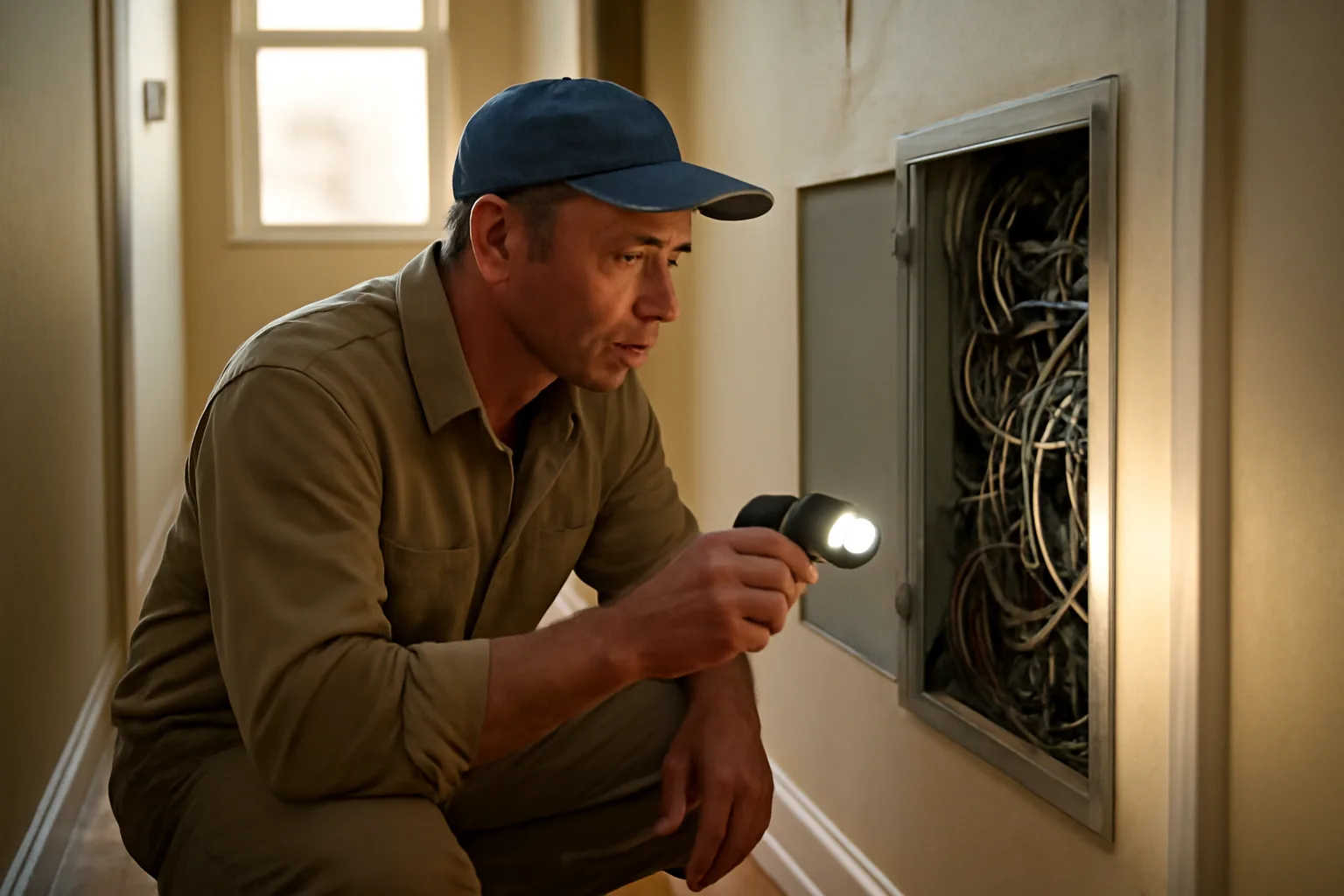
A rental property home inspection checklist covers smoke/CO detectors, egress windows, electrical panels, plumbing leaks, water heater safety, exterior stairs/railings, and pest issues. City rental inspectors check code compliance under local ordinance; most states require 24-48 hours notice for landlord entry. Confirm your city's exact checklist with its rental licensing office before scheduling.
What should be on a home inspection checklist for rental property?
A solid rental inspection checklist has five buckets: life safety, structural/exterior, electrical, plumbing, and pest/sanitation. If you only have time for one pass before a city inspection or a new tenant move-in, hit smoke alarms and carbon monoxide detectors first. Most fire deaths in rentals get traced back to missing or dead-battery smoke alarms, and it's the single most common failure item on municipal rental inspections. Here's the core list I'd walk through unit by unit: - Smoke alarms in every bedroom, outside sleeping areas, and one per floor
- Carbon monoxide detectors near fuel-burning appliances and attached garages
- Two means of egress from bedrooms (a door and a window that opens, or a second exit)
- GFCI outlets in kitchens, bathrooms, and within 6 feet of any water source
- No exposed or frayed wiring, no double-tapped breakers, panel cover on and labeled
- Water heater has a working temperature-pressure relief (TPR) valve with a discharge pipe to within 6 inches of the floor
- No active leaks under sinks, around toilets, or at the water heater
- Handrails on stairs with four or more risers, guardrails on porches/decks over 30 inches high
- Windows that open and lock, no broken glass, no missing screens if your city requires them
- No evidence of rodents, roaches, or bed bugs (check baseboards, behind the fridge, under sinks)
- Working locks on all exterior doors
- Adequate heat source in every habitable room This is a baseline, not a substitute for your city's actual checklist. Cities that run mandatory rental inspection programs, think Minneapolis, Rockford, or Toledo, publish their own inspector checklists, and they don't all match. Some require window screens, some don't. Some require hardwired interconnected smoke alarms in every unit built before a certain year, some accept battery units. Confirm with your city rental licensing office before you assume anything is universal. If you're prepping multiple units across different cities, keeping a master checklist and then layering each city's specific quirks on top saves a lot of re-work. That's the whole idea behind a rental packet, a one-time document that maps your unit against your city's actual rental code items instead of a generic list.
What can a landlord look at during an inspection?
A landlord (or a city inspector acting under a rental ordinance) can generally look at anything related to habitability, safety, and code compliance: smoke alarms, electrical panels, plumbing fixtures, HVAC, windows, doors, stairs, and general condition of walls, floors, and ceilings. What a landlord cannot do is use an inspection as a pretext to search personal belongings, open drawers, or go through a tenant's things. The legal boundary comes from two directions. First, most state landlord-tenant statutes limit entry to specific purposes: making repairs, showing the unit to prospective tenants or buyers, or verifying compliance with lease terms. California's Civil Code section 1954, for example, lists the reasons a landlord may enter a unit, and "inspection" for habitability or repair purposes is one of them, but the statute doesn't authorize rummaging through a tenant's possessions [1]. Second, municipal rental inspection ordinances usually limit the inspector's scope to the physical condition of the unit, not the tenant's belongings or lifestyle. In practice, that means during a walk-through you can: - Test smoke and CO alarms
- Open the electrical panel cover
- Run water at sinks and check for leaks
- Flush toilets and check for proper operation
- Check that windows open and lock
- Look inside cabinets under sinks for plumbing access, not for tenant belongings
- Photograph conditions relevant to the inspection (with reasonable notice to the tenant) What you generally can't do: open closets or drawers to look at personal items, show up without the legally required notice, or use the inspection visit to pressure a tenant about an unrelated lease dispute. If your city inspector needs to check a specific area (attic access, crawlspace) that requires moving a tenant's stored items, that's usually flagged in advance, not sprung on move-in day.
Who is responsible for a rental property walk-through inspection in California?
In California, the landlord is responsible for scheduling and documenting the move-in and move-out walk-through inspection, but the tenant has a legal right to participate. Under California Civil Code section 1950.5(f), if the landlord intends to withhold any part of a security deposit at move-out, the tenant has the right to request an initial inspection before vacating, and the landlord must give at least 48 hours written notice of that inspection [1]. The statute text is direct: the landlord must notify the tenant in writing of the tenant's right to request an initial inspection, and "if the tenant requests an initial inspection, the landlord... shall give the tenant reasonable notice of the date and time of the inspection" [1]. The landlord then has to give the tenant an itemized statement of any recommended repairs or cleaning, so the tenant has a chance to fix issues before move-out and avoid deposit deductions. On the city rental-inspection side (separate from the security deposit walk-through), some California cities with proactive rental inspection programs, like Los Angeles's Systematic Code Enforcement Program (SCEP), have their own inspector show up on a cycle tied to the property's registration, not tied to tenant turnover [2]. That inspection is scheduled by the city, and the landlord is responsible for making sure the unit is accessible and for correcting violations found.
How much notice does a landlord have to give before an inspection?
| California | 24 hours (reasonable notice) | Civil Code 1954 [3] | |
|---|---|---|---|
| Florida | 12 hours before entry to make repairs | Fla. Stat. 83.53 [4] | |
| Texas | No statutory minimum specified | Tex. Prop. Code Ch. 92 | |
| Illinois (Chicago) | 2 days under Chicago RLTO | Chicago RLTO 5-12-050 [5] | This table is a snapshot, not a guarantee. Read the actual statute or your city's ordinance before you rely on a number, because amendments happen and local rules can be stricter than the state floor. |
Most states require 24 to 48 hours advance notice before a landlord or their agent enters a rental unit for a non-emergency inspection, but the exact number and the required method (written vs. verbal) vary by state. California requires "reasonable notice," which the same statute defines as 24 hours in most circumstances, given in writing unless the tenant agrees otherwise [3]. Florida's landlord-tenant statute similarly directs landlords to give reasonable notice, specifying at least 12 hours before entering to make repairs [4]. Some states, like Texas, don't set a statutory minimum notice period at all, leaving it to the lease. Emergencies are the standard exception everywhere: burst pipes, fire, gas leaks, or a similar hazard. For those situations, landlords can enter without advance notice, though it's smart to document the emergency and notify the tenant as soon as possible afterward. For city rental inspection programs (separate from routine landlord entry), the notice requirement is usually spelled out in the local ordinance and mailed with the inspection appointment letter, often 7 to 30 days ahead depending on the city. Confirm with your city rental licensing office exactly how much notice their inspection program requires and whether missed appointments carry a re-inspection fee. | State | Statutory notice for routine entry | Source |
What is landlording, and what is a landlord exactly?
A landlord is the owner (or an authorized agent of the owner) who rents real property to another party, called a tenant, in exchange for payment. "Landlording" is the informal term for the day-to-day work of operating a rental: collecting rent, handling maintenance requests, screening tenants, following notice and eviction procedures, and keeping the property compliant with local codes. It sounds simple until you're doing it. In practice, landlording means you're part property manager, part bookkeeper, part low-grade contractor, and part compliance officer. Every state defines the landlord-tenant relationship through its own statute, usually called something like the Residential Landlord and Tenant Act. Those statutes cover security deposits, notice requirements, habitability standards, and eviction procedure. On top of that, if your property sits in a city with mandatory rental licensing or registration, you've got a second layer: local ordinance requirements for licensing, periodic inspection, and lead or smoke-detector disclosures. The workload scales weirdly. A single-family rental with a good tenant can run on autopilot for years. A ten-unit building with a rental license renewal every year and a city inspection cycle takes real ongoing attention: tracking renewal dates, scheduling re-inspections, keeping repair receipts in case a violation gets challenged. If you're managing multiple units across different cities, that's usually where landlords start losing track of deadlines, because every city's cycle and fee schedule is different.
How do you become a landlord, and how do you actually be a landlord day to day?
Becoming a landlord starts with buying (or inheriting) rental property, then registering it with any required city or county rental program, screening and placing a tenant under a written lease, and setting up systems for rent collection, maintenance requests, and recordkeeping. Being a landlord day to day is mostly about responsiveness: fixing things fast, documenting everything, and following your state's notice rules to the letter. The practical steps most new landlords need to knock out before the first tenant moves in: 1. Check whether your city requires rental registration or a rental license. Many mid-size and large cities do; plenty of small towns don't. Confirm with your city rental licensing office or building department. 2. Get the property inspection-ready using a checklist like the one above, before any city inspector or tenant walk-through. 3. Set up landlord liability insurance (a standard homeowner's policy usually excludes rental use). 4. Screen tenants consistently: credit check, income verification, rental history, following Fair Housing Act rules on protected classes (race, color, religion, sex, national origin, familial status, disability) [6]. 5. Use a written lease. Oral leases are legal in most states but create real disputes over terms. 6. Collect the security deposit correctly. States cap the amount (often one to two months' rent) and dictate how it must be held, often in a separate escrow account with interest in some states. 7. Track your city's renewal and re-inspection deadlines. This is the part landlords with 1-3 units most often forget, because it doesn't happen often enough to become a habit. None of this requires a license to practice, in the sense that most states don't require an individual owner-landlord to hold a professional license to rent out their own property (property management companies renting on behalf of others are a different story, and some states do require a real estate license for that). But cities absolutely can and do require a rental business license or registration certificate, and skipping it is one of the more common (and expensive) mistakes new landlords make.
What rights do tenants have without a lease?
Tenants without a written lease still have full legal protections under their state's landlord-tenant law, they're just operating under a month-to-month or "tenancy at will" arrangement instead of a fixed term. Rent amount and due date get set by whatever was actually agreed (verbally or by conduct), and either party generally can end the tenancy with proper notice, usually 30 days, though some states require more for longer-term occupants. Even with zero paperwork, a tenant is entitled to: a habitable unit (working plumbing, heat, no serious safety hazards), notice before entry, and legal eviction procedure if the landlord wants them out (meaning the landlord still has to go through the court process, more than change the locks). Self-help eviction, lockouts, utility shutoffs, removing a tenant's belongings, is illegal in essentially every state regardless of whether there's a written lease. Without a lease specifying otherwise, a lot of terms default to state law: notice period for rent increases, notice period to end tenancy, and habitability standards all still apply. What a tenant loses without a written lease is proof of specific terms, like whether pets were allowed or who's responsible for a specific repair. That ambiguity cuts both ways and it's exactly why oral agreements cause more disputes than they save in paperwork.
Why do landlords require renters insurance?
Landlords require renters insurance mainly to shift liability for a tenant's personal property loss and personal liability claims away from the landlord's own policy. A landlord's property insurance covers the building itself, not the tenant's furniture, electronics, or clothing, and it generally doesn't cover a tenant's liability if, say, the tenant's dog bites a guest or the tenant's negligence causes a kitchen fire that damages a neighboring unit. Requiring renters insurance, typically $100,000 to $300,000 in liability coverage, is a fairly standard lease clause now, and it's legal in nearly every state as long as it's applied consistently to all tenants (singling out tenants by a protected class while requiring it selectively would violate fair housing law). It's cheap for tenants, often $15-$30 a month depending on coverage and location, which is part of why it's become close to standard practice in professionally managed buildings. From the landlord's side, it also reduces subrogation risk: if a fire traced to tenant negligence damages the building, the landlord's insurer can pursue the tenant's insurer instead of eating the full loss or suing an uninsured tenant directly.
What can a landlord not do in Ohio?
Ohio landlords cannot enter a rental unit without reasonable notice (Ohio law generally treats 24 hours as reasonable, though the statute uses the word "reasonable" rather than a fixed number), cannot shut off utilities or change locks to force a tenant out, and cannot retaliate against a tenant for exercising a legal right like filing a code complaint. Ohio Revised Code section 5321.04 lays out the landlord's obligations, including keeping the premises in a fit and habitable condition and complying with building, housing, and health codes [7]. Ohio Revised Code 5321.05 covers tenant obligations, and the corresponding entry rule, Ohio Revised Code 5321.04(A)(8), requires landlords to enter "only at reasonable times" and after giving the tenant "reasonable notice" of intent to enter, except in emergencies [7]. Ohio courts have generally read "reasonable notice" as roughly 24 hours absent an emergency, though the statute doesn't hard-code that number the way California's does. Beyond entry, Ohio landlords cannot retaliate under ORC 5321.02: raising rent, decreasing services, or threatening eviction because a tenant complained to a health or safety agency, joined a tenant union, or asserted a right under the chapter is prohibited if it happens within a certain window after the protected activity (courts have looked to proximity in time as evidence of retaliatory intent). Ohio landlords also can't discriminate based on the federal Fair Housing Act's protected classes, and can't include lease clauses waiving a tenant's statutory rights under ORC Chapter 5321, since 5321.13 voids provisions that attempt to waive those protections [7].
City rental inspections vs. move-in/move-out walk-throughs: what's the difference?
| Who conducts it | Municipal inspector | Landlord (tenant may participate) | |
|---|---|---|---|
| Legal basis | Local rental licensing ordinance | Lease agreement / state deposit statute | |
| Consequence of failure | Fine, re-inspection fee, license hold | Deposit deduction dispute | |
| Frequency | Set by city (often 1-3 years) | Every tenancy turnover | |
| Notice required | Set by ordinance, often days to weeks | State minimum, often 24-48 hours | A lot of landlords mentally merge these two events, and that's where things slip. Passing your city's periodic rental inspection doesn't mean your move-out walk-through documentation is solid, and a clean move-out walk-through doesn't mean you're compliant with your city's smoke-alarm or egress rules. Treat them as two separate systems that happen to check some of the same things. |
A city rental inspection checks code compliance under a local ordinance and can result in fines or a denied/revoked license if it fails. A move-in or move-out walk-through is a private agreement between landlord and tenant to document the unit's condition, mainly for security deposit purposes, and generally has no direct connection to city code enforcement (though obvious safety hazards found during a walk-through should get fixed regardless). | Feature | City rental inspection | Move-in/move-out walk-through |
How do you prep for a city rental inspection without wasting money?
The cheapest prep is a self-walkthrough against your city's actual published inspection checklist, not a generic one, plus fixing the handful of items that fail most often: dead smoke alarm batteries, missing GFCI outlets, and unlabeled electrical panels. Most municipal rental inspection programs publish their checklist or code reference on the city's building or housing department page; pulling that specific document before you spend money on anything is the highest-value first step. Where I'd actually spend money: a $10-15 combination smoke/CO alarm swap if yours are more than 10 years old (most manufacturers rate them for a 10-year service life), GFCI outlet upgrades where missing (usually $15-25 per outlet in parts if you're comfortable doing it yourself, more with an electrician), and a plumber's visit if you've got a slow drain or a TPR valve that's not discharging correctly. Where I would not spend money: cosmetic upgrades inspectors don't check (paint color, cabinet hardware), or a full professional pre-inspection service unless you own enough units that the hourly cost pencils out against your own time. For a single unit, walking your own checklist against the city's published code items usually catches 90% of what would fail. If you're juggling more than one or two properties, or your city's checklist runs to multiple pages of code citations, it gets easy to miss something small that costs you a re-inspection fee and a delay. That's the gap a rental packet is built for: a one-time $79 document that walks your specific unit against your city's actual rental code checklist, instead of you cross-referencing a municipal code PDF at 11pm the night before your inspection window opens. Whatever you do, don't let the inspection prep distract from the tenant-facing side of the business. A perfectly code-compliant unit with no clear disclosure of tenants rights or renters rights still leaves you exposed to a dispute that has nothing to do with your city's checklist.
What happens if your rental fails a city inspection?
Failing a city rental inspection typically results in a written violation notice listing each failed item and a re-inspection deadline, usually 15 to 60 days depending on the city and the severity of the issue. Life-safety violations (no smoke alarms, exposed wiring, blocked egress) often get shorter correction windows than cosmetic or minor code items, and some cities allow emergency extensions if you can show parts are on order or a contractor is scheduled. Repeated failures or missed re-inspection deadlines are usually what triggers real consequences: escalating fines (many cities structure these as a base fine plus a daily or weekly accrual until corrected), a hold on your rental license renewal, or in serious or repeated cases, referral to housing court. Some cities also charge a re-inspection fee separate from any violation fine, sometimes $50 to $150 depending on the jurisdiction, though again, confirm with your city rental licensing office since these numbers are set locally and change. The good news: most failed items on a first inspection are fixable within days, not months. Smoke alarms, GFCI outlets, and handrail fixes are same-day-to-a-week jobs for most contractors. The bigger risk is ignoring the notice entirely and missing the re-inspection window, since that's what turns a $0-cost fix into an actual fine.
Frequently asked questions
How to become a landlord with no experience?
Start by confirming whether your city requires rental registration or licensing, get proper landlord liability insurance, use a written lease, and screen tenants consistently under Fair Housing Act rules. Many new landlords self-manage the first property to learn the process, then decide whether to hire a property manager once they scale past 2-3 units.
Who is responsible for a rental property walk-through inspection in California?
The landlord schedules and documents it, but under California Civil Code 1950.5(f), tenants have the right to request a pre-move-out inspection, and the landlord must give at least 48 hours written notice if the tenant asks for one. Separately, city inspection programs like LA's SCEP are scheduled by the city, not the tenant.
What is landlording?
Landlording is the day-to-day work of owning and operating a rental property: collecting rent, handling repairs, screening tenants, following state notice and eviction law, and staying compliant with any local rental licensing or inspection ordinance.
What is a landlord, legally speaking?
A landlord is the property owner or an authorized agent who rents real property to a tenant under a lease in exchange for payment, with obligations defined by state landlord-tenant statutes (habitability, notice, deposits) and any applicable local rental ordinance.
What rights do tenants have without a lease?
Tenants without a written lease still have full statutory protections: a habitable unit, required notice before entry, and a formal eviction process rather than a lockout. Terms not agreed on default to state law, and month-to-month tenancies typically end with 30 days' notice from either party unless state law sets a different minimum.
How much notice does a landlord have to give before entering?
Most states require 24-48 hours notice for routine entry; California specifies 24 hours as reasonable notice under Civil Code 1954, Florida requires 12 hours before entering to make repairs under Fla. Stat. 83.53. Emergencies are exempt everywhere. City rental inspection notice periods are separate and set by local ordinance.
What can a landlord look at during an inspection?
A landlord or city inspector can check smoke alarms, electrical panels, plumbing, windows, doors, and general safety and code items. They cannot search personal belongings, open drawers, or use the inspection as a pretext unrelated to habitability or code compliance.
What can a landlord not do in Ohio?
Ohio landlords can't enter without reasonable notice (generally treated as 24 hours), can't shut off utilities or change locks to force a tenant out, can't retaliate against a tenant for a code complaint under ORC 5321.02, and can't include lease clauses waiving statutory tenant rights under ORC 5321.13.
Why do landlords require renters insurance?
Renters insurance shifts liability for a tenant's personal property loss and personal injury claims away from the landlord's own policy, and it reduces subrogation risk if tenant negligence causes property damage. It's typically cheap, often $15-30 a month, and legal to require if applied consistently to all tenants.
What's the difference between a city rental inspection and a move-in walk-through?
A city rental inspection checks code compliance under a local ordinance and can affect your rental license; a move-in/move-out walk-through is a private landlord-tenant process mainly for documenting condition and security deposit purposes. They run on different schedules and different legal authority.
How often do cities require rental inspections?
It varies widely: some cities inspect every 1-3 years on a rolling registration cycle, others inspect only on tenant complaint or turnover. There's no federal standard; each city's rental licensing ordinance sets its own cycle, so confirm with your specific city's rental licensing office.
What happens if a rental property fails inspection?
You typically get a written violation notice with a correction deadline, often 15-60 days depending on severity and city rules. Missing the re-inspection deadline is usually what triggers escalating fines or a hold on your rental license renewal, more than the initial failure itself.
Sources
- California Legislature, Civil Code Section 1950.5: Tenant's right to request a pre-move-out inspection and the landlord's 48-hour notice requirement
- California Legislature, Civil Code Section 1954: California requires 24 hours reasonable notice for landlord entry in most circumstances
- Florida Legislature, Florida Statutes Section 83.53: Florida requires at least 12 hours notice before entering to make repairs
- U.S. Department of Housing and Urban Development, Fair Housing Act protected classes: Federal Fair Housing Act protected classes landlords must follow when screening tenants
- Ohio Legislature, Ohio Revised Code Section 5321.04: Ohio landlord obligations including habitability, code compliance, and reasonable notice before entry
- Ohio Legislature, Ohio Revised Code Section 5321.02: Ohio's prohibition on landlord retaliation against tenants for exercising legal rights
- Ohio Legislature, Ohio Revised Code Section 5321.13: Ohio voids lease provisions that attempt to waive tenant rights under Chapter 5321