Last updated 2026-07-26
TL;DR
A free home inspection checklist for landlords covers smoke/CO detectors, egress windows, electrical panels, plumbing leaks, HVAC, exterior stairs, and pest evidence, roughly 30 to 40 items depending on your city code. Most cities require 24 to 48 hours written notice before entry. Use this list before your official rental inspection so nothing surprises you at the door.
What should a free home inspection checklist actually cover?
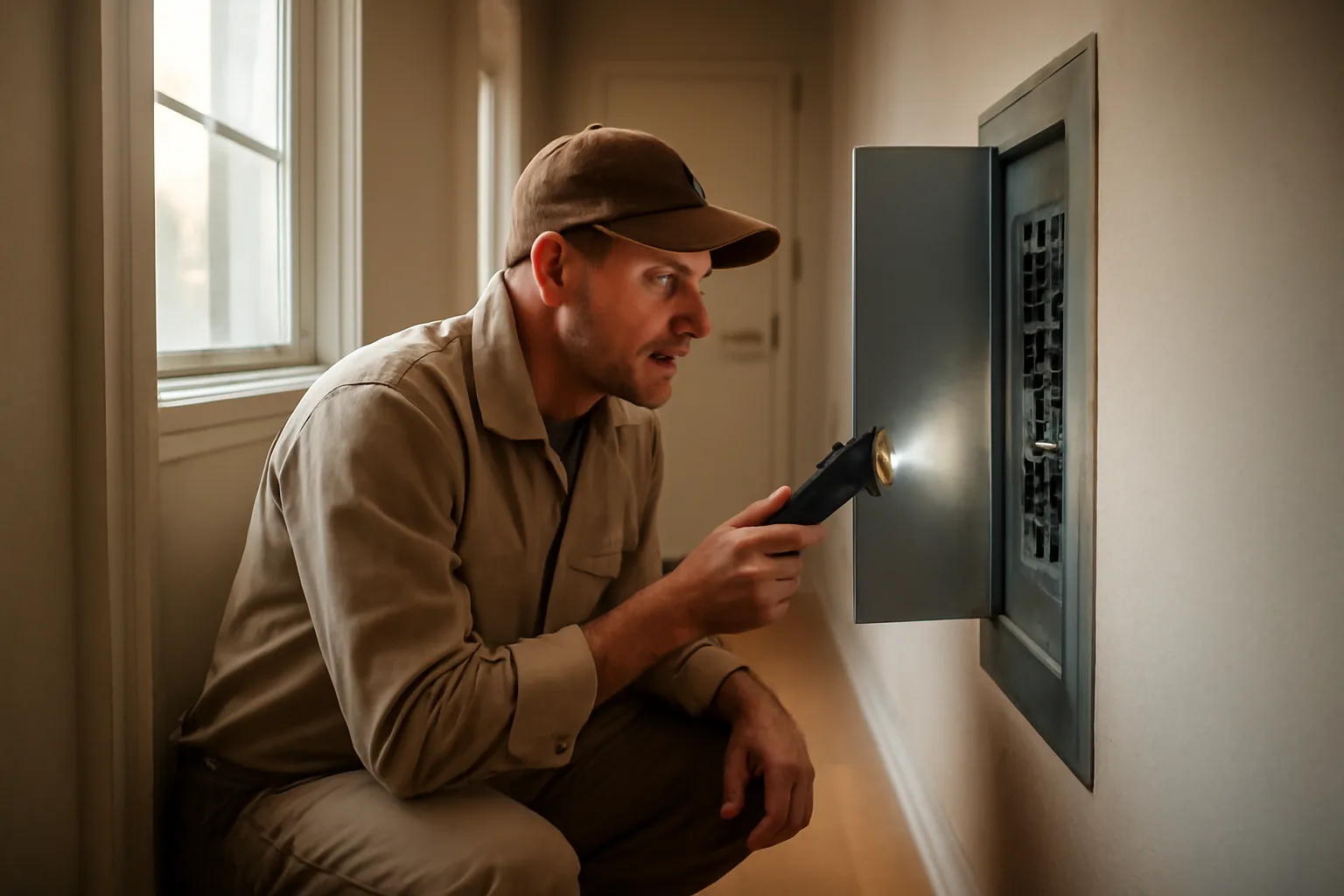
A solid rental inspection checklist covers seven areas: life safety devices, electrical, plumbing, structural and exterior, HVAC, pest and moisture evidence, and general habitability items like window screens and handrails. Most municipal rental inspection programs pull their checklist items straight from a local housing code, which in turn usually borrows heavily from the International Property Maintenance Code (IPMC), adopted in some form by hundreds of U.S. cities [1]. Here's the thing nobody tells new landlords: there is no single national "rental inspection checklist." Rockford, Illinois checks different items than Minneapolis, and both check different items than a small city in Ohio that just started requiring rental licenses last year. What follows is a composite list built from common IPMC provisions and typical city rental inspection forms. Treat it as your pre-inspection dry run, not a substitute for your actual city's form. Always confirm with your city rental licensing office for the exact checklist they use, because failing an item that wasn't even on your city's list wastes a re-inspection fee for nothing. Life safety items almost always top the list: working smoke alarms in every bedroom and on every level, carbon monoxide detectors near sleeping areas if there's any fuel-burning appliance or attached garage, and a second means of egress from bedrooms (a window that opens and is large enough for a person to climb through, typically at least 5.7 square feet of clear opening under IPMC Section 702) [1]. After that comes electrical (no exposed wiring, no missing outlet or switch covers, GFCI outlets near water sources), plumbing (no active leaks, functioning water heater, adequate water pressure), and structural items (stable stairs and handrails, no rotted decking, secure foundation).
What can a landlord look at during an inspection?
A landlord conducting a routine inspection can look at anything reasonably related to habitability, safety, and lease compliance: smoke detectors, plumbing fixtures, HVAC filters, evidence of pests, unauthorized pets or occupants, and general condition of walls, floors, and appliances. What a landlord generally cannot do is search through personal belongings, open locked containers, or use the inspection as a pretext to harass a tenant. Most state landlord-tenant statutes frame this as an "entry for inspection" right, not a search right. California Civil Code Section 1954, for example, allows landlords to enter to make necessary or agreed repairs, show the unit to prospective tenants or buyers, or when the tenant has abandoned or surrendered the property, and requires "reasonable notice in writing," which the statute presumes is 24 hours unless circumstances make that unreasonable [2]. During a city rental license inspection specifically, the inspector is checking code compliance, not tenant housekeeping. A messy apartment isn't a violation. A blocked fire exit, a missing smoke detector, or an extension cord running to a space heater usually is. Good inspectors focus on the structure and its systems, not what's on your tenant's bookshelf.
Who is responsible for a rental property walk-through inspection in California?
In California, the landlord is responsible for scheduling and conducting move-in and move-out walk-through inspections, but the process is jointly governed by statute. California Civil Code Section 1950.5(f) gives tenants the right to request an initial move-out inspection before vacating, so they can fix any deficiencies themselves and avoid deductions from the security deposit [3]. The landlord must give at least 48 hours written notice of the date and time of that initial inspection, and after it, must provide an itemized statement of any repairs or cleaning the tenant could do to avoid a deduction [3]. If the tenant doesn't request this pre-move-out inspection, the landlord isn't required to offer one, but many good landlords do it anyway because it heads off deposit disputes. This is separate from a city's rental licensing inspection. A city inspector checking for a rental license renewal is a government employee (or a licensed third-party inspector under city contract) checking code compliance. A move-in/move-out walk-through is a landlord-tenant condition documentation exercise. Don't confuse the two: passing one doesn't mean you've satisfied the other.
How much notice does a landlord have to give before entering?
Most states require 24 to 48 hours advance written notice before a landlord enters an occupied rental unit for a non-emergency reason like an inspection, repair, or showing. California requires "reasonable notice," presumed to be 24 hours [2]. Some cities layer additional notice requirements on top of state law specifically for rental license inspections, so check both. Emergencies are the one universal exception. If there's a fire, a burst pipe flooding the unit below, or a gas leak, landlords can enter without any advance notice under nearly every state's law, because the health and safety exception overrides the notice requirement. For scheduled city rental inspections, the process usually works like this: the city mails or emails a notice to the landlord with a date range or specific appointment window, the landlord then has to notify the tenant per state law timelines, and the tenant is expected to allow access. If a tenant refuses entry for a legitimate city-mandated inspection, most municipal codes give the city authority to seek an administrative warrant, similar to the process upheld in Camara v. Municipal Court, 387 U.S. 523 (1967), which established that municipal housing inspectors generally need a warrant absent consent, but that such warrants don't require the same probable cause standard as a criminal search [4].
What a landlord cannot do in Ohio
Ohio landlords cannot enter a unit without reasonable notice except in emergencies, cannot shut off utilities to force a tenant out, cannot change the locks without giving the tenant a new key, and cannot retaliate against a tenant for reporting a code violation or joining a tenant union. Ohio Revised Code 5321.04 lists specific landlord duties, and ORC 5321.05 covers tenant obligations, with the reciprocal restrictions built into the same chapter [5]. Specifically, ORC 5321.04(A)(8) requires landlords to give "reasonable notice" (Ohio courts and most municipal codes treat this as 24 hours in practice, though the statute doesn't fix a number) and enter "only at reasonable times," for repairs, inspections, or showings [5]. Self-help eviction, meaning locking out a tenant or removing their belongings without a court order, is illegal in Ohio and in nearly every state; landlords have to use the formal eviction process through municipal or county court. Ohio also bars landlords from retaliatory conduct under ORC 5321.02, which prohibits increasing rent, decreasing services, or threatening eviction because a tenant complained to a government agency about a building, housing, or health code violation [6]. If a landlord retaliates within roughly one year of a tenant's good-faith complaint or code inspection request, some Ohio courts treat that timing as evidence of retaliatory intent, though the statute itself doesn't set an automatic presumption period the way some other states' laws do.
What rights do tenants have without a lease?
Tenants without a written lease, often called month-to-month or at-will tenants, still have nearly all the same rights as tenants with a signed lease: the right to habitable premises, protection from illegal lockouts, the right to advance notice before entry, and the right to proper eviction notice before being forced out. What changes without a lease is mostly the notice period for ending the tenancy and rent increases, which typically follow state month-to-month rules instead of a fixed lease term. Most states require 30 days written notice to end a month-to-month tenancy, though some require 60 days if the tenant has lived there over a year (California's Civil Code Section 1946.1 is one example of this two-tier structure) [7]. Without a written lease, the terms are usually whatever was verbally agreed plus whatever state law fills in by default, which is why oral leases create so many disputes over pet policies, guest limits, or who pays for what repair. A tenant without a lease is still protected by the implied warranty of habitability in states that recognize it, meaning the landlord still has to maintain working plumbing, heat, and structural safety regardless of whether anything's in writing. If you're renting month-to-month and skipping a written agreement to save time, you're not skipping any legal obligations, just creating ambiguity that tends to favor whoever documents things better after the fact.
How do you become a landlord?
Becoming a landlord means acquiring a rental property (by purchase, inheritance, or converting a primary residence), then complying with your city and state's requirements before renting it out: business licensing, rental registration, lead paint disclosure if built before 1978, and often a rental inspection before the first tenant moves in. There's no license or certification required to simply own rental property in most of the U.S., but many cities require a rental license or registration specifically for landlords operating within city limits. The practical steps look like this: check your city's municipal code for rental registration or licensing requirements (search "[your city] rental license" plus your city's official .gov domain), get any required inspection scheduled before you advertise the unit, set up a separate bank account and basic bookkeeping since rental income is taxable, get landlord insurance (different from a homeowner's policy), and write a lease that complies with your state's landlord-tenant statute. Federal law also matters from day one. The Lead-Based Paint Disclosure Rule under 42 U.S.C. 4852d requires landlords of pre-1978 housing to give tenants an EPA-approved pamphlet and disclose known lead hazards before a lease is signed, with penalties up to $22,712 per violation as of the EPA's 2024 civil penalty inflation adjustment . New landlords routinely miss this because it's federal, not local, and doesn't show up on city rental license checklists.
What is landlording, and what is a landlord?
A landlord is a person or entity that owns residential or commercial property and rents it to a tenant in exchange for rent. "Landlording" is the informal industry term for the ongoing work of managing that relationship: collecting rent, maintaining the property, handling repairs, screening tenants, and staying compliant with local, state, and federal housing law. Legally, a landlord's core obligations in nearly every state include maintaining habitable premises (functioning heat, plumbing, structural safety), respecting the tenant's right to quiet enjoyment, following proper notice procedures for entry and lease termination, and returning security deposits within statutory deadlines (often 14 to 30 days after move-out, depending on the state). Landlording sounds simple until you're doing it: it's part maintenance coordinator, part bookkeeper, part legal-compliance officer, and part customer service rep, often for a single unit that doesn't generate enough monthly cash flow to justify hiring any of those roles separately. That's why small landlords (1 to 10 units) tend to get hit hardest by rental licensing rules: a property management company amortizes compliance costs across dozens of units, but an individual landlord with a duplex eats the same per-unit inspection fee and paperwork burden as someone managing 200 doors.
Why do landlords require renters insurance?
Landlords require renters insurance mainly to shift liability for a tenant's personal property loss and personal injury claims away from the landlord's own policy. A standard landlord (dwelling) insurance policy covers the building structure, but it typically does not cover a tenant's furniture, electronics, or clothing if there's a fire, burst pipe, or theft, and it doesn't cover a tenant's liability if their dog bites a visitor or their negligence causes a fire that damages a neighboring unit. Requiring renters insurance, usually with a modest liability minimum like $100,000, pushes that risk onto a policy that costs the tenant relatively little. The average cost of a renters insurance policy in the U.S. was about $17 per month, or roughly $208 per year, according to the National Association of Insurance Commissioners' most recent countrywide average data for 2019 policies (their most recent published average as of this writing) . That's a small price for tenants relative to the protection it gives landlords: if a tenant's negligence causes damage and the landlord's claim goes to their own insurer, having tenant coverage in the mix reduces the landlord's exposure and can lower future premium increases after a claim. Many states allow landlords to require renters insurance as a lease condition, though a handful of jurisdictions restrict how landlords can enforce it or what they can charge if a tenant doesn't comply. This is worth checking against your specific state's landlord-tenant statute before writing it into a lease, since requirements and enforcement mechanisms vary.
Free home inspection checklist: room-by-room items
| Life safety | Smoke alarms in every bedroom + hallway, CO detector near sleeping areas and fuel appliances, fire extinguisher (some cities require one per unit), clear fire exits, egress window in every bedroom | |
|---|---|---|
| Electrical | No exposed wiring, GFCI outlets within 6 feet of water sources, all outlets/switches have covers, breaker panel labeled and accessible, no overloaded extension cords as permanent wiring | |
| Plumbing | No active leaks under sinks or around toilets, water heater has a functioning temperature/pressure relief valve, adequate hot water, no visible mold around fixtures | |
| Structural/exterior | Handrails on stairs with 4+ risers, guardrails on porches/decks over 30 inches high, no rotted decking or steps, roof free of visible leaks, foundation free of major cracks | |
| HVAC | Furnace/heater in working order, filters changed, no visible gas leaks or scorching near appliances, adequate heat source per local minimum temperature code | |
| Pest/moisture | No visible rodent droppings or entry points, no active infestation signs, basement/crawlspace free of standing water | |
| General habitability | Windows open and lock, screens present if required, doors lock properly, adequate lighting in common areas, working smoke-tight fireplace/chimney if present | Go through this list room by room, not category by category. Standing in the bedroom, check the window, the smoke alarm, the outlet covers, and the closet for signs of moisture, all at once. It's faster and you catch things a checklist read in isolation misses. |
Here's a working checklist you can run through before any official inspection. It won't match every city's form exactly, so treat gaps as a signal to confirm with your city rental licensing office rather than assuming you're covered. | Area | Common check items |
How do landlords prep for the official city inspection differently from a DIY walkthrough?
A DIY walkthrough uses your own eyes and a general checklist. The official city inspection uses your city's specific form, often tied to a specific edition of the IPMC or a locally amended housing code, and it comes with a fail/pass outcome, a re-inspection fee if you fail, and sometimes a fine for missed deadlines. The gap between the two is where landlords get burned. A landlord might fix every item on a generic checklist and still fail because their city requires something unusual, like a second exterior door for units above a certain square footage, a specific type of smoke detector interconnection, or a minimum ceiling height in basement bedrooms. Cities publish their actual inspection checklist or code reference on their rental licensing page in most cases; it's worth pulling the PDF directly rather than relying on general advice (including this article). This is also where organizing the paperwork side matters as much as the physical fixes. Cities generally want proof of things like your business license, proof of ownership or authorized agent status, lead paint disclosure records for pre-1978 units, and sometimes a floor plan or occupancy limit worksheet, all submitted alongside your inspection request. If you're juggling multiple units or you're new to a city's specific licensing process, the $79 City Rental License & Inspection Prep Packet is built to organize exactly this kind of city-specific paperwork before your inspection date, so you're not scrambling to find your business license copy the morning of.
What happens if you fail a rental inspection?
Failing a rental inspection almost never means immediate loss of your rental license. Most cities give landlords a re-inspection window, typically 10 to 30 days, to fix cited violations before a re-inspection fee or a formal violation notice kicks in. The exact window, fee amount, and appeal process vary by city, so confirm with your city rental licensing office for your specific timeline. What does escalate quickly is repeated failure or ignoring the notice entirely. Many cities' housing codes allow escalating fines for uncorrected violations, and some allow the city to place a lien on the property or refer the case to a housing court if violations go uncorrected past a final deadline. This is a bigger deal for landlords with 1 to 10 units than for larger operators, because a single fine or lien notice can eat a meaningful chunk of a small landlord's annual margin on that property. The practical move after a failed inspection is simple: read the violation notice item by item, fix what's fixable immediately (smoke detectors, outlet covers, minor plumbing), get quotes fast on anything requiring a contractor, and request the re-inspection the day you're done rather than waiting until the deadline. Cities often process re-inspection requests slower than initial ones, so submitting early buys you buffer if scheduling runs long.
Frequently asked questions
How do you become a landlord for the first time?
Buy or inherit a rental property, then check your city's rental registration or licensing requirements before advertising the unit. Get any required pre-rental inspection done, secure landlord insurance, comply with federal lead paint disclosure rules for pre-1978 housing, and write a lease that follows your state's landlord-tenant statute. No general license is required to own rental property, but many cities require registration.
Who is responsible for a rental property walk-through inspection in California?
The landlord schedules and conducts it, but California Civil Code Section 1950.5(f) gives tenants the right to request a move-out walk-through with at least 48 hours written notice, so they can fix issues before the final deposit deduction decision. This is separate from a city's rental licensing inspection process.
What is landlording?
Landlording is the ongoing work of owning and managing rental property: collecting rent, handling maintenance, screening tenants, staying compliant with local, state, and federal housing law, and managing the day-to-day landlord-tenant relationship. It's less passive than most new landlords expect, especially for owners with just 1 to 10 units and no property manager.
What is a landlord legally?
A landlord is the owner (or authorized agent) of a residential or commercial property who rents it to a tenant under a lease or rental agreement in exchange for rent. Legally, landlords carry obligations around habitability, entry notice, security deposit handling, and non-retaliation, defined by state landlord-tenant statutes and local housing codes.
What rights do tenants have without a lease?
Tenants without a written lease still get habitability rights, protection from illegal lockouts, and entry notice requirements under state law. What changes is usually the notice period for ending tenancy, which follows month-to-month default rules, often 30 days, sometimes 60 days for tenants of over a year in some states like California.
How to be a landlord without a property management company?
Handle tenant screening, rent collection, maintenance requests, and compliance yourself using state-compliant lease templates, a dedicated bank account for rental income, and a system for tracking repair requests and entry notices. It's doable for 1 to 5 units with a few hours a month, but licensing paperwork and inspection prep eat more time than most first-time landlords expect.
Why do landlords require renters insurance?
Landlords require it to shift liability for tenant property loss and injury claims off the landlord's own policy. Average renters insurance cost about $208 a year according to NAIC's 2019 countrywide average, a small cost that meaningfully reduces the landlord's exposure to tenant-caused claims.
How much notice does a landlord have to give before an inspection?
Most states require 24 to 48 hours written notice before non-emergency entry. California presumes 24 hours is reasonable under Civil Code Section 1954. Emergencies (fire, flooding, gas leaks) are the universal exception allowing entry without advance notice.
What can a landlord look at during an inspection?
Landlords can check smoke detectors, plumbing, electrical systems, HVAC, structural condition, and evidence of unauthorized pets, occupants, or pest infestations. They generally cannot search personal belongings, open locked containers, or use inspections as a pretext to harass a tenant.
What a landlord cannot do in Ohio
Ohio landlords cannot enter without reasonable notice except in emergencies, cannot shut off utilities to force a move-out, cannot change locks without providing a key, and cannot retaliate against tenants who report code violations, per Ohio Revised Code 5321.02 and 5321.04.
What happens if I fail my city's rental inspection?
Most cities give a re-inspection window of roughly 10 to 30 days to fix violations before fines or a formal notice escalate. Repeated failures can lead to escalating fines or a lien in some cities. Confirm your specific timeline with your city rental licensing office.
Is there a truly free rental inspection checklist I can download?
Many cities publish their actual rental inspection checklist as a free PDF on their housing or code enforcement department page, and that's the one that actually matters for passing. Generic checklists like the one in this article are useful for a pre-inspection dry run but won't match every local code exactly.
Sources
- International Code Council, International Property Maintenance Code, Section 702: egress window and life safety requirements referenced in rental inspection checklists
- California Legislature, Civil Code Section 1954: 24 hours presumed reasonable notice before landlord entry in California
- California Legislature, Civil Code Section 1950.5: tenant right to request initial move-out inspection with 48 hours notice
- Supreme Court of the United States, Camara v. Municipal Court, 387 U.S. 523 (1967): municipal housing inspectors generally need a warrant absent consent for entry
- Ohio Legislature, Ohio Revised Code 5321.04: Ohio landlord duties including reasonable notice and entry restrictions
- Ohio Legislature, Ohio Revised Code 5321.02: Ohio's prohibition on landlord retaliation against tenants who report code violations
- California Legislature, Civil Code Section 1946.1: 30 or 60 day notice requirements to end month-to-month tenancy in California