Last updated 2026-07-26
TL;DR
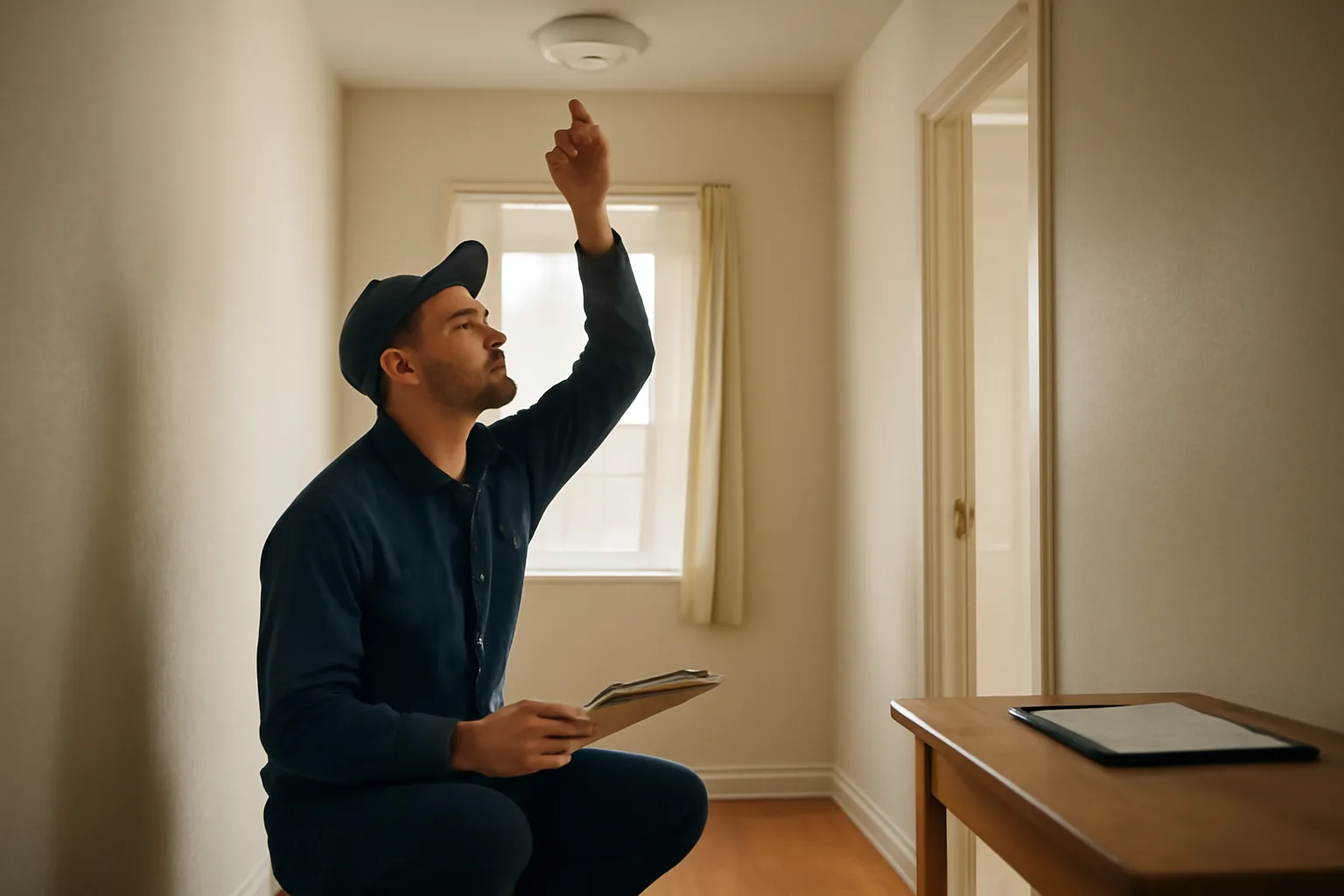
A preventive maintenance inspection is a landlord's scheduled walk-through to catch small problems (leaks, smoke detector batteries, HVAC filters, pest signs) before they become expensive repairs or code violations. Most states require advance written notice, commonly 24 to 48 hours, and the inspection is limited to a reasonable look at habitability and safety items, not a search of the tenant's belongings.
what is a preventive maintenance inspection and why do landlords do it
A preventive maintenance inspection is a scheduled visit to a rental unit where the landlord (or a maintenance tech) checks systems and conditions before something breaks, leaks, or triggers a code violation. Think smoke detector batteries, HVAC filters, water heater condition, visible plumbing leaks, window and door seals, signs of pests, and general wear that could turn into a bigger repair bill if it sits for another year. This is different from a move-in or move-out inspection, and different from a city rental license inspection. A preventive maintenance check is something the landlord initiates on their own schedule, usually once or twice a year, specifically to protect the property and catch problems early. Cities that require rental licensing often expect landlords to be doing exactly this kind of proactive check between official inspections, because a unit that fails a licensing inspection almost always has issues that were visible months earlier. The financial logic is simple. A slow leak under a sink costs maybe $150 to fix when caught early. Left alone for a year, it can mean subfloor replacement, mold remediation, and a much bigger invoice, plus a possible habitability complaint from the tenant. The National Apartment Association and property management research groups have long pointed to preventive maintenance as the cheaper path compared to reactive, emergency repairs, though the exact savings ratio depends heavily on the building's age and climate. For a landlord juggling one to ten units, preventive maintenance inspections also double as a paper trail. If a tenant later claims a condition was never disclosed, or a city inspector cites the unit for something during a rental license renewal, dated inspection notes and photos are your best defense.
what can a landlord look at during an inspection
A landlord can generally check anything tied to habitability, safety, and property condition: smoke and carbon monoxide detectors, HVAC filters and vents, plumbing fixtures and visible pipes under sinks, water heater and its shutoff valve, electrical outlets and panel access, window and door locks, signs of pests or moisture damage, and general cleanliness that could cause a code violation (blocked exits, hoarding-level clutter, fire hazards). What a landlord generally cannot do is open closed drawers, search personal belongings, look through a tenant's phone or mail, or use the inspection as a pretext to harass a tenant or retaliate for a complaint. Some states codify this. Ohio's landlord-tenant statute, for example, allows a landlord to enter to inspect the premises but ties that right to reasonable purposes and reasonable times, and courts have read that to exclude fishing expeditions through personal property [1]. A useful rule of thumb: if it's a system or fixture the landlord is responsible for maintaining under the lease or local housing code, it's fair game to inspect. If it's the tenant's personal property with no connection to a maintenance or safety issue, it's off limits without separate consent. Many city rental licensing programs publish their own inspection checklists, and it's worth pulling yours before you walk in. Checklists commonly cover working smoke alarms in every bedroom and hallway, GFCI outlets in bathrooms and kitchens, secure handrails on stairs with more than a few steps, proper egress from bedrooms (a window large enough to climb through in an emergency), and functioning heat sources rated for the climate. If your city requires a license, [confirm with your city rental licensing office] for the exact checklist they use, since these vary by jurisdiction and change periodically.
how much notice does a landlord have to give before an inspection
| California | 24 hours presumed reasonable | Civil Code 1954 [2] | |
|---|---|---|---|
| Oregon | 24 hours | ORS 90.322 [3] | |
| Ohio | "Reasonable notice" (commonly practiced as 24 hrs) | ORC 5321.04 [1] | |
| Texas | No statutory minimum for routine entry | Property Code Ch. 92 [4] | Texas is a notable outlier: the Texas Property Code doesn't set a specific advance-notice requirement for landlord entry the way California and Oregon do, though leases commonly build in their own notice clause and good practice is to give at least 24 hours regardless [4]. |
Most states require landlords to give tenants advance written or verbal notice before entering for a non-emergency inspection, and 24 hours is the most common standard, though it ranges from no statutory minimum in a few states to 48 hours in others. California requires "reasonable notice," which the state's Civil Code section 1954 defines as presumed reasonable at 24 hours in writing, though the statute allows shorter notice in some circumstances and longer notice can be reasonable depending on the situation [2]. Oregon's landlord-tenant law sets a flat 24-hour notice requirement for entry to inspect the premises, make repairs, or show the unit, under ORS 90.322 [3]. Ohio's statute (Ohio Revised Code 5321.04) requires the landlord to give reasonable notice, which Ohio courts and tenant guidance have generally interpreted as 24 hours in practice, though the statute itself doesn't specify an exact hour count [1]. Here's the honest catch: "reasonable notice" language shows up in a lot of state statutes without a hard number attached, which leaves room for dispute. If your state law just says "reasonable," giving 24 hours in writing (text, email, or a notice taped to the door with a timestamp) is the safest practical floor. Emergencies are the one exception almost everywhere: a burst pipe, gas leak, or fire hazard lets a landlord enter without advance notice in nearly every state's statute. | State | Notice requirement | Statute |
who is responsible for a rental property walk-through inspection in california
In California, the landlord is responsible for scheduling and conducting the walk-through inspection, but the tenant has the right to be present for it. California Civil Code section 1950.5 requires landlords to offer tenants an initial inspection before the tenant moves out, specifically so the tenant can fix any issues themselves and avoid deductions from the security deposit [5]. That pre-move-out inspection is a distinct legal requirement from a preventive maintenance inspection. The landlord (or their property manager) does the walk-through, but must give the tenant reasonable written notice of the date and time, and the tenant can request the inspection happen no earlier than two weeks before the move-out date, per the statute [5]. After the inspection, the landlord has to give the tenant an itemized statement of anything that needs fixing or cleaning to avoid a deduction. For routine preventive maintenance inspections (not the move-out kind), the same 24-hour notice standard under Civil Code 1954 applies. The landlord initiates it, gives notice, and the tenant has the right to be present, though California law doesn't require the tenant to be home for a routine maintenance check the way it does for the pre-move-out walk-through. A quick clarification for confused first-time landlords: no separate state agency does these inspections for you in California. There's no statewide "rental inspection department." Some individual cities (Los Angeles has its Systematic Code Enforcement Program, for example) run their own municipal inspection programs tied to rental registration, but the day-to-day preventive maintenance walk-through is on you as the property owner or your manager, not a government inspector [6].
what a landlord cannot do in ohio
In Ohio, a landlord cannot enter a rental unit without reasonable notice except in a genuine emergency, cannot use entry rights to harass a tenant, cannot shut off utilities to force a tenant out, and cannot remove a tenant's belongings or change the locks without going through the formal eviction process. These protections come from Ohio Revised Code Chapter 5321, the state's landlord-tenant law [1]. Specifically, ORC 5321.04 lays out landlord obligations, and ORC 5321.15 addresses prohibited actions: a landlord cannot recover or take possession of the premises by force, or by removing doors, windows, or furniture, or by causing utility service interruption, in an effort to get a tenant out without going through eviction proceedings [7]. That statute exists specifically because self-help evictions used to be common and caused real harm. Ohio law also protects tenants from retaliatory conduct. If a tenant complains to a housing authority about a code violation, or joins a tenant organization, ORC 5321.02 prohibits the landlord from retaliating by raising rent, decreasing services, or threatening eviction because of that complaint [8]. On the inspection side specifically, Ohio law doesn't give a landlord blanket rights to enter whenever they want. Entry has to be for a legitimate purpose (inspection, repair, showing the unit, or court order) and at reasonable times, per ORC 5321.04 [1]. A landlord who shows up unannounced repeatedly, or who uses inspection as a cover to intimidate a tenant, is exposing themselves to a real legal claim, more than a tenant complaint.
what rights do tenants have without a lease
A tenant without a written lease still has legal rights, usually as a month-to-month tenant under state landlord-tenant law, including the right to habitable housing, the right to advance notice before the landlord enters, and the right to a formal eviction process rather than being forced out. This surprises a lot of new landlords. No signed lease doesn't mean no rules. If rent is being accepted and a tenant is living in the unit, most states treat that as a periodic tenancy (commonly month-to-month), governed by the state's default landlord-tenant statute. That means the same basic protections apply: notice before entry, the implied warranty of habitability, and required notice before the tenancy can be ended (commonly 30 days for month-to-month, though this varies by state and by how long the tenant has lived there). Habitability is the big one. Nearly every state imposes an implied warranty of habitability regardless of what's in writing, meaning the landlord has to keep the unit safe and livable (working plumbing, heat, weatherproofing, structural safety) whether or not there's a signed lease spelling it out. This comes from case law and statute depending on the state; Ohio's version is codified at ORC 5321.04 [1]. Without a lease, disputes over rent amount, deposit terms, or move-out notice periods get murkier and usually fall back on whatever the state's default statute says, plus a paper trail of rent payments, texts, and emails. If you're a landlord operating without written leases, that's a real risk exposure for you too, more than the tenant.
what is landlording and what is a landlord
A landlord is a person or entity that owns residential or commercial property and rents it to a tenant in exchange for regular payment, usually under a lease or rental agreement. "Landlording" is the informal term for the day-to-day work of managing that relationship: collecting rent, handling repairs, screening tenants, following notice and inspection rules, and staying compliant with local housing codes. It's a real skill set, more than property ownership. A landlord's legal responsibilities generally include maintaining the property in habitable condition, following state and local notice requirements before entering the unit, handling security deposits according to state rules (many states cap deposit amounts and set deadlines for returning them, commonly 14 to 30 days after move-out depending on the state), and following formal eviction procedures rather than self-help methods like lockouts or utility shutoffs. Landlording also increasingly means dealing with municipal rental licensing. A growing number of cities require landlords to register or license their rental units, pay an annual or biennial fee, and pass a periodic inspection covering smoke detectors, egress windows, electrical safety, and structural condition. If you own in one of these cities and you're not sure what's required, [confirm with your city rental licensing office], since program names, fees, and inspection cycles differ block by block in some metro areas. At its core, landlording is risk management. You're managing the physical asset (the building), the legal relationship (the lease and the applicable statute), and the human relationship (a tenant who lives somewhere you own). Preventive maintenance inspections sit right at the intersection of all three.
how to become a landlord (and how to be a landlord day to day)
Becoming a landlord legally usually means buying or already owning residential property, then meeting your state and city's requirements before you can lawfully rent it out: proper title and financing in place, any required business license or rental registration, compliance with local zoning for rental use, and passing any mandatory rental inspection if your city requires one before issuing a license. The practical steps most first-time landlords go through: confirm the property is zoned for rental use (some single-family zones restrict this), check whether your city or county requires a rental license or registration (search "[your city] rental registration" or check with your city's housing department directly), get landlord liability insurance (different from a standard homeowner's policy), screen prospective tenants consistently and legally under the Fair Housing Act (you cannot discriminate based on race, color, national origin, religion, sex, familial status, or disability, per 42 U.S.C. 3604) [9], draft or use a compliant lease that matches your state's landlord-tenant statute, and set up a system for security deposits, rent collection, and maintenance requests. Day to day, being a landlord means responding to repair requests within a reasonable time (some states set a specific deadline, commonly 24 hours for no-heat or no-water emergencies and up to 30 days for non-emergency repairs, though this varies significantly by state statute), giving proper notice before entering, keeping records of every inspection and repair, and renewing your rental license or registration on schedule if your city requires one. A lot of new landlords underestimate the licensing side specifically. Missing a rental license renewal deadline in a city that requires one can mean fines that stack up fast, sometimes hundreds of dollars per unit per month in cities with aggressive code enforcement, on top of the risk that a court won't let you evict a tenant for non-payment if your rental license has lapsed (several cities and at least one state, per case law interpretations, have used unlicensed status as a defense in eviction proceedings). This is exactly the gap our $79 one-time City Rental License & Inspection Prep Packet is built to close: a straightforward walk-through of what your specific city likely requires so you're not guessing at renewal time. Find it at [/rental-packet-builder].
why do landlords require renters insurance
Landlords require renters insurance mainly to shift liability for a tenant's personal property damage and to add a layer of protection against certain liability claims that a landlord's own policy won't cover. A standard landlord (dwelling) insurance policy covers the building structure, not the tenant's furniture, electronics, or clothing, and it generally doesn't cover a tenant's liability if, say, the tenant's negligence causes a fire that damages a neighboring unit. Requiring renters insurance as a lease condition is legal in nearly every state, and it's become standard practice, particularly for landlords with multiple units where one tenant's uninsured loss (a kitchen fire, a bathtub overflow that damages the unit below) could otherwise become the landlord's financial and legal headache to sort out. The Insurance Information Institute notes that renters insurance is relatively cheap for the coverage: national average renters insurance premiums run roughly $15 to $30 per month depending on coverage level and location, according to industry rate surveys . That's a small ask relative to the protection it provides both parties. From a pure risk-management standpoint, a landlord requiring proof of renters insurance (and requiring the policy stay active for the full lease term) is one of the cheapest, easiest risk-reduction moves available, right alongside preventive maintenance inspections. Both are about catching a small, manageable cost before it becomes an expensive, contested one.
how preventive maintenance inspections tie into rental license renewals
In cities that require a rental license or registration, preventive maintenance inspections are effectively your dress rehearsal for the official inspection. Most licensing programs run inspections on a cycle, commonly annual, biennial, or triennial depending on the city, and they check largely the same things a good preventive maintenance walk-through covers: working smoke and CO detectors, secure egress, no exposed wiring, functioning heat, and no significant structural or moisture damage. The gap between what you catch on your own preventive walk-through and what a city inspector catches on the official one is usually where fines happen. A city might charge a re-inspection fee (commonly in the $50 to $150 range depending on the jurisdiction, though this varies a lot, so [confirm with your city rental licensing office] for your specific fee schedule) if the unit fails the first pass. Some cities also tack on a late fee or escalating fine for units that are cited and not corrected within a set window, sometimes 30 days. Running your own preventive maintenance inspection a month or two before your scheduled city inspection gives you time to fix small issues (dead detector batteries, a loose handrail, a leaking faucet) before an inspector documents them as a formal violation. It also builds the kind of dated maintenance record that helps if a tenant later disputes a habitability claim or a city appeals a citation. If you manage units in more than one city, keeping track of each municipality's specific checklist, fee schedule, and renewal date gets complicated fast, and that's exactly the kind of city-by-city variation where a structured prep resource (like the $79 City Rental License & Inspection Prep Packet at [/rental-packet-builder]) pays for itself the first time it saves you a failed inspection or a missed renewal deadline.
how often should a landlord actually do a preventive maintenance inspection
Most property management guidance recommends a formal preventive maintenance walk-through once or twice a year per unit, with more frequent quick checks (HVAC filter changes, smoke detector battery tests) on a seasonal basis, roughly every three to six months. A reasonable cadence for a small landlord with one to ten units: a full walk-through inspection twice a year (commonly spring and fall), HVAC filter changes every 60 to 90 days depending on filter type and manufacturer recommendation, smoke and CO detector battery and function tests twice a year (many fire departments recommend testing batteries when clocks change for daylight saving time), and a gutter and exterior check twice a year, particularly before and after the harshest weather season in your climate. More frequent isn't always better once you get past a certain point, since each visit is also an intrusion on the tenant's daily life and requires notice. Twice a year for a full inspection is a reasonable balance for most residential units; add an extra check if the property has an aging HVAC system, a history of plumbing issues, or is in a climate with harsh winters or heavy pest pressure. Document every inspection with photos, a dated checklist, and notes on anything fixed or flagged for follow-up. That record is useful for insurance claims, for defending against a habitability complaint, and for demonstrating good-faith maintenance if a code enforcement dispute ever comes up.
Frequently asked questions
What is a preventive maintenance inspection for an apartment?
It's a landlord-scheduled walk-through, usually once or twice a year, that checks smoke detectors, HVAC filters, plumbing, and general condition before small issues turn into expensive repairs or code violations. It's separate from a move-in, move-out, or official city rental license inspection.
How much notice does a landlord have to give before entering for an inspection?
Most states require 24 hours, either in writing or verbally, though some just say "reasonable notice" without a specific hour count. Oregon sets a flat 24-hour rule under ORS 90.322 [3]. California presumes 24 hours reasonable under Civil Code 1954 [2]. Check your specific state statute since the rule varies.
What can a landlord look at during an inspection?
A landlord can check systems tied to habitability and safety: smoke and CO detectors, HVAC, plumbing fixtures, electrical outlets, window and door locks, and signs of pests or damage. A landlord generally cannot search closed drawers, personal belongings, or use the inspection as a pretext for harassment.
Who is responsible for a rental property walk-through inspection in California?
The landlord schedules and conducts it, but under Civil Code 1950.5, the tenant has the right to request a pre-move-out inspection so they can fix issues themselves before the landlord assesses deposit deductions [5]. Routine preventive maintenance inspections follow the general 24-hour notice rule under Civil Code 1954 [2].
What is landlording?
Landlording is the day-to-day work of owning and managing rental property: collecting rent, handling repairs, following legal notice and inspection rules, managing security deposits, and staying compliant with local rental licensing requirements if your city has them.
What rights do tenants have without a signed lease?
A tenant without a lease is usually still a month-to-month tenant under state law, with rights to habitable housing, advance notice before entry, and a formal eviction process instead of a forced removal. The implied warranty of habitability applies regardless of whether anything's in writing, under most state statutes.
Why do landlords require renters insurance?
Because a landlord's own dwelling policy doesn't cover a tenant's personal belongings or certain liability from a tenant's negligence, like a kitchen fire. Renters insurance shifts that risk to the tenant and typically costs the tenant only around $15 to $30 a month, per industry rate data [10].
What can't a landlord do in Ohio specifically?
Under Ohio Revised Code 5321.15, a landlord cannot force a tenant out by shutting off utilities, changing locks, or removing belongings without going through formal eviction [7]. ORC 5321.02 also bars retaliation against a tenant who files a code complaint [8]. Entry requires reasonable notice under ORC 5321.04 [1].
How often should a landlord do a preventive maintenance inspection?
Twice a year for a full walk-through is a reasonable standard for most units, with more frequent seasonal checks (every 60 to 90 days) for HVAC filters and smoke detector batteries. Add extra checks if the property has an older HVAC system or a history of plumbing or pest problems.
How do I become a landlord?
Confirm the property is zoned for rental use, check whether your city requires rental registration or licensing, get landlord liability insurance, screen tenants consistently under Fair Housing Act rules [9], and use a lease that matches your state's landlord-tenant statute. Many cities also require passing an inspection before issuing a rental license.
Can a landlord inspect a rental unit without notice?
Only in a genuine emergency (fire, gas leak, burst pipe, or similar immediate safety risk) in nearly every state. For routine or non-emergency inspections, advance written or verbal notice is required, commonly 24 hours, under most state landlord-tenant statutes.
What happens if a landlord fails a city rental license inspection?
Typically the city issues a list of required corrections with a deadline, commonly 30 days, and may charge a re-inspection fee (often in the $50 to $150 range, though this varies widely by city). Continued non-compliance can lead to escalating fines or license denial; [confirm with your city rental licensing office] for exact fees.
Is a preventive maintenance inspection the same as a city rental inspection?
No. A preventive maintenance inspection is one the landlord runs on their own schedule to catch problems early. A city rental license inspection is a mandatory, government-run inspection tied to a rental permit or registration, usually on an annual, biennial, or triennial cycle depending on the municipality.
Sources
- Ohio Legislature, Ohio Revised Code 5321.04: Ohio landlord obligations including reasonable notice before entry for inspection or repair
- California Legislative Information, Civil Code Section 1954: California's 24-hour presumed reasonable notice standard for landlord entry
- Oregon State Legislature, ORS 90.322: Oregon's 24-hour notice requirement for landlord entry to inspect or repair
- Texas Constitution and Statutes, Property Code Chapter 92: Texas Property Code landlord-tenant provisions and lack of a specific statutory advance-notice requirement for routine entry
- California Legislative Information, Civil Code Section 1950.5: California tenant's right to request a pre-move-out inspection before security deposit deductions
- Ohio Legislature, Ohio Revised Code 5321.15: Ohio prohibition on landlord self-help eviction including utility shutoff or lock changes
- Ohio Legislature, Ohio Revised Code 5321.02: Ohio prohibition on landlord retaliation against tenants who file code complaints
- U.S. Department of Justice, Fair Housing Act 42 U.S.C. 3604: Federal Fair Housing Act protected classes landlords cannot discriminate against in tenant screening
- Insurance Information Institute, Facts and Statistics: Renters Insurance: Average renters insurance premium cost range