Last updated 2026-07-26
TL;DR
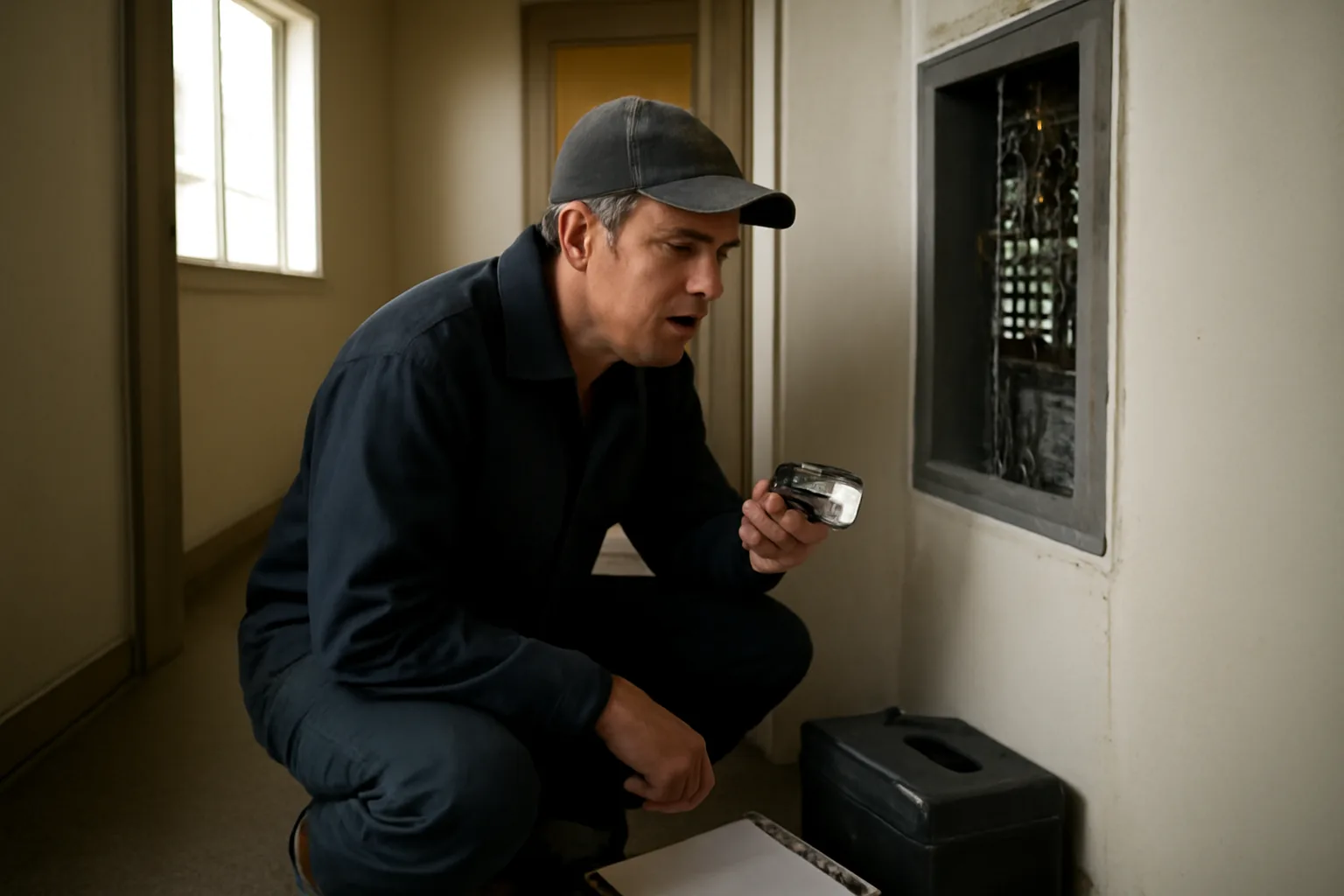
A solid landlord inspection checklist covers smoke and CO detectors, working locks, no active leaks, safe electrical, clear egress, and pest control, plus proof of proper notice to the tenant. Requirements vary by city, so pull your local rental inspection checklist before the appointment. Most cities post one for free.
What should be on a landlord checklist for inspection day?
At minimum, your checklist should cover life safety systems (smoke alarms, carbon monoxide detectors, fire extinguishers where required), working locks on all exterior doors, no active water leaks, functioning heat, safe electrical outlets and panels, clear emergency egress from bedrooms, and no obvious pest infestation. Most city rental inspection programs are modeled loosely on the International Property Maintenance Code (IPMC), which many states and cities adopt in whole or in part [1]. Beyond that baseline, cities add their own line items. Some check for handrails on stairs with four or more risers. Some check window screens in summer months. Some check that every bedroom has a second means of egress (a window that opens to the exterior, sized to code). A few require GFCI outlets in kitchens and bathrooms even in older buildings that predate that requirement, which surprises a lot of landlords who bought a property assuming it was grandfathered in. Here's the honest truth: there is no single national landlord inspection checklist, because there is no national rental licensing law. Each city writes its own ordinance, its own fee schedule, and its own list of what the inspector checks. Milwaukee's checklist differs from Rockford's, which differs from Toledo's. If you own in a city with mandatory registration, the smartest first move is to go pull the actual checklist that inspector is using. Many cities post it as a PDF on the housing or code enforcement department page. A generic checklist gets you 80% of the way there. The last 20% is city-specific, and that's the part that actually fails inspections.
What can a landlord look at during an inspection?
| Life safety | Smoke alarms in each bedroom and hallway, CO detectors near sleeping areas, fire extinguisher in some cities | |
|---|---|---|
| Electrical | No exposed wiring, GFCI in wet areas (varies by city and building age), working outlets, panel access clear | |
| Plumbing | No active leaks, functioning water heater with proper venting and pressure relief valve, adequate water pressure | |
| Structural | No holes in walls/ceilings, stable stairs and railings, no signs of foundation movement | |
| Exterior | Peeling paint (lead-paint concern in pre-1978 housing), broken windows, working locks, safe egress | |
| Pest/sanitation | No active infestation, working ventilation in bathrooms and kitchens | Remember that HUD's lead-based paint disclosure rule applies to any residential rental built before 1978, regardless of what your city's inspection checklist covers [2]. |
A landlord (or the city inspector working with the landlord) can generally look at anything related to habitability and code compliance: smoke detectors, electrical panels, plumbing under sinks, the water heater, HVAC equipment, window and door locks, stair railings, and structural issues like sagging floors or ceiling stains from leaks. What they typically cannot do is search through a tenant's personal belongings, closets full of personal items, drawers, or private papers under the guise of a maintenance inspection. The inspection is about the condition of the unit and its systems, not an excuse to go through someone's stuff. If you're the property owner walking through with a city inspector, keep the visit focused on structure and systems. Note the tenant's furniture and belongings only if they're blocking access to something you need to check, like a smoke detector or an electrical panel. Most city rental inspections check some version of this list: | Area | Common inspection items |
How much notice does a landlord have to give before an inspection?
Most states require 24 to 48 hours advance written notice before a landlord or their agent enters a rental unit for a non-emergency inspection. California requires "reasonable notice," which state law presumes to be 24 hours unless circumstances suggest otherwise [3]. Some states set a specific number: for example, several states use 24 hours as the statutory floor, while others (like Florida for certain purposes) reference 12 hours [4]. City-mandated rental inspections for licensing purposes are a separate animal from routine landlord entry. When a city inspector is coming to check for a rental license or registration renewal, the notice requirement is usually spelled out in that specific city's ordinance, not the general state landlord-tenant entry statute. Some cities require the landlord to notify the tenant in writing at least a set number of days before the city inspector's visit; others leave it to the landlord to coordinate directly with the tenant. Because this detail changes by ordinance, confirm the required notice period with your city rental licensing office before you schedule anything. A practical habit: give notice in writing (email counts in most states, but check your statute), state the date and a window of time, more than the date, and keep a copy. If the tenant refuses reasonable access after proper notice, most landlord-tenant statutes let you proceed under other remedies, but read your specific state code section before acting; this is not something to guess your way through.
Who is responsible for a rental property walkthrough inspection in California?
In California, the landlord is generally responsible for coordinating both the move-in/move-out walkthrough and any code-required rental inspections, but tenants have a legal right to be present. California Civil Code Section 1950.5 gives tenants the right to request an initial inspection before move-out, with the landlord required to give at least 48 hours' notice of that inspection and provide an itemized list of deficiencies afterward [5]. Separately, many California cities (not the state as a whole) run their own Rental Housing Inspection Programs or proactive rental inspection ordinances that require a city inspector to walk through units periodically, often every 3 to 5 years depending on the jurisdiction. Los Angeles runs its Systematic Code Enforcement Program (SCEP) under this model, inspecting registered rental units on a rotating cycle [6]. That inspection is a code enforcement function, run by the city, not something the landlord independently self-certifies in most cases. So to be precise: the landlord schedules and often attends both types of walkthroughs, the tenant has the right to be present for both, and for city-mandated code inspections, a city inspector (not the landlord) makes the compliance determination. If you own in California, check whether your city runs its own program in addition to the state Civil Code baseline, because the local ordinance almost always adds requirements beyond what state law sets.
What is landlording, and what does the job actually involve?
Landlording is the day-to-day work of owning and operating a rental property: collecting rent, maintaining the unit, handling repairs, screening tenants, complying with local codes, and managing the legal relationship defined by a lease. It's part maintenance work, part bookkeeping, part customer service, and part regulatory compliance. Most new landlords underestimate the compliance side. Owning a rental isn't just collecting a check. In a mandatory rental-licensing city, it also means registering the property, paying an annual or biennial license fee, passing a periodic inspection, and keeping records of all of it. Skip that part and you're looking at fines, more than an annoyed tenant. The financial side matters too. According to the U.S. Census Bureau's Rental Housing Finance Survey, most rental properties in the U.S. are owned by individual investors, not corporations, and a large share of those owners have just one to four units [7]. That's the reader of this article: someone who owns a handful of units, not a portfolio, and who's now dealing with a city ordinance they didn't expect to have to learn.
What is a landlord, exactly?
A landlord is the owner of a property (or their authorized agent) who rents that property to another party, called a tenant, under a lease or rental agreement in exchange for rent. The landlord holds legal title or a leasehold interest sufficient to sublease, and takes on the legal duties that come with that: maintaining habitability, following state and local landlord-tenant law, and respecting the tenant's rights under the lease. Legally, "landlord" isn't just a title, it comes with obligations that vary significantly by state. Every state has an implied warranty of habitability, meaning the landlord must keep the unit fit to live in (working plumbing, heat, no serious safety hazards) whether or not the lease says so explicitly [8]. On top of that baseline, cities with rental licensing ordinances add their own layer: registration, fees, and inspections that a landlord who owns in an unregulated area never has to think about.
How do you become a landlord, and how do you actually do the job well?
To become a landlord, you need to own (or have legal authority over) a rental property, understand your state's landlord-tenant law, screen and select a tenant, execute a written lease, and comply with any local registration or licensing requirements before you rent the unit out. Buying the property is the easy part. Everything after that is the actual job. A reasonable starting sequence looks like this: confirm the property is zoned for rental use, check whether your city requires a rental license or registration before you can legally rent (many mandatory-licensing cities require this before occupancy, not after), get a habitability-level inspection done yourself before listing, understand your state's security deposit limits and return timelines, and draft or review a lease that matches your state's required disclosures. Then comes the ongoing part: responding to repair requests within your state's legal timeline, keeping the unit in code-compliant condition year-round (more than before inspections), handling rent increases and notices to vacate correctly, and renewing your rental license or registration on schedule. Miss a license renewal deadline in a city that enforces this and you can face fines that stack up fast, sometimes per day, per unit. It genuinely pays to build a simple annual calendar reminder system for license renewal dates the moment you take on your first city-registered rental. For a broader look at the landlord role across different city rules, see landlord and landlord landlords.
What rights do tenants have without a lease?
A tenant without a written lease, often called a month-to-month tenant or tenant-at-will, still has real legal rights: the right to habitable housing, the right to proper notice before eviction, the right to privacy and advance notice before landlord entry, and the right to the return of their security deposit under the same rules as a written-lease tenant in most states. No written lease does not mean no rights. Without a written lease, the tenancy is typically governed entirely by state statute and, where it exists, local ordinance, rather than by lease terms. That actually gives the tenant a fairly strong floor of protection, because state landlord-tenant law fills every gap a lease would otherwise cover. The tenant can still only be evicted through the legal process (a formal notice period followed by court action if needed); a landlord cannot simply change the locks or remove belongings, a practice sometimes called "self-help eviction" that is illegal in every U.S. state. Rent amount, due date, and any rules about guests or subletting default to whatever the parties verbally agreed to, but proving those terms in a dispute is much harder without anything in writing. That's exactly why oral, no-lease tenancies create so many landlord-tenant disputes: nobody has a clean record of what was actually agreed to. If you're dealing with tenant rights questions in a specific city, see tenants rights, tenant rights, and renters rights.
Why do landlords require renters insurance?
Landlords require renters insurance mainly to shift liability for the tenant's personal property and personal liability away from the landlord's own policy. A landlord's property insurance covers the building and the landlord's own losses; it does not cover the tenant's furniture, electronics, or clothing if there's a fire, burst pipe, or theft. Renters insurance also typically includes personal liability coverage, which protects everyone if the tenant accidentally causes damage (a kitchen fire, an overflowing tub that damages the unit below). The insurance industry backs this up with real numbers: the Insurance Information Institute reports that renters insurance policies are relatively cheap, commonly running in the range of roughly $15 to $30 per month depending on coverage amount and location, which is part of why so many landlords now make it a lease requirement rather than a suggestion . Requiring it is legal in every state as a lease condition; landlords generally just need to require proof of an active policy naming the landlord (or property manager) as an "interested party" or additional interest on the policy, which lets the insurer notify the landlord if the policy lapses. For a landlord managing a licensed rental unit, requiring renters insurance is also a smart hedge against city inspection headaches. If a fire starts because of something in the tenant's unit (an overloaded space heater, an unattended stove), the tenant's own liability coverage is what pays for their losses and often contributes to the landlord's deductible exposure, not the landlord's policy alone.
How do I actually be a good landlord day to day?
Being a good landlord comes down to a short list of habits repeated consistently: respond to repair requests fast (most states require "reasonable time," often interpreted as days, not weeks, for non-emergency issues), keep the property in code-compliant condition year-round instead of scrambling before inspections, give proper written notice before every entry, and keep your rental license or registration current. A few specific practices separate landlords who sail through city inspections from landlords who get hit with re-inspection fees: First, do a self-inspection twice a year using whatever checklist your city publishes, more than before the official inspection date. Second, keep a paper or digital file per unit with receipts for smoke detector battery changes, HVAC servicing, and any repairs, because some cities want proof of maintenance history, more than a passing grade on inspection day. Third, respond to tenant communication in writing when it matters (repair requests, notices), because verbal-only landlording creates disputes that are nearly impossible to resolve fairly later. This is also where a lot of landlords save themselves real money and stress by getting organized before the city notice even arrives, rather than after. RentalPermitPath's $79 one-time City Rental License & Inspection Prep Packet is built around this exact idea: a structured way to track what your specific city requires, when renewals are due, and what an inspector is likely to check, so you're not reconstructing everything from scratch every time a notice shows up. You can start one at /rental-packet-builder.
What can a landlord not do in Ohio?
In Ohio, a landlord cannot shut off utilities, change the locks, or remove a tenant's belongings to force them out, a practice known as self-help eviction, which is illegal under Ohio Revised Code Chapter 5321, the state's Landlords and Tenants Act . A landlord also cannot retaliate against a tenant for reporting code violations, cannot enter the unit without reasonable notice except in an emergency, and cannot discriminate based on any protected class under the Ohio Civil Rights Commission's fair housing rules, which mirror the federal Fair Housing Act's protected categories . Ohio Revised Code 5321.04 requires the landlord to keep the premises fit and habitable, comply with building and housing codes, maintain common areas, and keep all electrical, plumbing, and heating systems in good working order . A landlord who fails to do this and then tries to evict for the tenant withholding rent over the disrepair may find that Ohio law actually gives tenants a formal repair-and-deduct or rent-escrow remedy under ORC 5321.07, provided the tenant follows specific notice steps first. Ohio doesn't have a statewide mandatory rental licensing law the way some states do, but individual Ohio cities, Cleveland and Cincinnati among them, run their own rental registration and inspection ordinances at the municipal level. If you own in Ohio, check your specific city's code enforcement or building department page, because "Ohio law" and "your city's ordinance" are two different things stacked on top of each other.
How do I get my property ready before the inspector arrives?
Start at least two weeks out, not two days out. Walk the unit yourself using your city's published checklist if one exists, test every smoke and CO detector, run water in every fixture to check for leaks and pressure, and check that every window opens and locks. Replace any burnt-out bulbs in stairwells and hallways, since inspectors commonly flag inadequate lighting in common areas and egress paths. Give your tenant proper written notice of the inspection date under your state's entry-notice statute, and be clear about what the inspector will be checking so nobody's surprised. Ask the tenant to clear access to any areas you'll need to show, like the water heater closet or the electrical panel, without asking them to move personal belongings unrelated to the inspection. On inspection day, bring your own documentation: proof of your current rental license or registration, receipts for any recent repairs relevant to past violations, and a copy of your city's checklist so you can walk the inspector through what you've already addressed. If a previous inspection flagged something, bring photos showing it's fixed. Inspectors move faster and go easier on landlords who show up prepared and organized, purely as a practical matter of how the visit goes.
Frequently asked questions
How to become a landlord?
You become a landlord by owning or legally controlling a rental property, learning your state's landlord-tenant law, screening a tenant, and signing a lease. In cities with mandatory rental licensing, you also need to register the property and pass an inspection, sometimes before you're legally allowed to rent it out. Check your city's housing or code enforcement office before listing.
Who is responsible for a rental property walkthrough inspection in California?
The landlord typically schedules and coordinates the walkthrough, but California Civil Code 1950.5 gives tenants the right to be present and to request an initial move-out inspection with 48 hours' notice. Many California cities also run their own proactive rental inspection programs, where a city inspector (not the landlord) makes the final compliance call.
What is landlording?
Landlording is the ongoing work of owning and managing a rental property: collecting rent, handling maintenance, screening tenants, following state and local landlord-tenant law, and, in licensed cities, keeping registration and inspection paperwork current. It's part maintenance, part bookkeeping, part legal compliance.
What is a landlord?
A landlord is the property owner (or their authorized agent) who rents a unit to a tenant under a lease in exchange for rent. Along with the title comes legal duties: maintaining habitability, following state landlord-tenant statutes, and complying with any city rental licensing ordinance that applies to the property.
What rights do tenants have without a lease?
Tenants without a written lease, often month-to-month, still have the right to habitable housing, advance notice before landlord entry, formal eviction procedures (no self-help evictions), and return of their security deposit under state rules. Verbal agreements govern rent and terms, but they're much harder to prove in a dispute.
How to be a landlord day to day?
Respond to repair requests quickly, give proper written notice before entering the unit, keep the property code-compliant year-round rather than just before inspections, and renew your rental license or registration on schedule. Keeping a maintenance log with dates and receipts also helps a lot during city inspections.
Why do landlords require renters insurance?
Renters insurance covers the tenant's own belongings and personal liability, which the landlord's property insurance does not. It typically costs around $15 to $30 a month according to the Insurance Information Institute, making it a low-cost way for landlords to reduce disputes over fire, water damage, and liability claims.
How much notice does a landlord have to give before an inspection?
Most states require 24 to 48 hours of advance written notice for routine landlord entry, though the exact number varies by state statute. City-mandated rental license inspections often have their own separate notice rule set by local ordinance, so confirm the specific requirement with your city's rental licensing office.
What can a landlord look at during an inspection?
A landlord or inspector can check smoke and CO detectors, electrical panels, plumbing, the water heater, locks, egress windows, stairs and railings, and signs of pests or leaks. They generally cannot search personal belongings, closets, or private papers under the guise of a maintenance or code inspection.
What can a landlord not do in Ohio?
Ohio landlords cannot do a self-help eviction (changing locks, shutting off utilities, removing belongings), cannot enter without reasonable notice except in an emergency, and cannot retaliate against tenants for reporting code violations. Ohio Revised Code 5321.04 also requires landlords to keep the unit habitable and code-compliant.
What happens if I fail a city rental inspection?
Most cities give you a written notice of violation with a re-inspection deadline, often 30 to 60 days depending on the city's ordinance, to fix flagged items. Fees for re-inspections and late fixes vary widely by city, so confirm the exact timeline and cost with your local rental licensing or code enforcement office.
Do I need a rental license if I only own one unit?
In most mandatory rental-licensing cities, yes. Ordinances usually apply per rental unit or per rental property regardless of how many units the owner holds citywide, though a few cities exempt owner-occupied duplexes or small buildings. Check the specific ordinance text for your city rather than assuming a small-owner exemption exists.
Can a landlord charge for a re-inspection after a failed inspection?
Many cities do charge a re-inspection fee if the first inspection fails and a second visit is needed, though the amount and whether it applies at all depends entirely on the local ordinance. Confirm the specific re-inspection fee schedule with your city's housing or code enforcement department before assuming a flat rate.
Sources
- International Code Council, International Property Maintenance Code: Many city rental inspection checklists are modeled on the International Property Maintenance Code
- California Civil Code Section 1954: California presumes 24 hours to be reasonable notice for landlord entry
- Florida Statutes Section 83.53: Florida law sets specific notice requirements for landlord entry into a rental unit
- California Civil Code Section 1950.5: California tenants have the right to an initial move-out inspection with 48 hours' notice and an itemized deficiency list
- U.S. Census Bureau, Rental Housing Finance Survey: Most U.S. rental properties are owned by individual investors, many with small unit counts
- Insurance Information Institute, Renters Insurance facts and statistics: Renters insurance commonly costs in the range of about $15 to $30 per month
- Ohio Revised Code Chapter 5321: Ohio's Landlords and Tenants Act prohibits self-help evictions and sets landlord and tenant obligations
- Ohio Revised Code Section 5321.04: Ohio law requires landlords to keep rental premises fit, habitable, and code-compliant