Last updated 2026-07-26
TL;DR
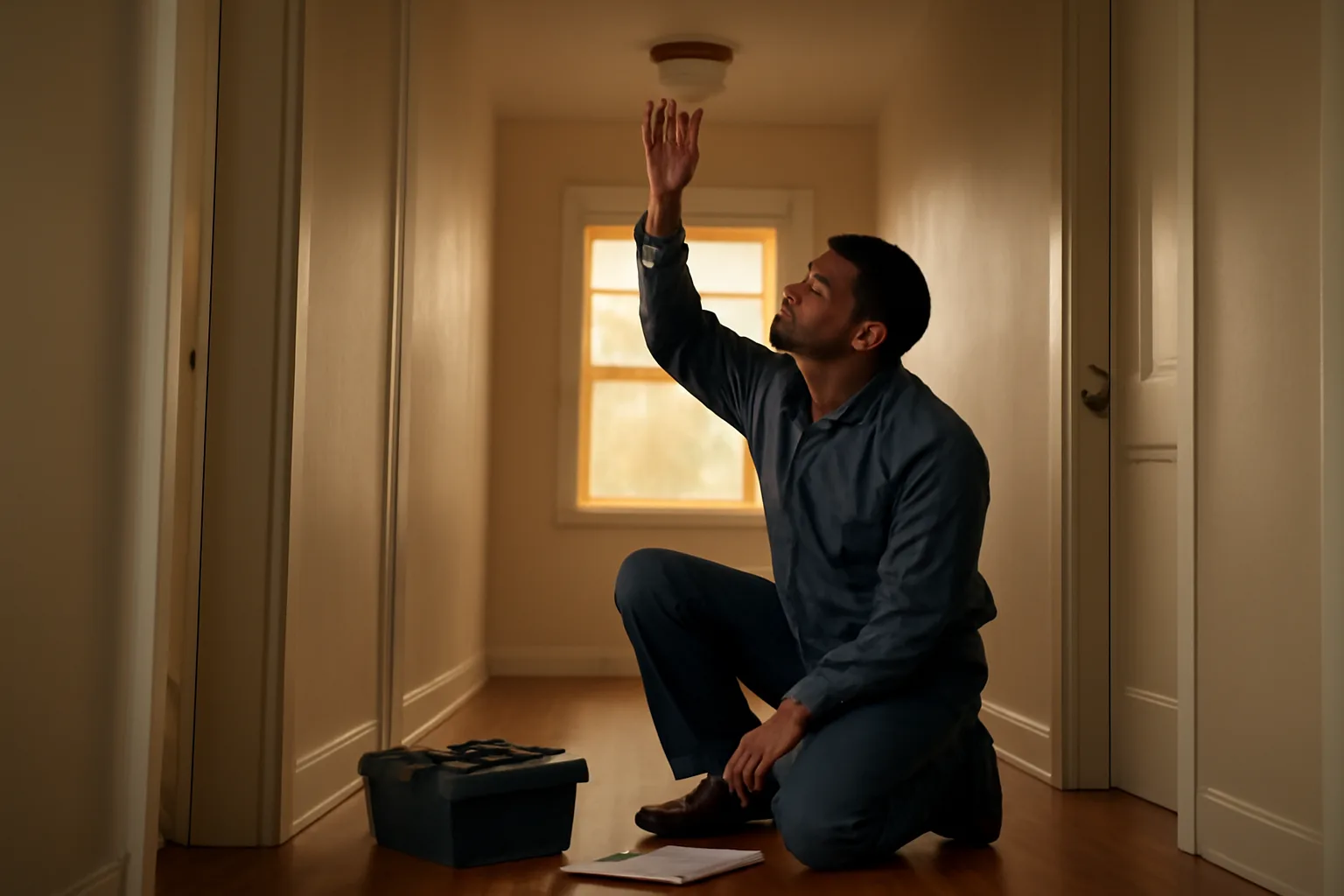
A rental inspection checklist form walks you room by room (smoke detectors, plumbing, electrical, exits, appliances) so you catch problems before a city inspector or a tenant does. Use it for move-in, move-out, and annual city inspections. Pair it with proper notice under your state's law, since most states require 24 to 48 hours before entry.
What should a rental inspection checklist form actually cover?
| Entry/exits | Locks function, deadbolts, exit doors open without a key from inside | |
|---|---|---|
| Smoke/CO detectors | Present in required locations, tested, battery or hardwired | |
| Electrical | No exposed wiring, GFCI outlets near water, panel accessible | |
| Plumbing | No active leaks, water pressure, functioning shutoffs, hot water temp | |
| Heating | Furnace/heater working, vented properly, no visible damage | |
| Windows | Open and close, locks intact, screens present, no broken glass | |
| Structural | Ceilings, walls, floors free of major damage or mold | |
| Exterior | Handrails secure, steps sound, adequate lighting, trash storage | A lot of cities publish their own inspection checklist as part of the rental licensing process, and if yours does, use that exact form. It tells you precisely what the inspector is grading you on. If your city hasn't published one, or you want something to use between official inspections, a generic checklist covering the zones above will catch most of what matters. |
A good checklist walks through every room the same way every time, so you're not relying on memory. At minimum it needs sections for smoke and carbon monoxide detectors, electrical outlets and panels, plumbing fixtures, windows and doors (including locks and exits), heating and cooling equipment, and any appliances you provide. Most usable forms run 8 to 10 rooms or zones (kitchen, bathroom(s), bedrooms, living area, basement/utility, exterior, common areas) with 40 to 60 individual line items total. That sounds like a lot until you're standing in the unit; then it's the difference between catching a loose handrail now and getting a violation notice from the city later. Here's a simple structure that covers what most municipal inspection programs check, based on common city rental inspection ordinances: | Zone | Typical check items |
How to become a landlord (the practical version)
Becoming a landlord isn't a licensing process in most states the way becoming a contractor or a real estate agent is. There's no national landlord exam. What actually happens is narrower and more procedural: you buy or convert a property, you register it (in cities that require it), you screen and place a tenant under a written lease, and you follow your state's landlord-tenant statute for security deposits, entry notice, and habitability. The steps that matter in order: confirm the property is zoned and permitted for rental use, check whether your city or county requires a rental license or registration (many do, and fines for unregistered rentals can run from under $100 to several thousand dollars depending on the jurisdiction), get landlord liability insurance, understand your state's security deposit limits and return deadlines, and set up a system for maintenance requests and inspections before you ever hand over keys. A lot of first-time landlords skip the registration check because they assume it only applies to big apartment buildings. It doesn't. Plenty of mandatory rental-licensing cities apply the requirement to a single-family home rented out by an individual owner. If you're not sure whether your city has one, check with your city's rental licensing or code enforcement office before you advertise the unit.
What is landlording, and what is a landlord?
A landlord is the person or entity that owns a rental property and leases it to a tenant in exchange for rent, taking on legal responsibilities for habitability, repairs, and following state and local landlord-tenant law. "Landlording" is the informal term for the day-to-day work of running that relationship: collecting rent, handling maintenance, doing inspections, managing lease renewals, and keeping the property legally compliant. It's a mix of property management and legal compliance. The property management half is maintenance, tenant communication, and turnover. The legal half is knowing your state's notice requirements, security deposit rules, and habitability standards, which is where most landlord mistakes and most tenant lawsuits actually come from. A landlord who's good at fixing things but ignores the legal side is exposed. A landlord who knows the law but lets the property fall apart ends up with the same result: fines, vacancy, and turnover costs. Small landlords (1 to 10 units) carry more of this personally than large operators do, since there's no property management company or in-house counsel absorbing the compliance work. That's the gap a checklist and a documented inspection process is meant to close.
Who is responsible for a rental property walk-through inspection in California?
In California, the landlord is responsible for conducting move-in and move-out walk-through inspections, and state law specifically gives the tenant the right to request an initial move-out inspection before the actual move-out date. Under California Civil Code Section 1950.5(f), the landlord must, upon the tenant's request, do this initial inspection "no earlier than 2 weeks before the expected termination or vacation date" and then give the tenant an itemized statement of anything that needs to be fixed to avoid a deduction from the security deposit [1]. The landlord has to give at least 48 hours' written notice before this initial inspection unless the tenant waives that notice [1]. After the actual move-out, the landlord (not the tenant) is the one who must inspect the unit and, within 21 days, either return the full deposit or send an itemized statement of deductions with receipts, per the same statute [1]. This is worth knowing even outside California, because a lot of states have modeled similar pre-move-out inspection rights into their own codes. If you're a landlord doing walk-throughs anywhere, treat the California approach (notice, documentation, itemized statement) as the baseline standard to hold yourself to, since it's what a tenant's attorney will point to if you're sloppy.
What can a landlord look at during an inspection?
A landlord can look at anything related to the condition, safety, and maintenance of the property: appliances, smoke detectors, plumbing, electrical systems, signs of pest infestation, unauthorized occupants or pets, and unauthorized alterations to the unit. What a landlord generally cannot do is search through a tenant's personal belongings, open closed drawers or containers, or use the inspection as a pretext to harass the tenant or retaliate against them. The inspection has to be for a legitimate purpose. Most state landlord-tenant statutes list acceptable reasons: making repairs, showing the unit to prospective tenants or buyers, verifying the tenant hasn't caused damage, and checking on habitability or code compliance. An inspection that happens right after a tenant files a complaint about mold, timed suspiciously, can look like retaliation, and several states have anti-retaliation statutes that specifically protect tenants who report code violations. Practically, keep the inspection visual and surface-level. Photograph what you see, check what's supposed to be checked (detectors, exits, leaks, damage), and don't rifle through closets or personal items beyond confirming there's no immediate safety hazard (exposed wiring behind a stored box, for instance). If you need to open something closed, like an electrical panel cover or an access hatch, explain why in the moment or note it on the inspection form.
How much notice does a landlord have to give before entering?
Most states require 24 to 48 hours of advance notice before a landlord enters an occupied rental unit for a non-emergency inspection or repair, but the exact number and the acceptable form of notice (written vs. verbal, mail vs. text) varies by state, so check your specific state's statute. California requires "reasonable notice," which state law presumes is 24 hours for most non-emergency entries under Civil Code Section 1954, and 48 hours specifically for the pre-move-out inspection under Section 1950.5(f) [1] [2]. There's no notice requirement at all for genuine emergencies (a burst pipe, a gas leak, fire) in nearly every state's law, since immediate entry is necessary to prevent damage or protect safety. Outside of emergencies, entering without proper notice, or entering too frequently, can expose a landlord to a claim for violation of the tenant's right to quiet enjoyment, and in some states it's a specific statutory violation with its own penalty. Because this varies so much by state and even by city ordinance layered on top of state law, the safest move is: give notice in writing, give more notice than the legal minimum when you can (48 hours instead of 24 is rarely a problem), and keep a copy of the notice you sent. If your city has its own rental inspection program, its ordinance may set its own notice window for the city inspector separate from your state's landlord-entry statute; confirm both with your city rental licensing office.
What rights do tenants have without a lease?
A tenant without a written lease, sometimes called a tenant-at-will or a month-to-month tenant depending on how rent is paid, still has nearly all the same legal protections as a tenant with a signed lease. State landlord-tenant law, not the lease document, is what actually creates most tenant rights: the right to a habitable unit, protection from illegal lockouts and utility shutoffs, the right to proper notice before entry, and the right to proper notice before eviction. What changes without a written lease is mostly about term and termination. A tenant without a lease is typically presumed to be renting month-to-month, which means either party can usually end the tenancy with notice (commonly 30 days, though some states require more for longer tenancies) rather than being locked into a fixed term. Rent amount, due date, and other terms not covered in writing get filled in by whatever was verbally agreed or by local custom, which is exactly why verbal-only rental agreements create so many disputes. Landlords sometimes assume no lease means no rights, and that's simply wrong. A tenant occupying a unit and paying rent, even under a completely informal arrangement, has tenancy rights under state law the moment they move in.
Why do landlords require renters insurance?
Landlords require renters insurance mainly to cover the tenant's personal property and liability, since the landlord's own property insurance policy almost never covers a tenant's belongings and typically doesn't cover injuries caused by the tenant's actions (a candle fire, a dog bite, water damage from an overflowed tub the tenant caused). Without renters insurance, a loss like that becomes a dispute between the landlord's insurer, the tenant, and sometimes the landlord personally. Renters insurance is genuinely cheap relative to the protection it buys. National average costs for a standard renters policy run roughly $15 to $30 a month depending on coverage limits and location, according to insurance industry rate surveys, though your state and city will vary. Requiring it costs the landlord nothing and shifts a meaningful chunk of liability risk off the landlord's own umbrella or property policy. A lot of landlords put a renters insurance requirement directly into the lease with a minimum liability coverage amount (commonly $100,000) and require the tenant to list the landlord as an "interested party" or provide proof of active coverage annually. That's a lease term decision you should work out with your own lease document or an attorney, not something to improvise unit by unit.
What can't a landlord do in Ohio?
Under Ohio's landlord-tenant law (Ohio Revised Code Chapter 5321), a landlord cannot enter the rental unit without giving reasonable notice and without entering at a reasonable time, except in an emergency [3]. Ohio courts and the statute generally treat 24 hours as reasonable notice, though the code itself uses the "reasonable" standard rather than naming an exact hour count for every situation. A landlord in Ohio also cannot shut off utilities, change the locks, or remove the tenant's belongings to force them out, commonly called "self-help eviction." Ohio Revised Code 5321.15 specifically prohibits a landlord from using "force, threat of force, or any other means" to remove a tenant or their property without going through the formal eviction process in court, and violating this can make the landlord liable for actual damages [4]. A landlord also cannot retaliate against a tenant for exercising a legal right, like reporting a code violation to a building inspector or joining a tenant organization; Ohio Revised Code 5321.02 specifically bars a landlord from raising rent, decreasing services, or threatening eviction in retaliation for these protected actions within a defined period after the tenant's action [5]. And a landlord in Ohio cannot ignore their own maintenance duties under 5321.04, which requires keeping the premises fit and habitable, keeping common areas safe, and maintaining all electrical, plumbing, heating, and other systems supplied by the landlord [3].
Move-in vs. move-out vs. annual city inspection: what's different
| Move-in | Landlord, often with tenant present | Establish baseline condition | Signed checklist, dated photos | |
|---|---|---|---|---|
| Move-out | Landlord (tenant may request pre-inspection) | Determine deposit deductions | Itemized statement, receipts | |
| City/code inspection | City inspector, sometimes with landlord present | Verify code compliance for license renewal | City inspection report, violation notices | The move-in and move-out checklists can be nearly identical forms used twice. The city inspection checklist should match your specific municipality's published standard whenever one exists, since that's the only version that actually determines whether you pass. If you're prepping for a city inspection, walking your own unit with a generic checklist first is still useful practice, but don't assume passing your own checklist means passing the city's. |
These three inspection types share a checklist but serve different purposes, and mixing them up is a common landlord mistake. A move-in inspection documents the unit's condition before the tenant takes possession, protecting both sides on what damage existed already. A move-out inspection documents condition after the tenant leaves, which is what determines security deposit deductions. An annual city rental inspection, in mandatory-licensing municipalities, checks the unit against a code compliance standard set by the city, independent of who's renting it or when they moved. | Inspection type | Who conducts it | Main purpose | Typical documentation |
How do I use a printable checklist for a real inspection?
Print two copies (or use a form that lets you keep a duplicate), walk the unit room by room in the same order every time, and mark each item as pass, fail, or needs attention rather than leaving blanks. Blanks are useless later; you won't remember six months from now whether you skipped an item or checked it and it was fine. Date every page and get a signature if the tenant is present, especially for move-in and move-out inspections. Take photos of anything marked fail or needs attention, and keep the photos organized by unit and date, more than dumped in a phone's camera roll. If you're prepping a unit for an annual city rental inspection, do your own walk-through with the checklist at least two to three weeks before the scheduled city inspection date, so you have time to fix anything before the inspector shows up, not after a violation notice arrives. For landlords managing more than one or two units, the paperwork side of this (tracking which unit needs inspection, when the license renews, what the last violation notice said) becomes the real bottleneck, more than the physical walk-through itself. That's the gap our $79 one-time City Rental License & Inspection Prep Packet is built for: a structured way to organize the checklist, the notice requirements, and the renewal timeline for your specific city so you're not reconstructing it from memory or a city website every year.
What happens if my rental fails the city inspection?
A failed rental inspection typically results in a written violation notice listing the specific defects and a compliance deadline, usually somewhere between 10 and 60 days depending on the city and the severity of the issue, with life-safety items (no working smoke detector, blocked exit, exposed wiring) generally given the shortest deadlines. Confirm the exact deadline and re-inspection fee with your city rental licensing office, since these numbers are set locally and change. Most cities allow a re-inspection once you've made the repairs, sometimes for an additional fee (commonly in the range of $25 to $150 depending on the city, though this varies widely). Repeated failures or missed deadlines are what typically escalate to daily fines or a suspended rental license, which then can bar you from legally renting the unit until the license is reinstated. The fastest way to avoid this entire chain is the move-in-vs-move-out-vs-annual distinction from the section above: use your own checklist as a pre-inspection a few weeks ahead, fix what you find, and treat the city's inspection as a formality rather than the first time anyone's looked closely at the smoke detectors.
Frequently asked questions
Is there a truly free printable rental inspection checklist?
Yes. Many city rental licensing offices publish their own free inspection checklist as a PDF on the city or county website, and it's the most accurate free option since it matches exactly what your local inspector checks. Generic free templates exist too, but a city-specific one (when available) should be your first choice for actual licensing inspections.
How often should a landlord inspect a rental property?
Beyond move-in and move-out, most landlords do a routine inspection once or twice a year, separate from any city-mandated inspection. Cities with mandatory rental licensing usually set their own inspection frequency, commonly annually or every 2 to 3 years depending on the ordinance; confirm the exact interval with your city rental licensing office.
Can a tenant refuse a landlord's inspection?
A tenant generally cannot refuse a properly noticed inspection for a legitimate purpose (repairs, safety checks, code compliance) under most state landlord-tenant statutes. A tenant can refuse entry that lacks proper notice, happens at an unreasonable time, or seems retaliatory; in that case the landlord's remedy is typically to re-notice, not to force entry.
Do landlords have to give notice for emergency repairs?
No. Nearly every state landlord-tenant statute exempts genuine emergencies, like a burst pipe, gas leak, or fire, from advance notice requirements, since immediate entry is necessary to prevent damage or protect safety. Non-emergency entry for routine repairs or inspections still requires the standard notice period, commonly 24 to 48 hours depending on the state.
What's the difference between a rental inspection and a rental license?
A rental license (or registration) is the legal permission from the city to operate the unit as a rental, usually renewed annually or every few years for a fee. A rental inspection is the process the city uses to verify the unit meets code before issuing or renewing that license. You typically can't get or keep the license without passing the inspection.
How to become a landlord if I only own one property?
Owning one property is enough; there's no minimum portfolio size required. Check your local zoning allows rental use, confirm whether your city requires rental registration or licensing (many single-family rentals owned by individuals are covered), get landlord liability insurance, and learn your state's security deposit and entry notice rules before placing a tenant.
What can a landlord not do during an inspection?
A landlord generally cannot search through a tenant's personal belongings, open closed drawers or containers unrelated to a safety check, enter without proper notice except in an emergency, or use the inspection as cover for harassment or retaliation against a tenant who filed a complaint. Keep inspections visual, documented, and tied to a legitimate maintenance or safety purpose.
Who pays for a failed rental inspection re-inspection fee?
The landlord typically pays the re-inspection fee, since the rental license is issued to the property owner or landlord, not the tenant. Fee amounts vary by city, commonly in the range of $25 to $150, so confirm the exact figure and any escalation for repeated failures with your city rental licensing office.
What rights does a tenant have without a signed lease?
A tenant without a written lease still has essentially all state-law tenant protections: habitability, notice before entry, notice before eviction, and protection from illegal lockouts or utility shutoffs. What's usually missing is a fixed term, so the tenancy is typically treated as month-to-month and can be ended by either side with standard notice, commonly 30 days.
Why would a landlord require renters insurance if the building already has insurance?
A landlord's property insurance covers the building and the landlord's own liability, not the tenant's personal belongings or damage the tenant causes to others (a fire from a candle, water damage, a dog bite). Renters insurance, costing roughly $15 to $30 a month on average, shifts that risk to the tenant's own policy instead of the landlord's.
How much notice does a landlord need to give before entering in California specifically?
California presumes 24 hours is reasonable notice for most non-emergency entries under Civil Code Section 1954, and requires at least 48 hours' written notice specifically for the pre-move-out inspection a tenant requests under Civil Code Section 1950.5(f). No notice is required for genuine emergencies.
What items should be on a move-out inspection checklist specifically?
A move-out checklist should mirror the move-in checklist item for item so you can compare condition directly: walls and floors for damage beyond normal wear, appliance function, plumbing leaks, all keys and remotes returned, cleanliness, and any tenant-caused alterations. California law requires the landlord to itemize any deductions within 21 days of move-out under Civil Code Section 1950.5(f).
Sources
- California Legislative Information, California Civil Code Section 1950.5: California requires an itemized move-out statement within 21 days and allows a tenant to request a pre-move-out inspection with 48 hours' notice
- California Legislative Information, California Civil Code Section 1954: California presumes 24 hours is reasonable notice for landlord entry in non-emergency situations
- Ohio Laws, Ohio Revised Code Section 5321.04: Ohio landlords must keep premises fit and habitable and maintain electrical, plumbing, and heating systems
- Ohio Laws, Ohio Revised Code Section 5321.15: Ohio prohibits landlords from using force or self-help measures to remove a tenant without court process
- Ohio Laws, Ohio Revised Code Section 5321.02: Ohio prohibits landlord retaliation against tenants who exercise legal rights like reporting code violations