Last updated 2026-07-26
TL;DR
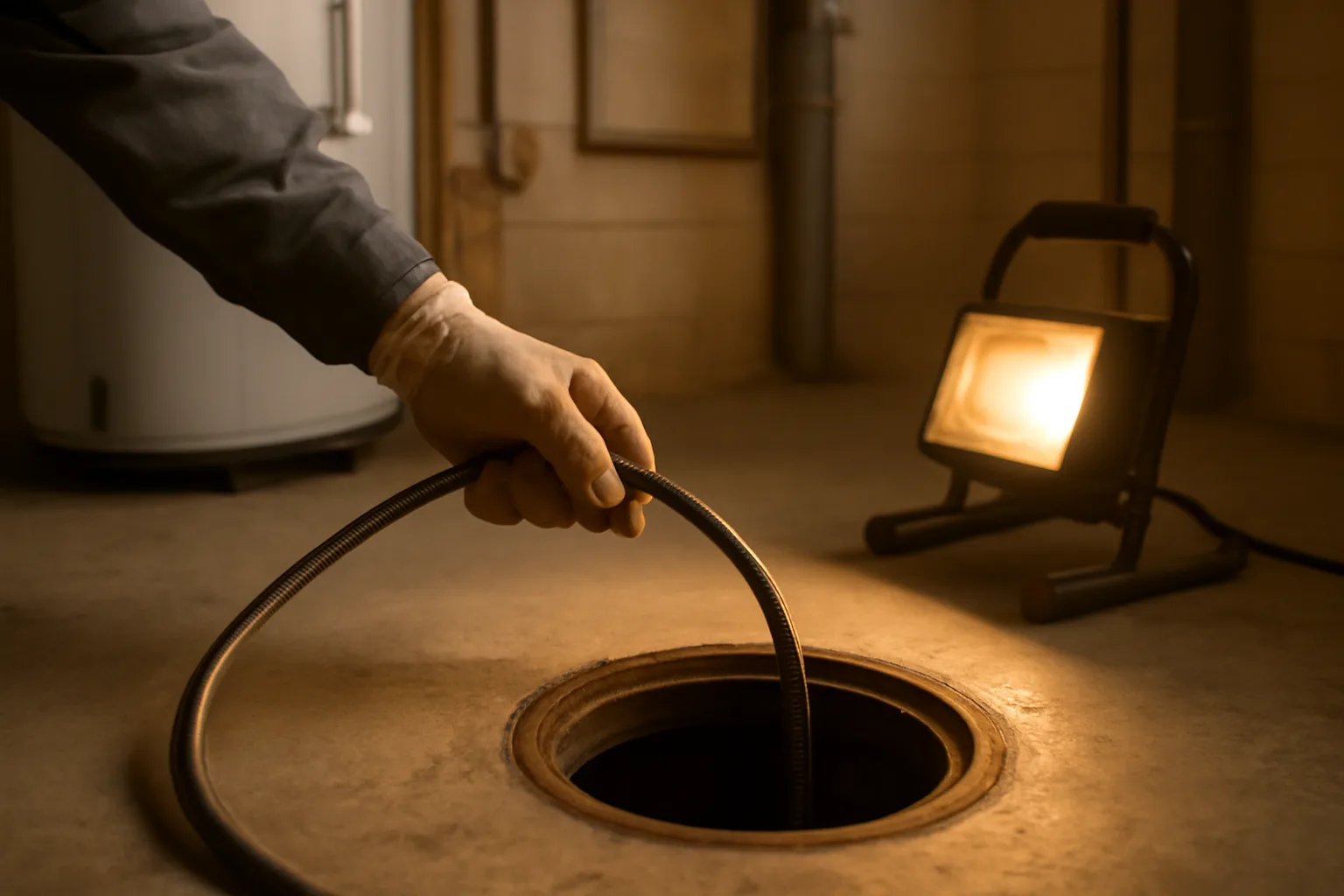
A drain pipe inspection camera rental typically costs $75 to $300 per day from a tool rental center, or $100 to $500 if you hire a plumber to run one. Landlords use these before rental inspections or after tenant complaints, to spot root intrusion, bellies, or cracks before a city inspector does. For 1-2 unit checks, renting often beats a service call.
what does a drain pipe inspection camera rental actually cost
Home center and tool rental chains generally price camera rentals in the $75 to $150 per day range for a basic push-camera setup that reaches 100 to 200 feet. Commercial-grade units with longer reach, locators, and recording capability run higher, sometimes $200 to $300 a day, and some outlets charge by the hour after a minimum block. These are typical market ranges reported by rental centers and plumbing supply retailers rather than a single regulated fee, so always confirm the exact daily and deposit cost with the specific rental counter you're using. If you'd rather not operate the equipment yourself, a plumber-run sewer camera inspection commonly costs $100 to $500, according to cost guides from home improvement resource sites, with the low end covering a simple single-line check and the high end covering longer runs, locate services, or same-day emergency calls [1]. Some plumbers roll the camera fee into a larger service call if they're already on site for a clog or backup. Deposit requirements matter too. Expect to leave a credit card hold or a deposit that can run $100 to $500 depending on the equipment value, refunded once the unit comes back clean and undamaged. Ask about cleaning fees specifically. Sewer camera cable that comes back covered in grease or debris sometimes triggers a cleaning charge that isn't obvious until you're at the counter.
should I rent a camera myself or hire a plumber
For a landlord with one problem drain and some patience, a DIY rental can work. You feed the cable in, watch the monitor, and look for obvious red flags: standing water (a belly in the pipe), roots pushing through joints, or a visible crack. Most consumer-grade rental units show a live picture on a small screen, sometimes with a distance counter so you can note where a problem sits. Where DIY falls short is depth of expertise. A plumber who runs cameras daily reads subtle warning signs a landlord might miss, like a slight lip at a joint that signals early pipe separation, or shine on the picture that says water is already pooling upstream. If your building has cast iron pipe over 40 years old, or you've had two or more backups in the past year, paying for a professional camera inspection is the smarter spend. You're more than buying the camera time, you're buying the read. A rough rule: if you're checking pipe health as routine prep ahead of a rental inspection deadline, a rental unit is probably fine. If you're diagnosing an active backup, slow drain that keeps recurring, or you suspect root intrusion from a tree near the sewer lateral, hire it out.
why would a landlord need a sewer or drain camera inspection at all
Cities with mandatory rental licensing programs increasingly ask landlords to certify that plumbing systems are functional and free of hazards before issuing or renewing a rental license. Most inspection checklists don't require a camera scope by default, but if an inspector flags slow drainage, sewer odor, or a history of backups, a camera inspection becomes the practical way to prove (or disprove) a problem before the reinspection deadline. Landlords also use cameras proactively, especially before a tenant turnover or a scheduled city inspection, to catch root intrusion or bellied pipe before it becomes a mid-lease emergency call. Finding a cracked lateral on your own schedule, on a weekday, beats getting the call at 11pm from a tenant with a flooded bathroom. If you're already assembling documentation for a city rental license renewal, a camera inspection report (even a basic one from a rental unit) is worth keeping in your file alongside smoke detector certs and other maintenance records. Our $79 City Rental License & Inspection Prep Packet includes a documentation checklist landlords use to organize exactly this kind of maintenance evidence before an inspector shows up.
what can a landlord look at during an inspection
During a rental property inspection, whether it's a city-mandated inspection or a landlord's own walkthrough, the landlord (or inspector) generally looks at health and safety systems: smoke and carbon monoxide detectors, electrical outlets and panel condition, plumbing fixtures and visible leaks, heating system function, window and door locks, and general structural condition like flooring, ceilings, and stairs. Many city inspection checklists also cover exterior items: roof condition, gutters, exterior paint, and pest evidence. What a landlord cannot do, in most states, is use an inspection as cover to search through a tenant's personal belongings, closets, or private papers unrelated to habitability or safety. The inspection scope is the unit's condition and systems, not the tenant's stuff. Landlords also generally can't show up unannounced for a routine inspection; nearly every state requires some form of advance notice except in emergencies. For drain and plumbing specifically, an inspector will typically check for functioning fixtures, no active leaks, proper drainage, and no sewage odor. A camera scope of the sewer lateral isn't standard checklist language in most cities, but if a unit has slow drains or a documented backup history, expect the inspector to ask about it or require follow-up documentation.
who is responsible for a rental property walk-through inspection in california
In California, the landlord is responsible for conducting move-in and move-out walk-through inspections and must offer the tenant an initial inspection before move-out if the landlord intends to withhold any part of the security deposit. California Civil Code Section 1950.5 requires landlords to give tenants the option of an initial inspection, conducted no earlier than two weeks before the end of the tenancy, and to provide the tenant written notice of the results, including an itemized statement of repairs or cleaning needed to avoid deductions [2]. The landlord (or the landlord's designated agent) performs the inspection, and the tenant has a right to be present. If the tenant doesn't request or attend the initial inspection, the landlord can still conduct the final move-out inspection alone, but the requirement to offer the option in the first place sits on the landlord. City-specific rental licensing programs in California (San Francisco, Los Angeles, and others each run separate systematic code enforcement or rent registry programs) may layer additional inspection requirements on top of the state's move-in/move-out rule, so confirm with your city rental licensing office whether a separate habitability inspection applies to your unit.
what is landlording and what does it actually involve
Landlording is the day-to-day work of owning and managing rental property: collecting rent, maintaining the unit, handling repairs, screening tenants, following local and state landlord-tenant law, and keeping the property compliant with any local rental licensing or registration rules. It's part business operation, part maintenance job, part legal compliance exercise. A landlord, in the legal sense, is the owner (or an owner's authorized agent) who leases residential or commercial property to a tenant in exchange for rent, taking on the underlying obligations of habitability, repair, and lawful notice under state landlord-tenant statutes. Most states define specific landlord duties in their residential landlord-tenant act, covering things like maintaining a habitable premises, handling security deposits within statutory timelines, and giving proper notice before entry or termination. For someone with 1 to 10 units, landlording usually means wearing every hat yourself: bookkeeper, maintenance tech, and code compliance officer all at once. That's exactly why city rental licensing notices and inspection deadlines catch small landlords off guard more than large property management companies, who have staff dedicated to tracking renewal dates and code changes.
how to become a landlord and how to be a landlord day to day
Becoming a landlord starts with acquiring property (purchase, inheritance, or conversion of a primary residence to a rental) and then meeting whatever registration or licensing requirements your city and state impose before you can legally rent it out. Many cities with mandatory rental licensing require you to register the unit, pass an initial inspection, and pay a licensing fee before a tenant moves in; operating without that license can trigger fines, so check with your city rental licensing office before listing the unit. Day to day, being a landlord means: setting a lease that complies with your state's landlord-tenant statute, screening tenants under fair housing law, collecting rent and handling deposits per state deposit-holding rules, responding to repair requests promptly (many states set implicit or explicit response-time expectations tied to habitability law), and giving proper notice before entering the unit or ending a tenancy. Most new landlords underestimate the maintenance side. A drain pipe inspection, a furnace tune-up, and smoke detector testing aren't glamorous, but they're the difference between passing a rental inspection cleanly and getting a reinspection order with a fine attached. If you're just getting started, our landlord basics guide covers the core setup steps most cities expect before you rent your first unit.
why do landlords require renters insurance
Landlords require renters insurance mainly to shift liability for the tenant's personal belongings and personal liability away from the landlord's own policy. A landlord's property insurance covers the building structure, not the tenant's furniture, electronics, or clothing, so if a fire, pipe burst, or theft damages a tenant's stuff, the landlord's policy typically won't pay for it. Requiring renters insurance moves that risk to the tenant's own coverage. Renters insurance also often includes personal liability coverage, which matters if a tenant's negligence (leaving a stove on, an overflowing tub) causes damage to the unit or a neighboring unit. Without renters insurance, that liability gap can land back on the landlord's policy or out of the landlord's pocket. The Insurance Information Institute notes that a standard renters policy typically covers personal property, liability, and additional living expenses if the unit becomes uninhabitable after a covered loss [3]. Requiring it is legal in nearly every state as a lease condition, as long as it's applied consistently and doesn't violate fair housing rules. It's a cheap ask for a landlord: average renters insurance premiums run around $15 to $30 a month nationally, a small cost that saves both sides a lot of grief after a plumbing failure or fire.
what rights do tenants have without a lease
A tenant without a written lease, sometimes called a tenant-at-will or a month-to-month tenant by operation of law, still has real rights. Most states treat an oral or unwritten rental arrangement as a month-to-month tenancy once rent has been accepted, and the tenant retains the same core protections as a written-lease tenant: the right to a habitable unit, protection from illegal lockouts or utility shutoffs, and the right to proper notice before eviction or rent increases. The notice period for ending a no-lease, month-to-month tenancy varies by state, commonly 30 days, though some states require longer for tenancies that have run a long time. A tenant without a lease is not an unprotected tenant; landlord-tenant statutes generally apply regardless of whether the agreement is written down, as long as rent has been paid and accepted. What a no-lease tenant doesn't have is the specific terms a written lease would lock in, like a fixed rent amount for a set term or specific clauses about pets, subletting, or renewal. Without that paper, either side can generally end the tenancy with proper notice, and the terms default to whatever the state's landlord-tenant code says for month-to-month arrangements.
how much notice does a landlord have to give before entry or ending a tenancy
Notice requirements vary significantly by state and by purpose (routine entry vs. ending a tenancy vs. rent increase), so there's no single national number. For entry to inspect, repair, or show a unit, many states require 24 to 48 hours advance notice; California, for example, requires "reasonable notice," which state law presumes to be 24 hours for most non-emergency entries under Civil Code Section 1954 [4]. For ending a month-to-month tenancy, 30 days notice is common across many states, though some jurisdictions require 60 or even 90 days for longer-term tenancies or specific circumstances (some California cities, for instance, require 60 days if the tenant has lived in the unit a year or more). Because these numbers genuinely differ by state and sometimes by city, don't rely on a generic number for anything you're about to send a tenant. Check your specific state's landlord-tenant statute (usually titled something like "Residential Landlord and Tenant Act") or confirm with your city rental licensing office if a local ordinance layers on additional notice requirements. Our tenants rights overview breaks down where these state-by-state differences tend to show up most.
what a landlord cannot do in ohio
Ohio's landlord-tenant law, codified in Ohio Revised Code Chapter 5321, sets several clear limits on what a landlord cannot do. A landlord cannot enter a rental unit without giving the tenant reasonable notice of intent to enter and entering only at reasonable times, except in cases of emergency, under ORC 5321.04 . A landlord also cannot shut off utilities, remove doors or windows, or seize a tenant's belongings to force them out, a practice generally banned as illegal self-help eviction under Ohio law; landlords must use the formal eviction process through the courts. Ohio law also prohibits retaliatory conduct: a landlord cannot raise rent, decrease services, or threaten eviction specifically because a tenant complained to a health or safety authority or joined a tenant organization, per ORC 5321.02 . And a landlord cannot fail to maintain the premises in a habitable condition; ORC 5321.04 requires landlords to keep the unit in compliance with building and housing codes and to keep plumbing, heating, and other systems in good working order. If you're a landlord in Ohio dealing with a city rental licensing or inspection notice, the state law floor still applies underneath whatever your specific city ordinance requires, so check both.
how does a drain camera inspection fit into a rental license inspection prep list
Most rental licensing checklists focus on visible, testable systems: working smoke detectors, functioning heat, no active leaks, safe electrical, and structurally sound stairs and railings. A drain camera scope isn't usually a required line item, but it earns its place on a smart landlord's prep list for two reasons. First, a slow or gurgling drain is exactly the kind of thing a city inspector notices and flags for follow-up, turning what could've been a quick pass into a reinspection cycle with a new deadline and sometimes a fee. Second, older buildings (pre-1980s in many cities) commonly still have clay or cast iron sewer laterals, both prone to root intrusion and corrosion respectively; catching that early avoids a mid-lease sewage backup that costs far more than a $150 camera rental would have. If you manage 1 to 10 units and you're staring down a licensing renewal notice, walk your prep list in this order: smoke/CO detectors, visible plumbing leaks, heating function, electrical panel condition, then drain and sewer health if you've had any prior complaints or the building is older. That order roughly matches what most city checklists prioritize and catches the items most likely to trigger a fine if missed.
Frequently asked questions
How much does it cost to rent a drain or sewer inspection camera?
Tool rental centers typically charge $75 to $150 a day for basic push-camera units, with commercial-grade or longer-reach equipment running $200 to $300 a day. Expect an additional refundable deposit, often $100 to $500 depending on the equipment's value, and ask about cleaning fees if the cable comes back with grease or debris on it.
Is it cheaper to rent a camera myself or hire a plumber?
Renting is usually cheaper for a single, simple check, running $75 to $150 a day versus $100 to $500 for a plumber-run inspection. But a plumber brings expertise that catches subtle problems (early joint separation, slow leaks) a DIY rental scope might miss, so for older pipe or recurring backups, the extra cost is usually worth it.
Do cities require a camera inspection before issuing a rental license?
Not typically as a standard requirement. Most rental licensing checklists cover visible plumbing function, not a camera sewer scope. Some cities may request one if an inspector flags a suspected drainage problem or backup history, so confirm with your city rental licensing office whether it applies to your situation.
How do I become a landlord?
You become a landlord by acquiring rental property and meeting your city and state's requirements before renting it out, which often includes registering the unit, passing an initial rental inspection, and paying a licensing fee. Requirements vary widely by city, so check with your local rental licensing office before listing a unit for rent.
Who handles the move-in and move-out walk-through inspection in California?
The landlord is responsible for conducting it. California Civil Code Section 1950.5 requires landlords to offer tenants an initial move-out inspection at least two weeks before the tenancy ends and to provide written results, giving tenants a chance to fix issues before facing security deposit deductions.
What is landlording?
Landlording is the ongoing work of owning and operating rental property: collecting rent, handling repairs and maintenance, screening tenants, and staying compliant with state landlord-tenant law and any local rental licensing or registration rules. It combines property management, light bookkeeping, and legal compliance into one ongoing job.
What is a landlord, legally speaking?
A landlord is the property owner, or an authorized agent acting on the owner's behalf, who rents residential or commercial property to a tenant. That role carries specific legal duties under state landlord-tenant statutes, including maintaining habitability, handling security deposits properly, and giving lawful notice before entry or eviction.
What rights does a tenant have without a signed lease?
A tenant without a written lease is generally treated as a month-to-month tenant and keeps the same core protections as a written-lease tenant: habitability, protection from illegal lockouts, and proper notice before eviction or rent changes. The main thing missing is fixed written terms; default state landlord-tenant rules fill that gap instead.
Why do landlords require tenants to carry renters insurance?
Landlords require it because their own property insurance covers the building, not the tenant's belongings, and doesn't cover the tenant's personal liability for accidents they cause. Renters insurance shifts that risk to the tenant's policy, and it's cheap: typically $15 to $30 a month nationally.
How much notice does a landlord have to give before entering a unit?
It varies by state. California presumes 24 hours is reasonable notice for non-emergency entry under Civil Code Section 1954. Many other states set similar 24 to 48 hour windows, though some differ, so check your specific state's landlord-tenant statute rather than assuming a single national standard.
What can a landlord check during a rental inspection?
A landlord or city inspector typically checks smoke and CO detectors, electrical safety, plumbing function and leaks, heating systems, window and door locks, and general structural condition like floors and stairs. The inspection covers the unit's condition and safety systems, not a tenant's personal belongings.
What is a landlord not allowed to do in Ohio?
Under Ohio Revised Code Chapter 5321, a landlord cannot enter without reasonable notice except in emergencies, cannot use illegal self-help methods like shutting off utilities to force a tenant out, cannot retaliate against a tenant for reporting code violations, and must keep the unit compliant with housing codes.
Does a camera drain inspection help avoid a rental license violation?
It can. Slow or gurgling drains are exactly what triggers a city inspector to flag plumbing for follow-up, which can turn a routine inspection into a reinspection cycle with added fees. Checking drain health ahead of a scheduled inspection, especially in older buildings, catches problems before an inspector does.
Sources
- Angi (HomeAdvisor), Sewer Camera Inspection Cost Guide: Professional sewer camera inspections typically cost $100 to $500
- California Legislative Information, Civil Code Section 1950.5: California landlords must offer tenants an initial move-out inspection with written itemized results
- Insurance Information Institute, Renters Insurance: Standard renters insurance covers personal property, liability, and additional living expenses
- California Legislative Information, Civil Code Section 1954: California presumes 24 hours notice is reasonable for landlord entry into a rental unit
- Ohio Laws and Rules, Revised Code Chapter 5321: Ohio law sets landlord entry notice requirements, bans retaliatory conduct, and requires habitability maintenance