Last updated 2026-07-26
TL;DR
Landlording means owning rental property and handling leasing, maintenance, rent collection, and legal compliance, either yourself or through a manager. Becoming a landlord takes a property, a lease that follows state law, insurance, and (in many cities) a rental license or registration. Tenant rights and landlord limits vary heavily by state.
what is landlording?
Landlording is the day-to-day work of owning and operating rental property. It covers everything from screening tenants and signing leases to collecting rent, handling repairs, and dealing with move-outs. Some people use "landlording" to describe just the hands-on tasks (fixing a leaky faucet, showing a unit), and others use it more broadly to mean the whole business of being a landlord, including bookkeeping, insurance, and legal compliance. The term isn't a legal one. You won't find "landlording" defined in any state statute. It's more of an industry and hobbyist word, popularized by books, blogs, and forums aimed at small owner-operators managing a handful of units themselves rather than through a big property management company. For a landlord with 1 to 10 units, landlording usually means wearing every hat: leasing agent, bookkeeper, maintenance coordinator, and compliance officer. That last role matters more than most new landlords expect. A growing number of cities require rental registration, a rental license, or a pre-rental inspection before you can legally lease a unit, and skipping that step can mean fines even if the tenant relationship itself is fine. If your city sends you an ordinance notice, that's usually the first sign you're in a mandatory rental-licensing municipality, and figuring out the paperwork side is at least as important as fixing the plumbing.
what is a landlord?
A landlord is the owner (or an authorized agent of the owner) of real property who rents that property to another person, called a tenant, in exchange for payment. The relationship is defined by a lease or rental agreement, and it's governed by state landlord-tenant law plus, in many cities, local rental licensing or housing codes. Legally, a landlord has two sides to the job: rights and duties. Landlords generally have the right to collect rent, enforce lease terms, and reclaim the property at the end of a tenancy through the proper legal process. Landlords also have duties, most importantly to maintain a habitable unit. Nearly every state recognizes an "implied warranty of habitability," a legal doctrine (not always written into statute, but recognized by state courts in most jurisdictions) that a rented home has to be fit to live in, with things like working plumbing, heat, and structural safety, regardless of what the lease says [1]. If you're new to this, it helps to think of "landlord" as a legal role you step into the moment you accept rent from someone living in your property, more than a title on a lease. That role comes with obligations under your state's landlord-tenant statute and, if your city runs a licensing program, under local ordinance too. For background on how tenant rights show up in day-to-day disputes, see tenant rights and tenants rights.
how to become a landlord
Becoming a landlord takes more than buying a property and finding a tenant. Here's the realistic checklist, in the order most owners actually go through it. 1. Buy or convert a property you're allowed to rent. Check your local zoning and any HOA rules first; some areas restrict short-term or even long-term rentals in certain zones. 2. Check if your city or county requires rental registration or a license. Many cities do, especially larger ones and older housing markets. Requirements and fees vary by city, so confirm with your city rental licensing office before you list the unit. 3. Get landlord-specific insurance (see the section below on why this matters, separate from a standard homeowner's policy). 4. Write or adapt a lease that complies with your state's landlord-tenant statute, covering security deposit limits, notice periods, and disclosures your state requires (lead paint disclosure is federally required for pre-1978 housing under 42 U.S.C. § 4852d [2]). 5. Screen tenants consistently and legally, following the Fair Housing Act's protected classes (race, color, religion, sex, national origin, familial status, and disability) [3]. 6. Set up a system for rent collection, maintenance requests, and record-keeping. Even a spreadsheet beats nothing. 7. Schedule and pass any required pre-rental or periodic inspection your city mandates before your license is issued or renewed. Most new landlords underestimate step 2 and step 7. A property that's perfectly fine to live in can still get you fined if the city required a rental license and you never applied for one. Fines for operating without a required rental license vary a lot by city, sometimes running from a few hundred dollars to over a thousand per violation, so it's worth checking this before you sign your first lease, not after a notice shows up.
how to be a landlord (day-to-day responsibilities)
Being a landlord day-to-day is mostly about consistency and paperwork, not confrontation. The core recurring duties are: collecting rent on schedule, responding to repair requests promptly, keeping the property in compliance with your local housing code, handling security deposits according to state rules (many states cap the deposit amount and set a deadline, often 14 to 30 days, for returning it after move-out), and renewing any required rental license or registration before it expires. A practical habit that saves landlords real money: calendar your license renewal date and any required inspection window the day you get your first license, not the week before it's due. Cities that run inspection-based licensing programs often have a narrow scheduling window, and missing it can push you into a late fee or a lapsed-license violation even if you didn't do anything wrong with the unit itself. The other daily-life skill is documentation. Photograph the unit before move-in, keep every repair receipt, and put maintenance requests and responses in writing (text or email counts). If a dispute ever reaches small claims court or a city inspector's file, the landlord with dated photos and written records comes out ahead almost every time.
who is responsible for rental property walk-through inspection in california?
In California, the landlord is responsible for conducting the initial move-in and pre-move-out walk-through inspections, but the tenant has the right to be present. California Civil Code § 1950.5(f) requires that if a landlord intends to make deductions from a security deposit, the landlord must, upon the tenant's request, give the tenant an initial inspection opportunity before the tenant moves out, and provide an itemized statement of proposed repairs and estimated costs "no earlier than two weeks before the termination... occurs" [4]. That pre-move-out inspection is different from a city rental inspection. Several California cities, including Los Angeles under its Systematic Code Enforcement Program, run separate rental housing inspection programs where a city inspector (not the landlord) checks units for code compliance, typically triggered by registration under the Rent Escrow Account Program or citywide systematic inspection cycles [5]. So there are really two kinds of "walk-through" a California landlord deals with: the security-deposit walk-through, which is the landlord's job and the tenant's right to attend, and a municipal code inspection, which is run by the city and confirmed through your local housing department. If you own in a California city with a rental inspection ordinance, don't assume your pre-move-out walk-through satisfies any city requirement. They're separate processes with separate paperwork, and confirm the specifics with your city rental licensing office.
what rights do tenants have without a lease?
Tenants without a written lease still have legal rights. Once someone moves in and pays rent, most states treat them as a tenant-at-will or a month-to-month tenant under the state's landlord-tenant statute, with the same habitability protections and, usually, the same notice-before-eviction requirements as a tenant with a written lease. Without a written lease, the terms default to what state law says a periodic tenancy looks like. That generally includes: the right to a habitable unit, protection from illegal lockouts or utility shutoffs (self-help eviction is illegal in essentially every state; the landlord has to go through court), the right to proper written notice before the tenancy ends, and Fair Housing Act protections against discrimination regardless of whether there's a lease [3]. What a tenant without a lease usually does NOT have is certainty about rent amount or term length beyond what was verbally agreed or established by practice (paying $1,200 on the 1st every month, for example, establishes an implied month-to-month tenancy at that rate). Disputes over verbal terms are genuinely harder to prove, which is exactly why every landlord guide, including this one, recommends a written lease even for family or friends. For more on this from the tenant side, see tenant and tenant and renters rights.
why do landlords require renters insurance?
Landlords require renters insurance mainly to shift liability for the tenant's personal property and for injuries or damage the tenant causes, away from the landlord's own policy. A standard landlord or dwelling policy covers the building structure; it typically does not cover a tenant's furniture, electronics, or clothing, and it may not fully cover a lawsuit stemming from the tenant's own negligence (an overflowing bathtub, a dog bite, a candle fire that starts in their unit). Renters insurance is cheap relative to the protection it buys. The average cost of a renters insurance policy in the U.S. was about $148 to $174 per year as of recent industry data from the Insurance Information Institute, though costs vary by state and coverage amount [6]. That's a small ask compared to what a landlord might face if an uninsured tenant's negligence causes a fire that damages the whole building and the landlord's insurer goes looking for someone to blame. Requiring renters insurance is legal in most states as a lease condition, though a landlord should apply the requirement consistently to every tenant to avoid a Fair Housing Act disparate-treatment claim. Some landlords go further and enroll tenants in a master policy or require proof of coverage before handing over keys. Either way, it's a landlord-basics move that costs the landlord nothing and reduces real financial exposure.
how much notice does a landlord have to give?
| Entry for repairs/inspection (non-emergency) | 24 to 48 hours | Many states set 24 hours as the standard; a few states have no statutory minimum at all | |
|---|---|---|---|
| Month-to-month lease termination (no cause) | 30 days | Some states require 60 days if the tenant has lived there a year or more | |
| Rent increase notice | 30 to 90 days | Longer notice increasingly required for larger increases in some states/cities | |
| Nonpayment of rent (before eviction filing) | 3 to 14 days | Varies widely; some states use "pay or quit" notices as short as 3 days | California, for example, generally requires "reasonable notice," which the statute defines as 24 hours in writing for non-emergency entry, under California Civil Code § 1954 [7]. Other states set their own numbers, and some cities layer additional notice requirements on top of the state minimum. The safest approach is to check your specific state's landlord-tenant statute (usually titled something like "Residential Landlord and Tenant Act") and, separately, your city's rental ordinance, since notice rules for licensing inspections are sometimes different from notice rules for routine entry. |
The notice a landlord has to give depends entirely on what kind of notice it is and what state the property is in; there's no single national rule. Here's the general pattern, though every number below should be confirmed against your specific state statute before you rely on it. | Notice type | Typical range | Notes |
what can a landlord look at during an inspection?
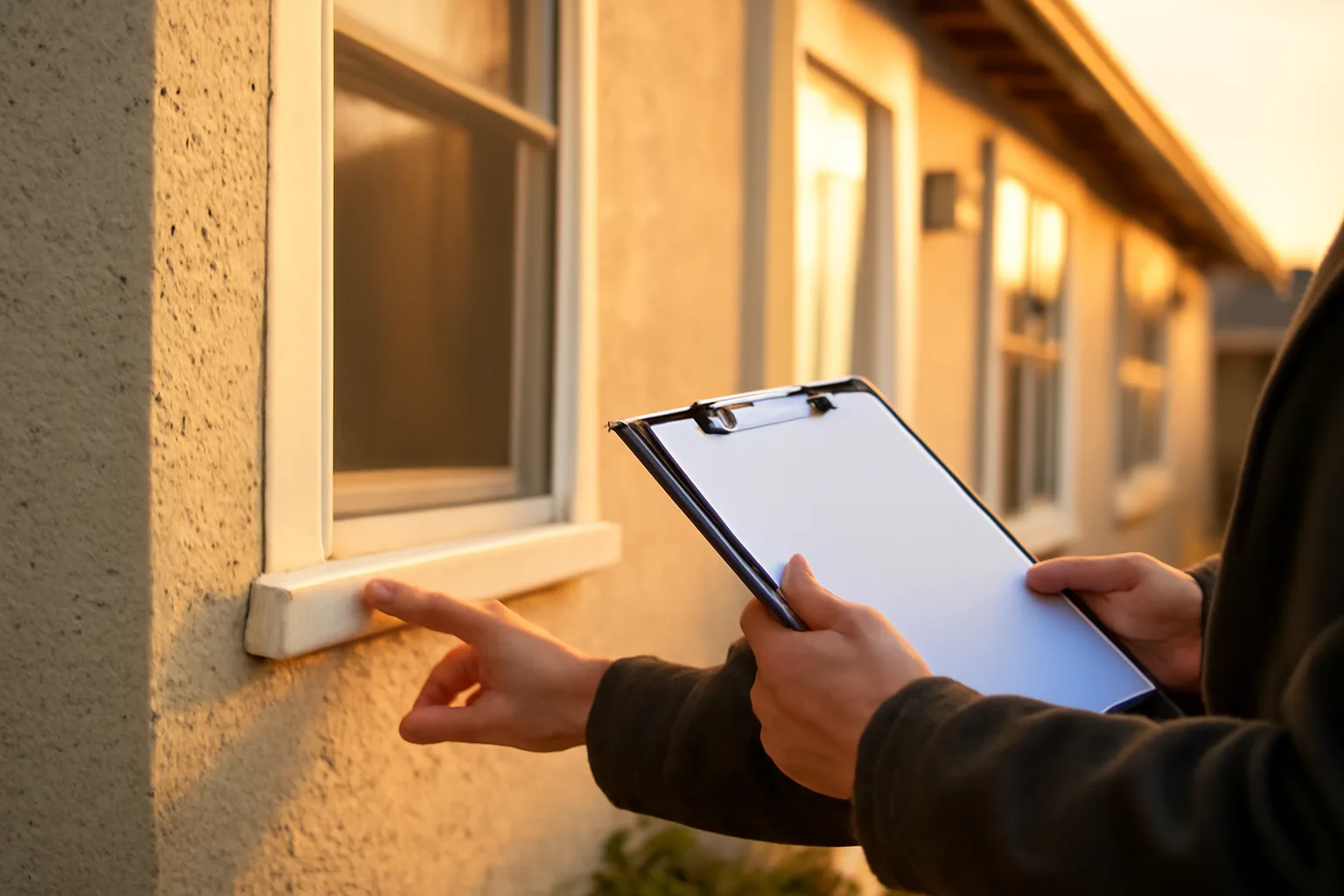
During a routine or move-in/move-out inspection, a landlord can generally look at the general condition and functioning systems of the unit: walls, floors, ceilings, windows, doors, plumbing fixtures, electrical outlets, smoke and carbon monoxide detectors, appliances that came with the unit, and evidence of pest issues or unauthorized alterations. The purpose is to document condition and check for lease violations or safety issues, not to search through personal belongings. A landlord generally cannot open drawers, closets, or containers just to look through a tenant's things, unless there's a specific, disclosed reason tied to the inspection (checking a closet for a leak source, for instance). Courts have generally treated tenant living space as protected from unreasonable landlord intrusion, even though the landlord owns the building; the tenant has a possessory interest and a reasonable expectation of privacy in the space they're renting. For a city rental licensing inspection, the inspector's checklist is usually narrower and code-focused: functioning smoke detectors, no exposed wiring, water heater with a properly installed temperature/pressure relief valve, working heat, no illegal room conversions, adequate egress from bedrooms, and no obvious code violations like missing handrails or blocked exits. This is a compliance check against the local housing or building code, not a general home inspection, and it's normally scheduled with advance notice rather than a surprise visit. What exactly gets checked and how much notice the inspector gives varies by city, so confirm the specific checklist with your city rental licensing office before the appointment. Landlords managing this kind of inspection cycle often find it useful to build a simple pre-inspection checklist ahead of time; our $79 City Rental License & Inspection Prep Packet is built around exactly that gap, a one-time reference to help you walk through the common inspection items before the city inspector does.
what a landlord cannot do in ohio
Ohio law spells out specific things a landlord cannot do, mostly under Ohio Revised Code § 5321.04 (landlord obligations) and § 5321.15 (prohibited landlord actions). Two rules stand out. Ohio Revised Code § 5321.15 makes it illegal for a landlord to lock out a tenant, remove the tenant's belongings, or shut off utilities like water, electricity, or gas as a way to force the tenant out, even if the tenant is behind on rent. The statute states a landlord "shall not cause, directly or indirectly, the interruption or termination of any utility service... except for a reasonable period of time when necessary for actual repairs or when necessary to protect against an emergency" and shall not seize the tenant's possessions or change the locks without a court order [8]. Self-help eviction is illegal; a landlord who wants to remove a tenant has to file for eviction through municipal or county court, called a forcible entry and detainer action in Ohio. Ohio landlords also cannot retaliate against a tenant for exercising a legal right, such as reporting a code violation to a health or building department, joining a tenants' union, or asserting a habitability complaint. Ohio Revised Code § 5321.02 addresses retaliatory conduct and limits a landlord's ability to raise rent, decrease services, or terminate the tenancy specifically because the tenant complained through legal channels . Beyond self-help eviction and retaliation, Ohio landlords are also bound by the general habitability duties in § 5321.04, which require keeping the premises in compliance with building and housing codes, keeping common areas safe, and maintaining electrical, plumbing, and heating systems in good working order . A landlord operating in Ohio, or in any state, should read the actual current text of the statute rather than rely on a summary, since these sections do get amended.
how rental licensing and inspection fit into all of this
Everything above is general landlord-tenant law, which applies whether or not your city has a rental licensing program. Rental licensing is a separate layer, imposed by the city or county, not the state, and it typically requires you to register the property, pay a fee, and sometimes pass a habitability or safety inspection before you can legally rent it out. Not every city has this. But a growing number do, particularly in older housing stock cities and places that have had problems with substandard rental conditions. If you got an ordinance notice, an inspection deadline letter, or a violation fine in the mail, that's your city's rental licensing office telling you that your property fell into (or fell out of compliance with) their program. The practical difference for a 1-to-10-unit landlord: state landlord-tenant law governs your relationship with the tenant (notice, deposits, habitability, eviction process), while city rental licensing governs your relationship with the city (registration, fees, inspection, license renewal). You need to track both, on separate calendars, because missing a license renewal deadline doesn't care whether your tenant relationship is going fine.
Frequently asked questions
How to become a landlord with just one rental unit?
The process is the same as for a larger portfolio, just smaller in scale: confirm zoning allows rental use, check if your city requires rental registration or licensing, get landlord insurance, use a state-compliant lease, screen tenants under Fair Housing Act rules, and schedule any required inspection before you list the unit. One unit still means one license application in most licensing cities.
What is landlording, exactly, versus property management?
Landlording usually means the owner personally handling leasing, maintenance, and compliance. Property management means hiring a licensed company or manager to do that work for a fee, typically 8% to 12% of monthly rent. Many small landlords start with landlording and switch to a property manager once they own more units than they can personally track.
What is a landlord's biggest legal risk?
Two areas cause the most legal trouble: fair housing violations during tenant screening (discrimination based on a protected class under the Fair Housing Act) and illegal self-help eviction, meaning locking a tenant out or shutting off utilities without a court order. Both carry real financial penalties and both are avoidable with a consistent, written process.
Who is responsible for a rental property walk-through inspection in California?
The landlord conducts the initial and pre-move-out inspections under California Civil Code § 1950.5(f), but the tenant has the right to be present and to receive an itemized list of proposed deductions beforehand. Separately, some California cities run their own code compliance inspections through a city inspector, which is a different process from the landlord's deposit walk-through.
What rights do tenants have without a written lease?
A tenant without a written lease is generally treated as a month-to-month or at-will tenant under state law, with the same habitability protections, the same requirement of proper written notice before eviction, and the same Fair Housing Act protections as a tenant with a written lease. What's less certain is the exact rent amount or term, which can be harder to prove without paperwork.
Why do landlords require renters insurance if they already have their own policy?
A landlord's own policy covers the building, not the tenant's belongings or the tenant's personal liability for accidents they cause. Renters insurance, averaging roughly $148 to $174 a year according to Insurance Information Institute data, shifts that liability and cost away from the landlord and the building owner's insurer.
How much notice does a landlord have to give before entering the unit?
Most states require 24 to 48 hours of notice for non-emergency entry; California's statute specifically treats 24 hours written notice as reasonable under Civil Code § 1954. A few states set no statutory minimum at all, so check your specific state's landlord-tenant act rather than assuming a national standard.
What can a landlord look at during a routine inspection?
A landlord can check general condition and safety items: plumbing, electrical, smoke detectors, appliances, signs of pest problems or unauthorized alterations, and lease compliance. A landlord generally cannot search through drawers, closets, or personal belongings without a specific, disclosed reason connected to the inspection.
What can't a landlord do in Ohio specifically?
Under Ohio Revised Code § 5321.15, a landlord cannot lock out a tenant, remove their belongings, or cut off utilities to force them out, even for nonpayment; eviction has to go through court. Ohio Revised Code § 5321.02 also bars retaliating against tenants who report code violations or exercise other legal rights.
Do I need a rental license even if my state landlord-tenant law doesn't mention one?
Possibly yes. Rental licensing is usually a city or county program, layered on top of state landlord-tenant law, not created by it. Your state statute won't mention a rental license because that's a local ordinance matter; check with your specific city or county's rental licensing office to find out if one applies to you.
What happens if I skip a required rental inspection?
Consequences vary by city but commonly include a fine, a hold on your rental license renewal, or an order to stop renting the unit until the inspection is completed. Fines for licensing or inspection violations often range from roughly a couple hundred dollars up into four figures per violation, depending on the city's ordinance.
Is a verbal lease legally enforceable?
In most states, yes, at least for month-to-month terms; contract law recognizes verbal agreements, but many states' statutes of frauds require leases longer than one year to be in writing to be enforceable. Even where a verbal lease is technically enforceable, it's much harder to prove specific terms in a dispute, which is why written leases are the standard recommendation.
Can a landlord require both a rental license and renters insurance?
Yes, these are unrelated requirements from different sources. The rental license comes from your city and applies to you as the property owner. Renters insurance is a lease condition you can choose to require of your tenant. A city licensing office generally has no rule against a landlord requiring renters insurance.
Sources
- U.S. Code, Residential Lead-Based Paint Hazard Reduction Act: Federal law requires lead paint disclosure for housing built before 1978
- HUD, Fair Housing Act overview: Protected classes under the Fair Housing Act include race, color, religion, sex, national origin, familial status, and disability
- California Legislature, Civil Code Section 1950.5: California landlords must offer an initial move-out inspection and itemized deduction estimate before the tenancy ends if requested
- Insurance Information Institute, Facts + Statistics: Renters insurance: Average annual cost of renters insurance in the U.S.
- California Legislature, Civil Code Section 1954: California treats 24 hours written notice as reasonable notice for landlord entry
- Ohio Legislature, Ohio Revised Code Section 5321.15: Ohio law bars landlords from shutting off utilities or seizing possessions to force a tenant out without a court order
- Ohio Legislature, Ohio Revised Code Section 5321.02: Ohio law prohibits landlords from retaliating against tenants who report code violations or exercise legal rights
- Ohio Legislature, Ohio Revised Code Section 5321.04: Ohio landlords must comply with building and housing codes and keep systems like plumbing and heating in good working order