Last updated 2026-07-26
TL;DR
Becoming a landlord means registering your rental (if your city requires it), screening tenants legally, carrying the right insurance, and knowing your state's notice and inspection rules. Even without a lease, tenants keep rights like habitability protections and eviction notice periods. Requirements vary heavily by city and state, so always confirm specifics with your local rental licensing office.
what is landlording, and what does a landlord actually do?
Landlording is the day-to-day work of owning and managing a rental property for income. It's more than collecting rent. It's screening applicants, maintaining the unit, handling repairs, following your city's licensing and inspection rules, managing the lease relationship, and knowing when (and how) you're allowed to enter a tenant's home. A landlord, in the plain legal sense, is the owner (or an owner's authorized agent) who rents real property to another person, called a tenant, in exchange for rent. Most state landlord-tenant statutes define the relationship this way, built on a lease or rental agreement that sets rent, term, and basic obligations. See, for example, California's Civil Code definitions of hiring and tenancy under Cal. Civ. Code § 1940 [1], which sets the scope of what's covered under the state's landlord-tenant law. Landlording sits somewhere between a business and a legal role. You're running a small operation (even with one unit), but you're also bound by consumer-protection-style rules: habitability standards, anti-discrimination law under the federal Fair Housing Act [2], security deposit limits, and in many cities, mandatory registration or licensing before you can legally rent at all. If your city requires a rental license, you'll want to check that early, since operating without one can mean fines that stack up fast. If you haven't looked into your specific city's registration or licensing rules yet, that's the first practical step, not the lease.
how do you become a landlord, step by step?
Becoming a landlord starts before you ever list a unit. Here's the realistic order of operations, based on what most state and city programs require. 1. Confirm you can legally rent the property. Check zoning, HOA rules if any, and whether your city requires a rental registration or license before you advertise a unit. Many mandatory-licensing cities require this step before the first tenant moves in, not after. 2. Get the property inspection-ready. Cities with rental licensing programs often require a habitability or life-safety inspection (smoke detectors, egress windows, working heat, no exposed wiring) before issuing or renewing a license. Budget time for this; a failed first inspection is common and just means a reinspection, usually for an additional fee. 3. Set up landlord insurance. A standard homeowners policy usually excludes rental use. You need a landlord (dwelling fire, DP-3 typically) policy that covers liability and lost rental income if the unit becomes uninhabitable after a covered loss. 4. Screen tenants consistently and legally. Use the same criteria for every applicant (income, credit, rental history, criminal background where legally permitted) and document your process. The Fair Housing Act bars discrimination based on race, color, national origin, religion, sex, familial status, or disability [2], and many states and cities add categories like source of income or sexual orientation. 5. Sign a written lease. Not legally required everywhere, but strongly recommended. It sets rent, term, deposit terms, and house rules in writing, which protects you if a dispute ever reaches a court or a housing agency. 6. Collect the deposit within legal limits and register it if your state requires that (several states require deposits over a certain amount to sit in an interest-bearing or escrow account). 7. Keep up with license renewals and reinspections. Most rental licensing programs are annual or biennial, not one-time. Miss a renewal deadline and you can lose the license and face fines even if the unit is in perfect shape. If you want a structured way to track city-specific licensing steps and inspection prep, that's exactly the gap RentalPermitPath's $79 City Rental License & Inspection Prep Packet is built to fill; it's a one-time reference packet, not a subscription, and it doesn't replace confirming current rules with your city.
who is responsible for the rental property walk-through inspection in california?
In California, the landlord is responsible for offering an initial move-out walk-through inspection before a tenant vacates, and the tenant decides whether to accept it. California Civil Code § 1950.5(f) requires that if a tenant's security deposit will be affected by proposed deductions, the landlord must notify the tenant of the right to request an initial inspection, conducted at a mutually agreed time, no earlier than two weeks before the end of the tenancy [3]. During that pre-move-out inspection, the landlord gives the tenant an itemized statement of anything that would be deducted from the deposit, so the tenant has a chance to fix it themselves before moving out. After the tenant actually vacates, the landlord does a final inspection and, within 21 calendar days, must return the deposit along with an itemized statement of any deductions, per the same section [3]. This is separate from a city's rental housing inspection (for licensing or code enforcement), which is usually done by a city inspector, not the landlord, and focuses on habitability and safety code compliance rather than deposit deductions. Landlords in California cities with proactive rental inspection programs (several Bay Area and Southern California cities run these) need to track both processes separately: the state-mandated deposit walk-through and any city-mandated licensing inspection.
what can a landlord check during a rental inspection?
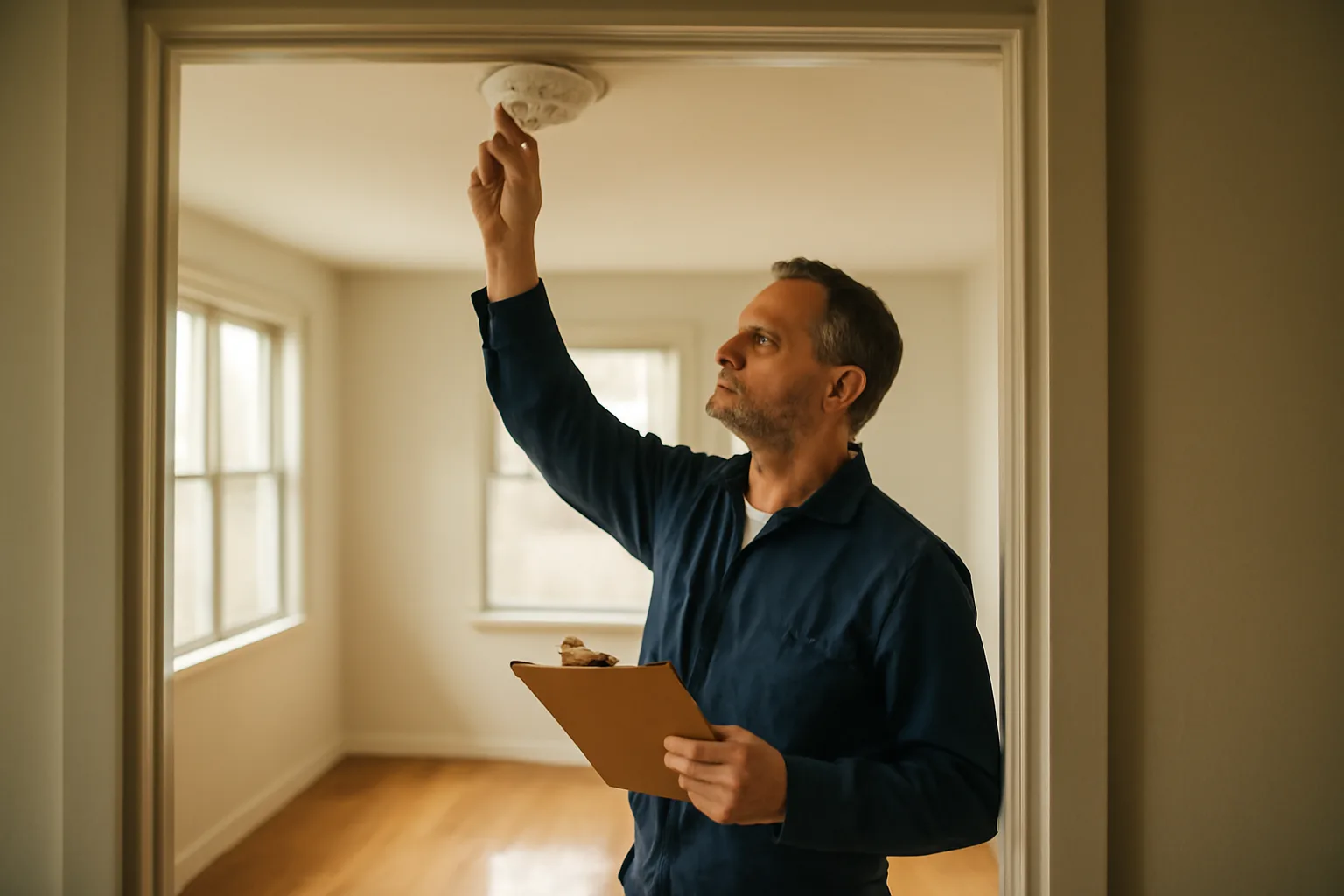
A landlord (or a city inspector, under a licensing program) can generally check for safety, habitability, and lease compliance issues, but the specifics depend on whether it's a routine maintenance check, a move-out walk-through, or a government licensing inspection. For a routine or licensing inspection, common checklist items include: - Working smoke and carbon monoxide detectors
- Functioning heat, plumbing, and electrical systems
- No pest infestation
- Secure locks on doors and windows, proper egress from bedrooms
- General cleanliness and no property damage beyond normal wear
- Unauthorized occupants or pets, if the lease restricts them
- Signs of illegal activity or lease violations What a landlord generally cannot do: search through personal belongings, closets, or drawers beyond what's needed to verify the physical condition of the unit; inspect without proper notice (see the notice section below); or use an inspection as pretext to harass a tenant or retaliate for a complaint. Most states also require inspections happen at reasonable times, and a tenant can request rescheduling within reason. For city licensing inspections specifically, inspectors typically check life-safety items tied to the local building and housing code, things like smoke detector placement, egress window size, handrail stability, and working utilities. They usually are not evaluating cosmetic condition or personal property at all. Confirm your specific city's inspection checklist with your rental licensing office, since these vary by jurisdiction and by whether the program is complaint-based or proactive.
how much notice does a landlord have to give before entering or inspecting a unit?
| California | 24 hours (presumed reasonable) | Cal. Civ. Code § 1954 [4] | |
|---|---|---|---|
| Texas | No statewide statutory minimum; lease terms control | Tex. Prop. Code Ch. 92 [5] | |
| Florida | 12 hours | Fla. Stat. § 83.53 [6] | |
| Washington | 1 day (2 days for move-out inspection purposes in some cases) | Wash. Rev. Code § 59.18.150 [7] | A few states, like Texas, don't set a statewide minimum notice period in the residential landlord-tenant chapter, so the lease itself usually governs; that's part of why a clear written lease matters so much. If your state or city has stricter rules than the ones above, those control. When in doubt, give more notice than the legal minimum. It costs you nothing and it avoids disputes. |
Notice requirements vary by state, but most states set a minimum notice period somewhere between 24 and 48 hours for non-emergency entry, including routine inspections. California requires "reasonable notice," which the law presumes to be 24 hours in the absence of contrary evidence, under Cal. Civ. Code § 1954 [4]. Emergencies (fire, flooding, a burst pipe) are the standard exception that allows entry without advance notice in nearly every state. Here's a rough comparison of common notice periods (confirm current statute language for your state, since these get amended): | State | Standard notice for entry | Statute |
what rights do tenants have without a signed lease?
Tenants without a signed lease still have legal protections, they're just governed by state landlord-tenant statutes and, often, the terms of a month-to-month tenancy rather than a fixed lease document. No lease does not mean no rights. At minimum, a tenant without a written lease generally keeps: - The right to a habitable dwelling (working plumbing, heat, structural safety), under the implied warranty of habitability recognized in most states
- The right to proper notice before eviction, even for a month-to-month or oral tenancy; many states require 30 days' notice to terminate a month-to-month tenancy absent lease terms saying otherwise
- Protection from illegal lockouts and "self-help" evictions (a landlord changing locks or shutting off utilities to force a tenant out), which is illegal in most states regardless of lease status
- The right to the return of any security deposit paid, under the same deposit statutes that apply to written leases
- Fair housing protections under federal law [2], which apply regardless of lease format An oral or month-to-month arrangement is still a legal tenancy in every state; it's just harder to prove specific terms (rent amount, pet policy, who pays utilities) without something in writing. That's exactly why a written lease protects both sides, even a short, simple one. For more on tenant protections broadly, see tenants rights and renters rights.
why do landlords require renters insurance?
Landlords require renters insurance mainly to cover the tenant's personal property and liability, which the landlord's own property insurance does not cover. A landlord's policy protects the building and the landlord's liability as owner; it does nothing for the tenant's furniture, electronics, or clothes if there's a fire, burst pipe, or theft. Requiring renters insurance also shifts liability risk. If a tenant accidentally causes damage (an overflowing bathtub that damages a downstairs unit, a kitchen fire) or a guest is injured in the unit, the tenant's liability coverage (typically $100,000 or more in a standard policy) can cover the claim instead of it landing entirely on the landlord's policy or out of pocket. Most renters insurance policies cost relatively little, often in the range of $15 to $30 per month depending on coverage limits and location, according to industry pricing reported by the National Association of Insurance Commissioners' consumer guidance on renters insurance [8]. That's cheap enough that requiring it as a lease condition is a low-friction way to reduce a landlord's exposure. It's legal to require in the large majority of states as a lease condition, similar to requiring a security deposit, as long as it's applied consistently across tenants and disclosed in the lease.
what a landlord cannot do in ohio
Ohio landlord-tenant law, codified mainly in Ohio Revised Code Chapter 5321 [9], spells out specific things a landlord cannot do, on top of general habitability and fair housing obligations. A landlord in Ohio cannot: - Retaliate against a tenant for complaining to a government agency about code violations, joining a tenant union, or asserting legal rights, under ORC § 5321.02 [10]
- Shut off utilities, change locks, or remove a tenant's belongings to force them out without going through the court eviction process (illegal "self-help" eviction)
- Enter the unit without reasonable notice, except in an emergency; Ohio law generally expects landlords to give reasonable notice and enter at reasonable times under the same chapter's tenant-right provisions
- Discriminate based on race, color, religion, sex, national origin, ancestry, disability, or familial status, mirroring federal fair housing protections [2] and Ohio's own civil rights statute
- Keep a security deposit without an itemized, written list of deductions when withholding more than $50 or one month's rent, whichever is greater, under ORC § 5321.16 - Fail to maintain the property in compliance with building and housing codes; ORC § 5321.04 sets out the landlord's specific maintenance obligations, including keeping the unit in a safe and habitable condition [9] Ohio tenants who believe a landlord has violated these rules can raise it as a defense in an eviction case or pursue damages separately; some violations, like illegal lockouts, can expose a landlord to statutory damages beyond just returning access. If you're a landlord in Ohio dealing with a violation notice from a city or a tenant dispute, it's worth reading ORC 5321 directly rather than relying on general landlord-tenant advice aimed at other states, since specifics do differ.
how do rental licensing and inspection rules fit into all of this?
None of the tenant-rights and notice rules above replace your city's separate rental licensing or registration requirements, which are a distinct layer on top of state landlord-tenant law. A growing number of cities, easily several hundred across the U.S. at this point, require landlords to register or license every rental unit, often paired with a periodic inspection for basic safety compliance. These programs vary enormously. Some cities charge a flat annual fee per unit (commonly somewhere between $50 and $300, though this varies a lot by city and unit count); others scale fees by number of units or building type. Some require inspection before every tenant turnover; others inspect every one to three years regardless of turnover. Missing a licensing deadline in these cities isn't just an administrative slip. It commonly triggers fines, and in some cities, an unlicensed landlord can be blocked from collecting rent or pursuing an eviction until the license issue is fixed. Because there's no federal or even consistent state standard for this (it's set city by city), the only reliable source of truth is your own city's rental licensing office or housing department page. If your city sent you an ordinance notice, a fine notice, or an inspection deadline, that notice itself usually names the office and program you need to check first. For landlords managing this across one or several cities, RentalPermitPath's $79 City Rental License & Inspection Prep Packet is built specifically to help you organize the licensing and inspection prep steps city by city; it's a reference tool, not a substitute for your city's official requirements, and it makes no promise about your inspection outcome.
what's the difference between being a landlord and 'landlording' as an ongoing practice?
"Landlord" is a legal and ownership status. "Landlording" is the ongoing practice, the actual work of running rentals well over years, more than the one-time act of signing a lease. Good landlording in practice looks like: consistent, documented tenant screening; a written lease every time; insurance that actually covers rental use; a maintenance response system so repair requests don't sit for weeks; staying current on your city's licensing renewal calendar; and knowing your state's notice, deposit, and eviction rules well enough to follow them without guessing. Bad landlording, the kind that generates fines and lawsuits, usually comes from skipping the boring administrative parts: no license because "the city never checked," no written lease because "we trust each other," no renters insurance requirement because "it never came up." Cities with proactive inspection programs exist largely because informal landlording, done at scale across a city, produces enough safety and habitability problems that local governments decided to require registration and inspection instead of relying on complaints alone. For more on tenant-side rights that shape what "good" landlording has to account for, see tenant rights and landlord landlords for broader landlord role context.
Frequently asked questions
How do I become a landlord with just one rental property?
Confirm zoning and any city rental license or registration requirement first, get landlord insurance (not a standard homeowners policy), screen tenants consistently, use a written lease, and collect the deposit within your state's legal limits. One-unit landlords face the same licensing and habitability rules as larger owners in most cities; size rarely exempts you.
Who is responsible for the rental property walk-through inspection in California?
The landlord must offer the tenant an initial move-out inspection before the tenancy ends, per Cal. Civ. Code § 1950.5(f), and provide an itemized list of proposed deductions. The tenant chooses whether to accept the walk-through. Separately, city-run licensing inspections (where they exist) are conducted by a city inspector, not the landlord.
What is landlording?
Landlording is the ongoing practice of owning and managing rental property: screening tenants, maintaining the unit, following notice and inspection rules, keeping licenses current, and handling the lease relationship day to day. It's distinct from simply holding legal title as a landlord.
What is a landlord?
A landlord is the owner (or authorized agent) who rents real property to a tenant under a lease or rental agreement in exchange for rent, as defined under most state landlord-tenant statutes, such as Cal. Civ. Code § 1940.
What rights do tenants have without a lease?
Tenants without a written lease still get habitability protections, notice before eviction (commonly 30 days for month-to-month tenancies), protection from illegal lockouts, deposit return rights, and fair housing protections under federal law. An oral or month-to-month tenancy is still a legal tenancy in every state.
How do I be a good landlord in practice, more than legally?
Respond to maintenance requests quickly, give more notice than the legal minimum before entering, document everything in writing, treat every applicant with the same screening criteria, and stay ahead of your city's license renewal and inspection deadlines rather than reacting to fine notices.
Why do landlords require renters insurance?
Renters insurance covers the tenant's belongings and personal liability, which a landlord's own policy does not cover. Requiring it shifts liability risk for tenant-caused damage or injury away from the landlord's policy, and it typically costs the tenant only about $15 to $30 a month.
How much notice does a landlord have to give before entering a unit?
It depends on the state. California presumes 24 hours is reasonable notice under Cal. Civ. Code § 1954; Florida requires 12 hours under Fla. Stat. § 83.53. Some states, like Texas, don't set a statewide minimum, leaving it to the lease. Emergencies are generally exempt from notice requirements everywhere.
What can a landlord look at during an inspection?
A landlord or city inspector can generally check smoke detectors, heating and plumbing systems, pest issues, window and door locks, egress routes, and general lease compliance. They generally cannot search personal belongings or use the inspection as pretext for harassment or retaliation.
What a landlord cannot do in Ohio?
Under Ohio Revised Code Chapter 5321, a landlord cannot retaliate against a tenant for complaints, perform an illegal self-help eviction (lockouts, utility shutoffs), enter without reasonable notice, discriminate based on protected classes, or withhold a security deposit without an itemized deduction list when withholding more than $50 or one month's rent.
Do I need a rental license even if I only rent out one unit?
In most cities with mandatory rental licensing programs, yes. Licensing requirements are usually per-unit or per-property, not based on how many units a landlord owns overall. Confirm directly with your city's rental licensing or housing office, since single-unit exemptions are uncommon but do exist in a few places.
What happens if I miss my city's rental inspection deadline?
Consequences vary by city but commonly include late fees, a formal violation notice, and in some jurisdictions a hold on rent collection or eviction filings until the property is licensed and inspected. Check your city's specific ordinance and rental licensing office for the exact penalty structure, since these differ widely.
Sources
- California Legislative Information, Civil Code § 1940: Defines the hiring and tenancy relationship that scopes California landlord-tenant law
- HUD, Fair Housing Act overview: Fair Housing Act prohibits discrimination based on race, color, national origin, religion, sex, familial status, and disability
- California Legislative Information, Civil Code § 1950.5: Landlord must offer an initial move-out inspection and return deposits with itemized deductions within 21 days
- California Legislative Information, Civil Code § 1954: 24 hours is presumed reasonable notice for landlord entry in California
- Texas Statutes, Property Code Chapter 92: Texas residential landlord-tenant chapter does not set a statewide statutory minimum entry notice period
- Online Sunshine, Florida Statutes § 83.53: Florida requires landlords to give tenants at least 12 hours notice before entering the dwelling in most cases
- Washington Revised Code § 59.18.150: Washington sets landlord entry notice requirements including a one day minimum in most circumstances
- Ohio Revised Code § 5321.04: Sets Ohio landlord obligations to maintain rental property in a safe and habitable condition
- Ohio Revised Code § 5321.02: Prohibits landlord retaliation against tenants who assert legal rights or file code complaints
- Ohio Revised Code § 5321.16: Requires landlords to provide an itemized list of deductions when withholding more than $50 or one month's rent from a security deposit