Last updated 2026-07-26
TL;DR
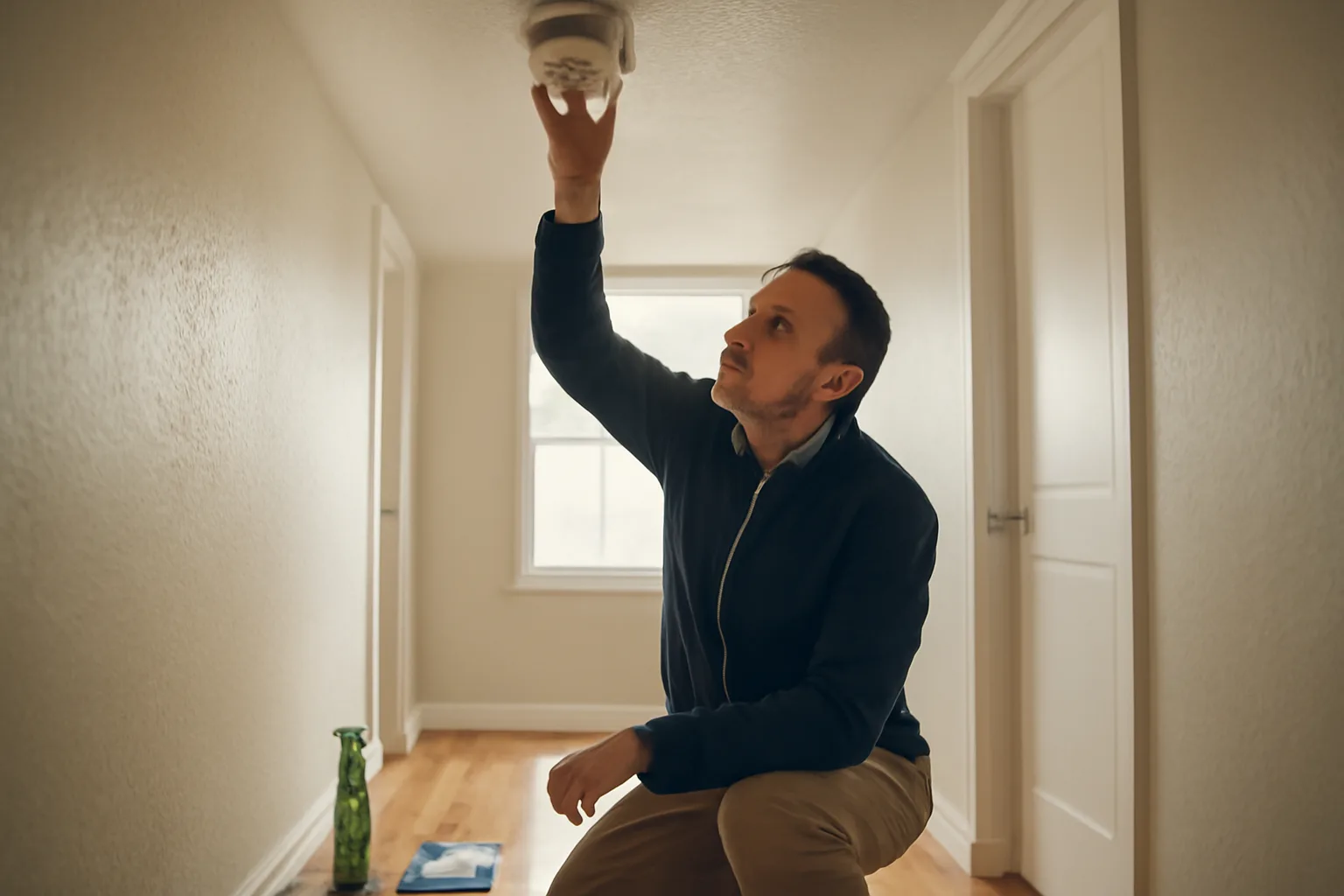
Before a rental inspection, clean and test every smoke and CO detector, clear all exits and window escape paths, fix leaks, replace burnt-out bulbs, and remove clutter blocking utility access. Inspectors mostly check life-safety items (smoke detectors, egress, electrical, heat) not dust. A clean unit with working safety equipment passes far more often than a spotless one with a dead smoke detector.
What should I clean before a rental inspection?
Focus on safety systems first, cosmetics second. Most city rental inspectors are checking for code violations, not judging your housekeeping, so a slightly dusty unit with working smoke detectors passes far more often than a spotless one with a disconnected detector or a blocked exit. Start with detectors. Test every smoke alarm and carbon monoxide alarm, replace batteries, and wipe off dust that can trigger false readings or block the sensor. Many cities require a working smoke detector in every bedroom and on every level, and a working CO detector near sleeping areas if there's any fuel-burning appliance or attached garage. This single item causes more failed inspections than almost anything else. Next, clear every exit path. Bedroom windows used for emergency egress need to open fully, and nothing should be stacked in front of exterior doors or hallways. Inspectors in most jurisdictions cite blocked egress as an immediate fail, sometimes a re-inspection is required before the unit can be occupied at all. After that: replace burnt-out bulbs (inspectors often check that every fixture works), wipe down the stove and check that all burners ignite, run water in every sink and tub to check for leaks and slow drains, and clear clutter away from the electrical panel, water heater, and furnace so the inspector can actually reach and see them. A locked utility closet or a panel buried behind boxes is a common reason inspections get delayed, not failed outright, but it wastes everyone's time and sometimes costs a re-inspection fee. Cleaning for appearance (wiping counters, vacuuming, taking out trash) helps if the inspector is also checking for pest evidence or general habitability, which some cities do include in their checklist. But it will not save you if the water heater has no pressure relief valve or the porch railing is loose.
What can a landlord (or inspector) actually look at during an inspection?
A city rental inspector generally checks life-safety systems, structural condition, and basic sanitation, not your tenant's personal belongings. Typical municipal checklists cover smoke and CO detectors, electrical panels and outlets, plumbing and water heater condition, heating system function, window and door locks, egress routes, handrails and stairs, and evidence of pests or water damage. Most inspection ordinances are explicit that the inspector is there to verify code compliance, not to do a general search. Minneapolis, for example, enforces its rental licensing inspections under the city's housing maintenance code, which sets minimum standards for things like smoke alarms, egress, and structural upkeep in licensed rental units, detailed in Minneapolis Code of Ordinances Chapter 244 [1]. Cities that require a Certificate of Occupancy or rental license renewal (Philadelphia, Baltimore, Minneapolis, and many others) publish a checklist in advance, and you should request it directly from your city's rental licensing office rather than guess. What inspectors are not supposed to do varies more by state and by whether a tenant is present. In general, an inspector or landlord conducting a routine inspection needs a legitimate purpose (safety, maintenance, code compliance) and proper notice; they are not there to search for tenant belongings, drug items, or personal property unrelated to habitability, and doing so can raise separate legal issues around tenant privacy and unreasonable search.
How much notice does a landlord have to give before an inspection?
Notice requirements are set by state law and vary widely, typically 24 to 48 hours for a routine inspection, though some states allow less for emergencies and require more for certain entry types. California's Civil Code Section 1954 requires landlords to give 'reasonable notice,' which the statute defines as 24 hours presumed reasonable, in writing, and only for specific purposes like repairs, showing the unit, or entry agreed to at move-in [2]. Many other states use similar language ('reasonable notice,' often defaulting to 24 or 48 hours) but the exact number, the required format (written vs. verbal), and the list of allowed reasons for entry differ by state and sometimes by city ordinance on top of state law. A city rental inspection is often treated differently from a landlord's own maintenance visit: some cities require the landlord to notify the tenant separately from the city's own notice to the landlord about a scheduled inspection date. Because these rules stack (state entry law, plus your local rental inspection ordinance, plus your own lease terms), the safest move is to confirm the required notice period and format with your city's rental licensing office and check your state's landlord-tenant statute before scheduling the walkthrough.
Who is responsible for a rental property walk-through inspection in California?
In California, both the landlord and tenant have documented rights and responsibilities around a walk-through, though the terms differ depending on whether it's a move-in/move-out inspection or a city compliance inspection. California Civil Code Section 1950.5 gives tenants the right to request an initial move-out inspection before vacating, at which the landlord must give the tenant an itemized list of anything that needs correcting to avoid a deduction from the security deposit [3]. The landlord must give at least 48 hours' written notice for that initial inspection and must be present or send a representative. For routine entry during a tenancy (not move-out related), Civil Code Section 1954 governs notice and permissible reasons, again defaulting to 24 hours [2]. For a city-mandated rental inspection (the kind tied to a rental license or Certificate of Occupancy), the responsibility usually falls jointly on the landlord to schedule access and the city inspector to conduct the actual code review; some California cities such as Los Angeles run their own Systematic Code Enforcement Program inspections on a set cycle rather than leaving it purely to the landlord's discretion. If you own in California, check your specific city's rental housing inspection program rather than assume state law alone covers it, since municipal ordinances often add separate notice and access rules on top of the Civil Code.
What is landlording, and what does it actually involve day to day?
Landlording is the ongoing work of owning and managing a rental property: collecting rent, maintaining the unit, handling repairs, screening tenants, staying compliant with local licensing and safety codes, and managing the legal relationship defined by your lease and state law. It is a mix of property management and legal compliance, more than collecting a check. Day to day it means things like: responding to maintenance requests within a reasonable time (some cities set specific deadlines for habitability repairs), keeping smoke detectors and heating systems in working order, renewing your rental license or registration on schedule, budgeting for periodic inspections, and understanding your state's notice and entry rules well enough that you're not accidentally violating them. It also means paperwork most new landlords underestimate: security deposit handling rules (many states cap the deposit amount and set a strict timeline, often 14 to 30 days, for returning it or providing an itemized deduction list), habitability standards under your state's implied warranty of habitability, and increasingly, local rental registration or licensing requirements that layer city-specific rules and fees on top of state law.
What is a landlord? (the basic legal definition)
A landlord is the owner (or their authorized agent) of a residential or commercial property who leases that property to a tenant in exchange for rent, under a lease or rental agreement that creates specific legal obligations on both sides. The relationship is governed by a mix of contract law (your lease) and state landlord-tenant statutes that set minimum standards neither party can waive away. Being a landlord comes with implied duties even if your lease doesn't spell them out: the implied warranty of habitability (recognized in nearly all states) requires the rental to be fit for human habitation, meaning functioning plumbing, heat, electrical, and structural safety. States differ on how that warranty is enforced and what remedies a tenant has (rent withholding, repair-and-deduct, or lease termination), so a landlord's actual legal exposure depends heavily on which state and city the property sits in.
How do you become a landlord? (the practical steps)
Becoming a landlord means more than buying a property and finding a tenant. If your city requires rental registration or licensing (many do, especially for multi-family or non-owner-occupied units), you generally need to: register the property with the city or county, pass an initial inspection, obtain a rental license or Certificate of Occupancy, and then renew that license on a recurring cycle (commonly annual or biennial, though this varies a lot by city). Practically, the steps most new landlords follow are: confirm the unit is legal to rent (zoning, occupancy limits, and any required permits), get proper landlord insurance (a landlord/rental dwelling policy, different from a standard homeowners policy), understand your state's security deposit and notice rules, screen tenants consistently and legally (fair housing law applies regardless of portfolio size), draft or use a compliant lease, and set up a system for rent collection and maintenance requests. Then there's the licensing side, which is where most first-time landlords get caught off guard. A city might require: a rental business license, a periodic safety inspection, lead paint disclosure or certification if the property was built before 1978 (a federal requirement enforced by HUD and the EPA under 40 CFR Part 745) [4], and sometimes a separate registration fee per unit. Confirm the exact license type, fee, and inspection cycle with your city's rental licensing office, since these details are set locally and change often.
Why do landlords require renters insurance?
Landlords require renters insurance mainly to shift liability and personal property risk away from the landlord's own policy. A landlord's dwelling insurance covers the building structure, but it typically does not cover a tenant's personal belongings (furniture, electronics, clothing) if there's a fire, burst pipe, or theft, and it may not cover liability if a tenant's guest is injured inside the unit due to the tenant's own negligence. Requiring renters insurance (often with a minimum liability coverage amount, commonly $100,000, and sometimes naming the landlord as an 'additional interest' on the policy) reduces the odds that a tenant will look to the landlord's insurance or the landlord directly to cover a loss that wasn't the landlord's fault. It also tends to reduce disputes after fires, water damage events, or break-ins, since the tenant has their own claim path instead of pressuring the landlord for compensation. Whether a landlord can legally require it depends on state law and local ordinance; most states allow landlords to require renters insurance as a lease condition, but a few cities or states have specific rules about how that requirement must be disclosed or enforced. If you add it, put the requirement and minimum coverage amount clearly in the lease itself rather than as a separate verbal expectation.
What rights do tenants have without a lease?
A tenant without a written lease (a month-to-month or oral tenancy) still has nearly all the same core protections as a tenant with a signed lease: the right to habitable housing, protection from illegal lockouts or utility shutoffs, the right to proper notice before entry, and the right to proper notice before eviction. What changes without a written lease is mainly the term length and the notice period for ending the tenancy. Most states treat an oral or undocumented month-to-month tenancy as still legally binding once rent has been accepted, meaning the landlord generally must give the same statutory notice to terminate (commonly 30 days, sometimes tied to how long the tenant has lived there) as they would with a written month-to-month lease. The tenant also still benefits from the state's implied warranty of habitability and any local just-cause eviction protections that apply regardless of lease format. Where tenants without a lease are more exposed: there's no written record of agreed-upon terms like who pays for utilities, pet policies, or specific maintenance responsibilities, which makes disputes harder to resolve and can leave both parties guessing about what was actually promised. If you're a landlord operating without written leases, that's a bigger practical risk to you than to the tenant, since you lose the paper trail in any dispute.
What can't a landlord do in Ohio?
Ohio law (Ohio Revised Code Chapter 5321, the Ohio Landlords and Tenants Act) restricts several common landlord actions. A landlord in Ohio cannot shut off utilities, change locks, or remove a tenant's belongings to force them out without going through the formal eviction process; this is sometimes called a 'self-help eviction' and it's illegal in Ohio as in most states [5]. Ohio Revised Code 5321.04 requires the landlord to maintain the unit in a fit and habitable condition, keep common areas safe, maintain electrical, plumbing, and heating systems in good working order, and comply with applicable building and housing codes [5]. A landlord who fails to do this can face a tenant remedy under 5321.07, which allows the tenant, after giving written notice, to deposit rent with a court (rent escrow) rather than pay the landlord directly until repairs are made. Ohio landlords also cannot enter the unit without reasonable notice for a non-emergency purpose; ORC 5321.04 requires 'reasonable notice,' generally interpreted as 24 hours, and entry can only be for a legitimate purpose like inspection, repairs, or showing the unit to prospective tenants or buyers [5]. Retaliation is also restricted: ORC 5321.02 prohibits a landlord from raising rent, decreasing services, or threatening eviction because a tenant complained to a government agency or joined a tenant organization [5].
Room-by-room cleaning checklist before the inspector arrives
| Every bedroom | Test smoke detector, confirm window opens fully for egress | Missing/dead detector is the #1 cited violation in most cities | |
|---|---|---|---|
| Kitchen | Test all stove burners and oven, check under-sink for leaks, clear panel access | Gas leaks and non-working burners are common fail points | |
| Bathroom | Run water in tub/sink, check for slow drains, test exhaust fan or window ventilation | Standing water or mold signals a plumbing or ventilation violation | |
| Hallways/exits | Clear all pathways, confirm exterior doors lock and open easily | Blocked egress is often an automatic fail | |
| Utility/basement | Clear access to water heater, furnace, electrical panel; check for exposed wiring | Inspector needs physical access to verify these systems | |
| Exterior | Clear house numbers, secure railings, check for peeling paint (pre-1978 units) | Lead paint rules apply to pre-1978 housing under EPA/HUD rule [4] | A quick note on timing: schedule your own walk-through the week before, not the day before. That gives you time to actually fix anything you find (a dead detector battery is a five-minute fix; a leaking water heater is not) instead of discovering it with the inspector standing next to you. |
Here's a practical breakdown by room. This isn't a substitute for your city's official checklist (always get that from your rental licensing office), but it covers what most inspections actually check. | Area | What to check/clean | Why it matters |
What happens if you fail the rental inspection?
Most cities don't shut down your rental on the spot for a failed inspection; they issue a notice of violation with a correction deadline, typically somewhere between 10 and 30 days depending on the severity and your city's ordinance. Life-safety issues (no working smoke detector, blocked egress, exposed electrical) tend to get shorter deadlines than cosmetic or minor code items. If you don't correct the violation by the deadline, cities generally escalate through a re-inspection fee, then a fine, and in repeat or serious cases, license suspension or revocation, which can mean you're not legally allowed to rent the unit until it's resolved. Fine amounts and re-inspection fees are set locally and vary enormously, from small flat fees to significant per-day penalties for continued non-compliance, so check your specific city's fee schedule for what a violation actually costs where you own. If you're prepping for a first inspection or a renewal and want a structured way to organize your city's specific requirements, licenses, and deadlines before the inspector shows up, that's exactly the gap our $79 City Rental License & Inspection Prep Packet is built to close. It won't guarantee a pass (no product honestly can, since every city's checklist differs) but it gives you an organized way to track what your specific city requires instead of guessing from a generic list.
How to think about inspections as an ongoing part of landlording, not a one-time event
If you own in a city with mandatory rental licensing, the inspection isn't a one-time hurdle, it's a recurring cost of doing business, usually tied to your license renewal cycle (commonly annual or every two to three years, though this varies widely by city). Building a habit of quarterly self-checks (detectors, leaks, bulbs, egress) means the official inspection becomes a formality instead of a scramble. The landlords who get the fewest violations tend to treat the inspection prep list as a maintenance routine, not an event: they replace detector batteries on a schedule (many fire departments recommend twice a year, often tied to daylight saving time changes), keep a simple log of what was checked and when, and budget for the license renewal fee and any re-inspection costs as a predictable annual line item rather than a surprise. If you manage more than one unit or property, that habit matters even more, since a violation at one address can sometimes affect your standing on rental licenses at other addresses in the same city, depending on how that city's ordinance is written.
Frequently asked questions
What should I clean first before a rental inspection?
Start with smoke and carbon monoxide detectors: test them, replace batteries, and wipe off dust. This is the single most commonly cited violation. Then clear egress paths (windows, exterior doors, hallways) and check that all light fixtures work. Cosmetic cleaning matters far less than these safety items for passing a code-based inspection.
Do I need to deep clean the unit for a city rental inspection?
Usually not, unless your city's checklist specifically covers sanitation or pest evidence. Most rental inspection ordinances focus on life-safety and structural code items (detectors, electrical, plumbing, egress), not dust or clutter. Confirm what's actually on your city's checklist rather than assuming a spotless unit is required.
How much notice does a landlord have to give before an inspection?
It depends on your state. California's Civil Code Section 1954 treats 24 hours' written notice as reasonable for routine entry [2]. Ohio requires 'reasonable notice,' generally interpreted as 24 hours, under ORC 5321.04 [5]. City-mandated inspections may add separate notice rules on top of state law, so check both.
Who is responsible for a rental property walk-through inspection in California?
For move-out inspections, California Civil Code Section 1950.5 gives tenants the right to an initial inspection with 48 hours' notice, and the landlord must provide an itemized repair list [3]. For city-mandated compliance inspections, responsibility is split between the landlord (scheduling access) and the city inspector, and rules vary by municipality.
What can a landlord or inspector look at during an inspection?
Typically: smoke and CO detectors, electrical panels, plumbing and water heater condition, heating systems, window and door locks, egress routes, stairs and railings, and visible pest or water damage. Inspectors generally cannot search personal belongings unrelated to habitability or code compliance.
What is landlording?
Landlording is the ongoing management of a rental property: collecting rent, maintaining the unit, screening tenants, staying compliant with licensing and safety codes, and managing the legal landlord-tenant relationship. It includes both the operational side (repairs, rent collection) and the compliance side (inspections, registrations, habitability law).
What is a landlord?
A landlord is the property owner (or authorized agent) who leases residential or commercial space to a tenant for rent under a lease or rental agreement. Landlords have implied legal duties, most notably the warranty of habitability, that exist even if the lease doesn't spell them out.
How do I become a landlord?
Confirm the property is legal to rent, get landlord insurance, understand your state's security deposit and notice laws, screen tenants under fair housing rules, and use a compliant lease. If your city requires rental licensing, you'll also need to register, pass an initial inspection, and renew on a set cycle.
Why do landlords require renters insurance?
Renters insurance covers the tenant's personal belongings and liability, which a landlord's dwelling policy usually doesn't cover. Requiring it (often with a minimum liability amount) shifts risk away from the landlord and reduces disputes after fires, water damage, or injuries inside the unit.
What rights do tenants have without a lease?
A tenant on a month-to-month or oral tenancy still has habitability protections, protection from illegal lockouts, and the right to proper notice before entry or eviction. The main difference from a written lease is the notice period for ending the tenancy, commonly 30 days in most states.
What can't a landlord do in Ohio?
Under Ohio Revised Code Chapter 5321, a landlord cannot shut off utilities, change locks, or remove belongings to force out a tenant without a court eviction. Landlords must maintain habitable conditions (ORC 5321.04), give reasonable entry notice, and cannot retaliate against tenants who file complaints (ORC 5321.02) [5].
What happens if my rental fails the city inspection?
Most cities issue a notice of violation with a correction deadline (often 10 to 30 days depending on severity) rather than an immediate shutdown. Missing that deadline can lead to re-inspection fees, fines, or license suspension. Deadlines and fees are set locally, so check your city's specific schedule.
How often do rental inspections happen?
It varies a lot by city; common cycles are annual, biennial (every two years), or triennial, often tied to your rental license renewal. Some cities also do complaint-based inspections outside the regular cycle. Confirm the exact cycle and renewal deadline with your city's rental licensing office.
Can a tenant refuse to let the inspector in?
Generally no, if proper notice was given and the entry is for a legitimate purpose like a code-required inspection, though the exact rule depends on your state's entry statute and lease terms. Landlords should still follow the required notice period exactly, since improper notice can complicate enforcement if a tenant does refuse.
Sources
- Minneapolis Code of Ordinances, Chapter 244 (Housing Maintenance Code): Minneapolis rental license inspections cover smoke alarms and housing maintenance code items
- California Civil Code Section 1954: California landlords must give reasonable notice, presumed 24 hours, for entry
- California Civil Code Section 1950.5: California tenants can request an initial move-out inspection with 48 hours notice and an itemized repair list
- EPA/HUD, 40 CFR Part 745 (Lead Disclosure Rule): Federal lead paint disclosure rules apply to housing built before 1978
- Ohio Revised Code Chapter 5321: Ohio landlord obligations, entry notice, retaliation protections, and rent escrow remedy for tenants
- Ohio Revised Code Section 5321.04: Ohio landlords must maintain habitable conditions and give reasonable notice before entry