Last updated 2026-07-26
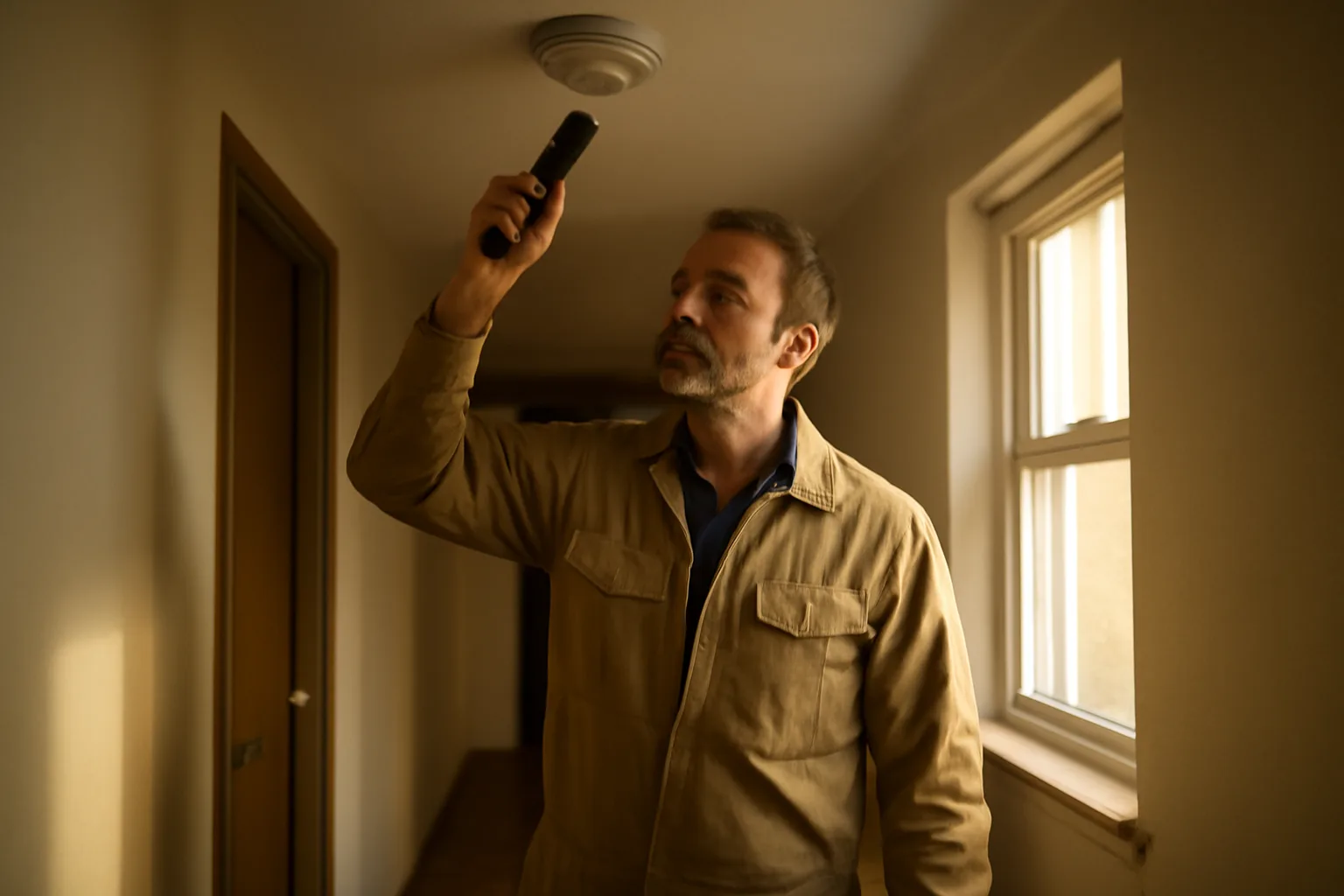
TL;DR
Ask the inspector what code sections they're checking, what fails automatically, how much time you get to fix violations, and whether a reinspection fee applies. Ask your tenant for access windows and confirm notice requirements under your state's landlord-tenant law, typically 24 to 48 hours written notice before entry.
What should I ask at a rental house inspection?
Ask the inspector five things before they walk the property: which code sections they're inspecting against, what triggers an automatic fail versus a warning, how many days you get to correct violations, whether a reinspection fee applies if you fail, and whether the report is public record. Most cities post their rental inspection checklist online before the visit, so ask for that document by name if you haven't seen it. Get the inspector's direct contact information too. Cities that run mandatory rental licensing programs, like Minneapolis, Rockford, and dozens of others, typically assign a specific inspector or code enforcement officer to a property or district. Having a direct line matters when you need to ask a follow-up question about a specific violation two weeks later, instead of getting routed through a general phone tree. If this is your first inspection under a new local ordinance, ask what happens if you're not ready. Some cities allow you to reschedule for a fee (often $25 to $100, confirm with your city rental licensing office), others treat a missed inspection as a failed one. Rockford, Illinois, for example, charges a reinspection fee after the first free reinspection under its Rental Housing Program [1]. Don't assume; every ordinance is different. Finally, ask about the smoke detector and carbon monoxide alarm standard specifically, since these are the single most common violation category. Many states require CO alarms in any dwelling with fuel-burning appliances or an attached garage, and it's worth confirming exactly where the inspector wants them placed.
What can a landlord look at during an inspection?
A landlord (or city inspector doing a licensing inspection) can generally look at anything tied to health, safety, and code compliance: smoke and CO alarm placement and function, electrical panels and outlets, plumbing fixtures and water heater relief valves, furnace and appliance venting, window and door locks, egress from bedrooms, handrails and guardrails, and signs of pest infestation or mold. Most municipal rental inspection checklists mirror the International Property Maintenance Code (IPMC), which many cities adopt by reference [2]. What a landlord generally cannot do is rummage through personal belongings, open closed drawers or containers, or use the inspection as a pretext to search for anything unrelated to habitability and code compliance. Courts have consistently treated a landlord's right of entry as limited to the stated purpose of the visit. If the inspection is for a city rental license renewal, the inspector is checking the unit against a public health and safety code, not doing a tenant background check. For a self-inspection ahead of a city visit (which is exactly what a rental packet builder helps you organize), walk through the same categories: alarms, egress, electrical, plumbing, structural. Photograph everything with a date stamp. If you catch an issue before the city does, you almost always have more time and cheaper options to fix it than if it shows up on an official violation notice.
Who is responsible for a rental property walk-through inspection in California?
In California, the landlord is responsible for scheduling and conducting move-in and move-out inspections, but the tenant has a legal right to participate. California Civil Code Section 1950.5(f) requires landlords to give tenants the opportunity to request an initial inspection before move-out, with at least 48 hours' written notice of the date and time, so the tenant can fix deficiencies before the final deduction from the security deposit is calculated [3]. The statute is specific: the landlord must provide an itemized statement of proposed repairs or cleaning if the tenant requests the initial inspection, and the tenant has the right to be present. This is separate from a city's rental licensing inspection. In cities with proactive rental inspection programs (Los Angeles's Systematic Code Enforcement Program, for example), a city inspector, not the landlord, checks the unit against the municipal housing code and habitability standards, and that inspection follows a different notice framework than the move-out walk-through under 1950.5. If you're a landlord in California juggling both a city inspection and a tenant move-out walk-through, keep the two processes and their paperwork separate. Mixing them up is a common source of security deposit disputes.
How much notice does a landlord have to give before an inspection?
Most states require 24 to 48 hours of advance notice before a landlord enters an occupied rental for a routine inspection, though the exact number and whether it must be in writing varies significantly by state. California requires "reasonable notice," which the statute defines as 24 hours in most circumstances, and it must generally be in writing [4]. Other states set 48 hours as the floor. There is no single federal standard for this; landlord-tenant law is set state by state, and a few states (Arkansas is a notable example) have historically had weaker statutory notice requirements than most. Always confirm your specific state's civil code or landlord-tenant statute rather than assuming a number. City rental licensing inspections work differently from routine landlord entry. When a city inspector is coming to check for a license renewal, the notice period and process is set by the local ordinance, not by the state's landlord-entry statute, and it's usually the landlord's job (not the tenant's) to arrange access. Confirm with your city rental licensing office how much notice they give landlords and what the landlord is expected to communicate to the tenant. A good rule regardless of the legal minimum: give more notice than required. Tenants who feel ambushed are less cooperative, and less cooperative tenants make for messier inspections. Sending written notice a full week ahead, then a reminder 48 hours out, costs you nothing and avoids scheduling fights.
What rights do tenants have without a lease?
A tenant without a written lease still has legal rights; they become what's usually called a periodic tenant or tenant-at-will, and state landlord-tenant law still applies in full. This includes the right to habitable premises, the right to advance notice before entry, and the right to a formal eviction process rather than a lockout, even if nothing was ever signed. Without a written lease, the tenancy typically defaults to a month-to-month arrangement governed by how rent is paid (if rent is paid monthly, notice to terminate is usually one full rental period, commonly 30 days, though some states require more for longer tenancies). HUD's tenant rights overview confirms that basic protections against illegal lockout and required notice for entry apply regardless of whether a lease is in writing [5]. The absence of a lease also does not exempt the unit from a city's rental licensing or inspection requirements. If your city requires a rental license, that requirement attaches to the property and the fact that you're renting it out, not to whether you and the tenant signed a document. Landlords sometimes assume an informal, undocumented rental somehow flies under the radar of code enforcement; it does not, and getting caught operating an unlicensed rental typically carries a steeper fine than the license fee itself would have cost.
How to become a landlord (the actual steps)
Becoming a landlord starts before you ever list a unit: check your local zoning to confirm the property can legally be rented, check whether your city requires a rental license or registration (a large and growing number of U.S. cities do), and get your property insurance switched from a homeowner's policy to a landlord or dwelling-fire policy, since standard homeowner's insurance often excludes rental use. Here's a realistic sequence: 1. Confirm zoning and any owner-occupancy requirements for the unit type. 2. Register or license the rental with your city, if required. Many cities require this before you can legally advertise the unit. 3. Schedule and pass any required initial rental inspection. 4. Get landlord insurance in place. 5. Screen tenants under Fair Housing Act rules, which prohibit discrimination based on race, color, national origin, religion, sex, familial status, or disability [6]. 6. Draft a lease that matches your state's required disclosures (lead paint disclosure for pre-1978 housing is a federal requirement under 42 U.S.C. 4852d, for instance). 7. Collect security deposit within your state's cap and handle it per your state's deposit statute. Skipping step 2 is the single most common expensive mistake first-time landlords make. Cities that catch an unlicensed rental (often through a tenant complaint, a utility record mismatch, or a routine sweep) frequently charge a fine that's several times the original license fee, and you may still have to get licensed and inspected anyway. It's cheaper and faster to do it up front.
What is landlording, and what is a landlord, exactly?
Landlording is the ongoing work of owning and managing a rental property: collecting rent, maintaining the unit, handling repairs, screening and communicating with tenants, and staying compliant with local housing codes and licensing rules. It is a legal and financial role, more than a real estate holding. A landlord is legally the person or entity (which can be an individual, an LLC, or a corporation) that owns a rental property and leases it to a tenant in exchange for rent. The landlord holds specific legal obligations that vary by state but generally include maintaining habitability (working plumbing, heat, and structural safety), following the state's rules for security deposits, giving proper notice before entry, and following formal eviction procedures rather than self-help remedies like changing locks or shutting off utilities. Small landlords (1 to 10 units) often underestimate how much of "landlording" is administrative rather than physical. Tracking a license renewal date, an inspection cycle, a lease renewal date, and a security deposit return deadline across even three or four units is enough to genuinely lose track of something if you're not using a system. This is exactly the gap a City Rental License & Inspection Prep Packet is built to close: a one-time $79 reference that walks you through what your city's inspection typically checks and how to document that you're ready, so you're not improvising the week before an inspector shows up.
Why do landlords require renters insurance?
Landlords require renters insurance mainly to cover the tenant's personal belongings and liability, since the landlord's own property insurance covers the building structure, not the tenant's furniture, electronics, or clothing, and typically doesn't cover a tenant's liability if they cause a fire or a guest gets injured in the unit. Renters insurance is inexpensive; national average costs run roughly $15 to $30 per month depending on coverage limits and location, according to insurance industry data tracked by the National Association of Insurance Commissioners [7]. Requiring it as a lease condition shifts a real financial risk (a tenant's water leak damaging their own laptop and TV, or a tenant's dog biting a neighbor) away from the landlord's policy and away from a dispute over whose insurance should pay. Some cities and states are moving toward requiring it outright. A growing number of large multifamily operators require proof of renters insurance as standard lease practice, and some jurisdictions allow landlords to enroll non-compliant tenants in a master policy and bill them for it. If you require it, put the coverage minimum and proof-of-insurance deadline in the lease itself, and keep a copy of the tenant's policy or their enrollment confirmation on file alongside your other compliance paperwork.
What a landlord cannot do in Ohio
Under Ohio Revised Code 5321.04, a landlord cannot cause the interruption of utility services the tenant is entitled to, cannot prevent a tenant's access to the unit except as authorized by law, and cannot remove a tenant's belongings or lock a tenant out without a court order . Ohio law also requires landlords to keep the premises in a fit and habitable condition, comply with building and housing codes materially affecting health and safety, and keep common areas safe and clean. On entry specifically, Ohio Revised Code 5321.04 requires landlords to give reasonable notice, and Ohio courts and statutory guidance generally treat 24 hours as reasonable notice for a non-emergency entry, though the statute's language is "reasonable notice" rather than a fixed number, so document what you actually gave and keep it consistent. A landlord in Ohio also cannot retaliate against a tenant for reporting a code violation or requesting repairs; Ohio Revised Code 5321.02 specifically prohibits retaliatory conduct, including raising rent or terminating the tenancy, in response to a tenant's good-faith complaint to a government agency about a building or housing code violation . This matters directly for the inspection conversation: if a tenant in Ohio calls the city about a bad furnace or a leaking roof and the city schedules an inspection, the landlord cannot respond by trying to evict that tenant or hike the rent as punishment. Enforcement typically comes through a tenant's civil claim or a defense raised in an eviction action, so the practical risk to a landlord is losing that case and owing damages, more than an ordinance fine.
What should a self-inspection checklist look like before the city arrives?
| Smoke/CO alarms | Present in every bedroom, hallway, and level; test function | Missing alarm in a converted room or basement | |
|---|---|---|---|
| Electrical | GFCI outlets near water sources, no exposed wiring, panel labeled | Missing GFCI in kitchen/bathroom | |
| Plumbing | No active leaks, water heater has a working relief valve and discharge pipe | Relief valve pipe missing or wrong length | |
| Egress | Bedroom windows meet minimum size, no security bars without release mechanism | Window painted shut or blocked | |
| Exterior | Handrails on steps with 3+ risers, no peeling lead paint on pre-1978 homes | Loose or missing handrail | |
| Pest/mold | No active infestation, no visible mold on walls or ceiling | Moisture stains near old leaks | Most of these categories trace back to the International Property Maintenance Code, which HUD and many state and local agencies reference as a baseline for minimum housing standards [2]. Confirm with your city rental licensing office whether they've adopted the IPMC as-is or modified it, since some cities add local requirements like a specific CO alarm brand-agnostic standard or extra fire extinguisher rules for multi-unit buildings. Document everything with dated photos as you go. If a violation shows up on the official inspection that you already fixed, having your own timestamped record makes the reinspection conversation much shorter. |
Walk the unit room by room using the same categories a city inspector uses, roughly two to four weeks before your scheduled inspection so you have time to fix anything you find. | Category | What to check | Common failure point |
What happens after a failed rental inspection?
After a failed inspection, the city typically issues a written notice of violation listing each item, a deadline to correct them (commonly 10 to 30 days, though this varies significantly by city and by severity), and instructions for scheduling a reinspection. Serious life-safety issues (no working smoke alarms, exposed electrical, blocked egress) often carry shorter correction windows than cosmetic issues. Ask the inspector, in writing if possible, exactly what documentation proves the fix (a photo, a receipt, a licensed contractor's signature for gas or electrical work) versus what requires a physical reinspection visit. Some cities let you self-certify minor fixes with photo evidence; most require an in-person reinspection for anything safety-related, and most charge a fee for that second visit if the first inspection already included one free reinspection. If you disagree with a violation, ask about the appeal process and the deadline to file it; missing that deadline usually means the violation stands regardless of merit. Keep every piece of correspondence. If this is a recurring pattern across multiple units, that's usually the point where a landlord decides a standing reference packet is worth more than reinventing the checklist every time a new inspection notice arrives.
Frequently asked questions
How to become a landlord starting from zero?
Confirm zoning allows rental use, check whether your city requires rental registration or licensing, get landlord insurance, and pass any required initial inspection before you list the unit. Then screen tenants under Fair Housing Act rules and write a lease that matches your state's required disclosures. Skipping the licensing step is the most common and most expensive mistake.
Who is responsible for a rental property walk-through inspection in California?
The landlord schedules and conducts it, but California Civil Code 1950.5(f) gives tenants the right to request an initial move-out inspection with at least 48 hours' written notice, so they can fix deductible issues themselves first. City licensing inspections are separate and are run by a municipal inspector, not the landlord.
What is landlording?
Landlording is the ongoing work of owning and operating a rental: collecting rent, maintaining the property, screening tenants, and staying compliant with local licensing and habitability codes. It's an active legal and administrative role, not a passive investment.
What is a landlord, legally speaking?
A landlord is the owner (individual, LLC, or company) who leases a property to a tenant for rent and holds legal duties like maintaining habitability, following state deposit rules, and giving proper notice before entry. State landlord-tenant statutes define these duties in detail, and they vary by state.
What rights do tenants have without a lease?
A tenant without a written lease still has full statutory rights: habitable premises, advance notice before entry, and a formal eviction process rather than a lockout. The tenancy usually defaults to month-to-month, and local rental licensing rules still apply to the unit regardless of whether paperwork was signed.
How to be a landlord day-to-day?
Day-to-day landlording means responding to repair requests promptly, keeping the unit's license and inspection status current, tracking lease and deposit deadlines, and documenting everything in writing. Most disputes come down to who can prove what was said or done, so a paper trail matters more than most new landlords expect.
Why do landlords require renters insurance?
Renters insurance covers the tenant's belongings and personal liability, which the landlord's own property policy doesn't cover. It typically costs $15 to $30 a month according to industry data, and requiring it shifts risk away from disputes over whose policy should pay for a tenant's damaged property or a guest's injury.
How much notice does a landlord have to give before entering?
Most states require 24 to 48 hours of written notice for routine, non-emergency entry, but the exact number is set state by state, so confirm your specific state's landlord-tenant statute. Emergency entry (fire, flood, gas leak) generally doesn't require advance notice at all.
What can a landlord look at during an inspection?
An inspector or landlord can check anything tied to safety and code: smoke/CO alarms, electrical and plumbing systems, egress windows, structural elements, and signs of pests or mold. They generally cannot search personal belongings or use the visit as a pretext for anything unrelated to habitability.
What a landlord cannot do in Ohio?
Under Ohio Revised Code 5321.04, a landlord cannot shut off utilities, lock out a tenant, or remove belongings without a court order, and must give reasonable notice before entry. Ohio Revised Code 5321.02 also bars retaliation, like eviction or a rent hike, against a tenant who reports a code violation.
What questions should I ask the inspector before a rental inspection?
Ask which code sections they check, what causes an automatic fail, how many days you get to fix violations, whether a reinspection fee applies, and whether the report becomes public record. Get their direct contact so follow-up questions don't get lost in a general phone queue.
What happens if I fail a city rental inspection?
You get a written notice listing violations and a correction deadline, commonly 10 to 30 days depending on severity and your city's ordinance. You then schedule a reinspection, which may carry a fee after the first free reinspection, and serious safety issues usually get shorter deadlines than cosmetic ones.
Sources
- California Legislative Information, Civil Code Section 1950.5: Tenants have the right to request an initial move-out inspection with 48 hours written notice under Civil Code 1950.5(f)
- California Legislative Information, Civil Code Section 1954: California generally requires 24 hours written notice before landlord entry for non-emergency purposes
- HUD, Tenant Rights, Laws and Protections: Basic tenant protections like notice before entry and protection from illegal lockout apply regardless of whether a lease is in writing
- HUD, Fair Housing Act overview: The Fair Housing Act prohibits discrimination in tenant screening based on race, color, national origin, religion, sex, familial status, or disability
- Ohio Revised Code Section 5321.04: Ohio landlords cannot cut off utilities, remove belongings, or lock out a tenant without a court order, and must give reasonable notice before entry
- Ohio Revised Code Section 5321.02: Ohio law prohibits landlord retaliation against a tenant who reports a code violation to a government agency
- 42 U.S.C. 4852d, Lead-Based Paint Disclosure: Federal law requires lead paint disclosure for housing built before 1978