Last updated 2026-07-26
TL;DR
Show up on time, bring your unit's paperwork (smoke detector logs, permits, prior violation letters), and walk the inspector's likely path yourself first: smoke/CO detectors, egress windows, water heater, electrical panel, and any open violations. Most cities require 24 to 48 hours notice for routine inspections. Fix what you can before the inspector arrives; it's almost always cheaper than a re-inspection fee.
What actually happens at a rental inspection?
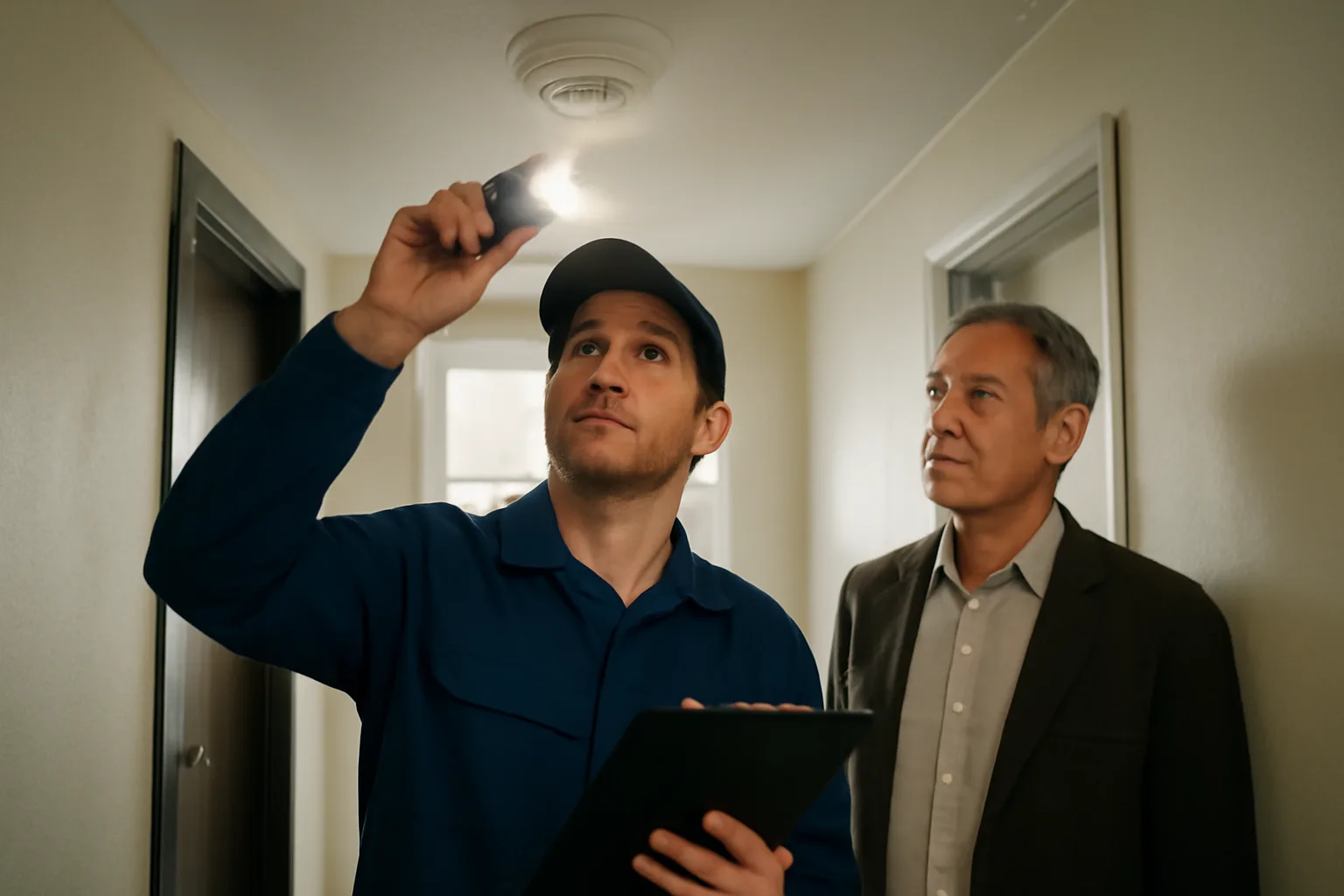
A rental inspection is a code compliance check, not a real estate walkthrough. An inspector from your city's housing or building department (sometimes called code enforcement) shows up at the scheduled time, walks every room including the basement and exterior, and checks specific items against a municipal housing code checklist. It usually takes 20 to 45 minutes for a single unit, longer for multi-unit buildings. Most cities publish their checklist in advance, and you should get a copy when you register or apply for your rental license. The inspector isn't grading your decorating. They're looking for life-safety items (smoke detectors, egress, electrical) and code violations (peeling paint, broken railings, pest evidence, unpermitted work). If you've never been through one, expect the inspector to work room by room with a clipboard or tablet, photograph anything that fails, and hand you (or mail you) a report listing pass/fail items with a re-inspection deadline for anything that failed. Chicago's Department of Buildings, for example, inspects for compliance with the Chicago Building Code and issues violation notices with defined correction periods rather than instant fines for first-time issues [1]. Some cities do the inspection with the tenant present, some require the tenant to let the inspector in even if you can't attend, and some require the owner or an authorized agent on site. Confirm with your city rental licensing office which applies to your unit before the date arrives.
How much notice does a landlord have to give before an inspection?
For city-mandated rental inspections, the notice period is set by your municipality, and it typically runs 24 to 48 hours for a scheduled compliance inspection, though initial licensing inspections are often scheduled weeks out by mail. This is separate from the notice a landlord owes a tenant to enter the unit for the inspection itself. Most state landlord-tenant laws require 24 hours notice (sometimes called "reasonable notice") before a landlord or the landlord's agent enters an occupied unit for a non-emergency reason, including to prepare for or accompany a city inspection. California's Civil Code sets this expectation directly: "in the absence of an agreement between the landlord and the tenant to the contrary, the landlord shall give the tenant reasonable notice in writing of his or her intent to enter and enter only during normal business hours" and further states 24 hours is presumed reasonable notice [2]. Ohio's landlord-tenant statute similarly requires the landlord to give the tenant "reasonable notice" of intent to enter, at least 24 hours in most cases, except in emergencies [3]. So in practice, you often have two notice clocks running: the city's notice to you about the inspection date, and your notice to the tenant about entering their unit that day. Send the tenant written notice as soon as you get the inspection date from the city. Don't wait until the day before. If the tenant refuses entry, most housing codes still hold you responsible for getting the unit inspected by the compliance deadline, so document the refusal in writing and contact your city inspection office right away; some jurisdictions have a process for tenant non-cooperation.
Who is responsible for a rental property walkthrough inspection in California?
In California, the landlord is legally responsible for making sure the rental unit is inspected and brought into compliance, even though many cities' Rental Housing Inspection Programs (RHIP) direct notices to the owner of record. Cities including Los Angeles, Oakland, and San Jose run their own systematic inspection programs under local ordinances layered on top of state law. Los Angeles's Systematic Code Enforcement Program (SCEP), for instance, requires owners of registered rental units to correct violations found during inspection within a set timeframe or face additional fees and potential referral to the city attorney [4]. The tenant doesn't bear responsibility for the inspection outcome. It's the owner's name on the rental registration and the owner's liability for violations. That said, day-to-day access is a shared responsibility. California Civil Code Section 1954 governs a landlord's right to enter for inspections, and the landlord (or the landlord's property manager) is the one who must coordinate access, not the tenant, unless the lease says otherwise. If you self-manage and live out of state, you'll want a local point of contact (a property manager, contractor, or even a trusted neighbor with a key) who can let the inspector in if you can't be there yourself.
What can a landlord look at during an inspection?
| Smoke/CO alarms | Present in each bedroom, hallway, and level; test date; battery vs. hardwired | |
|---|---|---|
| Egress | Bedroom windows meet minimum opening size, no security bars without release, second exit from basement units | |
| Electrical | No exposed wiring, GFCI in kitchens/baths, panel accessible, no obvious overloading | |
| Plumbing | No active leaks, water heater temperature/pressure relief valve (TPR) present, adequate hot water | |
| Structural | Handrails on stairs with 4+ steps, guardrails on porches/balconies, no rot or deterioration | |
| Exterior | Roof condition, gutters, foundation cracks, peeling exterior paint (lead paint concern in pre-1978 units) | |
| Pests/sanitation | Evidence of rodents or insects, trash storage, working locks on doors | If your unit was built before 1978, expect extra attention to peeling or chipping paint. HUD's lead-based paint disclosure rule applies to pre-1978 housing, and some cities inspect specifically for deteriorated paint as a lead hazard trigger [5]. You're allowed to (and should) look at all of this yourself beforehand using the same checklist; most cities post theirs online, and building your own pre-inspection walkthrough around it is the single best use of your prep time. |
During a city rental inspection, the inspector is checking the unit against the local housing code, and as the landlord you're generally allowed to walk through with them and inspect the same things: working smoke and carbon monoxide detectors, secure and unbroken windows and doors, functioning locks, GFCI outlets near water sources, water heater temperature and pressure relief valve, visible electrical panel condition, no exposed wiring, adequate egress from bedrooms, no active leaks or mold, and pest evidence. A typical municipal checklist covers these categories, roughly in this order: | Area | Common check items |
What can't a landlord do in Ohio (and generally, in any state)?
Ohio's Landlord-Tenant Act (Ohio Revised Code Chapter 5321) sets specific limits on what a landlord can do, and most of these mirror rules in other states, so they're worth knowing regardless of where your property is. A landlord in Ohio cannot enter the rental unit without reasonable notice except in an emergency; ORC 5321.04 requires the landlord to give "reasonable notice" and enter "at reasonable times," and courts and the statute treat this as tenant protection against surprise entry, inspections included [3]. A landlord also cannot shut off utilities, change the locks, or remove a tenant's belongings to force them out ('self-help eviction'); Ohio requires a formal eviction (forcible entry and detainer) action through the courts. A landlord cannot retaliate against a tenant for reporting a code violation or requesting repairs; ORC 5321.02 specifically bars raising rent, decreasing services, or threatening eviction in retaliation for a tenant contacting a housing inspector or a health department [6]. A landlord also can't ignore their own maintenance duties under ORC 5321.04, which requires keeping the premises in a fit and habitable condition, complying with building and housing codes, and keeping common areas safe. If your city inspection turns up a violation and you don't fix it by the deadline, that's a separate problem from lease enforcement. Confirm with your city rental licensing office and, for anything involving tenant disputes, talk to a local landlord-tenant attorney rather than relying on general guidance like this article.
What rights do tenants have without a lease?
A tenant without a written lease (a month-to-month or oral tenancy) still has essentially all the same legal protections as a tenant with a signed lease. What changes is the notice period for ending the tenancy, not the underlying rights. Habitability, quiet enjoyment, protection from illegal lockouts, and the landlord's entry-notice obligations all still apply. Most states treat an oral or lease-free tenancy as month-to-month, meaning either party can end it with proper notice, commonly 30 days, though some states and cities (especially those with rent control or just-cause eviction ordinances) require more. The tenant still has the right to a habitable unit under the implied warranty of habitability recognized in most states, still has the right to notice before the landlord enters (the same 24-hour standard discussed above generally applies whether or not there's a written lease), and still can't be evicted without going through the court process. What a lack of a lease does affect is proof: without a written document, rent amount, due date, and any special terms come down to oral agreement, texts, canceled checks, or other evidence if there's ever a dispute. If you're managing units without written leases, that's a bigger practical risk than a legal one. Get something in writing going forward, even a simple one-page agreement, but that's a separate topic from inspection prep.
Why do landlords require renters insurance?
Landlords require renters insurance mainly to shift liability for the tenant's personal property and personal liability away from the landlord's own policy. A standard landlord (dwelling) insurance policy covers the building structure and the landlord's own liability, but it doesn't cover a tenant's furniture, electronics, or clothing if there's a fire, burst pipe, or theft, and it often doesn't cover injuries caused by the tenant's own negligence (like the tenant's dog biting a visitor). Requiring renters insurance, typically with a modest liability minimum like $100,000, means the tenant's own policy pays out first in a dispute. That reduces the number of claims filed against the landlord's policy and can reduce the landlord's own premium risk over time. This isn't something a city rental inspection checks for. It's a lease and insurance issue, not a code issue. But landlords going through their first inspection cycle often clean up several policy gaps at once (insurance requirements, deposit handling, notice procedures) since they're already reviewing their whole operation.
How to prepare for a rental inspection: a walkthrough checklist
Do your own walkthrough at least a week before the scheduled inspection, using the same checklist categories the city uses. This gives you time to fix things, more than discover them. Start at the exterior: check the roof for obvious sagging or missing shingles, look at gutters and downspouts, check the foundation for cracks, make sure address numbers are visible (a surprisingly common fail item), and check exterior paint condition, especially on anything built before 1978. Move to common areas and stairwells: handrails should be solid on any stairway with four or more risers per the model building code convention many cities follow, and guardrails are typically required where a drop-off exceeds 30 inches . Inside each unit, test every smoke detector and CO detector (replace batteries even if they "seem" to work, and know that most detectors have a manufacture date stamped on the back and a 10-year expected service life). Check every window opens, closes, and locks, and that bedroom windows meet minimum egress size if that's on your city's checklist. Run water at every fixture checking for leaks, check the water heater's temperature and pressure relief valve has a discharge pipe, and open the electrical panel to make sure breakers are labeled and there's no obvious burn marks or double-tapped breakers. Make a punch list, fix what you can yourself, and get a licensed contractor for anything electrical or structural that's beyond a DIY fix. If you manage more than one unit across different cities, this is where a lot of landlords lose time recreating the same checklist over and over; if that's you, our $79 City Rental License & Inspection Prep Packet gives you a reusable pre-inspection checklist and document tracker built around what city inspectors actually check, so you're not starting from a blank page every renewal cycle.
What happens if you fail a rental inspection?
Failing a rental inspection almost never means immediate loss of your rental license. Nearly every city ordinance gives you a correction period, commonly 30 days for most violations, sometimes shorter (as little as 24 to 72 hours) for life-safety issues like a missing smoke detector or blocked egress, and longer for major repairs if you request an extension in writing. After the correction period, the city schedules a re-inspection, and this is where the real cost shows up. Many cities charge a re-inspection fee if the first re-check also fails, and some charge it even for a routine second visit. These fees vary a lot by city, ranging roughly from $50 to a few hundred dollars depending on the jurisdiction and how many times you've needed a re-inspection, so confirm the exact figure with your city rental licensing office rather than assuming. Ignore the notice entirely and you risk escalation: a hold on your rental license renewal, a formal notice of violation that can include daily fines, or in serious repeat cases, referral to a hearing officer or city attorney, as happens under Los Angeles's SCEP for owners who don't comply [4]. The fastest and cheapest path is almost always fixing the item before the first inspection, or immediately after if you fail, rather than letting it sit through a second notice cycle.
How to become a landlord (what the paperwork side actually looks like)
Becoming a landlord legally means more than buying a property and finding a tenant. In a mandatory rental-licensing city, it means registering the property with the city, sometimes obtaining a certificate of occupancy or rental license before you can legally lease it, and passing an initial inspection before that license is issued. The general sequence in most licensing cities: buy or convert the property, register it as a rental with the city's housing or licensing department (often within 30 days of first renting it out, though this varies), pay the initial registration or license fee, schedule and pass the initial inspection, then renew the license annually or biennially with a follow-up inspection. Some cities also require a separate business license or require landlords to designate a local agent if the owner lives out of state or out of the country. Beyond the licensing paperwork, becoming a landlord also means setting up the operational basics: a lease that complies with your state's landlord-tenant law, a system for handling security deposits (many states cap the amount and set strict return deadlines, commonly 14 to 30 days after move-out), a process for handling maintenance requests, and proof of adequate landlord insurance. None of this is legal advice, and requirements differ enough by state and city that it's worth a short consultation with a local landlord-tenant attorney or your city's housing department before you sign your first lease.
What is landlording, and what is a landlord, exactly?
A landlord is the owner (or owner's authorized agent) of real property who rents that property to another person, the tenant, in exchange for rent, under a lease or rental agreement. "Landlording" is the informal term for the ongoing work of operating that rental: collecting rent, handling repairs, managing turnover, staying current on local ordinances, and dealing with the regulatory side, licensing, registration, and inspections, that many cities now require. Legally, a landlord's core obligations across nearly every state include maintaining the property in habitable condition, respecting the tenant's right to quiet enjoyment, following state-specific notice rules before entering the unit, and handling security deposits according to state law. On top of that baseline, cities with rental licensing ordinances add their own layer: registration deadlines, inspection cycles, and license renewal fees that don't exist in non-licensing jurisdictions. If you're new to this and wondering where to start on the tenant relationship side rather than the inspection side, our guides on tenant rights and tenants rights cover the tenant-facing obligations that pair with everything discussed here.
How do I make sure I'm actually ready, city by city?
Every city runs its rental inspection program a little differently: different notice periods, different checklists, different re-inspection fees, different renewal cycles. There's no single national standard, which is exactly why "confirm with your city rental licensing office" shows up throughout this article instead of a specific number. Guessing at a fee or deadline and getting it wrong costs more than a five-minute phone call to confirm it. A few things worth checking specifically before your first inspection in a new city: whether the inspection is announced or can include unannounced follow-ups, whether the tenant must be present, whether there's a grace period for first-time violations versus repeat ones, and whether your license renewal date is tied to the inspection date or set independently. Some cities, notably several in California and the Midwest, also tie utility shutoff notices or nuisance property flags into the same inspection database, so a violation in one area (say, a fire code issue) can show up when you're trying to renew a completely separate registration. If you manage properties in more than one city, keeping each jurisdiction's rules, deadlines, and checklist straight by memory is where landlords slip up, not because the rules are complicated individually, but because they're different enough from city to city that assumptions carry over incorrectly. That's the specific problem our $79 City Rental License & Inspection Prep Packet is built to solve: a city-specific document checklist and inspection prep guide so you walk in with what that particular office actually wants to see.
Frequently asked questions
How much notice does a landlord have to give before an inspection?
Most states require 24 hours notice for a landlord to enter an occupied unit for a non-emergency reason, including a city inspection; California's Civil Code presumes 24 hours written notice is reasonable [2]. The city's own scheduling notice to you may come days or weeks earlier, but your notice to the tenant is a separate requirement.
What can a landlord look at during an inspection?
A landlord can review the same items a city inspector checks: smoke and CO detectors, window and door locks, egress from bedrooms, electrical panel condition, water heater pressure relief valve, visible plumbing leaks, handrails and guardrails, and pest or mold evidence. Doing this walkthrough yourself before the city visit is the single best way to avoid a failed inspection.
Who is responsible for a rental property walkthrough inspection in California?
The property owner is responsible for compliance, even in cities where a property manager coordinates access. Programs like Los Angeles's Systematic Code Enforcement Program direct notices and violation responsibility to the registered owner of the unit, not the tenant [4].
What can't a landlord do in Ohio?
Under Ohio Revised Code Chapter 5321, a landlord can't enter without reasonable notice except in an emergency, can't shut off utilities or change locks to force a tenant out, and can't retaliate against a tenant for reporting a code violation to a housing inspector [3][6]. Formal court eviction is required to remove a tenant.
What rights do tenants have without a lease?
A tenant without a written lease still has the same core protections as one with a lease: habitability, notice before entry, and protection from illegal self-help eviction. What differs is the tenancy is usually treated as month-to-month, meaning either side can end it with standard notice, often 30 days, rather than a fixed lease term.
Why do landlords require renters insurance?
Renters insurance shifts liability for a tenant's personal property and personal injury claims away from the landlord's own policy. Without it, the landlord's insurer may end up covering claims that should have been the tenant's responsibility, which raises the landlord's own premiums over time.
What happens if I fail a rental inspection?
You typically get a correction period, often 30 days for most items and much shorter for life-safety violations, before a re-inspection. Fail the re-inspection or ignore the notice and you risk a re-inspection fee, a hold on your license renewal, or in repeat cases, referral to a hearing officer or city attorney.
How to become a landlord in a city with mandatory rental licensing?
Register the property with your city's housing or licensing department, pay the registration or license fee, schedule and pass the initial inspection, and get your rental license or certificate of occupancy before leasing the unit. Requirements and deadlines vary significantly by city, so confirm with your local office directly.
What is landlording?
Landlording is the day-to-day work of owning and operating a rental property: collecting rent, handling repairs, managing tenant turnover, and complying with local licensing, registration, and inspection requirements. It covers both the tenant-facing relationship and the regulatory side that mandatory-licensing cities add on top.
What does a rental inspector actually check first when they arrive?
Most inspectors start with life-safety items: smoke and CO detector presence and function, then move to egress (windows and exits), then electrical and plumbing basics, then structural items like stairs and railings. The exact order and checklist come from your city's specific housing code, so ask for a copy in advance.
Does the tenant have to be home for a rental inspection?
It depends on the city. Some require the tenant or an adult occupant present to grant access, some allow the landlord's agent to let the inspector in, and some require the owner present regardless of tenant availability. Confirm this specific point with your city rental licensing office before the scheduled date.
Can a landlord be fined for a failed inspection even after fixing the problem?
Generally no, if the fix happens within the correction period the city grants, often around 30 days for standard violations. Fines and re-inspection fees typically apply when the item still fails at the re-inspection or when the landlord misses the correction deadline entirely, not simply for failing the first time.
Sources
- City of Chicago, Department of Buildings: Chicago inspects rental buildings for compliance with the Chicago Building Code and issues violation notices with correction periods
- California Civil Code Section 1954: 24 hours written notice is presumed reasonable notice for landlord entry in California
- Ohio Revised Code 5321.04: Ohio landlords must give reasonable notice and enter at reasonable times, and must maintain the premises in a fit and habitable condition
- 24 CFR Part 35, Subpart A (Lead-Based Paint Disclosure): Housing built before 1978 is subject to federal lead-based paint disclosure requirements
- Ohio Revised Code 5321.02: Ohio law bars landlords from retaliating against tenants for reporting code violations to a housing inspector or health department
- Insurance Information Institute, Facts + Statistics: Homeowners and renters insurance: Renters insurance is relatively inexpensive and covers tenant personal property and liability that a landlord's policy does not
- International Code Council, International Property Maintenance Code (IPMC) Section 306: Model housing code requirements for guardrails and handrails on stairways commonly referenced by city rental inspection checklists