Last updated 2026-07-26
TL;DR
Rental inspectors mostly check safety systems, not tidiness: smoke and CO detectors, electrical panels, plumbing leaks, and egress windows. Still, clean kitchens, bathrooms, and basements so inspectors can see outlets, vents, and pipes clearly. Clear clutter blocking exits, panels, or water heaters. Most cities give 24 to 48 hours notice before entry, though local ordinances vary.
What should I clean before a rental inspection?
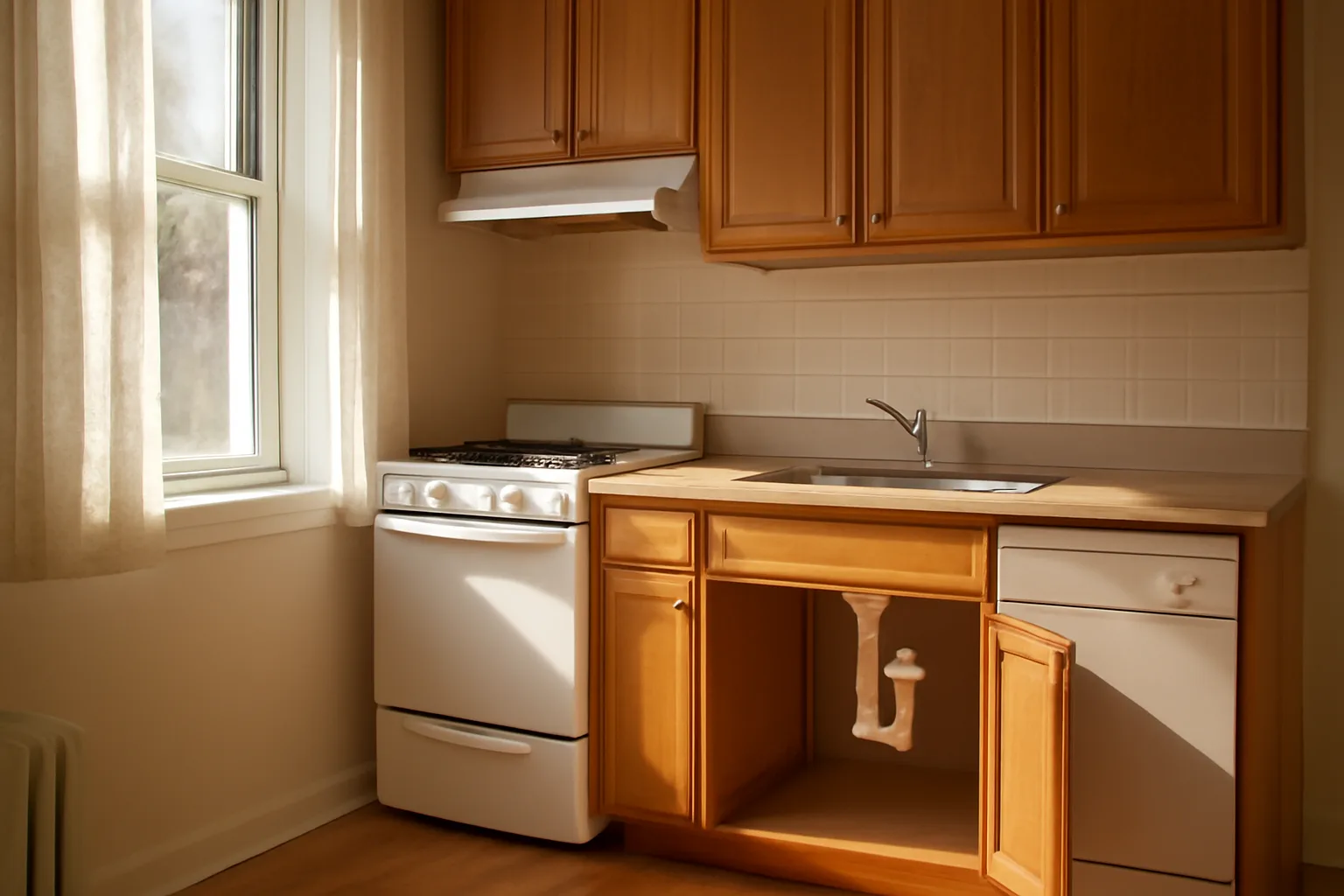
Focus on access, not sparkle. Inspectors need to see and reach electrical panels, smoke detectors, water heaters, furnace closets, and window exits. If a dresser is shoved in front of an outlet or a stack of boxes blocks the electrical panel, that's a problem even if the unit is otherwise spotless. Start with the kitchen. Clear the counters and under the sink so the inspector can check for leaks, GFCI outlets near water sources, and working exhaust fans. Wipe down the stove and check that all burners ignite; a dead burner sometimes gets flagged as a functional defect depending on the city's checklist. Bathrooms need working exhaust fans (or an operable window), no active leaks under the sink, and grout or caulking that isn't crumbling away from the tub. Many city checklists specifically look for mold or standing water, since HUD's Healthy Homes program identifies moisture control as one of the core habitability issues inspectors are trained to spot [1]. Bedrooms: clear a path to every window. Egress windows in bedrooms are a hard safety item in most inspection programs, and a window painted shut or blocked by furniture can be cited as a life-safety violation, not a cosmetic one. Basements and utility closets: sweep out storage that blocks the water heater, furnace, or electrical panel. Inspectors generally need three feet of clearance around electrical panels under the National Electrical Code's working space rule (NFPA 70, Article 110.26), which many local building codes adopt by reference [2]. Clutter here is one of the most common reasons a first inspection fails.
What can a landlord look at during an inspection?
A rental licensing inspector is generally checking a fixed checklist tied to the local housing or building code, not doing a general search of the unit. Typical items include smoke and carbon monoxide detectors, electrical outlets and panel access, plumbing fixtures and water pressure, window and door locks, egress paths, heating system function, and signs of pests or moisture damage. What they are not there for: judging your housekeeping, counting your dishes, or inspecting personal belongings. Most municipal rental inspection programs are built around habitability minimums, not aesthetics. That said, an inspector who can't see an outlet because of clutter, or can't verify a smoke detector because a closet is packed floor to ceiling, will often note it as "unable to inspect," which functions the same as a failure in most cities. Some cities also check exterior items during the same visit: exterior stairs and railings, gutters, roof condition visible from the ground, and address numbers visible from the street. Confirm with your city rental licensing office exactly what's on their checklist, since programs range from a short life-safety list to a much longer building-code-based form. Tenant belongings and privacy matter here too. The inspector (or the landlord accompanying them) generally cannot open drawers, closets used for personal storage, or search for unrelated items. The inspection is limited to the condition items on the checklist.
Who is responsible for a rental property walk-through inspection in California?
In California, the landlord is responsible for arranging move-in and move-out inspections tied to security deposit disputes, and the landlord (or their agent) conducts the actual walk-through, not a government inspector, unless the unit is also subject to a local rental licensing or code enforcement inspection. California Civil Code Section 1950.5 requires landlords to offer tenants an initial inspection before move-out, done "no earlier than two weeks before the expiration of the tenancy," so the tenant has a chance to fix any issues before final deductions are made from the deposit [3]. The landlord must give at least 48 hours' written notice of that initial inspection unless the tenant waives it, and must provide an itemized statement of proposed repairs or cleaning after the walk-through [3]. Separately, cities like Los Angeles, Oakland, and Berkeley run their own systematic rental inspection or licensing programs (often called Rent Escrow Account Program or proactive rental inspection programs) where a city code enforcement officer, not the landlord, does the walk-through. Those are different from the deposit-related inspection under Civil Code 1950.5. If your unit is in one of these programs, confirm with your city rental licensing office which inspection applies and who conducts it.
How much notice does a landlord have to give before an inspection?
Most states require at least 24 hours notice before a landlord or inspector enters an occupied unit, though the exact number and what counts as proper notice varies by state and by whether it's a landlord-initiated visit or a government inspection. California requires "reasonable notice," which the code presumes to be 24 hours in most circumstances, under Civil Code Section 1954 [4]. Oregon's landlord-tenant law (ORS 90.322) also sets a 24-hour notice standard for routine entry [5]. Some cities layer additional notice requirements on top of state law specifically for licensing inspections, sometimes 48 hours or more, and often require the notice in writing with a specific date and time window. Government rental inspectors (for licensing or code enforcement, as opposed to the landlord's own entry) are usually bound by whatever notice period the local ordinance sets, and that notice is often sent by mail or posted at the property weeks in advance of the inspection window, more than 24 hours before. Confirm with your city rental licensing office exactly what notice period and format applies in your program, since the number on your ordinance notice controls, not the general state landlord-tenant statute.
What a landlord cannot do in Ohio
Ohio landlords cannot enter a rental unit without giving "reasonable notice" to the tenant, and Ohio Revised Code Section 5321.04 sets that standard at 24 hours in most circumstances, allowing entry only at reasonable times for repairs, inspections, or showings [6]. Ohio landlords also cannot shut off utilities, remove doors or windows, or otherwise force a tenant out without going through the court eviction process. This kind of "self-help eviction" is prohibited under the same landlord obligations chapter that governs entry and repairs [6]. Ohio law also prohibits retaliatory conduct: a landlord generally cannot raise rent, decrease services, or start eviction proceedings specifically because a tenant reported a code violation or joined a tenant organization, under ORC 5321.02 [7]. If a rental inspection turns up violations, using that inspection as cover to retaliate against the tenant who requested it is a separate legal problem on top of the code violation itself.
What is landlording, and what is a landlord?
A landlord is the owner (or an owner's authorized agent) who rents out real property to a tenant in exchange for payment, and who takes on the legal duties that come with that relationship: maintaining habitability, handling deposits according to state law, and following the eviction process rather than removing a tenant unilaterally. "Landlording" is the everyday term for running that business: screening tenants, writing and enforcing leases, collecting rent, handling maintenance requests, and keeping the property compliant with local codes. It's not a licensed profession in most states (property management for other people's properties often does require a real estate license, but renting out your own property generally doesn't), but a growing number of cities require a rental license or registration specifically for the property itself, on top of the general landlord-tenant law that already applies. Small landlords with 1 to 10 units are the largest segment of the rental market by owner count: roughly 70% of rental properties nationally are owned by individual investors rather than institutions, according to the U.S. Census Bureau's Rental Housing Finance Survey data cited by HUD's research arm [8].
How to become a landlord (and how to be a landlord day to day)
Becoming a landlord starts with the property, not a license exam. You buy or already own a unit, meet your local zoning and rental licensing requirements if your city has them, and put a compliant lease in place. There's no national landlord license; requirements are set state by state and often city by city. The practical steps: confirm your city allows rentals in that zoning district and whether it requires rental registration or a license (many mid-size and large cities do, with annual or biennial renewal and a fee that varies by city (confirm with your city rental licensing office); screen tenants under Fair Housing Act rules, which prohibit discrimination based on race, color, national origin, religion, sex, familial status, or disability [9]; collect a security deposit within your state's legal limit and handle it according to that state's deposit statute; and get the unit inspection-ready before your first tenant moves in if your city requires a pre-occupancy inspection. Day to day, being a landlord means responding to repair requests promptly (many states set implied timelines, often 14 to 30 days for non-emergency repairs, though emergency items like no heat or a major leak require faster action), keeping records of rent payments and communications, and renewing your rental license or registration before it lapses. Missing a renewal deadline is one of the most common ways small landlords end up with a fine even though the property itself is in good shape.
Why do landlords require renters insurance?
Landlords require renters insurance mainly to shift liability for the tenant's personal belongings and for tenant-caused damage or injury claims away from the landlord's own policy. A standard landlord (dwelling) insurance policy covers the building structure, but it generally does not cover a tenant's furniture, electronics, or clothing lost in a fire or burst pipe, and it may not fully cover liability if a tenant's guest is injured due to the tenant's own negligence. Renters insurance is inexpensive relative to the protection it buys; national average costs are commonly cited in the range of $15 to $30 a month depending on coverage limits and location, though rates vary by state and insurer. Requiring it as a lease condition is legal in most states as long as it's applied consistently to all tenants and disclosed in the lease. From a landlord's side, requiring renters insurance also reduces the odds you get pulled into a dispute over a tenant's damaged belongings after a covered event like a fire or water leak, since the tenant's own policy handles that claim instead of yours.
What rights do tenants have without a lease?
A tenant without a written lease still has legal rights: most states treat an unwritten rental arrangement as a month-to-month tenancy at will, governed by the same state landlord-tenant statute that applies to written leases, including habitability standards, notice-to-enter rules, and eviction procedure. Without a written lease, a tenant is generally still entitled to a habitable unit (working plumbing, heat, and structural safety), proper notice before the landlord enters, and a formal eviction process rather than a lockout or utility shutoff. What changes without a lease is mainly the rent amount and term: month-to-month tenants can usually have rent changed or the tenancy ended with proper notice (commonly 30 days, though some states and rent-controlled cities require more), where a fixed-term lease locks those terms in until the lease ends. Oral leases and even implied tenancies (someone who has been paying rent and living in a unit for months without paperwork) are still enforceable in court in most states; the tenant just has to prove the terms through evidence like payment records or texts, since there's no signed document to point to.
How to prepare each room: a quick checklist
| Kitchen | GFCI outlets, exhaust fan, stove function, sink leaks | Clear counters and under-sink cabinet, wipe stovetop | |
|---|---|---|---|
| Bathroom | Exhaust fan or window, caulking, water pressure, mold | Clear under-sink area, scrub grout, fix running toilets | |
| Bedrooms | Egress window operable, smoke detector present | Clear path to every window, dust detector | |
| Basement/utility | Electrical panel clearance, water heater, furnace, sump pump | Remove stored boxes, sweep 3 ft around panel | |
| Common areas | Smoke/CO detectors, handrails, lighting | Test detector batteries, tighten loose railings | |
| Exterior | Address numbers, gutters, exterior stairs, exit doors | Clear porch clutter, trim vegetation blocking address | This list covers the items that show up across most municipal checklists, but it's not universal. Some cities' rental inspection programs go much deeper (checking window screens, handrail height in inches, or specific fire-rated door requirements), and some run a shorter life-safety-only list. Confirm with your city rental licensing office for the actual checklist your unit will be scored against before you assume you're done. |
Here's a practical breakdown of what tends to matter most, room by room, based on the categories that show up across most city rental inspection checklists. | Area | What inspectors typically check | What to clean/clear |
What happens if the inspection turns up violations?
Most cities issue a written notice of violation with a re-inspection deadline, typically somewhere between 10 and 60 days depending on the severity of the item and the specific ordinance, rather than an immediate fine. Life-safety items (no working smoke detector, blocked egress, exposed wiring) usually get shorter deadlines than cosmetic or minor maintenance items. Fines for failing to correct violations by the deadline vary enormously by city, sometimes escalating from a warning to a per-day fine if the issue isn't fixed. Repeat or unaddressed violations can also block your rental license renewal, which in some cities means you legally can't rent the unit at all until it's resolved. This is where a lot of small landlords get caught: they treat the first notice as a suggestion rather than a deadline. If you're prepping for a first-time license inspection or a renewal, working through a structured checklist ahead of the visit catches most of these issues before an inspector does. That's the whole idea behind our $79 one-time City Rental License & Inspection Prep Packet: a city-specific checklist and document set built around exactly the categories inspectors check, so you're not guessing the night before.
How this connects to tenant rights and communication
An inspection isn't just a landlord-side event; tenants have rights during the process too, including notice before entry and, in many jurisdictions, the right to be present. Handling that part professionally matters as much as the physical prep. If you're newer to running a rental, it helps to understand the broader tenant relationship alongside the inspection checklist: what tenants are owed under tenants rights frameworks, how renters rights intersect with your notice-to-enter obligations, and what the practical difference is between being a casual landlord and running a compliant, licensed rental business under your city's landlord landlords program. Understanding tenant rights and the tenant and tenant relationship generally also helps you avoid accidentally triggering a retaliation claim (see the Ohio section above) if a violation surfaces right after a tenant complaint.
Frequently asked questions
What can a landlord look at during an inspection?
Rental licensing inspectors generally check items tied to habitability and safety: smoke and CO detectors, electrical panel access, plumbing leaks, egress windows, heating function, and pest or moisture signs. They typically don't inspect personal belongings, closets used for storage, or judge general tidiness. Confirm your city's specific checklist, since programs range from short life-safety lists to full building-code inspections.
Who is responsible for a rental property walk-through inspection in California?
The landlord arranges and conducts move-out walk-through inspections under California Civil Code 1950.5, giving at least 48 hours notice before the visit. Separately, some California cities run their own proactive rental inspection programs where a city code enforcement officer, not the landlord, does the walk-through. Confirm which type applies to your unit with your city rental licensing office.
How much notice does a landlord have to give before an inspection?
Most states set a 24-hour notice minimum for routine landlord entry, including California (Civil Code 1954) and Oregon (ORS 90.322). City rental licensing inspections often require additional notice, sometimes 48 hours or more, sent in writing with a specific date and window. Confirm the exact notice period with your city rental licensing office, since it can exceed the general state landlord-tenant standard.
What a landlord cannot do in Ohio during an inspection or entry
Ohio landlords cannot enter without reasonable notice, generally 24 hours under ORC 5321.04, except in emergencies. They also cannot use self-help tactics like shutting off utilities or removing doors to force a tenant out, and cannot retaliate against a tenant for reporting code violations under ORC 5321.02.
What is landlording?
Landlording is the practical work of renting out property: screening tenants, writing leases, collecting rent, handling repairs, and keeping the unit compliant with local codes and rental licensing rules. It's not a licensed profession for renting your own property in most states, though many cities require a separate rental license or registration for the property itself.
What is a landlord?
A landlord is the property owner, or their authorized agent, who rents real estate to a tenant and takes on legal duties including maintaining habitability, handling security deposits under state law, and using formal eviction procedures rather than removing a tenant directly.
What rights do tenants have without a lease?
Tenants without a written lease are usually treated as month-to-month tenants under state law, with the same habitability rights, entry-notice rules, and eviction procedures as tenants with a lease. What differs is that rent and terms can typically be changed with proper notice (often 30 days), since there's no fixed term locking them in.
Why do landlords require renters insurance?
Renters insurance covers a tenant's personal belongings and certain liability claims that a landlord's own dwelling policy doesn't cover. Requiring it shifts risk for tenant property loss and tenant-caused injury claims away from the landlord, and it's inexpensive for tenants, commonly cited around $15 to $30 a month depending on coverage and location.
How to become a landlord?
Buy or already own a rental property, confirm local zoning allows rental use, register or license the property if your city requires it, screen tenants under Fair Housing Act rules, and use a lease compliant with your state's landlord-tenant law. There's no national landlord license; requirements are set at the state and city level.
How to be a landlord day to day?
Being a landlord day to day means responding to repair requests within your state's legal timelines, keeping records of rent and communication, renewing your rental license or registration before it expires, and following your state's notice-to-enter and eviction rules rather than handling disputes informally.
Do I need to clean the whole apartment or just the systems inspectors check?
You mainly need clear access to safety items: outlets, panels, detectors, water heaters, egress windows, and vents. General tidiness isn't usually graded, but if clutter blocks an inspector's view of a required item, it's often marked as unable to inspect, which acts like a failure. Clearing access is more valuable than deep cleaning for cosmetic reasons.
What's the most common reason a rental inspection fails?
Blocked access to electrical panels, missing or non-functioning smoke detectors, and blocked egress windows are among the most common fail points across city rental inspection checklists. Many of these are easy, low-cost fixes: replace a detector battery, move stored boxes away from the panel, or unstick a painted-shut window before the inspection date.
Sources
- HUD, Healthy Homes Program overview: Moisture control and mold are core habitability issues inspection programs are trained to identify
- NFPA 70, National Electrical Code, Article 110.26: Working space clearance requirement (commonly 3 feet) around electrical panels
- California Civil Code Section 1950.5: Landlord must offer an initial move-out inspection no earlier than two weeks before tenancy ends, with 48 hours notice
- California Civil Code Section 1954: California presumes 24 hours is reasonable notice for landlord entry
- Oregon Revised Statutes 90.322: Oregon sets a 24-hour notice standard for routine landlord entry
- Ohio Revised Code Section 5321.04: Ohio landlords must give reasonable notice, generally 24 hours, before entering a rental unit
- Ohio Revised Code Section 5321.02: Ohio prohibits landlord retaliation against tenants for reporting code violations
- HUD PD&R, Rental Housing Finance Survey research summary: Roughly 70% of rental properties nationally are owned by individual investors rather than institutions
- U.S. Department of Justice, Fair Housing Act overview: Fair Housing Act prohibits discrimination based on race, color, national origin, religion, sex, familial status, or disability