Last updated 2026-07-26
TL;DR
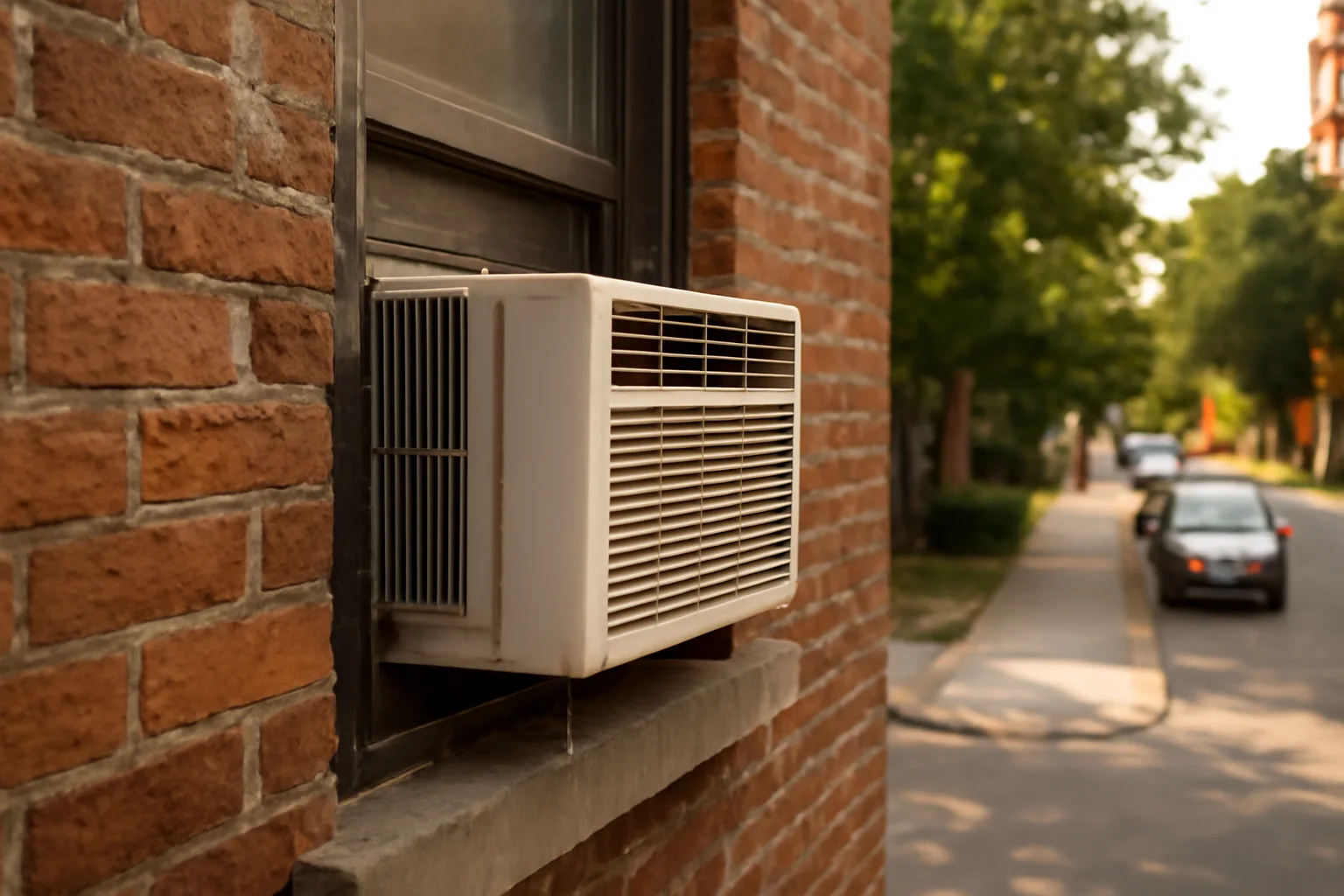
No U.S. state requires landlords to provide air conditioning in every rental unit. A handful of cities (including Phoenix, Dallas, and parts of Arizona) set maximum indoor temperature limits or require cooling equipment in extreme heat. Most states only regulate heating. Check your city's rental housing code, more than state law, for cooling rules.
Do any states legally require landlords to provide air conditioning?
No state has a law on the books that says every residential landlord must supply a working air conditioner. That surprises a lot of tenants and landlords in places like Phoenix or Houston where summer heat is dangerous, but it's the truth. State landlord-tenant statutes almost universally require heat, hot water, and a weatherproof structure. Cooling is treated differently. What states actually do is set a habitability standard, a general requirement that a rental be fit to live in, and leave the specifics of temperature control to local building codes or to the lease itself. Arizona is the closest thing to an exception worth naming: its landlord-tenant act requires landlords to maintain "cooling and heating" systems in a manner that keeps the unit habitable when the unit was originally equipped with them, under Arizona Revised Statutes 33-1324 [1]. But even that duty attaches only if the unit already has AC installed. It doesn't force a landlord to install cooling in a unit that never had it. Every other state treats air conditioning as an amenity, not a right. If your lease doesn't mention AC and your unit was never built with a cooling system, state law generally won't create one for you. That's very different from heat, which almost every state treats as a non-negotiable habitability item, often tied to a minimum indoor temperature during cold months (commonly a design temp near 68°F, though exact thresholds vary by jurisdiction and by whether it's a state statute or a local code).
Which cities require air conditioning or set a maximum indoor temperature?
City ordinances fill a lot of the gap state law leaves open, and this is where the real rules live. A short, honest list of places with documented cooling requirements: Phoenix, Arizona requires rental properties to have a cooling system capable of maintaining an indoor temperature no higher than 82°F when the outdoor temperature exceeds that, under the city's minimum housing standards enforced through its Neighborhood Services Department. Dallas, Texas amended its code in 2021 to require that rental housing have mechanical cooling capable of maintaining an indoor temperature of 85°F or lower, a rule passed specifically because Texas has no statewide requirement [2]. Some Arizona cities apply similar maximum-temperature standards through their own housing codes, layered on top of the state's 'maintain existing equipment' rule. Outside the desert Southwest, most cities that regulate temperature focus on heat in winter, not cooling in summer. New York City is a well-known example on the heat side, not the cooling side: it requires heat to at least 68°F during the day when outdoor temps drop below 55°F, under the city's Housing Maintenance Code [3]. A few cities have moved incrementally toward cooling rules after heat deaths, but as of now there's no broad national trend of cities requiring AC in every unit. If you manage property in a hot-summer state and got a notice from your city about cooling equipment, don't assume it's a state law problem. Check your specific city's rental housing code, because Dallas and Phoenix got there through local ordinances, not state statute [2].
What's the difference between a habitability requirement and an AC requirement?
Habitability is the broad legal floor for what makes a unit livable: working plumbing, structural safety, no pest infestations, functioning heat, safe electrical systems. It comes from the implied warranty of habitability, a legal doctrine most states have adopted either by statute or court decision. Air conditioning is a specific piece of equipment, and courts have generally not folded it into that floor the way they have with heat. The practical difference matters for enforcement. If a tenant sues over lack of heat in a state with a habitability statute, they usually win, because heat is explicitly named as a required service in most state codes. If a tenant sues over lack of AC in a state without a specific cooling law, the case usually turns on the lease language and whether AC was advertised or already installed, not on habitability law itself. There's a growing argument in extreme heat litigation that dangerously high indoor temperatures should count as a habitability failure even without a specific AC statute, similar to how a total loss of usable water counts. That argument has had mixed success and mostly applies where a heat wave created a genuinely dangerous condition, not as a general rule that every rental needs central air.
If AC isn't required by law, why do so many landlords provide it anyway?
Market pressure, not legal pressure, is the real driver. In hot climates, a unit without AC rents for less, sits vacant longer, and draws far fewer applicants. Landlords in Phoenix, Las Vegas, Houston, and similar markets install and maintain cooling because tenants won't sign a lease without it, not because a statute forces their hand. There's also a liability angle worth taking seriously even where it's not codified. If a tenant suffers a heat-related injury or death in a unit you control, and you knew the cooling system was broken and did nothing, you're exposed to a negligence claim even in a state with no specific AC statute. Extreme heat kills more people in the U.S. in a typical year than hurricanes, floods, and tornadoes combined, according to National Weather Service fatality data compiled over multiple decades. That's not a housing-law citation, it's a public health reality that shapes how judges and juries think about a landlord who let a cooling system sit broken for weeks during a heat wave. If you already have AC installed in a unit and it breaks, most states will treat that as an essential-services repair issue under your general maintenance obligations, meaning you're expected to fix it in a reasonable time, not stall for a season.
What should landlords put in the lease about air conditioning?
If a unit has AC, the lease should say who maintains it, who pays for repairs versus routine filter changes, and what the response-time expectation is if it fails. If a unit doesn't have AC and you're not planning to install it, the lease should say that plainly too, so nobody argues later that it was implied. A lot of landlord-tenant disputes over AC aren't really legal disputes, they're communication failures. The tenant assumed it was included because the listing photo showed a window unit that the last tenant left behind, or because a leasing agent said something offhand during a showing. Get it in writing either way. If you're renting in a city with a maximum indoor temperature ordinance like Phoenix or Dallas, your lease terms don't override the ordinance. You can't contract out of a legal minimum, so build your maintenance budget assuming the cooling system has to work, not assuming the lease protects you if it doesn't.
What can a landlord look at during an inspection?
Rental inspections, whether they're a routine annual licensing inspection or a city-mandated habitability check, generally cover life-safety and structural items: smoke and carbon monoxide detectors, electrical panels, plumbing, water heater condition, egress windows, handrails, and pest evidence. In cities with rental licensing programs, the inspector is usually working off a published checklist tied to the local housing code, not a general fishing expedition. What an inspector typically will not do is open closets, drawers, or personal storage, or inspect areas that don't affect health and safety. Most rental inspection programs limit the scope to systems and conditions, not the tenant's belongings. If your city's notice mentioned a cooling system inspection specifically (this happens in places like Phoenix that regulate maximum indoor temperature), expect the inspector to test that the AC actually cools the unit to code, more than that a unit is physically present. If you got an inspection notice and don't know exactly what's covered, call your city's rental licensing office and ask for the checklist before the inspection date. Cities vary a lot on how detailed these lists are, and showing up prepared with filters changed, batteries fresh in detectors, and obvious repairs done ahead of time avoids most of the fines that come from cosmetic or easily-fixed violations.
Who is responsible for a rental property walk-through inspection in California?
In California, the move-in and move-out walk-through inspection responsibility sits with the landlord, but the process is shaped by state law, not city discretion. California Civil Code Section 1950.5 gives tenants the right to request an initial move-out inspection before the final one, so they get a chance to fix issues themselves and avoid deductions from the security deposit [4]. The landlord has to give at least 48 hours' written notice before that initial inspection and provide an itemized statement of anything that needs to be fixed. That's separate from any city-level rental licensing inspection some California cities run (Los Angeles, Oakland, and others have their own systematic or complaint-based inspection programs). Those city inspections are usually done by a city housing inspector, not the landlord, and check code compliance rather than deposit-related wear and tear. If you're a landlord in a licensed California city, expect two different inspection tracks: the deposit walk-through you conduct yourself under Civil Code 1950.5, and any separate code inspection your city's rental program requires.
What is landlording, and what is a landlord?
A landlord is the person or entity that owns residential or commercial property and rents it to a tenant in exchange for payment, usually under a written or oral lease. Landlording is the day-to-day work of that role: collecting rent, handling maintenance requests, complying with local licensing and inspection rules, screening applicants, and managing the legal relationship defined by your state's landlord-tenant statute and any local rental ordinance. It's a legal role with real obligations attached, more than a title. Depending on your state and city, being a landlord can trigger registration requirements, licensing fees, mandatory inspections, insurance requirements, and specific notice rules for entering the unit or ending a tenancy. Landlords who treat it purely as passive income tend to get caught off guard by these obligations, usually via a fine notice or a certified letter from a housing inspector.
How do you become a landlord, and how do you actually run it well?
Becoming a landlord legally starts with owning or having authority to lease a property, but running it well involves more steps than most new landlords expect. At minimum: check whether your city requires rental registration or licensing (a large and growing number of cities do, often with an annual fee and a periodic inspection), get landlord liability insurance, understand your state's security deposit limits and return deadlines, and know your state's notice requirements for entry and for ending a tenancy. A practical sequence: confirm your property is legally allowed to be rented (zoning, HOA rules, and local licensing all matter here), register or license it with your city if required, screen tenants under fair housing law, use a written lease that matches your state's required disclosures, and set up a maintenance response system before you have your first tenant, not after your first maintenance complaint. If your city requires a rental license or a pre-occupancy inspection, budget real time for it. Some cities turn licenses around in a couple weeks; others take longer, especially if the first inspection turns up violations that need fixing and a re-inspection. For landlords managing that process for the first time in a licensing city, a structured checklist built around your specific city's ordinance (not a generic national list) saves the most time, since fees, inspection scope, and violation cure periods vary block to block, city to city.
What rights do tenants have without a written lease?
Tenants without a written lease still have real legal protections, they're just harder to prove and enforce without paper. An oral or month-to-month tenancy is still a tenancy under state law, and the tenant still gets the implied warranty of habitability, protection from illegal lockouts, the right to proper notice before eviction, and (in states that have one) the same security deposit protections as a written lease would provide. What changes without a lease is mostly about proof and default terms. Rent amount, due date, and notice period often default to whatever the parties can show was agreed to (payment history, texts, and emails become the evidence), and in most states an oral tenancy for residential property automatically runs month-to-month unless there's some other clear agreement. Landlords still have to give proper notice to end a month-to-month tenancy, exactly as they would with a written lease. Skipping the paperwork doesn't skip the legal process.
How much notice does a landlord have to give before entering or ending a tenancy?
This varies significantly by state, and there's no single national number, so treat any blanket claim of "24 hours everywhere" with suspicion. Many states set 24 hours' written or verbal notice as the standard for routine entry to make repairs or show the unit, but some require 48 hours, and a few states don't set a specific number in statute at all, defaulting to a "reasonable notice" standard instead. For ending a month-to-month tenancy, most states require 30 days' written notice from either party, though some states scale the notice period up (60 or even 90 days in a few jurisdictions) once a tenant has lived there past a certain number of years. For a fixed-term lease, notice requirements to end the tenancy at the end of the term are usually spelled out in the lease itself rather than state law, though some states still require a landlord to give written notice of non-renewal a set number of days ahead. Because this varies so much, the only safe move is checking your specific state's landlord-tenant statute (or a current summary from your state's housing agency) before you act, rather than relying on a number you heard applies everywhere.
Why do landlords require renters insurance?
Landlords require renters insurance mainly to shift liability and property-damage risk off themselves and their own policy. A landlord's own property insurance covers the building and the landlord's belongings and liability; it typically doesn't cover a tenant's personal property or an incident caused by the tenant's negligence (a kitchen fire, an overflowing tub, a dog bite). Renters insurance covers that gap for the tenant's belongings and gives the landlord a second line of liability coverage if the tenant's actions cause damage or injury. It's also cheap enough that requiring it rarely costs a tenant much: renters insurance premiums commonly run in the range of roughly $15 to $30 a month depending on coverage and location, though exact pricing depends heavily on state, coverage limits, and the insurer. Many landlords require proof of an active policy as a lease condition and require the landlord be listed as an "interested party" so they're notified if the policy lapses.
What can a landlord not do in Ohio specifically?
Ohio's landlord-tenant law is built around Ohio Revised Code Chapter 5321, and it bans some specific landlord behaviors that trip people up. A landlord in Ohio cannot shut off utilities, change the locks, or remove a tenant's belongings to force them out; that's a "self-help eviction" and it's illegal everywhere in Ohio regardless of how much rent is owed, and it opens the landlord up to tenant damages under the statute [5]. A landlord in Ohio also cannot retaliate against a tenant for reporting a housing code violation or for joining a tenant organization, and can't raise rent or refuse to renew primarily as retaliation for a tenant exercising a legal right, under the retaliation protections in the same chapter of Ohio law [5]. Ohio law also requires landlords to keep the unit in a habitable condition and to comply with local housing codes, so a landlord who ignores a documented habitability complaint (no heat, a leaking roof, a broken lock) is exposed under the statute even without a tenant filing a formal case first.
How does this connect to city rental licensing and inspection requirements generally?
Nothing here changes because a city runs a rental licensing or inspection program, but the stakes go up. If your city requires an annual or biennial inspection to renew your rental license, and your local housing code includes a maximum indoor temperature rule (as Phoenix and Dallas do), a broken or absent cooling system can turn into a licensing violation, more than a tenant complaint. That's a different, faster enforcement path than a lawsuit, often with fines that accrue per day or per violation until it's fixed. The safest approach for a landlord in any licensing city is to pull the actual ordinance text (not a summary) from your city's rental licensing office before you assume you're covered or exempt. Cooling requirements, where they exist, are almost always local rather than statewide, so a landlord who owns property in two different cities in the same state can face completely different obligations. If you're prepping for a first inspection or renewing a license and want a structured way to track what your specific city requires, city-specific reference material (like the $79 City Rental License & Inspection Prep Packet at /rental-packet-builder) can save time versus piecing it together from scattered city pages, though it's not a substitute for confirming the current rule with your city's office directly, since fees and requirements change. For background on general landlord obligations that apply regardless of your city's cooling rules, see our guides on tenant rights and renters rights.
Frequently asked questions
Is there a federal law requiring landlords to provide air conditioning?
No. There's no federal statute requiring residential landlords to provide air conditioning. Federal fair housing law can require AC as a disability accommodation in specific cases, but there's no general federal mandate for cooling in rental housing. Any AC requirement you're dealing with comes from state or, more commonly, city law.
Does Arizona require landlords to provide air conditioning?
Arizona law requires landlords to maintain heating and cooling systems that already exist in a unit, under Arizona Revised Statutes 33-1324, but it doesn't force landlords to install AC in a unit that never had it. Some Arizona cities, like Phoenix, layer their own maximum indoor temperature rule (82°F) on top of that state duty.
Does Texas require landlords to provide air conditioning?
Texas has no statewide law requiring AC in rentals. Dallas passed a city ordinance in 2021 requiring rental housing to maintain cooling capable of keeping indoor temperatures at or below 85°F, specifically because state law didn't cover it. Other Texas cities may or may not have similar local rules, so check locally.
What happens if my landlord won't fix a broken air conditioner?
If your unit's AC was already installed and stops working, most states treat that as a maintenance or essential-services issue under general habitability law, meaning the landlord has to repair it within a reasonable time. In cities with a maximum indoor temperature ordinance, an unrepaired AC can also become a code violation the city can enforce directly.
How to become a landlord if I've never rented out property before?
Confirm your property can legally be rented (zoning, HOA rules), check whether your city requires rental registration or licensing, get landlord insurance, learn your state's security deposit and notice rules, and use a written lease with your state's required disclosures. Set up your maintenance and tenant screening process before your first tenant moves in, not after a problem comes up.
Who is responsible for a rental property walk-through inspection in California?
The landlord conducts it, but California Civil Code Section 1950.5 requires the landlord to offer an initial move-out walk-through with 48 hours' written notice before the final inspection, giving the tenant a chance to fix issues before deposit deductions are made. This is separate from any city-run rental licensing inspection.
What is landlording?
Landlording is the ongoing work of owning and managing a rental property: collecting rent, handling repairs, complying with local licensing and inspection rules, screening tenants, and managing the legal relationship under your state's landlord-tenant law. It's an active legal role, not passive ownership.
What is a landlord?
A landlord is the person or entity that owns a property and leases it to a tenant for payment, under a written or oral agreement. The role carries legal obligations around habitability, notice, deposits, and, in many cities, mandatory registration or licensing.
What rights do tenants have without a written lease?
Tenants without a written lease still get the implied warranty of habitability, protection from illegal lockouts, proper eviction notice, and security deposit protections where state law provides them. An oral tenancy typically defaults to month-to-month, and the landlord still owes proper notice to end it.
How much notice does a landlord have to give before entering the unit?
This varies by state; many states require 24 hours, some require 48, and a few just require "reasonable notice" without a fixed number. There's no single national standard, so check your specific state's landlord-tenant statute rather than assuming one rule applies everywhere.
Why do landlords require renters insurance?
Renters insurance covers the tenant's personal belongings and gives the landlord a second layer of liability protection if the tenant's negligence causes damage or injury, since a landlord's own policy usually doesn't cover a tenant's property. Premiums are typically low, often in the rough range of $15 to $30 a month.
What can a landlord look at during a rental inspection?
Inspectors typically check life-safety and structural items: smoke and CO detectors, electrical systems, plumbing, water heater condition, egress windows, and pest evidence, based on the local housing code checklist. Most programs don't allow inspectors to search closets, drawers, or personal belongings unrelated to health and safety.
What can a landlord not do in Ohio?
Under Ohio Revised Code Chapter 5321, a landlord cannot shut off utilities, change locks, or remove belongings to force a tenant out (illegal self-help eviction), and cannot retaliate against a tenant for reporting code violations or exercising legal rights. Ohio landlords must also keep units in a habitable condition.
Do any U.S. cities require landlords to install air conditioning where none exists?
Most cooling ordinances (like Phoenix's and Dallas's) set a maximum indoor temperature the landlord must maintain, which effectively requires AC in units where it doesn't already exist, since there's no other way to hit that temperature target in summer heat. But this is a city-by-city rule, not a broad national requirement.
Sources
- Arizona State Legislature, Arizona Revised Statutes 33-1324: Arizona requires landlords to maintain existing cooling and heating systems in a habitable condition
- City of Dallas, Code of Ordinances Chapter 27, Minimum Urban Rehabilitation Standards: Dallas requires rental housing to maintain indoor temperature at or below 85°F via mechanical cooling
- New York City Administrative Code Section 27-2029, Housing Maintenance Code heat requirements: New York City requires indoor heat to at least 68°F during the day when outdoor temperature drops below 55°F
- California Legislative Information, Civil Code Section 1950.5: California requires landlords to offer an initial move-out inspection with 48 hours' written notice before the final deposit inspection
- Ohio Legislature, Ohio Revised Code Chapter 5321: Ohio law prohibits self-help evictions and landlord retaliation against tenants exercising legal rights