Last updated 2026-07-26
TL;DR
You need a landlord license whenever your city, county, or state requires one for renting out residential property, which is decided locally, not federally. There's no national rule. Common triggers: renting any unit, renting 3+ units, or renting a unit not owner-occupied. Check your specific city's rental licensing or code enforcement office before you sign a lease.
Do you need a landlord license to rent out property?
Maybe. It depends entirely on where the property sits. The United States has no federal landlord licensing law. Instead, licensing (sometimes called rental registration, or a certificate of occupancy for rentals) is set by individual cities, counties, and a handful of states. Some cities require a license for every single rental unit, no exceptions. Others exempt owner-occupied duplexes, or only regulate buildings with three or more units. Some states, like California, leave it almost entirely to local governments, so a landlord in Los Angeles operates under completely different rules than one in a small unincorporated county two hours away [1]. A few states do set floor rules. Maryland, for instance, allows counties and municipalities to establish rental licensing programs under its general local government authority, and dozens of Maryland jurisdictions (Baltimore City, Baltimore County, Montgomery County) each run their own separate systems with separate fees and inspection schedules. The honest answer to "do I need a license" is: go to your specific city's rental housing or code enforcement page and search "rental registration" or "rental license." If your city has a program, it'll usually show up on the first search result, often with a fee schedule and an online portal. If you can't find anything, call your city clerk's office and ask directly. Don't assume no news means no requirement. Plenty of small cities require registration but do a poor job publicizing it, and the fine for not knowing shows up as a citation, not a warning.
What actually triggers a rental license requirement?
| Minneapolis, MN | Any rental dwelling unit | Rental License [2] | |
|---|---|---|---|
| Baltimore, MD | Any rental dwelling unit | Rental License | |
| Los Angeles, CA | Units under rent stabilization ordinance (mostly pre-1978 multi-unit) | Rent Registration (RSO) [3] | |
| Milwaukee, WI | Buildings with rental units, with some owner-occupied exemptions | Residential Rental Property Registration [4] | The pattern: bigger cities with older, denser housing stock (Minneapolis, Baltimore, Milwaukee) tend to license broadly, because that's where substandard housing complaints historically clustered. Sunbelt cities with more single-family rentals sometimes skip licensing entirely, or limit it to short-term rentals. Owner-occupancy matters a lot. Renting out a room in the house you live in is treated very differently from renting an entire separate unit. Many ordinances exempt owner-occupied properties with one or two rented rooms, but not owner-occupied duplexes where the other unit is a full separate rental. Read the actual ordinance language, more than the FAQ page, because the exemption boundary is usually narrower than people assume. |
Most cities license based on one or more of these triggers: whether the unit is a rental at all, how many units are in the building, and whether the owner lives on site. Here's how that plays out in practice, using examples of real published programs: | City | Trigger | Program name |
How do I find out if my city requires a rental license?
Start with a direct search: your city name plus "rental license" or "rental registration." Most mid-size and large cities that require one will have a dedicated page, usually under the housing department, code enforcement, or the city clerk. If nothing comes up, call the city clerk's office or the building/code department directly and ask two questions: "Does this city require a rental license or registration for a single-family rental?" and "Is there a separate inspection requirement tied to it?" Some cities split these into two different processes run by two different departments, which is a common source of missed deadlines. Check your county too. Some licensing happens at the county level even inside a city (this is common in Maryland and parts of Ohio). And check for a state-level short-term rental registry if you're doing Airbnb-style rentals, since that's a separate track from long-term landlord licensing in most states. If you're prepping for a first-time application or catching up after a violation notice, our /rental-packet-builder walks through the document checklist most cities ask for (proof of ownership, lead paint disclosure where applicable, smoke/CO detector certification, sometimes a floor plan) so you're not guessing at the counter.
How to become a landlord: what has to happen before you rent your first unit?
Becoming a landlord is really four separate steps: get the property ready, handle the legal and financial setup, check licensing, and find a tenant the right way. First, the property has to meet your local housing code, which usually covers things like working smoke detectors, adequate heat, safe electrical, and no active code violations. Second, decide on your business structure. Many landlords rent as individuals; some form an LLC for liability separation, though an LLC doesn't replace insurance and doesn't exempt you from local licensing. Third, check whether your city or county requires a rental license, registration, or inspection before you can legally lease the unit; skipping this step is the single most common first-time landlord mistake, because people assume owning property is enough. Fourth, screen tenants using a consistent, written process and comply with the Fair Housing Act, which prohibits discrimination based on race, color, national origin, religion, sex, familial status, or disability in any housing transaction [5]. A lot of first-time landlords also underestimate the ongoing side: mid-lease repairs, annual re-inspections in cities that require them, and keeping proof of insurance and license renewal on file. Landlording isn't a one-time setup, it's an ongoing compliance relationship with your local housing department.
What is landlording, and what is a landlord, exactly?
Landlording is the practical, day-to-day work of owning and managing rental property: setting rent, maintaining the unit, handling tenant communication, collecting payment, and staying compliant with local codes. It's a verb people use for the operational side of being a landlord, distinct from just "owning" real estate. A landlord, legally, is the party that leases real property to another party (the tenant) in exchange for rent, under a lease or rental agreement. Most state landlord-tenant statutes define the term this way, tied to the existence of a rental agreement and an obligation to maintain the property in habitable condition. For example, under Ohio's landlord-tenant law, a landlord has specific statutory duties: comply with building and housing codes, keep common areas safe, maintain electrical, plumbing, and heating systems in good working order, and supply running water and reasonable heat . Being a landlord isn't limited to full-time investors. If you rent out a spare room, a basement unit, an inherited house, or a single condo, you're a landlord under the law the moment you have a paying tenant, whether or not you have a written lease.
How to be a landlord well: what does good practice actually look like?
Good landlording comes down to a short list of habits, repeated consistently: respond to repair requests fast, document everything in writing, follow your state's notice rules exactly, and keep your license and inspections current. Respond to maintenance requests within a few days for non-emergencies, and immediately for anything affecting habitability (no heat, no water, electrical hazards). Many states tie a tenant's legal remedies (rent withholding, repair-and-deduct, lease termination) to how long a landlord takes to fix a habitability issue after written notice, so slow response isn't just bad service, it's legal exposure. Keep a paper trail. Every notice, every repair request, every rent increase should exist in writing, even if you also talk in person. Text messages count as documentation in most jurisdictions, but a dated letter or email is stronger. Don't skip renewals. A license lapsing quietly is one of the most common ways landlords end up with a fine notice out of nowhere, because many cities auto-flag expired licenses during routine cross-checks with utility or tax records.
Who is responsible for a rental property walk-through inspection in California?
In California, the landlord is responsible for initiating the move-in and move-out inspection process, but the tenant has the right to be present for both. California Civil Code Section 1950.5 requires that if a landlord intends to withhold any part of a security deposit for repairs, they must give the tenant a reasonable opportunity to fix the issue before move-out, which means offering an initial inspection before the tenant vacates . The process works like this: the landlord notifies the tenant of the right to an initial (pre-move-out) inspection, the tenant can request it or waive it, and if the inspection happens, the landlord gives the tenant an itemized list of anything that needs fixing or cleaning to avoid a deposit deduction. After the tenant actually moves out, the landlord does a final inspection and has 21 days to return the deposit along with an itemized statement of deductions, per the same statute . This is separate from any city-level rental inspection program (like a habitability inspection tied to a rental license). Those are conducted by city code enforcement staff, not the landlord, and check things like smoke detectors, egress windows, and structural safety rather than cleanliness or damage.
What can a landlord look at during an inspection?
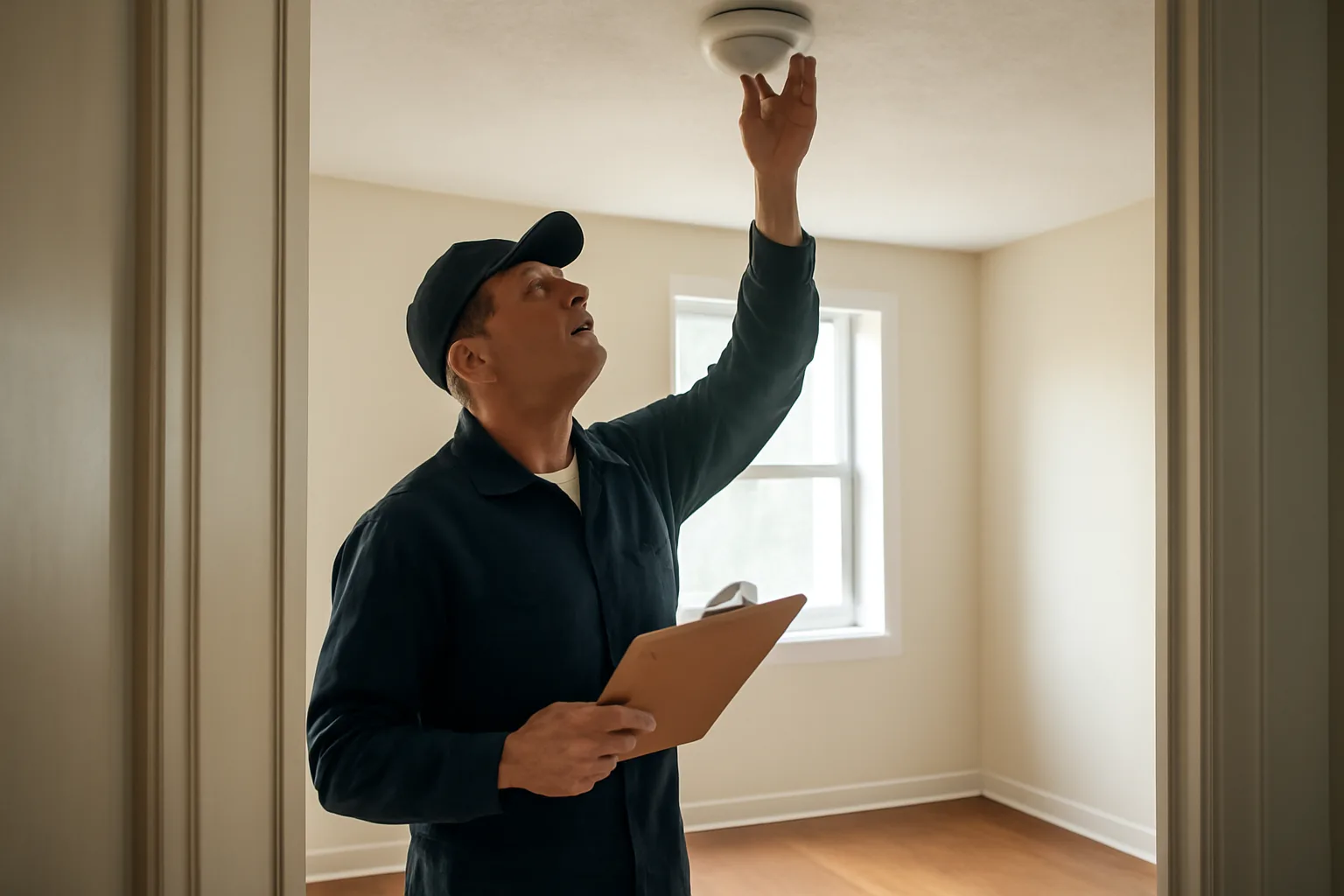
There are really two different kinds of "inspection," and they check different things. A city rental license inspection (done by code enforcement or a housing inspector) typically checks: smoke and carbon monoxide detectors, egress windows in bedrooms, working locks, adequate heat source, electrical panel condition, plumbing leaks, pest evidence, and general structural safety. It does not usually involve looking through personal belongings or closets in detail; it's a safety-code check, not a search. A landlord's own unit inspection (move-in, move-out, or periodic during tenancy) can reasonably cover: condition of walls, floors, appliances, fixtures, and evidence of unauthorized pets or occupants, or lease violations like unapproved smoking. What a landlord generally cannot do is enter without proper notice, search through personal property, or use a routine inspection as a pretext to harass a tenant or discourage them from asserting legal rights. Most states require advance written notice before a landlord can enter for a non-emergency inspection, commonly 24 hours, though this varies by state and lease terms. Always check your specific state's notice-of-entry statute rather than assuming 24 hours is universal.
How much notice does a landlord have to give before entering or ending a tenancy?
There are two very different notice questions here: notice to enter the unit, and notice to end a tenancy. They're governed by different rules and often different timeframes. For entry, many states require at least 24 hours' written notice for non-emergency entry (repairs, inspections, showings), though the exact number and form of notice varies by state statute, and some states don't specify a number at all, just "reasonable notice." Check your specific state code rather than assuming a fixed number applies everywhere. For ending a month-to-month tenancy, notice periods commonly run 30 days, though this can be longer (60 days in some states or cities for tenants who've lived there a year or more) or shorter in a few states. Local rent stabilization or just-cause eviction ordinances can extend this further and require a stated reason, more than a notice period; this is common in cities like Los Angeles under its Rent Stabilization Ordinance framework [3]. Because these numbers vary this much by state and even by city ordinance, don't rely on a generic number. Confirm the specific statute for your state and, separately, check whether your city has its own just-cause or notice-period ordinance layered on top.
What rights do tenants have without a written lease?
A tenant without a written lease still has real legal rights. Most states recognize an oral or month-to-month tenancy the moment rent is paid and accepted, and the tenant gets the same basic habitability protections as someone with a signed lease. Those protections generally include: the right to a habitable unit (working plumbing, heat, electrical, structural safety), protection from illegal lockouts or utility shutoffs used to force a move-out, the right to proper notice before the landlord ends the tenancy, and, in many states, the right to receive a receipt for rent paid in cash. What a tenant without a lease usually doesn't get is certainty about rent amount and terms; without a written lease, the terms are whatever was verbally agreed or established by pattern (like the rent amount actually being paid each month). This ambiguity is exactly why oral leases cause disputes, and why most experienced landlords use a written lease even for month-to-month arrangements, specifically to avoid "he said, she said" fights over what was agreed. State landlord-tenant statutes (like Ohio Revised Code Chapter 5321) apply to residential rental agreements generally and don't require a written lease to trigger landlord duties around habitability and repairs .
What can't a landlord do in Ohio?
Ohio Revised Code Chapter 5321 spells out specific things a landlord cannot do, on top of the general habitability duties. A landlord cannot retaliate against a tenant for exercising legal rights, such as reporting a code violation or joining a tenant union; retaliation includes raising rent, decreasing services, or threatening eviction shortly after the protected act . A landlord also cannot engage in "self-help" eviction. Ohio law prohibits landlords from locking out a tenant, shutting off utilities, or removing a tenant's belongings without going through the formal eviction (forcible entry and detainer) process in court . This matters because it's a common shortcut some landlords try when a tenant stops paying rent, and it can expose the landlord to damages, more than a delayed eviction. Ohio law also requires landlords to comply with all applicable building, housing, and health codes that materially affect health and safety, per ORC 5321.04(A)(1) . A landlord who ignores a known code violation isn't just risking a city fine, they're also creating grounds for the tenant to pursue remedies under the statute, including rent escrow through the local municipal court in some cases.
Why do landlords require renters insurance?
Landlords require renters insurance mainly to shift liability and personal property risk off their own policy and onto the tenant's. A landlord's own property insurance covers the building and the landlord's belongings and liability; it doesn't cover a tenant's furniture, electronics, or clothing if there's a fire, burst pipe, or theft. Renters insurance also typically includes liability coverage, which protects the landlord indirectly: if a tenant's negligence causes damage (an unattended stove fire, a bathtub overflow that floods the unit below), the tenant's liability coverage can pay for that damage instead of the landlord's policy taking the hit and the landlord's premiums rising afterward. Requiring it is legal in most states and increasingly common as a standard lease clause, though a few jurisdictions restrict how landlords can enforce it (for example, some cities require the landlord to offer a comparable landlord-provided policy option if the tenant can't get their own coverage). Check your state and city rules before making it a strict lease condition, and don't draft the clause yourself without reviewing your specific state's requirements; this is exactly the kind of detail worth a quick read of your state's landlord-tenant statute or a consult with a local attorney.
What happens if you skip the license and get caught?
Operating without a required rental license usually triggers a citation, a fine, and sometimes an order to stop renting the unit until you're compliant. Fine amounts vary enormously by city, from small flat penalties up to daily accruing fines for continued non-compliance, so there's no honest single number to quote here. Confirm the specific fine schedule with your city's rental licensing or code enforcement office before assuming a figure. Some cities also make an unlicensed rental unenforceable in court, meaning a landlord can't file an eviction against a nonpaying tenant until the unit is properly licensed and, sometimes, retroactively brought current on fees. That's a serious cash-flow risk for landlords who assumed licensing was optional paperwork rather than something tied to their legal standing to evict. The fix, if you've gotten a notice or just realized you're not registered, is usually straightforward: apply for the license, schedule whatever inspection is required, and pay the fee (sometimes with a late penalty on top). It's rarely faster to fight the requirement than to just get compliant. If you're trying to get organized before your city inspection or application appointment, our $79 one-time City Rental License & Inspection Prep Packet lays out the document checklist most cities ask for, so you walk in with what you need instead of getting bounced for a missing form.
Frequently asked questions
How do I become a landlord for the first time?
Get the property up to local housing code, decide whether to rent as an individual or through an LLC, check whether your city or county requires a rental license or registration, and set up a written lease and consistent tenant screening process. Confirm licensing requirements before you advertise the unit, since some cities require the license before you can legally lease.
Who is responsible for a rental property walk-through inspection in California?
The landlord initiates it. Under California Civil Code Section 1950.5, landlords must offer tenants an initial inspection before move-out if the landlord plans to deduct from the security deposit, giving the tenant a chance to fix issues first. A separate final inspection happens after move-out, with 21 days to return the deposit.
What is landlording?
Landlording is the ongoing work of operating a rental property: setting and collecting rent, handling repairs, communicating with tenants, and staying compliant with local housing codes and licensing rules. It's the operational side of being a landlord, more than owning the real estate.
What is a landlord, legally?
A landlord is the party who leases real property to a tenant in exchange for rent, with statutory duties to maintain the property in habitable condition. Ohio Revised Code 5321.04 defines these duties as complying with housing codes and keeping electrical, plumbing, and heating systems in good working order.
What rights do tenants have without a lease?
Tenants without a written lease still get basic habitability protections, protection from illegal lockouts, and the right to proper notice before the tenancy ends, under most state landlord-tenant statutes. What's missing is written certainty about rent and terms, which is why disputes are more common without a lease.
How to be a landlord well, day to day?
Respond to repair requests quickly, especially habitability issues like no heat or water. Document everything in writing. Follow your state's exact notice-of-entry and notice-to-vacate rules. Keep your rental license and required inspections current so a lapse doesn't turn into a surprise fine.
Why do landlords require renters insurance?
Renters insurance covers the tenant's own belongings, which the landlord's policy doesn't, and it includes liability coverage that can pay for tenant-caused damage instead of the landlord's insurance absorbing the cost. It's legal to require in most states, though a few cities have added conditions on how landlords can enforce it.
How much notice does a landlord have to give before entering a unit?
Many states require at least 24 hours' written notice for non-emergency entry, but the exact requirement varies by state statute, and some states just say "reasonable notice" without a fixed number. Check your specific state's landlord-tenant code rather than assuming 24 hours applies everywhere.
What can a landlord look at during an inspection?
A city licensing inspection checks safety items: smoke detectors, egress windows, heat, electrical, and plumbing condition. A landlord's own unit inspection can reasonably check general condition and lease compliance, but can't involve searching personal belongings or using the inspection to harass a tenant.
What can't a landlord do in Ohio?
Under Ohio Revised Code Chapter 5321, a landlord cannot retaliate against a tenant for exercising legal rights, cannot lock out a tenant or shut off utilities instead of filing a formal eviction, and cannot ignore code violations that affect health and safety.
Do I need a license to rent out a single room in my own house?
Often no, since many cities exempt owner-occupied properties where the owner rents out a room or two. But this exemption is narrower than people assume and doesn't usually cover owner-occupied duplexes with a fully separate rental unit. Confirm with your city's rental licensing office rather than assuming you're exempt.
Is a rental license the same as a business license?
No. A general business license covers operating any business in a city; a rental license (or rental registration) is specific to renting out residential property and often triggers its own inspection requirement. Some cities require both, separately, with separate fees and renewal schedules.
What happens if I rent without a required license?
You risk a citation and fine, and in some cities, an unlicensed unit can't be the basis for an eviction filing until the license is obtained. Fine amounts and enforcement approaches vary widely by city, so confirm the specific consequences with your local rental licensing or code enforcement office.
Sources
- California Legislative Information, Civil Code Section 1947 et seq.: California leaves most landlord-tenant and rental licensing regulation to local governments
- City of Milwaukee, Residential Rental Property Registration: Milwaukee requires registration of residential rental properties with some owner-occupied exemptions
- U.S. Department of Housing and Urban Development, Fair Housing Act Overview: The Fair Housing Act prohibits housing discrimination based on race, color, national origin, religion, sex, familial status, or disability
- Ohio Revised Code Section 5321.04: Ohio landlords must comply with housing codes, maintain electrical/plumbing/heating systems, and cannot retaliate or use self-help eviction
- California Civil Code Section 1950.5: California requires landlords to offer an initial move-out inspection and return the security deposit with an itemized statement within 21 days