Last updated 2026-07-25
TL;DR
Rental inspectors mainly check life-safety items: working smoke and CO alarms, two ways out of every bedroom, no exposed wiring, no active leaks or mold, working heat, and no pest infestations. Most cities use a checklist tied to their housing code. Fix obvious hazards before the inspection date and you'll pass most first-time visits without a callback.
What is a rental inspection actually checking for?
| Life safety | Smoke alarms, CO alarms, fire extinguishers (if required), two exits from sleeping areas | |
|---|---|---|
| Electrical | No exposed wiring, GFCI outlets near water, working outlets, no overloaded panels | |
| Plumbing | No active leaks, working hot water, proper drainage, no sewage backups | |
| Structural | Stairs, railings, decks, foundation cracks, window and door condition | |
| Pest and sanitation | Signs of rodents, cockroaches, bed bugs, mold, standing water | |
| Heating | Working furnace or heat source, especially in cold-climate cities | Every city's checklist looks a little different. Some cities publish theirs online; others hand it out at the pre-inspection meeting. Confirm the exact checklist with your city rental licensing office before the inspection date, because line items do vary by jurisdiction. |
A rental inspection is a walkthrough by a city code official (sometimes a fire inspector) to confirm a unit meets the minimum housing and safety standards in the local property maintenance code. Most cities that run mandatory rental licensing programs use some version of the International Property Maintenance Code (IPMC) as their baseline, often with local amendments [1]. The inspector isn't grading your paint job or your decor. They're checking for things that hurt or kill people: fire hazards, electrical hazards, structural problems, and health hazards like mold or pest infestations. If you've ever wondered what a landlord cannot do in Ohio, or in any other state, the flip side of that question is usually this: the state and city minimum housing codes set the floor a landlord has to meet, and inspectors exist to check that floor. Here's the short version of what shows up on nearly every city's rental inspection checklist: | Category | What gets checked |
What can a landlord look at during an inspection?
This question comes up two ways: what can a code inspector look at, and what can a landlord look at when doing their own walkthrough (either before a tenant moves in or during a lease). The rules are different for each. A city code inspector, when doing a licensing or complaint-based inspection, can typically look at anything covered by the housing or property maintenance code: smoke detectors, electrical panels, plumbing fixtures, windows, doors, stairs, and common areas. They generally cannot search personal belongings, open closets full of a tenant's things, or go through drawers. Their job is the condition of the structure and its systems, not an inventory of the tenant's stuff. A landlord doing their own walkthrough (a routine inspection, a move-in/move-out inspection, or a maintenance check) has more limited legal footing. Most states require landlords to give notice before entering an occupied unit, and the visit has to be for a legitimate purpose like inspecting condition, making repairs, or showing the unit to a prospective tenant or buyer. Landlords generally cannot go through a tenant's closets, drawers, or personal papers during a routine inspection. The inspection is about the unit's condition, appliances, smoke alarms, signs of damage, and lease compliance (unauthorized pets, unapproved occupants, health and safety issues), not a search of belongings. If you're building your own inspection checklist to use before a licensing visit, focus on: smoke and CO alarm function and battery dates, HVAC filter and function, visible leaks under sinks, window screens and locks, exterior door locks, exit path clearance, and any obvious pest signs. That overlaps almost exactly with what a city inspector checks, which is why doing your own pre-inspection walkthrough is the single best thing you can do before an official one.
How much notice does a landlord have to give before entering?
Notice requirements vary by state, and there's no single national rule. Many states require 24 hours' written or verbal notice before a landlord enters an occupied rental for a non-emergency reason like an inspection or repair, but the specific number and the required form of notice (written, verbal, posted) differ by state statute [2]. Some states are more specific. California, for example, presumes 24 hours is reasonable notice under Civil Code Section 1954, though the statute doesn't set that number as an absolute floor for every situation, it's a presumption that can be rebutted [2]. Other states, like Florida, generally follow similar norms in landlord-tenant statutes covering non-emergency entry. Because the number changes state to state (and sometimes city to city on top of that), confirm the exact notice period and required delivery method with your state's landlord-tenant statute or your city rental licensing office before you schedule any routine inspection. Emergency situations (fire, flooding, gas leak) generally don't require advance notice under most state laws, since the point of the notice requirement is to protect a tenant's right to quiet enjoyment during ordinary access, not to block a landlord from responding to a hazard.
Who is responsible for a rental property walk-through inspection in California?
In California, both the landlord and the tenant have roles, but the law puts a specific move-out inspection obligation on the landlord. Under California Civil Code Section 1950.5, if a landlord intends to deduct from a security deposit for anything other than unpaid rent, they must, upon the tenant's request, conduct an initial inspection before the tenant moves out and give the tenant a reasonable opportunity to fix identified deficiencies [3]. The statute is specific about timing: the landlord must notify the tenant in writing of their right to request this initial inspection, and if the tenant requests it, the inspection must happen within a reasonable time before the end of the tenancy, with the landlord giving at least 48 hours' written notice of the date and time (unless the tenant waives that notice) [3]. After the inspection, the landlord gives the tenant an itemized statement of anything that needs fixing. Separate from the move-out inspection, routine rental inspections tied to local rental licensing programs (many California cities require these) are typically conducted by a city code enforcement officer, not the landlord. The landlord's job in that scenario is to schedule access, be present or make sure someone is present, and fix flagged items by the deadline. So the honest answer is: for security deposit purposes, the landlord is responsible for offering and conducting the pre-move-out walkthrough. For code compliance purposes, the city inspector conducts the inspection, but the landlord is responsible for making the unit accessible and compliant.
What is a landlord, and what is landlording?
A landlord is the owner (or an owner's authorized agent) of a residential or commercial property who leases that property to a tenant in exchange for rent, taking on legal responsibilities for habitability, repairs, and compliance with state and local housing law. Most state landlord-tenant statutes define a landlord functionally, as the party who receives rent and controls the premises, rather than requiring any license just to hold that role, though many cities layer a rental license or registration requirement on top of state law. "Landlording" is the practical, day-to-day work of being a landlord: screening tenants, drafting or using a lease, collecting rent, handling maintenance requests, keeping the property up to code, and managing the relationship (and occasional conflict) with tenants. It's less a formal term and more industry shorthand, popularized by long-running books like "The Landlord's Handbook" and "Landlording" by Leigh Robinson, for the operational side of owning rental property. A useful way to think about it: owning the property makes you a landlord on paper. Landlording is the ongoing work of keeping that property legally habitable, financially solvent, and occupied by tenants who pay and behave. If you're new to this, our guide on landlord basics covers the operational side in more depth.
How do you become a landlord, and how do you actually run it well?
Becoming a landlord, in the simplest sense, just requires owning residential property and renting it out. There's no federal license to be a landlord. But there are usually several layers of local and state requirements you need to clear before you're legally operating: 1. Property ownership or authorized management rights (deed, LLC ownership, or a property management agreement). 2. Business registration if your city or state requires it for rental activity (this varies widely, confirm with your city or state). 3. Rental license or registration, required in many cities before you can legally lease a unit, often renewed annually with an inspection attached. 4. Compliance with local housing and building codes, checked at initial licensing and often at renewal. 5. Landlord-tenant law basics: security deposit limits and timelines, notice periods for entry and termination, habitability obligations, and eviction procedure, all set at the state level and enforced through state courts. 6. Insurance: landlord (dwelling) insurance covering the structure and liability, separate from a tenant's renters insurance. Running it well is a different skill than technically becoming one. The landlords who avoid fines and vacancies tend to do a few things consistently: they screen tenants with a real process (income verification, background check, prior landlord reference), they respond to repair requests fast (habitability complaints escalate quickly if ignored), they keep a paper trail on notices and inspections, and they treat their rental license renewal date like a recurring deadline, not a surprise. For a broader look at what the role involves day to day, see what a landlord actually does.
Why do landlords require renters insurance?
Landlords require renters insurance mainly to cover what their own landlord policy doesn't: the tenant's personal belongings and the tenant's personal liability. A standard landlord (dwelling) insurance policy covers the building structure and the landlord's liability as property owner, but it generally does not cover a tenant's furniture, electronics, or clothing if there's a fire, burst pipe, or theft [4]. There's also a liability angle that protects the landlord directly. If a tenant's negligence causes damage (they leave a stove on, a bathtub overflows into the unit below), renters insurance liability coverage can pay for that damage instead of the claim landing entirely on the landlord's policy or out of the landlord's pocket. Many landlords require proof of a policy with a minimum liability limit (commonly $100,000, though this varies by landlord and by state) as a lease condition. Renters insurance is also cheap relative to the protection it buys. The average cost nationally runs somewhere in the range of $15 to $30 per month depending on coverage amount and location, according to industry rate surveys from major insurers, though we'd point you to your state's department of insurance consumer pages for local averages rather than a single national number, since regional variation is significant.
What can a landlord look at during a routine inspection versus a licensing inspection?
These are two different events with two different rulebooks, and mixing them up is a common source of confusion. A routine landlord inspection (sometimes called a periodic or maintenance inspection) is something the landlord initiates, usually written into the lease, to check the unit's condition during an active tenancy. What the landlord can look at here is generally limited to visible condition and safety items: are the smoke alarms working, is there water damage, are there unauthorized occupants or pets, is the unit reasonably clean and free of hazards. A landlord doing this kind of inspection cannot rummage through drawers, closets, or personal effects, and must give proper notice under state law before entering. A licensing or code inspection, run by the city (sometimes with the fire department involved for larger buildings), is broader and codified. The inspector checks the property against the specific rental housing code the city has adopted, which usually traces back to the IPMC or a state-specific housing code [1]. This can include things a landlord's own walkthrough wouldn't normally cover, like verifying egress window dimensions, checking handrail height on stairs, confirming GFCI protection near water sources, and checking that a water heater has proper temperature-and-pressure relief venting. If you're prepping for a city licensing inspection specifically, it helps to build a checklist matched to your city's actual code rather than guessing from a generic list. That's the exact gap our $79 City Rental License & Inspection Prep Packet is built to close: a walkthrough checklist and document organizer matched to what cities commonly check, so you're not caught off guard by an item you didn't know was on the list.
What rights do tenants have without a lease?
A tenant without a written lease still has legal rights, because most tenant protections come from state statute, not from the lease document itself. A tenant paying rent without a signed lease is generally treated as a month-to-month tenant under state law, which means they still have the right to habitable housing, protection from illegal lockouts or utility shutoffs (self-help eviction is illegal in nearly every state), and the right to proper notice before the landlord ends the tenancy or raises rent. The habitability obligation is the big one. Nearly every state imposes an implied warranty of habitability on landlords regardless of whether there's a written lease: working plumbing, heat, structural safety, and freedom from pest infestation are baseline requirements a landlord has to meet [5]. A tenant without a lease can still file a habitability complaint, withhold rent in some states (under specific statutory procedures, this is state-dependent and risky to do without following the exact process), or report code violations to the city. What a no-lease tenant typically lacks is the specific negotiated terms a written lease would spell out: a fixed rent amount for a defined term, specific maintenance responsibilities, pet policies, or subletting rules. Without those in writing, state default rules fill the gap, which are usually less landlord-friendly and less tenant-friendly in specific ways depending on the state. If you're a tenant trying to understand your standing, our guide on tenants rights walks through the state-by-state basics in more detail, and renters rights covers habitability specifically.
What can a landlord not do in Ohio?
Ohio's landlord-tenant law is set out in Ohio Revised Code Chapter 5321, and it draws several clear lines a landlord cannot cross. A landlord in Ohio cannot use "self-help" eviction, meaning they cannot change the locks, shut off utilities, or remove a tenant's belongings to force them out without going through the court eviction process [6]. Ohio law also requires landlords to maintain the premises in a fit and habitable condition, comply with building and housing codes, and keep common areas safe [6]. A landlord who fails to do this can be sued by the tenant, and in some cases the tenant can deposit rent with the court (an escrow-style remedy) rather than pay the landlord directly while the issue is unresolved, following the specific procedure under ORC 5321.07. On entry, Ohio Revised Code 5321.04 requires landlords to give "reasonable notice" (Ohio courts and practice generally treat 24 hours as reasonable, though the statute itself doesn't spell out an exact number) and to enter only at reasonable times, for legitimate purposes like inspection, repairs, or showing the unit [6]. A landlord also cannot retaliate against a tenant for reporting a code violation or exercising a legal right, a protection covered separately under ORC 5321.02.
How do I prep a unit so it passes inspection the first time?
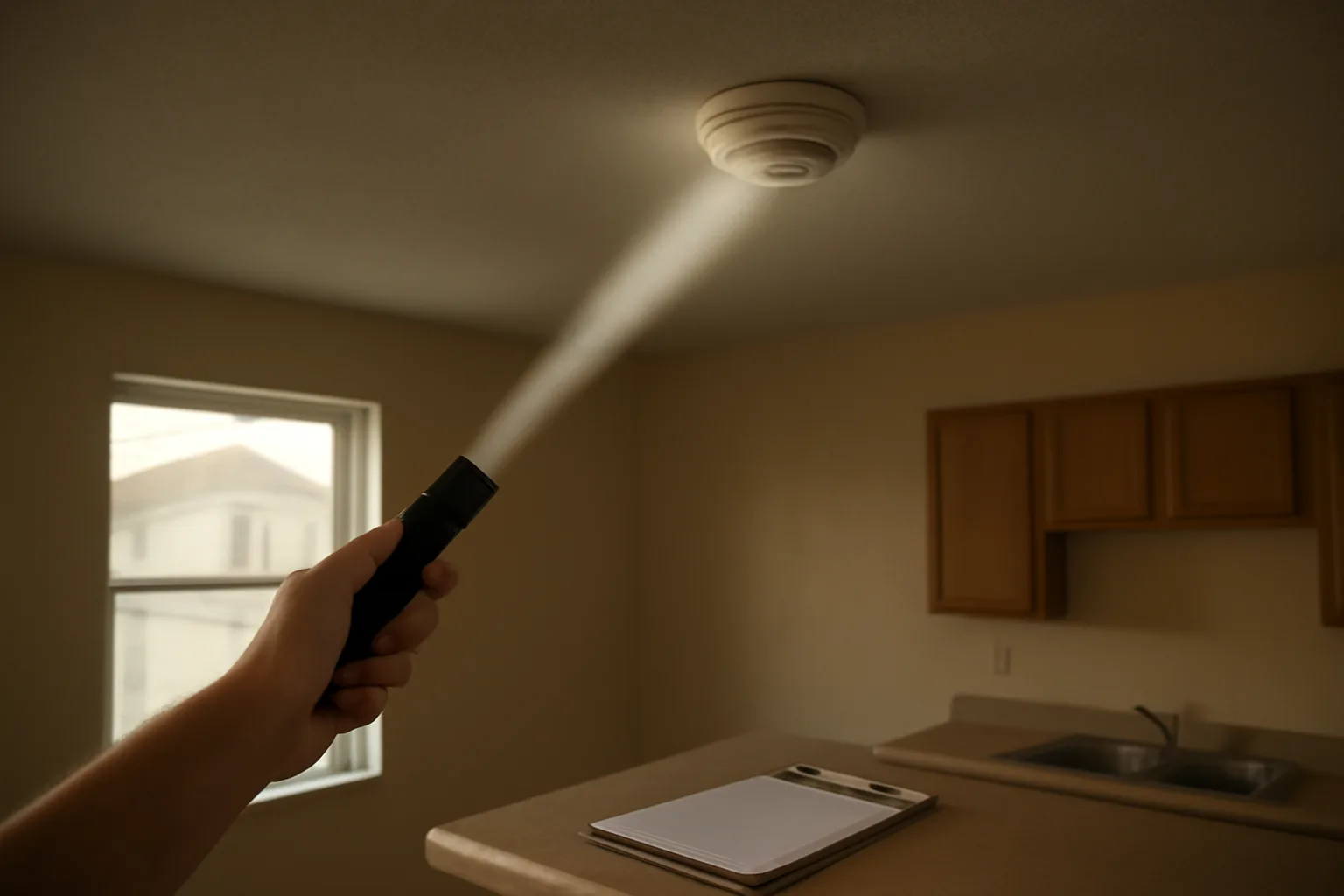
Most failed first-time inspections come down to the same handful of items, over and over. Fixing these before the inspector shows up solves the majority of issues cities flag: - Test every smoke alarm and CO alarm. Replace batteries even if they're not obviously dead, and check the alarm's manufacture date; most smoke alarms need full replacement after 10 years per National Fire Protection Association guidance .
- Confirm two ways out of every bedroom. A bedroom with only one door and no operable window that meets egress size is a common fail point in older housing stock.
- Check GFCI outlets in kitchens, bathrooms, and anywhere near water. Press the test button; if it doesn't trip and reset, replace it.
- Look under every sink and around every water heater for active leaks or water staining. Even a small, old stain can prompt questions.
- Clear the furnace area and check the filter. A dirty filter or blocked clearance is an easy, cheap fix that inspectors do flag.
- Walk every exterior stair and railing. Loose railings and rotted stair treads are structural fail points that show up constantly on city checklists.
- Check for pest signs: droppings, chew marks, nests. An infestation report is one of the harder things to fix on short notice, so catch it early. Running through this list two or three weeks before your scheduled inspection, not the night before, gives you time to actually fix what you find instead of hoping the inspector doesn't notice. If your city hands you a specific checklist ahead of time, use that exact document rather than a generic one, since line items and code citations vary city to city.
Frequently asked questions
What do landlords look for during a walk-through inspection?
Landlords and code inspectors mainly look for safety hazards: working smoke and CO alarms, no exposed wiring, no active leaks, clear exits from bedrooms, functioning heat, and no pest infestation. Licensing inspections also check compliance with the local housing code, like egress window size, handrail height, and water heater venting.
How much notice does a landlord have to give before an inspection?
It varies by state. Many states use 24 hours as the standard for non-emergency entry, and California's Civil Code Section 1954 treats 24 hours as presumptively reasonable. Some states require more, some allow verbal notice, others require written. Confirm the exact rule with your state's landlord-tenant statute.
Who is responsible for the walk-through inspection in California?
For security deposit purposes, the landlord must offer a pre-move-out inspection if the tenant requests one, under California Civil Code Section 1950.5, giving at least 48 hours' written notice. For rental licensing inspections, a city code officer conducts the inspection, and the landlord is responsible for scheduling access and fixing flagged items.
What is landlording, exactly?
Landlording is the ongoing, practical work of owning and operating rental property: screening tenants, collecting rent, handling repairs, staying compliant with local codes, and managing the tenant relationship. It's distinct from simply holding title to the property, which just makes you a landlord on paper.
What rights does a tenant have without a signed lease?
A tenant without a written lease is usually treated as a month-to-month tenant under state law and keeps core protections: the right to habitable housing, protection from illegal lockouts, and the right to proper notice before eviction or rent increases. What's missing is the specific negotiated terms a written lease would spell out.
Why do landlords require renters insurance?
Landlord insurance covers the building and the owner's liability, not a tenant's belongings. Renters insurance covers the tenant's personal property and adds a liability layer that can pay for damage the tenant causes, which protects the landlord from absorbing that cost directly.
What can a landlord not do in Ohio?
Under Ohio Revised Code Chapter 5321, a landlord cannot change locks or shut off utilities to force a tenant out (self-help eviction is illegal), must keep the unit habitable and code-compliant, must give reasonable notice before entering, and cannot retaliate against a tenant for reporting code violations.
What can a landlord look at during an inspection?
A city code inspector can check anything the housing code covers: alarms, wiring, plumbing, structural elements, egress, and pest signs. They generally cannot search personal belongings. A landlord doing a routine walkthrough is similarly limited to visible unit condition, not drawers or closets.
How do I become a landlord?
You need to own or legally manage rental property, then meet your state's landlord-tenant law obligations and your city's rental licensing or registration requirements if any apply. There's no federal landlord license, but many cities require registration, an inspection, and periodic renewal.
What's the difference between a routine inspection and a licensing inspection?
A routine inspection is landlord-initiated during a tenancy and limited to visible condition and lease compliance. A licensing inspection is city-run, tied to a rental housing code, and typically required before a rental license is issued or renewed, often on a set schedule set by the city.
Do smoke alarms need to be replaced on a schedule?
Yes. The National Fire Protection Association recommends replacing smoke alarms 10 years from their manufacture date, which is printed on the back of the unit, regardless of whether they still seem to function during a test.
Can a landlord enter without any notice at all?
Generally only in an emergency: fire, active flooding, gas leak, or an immediate threat to safety. For any non-emergency entry, including a routine inspection, state law requires advance notice, though the required amount of time and format vary by state.
Sources
- International Code Council, International Property Maintenance Code: Many cities base their rental housing inspection checklist on the International Property Maintenance Code
- California Legislative Information, Civil Code Section 1954: California law presumes 24 hours is reasonable notice before landlord entry
- California Legislative Information, Civil Code Section 1950.5: Landlord must offer a pre-move-out inspection with 48 hours' written notice if tenant requests it
- Cornell Law School Legal Information Institute, Landlord-Tenant Law overview: Nearly all states impose an implied warranty of habitability on residential landlords
- Ohio Legislature, Ohio Revised Code Chapter 5321: Ohio landlord-tenant obligations including habitability, notice for entry, and prohibition on self-help eviction
- National Fire Protection Association, Smoke Alarms: Smoke alarms should be replaced 10 years from their manufacture date