Last updated 2026-07-25
TL;DR
A rental property inspection checklist covers smoke/CO detectors, exits, electrical, plumbing, pest signs, and structural safety, done at move-in, move-out, and routine intervals. Most states require 24 to 48 hours written notice before a landlord or inspector enters. City rental licensing inspections check code compliance, not tenant housekeeping, and landlords who fail items usually get 30 to 60 days to fix them before a fine.
what should be on a rental property inspection checklist
| Life safety | Smoke alarms, CO detectors | Dead batteries, missing units in bedrooms | |
|---|---|---|---|
| Structural | Stairs, railings, decks | Loose railings, rotted deck boards | |
| Electrical | GFCI outlets, panel access | No GFCI near sinks, blocked panel | |
| Plumbing | Leaks, water heater | Leaking supply lines, no relief valve | |
| Pest/moisture | Mold, rodent signs | Window sill mold, basement moisture | If your city requires a rental license or registration, you're going to be inspected against a version of this list plus whatever local amendments your municipality has added. That's where tenant rights and habitability standards intersect with your compliance obligations, since the same items that keep you licensed are usually the same items that keep a unit legally habitable. |
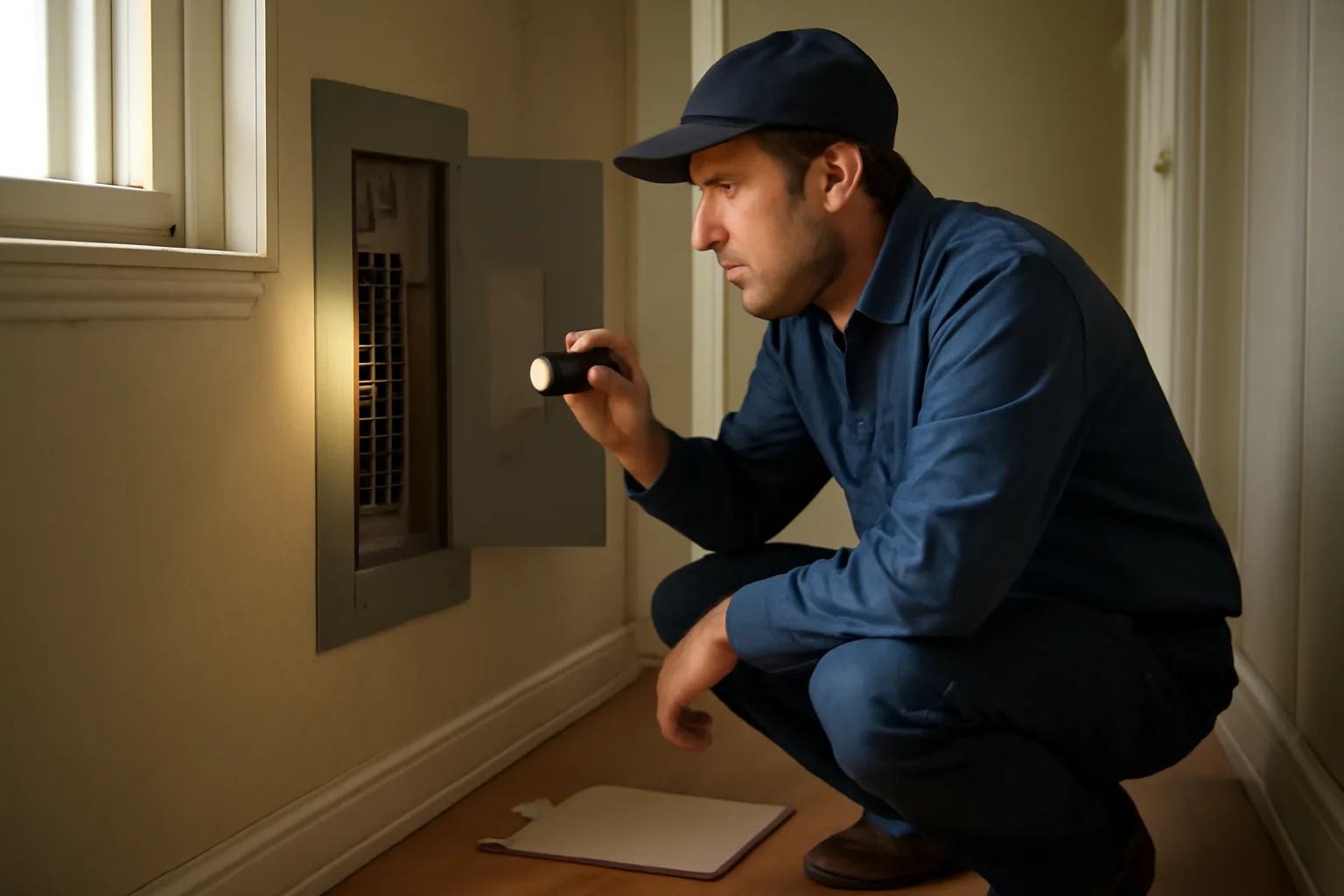
A solid rental inspection checklist has five zones: life safety, structural, electrical/mechanical, plumbing, and pest/moisture. You want it broken down room by room so nothing gets skipped, and you want a version you can hand to a tenant during a walkthrough and a version you use for a city compliance visit, because they're not quite the same document. Life safety comes first. It's what most cities actually fine you for. That means working smoke alarms in every bedroom and on every level (a requirement rooted in NFPA 72 and adopted into most state fire codes), carbon monoxide detectors near sleeping areas in any unit with gas appliances or an attached garage, two ways out of every sleeping room, and fire extinguishers in common areas of multi-unit buildings where local code requires them. Structural covers the stuff that doesn't move: foundation cracks, stair railings, deck attachment points, window and door seals, roof condition, and gutter drainage away from the foundation. Electrical and mechanical means GFCI outlets within 6 feet of water sources (kitchens, bathrooms, laundry, per the National Electrical Code Article 210.8), a furnace or HVAC system serviced within the last 12 months, water heater temperature and pressure relief valve function, and no visible exposed wiring. Plumbing means no active leaks, functioning shutoff valves, adequate water pressure, and proper drainage. Pest and moisture is often the item that trips up small landlords, because a little mold around a window or a sign of rodent activity in a basement can flag a unit as "unfit for occupancy" in some city codes, even if everything else passes. Here's a simple table version you can adapt: | Zone | Check | Common fail point |
what can a landlord look at during an inspection
A landlord doing a routine inspection can generally look at anything related to the condition and safety of the property: appliances, plumbing fixtures, smoke detectors, signs of damage, unauthorized pets, unauthorized occupants, and obvious lease violations in plain view. What a landlord can't do is go through drawers, closets, or personal belongings, or use the inspection as cover to search for something unrelated to property condition. Most state landlord-tenant statutes frame this as a "right of entry" tied to a legitimate purpose, not a general right to inspect at will. California's Civil Code Section 1954, for example, lists the specific reasons a landlord may enter: to make repairs, show the unit to prospective tenants or buyers, in emergencies, or when the tenant has abandoned the property [1]. Ohio's landlord-tenant law (Ohio Revised Code 5321.04) similarly limits entry to reasonable purposes with reasonable notice, and explicitly bars a landlord from using entry "unreasonably" [2]. So in practice, during a routine inspection you can check: smoke and CO alarm function, HVAC filters and vents, under-sink plumbing for leaks, window and door locks, visible signs of pest activity, and general cleanliness that could create a fire or health hazard. You generally cannot open a tenant's closed cabinets to look for contraband, photograph personal items unrelated to condition, or use a maintenance visit to snoop for lease violations you weren't there to check. If you're inspecting ahead of a city rental license renewal, stick to what the inspector will actually check: the mechanical, structural, and life-safety items covered above. Save any conversation about lease compliance for a separate conversation with the tenant.
who is responsible for a rental property walk-through inspection in california
In California, the landlord is responsible for scheduling and conducting the walk-through, but the tenant has a right to be present for it. California Civil Code Section 1950.5(f) gives tenants the right to request an "initial inspection" before move-out, done no earlier than two weeks before the tenancy ends, so the tenant gets a chance to fix deficiencies before final deductions are made from the security deposit [3]. The landlord must give the tenant at least 48 hours written notice of the date and time of that initial inspection, and after it, provide an itemized statement of any repairs or cleaning needed to avoid a deduction [3]. The final move-out inspection, done after the tenant has vacated, is also the landlord's responsibility, and the itemized deduction statement is required within 21 days of move-out under the same section. For move-in walkthroughs, California doesn't mandate a specific joint inspection by statute the way some cities do locally. Doing one anyway, with dated photos and a signed checklist, is the single best paper trail you can create for deposit disputes later. It protects both sides equally. Some California cities layer their own rental inspection program on top of this (through a rental housing inspection or systematic code enforcement program), and those are administered by the city's housing or code enforcement office, separate from the security deposit walk-through, so check with your specific city's rental licensing office for that requirement.
how much notice does a landlord have to give before entering or inspecting
Most states require 24 hours of notice before a landlord enters a rental unit for a non-emergency reason, though the exact number and whether it must be written varies by state. California requires "reasonable notice," which the statute presumes to be 24 hours unless circumstances make that impracticable, and that notice must generally be in writing (Civil Code Section 1954) [1]. Some states, like Florida, specify at least 12 hours notice for cases involving repairs (Florida Statutes Section 83.53) [4]. For the security deposit initial inspection specifically, California requires 48 hours written notice, longer than the standard entry notice [3]. Emergencies are the universal exception: fire, flooding, or an immediate safety threat lets a landlord enter without any advance notice in essentially every state. Here's the practical rule I'd follow no matter what your state's statutory minimum is: give at least 48 hours written notice for anything routine, by text or email with a timestamp, and keep a copy. It costs you nothing extra and it's the single easiest thing to point to if a tenant later claims you violated their right to quiet enjoyment. If your city rental license program requires periodic inspections, the notice for those is usually set by the municipal code, not the state landlord-tenant statute, so read your inspection notice letter closely for the actual deadline; don't assume it matches your state's general entry rule.
what a landlord cannot do in ohio
Ohio landlords cannot enter a rental unit without reasonable notice and a legitimate purpose (Ohio Revised Code 5321.04), cannot shut off utilities or change locks to force a tenant out (that's illegal self-help eviction, addressed under Ohio Revised Code 5321.15), and cannot retaliate against a tenant for reporting a code violation or joining a tenant union (Ohio Revised Code 5321.02) [2][5][6]. Specifically, Ohio Revised Code 5321.15 states a landlord "shall not cause, directly or indirectly, the interruption or termination of any utility service" being paid for by the tenant, and bars locking a tenant out except through the court eviction process [5]. That means even if rent is late, an Ohio landlord has to go through the municipal court, not change the locks over a weekend. Ohio Revised Code 5321.04 also requires landlords to keep the unit in a fit and habitable condition, comply with building and housing codes materially affecting health and safety, and keep common areas in safe condition [2]. Failing those obligations doesn't just risk a code violation, it can also give the tenant grounds to withhold rent through Ohio's statutory repair-and-deduct process under Section 5321.07, following specific notice steps [7]. So the short version for Ohio: no entry without notice and cause, no retaliation, no lockouts, no utility shutoffs, and no ignoring health and safety code violations once you're on notice of them.
what rights do tenants have without a lease
A tenant without a written lease, sometimes called a tenant-at-will or month-to-month tenant by default, still has nearly all the same legal protections as a tenant with a signed lease. No written lease doesn't mean no rights; it usually just means the tenancy runs month-to-month and either side can end it with proper notice. Without a lease, a tenant still has the right to a habitable unit (working plumbing, heat, structural safety), the right to notice before entry, the right to proper eviction procedure through the courts rather than a lockout, and the right to their security deposit back under whatever timeline their state sets. What changes without a written lease is mostly the terms around length of tenancy and rent increases; a month-to-month arrangement typically requires 30 days notice to end the tenancy or change terms like rent, though some states or cities require more (60 or 90 days in certain rent-controlled or long-tenancy situations). Verbal leases are legally enforceable in most states for month-to-month terms, though they're obviously harder to prove in a dispute. If you're a landlord operating without written leases, that's a real risk to you too, more than an informality, since you have nothing in writing to point to if a disagreement comes up about pets, guests, or maintenance responsibilities. For more on what protections apply regardless of paperwork, see renters rights and tenants rights.
why do landlords require renters insurance
Landlords require renters insurance mainly to cover the tenant's personal belongings and liability, not the building itself, which is covered by the landlord's own policy. A landlord's property insurance covers the structure, but it typically excludes a tenant's furniture, electronics, and clothing, and it doesn't cover a tenant's personal liability if, say, their dog bites a visitor or their bathtub overflow damages the unit below. Requiring renters insurance (commonly $100,000 to $300,000 in liability coverage) shifts that risk off the landlord's policy and reduces the chance of a costly claim or lawsuit landing entirely on the landlord. It's a low-cost requirement for tenants, typically $15 to $30 a month depending on coverage and location, and it's legal to require in most states as a lease condition, as long as it's disclosed and applied consistently to all tenants. The other reason: if a fire, water leak, or other covered event happens and it's the tenant's fault (an unattended candle, a bathtub left running), the landlord's insurer may subrogate, meaning they pay the claim then sue the tenant to recover costs. A tenant with their own liability coverage absorbs that instead of it becoming a drawn-out dispute between the landlord's insurer and an uninsured tenant.
what is a landlord and what is landlording
A landlord is the owner (or authorized agent of the owner) of real property who rents that property to another party, called a tenant, in exchange for regular payment. Landlording is the informal term for the practice and business of being a landlord: sourcing tenants, screening applicants, collecting rent, handling maintenance, keeping the unit compliant with local code, and managing the legal relationship defined by a lease. Landlording isn't a licensed profession by itself in most states (property management, done for other owners for a fee, often is licensed, but managing your own rental typically is not). What is regulated, heavily in some cities, is the property: rental registration, rental licensing, and periodic inspection requirements exist specifically because cities want a point of contact and a compliance record for every unit rented out, regardless of whether the owner considers themself a professional landlord or someone renting out a basement unit. The day-to-day of landlording breaks into four buckets: tenant relations (screening, communication, notices), financial (rent collection, expense tracking, taxes), maintenance (repairs, inspections, vendor management), and compliance (registration, licensing, code inspections, insurance). Landlords who treat compliance as an afterthought are the ones who end up blindsided by a rental licensing notice or a failed inspection fine, because the requirements are usually published well in advance by the city but easy to miss if you're not looking for them.
how to become a landlord and how to be a landlord
Becoming a landlord starts with the property itself: you either already own a property you're converting to a rental, or you're buying one specifically to rent out. From there, the steps are roughly the same everywhere: confirm zoning allows rental use, check whether your city requires rental registration or licensing (many do, and it's separate from your mortgage or deed), get landlord liability insurance, set up a lease that complies with your state's landlord-tenant statute, and screen tenants consistently under fair housing law. Most cities with a rental licensing program require you to register or license the unit before you advertise it or place a tenant, not after. Skipping that step is one of the most common ways new landlords end up with a violation notice in their first year. Fees vary widely: confirm the exact registration or license fee, renewal cycle, and inspection requirement with your specific city's rental licensing office, since these range from a simple annual registration fee in the tens of dollars to licensing programs with inspection fees in the hundreds, depending on the municipality and unit count. Being a landlord day to day means: responding to maintenance requests promptly (most states require "reasonable time," often interpreted as 24 to 48 hours for urgent issues like no heat or no water), keeping records of all notices and inspections, following your state's exact security deposit return timeline (it ranges from 14 days in some states to 30 or more in others), and never skipping the formal eviction process, no matter how tempting a shortcut looks. If you're just getting your first unit registered, running that first inspection checklist yourself before the city's inspector shows up saves real money. Fixing a missing GFCI outlet or a dead smoke alarm battery costs you a few dollars; failing a city inspection over the same issue can cost a re-inspection fee plus a delay in getting your license issued, and in some cities a daily fine accrues if the violation goes uncorrected past the notice deadline. This is exactly the kind of prep work our $79 City Rental License & Inspection Prep Packet is built for: a checklist matched to what inspectors actually look for, so you're not guessing at what to fix before the appointment.
how often should a landlord inspect a rental property
There's no single national standard, but a common-sense cadence is: a full move-in inspection, a full move-out inspection, and one to two routine mid-tenancy inspections per year, plus any inspection required by your city's rental licensing cycle. Twice-a-year routine inspections are standard advice among property management associations, often paired with seasonal maintenance (checking HVAC before summer and winter). City-mandated inspections run on their own schedule set by ordinance, commonly every one, two, or three years depending on the program, though some cities inspect annually for buildings with prior violations and less often for units with clean histories. That interval, and whether it's triggered by tenant turnover instead of a calendar date, is set locally, so confirm the actual cycle with your city's rental licensing office rather than assuming a national default. Doing your own inspection more often than the city requires isn't wasted effort. It catches small problems (a slow leak, a failing smoke alarm battery) before they become code violations, tenant complaints, or insurance claims. It's also the best way to walk into a city inspection already knowing what's going to fail, instead of finding out from the inspector's report.
what happens if a rental fails a city inspection
If a unit fails a city rental inspection, the landlord typically gets a written notice listing each violation and a deadline to fix them, commonly 30 to 60 days depending on the severity and the city's ordinance. Life-safety violations (no smoke detector, exposed wiring, no second exit) usually get shorter deadlines than cosmetic or minor code items. After the deadline, the city typically schedules a re-inspection, sometimes for an additional fee, to confirm the fixes were made. If violations aren't corrected, cities generally escalate through a fine schedule (often starting in the range of $50 to a few hundred dollars per violation per day it remains uncorrected, though this varies enormously by municipality), and in serious or repeated cases can suspend or revoke the rental license entirely, which can legally bar you from renting the unit until it's resolved. The fix is almost always cheaper and faster than the fine. A missing CO detector costs $20 to $40 to correct; letting that same violation sit past a re-inspection deadline can trigger daily fines that add up fast, plus the cost of a second inspection visit. If you've gotten a notice already, don't wait on it: read the deadline carefully, fix what you can immediately, and call the inspection office if you need more time, since many will grant an extension if you're actively working on it rather than ignoring it.
Frequently asked questions
What is included in a standard rental inspection checklist?
A standard checklist covers smoke and CO detectors, electrical outlets and panels (especially GFCI near water), plumbing leaks and water heater function, structural items like stairs and railings, HVAC condition, and signs of pests or moisture damage. City rental licensing inspections check these same categories against local building and housing code.
How to become a landlord?
Confirm your property's zoning allows rental use, check if your city requires rental registration or licensing before you advertise the unit, get landlord liability insurance, use a lease compliant with your state's landlord-tenant law, and screen tenants consistently under fair housing rules. Register with your city's rental licensing office before placing a tenant, not after.
Who is responsible for a rental property walk-through inspection in California?
The landlord is responsible for scheduling and conducting it, but under California Civil Code Section 1950.5(f), tenants can request a pre-move-out initial inspection with at least 48 hours written notice, giving them a chance to fix issues before deposit deductions are finalized.
What is landlording?
Landlording is the practice of owning and renting out real property: screening tenants, collecting rent, handling maintenance, and keeping the unit compliant with local registration, licensing, and inspection rules. It's not a licensed profession itself, but many cities license the rental unit and require ongoing compliance from whoever operates it.
What is a landlord?
A landlord is the owner or authorized agent of real property who rents it to a tenant in exchange for regular payment, usually under a lease. Landlords carry legal obligations under state landlord-tenant law, including habitability, proper notice before entry, and following formal eviction procedure rather than self-help remedies.
What rights do tenants have without a lease?
Tenants without a written lease still have the right to a habitable unit, notice before entry, formal eviction procedure instead of a lockout, and return of their security deposit under state timelines. No lease usually just means a month-to-month tenancy, ending with 30 days notice in most states, sometimes more.
How to be a landlord day to day?
Respond to maintenance requests within a reasonable time (often 24 to 48 hours for urgent issues), document all notices and inspections in writing, follow your state's security deposit return deadline exactly, and never bypass the formal eviction process even when a tenant situation feels urgent.
Why do landlords require renters insurance?
Renters insurance covers the tenant's belongings and personal liability, which the landlord's own property insurance does not. It reduces the landlord's exposure if a tenant's negligence causes damage (an overflowing tub, an unattended candle) or if someone is injured in the unit and sues.
How much notice does a landlord have to give before entering?
Most states require at least 24 hours notice for non-emergency entry, though the exact minimum varies. California presumes 24 hours reasonable and requires it in writing (Civil Code 1954); some states require less for repairs. Emergencies allow entry without any advance notice.
What can a landlord look at during an inspection?
A landlord can check smoke and CO detectors, appliances, plumbing, HVAC, visible damage, and obvious lease violations in plain view. A landlord cannot search closed drawers, closets, or personal belongings, and cannot use a maintenance visit as cover to look for something unrelated to the unit's condition.
What can a landlord not do in Ohio?
Ohio landlords cannot enter without reasonable notice and cause (Ohio Revised Code 5321.04), cannot shut off utilities or change locks to force a tenant out (5321.15), and cannot retaliate against a tenant for reporting a code violation (5321.02). Eviction must go through the municipal court.
How often does a rental property need to be inspected?
There's no universal rule. A common private cadence is a move-in inspection, a move-out inspection, and one to two routine inspections per year. City-mandated licensing inspections run on a separate cycle, often every one to three years, set by local ordinance; confirm the exact interval with your city's rental licensing office.
What happens if my rental fails a city inspection?
You typically get a written notice listing violations with a correction deadline, often 30 to 60 days. Life-safety issues usually get shorter deadlines. Missing that deadline can trigger re-inspection fees and daily fines, and in serious cases can suspend your rental license until violations are fixed.
Sources
- California Legislative Information, Civil Code Section 1954: California landlord entry notice requirements and permitted reasons for entry
- Ohio Laws, Revised Code Section 5321.04: Ohio landlord obligations for habitability, notice, and reasonable entry
- Florida Legislature, Florida Statutes Section 83.53: Florida landlord entry notice requirement of at least 12 hours for repairs
- Ohio Laws, Revised Code Section 5321.15: Ohio prohibition on utility shutoffs and self-help lockouts by landlords
- California Legislative Information, Civil Code Section 1950.5: California pre-move-out initial inspection right and 48-hour notice requirement
- Ohio Laws, Revised Code Section 5321.02: Ohio prohibition on landlord retaliation against tenants
- National Fire Protection Association, NFPA 72: Smoke alarm placement requirements referenced by state fire codes
- National Fire Protection Association, National Electrical Code Article 210: GFCI outlet requirements near water sources in dwellings
- Ohio Laws, Revised Code Section 5321.07: Ohio tenant repair-and-deduct rights following landlord notice of a code violation