Last updated 2026-07-25
TL;DR
If you searched "under bridge inspection truck rental," you're likely looking for aerial lift equipment used to inspect highway bridges, not rental housing. This article clears that up fast, then covers what actually matters to landlords: rental property inspections, licensing rules, tenant rights, and notice requirements in cities that require rental registration.
what does "under bridge inspection truck rental" actually mean?
An under bridge inspection truck, sometimes called an under bridge unit or UBIT, is a specialized vehicle with a hydraulic arm that lowers an inspector platform beneath a bridge deck so engineers can examine the underside, the girders, and the support structure up close. State departments of transportation either own fleets of these trucks or rent them from equipment companies for periodic bridge inspections required under federal law. The Federal Highway Administration's National Bridge Inspection Standards require most highway bridges to be inspected at intervals not to exceed 24 months [1]. If that's what brought you here, this isn't your site. RentalPermitPath covers residential rental property licensing, registration, and code inspections for landlords, not heavy equipment rental or transportation engineering. You'd want a bridge inspection equipment rental company or your state DOT's bridge inspection program page instead. But here's the thing: a decent chunk of people searching that exact phrase are actually landlords who got a notice about a required "rental inspection" and typed the wrong words into Google, or they're mixing up commercial equipment searches with a housing inspection they're anxious about. So if you're a landlord who landed here because your city sent you an inspection letter and you're stressed and typing fast, keep reading. The rest of this article covers what your rental property inspection actually involves, what your city can and can't check, and what your legal obligations are as a landlord.
what is landlording, and what is a landlord?
A landlord is the owner (or an owner's authorized agent) who leases residential or commercial property to a tenant in exchange for rent. Landlording is the day-to-day work of running that arrangement: collecting rent, maintaining the unit, handling repairs, following local and state law, and managing the relationship with tenants from move-in to move-out. It sounds simple until you're doing it. Landlording is really three jobs stacked on top of each other: property maintenance, bookkeeping, and compliance. The compliance part is the one new landlords underestimate most, especially in cities with mandatory rental licensing or registration programs. Those programs require you to register your unit, pay a fee, and often pass a habitability inspection before you can legally rent it out. Miss that step and you can face fines, a rental ban, or trouble evicting for nonpayment because your lease may be considered unenforceable in some jurisdictions until the unit is properly licensed. The legal definition of landlord and tenant, and the baseline duties each side owes the other, comes from state landlord-tenant law. Every state has its own statute; there's no single federal landlord-tenant code. If you want the specific language for your state, search "[your state] landlord tenant act" plus your state's official legislature site, not a generic blog.
how to become a landlord: what's actually required?
Becoming a landlord legally requires more than buying a property and finding a tenant. Here's the realistic checklist: 1. Confirm zoning allows rental use for your property type (single-family, duplex, ADU, etc.) with your local planning or zoning office. 2. Check whether your city requires a rental license, rental registration, or a certificate of occupancy for rentals. Hundreds of U.S. cities do, including Chicago, Los Angeles, Minneapolis, and many mid-size cities you wouldn't expect. Requirements, fees, and inspection cycles vary by city, so confirm with your city rental licensing office directly. 3. Get landlord-appropriate insurance (a standard homeowner's policy usually doesn't cover a tenant-occupied property). 4. Learn your state's security deposit limits, notice requirements, and habitability standards. 5. Set up a lease that complies with state law (this isn't a form you should copy off a random website; check your state bar association or a local attorney for anything unusual). 6. Screen tenants consistently and legally under the Fair Housing Act, which prohibits discrimination based on race, color, national origin, religion, sex, familial status, or disability [2]. 7. Register for any required business license or rental property tax if your city or state requires it. Skipping step 2 is the most common expensive mistake. A landlord who rents out a unit in a city with mandatory licensing, without registering it, can get hit with fines that stack up per month of noncompliance in some cities, on top of having to retroactively pass an inspection anyway. If you're managing 1 to 10 units and you're not sure your city has one of these programs, that's worth ten minutes of checking before you sign your next lease.
who is responsible for a rental property walk-through inspection in California?
In California, the landlord is responsible for arranging and conducting the pre-move-out inspection, but the tenant has to request it or the landlord has to offer it. California Civil Code Section 1950.5 gives tenants the right to request an initial inspection before move-out, so they can fix any issues themselves and avoid deposit deductions [3]. The landlord must give at least 48 hours written notice before entering for that inspection unless the tenant waives that notice in writing [3]. Separately, some California cities (not the state as a whole) also require a rental housing inspection tied to licensing or code enforcement, run by the city's housing or building department, not the landlord. Los Angeles, for example, runs the Systematic Code Enforcement Program (SCEP), which requires periodic inspections of most residential rental units in the city [4]. That's a different inspection from the move-out walkthrough: SCEP checks the building for habitability code violations, and the city, not the landlord, schedules and conducts it, though the landlord typically has to be present or provide access. So the short answer: for the move-out deposit walkthrough, it's the landlord's job to offer or perform it under state law. For a city rental-licensing inspection, it's the city's inspector who does the actual inspection, but it's the landlord's job to register the property, pay the fee, and get the unit ready to pass.
what can a landlord look at during an inspection?
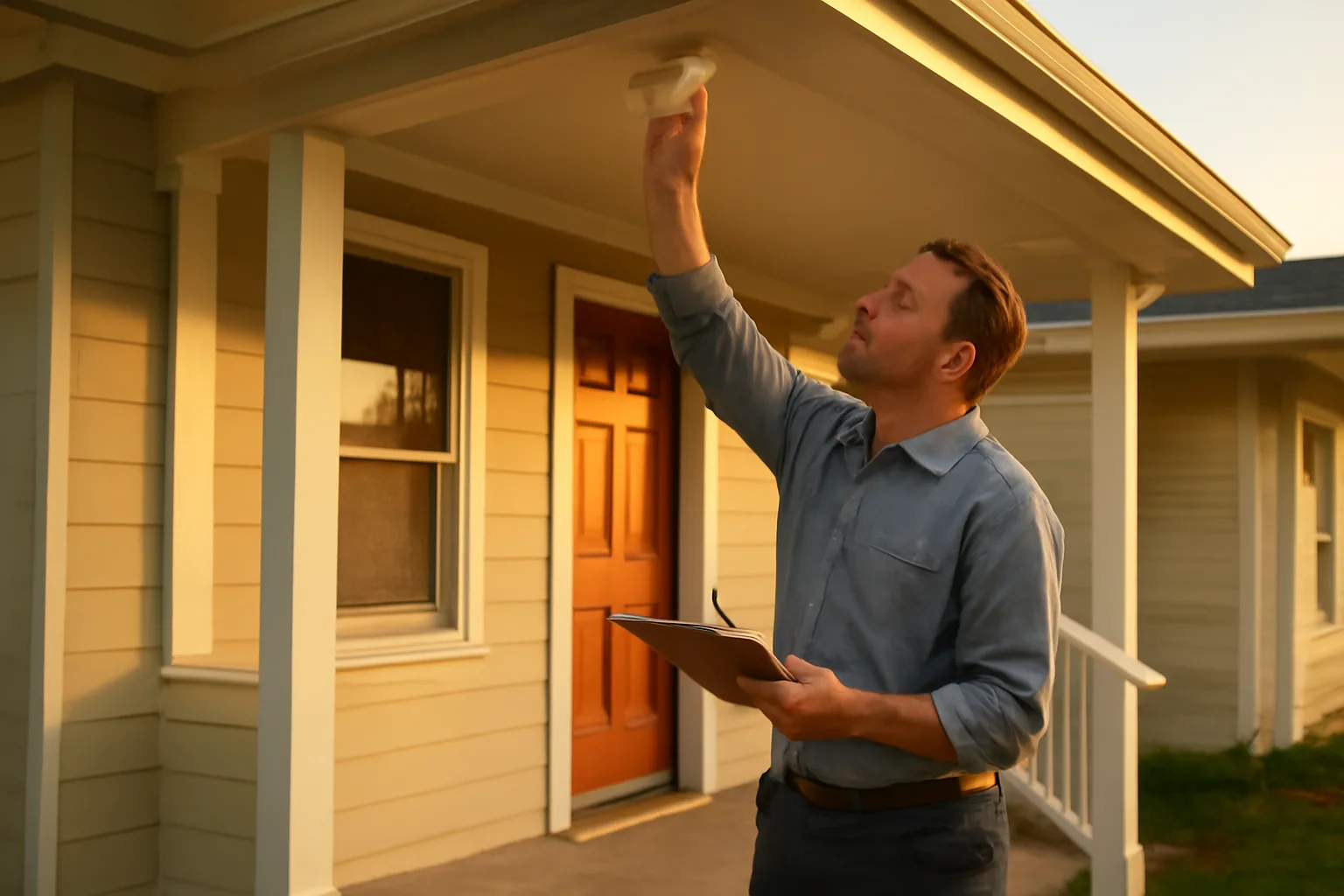
During a routine or move-out inspection, a landlord (or the landlord's agent) can generally check for damage beyond normal wear and tear, cleanliness, safety hazards, and whether the unit is being used in a way that violates the lease. That includes checking smoke detectors, looking for unauthorized pets or occupants, checking for unreported leaks or mold, and confirming no illegal alterations were made. What a landlord generally cannot do is search through a tenant's personal belongings, closets, or drawers unless there's a specific lease-permitted or legal reason (like checking for a safety hazard reported by the tenant). Landlords also can't use an inspection as a pretext to harass a tenant, and most states require advance written notice before any non-emergency entry. For a city licensing or code-compliance inspection, the inspector is checking the physical building, not the tenant's belongings: working smoke and carbon monoxide detectors, safe electrical and plumbing systems, adequate heat, no structural hazards, proper egress from bedrooms, and compliance with the local housing or building code. A city inspector generally isn't there to judge how tidy the tenant keeps the place; they're checking whether the building itself is safe and code-compliant. If you're prepping for one of these, getting your unit's basics squared away (working detectors, no code violations sitting unaddressed, documentation of past repairs) matters far more than a spotless kitchen.
how much notice does a landlord have to give before entering or inspecting?
Notice requirements vary by state, and there's no single national rule. California requires "reasonable notice," which the Civil Code defines as presumptively 24 hours for most entries [3]. Many other states set their own standard: some require 24 hours, some 48, and a few don't set a specific number in statute at all, just requiring "reasonable" notice, which courts interpret case by case. Emergency entry (a burst pipe, a fire, a gas leak) is the one exception nearly every state allows without advance notice. Outside of emergencies, giving notice by text or a note left on the door may or may not satisfy your state's written notice requirement, so check your specific state statute rather than assuming. For city rental-licensing inspections, the notice period is usually set by your city's ordinance, not state law, and it can be different from the entry-notice rule that applies to routine landlord visits. Some cities schedule inspections with weeks of advance notice by mail; others use shorter windows for follow-up or complaint-based inspections. Confirm the specific notice period with your city rental licensing office, since this genuinely varies block by block in some regions and changes when ordinances get updated.
why do landlords require renters insurance?
Landlords require renters insurance mainly to shift liability and property-damage risk away from themselves and their own insurance policy. A landlord's own property insurance covers the building structure, but it generally doesn't cover a tenant's personal belongings, and it may not fully cover liability if a tenant's negligence (a kitchen fire, an overflowing tub) causes damage. Renters insurance typically covers the tenant's personal property, provides liability coverage if the tenant accidentally causes damage or someone is injured in the unit, and often covers additional living expenses if the unit becomes temporarily uninhabitable. Requiring it is legal in most states as a lease condition, though a landlord can't apply the requirement in a way that discriminates against protected classes under the Fair Housing Act [2]. The honest landlord-side reason: renters insurance means fewer disputes and lawsuits landing entirely on your policy and your wallet when something goes wrong that was the tenant's fault, not the building's. It's a cheap requirement to add to a lease (renters insurance commonly runs in the range of $15 to $30 a month depending on coverage and location, though costs vary by market) and it's one of the lower-friction risk-management moves a small landlord can make.
what rights do tenants have without a lease?
A tenant without a written lease still has legal rights under state landlord-tenant law. If a tenant is paying rent and the landlord accepts it, most states treat this as a month-to-month tenancy at will, governed by the same state statute that would apply if there were a written lease, just without the specific terms a written lease would spell out. Without a written lease, tenants generally still have the right to: habitable housing (working plumbing, heat, and structural safety), advance notice before the landlord enters (per your state's statute), advance notice before eviction or lease termination (typically 30 days for month-to-month tenancies in many states, though this varies), and protection from retaliatory or discriminatory eviction under the Fair Housing Act [2] and state equivalents. What a tenant without a lease usually doesn't have is a fixed rent amount or fixed term locked in; a landlord can typically raise rent or end a month-to-month tenancy with proper notice, subject to any local rent control or just-cause eviction ordinances that may apply in your city. If you're a landlord operating without written leases for any of your units, that's a real gap. An oral or informal arrangement still creates a legal tenancy, but it also creates ambiguity that tends to go against whoever didn't put terms in writing when a dispute lands in court. For a deeper look at how these baseline protections work, see tenant rights and renters rights.
what can a landlord not do in Ohio?
Ohio landlord-tenant law is set out in Ohio Revised Code Chapter 5321. Under that chapter, a landlord cannot shut off utilities, change the locks, or remove a tenant's belongings to force them out without going through the formal eviction process in court, sometimes called "self-help eviction," and it's illegal in Ohio as in most states [5]. Ohio law also requires landlords to give reasonable notice, presumptively at least 24 hours, before entering an occupied unit for a non-emergency reason [5]. The statute states landlords must maintain the property to meet applicable health and safety codes, keep common areas safe, and maintain electrical, plumbing, and heating systems in good working order [5]. Ohio landlords also cannot retaliate against a tenant for reporting a code violation to a housing authority or for asserting other legal rights under the chapter; ORC 5321.02 specifically restricts a landlord's ability to raise rent, decrease services, or bring eviction proceedings in retaliation for a tenant's good-faith complaint [6]. And like every state, Ohio landlords cannot discriminate based on the protected classes under the federal Fair Housing Act [2], plus any additional protected classes added under Ohio Revised Code Chapter 4112 . If you're a landlord in a city like Cleveland, Columbus, or Cincinnati, layer city-level rental registration or inspection ordinances on top of this state law; several major Ohio cities run their own rental registration or licensing programs separate from the state statute, so confirm requirements with your specific city's rental licensing or code enforcement office.
how does a mandatory rental inspection actually work, city to city?
| Registration only | Landlord registers the unit and pays a fee; no routine inspection unless there's a complaint | Common in smaller cities | |
|---|---|---|---|
| Licensing with cyclical inspection | Landlord registers, pays a fee, and the unit is inspected on a set cycle (often every 1 to 3 years) | Los Angeles SCEP [4] | |
| Complaint-based inspection | No routine inspection, but a tenant complaint triggers a code enforcement visit | Many mid-size cities | |
| Point-of-sale or point-of-rental inspection | Inspection required when the unit changes tenants or ownership | Some Midwest and Rust Belt cities | Fees, inspection intervals, and what specifically gets checked (life-safety systems, structural issues, occupancy limits) differ by city and change over time as ordinances get updated, so treat any specific number you find online, including in this article, as something to double check against your city's current rental licensing office page before you budget for it or schedule around it. |
There's no single national rental inspection standard, which is exactly why this trips landlords up when they move a rental into a new city or buy their first unit in one of these jurisdictions. Broadly, cities that require rental licensing or inspection tend to follow one of a few patterns: | Program type | How it works | Example approach |
how do I actually get ready for a rental licensing inspection?
Most inspection failures come down to a short list of repeatable problems: missing or expired smoke and carbon monoxide detectors, unpermitted electrical work, blocked egress windows in bedrooms, peeling lead paint in older units, and unaddressed water damage. None of those are expensive to fix if you catch them before the inspector shows up; all of them are expensive if you don't. A reasonable prep sequence looks like this: pull your city's specific inspection checklist (most rental licensing offices publish one), walk the unit yourself with that checklist in hand, fix anything obvious, document what you've already repaired with photos and dates, and confirm your registration and fee are current before the scheduled date. If your city requires proof of a certificate of occupancy or a specific permit history, gather that paperwork ahead of time rather than scrambling the morning of the inspection. This is the part where, if you own a handful of units across one or two cities and you'd rather not rebuild this checklist from scratch every renewal cycle, our $79 one-time City Rental License & Inspection Prep Packet walks through the registration steps, typical inspection points, and renewal timeline for your city so you're not guessing at what the inspector actually checks. It's a reference tool, not a guarantee of passing; no packet can promise that, since the inspector, not the packet, makes the final call.
what happens if I ignore the inspection notice or violation letter?
Ignoring a rental licensing notice tends to get expensive fast, and the mechanism is usually the same across cities: an unpaid fine escalates into a daily or monthly penalty, then into a hold on your ability to legally collect rent or evict for nonpayment, and in the worst cases into a lien on the property or a court referral. Cities vary widely on the specific dollar amounts and escalation timeline, so don't assume a first-notice fine is the ceiling. The smarter move, even if you can't fix everything by the deadline, is to contact your city's rental licensing or code enforcement office directly and ask about an extension or a compliance plan. Most municipal inspection programs have some process for landlords who are actively working toward compliance, and showing up before the deadline passes puts you in a very different position than showing up after a fine has already been assessed. If you're new to owning rental property and this is your first brush with a licensing notice, take it as the signal it is: your city has an active enforcement program, and this almost certainly isn't a one-time event. Budget for the renewal cycle now, because it's coming back around.
Frequently asked questions
What is an under bridge inspection truck used for?
An under bridge inspection truck (UBIT) is a vehicle with a hydraulic arm that positions inspectors beneath a bridge deck to examine girders, joints, and supports up close. State transportation departments use them to meet the Federal Highway Administration's National Bridge Inspection Standards, which generally require inspection at least every 24 months. This has nothing to do with residential rental housing inspections.
How to become a landlord starting from scratch?
Confirm zoning allows rental use, check whether your city requires rental registration or licensing, get landlord insurance, learn your state's security deposit and notice rules, write a state-compliant lease, and screen tenants consistently under Fair Housing Act rules. Cities with mandatory licensing add a registration fee and often an inspection before you can legally rent, so check that first.
Who is responsible for a rental property walk-through inspection in California?
The landlord is responsible for offering and conducting the pre-move-out inspection under California Civil Code Section 1950.5, giving at least 48 hours written notice unless the tenant waives it. Separately, some California cities run their own licensing-tied inspections, like Los Angeles's Systematic Code Enforcement Program, conducted by city inspectors rather than the landlord.
What is landlording?
Landlording is the ongoing work of owning and managing a rental property: maintaining the unit, collecting rent, following state and local landlord-tenant law, and handling the relationship with tenants from move-in through move-out. In cities with mandatory rental licensing, it also includes registering the unit and passing periodic inspections.
What is a landlord?
A landlord is the owner or authorized agent who leases residential or commercial property to a tenant for rent, taking on legal duties like habitability, proper notice before entry, and compliance with local licensing rules, and gaining rights like collecting rent and enforcing lease terms through legal eviction process.
What rights do tenants have without a written lease?
A tenant paying rent without a written lease is generally treated as a month-to-month tenant under state law, with rights to habitable housing, advance notice before entry, and advance notice before eviction (often 30 days, though this varies by state and city). What they typically lack is a locked-in rent amount or term.
How to be a landlord without breaking the law?
Register with your city's rental licensing program if one applies, use a lease that follows your state's landlord-tenant statute, give proper notice before entry (commonly 24 to 48 hours depending on the state), never attempt a self-help eviction, and follow Fair Housing Act rules on screening and treatment of tenants.
Why do landlords require renters insurance?
Renters insurance covers a tenant's personal belongings and adds liability coverage if the tenant's negligence causes damage or injury, protecting the landlord's own policy and wallet from claims that aren't the building's fault. It's a low-cost lease requirement, commonly $15 to $30 a month, that reduces dispute risk for both sides.
How much notice does a landlord have to give before entering?
It depends on the state. California presumes 24 hours is reasonable notice under Civil Code Section 1950.5; other states set 24 or 48 hours by statute, and some just require "reasonable" notice without a fixed number. Emergencies are the universal exception. Check your specific state's landlord-tenant statute for the exact rule.
What can a landlord look at during an inspection?
A landlord can check for damage beyond normal wear, safety hazards, working smoke detectors, unauthorized occupants or pets, and lease compliance. A landlord generally cannot search personal belongings, drawers, or closets without a specific reason, and can't use inspections to harass a tenant.
What can a landlord not do in Ohio?
Under Ohio Revised Code Chapter 5321, a landlord can't shut off utilities, change locks, or remove belongings to force a tenant out without a court eviction order. Landlords also can't retaliate against tenants for code complaints (ORC 5321.02) and must give reasonable entry notice, presumptively at least 24 hours.
Does every city require a rental license or inspection?
No. Rental licensing, registration, and inspection requirements are set city by city (sometimes county by county), not nationally or even statewide in most states. Hundreds of U.S. cities have some version of a program, but requirements, fees, and inspection cycles vary widely, so confirm with your specific city's rental licensing office.
What's the difference between a move-out inspection and a city licensing inspection?
A move-out inspection is between landlord and tenant, focused on damage versus normal wear, and governed by state security deposit law. A city licensing inspection is conducted by a municipal inspector, focused on building code and habitability standards (smoke detectors, electrical, structural safety), and tied to your rental license renewal.
Sources
- Federal Highway Administration, National Bridge Inspection Standards: Highway bridges must generally be inspected at intervals not exceeding 24 months.
- U.S. Department of Housing and Urban Development, Fair Housing Act overview: Fair Housing Act protected classes and screening/discrimination rules for landlords.
- California Legislative Information, Civil Code Section 1950.5: Tenant right to pre-move-out inspection and landlord notice requirements for entry in California.
- Ohio Revised Code, Chapter 5321 (Landlords and Tenants): Ohio landlord duties on maintenance, entry notice, and prohibition on self-help eviction.
- Ohio Revised Code, Section 5321.02: Ohio law prohibits landlord retaliation against tenants who report code violations or assert rights.
- Ohio Revised Code, Chapter 4112 (Civil Rights Commission): Ohio's state-level protected classes for housing discrimination beyond federal Fair Housing Act categories.