Last updated 2026-07-25
TL;DR
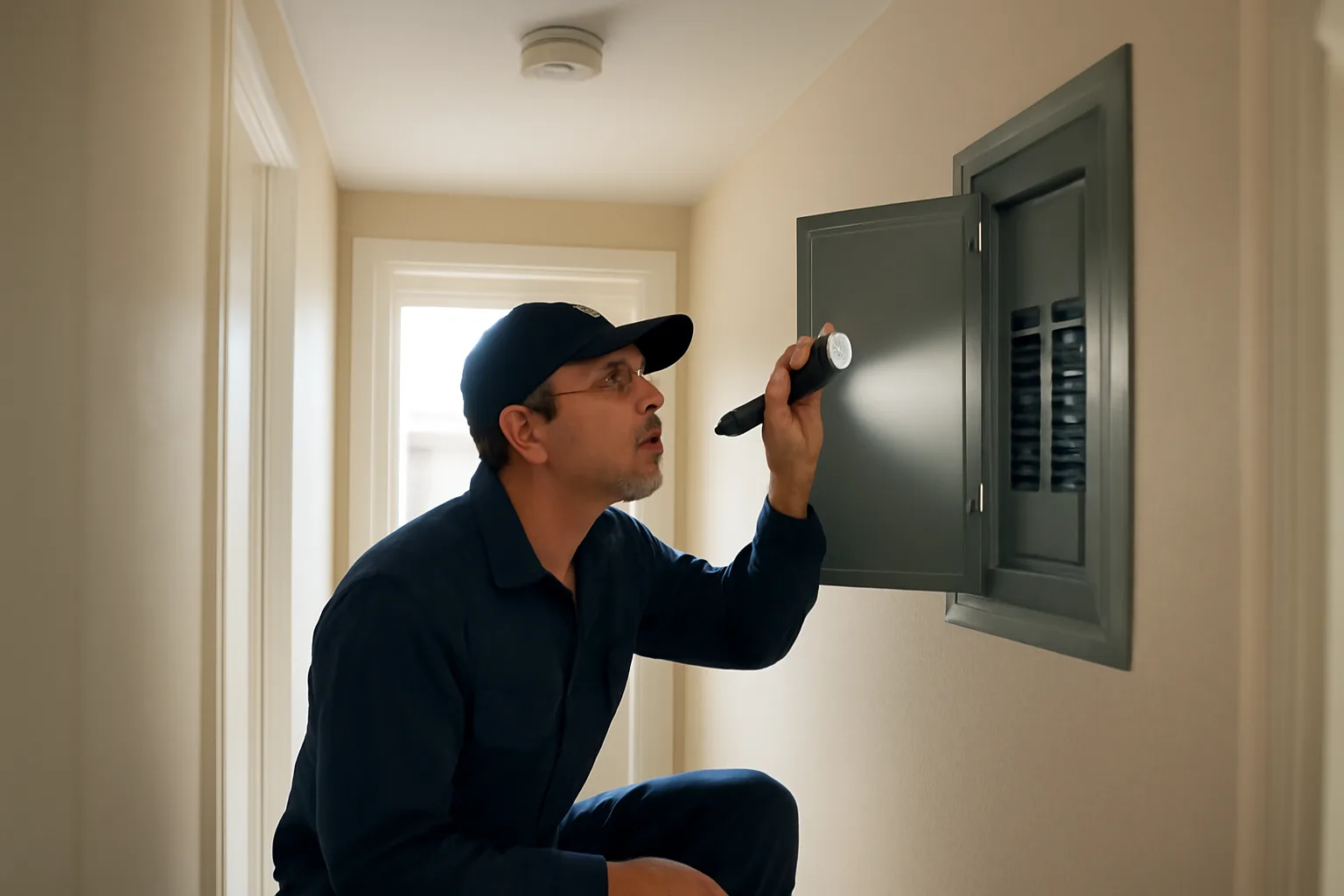
A rental inspection service is a city program, or a private inspector you hire, that checks a rental unit against health and safety codes before or during a lease. Cities that require licensing often mandate periodic inspections; notice periods usually run 24 to 48 hours depending on state law and lease terms.
What is a rental inspection service, exactly?
A rental inspection service is any arrangement, public or private, that checks a rental unit against a set of health, safety, and building code standards. Most landlords run into this term in one of two contexts: a city rental inspection program tied to your rental license, or a private inspector you hire on your own to check a unit before you list it or before a city inspector shows up. City-run rental inspection programs exist because a lot of municipalities require landlords to register or license rental property before renting it out, and many of those ordinances tie renewal to a passed inspection. The city of Minneapolis, for example, requires a rental license for most residential rental property under its rental licensing ordinance and conducts inspections tied to that license [1]. Rockford, Illinois runs a similar model, inspecting units on a cycle tied to license renewal under its own rental housing code [2]. Private rental inspection services are different. These are contractors, home inspectors, or property management consultants you pay directly to walk a unit and flag problems before the city does, or before a new tenant moves in. There's no license required to call yourself a "rental inspector" in most states, so vetting matters. Ask for a sample report, ask whether they know your city's specific checklist (more than general home inspection standards), and ask what they cover for the price. If you're trying to get ahead of an ordinance notice, the fastest path is usually to pull your city's actual inspection checklist first. Cities publish these as part of their rental licensing office guidance, and reading the checklist tells you exactly what a private inspector or a self-walkthrough needs to catch.
What can a landlord look at during an inspection?
A landlord conducting a routine inspection can generally check smoke detectors, plumbing fixtures, electrical outlets, signs of pest infestation, structural condition, window and door function, and general cleanliness that affects habitability. What a landlord cannot do is use the inspection as a pretext to search through a tenant's belongings, open closed drawers, or go through personal items unrelated to the property's condition. Most state landlord-tenant statutes frame this as an "entry for inspection" right, not a general search right. California's Civil Code section 1954, for instance, allows landlord entry to inspect the premises, but only after proper notice and only for the stated purpose [3]. Ohio's landlord entry statute, R.C. 5321.04, similarly limits entry to reasonable times, for legitimate purposes like inspection, repairs, or showing the unit, and after reasonable notice [4]. In practice, a checklist-based inspection covers: smoke and carbon monoxide detector presence and function, working locks on exterior doors, no exposed wiring, functioning heat source, no active leaks, egress windows in bedrooms, water heater condition, and pest evidence. That's the core of what most municipal rental inspection checklists ask for, and it lines up with what a private inspector should be checking too. What a landlord cannot do during a walkthrough is treat it as a fishing expedition. If you find something unrelated to habitability, like a tenant's personal papers on a table, that's not yours to read or photograph. Stick to the property's condition. If your city's checklist requires photo documentation, photograph fixtures and systems, not personal belongings.
Who is responsible for a rental property walkthrough inspection in California?
In California, the landlord is generally responsible for arranging move-in and move-out walkthrough inspections, and state law gives tenants specific rights around the move-out version. Under California Civil Code section 1950.5(f), a landlord must, upon request, give the tenant the opportunity for an initial inspection before move-out, specifically to let the tenant fix any issues that might otherwise result in a security deposit deduction [5]. That initial inspection has to happen at a reasonable time, and the landlord must give the tenant at least 48 hours written notice of the date and time, unless the tenant waives that notice [5]. After that walkthrough, the landlord has to give the tenant an itemized statement of the deficiencies found, so the tenant has a real chance to correct them before move-out. Move-in condition documentation isn't separately mandated by that same statute, but it's standard practice, and it protects both sides. Landlords in California commonly use a move-in checklist signed by both parties as the baseline record. If a security deposit dispute ends up in small claims court, that signed move-in inspection is often the single most useful piece of evidence either side has. So to answer directly: the landlord initiates and is responsible for arranging the walkthrough, but California law builds in a tenant-triggered right to request the pre-move-out version specifically.
How much notice does a landlord have to give before entering?
| Routine entry for repairs/inspection (CA) | 24 hours, written [3] | |
|---|---|---|
| Move-out initial inspection (CA) | 48 hours [5] | |
| Routine entry (OH) | "Reasonable notice," commonly treated as 24 hours [4] | |
| City rental inspection visit | Varies by city ordinance, confirm with your city rental licensing office | When in doubt, give more notice than the legal minimum. It reduces tenant friction and it's cheap insurance against a habitability or harassment complaint. |
Notice periods vary by state, but 24 hours is the most common standard, with California requiring 24 hours for most entries under Civil Code 1954 and some states or cities extending that to 48 hours for specific situations [3]. Always check your specific state statute rather than assuming a number, because this is one of the areas where states genuinely differ. California Civil Code 1954 sets 24 hours as "reasonable notice" in most circumstances, though it allows written notice to be presumed reasonable if given 24 hours in advance and left with the tenant, mailed, or posted and mailed [3]. Ohio's R.C. 5321.04 requires "reasonable notice" without a fixed number of hours specified in the statute text, though Ohio courts and standard practice treat 24 hours as the reasonable benchmark landlords use [4]. For city-mandated rental inspections, notice requirements often come from two directions at once: your state's landlord entry statute, and the city's own inspection ordinance, which may specify its own notice period for the inspector's visit. When these two overlap, follow whichever is more protective of tenant notice, and document that you gave it in writing. Here's a quick comparison of notice periods landlords commonly encounter: | Situation | Typical notice required |
What a landlord cannot do in Ohio
Ohio landlords cannot enter a rental unit without reasonable notice except in genuine emergencies, cannot retaliate against tenants who complain to code enforcement or join a tenant union, and cannot shut off utilities or change locks to force a tenant out without going through eviction in court. These protections come primarily from Ohio Revised Code Chapter 5321, the Landlords and Tenants Act. R.C. 5321.04 lays out landlord obligations including maintaining the premises in a fit and habitable condition, keeping common areas safe, and maintaining electrical, plumbing, sanitary, heating, and other facilities in good working order [4]. A landlord who ignores these duties can be sued by the tenant for damages, and in some cases the tenant can pursue rent escrow remedies through the local municipal or county court. R.C. 5321.02 specifically prohibits retaliatory conduct: a landlord cannot terminate a tenancy, refuse to renew, or increase rent in retaliation for a tenant's good faith complaint about a housing code violation, or for the tenant joining a tenant organization [6]. Self-help eviction, meaning changing locks, removing doors, or shutting off utilities to force a tenant out without a court order, is also not permitted under Ohio law; landlords have to use the formal eviction process through municipal or county court. Ohio does not have a statewide rent control law, and most rental licensing or inspection requirements in Ohio come from city ordinances rather than state law, so an Ohio landlord's actual inspection obligations depend heavily on which city the property sits in. Toledo, Cincinnati, and several other Ohio cities run their own rental registration and inspection programs layered on top of the state landlord-tenant code.
What rights do tenants have without a lease?
A tenant without a written lease still has full legal protection under state landlord-tenant law; the absence of a written lease doesn't strip away habitability rights, notice requirements, or eviction procedures. What changes without a lease is mainly the certainty around lease term and rent amount, not the tenant's basic protections. Most states treat an unwritten rental arrangement as a month-to-month tenancy, governed by the same statutory framework as a written lease. That means the landlord still has to maintain the unit in habitable condition, still has to give proper notice before entry, and still has to go through formal eviction in court to remove the tenant, oral agreement or not. Where things get murky without a written lease is proving what was agreed to. Rent amount, who pays utilities, pet policies, and move-in condition are all much harder to establish in a dispute if nothing's in writing. That cuts both ways: a landlord without a written lease has just as hard a time proving the tenant agreed to specific terms as the tenant does. A month-to-month tenant, lease or no lease, typically needs 30 days' written notice before a landlord can terminate the tenancy for no cause, though this varies by state and by how long the tenant has lived there. Some states scale the notice period up for longer tenancies. Check your specific state's notice-to-vacate rules rather than assuming 30 days applies everywhere. For a broader look at what protections exist state by state, see tenants rights and renters rights.
Why do landlords require renters insurance?
Landlords require renters insurance mainly to shift liability for a tenant's personal property and personal liability claims away from the landlord's own policy. A landlord's property insurance covers the building and the landlord's own belongings; it does not cover a tenant's furniture, electronics, or clothing if there's a fire, burst pipe, or theft. Renters insurance also typically includes personal liability coverage, which matters if a tenant's guest gets hurt in the unit, or if the tenant accidentally causes damage that affects a neighboring unit, like a bathtub overflow that floods the unit below. Without renters insurance, that liability risk often lands on the landlord's policy, or in a lawsuit against the landlord directly, even when the landlord did nothing wrong. There's no federal law requiring renters insurance, and state law rarely mandates it either; it's almost always a lease clause the landlord chooses to include. Many landlords set a minimum liability coverage amount, commonly in the $100,000 range, and require proof of an active policy naming the landlord as an "interested party" so they get notified if the policy lapses. Requiring renters insurance is cheap risk management for a landlord with 1 to 10 units, where a single uninsured loss (a kitchen fire, a bathtub overflow into a downstairs unit) can wipe out a year of rental income if it turns into a liability claim with no coverage behind it.
What is landlording, and what is a landlord?
A landlord is the owner of real property who rents that property to another person, called a tenant, in exchange for regular payment, usually monthly rent. Landlording is the ongoing work of managing that relationship and that property: collecting rent, maintaining the unit, handling repairs, following notice and entry laws, and keeping up with local licensing or registration requirements. Legally, being a landlord comes with a specific bundle of obligations that vary by state but generally include maintaining habitability (working plumbing, heat, structural safety), following proper procedures for entry and eviction, returning security deposits within a set timeframe, and complying with any local rental registration or licensing ordinance that applies to the property. In cities with mandatory rental licensing, being a landlord also means becoming, functionally, a small compliance operation. You're tracking license renewal dates, inspection cycles, and any code violations tied to the address. That's on top of the basic work of finding tenants, handling maintenance requests, and managing turnover. Landlording scales in complexity faster than most new landlords expect. One unit in a city with no licensing requirement is mostly about tenant relations and basic maintenance. Ten units across two or three cities, each with its own rental license renewal date, inspection cycle, and fee schedule, turns into a real administrative job even before you factor in tenant issues.
How to become a landlord (and how to actually run it well)
Becoming a landlord legally requires owning rental property, following your state's landlord-tenant law, and complying with any local business licensing, rental registration, or rental inspection ordinance that applies where the property sits. There's no license required in most places just to be a landlord in general terms, but plenty of individual cities require a specific rental license or registration before you can legally rent out a unit. The practical steps: confirm the property is zoned for rental use, check whether your city or county requires rental registration or licensing (a growing number do, especially for single-family and small multifamily rentals), get landlord liability insurance, and understand your state's specific rules on security deposits, notice periods, and habitability standards before you sign a first lease. Most first-time landlords underestimate the local compliance piece. It's more than state landlord-tenant law you're following, it's whatever your specific city or county has layered on top. Some cities require an inspection before the first tenant moves in; others inspect on a renewal cycle, commonly every one to three years depending on the ordinance. Confirm your specific city's requirements with your city rental licensing office, since fee amounts, inspection cycles, and renewal deadlines vary widely and change over time. This is where a lot of new landlords get an unpleasant surprise: a violation notice or a fine for an unlicensed rental they didn't know needed a license at all. If you're just getting started or you've just gotten one of these notices, working through your city's actual checklist before an inspector shows up is the highest-leverage thing you can do. A $79 City Rental License & Inspection Prep Packet can help you walk through what your specific city expects, item by item, before you're standing in front of an inspector.
How do city rental inspection programs actually work?
Most city rental inspection programs follow a similar structure: register or license the rental unit, get scheduled for an initial or cyclical inspection, receive a checklist of violations if any exist, fix them within a set window, and get re-inspected if needed before the license is issued or renewed. The details, cost, and cycle length differ enormously by city. Minneapolis, for example, licenses rental property and inspects it on a cycle that can range depending on the property's compliance history, with better-performing properties inspected less often [1]. Some cities inspect every rental unit annually regardless of history; others use a complaint-driven model layered on top of a base licensing requirement. Failing an initial inspection isn't usually the end of the world. Most ordinances give landlords a correction period, often 30 days, sometimes shorter for serious life-safety issues like a missing smoke detector or blocked egress, before a re-inspection or fine kicks in. Fines for operating an unlicensed rental, or for uncorrected violations after the deadline, can run from under $100 to several hundred dollars per violation per day in some cities, so acting on a first notice quickly matters more than most landlords assume. Because every city writes its own ordinance, the single most useful move for a landlord who just got an inspection notice is pulling that city's actual checklist and fee schedule directly from the city rental licensing office, rather than assuming your last city's rules apply here too.
How do I prepare for a rental inspection without hiring someone?
You can prepare for a rental inspection yourself by walking the unit with your city's published checklist in hand and fixing the obvious life-safety items first: smoke detectors, carbon monoxide detectors, egress windows, and any exposed wiring or active leaks. Most inspection failures come from a short list of repeat issues, not exotic code violations. Start with detectors. Missing or non-functional smoke detectors are one of the most common violations cited in municipal rental inspections nationally, and they're also the cheapest to fix, usually under $30 per unit for a basic hardwired or battery unit. Next check locks: every exterior door needs a functioning lock, and in most jurisdictions, deadbolts can't require a key to exit from inside (a fire code issue, more than a preference). Then work through plumbing and heat: no active leaks under sinks, water heater has a proper temperature/pressure relief valve and discharge pipe, and the primary heat source works and can maintain a minimum temperature (commonly 68°F is used as a habitability benchmark in many local codes, though the exact number is set locally). Finally check the exterior: handrails secure on any steps with more than two or three risers, no trip hazards, and address numbers visible from the street, which is a surprisingly common citation in several city programs. If you manage more than one or two units, or units across more than one city, doing this from memory gets risky fast, since checklists differ by city and change over time. That's the exact gap our $79 City Rental License & Inspection Prep Packet is built for: pulling together what your specific city's inspection actually checks so you're not guessing the week before the inspector shows up.
Frequently asked questions
How much does a private rental inspection service cost?
Private rental inspection costs vary widely by market and scope, commonly running from roughly $150 to $400 for a single-family rental unit, similar to a standard home inspection. Multi-unit buildings or more detailed reports cost more. Always ask for a written scope of what's covered before hiring, since some inspectors only check major systems, not the full municipal checklist.
What is a landlord?
A landlord is the legal owner of a property who rents it to a tenant in exchange for regular payment. Landlords take on obligations under state landlord-tenant law, including maintaining habitability, following proper notice and entry procedures, and complying with any local rental licensing or registration ordinance that applies to the property.
What is landlording?
Landlording is the ongoing work of owning and managing rental property: collecting rent, handling maintenance and repairs, screening tenants, following state and local landlord-tenant law, and keeping up with any city rental license, registration, or inspection requirements tied to the property.
How much notice does a landlord have to give before entering a unit?
Most states require at least 24 hours written notice for routine entry, though the exact rule depends on your state. California's Civil Code 1954 treats 24 hours written notice as reasonable [3]. Ohio requires "reasonable notice" without a fixed number in the statute [4]. City inspection visits may add their own notice requirement on top.
Who is responsible for a rental property walkthrough inspection in California?
The landlord is responsible for arranging walkthrough inspections. California Civil Code 1950.5(f) also gives tenants the right to request an initial inspection before move-out, with at least 48 hours written notice, so they can fix issues before facing security deposit deductions [5].
What can a landlord look at during an inspection?
A landlord can inspect the physical condition of the property: smoke detectors, plumbing, electrical systems, structural condition, pest evidence, and general habitability. A landlord cannot use an inspection to search through a tenant's personal belongings or go through items unrelated to the property's condition.
What a landlord cannot do in Ohio?
Ohio landlords cannot enter without reasonable notice except in emergencies, cannot retaliate against tenants for code complaints or joining a tenant organization under R.C. 5321.02 [6], and cannot use self-help eviction like changing locks or shutting off utilities instead of going through court.
What rights do tenants have without a lease?
Tenants without a written lease still have full protection under state landlord-tenant law, typically as a month-to-month tenancy. The landlord still must maintain habitability, give proper notice before entry, and use formal court eviction procedures. What's harder without a lease is proving specific agreed terms like rent amount or pet policy.
Why do landlords require renters insurance?
Renters insurance covers a tenant's personal property and personal liability, which a landlord's own property insurance does not cover. It protects landlords from liability claims tied to tenant-caused incidents, like a fire or water damage affecting other units, without dipping into the landlord's own coverage.
How to become a landlord?
Becoming a landlord means owning rental property and complying with your state's landlord-tenant law plus any local rental registration, licensing, or inspection ordinance. Practical steps include confirming zoning allows rental use, checking city licensing requirements, getting landlord liability insurance, and learning your state's security deposit and notice rules before signing a lease.
How often does a rental license require a city inspection?
Inspection cycles vary by city, ranging from every visit before a new tenant to a rotating cycle every one to three years tied to license renewal, sometimes adjusted based on a property's compliance history. Confirm your specific city's inspection cycle and fee with your city rental licensing office, since this changes by ordinance and over time.
Can a landlord fail a rental inspection and still rent the unit?
Usually not until violations are corrected. Most ordinances give a correction window, often around 30 days, before re-inspection or fines apply, and serious life-safety violations (missing smoke detectors, blocked exits) often get shorter deadlines or immediate orders to fix.
Does every city require a rental inspection to license a property?
No. Rental licensing and mandatory inspection requirements are set city by city, not nationally or even always statewide. Some cities require inspection before every new tenancy, some inspect on a renewal cycle, and many smaller municipalities have no rental licensing program at all. Confirm requirements directly with your specific city rental licensing office.
Sources
- City of Minneapolis Code of Ordinances, Title 12, Chapter 244 (Rental Dwelling Licenses): Minneapolis requires a rental license for most residential rental property and conducts inspections tied to that license
- Rockford, Illinois Code of Ordinances, Chapter 20, Article X (Residential Rental Property): Rockford, Illinois inspects rental units on a cycle tied to license renewal
- California Civil Code Section 1954: California requires 24 hours written notice for landlord entry to inspect the premises
- Ohio Revised Code Section 5321.04: Ohio landlords must maintain habitability and provide reasonable notice before entry
- California Civil Code Section 1950.5: California tenants can request an initial move-out inspection with 48 hours written notice under Civil Code 1950.5(f)
- Ohio Revised Code Section 5321.02: Ohio law prohibits landlord retaliation against tenants for code complaints or joining a tenant organization