Last updated 2026-07-25
TL;DR
A house inspection template is a room-by-room checklist covering safety systems, structural condition, and utilities, used before move-in, move-out, or a city compliance inspection. Good templates document date, condition, and photos for every item so there's a record if a dispute or code violation comes up later.
What should a house inspection template actually cover?
| Exterior | Roof condition, gutters, siding, foundation cracks, walkway trip hazards | |
|---|---|---|
| Entry/exit | Door locks function, deadbolts, window locks, weatherstripping | |
| Bedrooms | Smoke alarm present and tested, egress window operable, outlet covers | |
| Kitchen | Stove/oven function, refrigerator seal, sink drainage, GFCI outlets near water | |
| Bathroom | Exhaust fan, water pressure, caulking, toilet stability, no active leaks | |
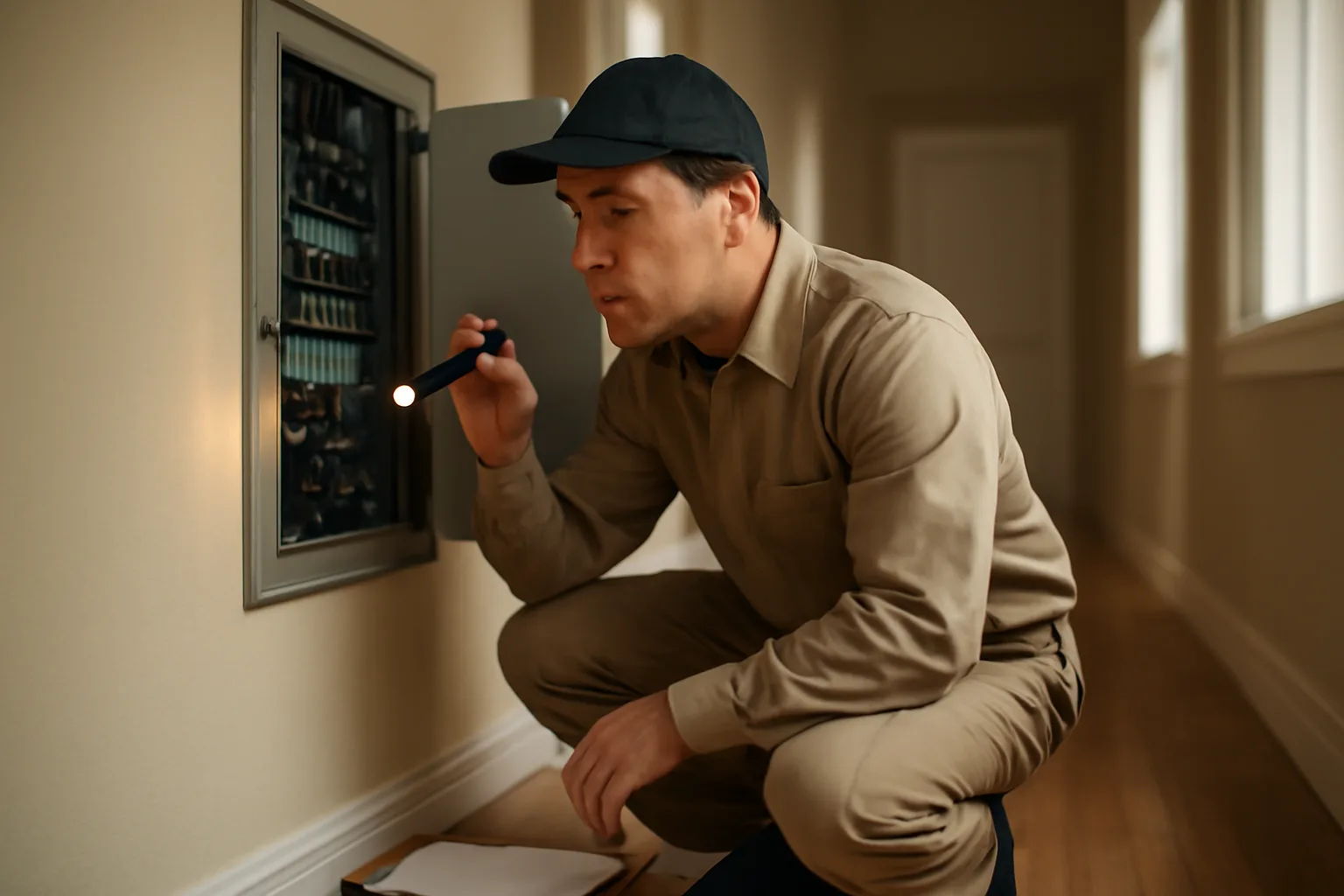
| Basement/mechanical | Water heater strap and temperature setting, furnace filter, electrical panel labeling | |
| Common areas (multi-unit) | Lighting, handrails, fire extinguisher tags, exit signage | A one-time reference like the City Rental License & Inspection Prep Packet can save you the research time of building this from scratch for a specific city, since it's built around what license and inspection programs commonly ask for. But even a free template works fine if you use it consistently and keep dated copies. |
A solid house inspection template walks through every room and every system a tenant or code inspector would care about, in the same order every time. That consistency matters more than people think. If you inspect Unit A room by room but Unit B by system, you'll miss things and you won't be able to compare notes across properties. At minimum, your template needs sections for: exterior (roof, siding, foundation, walkways), entry points (doors, locks, windows), each interior room (walls, ceiling, floor, outlets, paint condition), kitchen (appliances, plumbing, ventilation), bathrooms (fixtures, water pressure, exhaust fan, caulking), safety systems (smoke alarms, carbon monoxide detectors, fire extinguisher if required, egress windows in bedrooms), and mechanical systems (furnace, water heater, electrical panel). Many city rental inspection programs publish their own checklist, and if your city requires a license or registration, you should pull that specific document rather than relying on a generic template alone. Minneapolis, for example, runs its rental licensing program under city code and inspects units against its housing maintenance code, covering items down to handrail condition and window screen condition [1]. Your own pre-inspection walkthrough should mirror whatever your city's inspector will actually check, more than general good practice. Here's a basic room-by-room structure you can adapt: | Area | Key items to check |
What can a landlord look at during an inspection?
A landlord doing a routine or move-in/move-out inspection can look at the physical condition and function of the unit itself: walls, floors, fixtures, appliances, plumbing, electrical, windows, doors, and safety equipment like smoke detectors. The inspection is about the property's condition, not the tenant's belongings or personal space. What a landlord generally should not do is search through drawers, closets, or personal items, or use an inspection as a pretext to go through a tenant's things. Most state landlord-tenant laws frame the right of entry around a legitimate business purpose (repairs, inspection, showing the unit to prospective buyers or tenants), not general surveillance. California's Civil Code Section 1954, for instance, lists the specific purposes that justify landlord entry, including to make necessary or agreed repairs, show the unit to prospective tenants or buyers, or when the tenant has abandoned the property [2]. During an inspection, a reasonable landlord checklist includes: confirming smoke and CO alarms are present and functioning, checking for signs of leaks or water damage, testing that windows and doors lock and open properly, verifying no unauthorized occupants or pets are living there if that's a lease term, checking for obvious safety hazards (exposed wiring, broken stair rails, blocked exits), and photographing anything that will need repair before the next tenant or before a scheduled city inspection. If you're preparing for a government rental inspection rather than your own routine check, the inspector will typically be looking at code compliance items specifically, things like minimum ceiling height in bedrooms, working egress windows, proper handrails, functioning heat, and no illegal occupancy. Those standards come from your city or state's housing/property maintenance code, and they vary. Always confirm the specific checklist with your city rental licensing office before the appointment.
Who is responsible for a rental property walk-through inspection in California?
In California, the landlord is generally responsible for arranging and conducting move-in and move-out inspections, but tenants have specific rights around the process, especially for the move-out inspection tied to the security deposit. California Civil Code Section 1950.5 gives tenants the right to request an initial inspection before move-out, done at a time mutually agreed upon, so the tenant gets a chance to fix any issues before the final deposit deduction is calculated. The statute requires the landlord to give the tenant "reasonable notice of no less than 48 hours" of the date and time of that initial inspection, unless the tenant waives that requirement [3]. After the initial inspection, the landlord must provide an itemized statement of any deficiencies and give the tenant an opportunity to remedy them before the final move-out inspection. For routine inspections during the tenancy (not tied to move-out), California Civil Code Section 1954 requires landlords to give at least 24 hours' notice before entering, and entry has to happen during normal business hours unless the tenant agrees otherwise [2]. So while the landlord is the one who schedules and conducts the walk-through, California law puts firm limits on how it's done and how much notice is required. If you manage a rental in California and want a repeatable process, build your walk-through around the same checklist every time (documented above), and always keep a written or emailed notice trail showing you gave the required 48-hour or 24-hour notice depending on the inspection type. That paper trail matters if a deposit dispute ends up in small claims court.
How much notice does a landlord have to give before an inspection?
Notice requirements vary by state, but 24 hours is the most common minimum for routine entry, and some states require more for specific situations like a move-out inspection. California requires "reasonable notice," which the statute defines as presumptively 24 hours for routine entry under Civil Code 1954, and no less than 48 hours for the initial move-out inspection under Civil Code 1950.5 [2] [3]. Other states set their own standards. For example, Texas doesn't have a statewide statutory notice period for routine landlord entry in the way California does, which means the lease terms often control unless local ordinances say otherwise, so landlords there should check both state law and their specific city or county rules. Because this varies so much by state and even by city, don't assume your state matches California's numbers. Confirm your specific state's landlord-tenant statute, or check with your city rental licensing office if the notice requirement is tied to a licensing inspection rather than a routine landlord visit. A licensing inspection notice requirement might be set by city ordinance and differ from your state's general entry notice law. Regardless of the legal minimum, giving more notice than required, and confirming in writing (email or text, more than a phone call), avoids a huge share of tenant disputes. A tenant who gets 3 days' notice and a specific time window is far less likely to feel ambushed or file a complaint than one who gets a call the night before.
What can a landlord not do in Ohio?
Ohio law puts specific limits on landlord conduct, primarily under Ohio Revised Code Chapter 5321, the Ohio Landlords and Tenants Act. A landlord in Ohio cannot enter the rental unit without giving reasonable notice and without a legitimate purpose; the statute requires landlords to give tenants "reasonable notice of the landlord's intent to enter" and to enter "only at reasonable times," except in cases of emergency [4]. Ohio landlords also cannot engage in retaliatory conduct against a tenant for exercising legal rights, such as filing a complaint with a building or health department, or joining a tenants' union. Ohio Revised Code 5321.02 specifically prohibits a landlord from retaliating by increasing rent, decreasing services, or threatening eviction because a tenant complained about a code violation [5]. A landlord in Ohio cannot shut off utilities, change locks, or remove a tenant's belongings to force them out without going through the formal eviction process in court. This is sometimes called "self-help eviction" and it's illegal in Ohio as in most states; the only lawful way to remove a tenant is through the eviction (forcible entry and detainer) process in municipal or county court. Ohio landlords also have an affirmative duty under ORC 5321.04 to keep the property in a fit and habitable condition, comply with building and housing codes, keep common areas safe, and maintain electrical, plumbing, heating, and other essential services in good working order [4]. Failing to do so isn't just "not doing something extra," it's a violation of a statutory duty, and it can be raised as a defense in an eviction case or grounds for a tenant to pursue repair-and-deduct remedies under the same chapter.
What is landlording, and what is a landlord?
A landlord is the owner (or an owner's authorized agent) of real property who rents that property to another person, called a tenant, in exchange for payment, usually under a lease or rental agreement. Landlording is the informal term for the ongoing work of managing that relationship and the property: collecting rent, handling repairs, following local and state law, and dealing with tenant turnover. Landlording isn't just owning property, it's an operating role. It includes screening applicants, drafting or using a lease, maintaining the property to code, handling maintenance requests, managing security deposits according to state rules, and, in a growing number of cities, complying with a rental registration or licensing program. Many cities now require landlords to register their rental property, pay an annual or biennial license fee, and pass a periodic inspection before renting the unit legally. Programs like these exist in cities from Minneapolis to many municipalities in New Jersey and Ohio, and requirements differ significantly from one city to the next, so always confirm with your specific city rental licensing office rather than assuming your city works like a neighboring one. Small landlords, meaning people who own somewhere between 1 and 10 units, often do this work themselves rather than hiring a property management company. That's fine for many owners, but it means you're personally on the hook for knowing your state's landlord-tenant statute and your city's licensing rules, since ignorance of a local ordinance doesn't excuse a violation or fine.
How do you become a landlord, and how do you actually be a good one?
Becoming a landlord legally usually means four things: owning or having authority to rent the property, complying with any state or local landlord registration/licensing requirement, following your state's landlord-tenant law for leases, deposits, and entry, and getting the right insurance in place before you hand over keys. Step one is confirming what your city and state actually require. Many cities require a rental license or registration before you can legally rent out a unit at all, sometimes paired with a mandatory inspection. This is separate from any homeowners association rule or mortgage requirement, it's a legal compliance step, and skipping it can mean fines or even an inability to collect rent in a dispute in some jurisdictions. Check with your specific city rental licensing office; fees and inspection cycles vary widely and change over time, so don't rely on secondhand information from another landlord in a different city. Step two is getting your paperwork and property ready: a compliant lease, a habitable unit (working smoke detectors, functioning heat, no code violations), proper security deposit handling per your state's rules, and landlord insurance (sometimes called a landlord policy or dwelling fire policy) rather than a standard homeowner's policy, since most homeowner policies exclude rental use. Being a good landlord day to day comes down to a short list of habits: respond to repair requests quickly, document everything (inspections, notices, communications), know your state's notice periods for entry and lease termination, and treat the tenant relationship as a business relationship with clear boundaries, not a favor you're doing someone. If you're getting started, our guides on tenant rights and renters rights are a good next stop, since knowing what tenants are entitled to is half of knowing what you're required to do.
What rights do tenants have without a written lease?
A tenant without a written lease still has legal rights. In most states, an oral or implied rental agreement (sometimes called a tenancy at will or month-to-month tenancy by default) still creates a landlord-tenant relationship governed by state law, including the right to a habitable dwelling, protection from illegal lockouts, and required notice before eviction. Without a written lease, the terms tend to default to whatever your state's statute sets for an unwritten or month-to-month tenancy, generally: rent is due as agreed (often monthly), either party can end the tenancy with proper notice (commonly 30 days, though this varies by state and by how long the tenant has lived there), and the landlord still has to maintain the property to code and follow the state's eviction process rather than removing the tenant directly. The absence of a written lease does not strip a tenant of habitability protections, protection from retaliation, or the right to proper notice before entry or eviction; those protections come from state statute, not from the lease document itself. A landlord who tries to skip formal eviction proceedings because "there's no lease" is still violating the law in nearly every state. For landlords, the practical lesson is: never assume the lack of a signed lease means you have more flexibility. If anything, you have less protection for yourself, since there's no written record of rent amount, due date, or house rules if a dispute arises. Put something in writing, even a short one-page agreement, before the tenant moves in.
Why do landlords require renters insurance?
Landlords require renters insurance mainly to shift liability and financial risk for the tenant's personal property and certain injury/damage claims away from the landlord's own policy. A landlord's property insurance covers the building and the landlord's own liability, but it typically does not cover a tenant's furniture, electronics, or clothing if there's a fire, burst pipe, or theft. Requiring renters insurance protects the landlord in a few concrete ways: if a tenant's negligence causes a fire or water damage, a renters policy's liability coverage can help cover the landlord's losses instead of the landlord having to sue the tenant directly or absorb the cost; if a guest is injured in the unit, the tenant's liability coverage may respond instead of the landlord's; and it reduces the odds that a tenant with no financial cushion after a loss falls behind on rent or pushes for the landlord to cover their losses. The federal Department of Housing and Urban Development and many state housing agencies don't mandate renters insurance for private landlords, but plenty of leases and some subsidized housing programs do require proof of a policy, often with a modest liability minimum like $100,000. Requiring it is a lease term a landlord sets, not typically a government mandate, so if you want to require it, put it clearly in the lease and ask for proof of an active policy at move-in and renewal. Cost-wise, renters insurance is cheap relative to the protection it offers; national average premiums for renters insurance run roughly in the range of $15 to $30 a month depending on coverage limits and location, though your tenant's actual quote will vary by state and insurer.
How do you build a house inspection template you'll actually use?
The best house inspection template is the one you'll actually fill out every single time, not the most detailed one sitting unused in a drawer. Keep it to one or two pages, organized by room, with simple condition ratings (good, fair, needs repair) rather than long narrative fields, plus a spot for photos and the date. A workable structure: header section with property address, unit number, inspection date, inspector name, and inspection type (move-in, move-out, routine, city compliance). Then a room-by-room grid with condition checkboxes and a notes line. Then a safety systems section specifically calling out smoke alarm test date, CO detector test date, fire extinguisher expiration if applicable, and water heater temperature setting. Finish with a signature line for both landlord and tenant if it's a move-in/move-out inspection, since a jointly signed document is far stronger evidence in a deposit dispute than a landlord's solo notes. If your city requires a licensing inspection, build a second, separate checklist that mirrors your city's actual published inspection standards, since a generic template won't necessarily catch city-specific items like smoke alarm placement rules, egress window dimensions, or exterior maintenance codes. If you're prepping for a first-time city inspection and don't want to build that document from your city's often dense code language yourself, the City Rental License & Inspection Prep Packet is built around exactly that gap, a one-time $79 reference to help you walk in prepared instead of guessing at what the inspector will check. Whatever template you use, keep copies. Digital photos with timestamps, saved PDFs of each inspection, and a simple log of dates and outcomes will save you real trouble if a tenant disputes a deduction or a city cites a violation you believe was already fixed.
How does a routine inspection differ from a city licensing inspection?
A routine landlord inspection and a government rental licensing inspection serve different purposes and follow different rules, even though they might look similar on the surface. A routine inspection (move-in, move-out, or periodic check during the tenancy) is something the landlord initiates for their own business purposes: verifying condition, catching maintenance issues early, protecting the security deposit calculation. It's governed by your state's landlord-tenant entry notice statute (commonly 24 to 48 hours' notice, varying by state) and by whatever's in your lease. A city rental licensing inspection is a government compliance check, usually required before a rental license is issued or renewed, and it's governed by your municipal code, more than state landlord-tenant law. These inspections check for property maintenance code compliance: smoke and CO alarm placement, egress window size in bedrooms, electrical panel safety, structural issues, and sometimes occupancy limits. Failing one typically means a re-inspection requirement and a deadline to fix cited items, and continuing to rent without a required license can carry its own fines separate from any inspection findings, with the specific fee schedule and violation penalties set by each city's ordinance. Always confirm current fees and deadlines with your city rental licensing office, since these numbers get updated and vary enormously between cities. The practical move for landlords is to treat the city licensing checklist as the stricter standard and build your own routine inspection template to match it wherever possible, since a unit that passes your own thorough walk-through is far more likely to pass the city's inspection too.
Frequently asked questions
How to become a landlord for the first time?
Confirm any city or state rental registration/licensing requirement first, then get a compliant lease, make sure the unit is habitable and passes basic safety checks (smoke alarms, working heat, no code violations), get landlord insurance instead of a standard homeowner policy, and learn your state's rules on deposits, entry notice, and eviction before you sign a tenant.
Who is responsible for a rental property walk-through inspection in California?
The landlord schedules and conducts it, but California law controls the process: 24 hours' notice for routine entry under Civil Code 1954, and at least 48 hours' notice for the initial move-out inspection under Civil Code 1950.5, with the tenant given a chance to fix cited issues before the final deposit deduction [2][3].
What is landlording?
Landlording is the day-to-day work of owning and managing a rental property: collecting rent, maintaining the unit, following state landlord-tenant law, handling tenant turnover, and complying with any city rental registration or licensing program. It's the operating role, more than the ownership status.
What is a landlord, legally?
A landlord is the owner or authorized agent of real property who rents it to a tenant under a lease or rental agreement in exchange for payment. Legal responsibilities (habitability, notice, deposit handling) attach to this role under state statute regardless of whether the agreement is written or oral.
What rights do tenants have without a lease?
A tenant with no written lease still has habitability rights, protection from illegal lockout, and a right to proper notice before entry or eviction under state law. An unwritten tenancy usually defaults to a month-to-month arrangement governed by the state's landlord-tenant statute, not a rights-free arrangement.
How to be a landlord without constant headaches?
Use a written lease every time, document every inspection and communication, learn your state's specific notice periods for entry and termination, respond to repair requests fast, and confirm your city's rental licensing rules before you rent rather than after a violation notice arrives.
Why do landlords require renters insurance?
Mainly to protect against a tenant's negligence causing fire or water damage, to cover injury claims involving the tenant's guests, and to reduce the odds a tenant with no financial cushion falls behind on rent after a loss. It shifts risk off the landlord's own policy [source: general insurance industry guidance, not a specific state mandate].
How much notice does a landlord have to give before entering?
It depends on the state. California requires 24 hours for routine entry and 48 hours for the initial move-out inspection under Civil Code sections 1954 and 1950.5 [2][3]. Other states set different minimums or leave it to the lease; always confirm your specific state's statute.
What can a landlord look at during an inspection?
The physical condition of the unit: walls, floors, plumbing, electrical, appliances, windows, doors, and safety equipment like smoke and CO alarms. A landlord generally should not search personal belongings, drawers, or closets during a routine inspection; the focus is the property's condition, not the tenant's possessions.
What can a landlord not do in Ohio?
Ohio landlords cannot enter without reasonable notice except in emergencies, cannot retaliate against a tenant for reporting code violations (ORC 5321.02), and cannot use self-help eviction like shutting off utilities or changing locks instead of going through the court eviction process [4][5].
Does a landlord have to give written notice, or is a phone call enough?
State statutes generally don't require notice to be in writing, but written notice (email or text with a timestamp) is much stronger evidence if a tenant later disputes that proper notice was given. Practically, always put entry notice in writing even if your state law would technically accept a verbal notice.
What happens if a rental fails a city licensing inspection?
Typically the city issues a list of violations with a deadline to fix them and schedules a re-inspection. Continuing to rent the unit without a valid license during that period can trigger separate fines under the city's ordinance. Specific penalties and timelines vary by city, so confirm with your city rental licensing office.
Do I need a different inspection checklist for every city?
Often yes, if the city has its own rental licensing program with a published inspection standard. General best-practice checklists cover the basics, but a city-specific licensing inspection may check items (egress window size, specific alarm placement) that a generic template won't include.
Sources
- Minneapolis Code of Ordinances, Chapter 244 (Housing Maintenance Code): Minneapolis inspects rental units against its housing maintenance code as part of its rental licensing program
- California Civil Code Section 1954: California requires reasonable notice, presumptively 24 hours, before landlord entry, and lists the lawful purposes for entry
- California Civil Code Section 1950.5: California requires at least 48 hours' notice for the initial move-out inspection and lets tenants fix cited deficiencies before final deposit deductions
- Ohio Revised Code 5321.04: Ohio landlords must give reasonable notice and enter only at reasonable times, except emergencies, and must maintain the unit in fit and habitable condition
- Ohio Revised Code 5321.02: Ohio law prohibits landlord retaliation against tenants who file code complaints or join tenant organizations