Last updated 2026-07-26
TL;DR
Becoming a landlord means more than buying property and finding a tenant. Most cities require rental registration or licensing before you collect rent, inspections check basic safety systems, and tenants have real legal protections even without a signed lease. Skipping registration risks fines that often start around $100 to $500 per violation, depending on your city's code.
how to become a landlord
Becoming a landlord starts well before you hand over keys. You need to check whether your city or county requires rental registration or a rental license, get the unit inspected if your jurisdiction mandates it, screen tenants under fair housing law, and understand what state and local rules govern deposits, notice periods, and habitability. Many renters assume landlording is just owning a second property and collecting a check. It's closer to running a small regulated business. You're responsible for maintaining a habitable unit under your state's implied warranty of habitability, following fair housing law under the federal Fair Housing Act, and complying with whatever registration or licensing scheme your city has adopted [1]. Some cities like Los Angeles require a Rental Registration through the Housing Department before you rent a unit built before a certain date, and failure to register can block you from pursuing an eviction [2]. The practical steps look like this: confirm your property isn't in a rent-controlled or licensing-mandatory zone without checking first, get landlord liability insurance, learn your state's security deposit limits and return deadlines, and set up a system for maintenance requests and entry notices. If your city requires a rental license or inspection before occupancy, that has to happen first. Skipping this step is the single most common mistake new landlords make, and it's the one that gets punished with fines or delayed rent collection. If you're managing property in a city with mandatory licensing, our rental packet builder walks through the document prep most inspectors ask for, but the actual registration itself always goes through your city's housing or code enforcement office directly.
what is landlording
Landlording is the ongoing work of owning and managing rental property: screening tenants, maintaining the unit, collecting rent, handling repairs, and following the legal rules that govern the landlord-tenant relationship in your state and city. It's not passive. Even a single-unit landlord has legal duties that don't pause between tenants. The term covers everything from finding tenants and running background and credit checks, to handling move-in and move-out inspections, to responding to repair requests within legally required timeframes. Many states set specific response windows for habitability issues; for example, some jurisdictions require landlords to address conditions affecting health and safety within a defined number of days once notified, though the exact window varies by state and by the severity of the issue [3]. Landlording also means recordkeeping. You need proof of when repairs were requested and completed, when notices were given, and how security deposits were handled. If a dispute ends up in small claims court, whoever has the paper trail usually wins.
what is a landlord
A landlord is the owner (or their authorized agent) who rents real property to a tenant in exchange for money, under a lease or rental agreement, written or oral. Legally, a landlord takes on specific duties: maintaining habitable conditions, respecting a tenant's right to quiet enjoyment, following proper procedures for entry and eviction, and, in many cities, registering or licensing the rental unit with the local government. The legal definition matters because it determines who's on the hook when something goes wrong. If you own a property and someone else manages it day to day, that manager may be acting as your agent, but you as the owner typically remain liable for registration, licensing, and code compliance in most municipal ordinances [2]. That's worth knowing if you're using a property manager and assuming they've handled the paperwork. Confirm it yourself, in writing. A landlord is also distinct from a property manager in that a manager is usually paid a fee to run the property on someone else's behalf, while the landlord is the party with ownership interest and ultimate legal responsibility.
who is responsible for a rental property walkthrough inspection in california
In California, the landlord is generally responsible for conducting a move-out inspection if the tenant requests one, and the law requires the landlord to give the tenant a reasonable opportunity to fix issues before deductions are taken from the security deposit. Under California Civil Code Section 1950.5, a landlord must, upon request, do an initial inspection before the tenant moves out and provide an itemized statement of anticipated deductions, giving the tenant a chance to remedy those issues [4]. Specifically, the landlord must notify the tenant of the right to request this initial inspection, and if the tenant asks for it, the inspection has to happen within a reasonable time before the end of the tenancy, typically interpreted as within the last two weeks. The landlord or their agent conducts it, and the tenant has the right to be present. After the tenant moves out, the landlord then has 21 days to return the deposit along with an itemized statement of any deductions [4]. This is different from a rental licensing inspection, which some California cities conduct separately for code compliance (electrical, smoke detectors, plumbing) rather than deposit disposition. Check with your specific city's rental licensing office, since programs like Los Angeles's Systematic Code Enforcement Program (SCEP) run inspections on a different cycle and for different purposes than a tenant's move-out walkthrough [2].
what can a landlord look at during an inspection
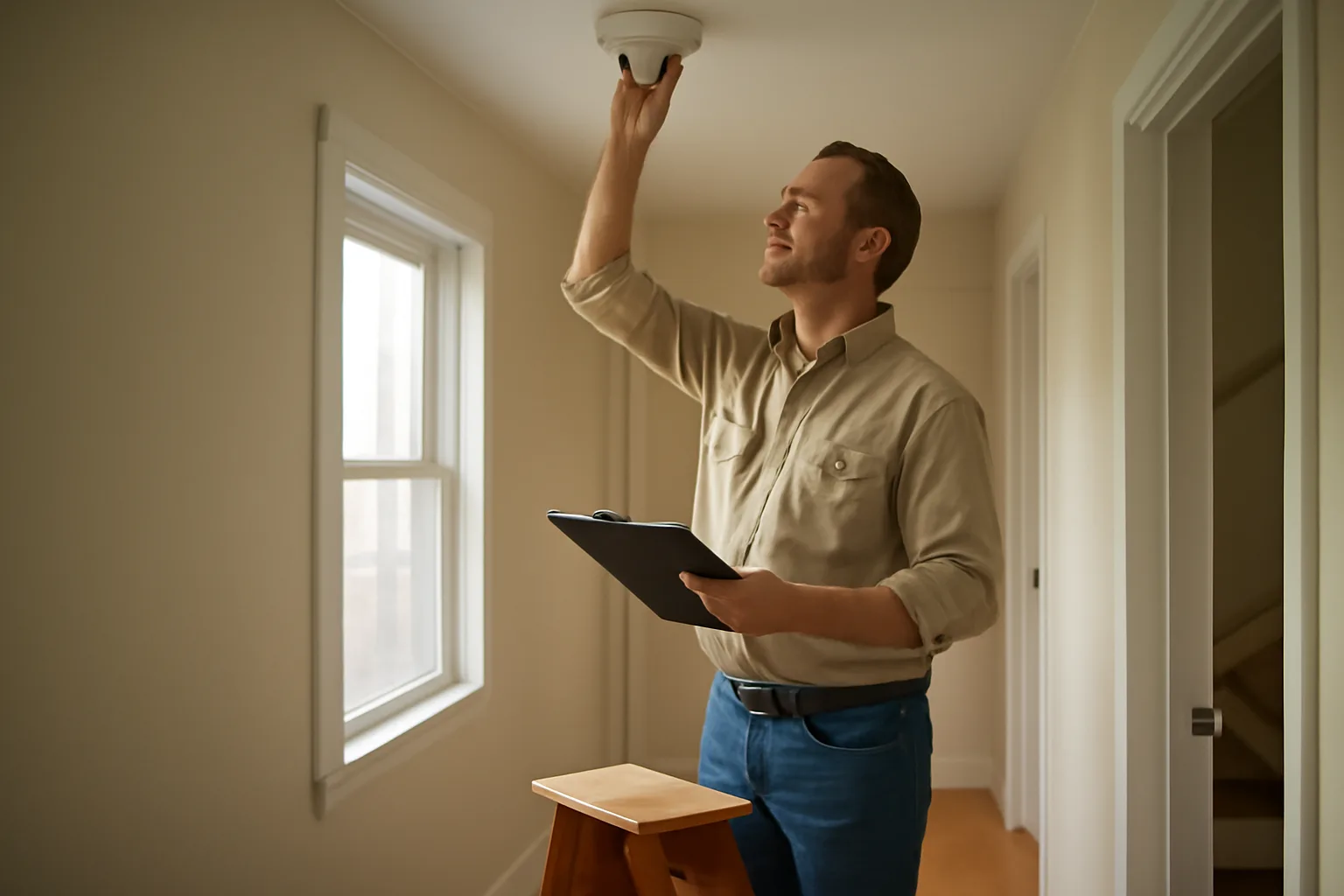
During a routine or move-out inspection, a landlord can generally check for damage beyond normal wear and tear, verify smoke and carbon monoxide detectors work, confirm no unauthorized occupants or pets are present if the lease restricts them, and check that major systems (plumbing, electrical, heating) are functioning and not being misused. What a landlord can't do is search through personal belongings, closets, or drawers unless there's a specific safety reason, and can't use the inspection as a pretext to harass a tenant. Most states require landlords to give advance notice before entering for a routine inspection, commonly 24 to 48 hours depending on the state, and entry generally has to happen at reasonable times [3]. Emergency situations (a burst pipe, a fire hazard) are the main exception that allows entry without advance notice. For code-compliance inspections tied to a rental license, a city inspector is usually checking for things like working smoke detectors, secure egress windows, functioning heat, absence of visible electrical hazards, and general structural safety. The inspection isn't about your tenant's housekeeping. It's about whether the unit meets the minimum habitability standard the city has adopted.
why do landlords require renters insurance
Landlords require renters insurance mainly to shift liability for the tenant's personal property and personal liability away from the landlord's own policy. If a tenant's belongings are damaged by a covered event, or if the tenant is responsible for damage to someone else's property or an injury inside the unit, renters insurance covers that instead of the landlord's insurance absorbing the claim. A standard landlord (dwelling) insurance policy typically does not cover a tenant's personal belongings, and it may not fully cover liability claims that originate from the tenant's own actions. Requiring renters insurance, often in the $15 to $30 a month range depending on coverage and location, is a common risk-management practice, though it isn't universally required by law; some cities and some lease templates make it mandatory, others leave it optional. Check your state's landlord-tenant statute and your own lease terms, since requirements vary.
how much notice does a landlord have to give
Notice requirements depend on what kind of notice you're giving and which state you're in. For routine entry (like a repair visit or inspection), most states require 24 to 48 hours advance notice; California, for instance, generally requires 24 hours' written notice for non-emergency entry under Civil Code Section 1954, with some exceptions [5]. For ending a month-to-month tenancy, many states require 30 days' notice, though some, like California, require 60 days if the tenant has lived there a year or more [2]. For rent increases, notice periods often mirror the termination notice: 30 days for smaller increases, sometimes 60 or 90 days for larger increases (some states like California require 90 days' notice for rent increases over 10%) [2]. For nonpayment of rent, notice-to-pay-or-quit periods are typically shorter, often 3 to 5 days depending on the state. Because these periods vary so much by state and even by city, the only reliable move is to check your specific state's landlord-tenant statute before sending any notice. Getting the number of days wrong can invalidate the entire notice and force you to start over.
what rights do tenants have without a lease
A tenant without a signed lease still has legal rights. If they're paying rent and the landlord accepts it, courts generally treat this as a month-to-month tenancy governed by state landlord-tenant law, even with nothing in writing. That means the tenant still has a right to habitable housing, protection from illegal lockouts, proper notice before eviction, and, in many states, the same security deposit protections as a tenant with a written lease. What changes without a lease is mainly the certainty around terms like rent amount, who pays for what utility, and how much notice is required to end the tenancy, since those defaults fall back to state law rather than a negotiated agreement. Many states treat an oral or implied month-to-month tenancy as terminable with standard notice, commonly 30 days, unless local rent control extends that protection [6]. A landlord still can't just change the locks or shut off utilities to force someone out, lease or no lease. Self-help eviction is illegal in essentially every U.S. state; the landlord has to go through the formal court eviction process regardless of whether there was ever a written lease [6].
how to be a landlord (day-to-day practices that keep you out of trouble)
Being a good landlord day to day comes down to a short list of habits: respond to repair requests quickly and document it, give proper notice before every entry, keep security deposits in whatever account or method your state requires, and never attempt a self-help eviction. Small landlords with one to ten units often skip formal systems because it feels like overkill for a single duplex, but that's exactly when disputes get messy, since there's no paper trail. Keep a simple log: date of every tenant communication, date and method of every entry notice, and copies of every inspection report. If your city has a mandatory rental registration or licensing program, keep the confirmation and any inspection certificate somewhere you can find it in five minutes, not five hours. A lot of the fines cities issue aren't for actual code violations found during inspection. They're for missed registration deadlines or failure to renew a license on time, which is an administrative failure, not a maintenance one [2]. On the tenant relationship side, treat every applicant under fair housing law consistently: same screening criteria, same income requirements, same process regardless of the applicant's protected class under the federal Fair Housing Act [1]. Inconsistent screening is one of the most common ways small landlords end up facing a fair housing complaint, often without meaning to discriminate at all.
what a landlord cannot do in ohio
In Ohio, a landlord cannot lock a tenant out, shut off utilities, or remove a tenant's belongings without going through the formal eviction process in court. Ohio Revised Code Section 5321.15 explicitly prohibits self-help evictions, stating a landlord cannot recover possession by using force or by excluding the tenant from the premises without a legal proceeding [7]. Ohio landlords also can't retaliate against a tenant for exercising a legal right, like reporting a code violation or joining a tenant union; Ohio Revised Code 5321.02 protects tenants from retaliatory eviction or rent increases in response to a good-faith complaint [8]. A landlord in Ohio can't ignore the duties laid out in ORC 5321.04, which requires landlords to keep the premises in a fit and habitable condition, comply with building and housing codes, and keep common areas safe [9]. Ohio law also limits what a landlord can charge and how; for example, security deposits over $50 or one month's rent (whichever is greater) accrue interest at 5% per year if held longer than six months, per ORC 5321.16 . A landlord who fails to return a deposit or an itemized list of deductions within 30 days of move-out risks the tenant recovering damages, including the wrongfully withheld amount plus reasonable attorney fees .
how city rental licensing and inspection programs actually work
Rental licensing programs vary enormously by city, but the general shape is similar: register the unit with a city office (often Housing, Code Enforcement, or Community Development), pay a fee (commonly somewhere in the $30 to $300 per unit range depending on the city, though some are higher), and in many cities, pass a habitability inspection on a set cycle, often every one to three years. Cities with these programs usually publish a checklist covering things like working smoke and carbon monoxide detectors, secure handrails, functioning heat, no exposed wiring, and proper egress from bedrooms. Miss the registration deadline and many cities issue an escalating fine, sometimes starting around $100 to $500 for a first violation and increasing for repeat non-compliance, though exact numbers depend entirely on your city's municipal code. There's no substitute for pulling up your own city's ordinance directly, since these numbers genuinely differ block to block in some metro areas with multiple incorporated cities. If you're trying to get organized before an inspection, our $79 one-time rental packet builder helps assemble the standard documentation many cities want on hand (proof of registration, prior inspection history, smoke detector compliance records), but it doesn't replace calling your city's rental licensing office to confirm the actual fee schedule and inspection cycle for your address.
Frequently asked questions
How do I become a landlord for the first time?
Check whether your city requires rental registration or licensing before you rent the unit, get landlord liability insurance, learn your state's security deposit and notice rules, and screen tenants consistently under fair housing law. If your city mandates a habitability inspection, schedule it before advertising the unit, since some cities won't let you collect rent legally until registration is complete [2].
What's the difference between a landlord and a property manager?
A landlord owns the property and holds ultimate legal responsibility for registration, licensing, and code compliance. A property manager is hired to handle daily operations like rent collection and maintenance but is acting as the owner's agent. Even with a manager in place, the landlord is typically still liable if the unit isn't properly registered [2].
Does a landlord have to give notice before entering a rental unit?
Yes, in nearly every state, except for genuine emergencies. Most states require 24 to 48 hours advance notice for routine entry, with California requiring 24 hours under Civil Code Section 1954 [5]. Check your specific state statute, since the exact hours and allowed reasons for entry vary.
Can a landlord require renters insurance?
In most states, yes, a landlord can require renters insurance as a lease condition, since it's not prohibited by federal or most state law. It shifts liability for the tenant's belongings and personal liability claims away from the landlord's policy. Typical monthly cost runs around $15 to $30 depending on coverage and location.
What rights does a tenant have if there's no written lease?
A tenant without a written lease who is paying and the landlord is accepting rent generally has an oral or implied month-to-month tenancy under state law, with the same habitability and no-lockout protections as a written lease. Self-help eviction remains illegal regardless of whether a lease was ever signed [7].
Who does a rental walkthrough inspection in California, the landlord or the tenant?
The landlord (or their agent) conducts the walkthrough, but the tenant has the right to request it and be present. Under California Civil Code 1950.5, the landlord must offer an initial inspection before move-out and give the tenant a chance to fix noted issues before deposit deductions are made [4].
What can't a landlord do in Ohio?
An Ohio landlord cannot lock out a tenant, shut off utilities, or remove belongings without a court eviction order (ORC 5321.15), cannot retaliate against a tenant for a good-faith complaint (ORC 5321.02), and must keep the unit habitable and code-compliant (ORC 5321.04) [8][9][10].
How much can a landlord fine a tenant for a lease violation?
This depends entirely on your state and lease terms; there's no universal cap, and many states don't allow arbitrary 'fines' at all outside of late rent fees, which some states cap as a percentage of rent or a flat dollar amount. Check your state's landlord-tenant statute before writing a fee into a lease.
What happens if a landlord doesn't register a rental property with the city?
Consequences vary by city, but many charge escalating fines, commonly in the $100 to $500 range for a first violation, and some cities bar you from filing an eviction until the property is registered. Confirm the exact penalty and process with your city's rental licensing office [2].
Can a landlord look through a tenant's belongings during an inspection?
No, not typically. A landlord or inspector can check that systems like smoke detectors, plumbing, and electrical are functioning and look for damage beyond normal wear, but going through drawers, closets, or personal items generally exceeds the legal scope of a routine inspection unless there's a specific safety concern.
How much notice does a landlord need to raise the rent?
It depends on the state and the size of the increase. Many states require 30 days for a standard increase on a month-to-month tenancy, while some, like California, require 90 days' notice for increases over 10% in a 12-month period [6]. Check your state's statute for the exact threshold.
Is landlording considered a business?
Functionally, yes. Even a single-unit landlord takes on legal duties around habitability, fair housing, deposit handling, and notice requirements that mirror running a small regulated business, even if it isn't formally structured as an LLC or corporation for tax purposes.
Sources
- U.S. Department of Housing and Urban Development, Fair Housing Act overview: Landlords must comply with federal fair housing protections for protected classes
- State landlord-tenant statutes (varies by state): States set differing notice periods and habitability response windows for landlords
- California Legislative Information, Civil Code Section 1950.5: California requires landlords to offer an initial move-out inspection and return deposits with itemized deductions within 21 days
- California Legislative Information, Civil Code Section 1954: California requires 24 hours' notice before landlord entry for non-emergency purposes
- California Legislative Information, Civil Code Section 1946.1 and AB 1482 provisions: California requires 60 days' notice to terminate a tenancy of one year or more and 90 days' notice for rent increases over 10%
- Ohio Revised Code Section 5321.15: Ohio prohibits landlords from using self-help methods like lockouts or utility shutoffs to remove a tenant
- Ohio Revised Code Section 5321.02: Ohio protects tenants from retaliatory eviction or rent increases after a good-faith complaint
- Ohio Revised Code Section 5321.04: Ohio requires landlords to maintain habitable premises and comply with building and housing codes
- Ohio Revised Code Section 5321.16: Ohio requires interest on security deposits held over six months and sets a 30-day deadline for returning deposits with itemized deductions