Last updated 2026-07-26
TL;DR
There's no such thing as a "boat rental no license" rule for residential landlords, that phrase doesn't map to rental property law. If you searched this looking for landlord licensing basics, here's what actually matters: most rental license cities require registration before you rent, inspections check basic safety systems, and tenants keep rights even without a signed lease.
what is landlording, and what does a landlord actually do
Landlording is the business of renting out real property, usually a house, apartment, or unit, in exchange for regular payment. A landlord is the person or entity that owns the property and grants a tenant the right to occupy it under a lease or rental agreement, in exchange for rent. That's the plain definition, but the job is bigger than "collect rent and fix the sink." In practice, landlording means screening tenants, drafting or using a compliant lease, maintaining the property to meet local housing codes, handling repairs within a reasonable time, managing security deposits according to state law, and in a growing number of cities, registering or licensing the rental unit itself. The U.S. Census Bureau's American Housing Survey estimates roughly 48.2 million occupied rental units in the United States as of 2021 [1], and a large share of those are owned by individual investors with ten units or fewer, not corporate portfolios. If you're new to this, the biggest mental shift is realizing you're running a small regulated business, more than "renting out a spare property." Cities with mandatory rental licensing treat you that way: they want your name, your contact information, sometimes your local agent's information, and proof the unit meets basic safety code, before you're legally allowed to collect rent.
how to become a landlord (the actual steps, not the theory)
Becoming a landlord is mostly paperwork and property prep, not some certification you earn once. Here's the realistic order of operations for a first-time landlord with one to a few units. First, check your local rules before you list the unit. Search your city name plus "rental registration" or "rental license" to see if your municipality requires it. Many cities, especially older Rust Belt and Northeast cities, do. Second, get the property inspection-ready: working smoke and carbon monoxide detectors, no exposed wiring, functioning heat, and no obvious code violations. Third, register or license the unit with your city if required, which usually means an application, a fee (confirm with your city rental licensing office, since fees vary widely by city and unit count), and sometimes a scheduled inspection. Fourth, set your rent and screening criteria, consistent with the Fair Housing Act's protected classes [2]. Fifth, use a written lease. You are not legally required to have one in every state, but skipping it creates real problems, covered below. Sixth, collect the security deposit according to your state's cap and handling rules, and give the tenant a move-in condition report. Seventh, get landlord insurance, more than a homeowner's policy, since most homeowner policies exclude rented property. None of this requires a license to be a landlord the way, say, a contractor needs a trade license. What you need is: legal capacity to own property, compliance with any local rental registration or licensing ordinance, and compliance with state landlord-tenant law and federal fair housing law.
how to be a landlord day to day, once the unit is rented
Once someone's living there, being a landlord is mostly about responsiveness and documentation. You need a system for tenants to report repairs, a timeline for responding (state law often sets an outer bound for "habitability" repairs like no heat or no water), and records of every notice you send. Keep receipts and photos for repairs. Keep a copy of every notice, every rent increase letter, every inspection report. If your city requires periodic re-registration or re-inspection, calendar it, because missed renewal deadlines are one of the most common ways landlords rack up fines they didn't see coming. Many first-time landlords underestimate how much of the job is administrative. You're more than a repair person, you're the record-keeper for a small regulated tenancy. That paperwork burden is exactly why cities with mandatory licensing programs exist: they want a documented, inspectable trail if something goes wrong.
who is responsible for a rental property walk-through inspection in California
In California, the landlord is responsible for arranging the move-in and move-out walk-through inspections, and state law gives tenants a specific right to an initial inspection before move-out if they want one. Under California Civil Code section 1950.5(f), a tenant has the right to request an initial inspection of the unit before terminating the tenancy, so they can fix issues themselves and avoid deductions from the security deposit [3]. Here's how it actually works. The landlord must notify the tenant in writing of their right to request this initial inspection. If the tenant requests it, the landlord must do the walk-through within a reasonable time before the end of the tenancy and give the tenant an itemized statement of anything that needs fixing or cleaning to avoid a deduction. The tenant then gets a chance to address those items before the final move-out inspection. Critically, the landlord conducts the inspection, but it exists to protect the tenant's deposit, not to give the landlord extra bargaining power. This is different from routine habitability or code inspections a city might run under a rental licensing ordinance. Those are conducted by a city inspector, not the landlord, and follow that city's own notice and access rules. Don't confuse the two: California's move-out walk-through right is a state civil code protection tied to security deposits, while city rental inspection programs are local health and safety code enforcement.
what can a landlord look at during an inspection
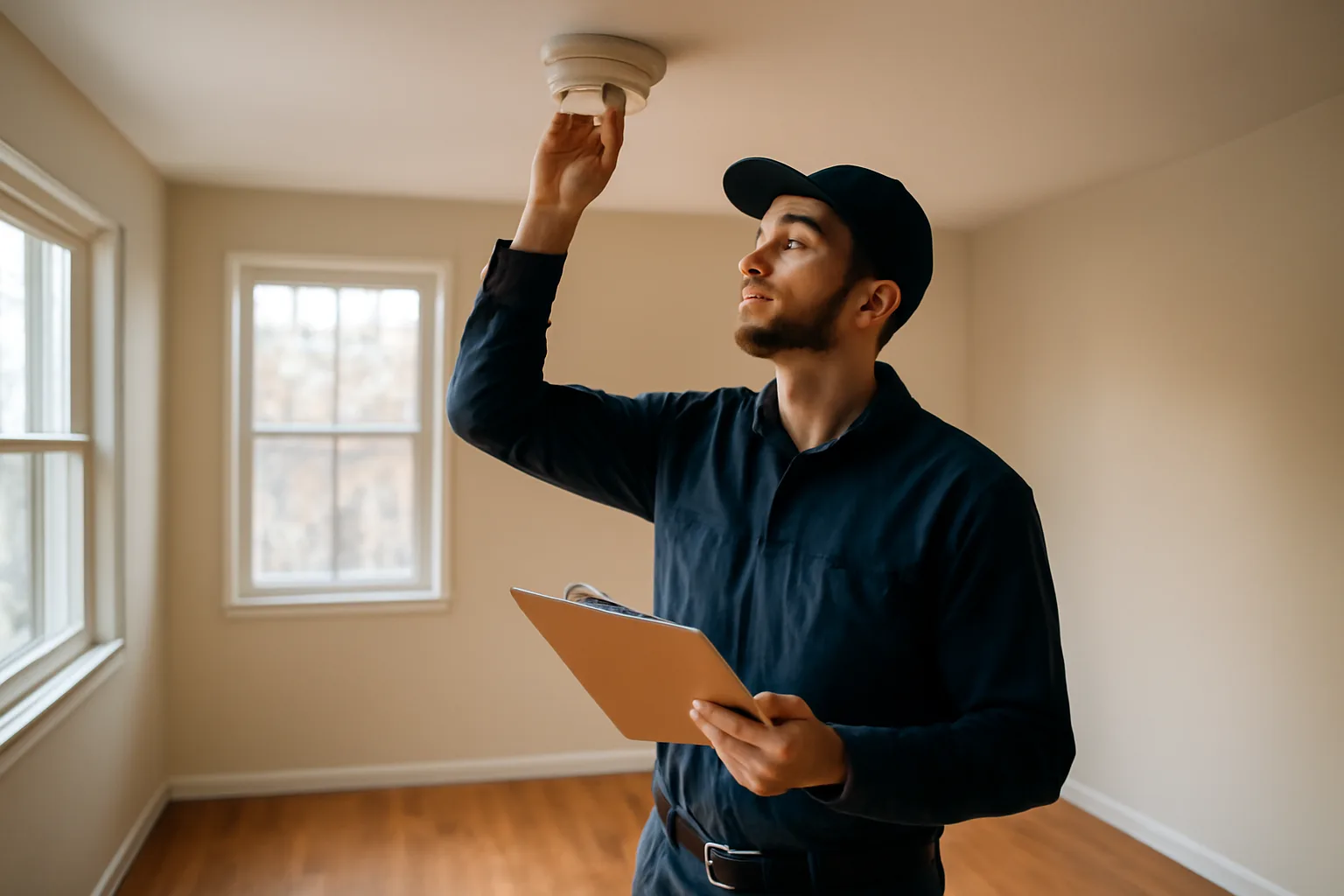
During a routine or move-out inspection, a landlord (or city inspector, on a licensing inspection) can generally look at anything related to the condition, safety, and maintenance of the unit: walls, floors, ceilings, plumbing fixtures, electrical outlets, smoke and carbon monoxide detectors, windows and doors, appliances that came with the unit, and signs of pest infestation or water damage. What a landlord generally cannot do is search through a tenant's personal belongings, closets, drawers, or private files as part of a maintenance or code inspection. The inspection is about the condition of the structure and its systems, not an audit of the tenant's possessions. If a city rental inspector is doing a licensing-related inspection, they're typically checking against a specific code checklist: working detectors, secure handrails, no exposed wiring, functioning locks, adequate egress from bedrooms, and no obvious structural hazards. Some cities publish that checklist publicly; if yours does, get a copy before your first inspection so you're not guessing. Proper notice matters here too. Most states require landlords to give advance written notice, often 24 to 48 hours, before entering for a non-emergency inspection, and to enter only at reasonable times. That notice rule is separate from, but works alongside, whatever notice a city rental inspection program requires for its own inspector visits.
how much notice does a landlord have to give before entering or ending a tenancy
Notice requirements split into two different categories, and mixing them up causes a lot of confusion: notice to enter the unit, and notice to end or change the tenancy. For entry, most states require 24 hours' advance notice for non-emergency entry (inspections, repairs, showings), though the exact wording and hours vary. California, for example, presumes 24 hours' notice is reasonable under Civil Code section 1954 [4]. Some states use 48 hours, some just say "reasonable notice" without a number, so confirm your specific state's statute rather than assuming California's rule applies everywhere. For ending or changing a month-to-month tenancy, notice periods commonly run 30 days for tenancies under a year and up to 60 days for longer tenancies in some states, but these numbers vary a lot by state and by whether the landlord or tenant is initiating. Local just-cause eviction ordinances in some cities add extra layers on top of state law, sometimes requiring specific reasons before non-renewal is even allowed. Because this varies so much by state and city, treat any specific day count as confirm with your state landlord-tenant statute and your city ordinance, not a nationwide constant.
why do landlords require renters insurance
Landlords require renters insurance mainly to shift liability and property-loss risk away from themselves and their own insurance policy. A landlord's own property insurance covers the building's structure, but it typically does not cover a tenant's personal belongings, and it may not adequately cover a tenant's liability if, say, the tenant accidentally causes a fire or a guest gets injured in the unit. Renters insurance policies are inexpensive relative to the protection they offer. The Insurance Information Institute notes renters insurance is generally affordable compared to other policy types, though exact premiums vary by state, coverage limits, and provider [5]. Requiring it in the lease protects the tenant's own belongings, and it gives the landlord a layer of liability protection if a tenant-caused incident leads to a claim or lawsuit. It's a smart, low-cost requirement, and most landlords who skip it eventually regret it after a tenant's water leak or grease fire turns into a dispute over who pays for the tenant's ruined furniture.
what rights do tenants have without a lease
A tenant without a signed lease still has real legal rights. If there's no written agreement but the tenant is paying rent and the landlord is accepting it, most states treat this as a month-to-month tenancy at will, governed by state landlord-tenant law rather than lease terms. That means the tenant still gets, at minimum: the right to a habitable unit (working plumbing, heat, structural safety), protection under the Fair Housing Act against discrimination [2], the right to advance notice before the landlord enters, the right to advance written notice before the tenancy is terminated (the same 30-to-60-day range discussed above, depending on state and tenancy length), and the right to the return of any security deposit under the state's deposit rules, if one was collected. What a tenant does not automatically get without a lease is a fixed rent amount for a set term. Because there's no lease locking in the rent for, say, twelve months, a landlord in a month-to-month arrangement can generally raise the rent with proper notice, subject to any local rent control ordinance. The absence of a lease cuts both ways: fewer guaranteed terms for the tenant, but also more flexibility for the landlord to adjust rent or end the tenancy (within legal notice limits) compared to a fixed-term lease.
what a landlord cannot do in Ohio
Ohio landlord-tenant law, codified mainly in Ohio Revised Code Chapter 5321, sets specific limits on landlord conduct. Ohio Revised Code section 5321.04 lays out landlord obligations, including the duty to keep the premises in a fit and habitable condition and to comply with building, housing, and health codes [6]. Under Ohio law, a landlord cannot shut off utilities, change the locks, or remove a tenant's belongings to force them out, that's an illegal "self-help" eviction; the landlord has to go through the court eviction process instead. A landlord also cannot retaliate against a tenant for reporting a code violation or joining a tenant organization, cannot discriminate based on the federally protected classes under the Fair Housing Act [2], and cannot enter the unit without reasonable notice except in a genuine emergency. Ohio law also generally requires landlords to make repairs within a reasonable time after receiving notice of a problem that affects habitability, and failing to do so can expose the landlord to a tenant's rent-escrow claim under the statute. If you're a landlord operating in a city with its own rental registration ordinance layered on top of Ohio's state law (several larger Ohio cities do), you have two sets of obligations running at once: the state habitability and eviction-process rules under Chapter 5321, and whatever local licensing, inspection, and registration fee rules your specific city imposes. Check both. For general background on tenant protections that often intersect with these local rules, see tenants rights and renters rights.
how rental licensing and inspection programs fit into all of this
Everything above (habitability duties, notice rules, deposit handling) is state law that applies whether or not your city runs a rental licensing program. Licensing is a separate, local layer that a growing number of cities have added on top. A mandatory rental licensing city typically requires you to register every rental unit, pay an annual or biennial fee (confirm with your city rental licensing office, since amounts vary enormously by city, from roughly the price of a permit application to several hundred dollars per unit), and pass a periodic inspection covering things like smoke detectors, egress windows, handrails, and electrical safety. Miss the registration deadline or fail the inspection without fixing the cited items, and you're looking at fines that in some cities escalate weekly until you comply. If you own one to ten units and just got a notice, an inspection date, or a fine letter from your city, the fastest path to compliance is usually: pull the specific ordinance or program page for your city, get the inspection checklist, walk your unit against it before the inspector does, and get your paperwork (proof of ownership, lease template, insurance, registration application) organized in one place. That's the exact gap our $79 one-time City Rental License & Inspection Prep Packet is built to close: a structured way to get your documents and unit ready before the deadline, not legal advice, just organized prep.
one to ten unit landlords: what actually changes at each stage
| Registration | Usually one simple city application per unit | May need a business license plus per-unit registration | |
|---|---|---|---|
| Inspection frequency | Often triggered by tenant turnover or city cycle | Often annual or biennial across all units | |
| Insurance | Landlord policy plus tenant's renters insurance | Same, sometimes with an umbrella liability policy | |
| Recordkeeping | Spreadsheet or folder is often enough | Needs a dedicated system to track renewal dates | |
| Fine exposure | One missed deadline affects one unit | Missed deadlines can compound across the portfolio | The core legal obligations (habitability, fair housing, notice, deposit handling) don't scale up or down based on unit count. But the administrative risk of missing a renewal or inspection deadline absolutely scales, because more units means more dates to track. If you're at four or more units and still using a memory-and-sticky-notes system for renewal deadlines, that's the point to build a real calendar or tracking sheet, before, not after, the first missed deadline turns into a fine. |
Small landlords hit the same milestones as big property managers, just with less staff to handle it. Here's a quick comparison of what typically differs. | Stage | Solo landlord (1-3 units) | Small portfolio (4-10 units) |
a note on what this article isn't (and where the "boat rental no license" phrase went)
To be direct about it: this topic slug referenced "boat rental no license," which is a watercraft rental and boating-license question, not a residential rental property question. It doesn't fit this site's focus on city rental registration, licensing, and inspection requirements for residential landlords, so we've treated the underlying request as a request for foundational landlord basics instead, since that's what the actual question list called for. If you did land here looking for boat rental license requirements (whether you need a boating license to rent a boat, or to rent one out), that's governed by your state's boating safety education law and U.S. Coast Guard recreational boating rules, not by any city rental-property ordinance, and it's outside what this site covers. If you're a landlord dealing with an actual rental registration notice, inspection deadline, or fine, the rest of this article and our other guides on landlord basics and tenant rights are the right starting point.
Frequently asked questions
What is landlording?
Landlording is the practice of owning residential property and renting it to tenants for regular payment, including screening, maintenance, rent collection, and compliance with state landlord-tenant law and any local rental registration or licensing ordinance. It's a small regulated business, not a passive investment, especially once a city requires licensing or inspection.
What is a landlord?
A landlord is the owner (or authorized agent of the owner) of a rental property who grants a tenant the legal right to occupy it under a lease or rental agreement in exchange for rent, and who holds the legal duties to maintain habitability, handle deposits properly, and follow state and local landlord-tenant law.
How do I become a landlord for the first time?
Check your city's rental registration or licensing requirements, get the unit inspection-ready (working smoke/CO detectors, no code violations), register with the city if required, screen tenants consistent with the Fair Housing Act, use a written lease, collect the deposit per your state's rules, and get landlord insurance separate from a standard homeowner policy.
Who is responsible for a rental property walk-through inspection in California?
The landlord arranges and conducts the walk-through inspection, but California Civil Code section 1950.5(f) gives the tenant the right to request an initial pre-move-out inspection so they can fix issues themselves before the final deposit deduction inspection. The landlord must notify the tenant in writing of this right.
What can a landlord look at during an inspection?
A landlord or city inspector can check structural and safety items: smoke and CO detectors, plumbing, electrical outlets, windows, doors, locks, and signs of water damage or pest infestation. They generally cannot search a tenant's personal belongings, closets, or private papers during a routine maintenance or code inspection.
What rights do tenants have without a lease?
A tenant paying rent without a signed lease typically has a month-to-month tenancy under state law, keeping rights to habitability, advance notice before entry, advance notice before termination (often 30 to 60 days depending on the state), and Fair Housing Act protection, but without a fixed rent term locked in by contract.
Why do landlords require renters insurance?
Landlords require renters insurance because their own property policy usually doesn't cover a tenant's belongings or the tenant's personal liability for accidents like fires or injuries to guests. Requiring it protects the tenant financially and reduces the landlord's own liability exposure if a tenant-caused incident leads to a claim.
How much notice does a landlord have to give before entering a unit?
Most states require at least 24 hours' advance written notice for non-emergency entry, though some states specify 48 hours or just "reasonable notice." California presumes 24 hours is reasonable under Civil Code section 1954. Check your specific state statute, since the exact number and required notice format vary.
How much notice does a landlord have to give to end a tenancy?
It depends on the state and the length of the tenancy, but 30 days is common for tenancies under a year, with some states requiring 60 days for tenancies over a year. Some cities add just-cause eviction ordinances on top of state notice rules, requiring a specific legal reason before non-renewal.
What can a landlord not do in Ohio?
Under Ohio Revised Code Chapter 5321, a landlord cannot shut off utilities, change locks, or remove belongings to force a tenant out (illegal self-help eviction), cannot retaliate against a tenant for reporting code violations, cannot discriminate under Fair Housing Act protected classes, and cannot enter without reasonable notice except in an emergency.
Does every city require a rental license?
No. Rental licensing and registration requirements are set city by city (and sometimes county by county), not nationally. Many older, larger cities require it; many smaller or newer-growth cities don't. Always confirm with your specific city rental licensing office rather than assuming a rule from one city applies elsewhere.
What happens if I miss my city's rental inspection deadline?
Consequences vary by city but commonly include late fees, an escalating fine schedule, a hold on your rental license renewal, or in some cities a ban on collecting rent until the unit is compliant. Confirm the specific penalty schedule with your city rental licensing office, since amounts and escalation timing differ widely.
Do I need a license just to be a landlord, separate from city rental licensing?
No general "landlord license" exists at the state or federal level the way, say, a real estate license does. The only licensing requirement most landlords face is a local rental registration or rental license ordinance, which is set by individual cities, not a statewide or national landlord credential.
Sources
- U.S. Census Bureau, American Housing Survey: Estimated number of occupied rental units in the United States
- U.S. Department of Housing and Urban Development, Fair Housing Act overview: Federal protected classes landlords cannot discriminate against in screening or tenancy decisions
- California Legislative Information, Civil Code section 1950.5: Tenant's right to request an initial pre-move-out inspection before security deposit deductions
- California Legislative Information, Civil Code section 1954: 24 hours is presumed reasonable notice for landlord entry in California
- Insurance Information Institute, Renters Insurance: Renters insurance is generally affordable and covers belongings and liability not covered by a landlord's policy
- Ohio Legislature, Ohio Revised Code section 5321.04: Ohio landlord obligations to maintain habitability and comply with housing codes