Last updated 2026-07-26
TL;DR
Becoming a landlord means more than buying a rental unit. You'll need to check local licensing rules, understand what inspectors can and can't do, give proper notice before entry, and know tenant rights even without a written lease. Requirements vary heavily by city and state, so always confirm specifics with your local rental licensing office.
what is a landlord, exactly?
A landlord is anyone who owns residential property and rents it to another person (a tenant) in exchange for payment, usually under a lease or rental agreement. That's the plain definition, but the legal definition matters more once you're the one holding the keys. Most state landlord-tenant statutes define "landlord" (sometimes "lessor") as the owner, lessor, or sublessor of a dwelling unit, or an agent acting on the owner's behalf. Ohio's landlord-tenant law, for example, defines landlord as "the owner, lessor, or sublessor of residential premises" including anyone "who is entitled to receive rent" for it [1]. That agent language matters if you hire a property manager: the manager can carry landlord obligations too, but you as owner don't get to hide behind them if something goes wrong. Being a landlord is a legal role with duties attached, more than a source of income. You owe tenants habitable housing, proper notice before entry, and handling of security deposits according to your state's rules. Skip those and you're the one facing a judge, not your tenant.
what is landlording, and is it a full-time job?
Landlording is the ongoing work of managing a rental property: collecting rent, handling maintenance requests, screening tenants, keeping up with local registration or licensing rules, and dealing with turnover between leases. For a single unit, it might take a few hours a month. For 5 to 10 units, plan on several hours a week, more if something breaks. Most small landlords self-manage at first because a property manager typically costs 8% to 12% of monthly rent, according to national property management industry surveys, though rates vary by market and service level. If you're handy, live nearby, and don't mind late-night maintenance calls, self-managing 1 to 3 units is very doable. Once you hit 5+, or if any of your units are in a mandatory rental-licensing city, the paperwork side alone (registration renewals, inspection scheduling, code compliance) starts eating real time. Landlording also means staying current on law changes. Cities update licensing fees and inspection cycles more often than landlords expect, and missing a renewal deadline can trigger a fine before you even know the rule changed.
how to become a landlord: the actual steps
Becoming a landlord isn't one application. It's a sequence, and skipping steps is how people end up with a vacant, uninsurable, unrentable property six months in. 1. Buy or convert a property zoned for residential rental use. Check your local zoning code before you close, not after. 2. Check whether your city or county requires a rental license, registration, or business license before you can legally rent. Many cities (Baltimore, Minneapolis, and dozens of others) require landlords to register or license every rental unit, often with a fee per unit and a renewal cycle, before a tenant can legally move in. 3. Get landlord-specific insurance (sometimes called a landlord policy or DP-3 dwelling policy), not a standard homeowner's policy. A vacant or tenant-occupied property under a homeowner's policy can get claims denied. 4. Set up a lease that complies with your state's landlord-tenant statute, covering security deposit limits, disclosures (lead paint for pre-1978 housing is federally required under 42 U.S.C. § 4852d [2]), and notice terms. 5. Screen tenants consistently and legally under the Fair Housing Act, which prohibits discrimination based on race, color, national origin, religion, sex, familial status, or disability [3]. 6. Schedule any required pre-occupancy or periodic inspection with your city's rental licensing office. Some cities inspect before the first tenant moves in; others inspect on a rotating cycle (every 1 to 3 years is common). 7. Set up a system, even a simple spreadsheet, for tracking rent payments, maintenance requests, and inspection or license renewal dates. If your city has a licensing program, that paperwork is often the part new landlords underestimate. A rental license and inspection prep packet can help you organize what your city's office typically asks for before you go in, though every city's checklist differs and you should confirm current requirements directly with your local office.
who is responsible for the rental property walk-through inspection in California?
In California, the landlord is responsible for initiating the pre-move-out walk-through inspection, but it's the tenant's right to request one, and either party can decline it. California Civil Code § 1950.5(f) requires that if the tenancy is ending, the landlord must notify the tenant in writing of the right to request an initial inspection before the tenant moves out, done "no earlier than two weeks" before the end of the tenancy [4]. At that inspection, the landlord must give the tenant an itemized list of anything that would justify deductions from the security deposit, along with a chance to fix issues before move-out. This isn't the same as a city rental housing inspection for code compliance. That's a separate process run by the local rental housing or code enforcement department, and who's responsible depends on the specific city's rental inspection ordinance. Los Angeles, Oakland, and San Francisco, for example, each run their own systematic rental inspection programs with different cycles and fee schedules, so a landlord with units in more than one of those cities needs to track each separately. Bottom line: the security deposit walk-through is a landlord duty under state law. The code compliance inspection, if your city has one, is scheduled by the local licensing office and its rules live in city code, not the state civil code.
what can a landlord look at during an inspection?
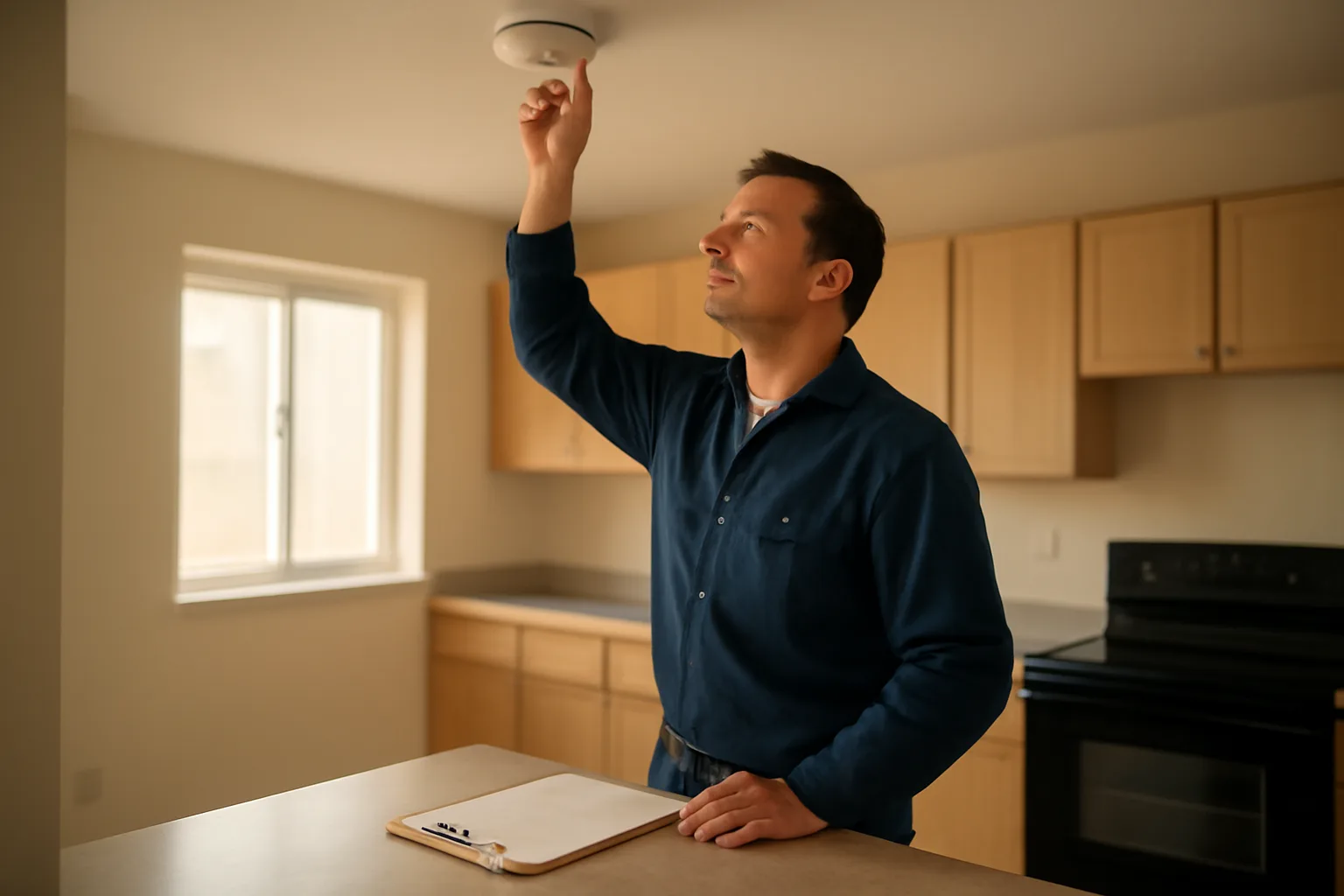
During a routine or code-compliance inspection, the inspector (or landlord, if it's a landlord-conducted walk-through) is generally checking for safety and habitability issues: working smoke and carbon monoxide detectors, functioning heat, no exposed wiring, no active leaks, pest issues, and adequate egress from bedrooms. Most municipal rental inspection checklists mirror the local building and housing code, not the landlord's personal preferences about cleanliness or decor. What an inspector should not do is search through your tenant's personal belongings, closets, or private files unrelated to the inspection's purpose. The inspection is about the condition of the unit as a structure and system (plumbing, electrical, HVAC, structural safety), not an excuse to catalog someone's possessions. A landlord's own routine inspection (separate from a city inspection) should stick to the same idea: checking for damage, unauthorized occupants, unauthorized pets if that's a lease violation, and maintenance needs. Both landlords and city inspectors also need to give proper advance notice before entering an occupied unit (see the next section), and neither has open-ended authority to enter whenever they want.
how much notice does a landlord have to give before entering a unit?
| California | 24 hours (written, presumed reasonable) | Cal. Civ. Code § 1954 [5] | |
|---|---|---|---|
| Many states | 24 hours | Common but confirm your specific state statute | |
| Some states | 48 hours | Less common, check state code | |
| Emergency entry | None required | Fire, flood, or immediate safety threat generally exempted | Emergencies (a burst pipe, fire, gas leak, or immediate danger to life or property) are the standard exception in nearly every state's law: no advance notice is required when there's an emergency. Outside of emergencies, entering without proper notice can expose a landlord to a tenant claim for violation of quiet enjoyment, and in some states, statutory damages. Always check your specific state's landlord-tenant statute before assuming a number, because this is exactly the kind of detail that varies enough to bite you. |
Notice requirements vary by state, and this is one of the most commonly misunderstood landlord rules. There's no single national standard. California requires "reasonable notice," which the statute presumes to be 24 hours in writing, under Civil Code § 1954 [5]. Many other states use a similar 24-hour standard, though some set it at 48 hours, and a handful don't specify a number at all, just "reasonable notice." Here's a rough comparison of common notice rules landlords run into: | State approach | Typical notice required | Notes |
why do landlords require renters insurance?
Landlords require renters insurance mainly to shift liability and property-loss risk away from themselves. A landlord's own insurance policy typically covers the building structure, not the tenant's personal belongings, and it often doesn't cover a tenant's liability if the tenant accidentally causes damage (a kitchen fire, an overflowing tub that damages a downstairs unit). Renters insurance is relatively cheap. National average costs for a renters insurance policy have generally run in the range of $15 to $30 per month, according to insurance industry data compiled by the Insurance Information Institute, though prices vary by state, coverage amount, and provider [6]. For a landlord, requiring it as a lease condition is a low-cost way to reduce disputes over who pays when something goes wrong. It also protects the landlord in liability situations: if a tenant's guest gets injured and sues, the tenant's renters insurance liability coverage can be the first line of defense instead of the landlord's own policy taking the hit. Landlords in multi-unit buildings especially like this because damage in one unit (a fire, a water leak) can spread to neighboring units, and having the responsible tenant's insurance in place speeds up the claims process considerably.
what rights do tenants have without a lease?
Tenants without a written lease still have real legal rights. A lease being verbal, expired, or nonexistent doesn't strip tenants of protections; it just changes what kind of tenancy exists (usually a month-to-month or "tenancy at will") and what notice is required to end it. Without a written lease, most states treat the arrangement as a periodic tenancy, typically month-to-month if rent is paid monthly. That tenant still has the right to: habitable housing meeting local code, privacy and advance notice before landlord entry (same rules as leased tenants in most states), protection from illegal lockouts or "self-help" eviction (a landlord can't just change the locks or shut off utilities to force someone out), and the same fair housing protections under federal law regardless of lease status [3]. Ending a no-lease tenancy generally requires the same kind of written notice a landlord would give to end any month-to-month tenancy, often 30 days, though some states and some cities with just-cause eviction ordinances require more, or require a specific reason. A landlord can't just tell a no-lease tenant to leave tomorrow. The absence of paperwork protects nobody and actually creates more ambiguity that tends to favor the tenant in court, since the landlord usually can't point to written terms the tenant agreed to.
what can't a landlord do in Ohio?
Ohio's landlord-tenant law (Ohio Revised Code Chapter 5321) spells out specific things landlords are barred from doing. The big ones: A landlord can't shut off utilities, change the locks, or remove a tenant's belongings to force them out without going through the formal eviction process in court. This is often called "self-help eviction" and it's illegal in Ohio and in nearly every state. Ohio Rev. Code § 5321.15 specifically prohibits a landlord from causing, directly or indirectly, the interruption of any utility service to the tenant except for reasons beyond the landlord's control or for repairs [7]. A landlord also can't retaliate against a tenant for complaining to a housing authority, joining a tenant union, or asserting a legal right. Ohio Rev. Code § 5321.02 protects tenants from retaliatory conduct including rent increases, service reductions, or eviction filed because the tenant exercised a legal right [8]. A landlord in Ohio also has an affirmative duty to keep the unit in a habitable condition, per Ohio Rev. Code § 5321.04, including compliance with building and housing codes, keeping common areas safe, and maintaining electrical, plumbing, heating, and hot water systems in good working order [9]. Failing to do so can give tenants grounds to withhold rent under specific statutory procedures, or terminate the lease. What this means practically: if you own rental property in Ohio, don't ever try to force a tenant out yourself. File in municipal or county court and let the eviction process run, however slow it feels.
how to be a landlord day to day: what the job actually involves
Beyond the legal setup, being a landlord day to day is mostly maintenance response, rent collection, and record-keeping. The unglamorous parts are what separate landlords who keep tenants long-term from ones who churn through vacancies. Respond to maintenance requests fast, even a same-day acknowledgment that you've seen the request and will address it. Slow responses are the single most common driver of tenant complaints and bad reviews in landlord-tenant satisfaction surveys, and unresolved habitability issues (no heat, no working plumbing) can trigger a legal right for tenants to withhold rent or repair-and-deduct in many states. Keep records of everything: rent payments, repair requests and completion dates, notices given, and inspection results. If a dispute ever goes to court, whoever has better records tends to win, whether that's a landlord defending against a habitability claim or proving a tenant's payment history. Stay ahead of your city's licensing calendar. If you're in a mandatory rental-registration city, mark your renewal date the day you get your license, not the week before it expires. Fines for a lapsed rental license can run from small administrative penalties into the hundreds of dollars per unit depending on the city, and repeat violations often escalate. Check with your specific city's rental licensing office for their fee schedule and grace period, since this varies enormously from one city to the next.
renewals, licensing cycles, and how to stay ahead of them
Once you're a landlord in a city with mandatory rental licensing, the renewal cycle becomes part of your annual routine, not a one-time hurdle. Some cities require annual renewal, others go every 2 to 3 years, and a few tie renewal timing to inspection results (pass clean, get a longer cycle; fail, get inspected again sooner). Missing a renewal isn't just an administrative headache. In many cities, renting out an unlicensed unit is itself a code violation that can carry its own fine, separate from any inspection findings. Some jurisdictions also make it harder to evict a tenant, even a nonpaying one, if the unit wasn't properly licensed at the time. The practical fix: build a simple calendar reminder tied to each property's specific renewal date, set at least 60 days out so you have time to schedule any required inspection before the deadline. If you manage several units across different renewal dates, a shared spreadsheet or property management app beats trying to remember dates in your head. For landlords getting ready for their first or next licensing cycle, organizing what your city typically asks for (proof of insurance, smoke detector certification, contact information updates) ahead of time saves a scramble; that's the specific gap our $79 rental license and inspection prep packet is built to help with, though you'll still want to confirm your city's current checklist directly with its rental licensing office since requirements change.
Frequently asked questions
How to become a landlord with no experience?
Start by checking your city's zoning and rental licensing rules before buying, get landlord insurance (not a homeowner's policy), use a state-compliant lease, and screen tenants consistently under Fair Housing Act rules. Many first-time landlords self-manage one unit before scaling up, since a property manager typically costs 8% to 12% of monthly rent.
Who is responsible for the rental property walk-through inspection in California?
The landlord must notify the tenant in writing of the right to an initial move-out inspection, held no earlier than two weeks before the tenancy ends, under California Civil Code § 1950.5(f). The tenant can accept or decline the offer; either way, the landlord still handles the actual itemized deposit deduction list.
What is landlording?
Landlording is the ongoing management of a rental property: collecting rent, handling repairs, screening tenants, and keeping up with local licensing, registration, and inspection rules. It's more than owning property; it's the operational and legal work of renting it out responsibly.
What is a landlord?
A landlord is the owner, lessor, or agent entitled to receive rent for a residential property under a lease or rental agreement. Ohio Revised Code § 5321.01 defines it this way, and most other states use nearly identical language covering owners and their authorized agents.
What rights do tenants have without a lease?
Tenants without a written lease still get habitability protections, notice before landlord entry, protection from illegal lockouts or utility shutoffs, and federal fair housing protections. No lease usually just means a month-to-month tenancy, which still requires proper written notice (often 30 days) to end.
How to be a landlord without hiring a property manager?
Self-managing works for 1 to 3 units if you're responsive to maintenance calls, keep organized records of rent and repairs, and stay on top of your city's licensing renewal dates. Once you're past 5 units or juggling multiple cities' rules, the admin load usually justifies at least part-time help.
Why do landlords require renters insurance?
Renters insurance shifts liability for a tenant's belongings and accidental damage away from the landlord's own policy, which usually only covers the building structure. At $15 to $30 a month on average per Insurance Information Institute data, requiring it is a cheap way to avoid disputes over who pays for damage.
How much notice does a landlord have to give before entering?
It depends on your state. California requires 24 hours' written notice under Civil Code § 1954, and many other states use similar 24 to 48-hour standards. Emergencies (fire, flood, gas leak) are generally exempt from advance notice everywhere. Always confirm your specific state's statute.
What can a landlord look at during an inspection?
Inspectors and landlords conducting walk-throughs check safety and habitability items: smoke detectors, heating, plumbing, electrical systems, pest issues, and structural condition. They generally shouldn't search personal belongings or closets unrelated to the inspection's purpose, and proper advance notice is still required for entry.
What can't a landlord do in Ohio?
Ohio landlords can't shut off utilities, change locks, or remove belongings to force a tenant out without a court eviction, per Ohio Rev. Code § 5321.15. They also can't retaliate against tenants for asserting legal rights (§ 5321.02) and must keep units compliant with housing codes (§ 5321.04).
Do I need a rental license to rent out one unit?
It depends entirely on your city. Many municipalities require rental registration or licensing even for a single unit, often with a per-unit fee and a renewal cycle. Confirm directly with your city's rental licensing office, since requirements and fees vary widely and change over time.
What happens if my rental license lapses?
Renting an unlicensed unit is often its own code violation, separate from inspection issues, and can carry a fine. Some cities also make eviction harder if the unit wasn't licensed when the lease started. Confirm your city's specific penalty and grace period with its rental licensing office.
Can a tenant refuse a landlord's inspection request?
For a security deposit walk-through inspection (like California's pre-move-out inspection), the tenant can decline it since it's offered as their right, not a landlord requirement. For code-compliance inspections tied to a city's rental license, refusal rules depend on that city's ordinance; some allow inspection warrants if access is denied.
Sources
- Ohio Revised Code § 5321.01: Ohio's statutory definition of landlord as owner, lessor, or sublessor entitled to receive rent
- 42 U.S.C. § 4852d (Residential Lead-Based Paint Hazard Reduction Act): Federal lead paint disclosure requirement for pre-1978 housing
- U.S. Dept. of Housing and Urban Development, Fair Housing Act overview: Federal fair housing protected classes for tenant screening
- California Civil Code § 1950.5: Landlord must offer initial move-out inspection no earlier than two weeks before tenancy ends
- California Civil Code § 1954: 24-hour written notice presumed reasonable for landlord entry in California
- Insurance Information Institute, Renters Insurance facts and statistics: Average renters insurance costs roughly $15-$30 per month
- Ohio Revised Code § 5321.15: Ohio prohibition on self-help eviction including utility shutoffs and lockouts
- Ohio Revised Code § 5321.02: Ohio protections against landlord retaliation for tenants asserting legal rights
- Ohio Revised Code § 5321.04: Ohio landlord's statutory duty to maintain habitable premises and working utilities