Last updated 2026-07-26
TL;DR
A rental car damage inspection form documents a vehicle's condition at pickup and return. Landlords use the same idea, a move-in/move-out inspection checklist, to document unit condition, protect security deposits, and satisfy city rental inspection rules. The form itself isn't a legal requirement in most states, but courts and cities treat it as strong evidence of condition and notice.
What is a rental car damage inspection form, and why are landlords searching for it?
A rental car damage inspection form is the checklist a rental car company uses at pickup and return to record dings, scratches, low fuel, or interior damage. Anyone who has rented a car at an airport counter has watched an agent walk around the vehicle marking a diagram, or has been handed a paper to sign confirming the vehicle's condition before driving off. Landlords searching this term are usually looking for something adjacent: a documented, dated, signed record of a rental property's condition at move-in and move-out, the residential equivalent of what Hertz or Enterprise does with a car. The logic transfers directly. Both documents exist to answer one question later, when a dispute happens: what condition was this asset in before the renter took possession, and what condition was it in when they gave it back? For landlords, this document usually goes by a different name: a move-in/move-out inspection checklist, a condition report, or a walk-through inspection form. Some states require it by law for residential leases (more on that below); most don't, but a documented walk-through is still the single best piece of evidence a landlord can have in a security deposit dispute. If you're dealing with a city that requires a rental license or a mandatory rental inspection, this same walk-through habit doubles as prep. A landlord who already does a thorough move-in inspection with photos rarely gets surprised by a city inspector's checklist, because the two documents look for the same things: working smoke detectors, no active leaks, secure locks, functioning outlets.
How do I use a move-in/move-out inspection checklist like a rental car company uses its damage form?
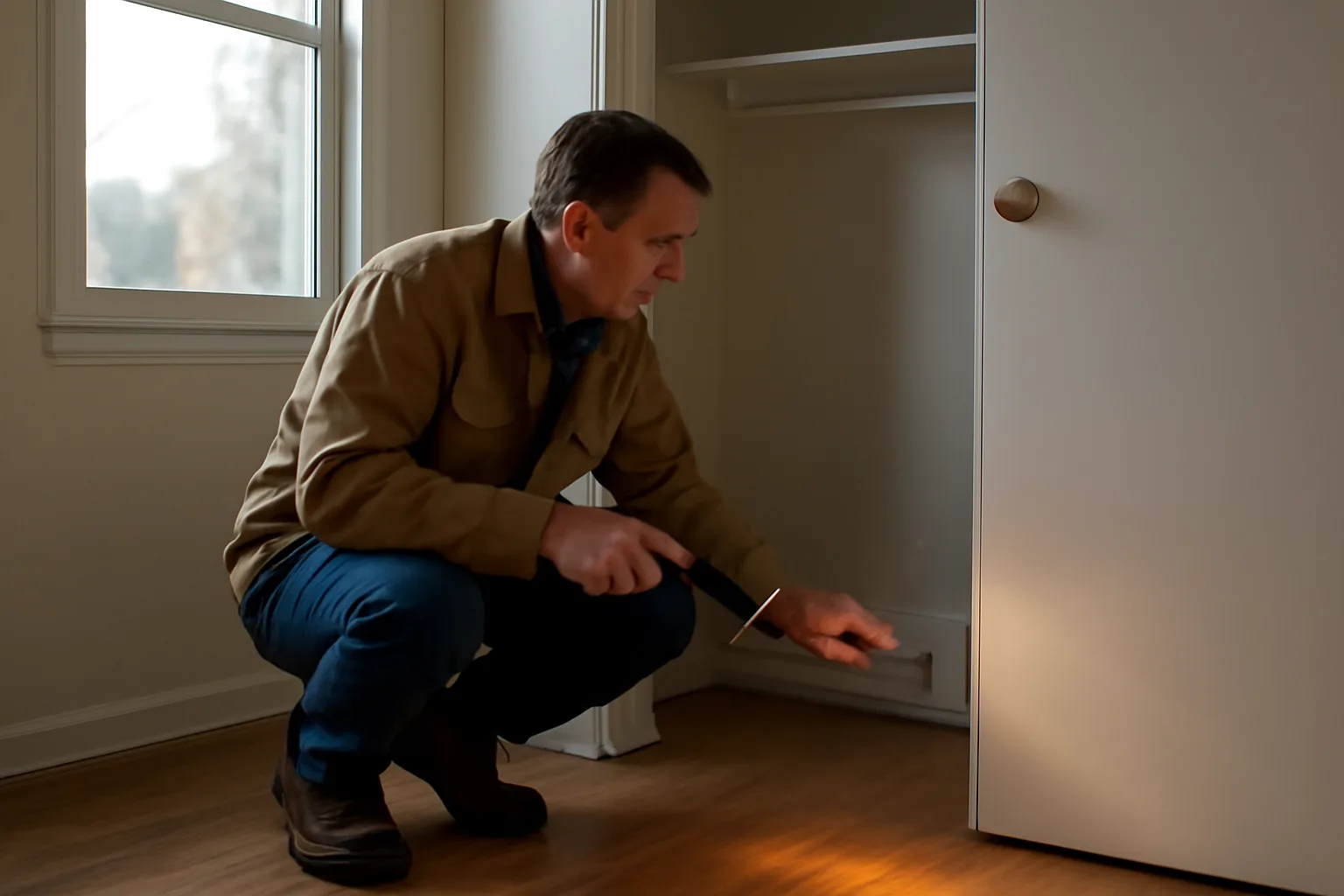
Copy the structure, not the industry. A good rental car form has four things: a diagram or room list, a condition rating for each item, a signature from both parties, and a date and mileage (or in your case, a meter reading or utility status). Your walk-through checklist should mirror all four. Walk every room with the tenant present, if possible, and note the condition of floors, walls, ceilings, windows, screens, doors, locks, appliances, faucets, and fixtures. Rate each item (good, fair, damaged, not working) rather than just writing a checkmark. Photograph or video everything, with a date stamp, before the tenant moves in and again when they move out. Have both parties sign and date the form; if the tenant refuses, note that on the form and send a copy by mail or email so there's a timestamp. Many states now put real teeth behind this. California, for example, entitles the tenant to request an initial inspection before move-out specifically so they have a chance to fix deficiencies and avoid deposit deductions. California Civil Code Section 1950.5(f) requires the landlord to give at least 48 hours' written notice of the date and time of that initial inspection and to provide an itemized statement of anticipated deductions [1]. That statement is functionally a damage inspection form, just for a rental unit instead of a car. Even where it isn't required by statute, the same document protects you if a tenant later claims a stain, hole, or broken fixture was already there when they moved in. Courts and small-claims judges lean heavily on written, dated, signed condition reports over one party's memory.
Who is responsible for the rental property walk-through inspection in California?
In California, the landlord is responsible for offering and conducting the walk-through, but the tenant has the right to request it and to participate. California Civil Code Section 1950.5(f)(1) gives tenants the right to request an initial inspection before they move out, to be conducted "no earlier than two weeks before the termination of the tenancy" [1]. At that inspection, the landlord must give the tenant an itemized statement specifying repairs or cleaning needed to avoid deductions from the security deposit, and the tenant then gets a reasonable opportunity to fix those items before moving out. After the tenant actually moves out, the landlord must return the deposit (or an itemized statement of deductions with receipts) within 21 calendar days, per the same code section [1]. The landlord initiates and documents the inspection; the tenant has the right to be present, to fix flagged issues, and to receive copies of any itemized deduction statement. If the landlord skips the required notice or itemization, tenants can sometimes recover statutory penalties in small claims court, so this isn't just paperwork housekeeping, it's a legal exposure point in California specifically. Outside California, most states don't mandate a pre-move-out walk-through the same way, but plenty of cities with rental licensing programs (see our city guides) expect landlords to document unit condition as part of license renewal or complaint response. Confirm the specific requirement with your city rental licensing office, since these rules vary block by block, more than state by state.
What can a landlord look at during an inspection?
A landlord can generally inspect anything related to the property's condition, safety, and compliance with the lease: smoke and carbon monoxide detectors, plumbing fixtures, electrical outlets, windows and locks, signs of pest infestation, unauthorized occupants or pets if the lease restricts them, and general cleanliness that could cause property damage. What a landlord cannot do is turn an inspection into a general search of the tenant's belongings, open drawers or closets without reason, or use the inspection as a pretext for harassment. Most states require reasonable advance notice before entry for a non-emergency inspection, commonly 24 hours, though the exact number and whether it must be in writing varies by state and even by lease terms. Check your specific state's landlord-tenant statute rather than assuming a nationwide standard, because there isn't one. For city rental inspection programs specifically, the inspector (not the landlord) usually checks a defined list: working smoke and CO detectors, no exposed wiring, functioning heat, no active leaks or mold, secure exterior doors and windows, proper egress from bedrooms, and sometimes exterior conditions like peeling paint or handrail stability. These lists are public in most cities that run a licensing program; ask your city rental licensing office for the actual inspection checklist rather than guessing, since a missed item is what turns into a violation notice and a fine. A landlord's own pre-inspection, the kind documented on a move-in/move-out checklist, is a good dry run for the city's version. If you already know your unit's smoke detectors are current and its locks work, the official inspection becomes a formality instead of a scramble.
How much notice does a landlord have to give before entering or inspecting a unit?
There's no single national number, and this is one of the most misunderstood parts of landlord-tenant law. Notice requirements are set state by state, and some states don't specify a number at all, just "reasonable notice." California requires "reasonable notice," which the same code section presumes to be 24 hours in writing for routine entry, per California Civil Code Section 1954 [2]. Many other states use 24 hours as their benchmark too, but plenty use 48 hours, and some simply say "reasonable" without a number attached. Emergency entry (fire, flood, gas leak) doesn't require advance notice anywhere. For the specific initial move-out inspection discussed above, California requires at least 48 hours' written notice of the date and time, separate from the general entry notice rule [1]. Because this varies so much, the only safe answer is: check your specific state's landlord-tenant statute, and check your lease, since some leases specify a longer notice period than the state minimum and that longer period controls. If you manage property in a city with its own rental licensing ordinance, that ordinance sometimes layers on additional notice rules for the mandatory inspection itself, separate from routine entry. Confirm both with your city rental licensing office before you show up at the door.
What a landlord cannot do in Ohio
Ohio's landlord-tenant law, Ohio Revised Code Chapter 5321, spells out several things a landlord cannot do. A landlord cannot enter the rental unit except at reasonable times and after giving "reasonable notice," and Ohio courts and practitioners generally treat 24 hours as a reasonable benchmark, though the statute itself doesn't fix an exact number the way some states do [3]. A landlord in Ohio cannot shut off utilities, remove doors or windows, or otherwise use "self-help" measures to force a tenant out, even if the tenant is behind on rent; eviction has to go through the court process. Ohio Revised Code 5321.15 specifically prohibits a landlord from using force, threats, or utility shutoffs to remove a tenant or the tenant's belongings without a court order [4]. A landlord also cannot retaliate against a tenant for exercising a legal right, such as filing a complaint with a housing agency or joining a tenant union; Ohio Revised Code 5321.02 addresses retaliatory conduct including retaliatory eviction or lease non-renewal [5]. On the inspection side, Ohio landlords are expected to keep the premises fit and habitable under Ohio Revised Code 5321.04, which requires compliance with building and housing codes materially affecting health and safety, and to make repairs and keep common areas safe [6]. That habitability duty is exactly why a documented move-in/move-out inspection matters in Ohio too: it's your evidence that a defect was pre-existing, or that you addressed a repair request, if a dispute ever reaches a municipal court.
What rights do tenants have without a lease?
A tenant without a written lease, sometimes called a tenant-at-will or a month-to-month tenant by default, still has real legal protections in every state. The absence of a signed lease doesn't strip away habitability rights, protection from illegal lockouts, or the right to advance notice before the tenancy ends. Most states treat an oral or unwritten rental arrangement as a periodic tenancy, usually month-to-month if rent is paid monthly, and require the same notice period to end that tenancy as they would for a written month-to-month lease, commonly 30 days, though some states use different lengths. The landlord still owes the tenant a habitable unit, working utilities, and lawful entry procedures. A tenant without a lease can't be evicted without proper legal process either; a landlord still has to go through the court eviction process (unlawful detainer or forcible entry and detainer, depending on the state's terminology) rather than just changing the locks or removing belongings. Ohio Revised Code 5321.15, cited above, applies regardless of whether there's a written lease [4]. Where a tenant without a lease has weaker footing is proof: without a written document, terms like rent amount, due date, and what's included can come down to conflicting testimony. That's part of why documentation habits (receipts, texts confirming rent amount, a written move-in condition report) matter even more when there's no formal lease. For tenants trying to understand what they're actually entitled to, see tenants rights and renters rights.
What is landlording, and what is a landlord?
A landlord is the owner of a rental property (or their authorized agent) who leases that property to a tenant in exchange for rent. Landlording is the informal term for the day-to-day work of that role: collecting rent, handling maintenance and repairs, screening applicants, complying with local and state housing law, and managing the landlord-tenant relationship overall. Landlording isn't a licensed profession the way real estate brokering is, but it does come with legal duties attached automatically once you rent out a unit, whether or not you think of yourself as "a landlord" in a formal sense. Those duties include habitability (keeping the unit fit to live in), following fair housing law in tenant screening, honoring security deposit rules, and giving proper notice before entry or lease termination. In cities with mandatory rental registration or licensing, landlording also comes with an administrative layer: registering the unit with the city, paying an annual or per-unit fee, and passing a periodic inspection. These programs exist specifically because cities found that unregistered rentals had disproportionately higher rates of code violations, and registration lets code enforcement actually reach owners. See our city guides hub for how specific cities structure these programs. Someone who owns one rental house and lives three states away is legally a landlord the moment they sign a lease, with the same basic obligations as someone who owns fifty units through a management company. The scale changes; the underlying legal role doesn't.
How do I become a landlord, step by step?
Becoming a landlord starts before you own a rental property and continues well past the first lease signing. Here's the realistic sequence for someone doing this for the first time with one or two units. 1. Confirm the property is legally rentable. Check local zoning, HOA rules if applicable, and whether your city requires a rental license or registration before you can legally lease the unit. Many cities, especially those with mandatory rental licensing ordinances, require registration before or shortly after the first tenant moves in, and renting without that license can carry fines. 2. Get the unit inspection-ready. Working smoke and carbon monoxide detectors, functioning locks, no active leaks, safe electrical, and clear egress from bedrooms are close to universal requirements across city rental inspection programs, even though the exact checklist varies. Doing this work before you have a tenant is cheaper and faster than doing it under a violation notice deadline. 3. Understand your state's landlord-tenant law. This governs security deposit limits and timelines, entry notice, habitability duties, and eviction procedure. It is not the same everywhere, and copying a lease template from another state is a common first-timer mistake. 4. Screen tenants consistently and legally. Apply the same criteria to every applicant to avoid fair housing violations; the federal Fair Housing Act, enforced by HUD, prohibits discrimination based on race, color, national origin, religion, sex, familial status, or disability [7]. 5. Use a written lease and a documented move-in inspection. Even in states that don't require it, a signed lease and a photographed, dated condition report protect you in nearly every dispute that follows. 6. Set up rent collection, maintenance response, and recordkeeping systems before you need them, not after a tenant calls about a leak at 11pm. If your city requires licensing or inspection and you want a structured way to get paperwork and property both ready before the deadline, our $79 one-time City Rental License & Inspection Prep Packet is built around exactly this checklist.
How do I be a good landlord, day to day?
Being a good landlord day to day comes down to responsiveness, documentation, and knowing your legal limits before you hit them. The mechanics matter less than the habits. Respond to repair requests quickly and in writing (even a text confirming "got it, will send someone Thursday" counts). Habitability law in most states requires landlords to make repairs affecting health and safety within a reasonable time after notice, and "reasonable" gets interpreted against you if you sat on a request for weeks. Ohio's habitability statute, for example, requires landlords to "make all repairs and do whatever is reasonably necessary to put and keep the premises in a fit and habitable condition" [6]. Keep a paper trail on everything: lease, inspection reports, repair requests, notices given, rent receipts. This is the single habit that separates landlords who win disputes from landlords who lose them, because most landlord-tenant disagreements come down to who has documentation and who has memory. Give proper notice before entry, every time, even for something small like a furnace filter swap. It's tempting to skip notice for a five-minute job; it's also the fastest way to get accused of harassment or illegal entry. Treat renewals and rent increases the same way you'd want treated as a tenant: with real notice, not a surprise. Most states require 30 to 60 days' notice for a rent increase on a month-to-month tenancy, though exact timelines vary, so check your state's statute.
Why do landlords require renters insurance?
Landlords require renters insurance mainly to shift liability and property-loss risk away from themselves and onto the tenant's own coverage. A landlord's own property insurance policy covers the building and the landlord's property, but it typically does not cover a tenant's personal belongings if there's a fire, burst pipe, or theft, and it may not adequately cover a tenant's liability if the tenant accidentally causes damage or a guest is injured in the unit. Renters insurance is genuinely inexpensive relative to what it covers; national estimates commonly put average renters insurance premiums somewhere in the range of $15 to $30 a month, though the exact figure depends heavily on coverage limits, location, and deductible, so treat any single number as a rough range rather than a fixed price. Requiring it also protects the landlord indirectly: if a tenant's negligence causes a fire that damages neighboring units, the tenant's liability coverage (not the landlord's policy) is the first line of defense, which can keep the landlord's own claims history and premiums cleaner. Many cities' rental licensing ordinances and plenty of standard leases now require proof of renters insurance as a lease condition, separate from any government mandate. It's not universally required by law, but it's become a near-standard lease clause because it's cheap for the tenant and meaningfully reduces the landlord's uninsured exposure.
Frequently asked questions
Is a rental car damage inspection form legally the same as a rental unit inspection checklist?
No, they're different documents for different industries, but the concept is identical: a dated, signed record of an asset's condition at handoff, used later as evidence if a dispute arises. Landlords should treat a move-in/move-out inspection checklist with the same seriousness a rental car company treats its damage form.
Do I legally need a written move-in inspection checklist as a landlord?
It depends on your state. California requires a specific pre-move-out inspection process and itemized deduction statement under Civil Code Section 1950.5(f) [1]. Many other states don't mandate the document by statute, but it's still the strongest evidence you can have in a security deposit dispute, so most experienced landlords use one regardless of whether it's required.
Who pays for damage found during a landlord's inspection?
Ordinary wear and tear is the landlord's cost to absorb; damage beyond normal wear, caused by the tenant or their guests, can typically be deducted from the security deposit if documented with an itemized statement and, in states like California, timely notice within 21 days of move-out [1].
How often can a landlord inspect a rental unit?
There's no universal number; it depends on your lease and state law, and inspections still require advance notice except in emergencies. Routine inspections once or twice a year, plus move-in and move-out walk-throughs, is a common and defensible pattern, but check your state's landlord-tenant statute for any specific limits.
What is landlording, in plain terms?
Landlording is the day-to-day work of owning and managing a rental property: collecting rent, handling repairs, screening tenants, following state and local housing law, and keeping the unit habitable and compliant. It applies whether you own one unit or fifty.
What is a landlord, legally?
A landlord is the owner of a rental property, or their authorized agent, who leases that property to a tenant for rent. The role carries automatic legal duties, including habitability, fair housing compliance, and proper notice for entry and lease termination, regardless of whether the owner thinks of themselves as a professional landlord.
What rights do tenants have without a lease?
Tenants without a written lease still have habitability rights, protection from illegal lockouts, and a right to proper notice before the tenancy ends, usually treated as a month-to-month tenancy by default. A landlord still must go through formal eviction procedure rather than removing the tenant or their belongings directly.
How do I become a landlord?
Confirm the property can legally be rented (zoning, HOA, city rental license if required), get the unit up to safety code, learn your state's landlord-tenant law, screen tenants consistently under fair housing law, use a written lease, and document the unit's condition at move-in. Then set up systems for rent collection and maintenance before you need them.
Who is responsible for the rental property walk-through inspection in California?
The landlord must offer and conduct it, giving at least 48 hours' written notice under California Civil Code Section 1950.5(f), and the tenant has the right to be present and to fix flagged issues before the final move-out inspection [1].
What can a landlord look at during an inspection?
Smoke and CO detectors, plumbing, electrical, locks, windows, signs of pests, unauthorized pets or occupants if the lease restricts them, and general condition affecting safety or property value. A landlord generally cannot search personal belongings or use an inspection as pretext for harassment.
How much notice does a landlord have to give before an inspection?
It varies by state; many use 24 hours as a benchmark for routine entry, some require 48 hours, and some just say "reasonable notice" without a fixed number. California presumes 24 hours in writing for routine entry under Civil Code Section 1954 and requires 48 hours for the specific pre-move-out inspection [1][2].
What a landlord cannot do in Ohio?
An Ohio landlord cannot use self-help eviction (shutting off utilities, removing doors, forcing a tenant out without a court order) under Ohio Revised Code 5321.15, cannot retaliate against a tenant for exercising legal rights under 5321.02, and cannot enter without reasonable notice [4][5].
Why do landlords require renters insurance?
It shifts the cost of a tenant's personal property loss and personal liability away from the landlord's own policy, which usually doesn't cover the tenant's belongings. It's cheap for tenants, commonly in a rough range of $15 to $30 a month depending on coverage and location, and reduces the landlord's uninsured exposure.
Sources
- California Legislative Information, Civil Code Section 1950.5: California's initial move-out inspection notice, itemized deduction statement, and 21-day deposit return timeline
- California Legislative Information, Civil Code Section 1954: California's reasonable notice standard, presumed 24 hours in writing, for landlord entry
- Ohio Legislature, Ohio Revised Code Chapter 5321: Ohio landlord-tenant law framework governing entry, habitability, and tenant remedies
- Ohio Legislature, Ohio Revised Code 5321.15: Ohio's prohibition on self-help eviction, including utility shutoffs and forced removal without court order
- Ohio Legislature, Ohio Revised Code 5321.02: Ohio's prohibition on retaliatory conduct by landlords against tenants exercising legal rights
- Ohio Legislature, Ohio Revised Code 5321.04: Ohio landlord's duty to maintain fit and habitable premises and make necessary repairs
- U.S. Department of Housing and Urban Development, Fair Housing Act overview: Federal Fair Housing Act protected classes landlords must not discriminate against in tenant screening