Last updated 2026-07-26
TL;DR
Becoming a landlord means more than buying a property: you need to register with your city (often required), understand what an inspector can and can't check, and know tenant rights around notice and privacy. Most cities require 24-48 hours notice before entry, and rules on inspections, deposits, and insurance vary heavily by state and city.
how do you actually become a landlord?
Becoming a landlord is mostly paperwork and risk management, not a license exam. You need a property, a lease, insurance, and in a growing number of cities, a rental registration or license before you can legally rent the unit out. Start with the boring stuff first: check whether your city or county requires rental registration or a rental license. Hundreds of municipalities across the U.S. now require this, including Los Angeles's Rent Registry program and many mid-size cities in Ohio, New Jersey, and Minnesota that run mandatory rental inspection programs. If you skip this step, you can face fines even if your lease and tenant relationship are perfectly fine. Next, get landlord-specific insurance (a standard homeowners policy usually excludes rental use), set up a compliant lease, and figure out your local security deposit rules; many states cap deposits and require you to return them within a specific window, often 14 to 30 days after move-out depending on the state [1]. Finally, learn your local eviction process before you need it. Landlord-tenant law is state and often city-specific, so a process that works in Texas can get you in real trouble in California or New York.
what is landlording, exactly?
Landlording is the ongoing work of owning and managing a rental property: collecting rent, maintaining the unit, handling repairs, following notice rules, and staying compliant with local licensing and inspection requirements. It's a mix of light property management and light legal compliance. Most landlords with 1-10 units handle this themselves rather than hiring a property manager. That's fine financially (property managers typically charge 8% to 12% of monthly rent), but it means you're personally on the hook for knowing the rules: habitability standards, notice periods, security deposit handling, and any local licensing renewal deadlines. The habitability piece matters more than people expect. Every state has some version of an implied warranty of habitability, meaning you must keep the unit livable (working plumbing, heat, structural safety) regardless of what the lease says [2]. Landlording, done right, is really risk management with a rent check attached.
what is a landlord, legally speaking?
A landlord is the party that leases residential or commercial property to a tenant in exchange for rent, and takes on legal obligations tied to that role: habitability, repairs, privacy, and following state and local landlord-tenant statutes. The word covers everyone from a single-unit owner renting out a basement to a company managing hundreds of units. Legally, being a landlord triggers specific duties the moment you have a tenant, lease or no lease. You owe basic habitability, you owe proper notice before entry, and in licensing cities you owe compliance with the local rental ordinance. None of these duties depend on whether you think of yourself as a "real" landlord or just someone renting out a spare unit. If your city requires a rental license or registration, you're legally a landlord under that ordinance the moment you start collecting rent, not once you've completed the paperwork. That's why fines for unregistered rentals often apply retroactively to the start of the tenancy, not the date the city caught you.
who is responsible for the rental property walk-through inspection in California?
In California, the landlord is responsible for offering the pre-move-out inspection, but the tenant decides whether to accept it. Under California Civil Code Section 1950.5(f), a landlord must notify the tenant of their right to an initial inspection before the tenant moves out, conducted no earlier than two weeks before the end of the tenancy [3]. The landlord (or their agent) does the actual walk-through, and the tenant has the right to be present. The point of the inspection is to give the tenant a chance to fix any deficiencies before move-out so they can avoid deductions from their security deposit; the landlord must give an itemized statement of proposed repairs or cleaning if problems are found [3]. This is separate from routine mid-tenancy inspections and separate from any city-mandated rental inspection tied to a license (common in cities with rental inspection programs). If your city requires periodic inspections for code compliance, that inspection is usually run by a city inspector, not the landlord, and follows different notice rules than the California move-out walk-through.
what can a landlord look at during an inspection?
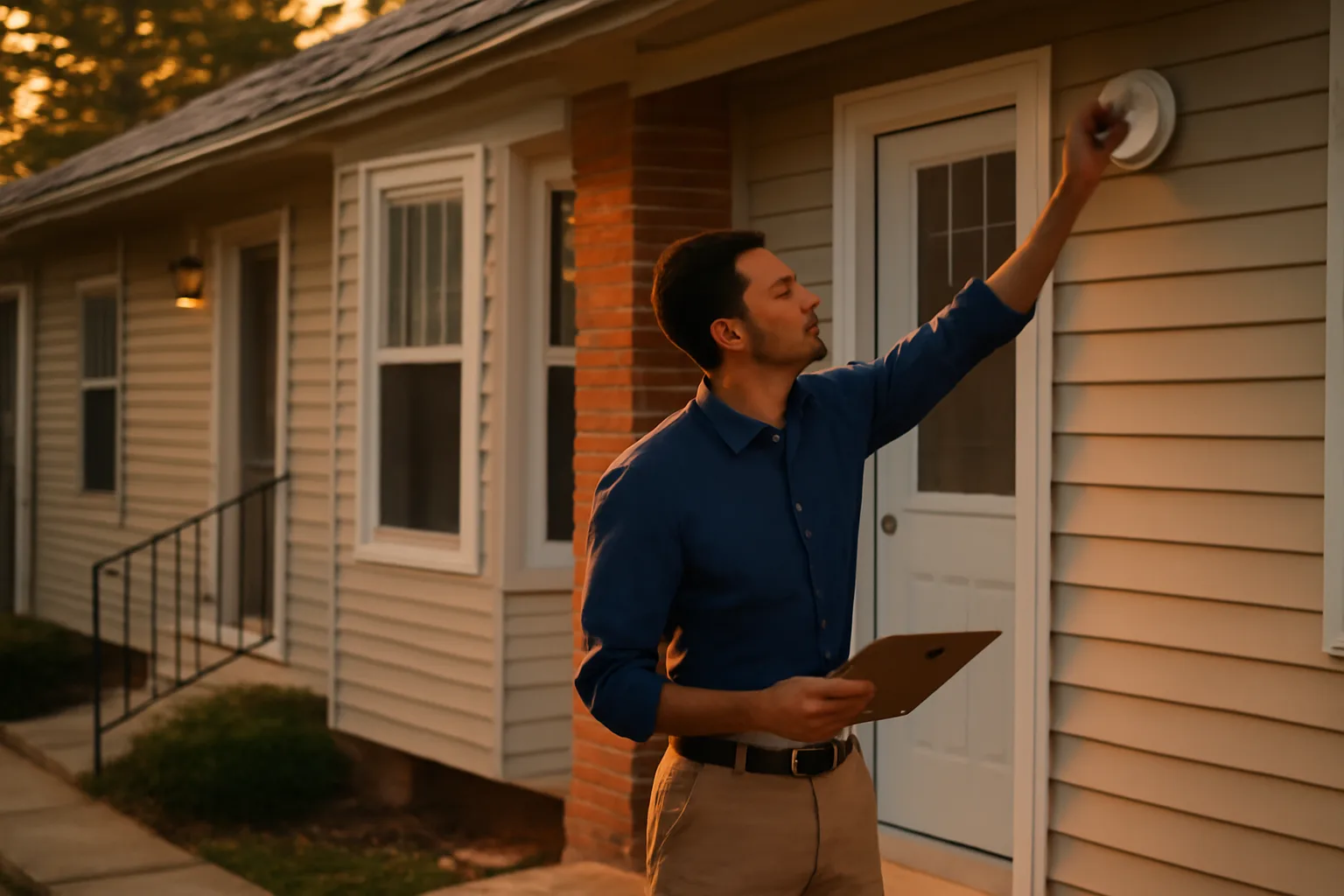
During a routine or move-out inspection, a landlord can check the condition of the unit itself: appliances, fixtures, smoke detectors, signs of damage, cleanliness, and any lease violations that are visible (unauthorized pets, unauthorized occupants, illegal alterations). A landlord generally cannot search personal belongings, go through drawers, or use the inspection as cover to look at anything unrelated to the unit's condition and lease compliance. Most states require the inspection purpose to be reasonable, meaning tied to a legitimate reason: checking for damage, verifying repairs, showing the unit to prospective tenants or buyers, or responding to a maintenance request. "Reasonable" is doing a lot of work in that sentence and it varies by state statute. For city-mandated rental inspections (the kind tied to a rental license), the inspector typically checks code items: smoke and CO detectors, working plumbing and heat, electrical safety, egress windows, handrails, and pest or mold issues. These inspections are about property condition and code compliance, not tenant behavior or belongings. If you're prepping for one of these, checking your city's specific inspection checklist ahead of time saves you a failed inspection and a re-inspection fee; confirm the checklist with your city rental licensing office since items vary by jurisdiction. Our tenant rights overview covers what tenants can push back on if an inspection oversteps these bounds.
how much notice does a landlord have to give before entry?
Most states require 24 to 48 hours of advance notice before a landlord enters an occupied unit for a non-emergency reason, though the exact number and the acceptable delivery method (written, posted, verbal) varies by state. California requires 24 hours notice, presumed reasonable, under Civil Code Section 1954, unless the tenant agrees to less [4]. Many other states use a 24-hour standard by statute or case law, while some, like Delaware, specify 48 hours [5]. Emergencies are the standard exception nationwide: if there's a fire, flood, gas leak, or similar hazard, a landlord can enter without notice. Routine maintenance, showings, and inspections almost always require advance notice, and courts have been willing to treat repeated no-notice entries as a form of harassment or even constructive eviction in extreme cases. If you're in a licensing city, don't confuse the city inspector's scheduling process with your own entry-notice obligations as landlord. The city typically schedules its inspection directly with you or the tenant, but you as landlord may still owe the tenant your state's standard entry notice separately, depending on how your state statute is written.
what rights do tenants have without a lease?
Tenants without a written lease still have full legal protections under state landlord-tenant law; the absence of a lease does not mean the absence of rights. A tenant paying rent regularly (even informally, even without paperwork) is generally treated as a month-to-month tenant under state law, with the same habitability, privacy, and notice protections as someone with a signed lease [2]. Without a written lease, the terms default to whatever your state statute says for month-to-month tenancies: usually 30 days notice to terminate on either side (sometimes longer for longer-term tenants), the same entry-notice rules, and the same implied warranty of habitability. What a verbal or no-lease arrangement does lose is clarity: no agreed rent amount in writing, no agreed policies on pets, guests, or subletting, which makes disputes harder to resolve. This is one of the most common landlord mistakes with 1-2 unit properties: renting to a family member or friend on a handshake, then being surprised that eviction and notice rules apply exactly like they would with a signed lease. They do. Check our tenants rights guide and renters rights overview for state-specific defaults.
why do landlords require renters insurance?
Landlords require renters insurance mainly to shift liability for the tenant's personal belongings and for tenant-caused incidents (like a kitchen fire or a bathtub overflow that damages the unit below) off the landlord's own policy. A landlord's property insurance covers the building; it typically does not cover a tenant's furniture, electronics, or personal injury claims arising from the tenant's own negligence. Requiring renters insurance is legal in most states as a lease condition, and it's become standard practice for landlords of all sizes. It's relatively cheap for tenants too: renters insurance often runs somewhere in the range of $15 to $30 a month depending on coverage and location, though costs vary by state and insurer. From the landlord's side, requiring proof of renters insurance at lease signing (and at each renewal) is a low-cost way to reduce your own liability exposure without adding real cost or complexity to your operations. It won't cover damage the tenant does to the unit itself in most basic policies, so it's not a substitute for your own landlord policy or for collecting an adequate security deposit.
what a landlord cannot do in Ohio
In Ohio, a landlord cannot enter the rental unit without reasonable notice (Ohio law generally treats 24 hours as reasonable, though the statute doesn't specify an exact number), cannot shut off utilities to force a tenant out, cannot change the locks without a court order, and cannot retaliate against a tenant for reporting code violations or exercising legal rights. Ohio Revised Code Section 5321.04 requires landlords to maintain the premises in a fit and habitable condition, keep common areas safe, maintain electrical, plumbing, heating, and sanitary systems, and comply with local housing codes [6]. A landlord who fails to do this and gets sued can be on the hook for the tenant's damages plus, in some cases, attorney fees. Ohio Revised Code Section 5321.02 specifically prohibits retaliatory conduct, meaning a landlord cannot raise rent, decrease services, or attempt eviction specifically because a tenant complained to a government agency about a code violation or exercised a right under the landlord-tenant statute . Self-help eviction (changing locks, removing doors, shutting off power or water) is illegal statewide; a landlord has to go through the court eviction process no matter how far behind on rent the tenant is.
how to be a landlord without getting fined by your city
The single biggest fine risk for small landlords isn't a bad tenant, it's an unregistered or unlicensed rental. Cities with mandatory rental registration or licensing programs (common across Ohio, New Jersey, California, and dozens of mid-size cities nationwide) issue fines that can run from under $100 to several hundred dollars per violation, and some cities charge per-day penalties for ongoing non-compliance; confirm the specific fee schedule with your city rental licensing office since it varies widely. The fix is procedural, not complicated: find your city's rental registration or licensing office (search "[your city] rental registration" or "[your city] rental license"), register before you advertise the unit for rent, and calendar your renewal date and any required inspection date. Many cities require re-registration annually and re-inspection every one to three years depending on the ordinance. This is the exact gap our $79 City Rental License & Inspection Prep Packet is built for: a structured way to pull together what your specific city's registration form, inspection checklist, and renewal timeline actually require, instead of piecing it together from scattered city pages. It's a one-time cost, not a subscription, and it doesn't replace your city's actual filing, it just helps you get the filing right the first time.
what happens if you skip registration or fail an inspection?
If you skip required rental registration, most cities can fine you retroactively back to when the tenancy started, and some can bar you from collecting rent or pursuing eviction until you're compliant. That last part catches landlords off guard: a few cities and states have case law or ordinance language that lets a tenant raise your unregistered status as a defense in an eviction case. Failing a rental inspection is usually less catastrophic but still costly. Most programs give you a correction period (commonly 30 to 60 days, though this varies by city) to fix the cited issues, then charge a re-inspection fee if you need a second visit. Ignore the notice entirely and the fines escalate, sometimes converting into a lien against the property if left unresolved long enough. The practical move if you get an inspection notice or violation letter: don't panic and don't ignore it. Read exactly what's cited, fix what you can before the re-inspection, and call the inspector's office if anything in the notice is unclear. Inspectors deal with confused first-time landlords constantly; a phone call asking what specifically needs to change is normal, not a red flag.
Frequently asked questions
How do you become a landlord if you already own the property?
Check whether your city or county requires rental registration or licensing before you rent it out, get landlord-specific insurance, draft a compliant lease under your state's landlord-tenant law, and confirm your local security deposit and notice rules. Owning the property is the easy part; the compliance steps are where new landlords get tripped up.
Who does the pre-move-out walk-through inspection in California?
The landlord offers and conducts it, but it's the tenant's choice whether to accept the inspection. Under California Civil Code Section 1950.5(f), the landlord must notify the tenant of this right and, if requested, do the walk-through no earlier than two weeks before move-out, then provide an itemized list of any needed repairs or cleaning.
What is landlording in simple terms?
Landlording is the day-to-day work of owning a rental: collecting rent, handling repairs, following notice and privacy rules, and staying compliant with local rental registration or licensing requirements. It's part maintenance, part paperwork, part knowing your state's landlord-tenant statute well enough to avoid liability.
What legally defines a landlord?
A landlord is anyone who leases property to a tenant for rent and, in doing so, takes on legal duties around habitability, entry notice, and deposit handling under state law. This applies the moment rent is collected, regardless of whether a written lease or city registration exists yet.
What rights does a tenant have if there's no written lease?
A tenant paying rent regularly without a written lease is usually treated as a month-to-month tenant under state law, with the same habitability, privacy, and notice protections as a tenant with a signed lease. What's missing is agreed-upon detail on things like pets, guests, and rent amount in writing.
Why do landlords require renters insurance from tenants?
Landlord insurance covers the building, not the tenant's belongings or liability for tenant-caused incidents. Requiring renters insurance, often $15 to $30 a month for the tenant, shifts that risk off the landlord's policy and is a standard, low-cost lease condition in most states.
How much notice does a landlord have to give before entering a unit?
Most states require 24 to 48 hours notice for non-emergency entry. California sets 24 hours as presumptively reasonable under Civil Code Section 1954. Exact requirements and acceptable notice methods vary by state, so check your specific state's landlord-tenant statute.
What can a landlord check during a routine inspection?
A landlord can check the unit's condition: appliances, fixtures, smoke detectors, damage, cleanliness, and visible lease violations. A landlord generally cannot search personal belongings or use an inspection as a pretext to look at anything unrelated to the unit's condition or lease compliance.
What is a landlord not allowed to do in Ohio?
Under Ohio Revised Code 5321.04 and 5321.02, a landlord cannot skip maintaining habitability, cannot retaliate against a tenant for reporting code violations, cannot shut off utilities or change locks to force someone out, and must use the formal court eviction process, not self-help eviction.
Do I need a rental license to rent out one unit?
It depends entirely on your city. Many municipalities require rental registration or licensing even for a single unit, while others exempt owner-occupied duplexes or small properties. Search your specific city's rental registration or licensing office page, or confirm directly with that office, since there's no national rule.
What happens if I get a rental inspection violation notice?
Read exactly what was cited, fix the issues within the correction window (commonly 30 to 60 days depending on the city), and schedule your re-inspection. Ignoring the notice typically leads to escalating fines and, in some cities, a lien against the property.
Can a city inspector look inside closets or drawers during a rental inspection?
Generally no. City rental inspections tied to licensing focus on code items like smoke detectors, electrical and plumbing systems, egress, and structural safety, not personal belongings. If an inspector's requested access seems to go beyond code compliance, ask them directly what specific violation they're checking for.
Sources
- National Conference of State Legislatures, Security Deposits: State security deposit return windows commonly range from 14 to 30 days after move-out.
- California Legislative Information, Civil Code Section 1950.5: California landlords must offer a pre-move-out inspection under Civil Code 1950.5(f), conducted no earlier than two weeks before tenancy end.
- California Legislative Information, Civil Code Section 1954: California treats 24 hours advance notice as presumptively reasonable for landlord entry.
- Delaware Code, Title 25, Section 5509: Delaware requires landlords to give tenants notice before entry under its residential landlord-tenant code.
- Ohio Revised Code Section 5321.04: Ohio landlords must maintain habitable premises, safe common areas, and functioning electrical, plumbing, heating, and sanitary systems.
- Ohio Revised Code Section 5321.02: Ohio law prohibits landlords from retaliating against tenants who report code violations or exercise statutory rights.