Last updated 2026-07-26
TL;DR
A complete landlord rental checklist covers legal setup, unit inspection prep, lease terms, insurance requirements, and notice rules before and during a tenancy. Most of the specific numbers (notice periods, inspection intervals, license fees) come from state or city law, so check yours before you act on any deadline.
What is landlording, and what does a landlord actually do?
Landlording is the ongoing job of owning residential property and renting it to someone else for money. It's more than collecting rent. It's screening applicants, keeping the unit habitable, following state and local landlord-tenant law, handling repairs, managing security deposits correctly, and dealing with the paperwork that comes with all of it. A landlord (sometimes called a lessor) is the legal owner or authorized agent who rents real property to a tenant under a lease or rental agreement. The relationship is contractual, but it's also regulated. Every state has a landlord-tenant statute that spells out minimum duties, and a growing number of cities layer on their own rental registration, licensing, or inspection rules on top of state law. If you own one rental house or a fourplex, you're doing the same job as someone who owns 200 units, just at a smaller scale and usually without a property management company or in-house maintenance staff. That means you're personally responsible for knowing the rules, more than following whatever the last owner did.
How do you become a landlord, step by step?
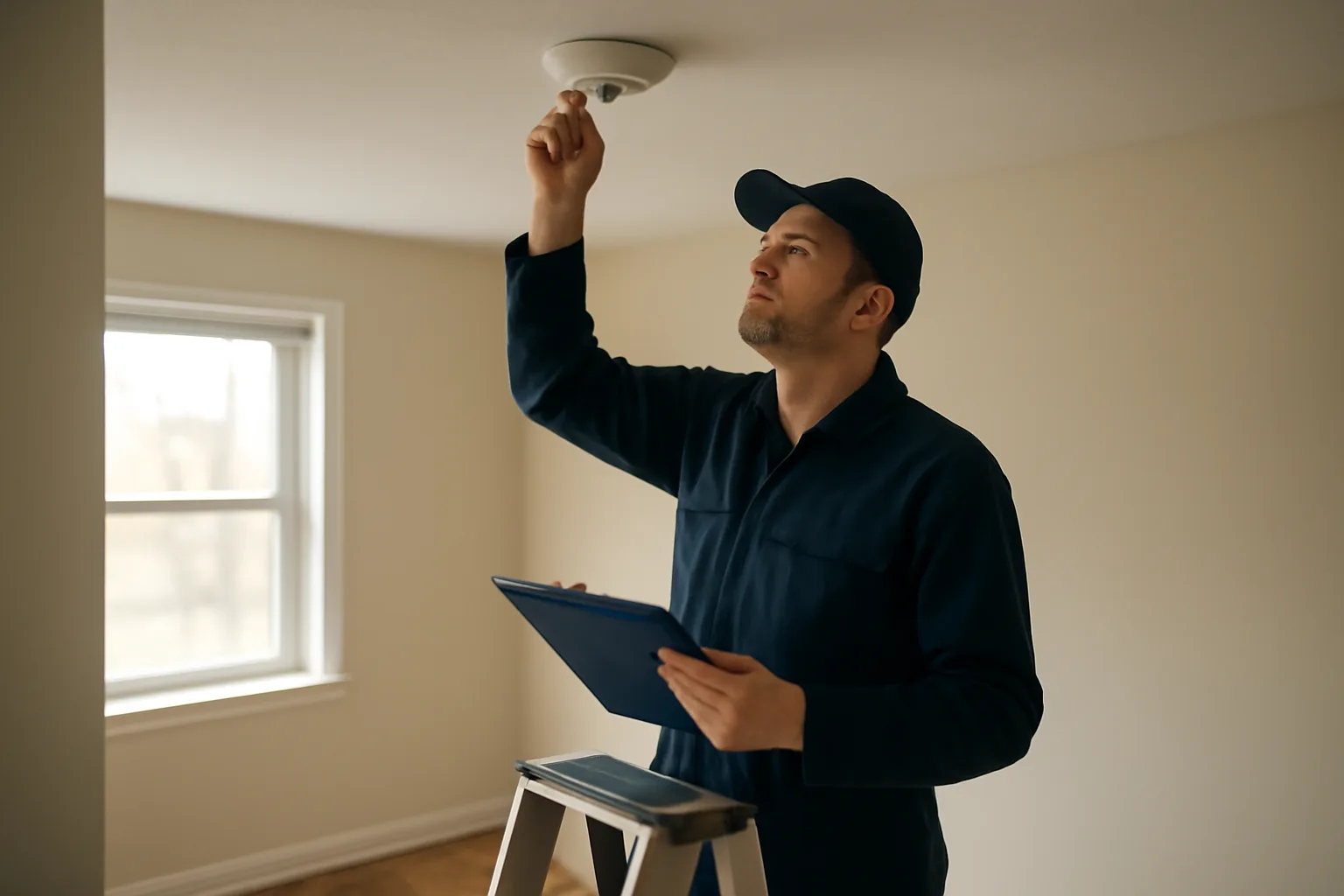
Becoming a landlord is less about a license to "be" one and more about setting up the property and yourself correctly before the first tenant moves in. Here's the realistic order of operations for a small owner with 1 to 10 units. 1. Confirm you can legally rent the unit. Some cities require a rental registration or license before you can advertise a unit for rent at all. Skipping this step is the single most common reason small landlords get hit with a fine notice in their first year. 2. Get the unit inspection-ready. Working smoke and carbon monoxide detectors, functioning locks, no active leaks, safe electrical panels, and clear egress from bedrooms are baseline expectations almost everywhere, inspection program or not. 3. Set up landlord entity basics. Decide whether you'll hold the property personally or through an LLC, get a separate bank account for rent and deposits, and figure out how security deposits must be held in your state (many states require a separate account and set interest or return rules by statute). 4. Write a compliant lease. This is where a lot of DIY landlords get into trouble, because a lease clause that violates state law is generally unenforceable even if the tenant signed it. 5. Screen tenants consistently and legally. The Fair Housing Act, 42 U.S.C. § 3601 et seq., bars discrimination based on race, color, religion, sex, national origin, familial status, and disability in the sale or rental of housing [1]. Many states and cities add source of income, sexual orientation, and other protected classes on top of federal law. 6. Register or license the rental with your city if required. This is the step people forget because it's not part of "finding a tenant," it's a municipal compliance requirement that runs on its own clock. 7. Get proper insurance, both landlord (dwelling) coverage and, in many cases, a renters insurance requirement for the tenant. 8. Move the tenant in with a documented move-in inspection, signed lease, and deposit receipt.
What should be on a landlord's pre-rental checklist?
| Registration/licensing | Is a rental registration, business license, or rental permit required in your city? | Many cities fine unregistered rentals per day of violation | |
|---|---|---|---|
| Safety systems | Smoke detectors, CO detectors, fire extinguishers where required | Baseline habitability and fire code issue | |
| Structural/utility | Working plumbing, heat, hot water, no active leaks | Core of every state's implied warranty of habitability | |
| Lease document | State-compliant lease, correct deposit terms, disclosures | Non-compliant clauses can be void even if signed | |
| Insurance | Landlord dwelling policy, tenant renters insurance requirement if desired | Protects your asset and limits liability exposure | |
| Screening | Consistent criteria applied to every applicant | Fair Housing Act compliance, 42 U.S.C. § 3601 [1] | |
| Move-in documentation | Photos, written condition report, signed by both parties | Protects deposit disputes later | If your city requires a rental inspection before you can get a certificate of occupancy or rental license, build in extra lead time. Inspection backlogs in busy cities can run weeks, not days. |
Here's the condensed version you can actually use before listing a unit. Treat it as a floor, not a ceiling. Your city or state may require more. | Category | What to check | Why it matters |
Who is responsible for a rental property walk-through inspection in California?
In California, state law puts the responsibility on the landlord to conduct an initial move-in inspection if the tenant requests one, and separately requires landlords to offer an initial inspection before move-out. California Civil Code § 1950.5(f) requires that upon termination of a tenancy, if requested by the tenant, the landlord shall give the tenant reasonable opportunity to be present at the inspection, and the landlord must give at least 48 hours' prior written notice of the date and time of that inspection unless the parties waive it in writing [2]. The walk-through itself is the landlord's obligation to conduct and document, but the tenant has the right to be present and to get an itemized statement of any deficiencies noted. That statement gives the tenant a chance to fix things before move-out and avoid deductions from the deposit. On the move-in side, most California landlords also do a condition inspection, though state law's explicit walk-through notice requirement (Civil Code § 1950.5) is specifically tied to termination of tenancy. Doing a documented move-in inspection anyway, with photos and a signed condition checklist, is standard practice and protects you if there's a dispute over deposit deductions at move-out. Some cities within California, like Los Angeles and San Francisco, layer additional rental inspection ordinance requirements on top of this (their Systematic Code Enforcement or similar programs), so check with your specific city's rental housing office.
What can a landlord look at during an inspection?
A landlord (or a city inspector, in jurisdictions with mandatory rental inspection programs) can generally look at anything related to habitability, safety, and code compliance. That means checking smoke and CO detectors, testing outlets and light fixtures, looking under sinks for leaks, checking the water heater and furnace, and confirming windows and doors lock and open properly for fire egress. What a landlord or inspector generally cannot do is rummage through personal belongings, open closed drawers or containers unrelated to the inspection's purpose, or use the visit as a pretext for something unrelated to habitability or lease compliance. Most state statutes limit landlord entry to specific reasons: repairs, inspections, showing the unit to prospective tenants or buyers, or emergencies. For city-run rental inspection programs, the scope is usually defined by local housing code and covers structural, electrical, plumbing, fire safety, and sometimes exterior conditions (peeling paint, broken steps, pest evidence). The inspector isn't grading your decor. They're checking against a written code checklist, and in most cities that checklist is available in advance from the rental licensing office, so ask for it before your first inspection instead of guessing.
How much notice does a landlord have to give before entering or ending a tenancy?
This is one of the most state-specific numbers in landlord-tenant law, and there is no single national rule, so treat any number here as a starting point to verify against your own state's statute. For entry notice (routine, non-emergency access): many states require 24 hours' written or verbal notice. California requires "reasonable notice," which state law presumes to be 24 hours in most circumstances, under Civil Code § 1954 [3]. Some states set 24 hours as a floor, others set 48 hours for specific purposes like the move-out inspection mentioned above. For ending a tenancy or non-renewal: notice periods commonly range from 30 to 90 days depending on the state, the length of tenancy, and whether it's a month-to-month or fixed-term lease. Some states scale the notice period to how long the tenant has lived there. Because this varies so much by state and sometimes by city rent control ordinance, don't rely on a generic number. Pull your specific state's residential landlord-tenant act or your city's tenant protection ordinance before sending any notice. Emergency entry (fire, flood, gas leak) generally does not require advance notice under any state's law, because the safety exception overrides the standard notice period.
Why do landlords require renters insurance?
Landlords require renters insurance mainly to shift liability risk away from the landlord's own policy and to make sure the tenant has a way to cover their own belongings and liability exposure, since a standard landlord dwelling policy does not cover a tenant's personal property or personal liability for incidents inside the unit. A landlord's own property insurance covers the building, fixtures, and the landlord's own liability as owner. It generally does not pay for a tenant's furniture destroyed in a fire, and it does not cover a claim where a tenant's guest is injured and sues the tenant directly. Renters insurance closes that gap. It also often includes loss-of-use coverage, so if the unit becomes uninhabitable, the tenant's temporary housing costs get covered by their own policy instead of becoming a dispute with the landlord. There's also a practical liability argument: if a tenant's negligence (a grease fire, an overflowing tub) damages the building, a landlord without a renters insurance requirement in the lease has to chase the tenant personally for those costs, which is slower and less reliable than a claim against an insurance policy. Many landlords require proof of a policy with a minimum liability limit (commonly $100,000, though this isn't set by any single law and varies by landlord and by state) as a lease condition, and some require the landlord be listed as an "interested party" on the policy so they're notified if it lapses.
What rights do tenants have without a lease?
Tenants without a signed written lease still have rights, because a rental relationship can exist under an oral or implied agreement, and every state's landlord-tenant statute and the implied warranty of habitability still apply regardless of whether there's paper. A tenant paying rent and occupying a unit with the owner's knowledge is generally treated as a month-to-month tenant under state law, even with nothing in writing. That means normal notice-to-vacate rules still apply before the landlord can require them to leave, the landlord still can't just change the locks or shut off utilities to force them out (a self-help eviction, illegal in nearly every state), and the tenant still has habitability protections. Without a written lease, both sides lose the specificity a lease provides, like exact rent due dates, pet policies, or which repairs are whose responsibility, so disputes tend to default to whatever the state's statutory baseline says, plus whatever can be proven through payment records, texts, or witness testimony about the verbal terms. This is exactly why a documented, state-compliant lease matters even for a single-unit landlord: it's cheaper to write one clearly up front than to litigate what was "agreed" verbally later.
What can't a landlord do in Ohio?
Ohio law, primarily the Ohio Revised Code Chapter 5321 (Landlords and Tenants), sets specific limits on landlord conduct. Ohio Rev. Code § 5321.04 requires landlords to keep the premises in a fit and habitable condition, comply with building and housing codes, keep common areas safe, and maintain electrical, plumbing, heating, and appliances supplied by the landlord [4]. Ohio landlords cannot shut off utilities, change locks, or remove a tenant's belongings to force them out without going through the court eviction process (self-help eviction is not permitted). Ohio Rev. Code § 5321.15 specifically prohibits a landlord from using self-help remedies like changing locks, removing doors or windows, or intentionally interrupting utilities to force a tenant out, and allows the tenant to recover damages if this happens [5]. Ohio landlords also can't retaliate against a tenant for exercising legal rights, such as reporting a housing code violation or joining a tenant union. Ohio Rev. Code § 5321.02 limits a landlord's ability to raise rent, decrease services, or bring eviction action as retaliation within a specified period after the tenant's protected action [6]. And under § 5321.04, an Ohio landlord generally can't enter the unit without giving reasonable notice, except in an emergency, though Ohio's statute doesn't specify an exact hour count the way some states do, so "reasonable" gets interpreted by local courts, and 24 hours is the commonly cited practical standard among Ohio landlord attorneys and legal aid guides.
How does city rental licensing change this checklist?
State landlord-tenant law is the floor everywhere. Cities with mandatory rental licensing, registration, or inspection programs add a second, separate layer on top, and this is where most first-time small landlords get caught off guard. A typical municipal program requires the owner to register the rental unit (sometimes annually, sometimes on a multi-year cycle), pay a per-unit or per-property fee, and pass a physical inspection covering fire safety, structural condition, and basic habitability before a license or certificate is issued or renewed. Fees, inspection intervals, and penalties are set entirely by each city, so there's no national number to quote here. One city might charge a flat annual fee under $100 per unit; another might charge several hundred dollars and require reinspection every two to three years. Confirm the current fee schedule and inspection interval with your city rental licensing office directly, because these figures change and vary enormously by jurisdiction. What's consistent across most of these programs is the penalty structure: operating an unregistered or unlicensed rental typically draws a fine, sometimes a daily accruing fine, and in some cities the inability to pursue an eviction in court until the property is properly licensed. That last part catches landlords off guard, because it means a licensing lapse can block your ability to remove a nonpaying tenant, more than cost you money. If you got a notice from your city about a missing registration, an upcoming inspection deadline, or a violation fine, the first move is confirming exactly what's required, by when, and what the reinstatement or appeal path looks like, directly with that city's rental office. If you want a structured way to pull together what a typical city rental license and inspection packet requires so you walk into that process organized instead of scrambling, the $79 City Rental License & Inspection Prep Packet is built around exactly that gap.
What should you check before every tenant turnover?
Turnover is where small landlords lose the most money to avoidable mistakes, because it's the moment where deposit law, habitability law, and your own cash flow all collide at once. Before the outgoing tenant leaves: schedule the move-out inspection with proper notice (see the California example above, 48 hours under Civil Code § 1950.5(f) [2], though your state's number may differ), document condition with photos, and give the tenant a chance to fix chargeable items first if your state requires that opportunity. After move-out: return the security deposit, or an itemized statement of deductions, within your state's statutory deadline. These deadlines are commonly 14 to 30 days depending on the state, and missing the deadline in many states means you forfeit the right to withhold anything, or in some states triggers penalty damages owed to the tenant. This is a number worth looking up in your specific state statute rather than guessing, because the consequences of missing it are real money out of your pocket. Before the new tenant moves in: redo the safety checks (smoke and CO detectors especially), confirm the unit still meets your city's rental licensing requirements if the license doesn't automatically carry over to a new tenancy, and complete a fresh, signed move-in condition report.
Frequently asked questions
How to become a landlord with no experience?
Start by learning your state's landlord-tenant statute and your city's rental registration or licensing rules, then get the unit inspection-ready, set up a compliant lease, and screen tenants consistently under the Fair Housing Act, 42 U.S.C. § 3601 [1]. Many new landlords also read their state bar's or legal aid's free landlord-tenant guide before their first lease signing.
What is the difference between landlording and property management?
Landlording is owning and being legally responsible for a rental property; property management is a hired service that handles day-to-day tasks (rent collection, maintenance, screening) on the owner's behalf. A landlord can self-manage or hire a property manager, but legal responsibility for the property generally stays with the owner either way.
Who is responsible for a rental property walk-through inspection in California?
The landlord is responsible for conducting the walk-through and giving the tenant at least 48 hours' written notice before an initial move-out inspection if the tenant requests one, under California Civil Code § 1950.5(f). The tenant has the right to be present and receive an itemized list of deficiencies.
What is a landlord legally?
A landlord is the property owner or authorized agent who leases residential or commercial real estate to a tenant in exchange for rent, under a contractual and statutory relationship governed by state landlord-tenant law and, in many cities, local rental licensing ordinances.
What rights do tenants have without a lease?
A tenant occupying a unit and paying rent without a written lease is generally treated as a month-to-month tenant under state law. They still get standard notice-to-vacate protections, habitability rights, and protection against illegal self-help eviction, even with no paper agreement.
How much notice does a landlord have to give before entering the unit?
Many states set 24 hours as the standard for routine entry notice; California presumes 24 hours reasonable under Civil Code § 1954. Some situations, like a California move-out inspection, require 48 hours. Always confirm your specific state's number since it isn't uniform nationwide.
What can a landlord look at during an inspection?
A landlord or city inspector can check items related to safety and habitability: smoke and CO detectors, plumbing, electrical, heating, locks, windows, and structural condition. They generally cannot search personal belongings or use the visit for reasons unrelated to habitability or lease compliance.
Why do landlords require renters insurance?
Because a landlord's own dwelling policy doesn't cover a tenant's personal property or personal liability inside the unit. Requiring renters insurance shifts that risk to the tenant's own policy and gives the landlord a faster path to recovery if the tenant's negligence causes damage.
What can't a landlord do in Ohio?
Under Ohio Rev. Code § 5321.15, an Ohio landlord cannot use self-help remedies like changing locks, removing doors, or shutting off utilities to force a tenant out; eviction must go through court. Ohio Rev. Code § 5321.02 also bars retaliatory rent increases or eviction for a tenant's protected complaints.
Do all cities require a rental license or registration?
No. Rental licensing, registration, and inspection requirements are set city by city (and sometimes county by county), not nationwide. Some cities have no program at all; others require annual registration and periodic inspection. Confirm directly with your specific city's rental licensing office.
What happens if you rent out a property without a required city license?
Penalties vary by city but commonly include fines (sometimes daily accruing), and in some jurisdictions the loss of the ability to file an eviction in court until the property is properly licensed. Confirm the exact penalty structure with your city's rental licensing or code enforcement office.
How long does a landlord have to return a security deposit?
Deadlines are set by state, commonly ranging from 14 to 30 days after move-out, and missing the deadline can mean forfeiting the right to withhold deductions or owing the tenant penalty damages in some states. Check your specific state's security deposit statute for the exact number and consequence.
Sources
- U.S. Department of Housing and Urban Development, Fair Housing Act: Fair Housing Act bars discrimination based on race, color, religion, sex, national origin, familial status, and disability in rental housing
- California Legislative Information, Civil Code Section 1950.5: California requires 48 hours' written notice before an initial move-out inspection if requested by the tenant
- California Legislative Information, Civil Code Section 1954: California presumes 24 hours notice reasonable for landlord entry into a rental unit
- Ohio Laws, Revised Code Section 5321.04: Ohio landlords must keep premises fit and habitable, comply with codes, and maintain utilities and appliances supplied by the landlord
- Ohio Laws, Revised Code Section 5321.15: Ohio law prohibits self-help evictions such as changing locks or shutting off utilities to force a tenant out
- Ohio Laws, Revised Code Section 5321.02: Ohio law limits retaliatory rent increases, service decreases, or eviction against a tenant who exercised legal rights