Last updated 2026-07-26
TL;DR
Becoming a landlord means registering with your city (if required), screening tenants legally, carrying the right insurance, and following state notice rules for entry and inspections. There's no license required in most states to rent out a single unit, but many cities require rental registration or licensing regardless of how many units you own.
How do you become a landlord?
You become a landlord the moment you rent a unit to someone else in exchange for money, whether that's a spare room, a basement apartment, or a whole house. There's no national license requirement to do this. What trips people up is that a lot of cities and some states layer their own registration, licensing, or inspection rules on top of the basic legal right to rent out property. The practical steps look like this: confirm your property is legally zoned for rental use, check whether your city requires rental registration or a rental license (many do, and fines for skipping this can run from $100 to $1,000+ depending on the city, confirm with your city rental licensing office), get landlord liability insurance, screen tenants under the Fair Housing Act rules, and use a written lease. HUD's Fair Housing Act page lays out the seven protected classes you cannot discriminate against in advertising, screening, or terms: race, color, national origin, religion, sex, familial status, and disability [1]. A lot of new landlords skip the registration step because they don't know it exists until a code enforcement notice shows up. If you're in a city with mandatory rental licensing, that notice usually means you've got a set number of days (commonly 15 to 30, confirm with your city rental licensing office) to register or apply before penalties start stacking. Don't wait on this. Cities that fine for unregistered rentals often keep charging per month or per violation, not as a one-time hit. If you own 1 to 10 units, you're the target reader for most of these ordinances. Cities aren't chasing big management companies with this stuff nearly as often as they're catching individual landlords who didn't know the rule existed.
What is landlording, exactly?
Landlording is the ongoing job of managing a rental property: collecting rent, maintaining the unit, handling repairs, following state and local law on notices and entry, and dealing with tenant turnover. It's not a one-time task, it's operational work that continues for as long as you own the rental. People who inherit a property or convert a home into a rental often underestimate this. You're more than handing over keys. You're now responsible for habitability standards (working plumbing, heat, safe electrical, no pest infestations), for responding to repair requests in a reasonable time, and for following your state's specific rules on deposits, notices, and evictions. Some states, like California, spell out habitability duties directly in the Civil Code, including that a landlord must maintain the premises in a condition "fit for the occupation of human beings" [2]. Landlording also means paperwork you can't skip. Lease agreements, move-in/move-out inspection records, deposit itemizations, and increasingly, rental registration or license renewals if your city requires them, all pile up fast. If you're managing this solo across 1 to 10 units, the administrative load is often the part people didn't expect. It's not the toilet repair that eats your weekends, it's tracking which city forms are due when.
What is a landlord, legally speaking?
A landlord is the party who owns or controls a rental property and grants a tenant the right to occupy it in exchange for rent, under either a written lease or an oral/implied agreement. Most state landlord-tenant statutes define the term this way, sometimes using "lessor" interchangeably. Legally, being a landlord comes with a bundle of obligations regardless of what state you're in: you must provide a habitable unit, respect the tenant's right to quiet enjoyment, follow legal procedures for entry and eviction, and handle security deposits according to your state's specific rules on caps, holding, and return timelines. Some states cap deposits at one or two months' rent; others have no cap at all. This varies enough that you really do need to check your specific state code rather than assume a national standard exists. One thing that surprises new landlords: being a landlord doesn't require an LLC, a business license (in most places), or any formal training. Anyone who owns real estate can become one by signing a lease with a tenant. The legal weight comes after that, in how you handle the relationship, not in some credentialing step beforehand.
Who is responsible for a rental property walk-through inspection in California?
In California, the landlord is responsible for initiating the pre-move-out walk-through inspection, but it happens jointly with the tenant if the tenant requests it. California Civil Code Section 1950.5(f) requires that if a tenant is moving out, the landlord must notify the tenant of their right to request an initial inspection before the actual move-out date, and if requested, the inspection must happen no earlier than two weeks before the tenancy ends [2]. The point of the pre-move-out inspection is to give the tenant a chance to fix issues before the final deposit deduction happens. After the walk-through, the landlord has to give the tenant an itemized statement of any deficiencies noted, so the tenant has the opportunity to remedy them before the final move-out inspection. This is separate from a city's rental licensing inspection (like Los Angeles's Systematic Code Enforcement Program), which is about code compliance, not deposit deductions. Don't confuse the two. A move-out walk-through is a landlord-tenant deposit matter under state civil code. A rental licensing inspection is a city code enforcement matter, usually tied to your rental registration or license renewal. If your city requires periodic inspections for licensing purposes, that's a completely different appointment with a different inspector and different consequences (failing it can mean fines or a hold on your license renewal, not a deposit dispute).
What can a landlord look at during an inspection?
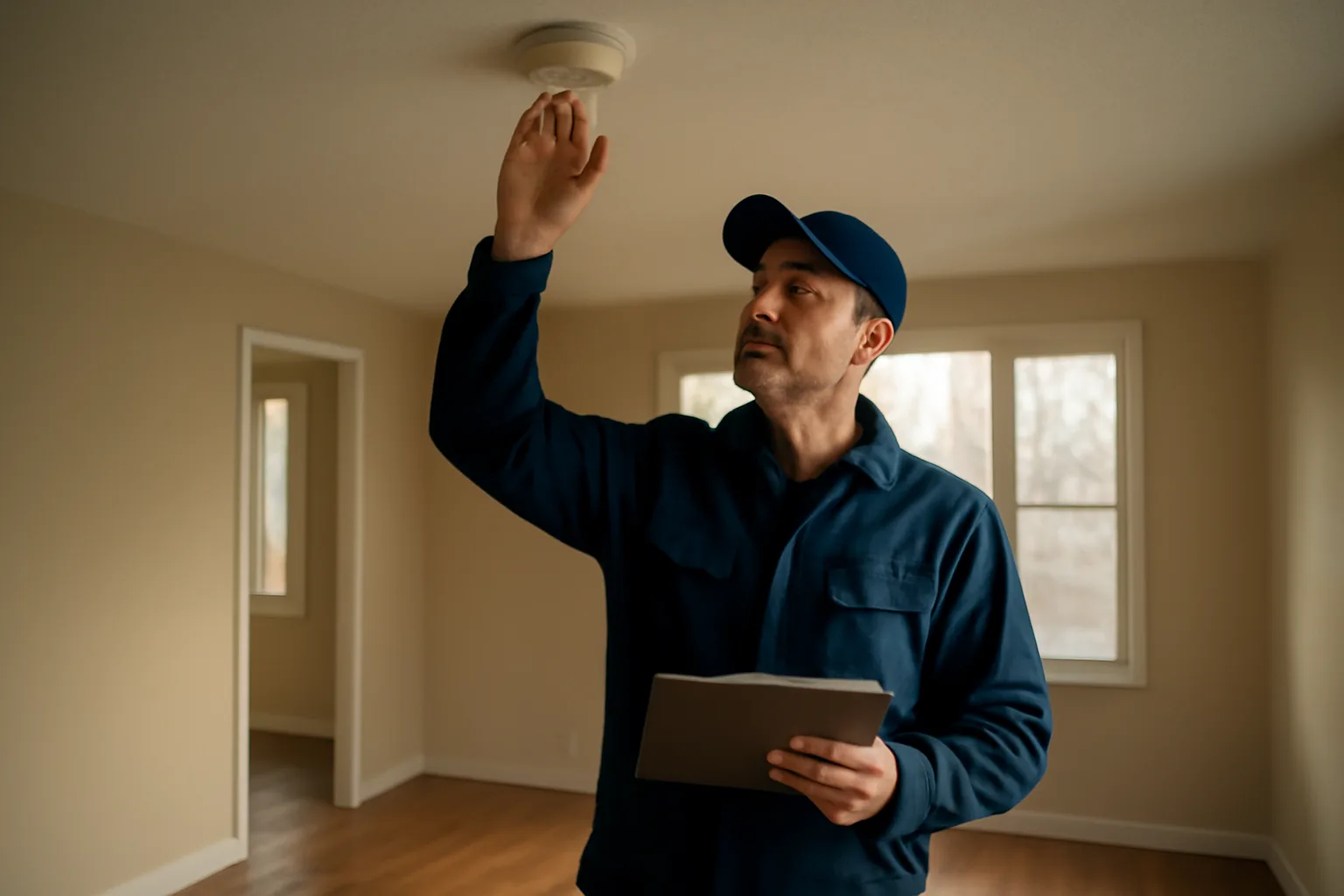
A landlord conducting a routine inspection can generally look at the general condition of the unit: smoke detectors, plumbing fixtures, signs of pest infestation, HVAC function, visible damage to walls or floors, and whether the unit is being used in a way that violates the lease (unauthorized occupants, unauthorized pets, illegal activity). What a landlord cannot do is search through personal belongings, drawers, or closets under the guise of a maintenance inspection. Most states require landlords to give advance notice before entering for a routine inspection, and the notice must state a reasonable purpose. Inspections are supposed to be about the property, not about the tenant's possessions or personal habits. During a city rental license inspection, the inspector is looking at something different: code compliance items like working smoke and carbon monoxide detectors, safe egress from bedrooms, no exposed wiring, proper handrails on stairs, functioning heat, and no illegal units. These inspections do not typically involve opening closets or drawers either. If you're prepping for one, focus on life-safety items first: smoke detectors, CO detectors, secondary egress windows in bedrooms, and handrails. Those are the most commonly cited violations across code enforcement inspection reports in cities that publish them.
How much notice does a landlord have to give before entering?
Most states require 24 to 48 hours of advance notice before a landlord can enter an occupied rental unit for a non-emergency reason like a routine inspection or repair. The exact number varies by state and there's no federal standard. California requires "reasonable notice," and the statute presumes 24 hours is reasonable unless circumstances indicate otherwise, per Civil Code Section 1954 [2]. Other states set it explicitly at 24 hours (this is a common baseline, but confirm your specific state's statute, since some set it higher or leave it as a "reasonable" standard without a fixed number). Emergencies are the exception everywhere. If there's a burst pipe, fire, or immediate safety hazard, landlords can enter without advance notice under nearly every state's law. But routine repairs, showing the unit to prospective tenants or buyers, and periodic inspections all fall under the standard notice requirement, not the emergency exception. If you're managing a rental in a city with mandatory licensing inspections, remember that the city inspector schedules the visit directly, usually with written notice sent to both you and the tenant. That notice period is set by the city's rental inspection program, separate from your state's landlord entry notice law, and the two don't always match up in timing.
Why do landlords require renters insurance?
Landlords require renters insurance mainly to shift liability. If a tenant's negligence causes a fire, flood, or other damage, renters insurance covers the tenant's personal property and liability, which keeps the landlord's own policy claims (and premiums) lower. It also protects the landlord from a tenant claiming the landlord owes them for destroyed belongings after a covered incident. Renters insurance is cheap relative to what it covers. National average costs for a renters insurance policy run in the range of $15 to $30 per month depending on coverage limits and location, though this varies by state and insurer, so treat it as a rough range rather than a fixed number. Many landlords write a renters insurance requirement directly into the lease, with a minimum liability coverage amount (commonly $100,000, though this varies) and a requirement to name the landlord as an "interested party" on the policy so they get notified if it lapses. This isn't required by law in most states, it's a lease term the landlord chooses to add. A few cities and some subsidized housing programs do mandate it, so check local rules if you're unsure.
What rights do tenants have without a written lease?
Tenants without a written lease still have full legal protection under their state's landlord-tenant law. An oral agreement to pay rent in exchange for occupancy creates a tenancy, usually a month-to-month tenancy, and the tenant keeps the same basic rights: habitability, protection from illegal lockout, the right to proper notice before eviction, and protection from retaliatory or discriminatory treatment. What changes without a written lease is proof. Rent amount, move-in date, and any special terms (who pays for what utility, whether pets are allowed) become harder to establish if there's a dispute, because there's no document to point to. Courts will often look at payment history, texts, and other written communication to reconstruct the terms. A landlord still has to follow the same notice periods for ending a month-to-month tenancy as they would with a written lease, and most states set that at 30 days, though some require more for longer tenancies. HUD's Fair Housing Act protections apply the same way whether or not there's a signed lease [1]. If you're renting to someone right now without paperwork, get something in writing as soon as you can. It protects both sides, and it's required for compliance with most city rental registration programs anyway, since they often ask for lease term information on the registration form.
What can't a landlord do in Ohio?
In Ohio, a landlord cannot enter a rental unit without reasonable notice (Ohio law generally treats 24 hours as reasonable, though the statute uses a "reasonable notice" standard rather than a fixed number), cannot shut off utilities or change locks to force a tenant out (a "self-help eviction"), and cannot retaliate against a tenant for reporting a code violation or exercising a legal right, under Ohio Revised Code Chapter 5321, the Ohio Landlords and Tenants Act [3]. Ohio Revised Code 5321.04 lays out the landlord's affirmative duties, including keeping the premises in a fit and habitable condition and maintaining electrical, plumbing, and heating systems in good working order [3]. A landlord who fails to do this and gets sued can face a court order to fix the problem, plus possible damages. Ohio also prohibits landlords from retaining a security deposit unlawfully. Under ORC 5321.16, if a landlord withholds any part of the deposit, they must provide an itemized list of deductions within 30 days of termination of the rental agreement, and failure to do so in good faith can make the landlord liable for damages plus attorney fees [4]. The statute states that a landlord who fails to comply "shall be liable to the tenant for the amount of the deposit that the landlord failed to return" along with damages and reasonable attorney's fees [4]. Self-help eviction (changing locks, removing doors, shutting off water or electric) is illegal in Ohio and in nearly every other state. If a landlord wants to remove a tenant, they have to go through the formal eviction process in court, called a forcible entry and detainer action in Ohio.
How do rental registration and licensing rules fit into all this?
Separate from state landlord-tenant law, a growing number of cities require landlords to register their rental property, get a rental license, or pass a periodic inspection before they can legally rent it out. This is a local ordinance requirement, layered on top of everything discussed above, and it varies enormously by city. Some cities only require registration (a simple form and a fee). Others require a full rental license with a scheduled inspection every one to three years. If you got a notice from your city about registering a rental, applying for a license, or scheduling an inspection, that's a city code enforcement matter, not a state landlord-tenant law matter. The fee, the inspection checklist, and the renewal timeline are all set locally, so there's no single national number to quote here. Always confirm the specific fee, deadline, and inspection scope with your city rental licensing office directly, since program details change and vary block by block in some larger cities. This is the exact situation where a lot of small landlords (1 to 10 units) get caught off guard: they didn't know their city had a licensing requirement until a fine notice landed. If you're staring down an inspection deadline or a violation notice right now, it helps to have a clear, organized way to walk through what your city typically checks for (smoke detectors, egress, handrails, pest issues) before the inspector shows up. That's the exact gap our $79 City Rental License & Inspection Prep Packet is built to fill: a one-time packet that organizes the common inspection categories and registration paperwork so you're not guessing what the inspector wants to see.
What should you do first if you just got a rental licensing notice?
First, read the notice carefully for three things: the deadline, the specific violation or requirement cited, and the office name and phone number to call with questions. Don't assume the notice is boilerplate. Cities that send licensing or registration notices usually mean it, and ignoring the first notice is what turns a $100 fee into a $500+ fine. Second, call the office listed on the notice, not a general city hall line, and ask exactly what's required: registration only, a license application, a scheduled inspection, or payment of an existing fine. Ask for the fee schedule and any appeal process if you think the notice is in error. Third, if an inspection is scheduled, walk your unit yourself first using a basic safety checklist. Working smoke detectors in every bedroom and on every level, a working carbon monoxide detector if you have gas appliances or an attached garage, secondary egress (a window that opens) in every bedroom, secure handrails on any stairs with more than a few steps, and no exposed wiring. These are the items most commonly flagged in city rental inspections. If you manage more than one unit or you're new to this and want a structured way to walk through registration paperwork and a pre-inspection checklist without piecing it together from scattered city PDFs, that's exactly the kind of prep our $79 City Rental License & Inspection Prep Packet is designed for. It's a one-time purchase, not a subscription, and it's meant to organize what you already need to gather, not replace your city's actual requirements.
Frequently asked questions
Do you need a license to become a landlord?
In most states, no state-level license is required to rent out property you own. But a growing number of cities require rental registration or a local rental license regardless of how many units you have. Check with your specific city's rental licensing or code enforcement office, since this is a local requirement, not a statewide one in most places.
What is the difference between a landlord and a property manager?
A landlord owns the rental property (or holds a leasehold interest they're subletting). A property manager is hired by the landlord to handle day-to-day operations like rent collection, maintenance, and tenant communication, but doesn't own the property. Landlords can act as their own property managers, which is common for owners of 1 to 10 units.
Can a landlord evict a tenant without a written lease?
Yes, but the landlord still has to follow the same legal eviction process required for any tenancy, including proper notice (commonly 30 days for month-to-month tenancies, though this varies by state) and a formal court filing if the tenant doesn't leave. A missing lease doesn't let a landlord skip the legal eviction process or use self-help methods like changing locks.
How much can a landlord charge for a security deposit?
This depends entirely on your state. Some states cap deposits at one or two months' rent, others set no cap at all. There's no federal limit. Check your specific state's landlord-tenant statute for the exact cap and the required timeline for returning the deposit after move-out.
Can a landlord enter without notice in an emergency?
Yes. Nearly every state allows landlords to enter without advance notice when there's an emergency, such as a fire, flood, gas leak, or other immediate threat to health or safety. Outside of emergencies, standard notice rules apply, typically 24 to 48 hours depending on the state.
What happens if a landlord doesn't register a rental property with the city?
Penalties vary by city but commonly include fines that can start around $100 to $250 and increase with each missed deadline or renewal period, sometimes accumulating monthly. Some cities also bar landlords from filing an eviction case until the rental is properly registered or licensed. Confirm the specific consequence with your city rental licensing office.
Is renters insurance legally required for tenants?
Not by state law in most places. It's typically a lease requirement the landlord chooses to add, not a legal mandate. Some cities or subsidized housing programs do require it though, so check local rules if you're unsure whether it's mandatory in your area.
What can't a landlord ask during tenant screening?
Under the federal Fair Housing Act, a landlord cannot ask about or use race, color, national origin, religion, sex, familial status, or disability as a factor in screening decisions. Landlords can still ask about income, rental history, and run standard credit and background checks.
How often does a rental property need a licensing inspection?
This varies completely by city. Some require inspection only at initial registration, others require it every one to three years, and some inspect only on tenant complaint or turnover. There's no national standard. Always confirm the specific schedule with your city rental licensing office.
Can a landlord refuse to rent to someone with a housing voucher?
This depends on your state and city. Some states and cities have added source-of-income protections that make it illegal to refuse a tenant solely because they use a housing voucher (like Section 8). Federal Fair Housing Act protections don't cover source of income directly, so check your specific state and city law.
What's the difference between a rental inspection and a move-out walk-through?
A move-out walk-through is a landlord-tenant matter tied to security deposit deductions, governed by state law like California Civil Code 1950.5. A rental licensing inspection is a city code enforcement matter tied to your rental registration or license, checking for safety code compliance, not deposit issues.
Do landlords have to give a reason for not renewing a lease?
In most states, no, if it's a fixed-term lease ending naturally or a proper month-to-month notice to vacate. Some cities with just-cause eviction ordinances do require a stated reason though, so check whether your city has that kind of protection before assuming you can decline renewal without cause.
Sources
- HUD, Fair Housing Act Overview: Seven protected classes under the federal Fair Housing Act
- California Civil Code Section 1950.5: Pre-move-out inspection rights and timing under California law
- Ohio Revised Code Section 5321.04: Ohio landlord's affirmative duties to maintain habitable premises
- Ohio Revised Code Section 5321.16: Ohio security deposit itemization requirement within 30 days
- California Civil Code Section 1954: California landlord entry notice presumed reasonable at 24 hours
- Ohio Revised Code Chapter 5321, Landlords and Tenants: Ohio Landlords and Tenants Act framework covering entry notice, self-help eviction ban, and retaliation protections