Last updated 2026-07-26
TL;DR
If you landed here searching "car rental license," you likely mean either running a car-rental business (a state motor vehicle dealer/rental license) or, more commonly, licensing a residential rental property. This guide covers residential rental licensing: how to register, what inspections check, tenant rights, and landlord responsibilities city by city.
Wait, do you mean a car rental business license or a rental property license?
This search term is genuinely ambiguous, so let's clear it up fast. If you want to start a company that rents out cars (think a local Hertz competitor), that's a different animal entirely: you'd need a state business license, a motor vehicle dealer or rental company registration through your state's DMV or Department of Motor Vehicles, garage liability insurance, and often a surety bond. Requirements vary heavily by state, and there's no single national "car rental license." Check your state DMV's commercial or dealer licensing division for that path. But most people who type this phrase are actually asking about renting out real estate, a house, apartment, or duplex, and they're using "rental license" loosely. That's the far more common situation for our readers, and it's what the rest of this article covers: how residential rental licensing, registration, and inspection programs work in cities that require them. If you're a landlord who just got a notice from your city about registering a rental unit, or you're staring down an inspection deadline, keep reading. Everything below applies to residential rental property, not vehicles.
How do you become a landlord in the first place?
Becoming a landlord legally means more than buying a property and finding a tenant. In most cities you need to register the property with a local agency, sometimes get a license or permit, follow local landlord-tenant law, and in many jurisdictions pass a habitability inspection before you can legally rent it out. The basic sequence looks like this in mandatory-licensing cities: confirm whether your city requires rental registration or licensing (check with your city's rental licensing office, code enforcement division, or department of buildings), submit an application and pay the fee, schedule and pass an inspection if one is required, and then renew on whatever cycle your city sets (commonly annual or biennial, though this varies widely). Some cities, like Los Angeles under its Rent Stabilization Ordinance, require registration of covered units with the Los Angeles Housing Department, while others fold licensing into local business tax registration [1]. There is no single federal or state standard; this is a city-by-city patchwork, which is exactly why you need to check your specific municipality before doing anything else. See our city guides for jurisdiction-specific detail.
What is landlording, exactly?
Landlording is the ongoing work of owning and managing rental property: collecting rent, maintaining the unit, handling repairs, screening tenants, following state and local landlord-tenant law, and dealing with turnover. It's a mix of light property management and legal compliance, and in licensed cities it also means keeping your registration current and passing periodic inspections. People use "landlording" as informal shorthand the way "parenting" describes the ongoing job, not a single credential. There's no license called "landlording" itself. What exists instead are city rental licenses, state landlord-tenant statutes you must follow, and sometimes state-level business registration if you're renting through an LLC. Most self-managing landlords with 1 to 10 units treat landlording as a part-time second job. Budget real time for it: responding to maintenance calls, handling lease renewals, and staying current on local ordinance changes. Cities update rental registration rules more often than owners expect, and missing a renewal deadline is one of the most common ways landlords end up with fines.
What is a landlord, legally speaking?
A landlord is the person or entity that owns rental property and leases it to a tenant in exchange for rent, taking on specific legal duties defined by state landlord-tenant law and, in licensed cities, local housing codes. That includes maintaining the property in habitable condition, following notice requirements, and respecting tenant rights around privacy, deposits, and eviction procedure. Every state has its own landlord-tenant code. Ohio's is Chapter 5321 of the Ohio Revised Code, which spells out landlord obligations (keeping the unit fit and habitable, complying with building and housing codes) and tenant obligations in the same chapter [2]. If you own through an LLC, the LLC is the legal landlord, but you as the managing member still handle the practical landlord duties: inspections, repairs, and tenant communication. The legal definition matters most when something goes wrong. If a tenant sues over a habitability issue or a security deposit dispute, the court applies your state's landlord-tenant statute, not a general dictionary definition. Know your state's chapter and section number, because you'll want to cite it if a dispute ever escalates.
Who is responsible for a rental property walk-through inspection in California?
In California, the landlord is generally responsible for conducting the move-in and move-out inspection process, and state law gives tenants a specific right to request a joint walk-through before move-out. Under California Civil Code Section 1950.5, a landlord must, upon the tenant's request, do an initial inspection before the tenant moves out and give the tenant an itemized statement of anything that needs fixing or cleaning to avoid deductions from the security deposit [3]. Specifically, the landlord must notify the tenant in writing of the right to request this initial inspection, and if the tenant asks for it, the inspection has to happen no earlier than two weeks before the end of the tenancy, with 48 hours' advance written notice unless the tenant waives it [3]. The landlord (or their agent) conducts the walk-through, and the tenant has the right to be present. Separately from that move-out process, many California cities (San Francisco, Los Angeles, and others) run their own rental housing inspection programs tied to registration or licensing, and those inspections are typically conducted by city code enforcement or housing inspectors, not the landlord. Don't confuse the state-mandated move-out walk-through (a landlord-tenant matter) with a city compliance inspection (a government matter). Check your specific city's rental housing inspection program for which applies to you.
What can a landlord look at during a rental inspection?
| City rental licensing inspection | Municipal code enforcement/housing inspector | Smoke/CO detectors, electrical, plumbing, heating, egress, structural safety, pest evidence | |
|---|---|---|---|
| California move-out walk-through (Civ. Code 1950.5) | Landlord or agent | Damage/cleaning items that could trigger deposit deductions | |
| Landlord's routine lease-compliance check | Landlord | Lease violations, unauthorized occupants/pets, obvious damage, safety hazards | If you're prepping for a formal city inspection, our $79 City Rental License & Inspection Prep Packet walks through a room-by-room checklist built around the common code items inspectors flag most, so you're not guessing what they'll look at. |
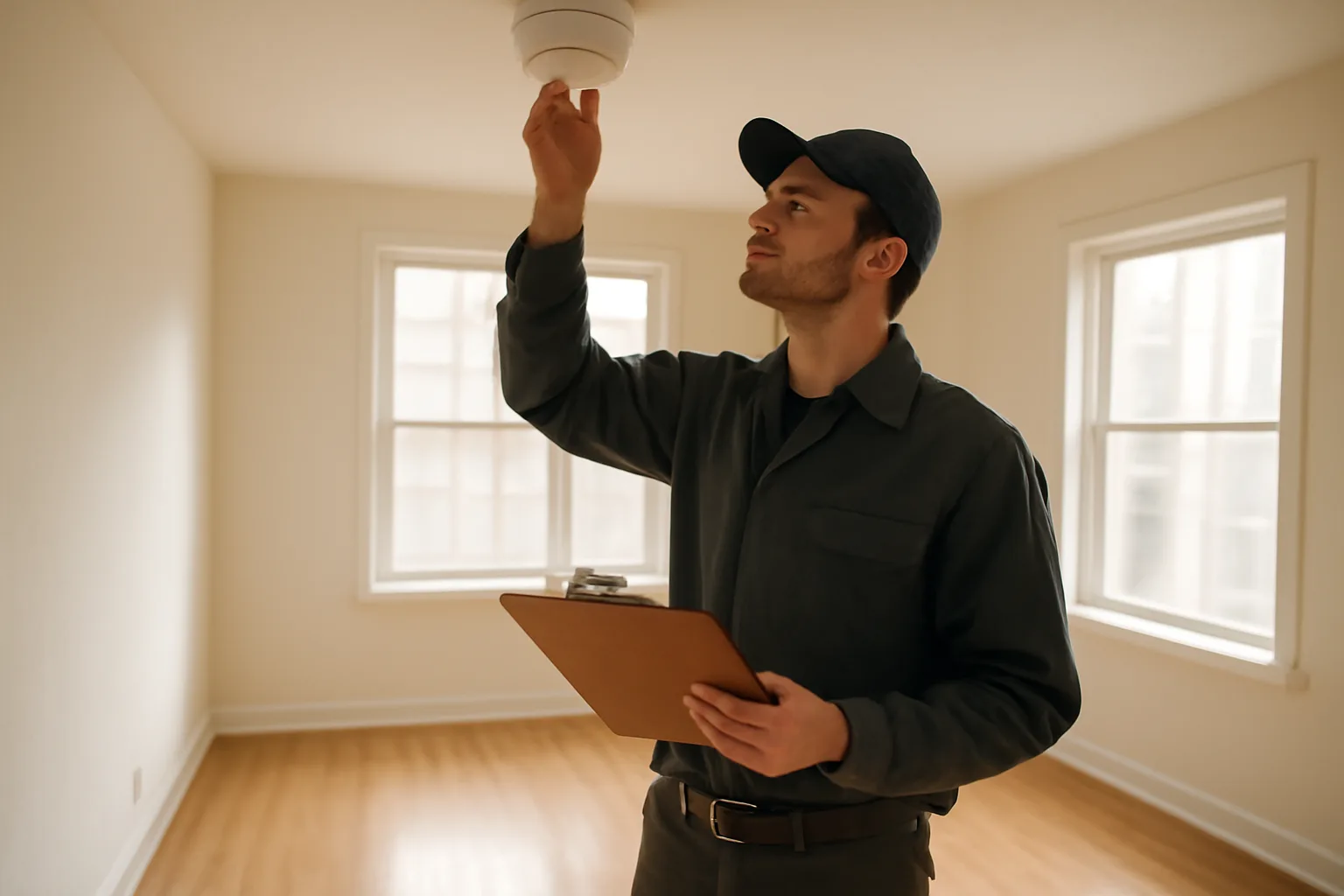
During a habitability or licensing inspection, an inspector (or a landlord doing an internal walk-through) can generally check smoke and carbon monoxide detectors, electrical outlets and panels, plumbing fixtures and water heater safety, heating systems, window and door locks, exit routes, evidence of pest infestation, and structural issues like broken stairs or railings. City rental licensing inspections typically use the same International Property Maintenance Code framework or a local equivalent as a checklist [4]. A landlord's own periodic walk-through (separate from a government inspection) can reasonably look at general property condition, whether the tenant is violating lease terms like unauthorized pets or occupants, damage beyond normal wear, and safety hazards. What a landlord cannot do is search through a tenant's personal belongings, closets, or drawers without cause, and cannot enter without proper notice except in a genuine emergency. Here's a rough breakdown of what typically gets checked in a municipal rental inspection versus a landlord's own walk-through: | Inspection type | Who conducts it | What's typically checked |
How much notice does a landlord have to give before entering?
Notice requirements vary by state, but 24 hours is the most common standard for non-emergency entry, and some states require 48 hours. California requires "reasonable notice," which state law presumes to be 24 hours for entry to make repairs or show the unit, per Civil Code Section 1954 [5]. Ohio's landlord-tenant law under Revised Code 5321.04 requires landlords to give tenants "reasonable notice" of intent to enter, and courts have generally treated 24 hours as reasonable in practice, though the statute itself doesn't set an exact number [2]. Emergencies are the exception everywhere: if there's a fire, flood, gas leak, or similar hazard, landlords can enter without advance notice. Outside of emergencies, entry generally has to happen at reasonable times, usually meaning normal business hours, and for a legitimate purpose like repairs, inspections, or showing the unit to prospective tenants or buyers. If your city requires a licensing inspection, that inspection typically also requires advance notice to the tenant, often coordinated by the city itself rather than the landlord. Read your specific city's inspection notice rules before you schedule anything, because showing up unannounced, even for a city-mandated inspection, can violate your state's entry notice statute.
What rights do tenants have without a lease?
Tenants without a written lease still have legal rights. In most states, a tenant paying rent without a written lease is a month-to-month tenant under an oral or implied agreement, and they retain the same basic protections as a tenant with a lease: the right to habitable housing, protection from illegal lockouts, and the right to proper notice before eviction. Without a written lease, the specific terms (rent amount, who pays utilities, pet policy) default to whatever was orally agreed or established by practice, which makes disputes harder to resolve since there's no document to point to. Most states require landlords to give at least 30 days' notice to end a month-to-month tenancy without cause, though this varies (some states require less, some more, and some cities with just-cause eviction laws restrict no-cause terminations entirely). A landlord still cannot skip required legal process just because there's no lease. Eviction still has to go through the courts in every state; self-help eviction (changing locks, shutting off utilities, removing belongings) is illegal everywhere regardless of whether a lease exists. If you're a tenant without a lease worried about your rights, or a landlord dealing with a no-lease situation, check your state's tenant rights resources and your state's landlord-tenant statute directly, since the notice period and protections differ meaningfully by state.
Why do landlords require renters insurance?
Landlords require renters insurance mainly to shift liability and property-damage risk away from the landlord's own policy. A landlord's property insurance covers the building structure, but it generally doesn't cover a tenant's personal belongings, and it often doesn't fully cover liability if a tenant's guest gets injured or the tenant's negligence (an unattended stove, an overflowing bathtub) damages the unit. Requiring renters insurance, typically with a modest liability minimum like $100,000 or $300,000, gives the landlord a second layer of protection: if the tenant's actions cause a fire or water damage, the tenant's policy is the first line of financial responsibility instead of the landlord eating the cost or fighting it out in small claims court. It also protects the tenant, since their own belongings (electronics, furniture, clothing) aren't covered by the landlord's policy at all. Whether a landlord can require renters insurance as a lease condition depends on state law, but it's broadly permitted and increasingly common as a standard lease term nationwide. If you require it, you generally need to also allow tenants to shop for their own policy rather than forcing them into one specific insurer, and you should specify the minimum liability coverage clearly in the lease itself.
What can't a landlord do in Ohio?
Ohio landlords are legally barred from several specific actions under Ohio Revised Code Chapter 5321. A landlord cannot retaliate against a tenant for exercising a legal right, such as complaining to a building inspector or joining a tenant organization; Ohio Revised Code 5321.02 specifically prohibits a landlord from increasing rent, decreasing services, or threatening eviction in retaliation for a tenant's good-faith complaint about a housing code violation [6]. Ohio landlords also cannot use self-help eviction. They can't shut off utilities, change the locks, or remove a tenant's belongings to force them out, no matter how much rent is owed; eviction has to go through the municipal or county court's forcible entry and detainer process. Ohio Revised Code 5321.04 also requires landlords to keep the premises in a fit and habitable condition, comply with applicable housing codes, and maintain electrical, plumbing, and heating systems in good working order [2]. Ohio landlords cannot enter without reasonable notice except in an emergency, per 5321.04, and cannot fail to disclose known lead-based paint hazards in properties built before 1978, which is a federal requirement under 42 U.S.C. 4852d that applies in every state, more than Ohio . If you manage rentals in Ohio, read Chapter 5321 directly; it's not long, and it covers most of the disputes that end up in municipal housing court.
What does a typical rental licensing process actually cost and take?
| Initial rental license/registration fee | $25 to $300 per unit annually | |
|---|---|---|
| Inspection frequency | Every 1 to 3 years, or upon tenant turnover | |
| Re-inspection window after failed inspection | 30 to 60 days | |
| Late renewal penalty | Flat fee or daily accrual, varies widely | Because these numbers shift by city and change year to year, don't rely on secondhand estimates, including this table's ranges, for your actual budget. Go straight to your city's rental licensing office page or call them directly. |
Costs and timelines vary enormously by city, which is the single most important thing to understand before budgeting for licensing. Some cities charge a flat annual fee per unit in the range of roughly $50 to $300, others charge per building plus a per-unit add-on, and a few tie fees to a sliding scale based on the number of units you own. Confirm the exact figure with your city's rental licensing office, since even neighboring cities in the same county can differ by hundreds of dollars. Timelines matter as much as cost. Many cities require you to apply for a license before advertising or leasing a unit, then schedule an inspection that can take anywhere from a few weeks to a few months depending on inspector availability. If your property fails inspection, you'll typically get a re-inspection window (often 30 to 60 days) to fix violations before facing fines, though this again depends entirely on the specific city ordinance. A rough national pattern from local reporting and municipal fee schedules looks like this: | City program element | Typical range (confirm locally) |
What happens if you skip rental licensing or miss a renewal?
Operating an unlicensed rental unit in a city that requires licensing typically exposes you to civil fines, and in some cities it can also mean you're barred from collecting rent or pursuing eviction in court until you get licensed. Some municipal codes explicitly state that a landlord operating without a valid rental license cannot maintain an eviction action against a tenant, which can leave you stuck with a non-paying tenant and no legal path to remove them until you fix your licensing status. Fines for operating unlicensed, or for missing an inspection deadline, vary by ordinance but commonly run from flat fines in the low hundreds of dollars up to daily accruing penalties in cities that treat it as a continuing violation. Some cities also apply per-unit fines separately if you own a multi-unit property and only part of it is properly registered. The fix is almost always straightforward: register or renew as soon as you realize you're out of compliance, pay whatever late fee applies, and schedule the inspection. Cities are generally far more interested in getting you compliant than punishing you, but the fines exist specifically to create urgency, so don't sit on a notice hoping it resolves itself.
Frequently asked questions
Is there a national license required to rent out a house or apartment?
No. There's no federal or state-mandated rental property license across the board. Licensing requirements exist at the city or county level, and many municipalities have no rental licensing program at all. Whether you need one depends entirely on where the property is located, so your first step is always checking with your specific city's rental licensing or code enforcement office.
How do I become a landlord if I've never done it before?
Start by checking your city's rental registration or licensing requirements, then review your state's landlord-tenant statute for notice periods, security deposit rules, and habitability standards. Get proper landlord insurance, draft a lease that complies with local law, and budget time and money for repairs, screening, and any required inspection before you advertise the unit.
Who conducts a rental property walk-through inspection in California?
For the state-mandated move-out inspection under California Civil Code 1950.5, the landlord or their agent conducts it, and the tenant has the right to be present if they requested it. Separately, city rental inspection programs (where they exist) use municipal code enforcement inspectors, not the landlord.
What is landlording as a term?
Landlording is informal shorthand for the day-to-day work of owning and managing rental property: collecting rent, handling maintenance, following landlord-tenant law, and managing licensing or inspection compliance in cities that require it. It's not a licensed profession or credential, just common usage for the ongoing job.
What legally defines a landlord?
A landlord is the property owner (or their authorized agent) who leases residential property to a tenant for rent, taking on duties defined by state landlord-tenant law, such as habitability maintenance and proper notice before entry. Ohio's definition and duties sit in Revised Code Chapter 5321.
What rights does a tenant have without a signed lease?
A tenant without a written lease is usually treated as a month-to-month tenant with the same core protections as a leased tenant: habitable housing, protection from illegal lockouts, and required notice before eviction, typically 30 days in most states, though this varies by state and by city just-cause laws.
How is landlording different from property management?
Landlording usually refers to an owner personally handling their own rental property, while property management refers to hiring a company or manager to do that work for a fee, typically 8% to 12% of monthly rent. Both involve the same underlying legal duties; the difference is who's doing the day-to-day work.
Why do landlords require tenants to carry renters insurance?
Renters insurance shifts liability for tenant-caused damage and injury away from the landlord's own policy, since a landlord's property insurance typically doesn't cover a tenant's belongings or fully cover liability from tenant negligence. Most landlords require a minimum liability amount, often $100,000, as a lease condition.
How much advance notice must a landlord give before entering a unit?
Most states require 24 to 48 hours' notice for non-emergency entry. California presumes 24 hours is reasonable under Civil Code 1954, while Ohio's Revised Code 5321.04 requires "reasonable notice" without specifying an exact number, though courts generally treat 24 hours as reasonable in practice.
What can a landlord check during a routine or licensing inspection?
Inspectors typically check smoke and carbon monoxide detectors, electrical systems, plumbing, heating, window and door security, exit routes, structural safety, and pest evidence. A landlord's own routine walk-through can also check for lease violations and damage, but cannot include searching personal belongings without cause.
What can't a landlord legally do in Ohio?
Ohio landlords cannot retaliate against a tenant for a good-faith code complaint (Ohio Revised Code 5321.02), cannot use self-help eviction like changing locks or shutting off utilities, must keep the unit habitable and code-compliant, and cannot enter without reasonable notice except in a genuine emergency (Ohio Revised Code 5321.04).
Does 'rental license' ever mean a car rental business license?
Occasionally, yes. If you're trying to start a company that rents vehicles, you'd need state business registration, a motor vehicle dealer or rental company license through your state DMV, and typically a surety bond and garage liability insurance. That process is entirely separate from residential rental property licensing covered in this article.
Sources
- Ohio Revised Code Section 5321.04: Ohio landlord duties: habitability, code compliance, maintenance of systems, and reasonable notice before entry
- California Civil Code Section 1950.5: California landlords must offer a tenant-requested initial move-out inspection with 48 hours' notice and an itemized statement
- International Code Council, International Property Maintenance Code: Many municipal rental inspections use the IPMC framework for habitability and safety checks
- California Civil Code Section 1954: California presumes 24 hours' notice is reasonable for landlord entry to make repairs or show the unit
- Ohio Revised Code Section 5321.02: Ohio prohibits landlord retaliation against tenants for good-faith code violation complaints
- 42 U.S.C. Section 4852d, Residential Lead-Based Paint Hazard Reduction Act: Federal law requires disclosure of known lead-based paint hazards in pre-1978 rental housing