Last updated 2026-07-26
TL;DR
Becoming a landlord means more than buying a property: most cities require rental registration or licensing, periodic inspections, and compliance with tenant notice and habitability rules. Requirements vary by city and state, so confirm specifics with your local rental licensing office before you rent out a unit.
what is a landlord, exactly?
A landlord is the person or entity that owns rental property and leases it to someone else (the tenant) in exchange for rent. That's the plain-English version. Legally, a landlord takes on a bundle of duties: keeping the unit habitable, following state and local eviction procedures, respecting tenant privacy, and complying with whatever licensing or registration rules the city has on the books. Most state landlord-tenant statutes define the relationship through the lease or rental agreement, written or verbal. California's Civil Code, for example, spells out the landlord's duty to maintain a "tenantable" dwelling, covering things like weatherproofing, plumbing, heating, and working locks [1]. Ohio's landlord-tenant law (ORC 5321) does something similar, listing specific landlord obligations around safety and repair [2]. So "landlord" isn't just a title, it's a legal role with a checklist attached. If you own a rental and collect rent, you're it, whether you feel like a landlord or not.
what is landlording, and is it different from just owning rental property?
Landlording is the day-to-day work of managing a rental: screening tenants, collecting rent, handling repairs, scheduling inspections, keeping records, and staying current on local ordinance changes. Owning the property is passive. Landlording is active. A lot of first-time landlords underestimate this gap. You can own a duplex for years without doing much, but the moment you rent out a unit, you're on the hook for habitability standards, notice periods, security deposit handling, and (in a growing number of cities) a rental license or registration renewal every year or two. Cities with mandatory rental licensing treat landlording as a regulated activity, more than a private contract between two people. That means inspections, fees, and paperwork are part of the job now, not an occasional annoyance. If you're managing 1 to 10 units yourself, landlording also means being your own compliance department. Nobody else is going to track your city's inspection cycle for you.
how to become a landlord: the actual steps
Becoming a landlord in a licensed municipality generally means the following, though the order and names of steps vary by city. 1. Confirm the property is zoned and legally allowed to be rented (some cities cap rentals in single-family zones or require owner-occupancy for certain unit types). 2. Register or license the rental with the city, usually through a rental registration or rental housing office. Fees and cycles vary widely by city, so confirm the exact amount and renewal period with your city rental licensing office. 3. Pass an initial inspection if the city requires one before issuing a license, covering things like smoke detectors, egress windows, electrical safety, and general habitability. 4. Get a compliant lease or rental agreement in place, including required disclosures (lead paint disclosure for pre-1978 housing is a federal requirement under 24 CFR 35.88, more than a city one) [3]. 5. Understand your state's security deposit rules, notice requirements, and habitability statute before your first tenant moves in. 6. Set up a system for handling repair requests and documenting them, since disputes often come down to who can prove what. Skipping step 2 is the most common expensive mistake. Cities that catch unregistered rentals through a complaint, a utility record mismatch, or a neighbor tip often issue back-fees or fines that dwarf what timely registration would have cost. If you want a structured way to track deadlines and inspection prep across the requirements above, the rental packet builder walks through a $79 one-time packet built around city rental license and inspection prep, but you can absolutely assemble the same checklist yourself from your city's rental housing office website.
who is responsible for a rental property walk-through inspection in california?
In California, the landlord is generally responsible for initiating and conducting the move-out inspection, and the tenant has a right to be present. California Civil Code Section 1950.5(f) gives tenants the right to request an "initial inspection" before move-out, specifically so they can fix any deficiencies themselves before the landlord makes deductions from the security deposit [1]. Here's how it actually works: the landlord must notify the tenant in writing of the right to request this pre-move-out inspection. If the tenant asks for it, the landlord (or the landlord's agent) does the walk-through, usually within two weeks of the move-out date, and gives the tenant an itemized list of anything that needs fixing or cleaning to avoid deposit deductions [1]. The tenant is allowed, not required, to attend. Separately, many California cities with rental inspection programs (for habitability, not move-out condition) require the landlord to schedule and be present for city inspector visits, sometimes with the tenant also given advance notice of entry per Civil Code Section 1954, which generally requires 24 hours' notice for landlord entry into an occupied unit [4]. So the short answer: the landlord is responsible for arranging both types of inspection, the tenant has rights to notice and, for move-out inspections, a chance to fix issues first.
what can a landlord look at during an inspection?
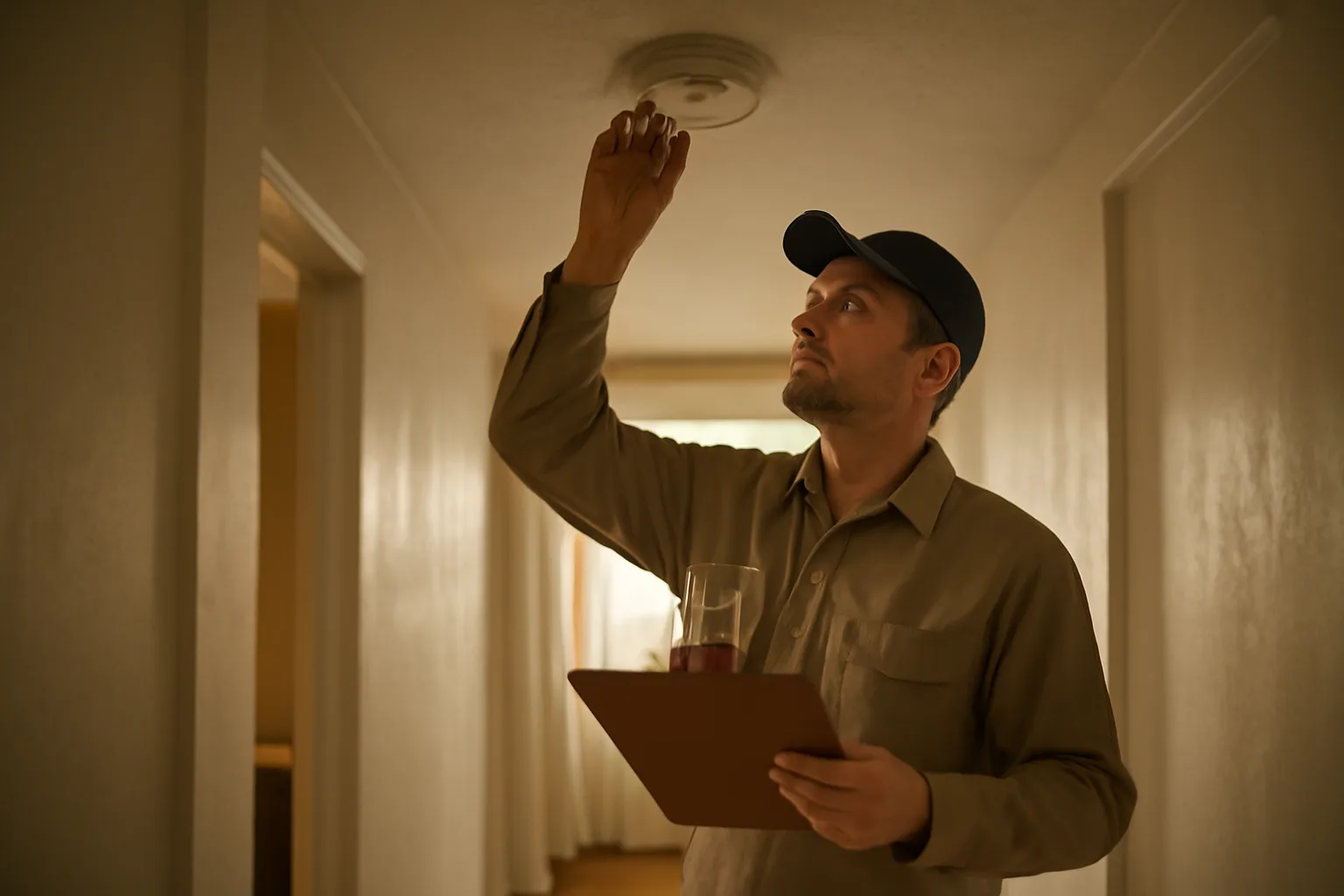
During a routine or city-mandated inspection, a landlord (or the city inspector) typically checks life-safety systems, structural condition, and general cleanliness, not personal belongings. Common inspection checklist items include: - Working smoke and carbon monoxide detectors - Electrical outlets, panels, and visible wiring hazards - Plumbing leaks, water heater condition, and venting - Heating system function - Window and door locks, and secondary egress from bedrooms - Signs of pest infestation or mold - General structural issues: broken stairs, damaged flooring, unsafe railings What a landlord generally cannot do is search through a tenant's belongings, open closed drawers or containers, or use a routine inspection as a pretext to harass a tenant. Inspections are supposed to be limited to what's necessary to verify habitability or code compliance, and most state entry statutes require advance notice (commonly 24 to 48 hours, varying by state) except in genuine emergencies [4]. City rental inspection programs usually publish their own checklist. If your city sent you an inspection notice, that checklist (not a generic list like this one) is the actual scope you'll be held to, so request it directly from your city rental licensing office if it wasn't included.
what rights do tenants have without a lease?
Tenants without a written lease still have legal rights, because most states recognize an oral or "month-to-month" tenancy as a valid rental agreement once rent has been accepted. A tenant paying rent, with or without paper, is protected by state landlord-tenant law and typically cannot be evicted without proper notice and, where required, a court process. Without a written lease, the tenancy is usually treated as month-to-month, governed by the state's default statutory terms. That means the tenant still has a right to habitable housing, a right to notice before entry, a right to notice before the tenancy is terminated (commonly 30 days for month-to-month tenancies, though some states and cities require longer for longer tenancies), and a right to the return of any security deposit under the state's deposit-handling rules. What a no-lease tenant does not have is certainty. Terms can be harder to prove in a dispute (rent amount, who pays for what utility, pet policies) since there's no document to point to. That cuts both ways: it's just as risky for the landlord as it is for the tenant. If you're renting without a written lease right now, that's a gap worth closing regardless of what state you're in, informal arrangements are exactly where disputes get expensive.
how much notice does a landlord have to give?
There are two very different "notice" questions here: notice to enter the unit, and notice to end the tenancy. Both vary by state, and neither has a single national answer. For entry notice, many states require 24 hours' advance notice for non-emergency entry, including California under Civil Code Section 1954, which specifies that landlords must give "reasonable notice," presumed to be 24 hours unless circumstances indicate otherwise [4]. Some states require 48 hours; a few have no statutory minimum at all, leaving it to the lease terms. For ending a month-to-month tenancy, 30 days' notice is the most common default, though this varies: some states require 60 days if the tenant has lived there over a year, and some cities with just-cause eviction ordinances add extra requirements on top of the state minimum regardless of lease length. For rent increases, notice requirements are often tied to the size of the increase and can be longer than eviction notice. Check your specific state statute, because a mismatch here (giving 30 days when your state requires 60) can invalidate the notice entirely and force you to restart the clock.
why do landlords require renters insurance?
Landlords require renters insurance mainly to shield themselves from liability exposure and to make sure the tenant's own belongings and liability are covered, since a landlord's property insurance typically does not cover a tenant's possessions or a tenant-caused injury to a guest. The Insurance Information Institute notes that a landlord's policy generally covers the building structure and the landlord's own liability, but "a landlord's insurance policy does not cover a tenant's personal belongings," which is exactly the coverage gap renters insurance is meant to fill [5]. If a tenant's stove fire damages the unit, or a tenant's dog bites a visitor, renters insurance liability coverage can cover the claim instead of it landing entirely on the landlord's policy or out of the landlord's pocket. Most landlords who require it set a minimum liability coverage amount (commonly $100,000, sometimes higher) and ask for the landlord to be listed as an "interested party" or additional insured on the policy, so they get notified if the tenant lets the policy lapse. It's a cheap ask for tenants, renters insurance often runs $15 to $30 a month depending on location and coverage, and it meaningfully reduces the landlord's uninsured-loss risk.
what can't a landlord do in ohio?
Ohio's landlord-tenant law, codified in Ohio Revised Code Chapter 5321, sets out specific things a landlord cannot do, and violating them can expose the landlord to tenant lawsuits or defenses in an eviction case. Under ORC 5321.04 and related sections, a landlord cannot: shut off utilities to force a tenant out (a "self-help" eviction), change the locks without a court order, remove a tenant's belongings without following the legal eviction process, retaliate against a tenant for reporting code violations or exercising a legal right, or enter the unit without reasonable notice except in an emergency [2]. Ohio law specifically requires landlords to maintain the premises in a fit and habitable condition, keep common areas safe, maintain electrical, plumbing, and heating systems, and comply with local housing and health codes [2]. A landlord who ignores these duties risks the tenant using ORC 5321.07's repair-and-deduct or rent-escrow remedies, where a tenant can put rent in escrow with the court instead of paying the landlord directly until the repair is made. Ohio also prohibits retaliatory conduct: if a tenant complains to code enforcement or joins a tenant organization, the landlord cannot respond by raising rent, cutting services, or starting eviction proceedings in retaliation, under ORC 5321.02 [6].
how to be a landlord day to day: the ongoing compliance list
| Rental license/registration renewal | Annually or every 2 years, varies by city | Landlord, confirm cycle with city rental office | |
|---|---|---|---|
| City habitability inspection | Varies (some cities inspect every unit annually, others on a rolling multi-year cycle or complaint basis) | City inspector, scheduled by landlord | |
| Smoke/CO detector check | At least annually | Landlord | |
| Lease renewal or notice | Per lease term or state notice minimum | Landlord | |
| Security deposit accounting | At move-out | Landlord | |
| Insurance policy review | Annually | Landlord | The biggest practical failure point for small landlords (1 to 10 units) is losing track of renewal dates across multiple cities or multiple properties. A missed license renewal deadline in a mandatory-registration city often triggers a fine before you even get a warning notice, since many cities' code enforcement systems flag unregistered addresses automatically through utility or tax records. If you're managing this solo, a simple shared calendar with every deadline (license renewal, inspection window, insurance expiration, lease end dates) beats trying to remember it. Some landlords build a folder per property with the license, past inspection reports, and insurance certificate all in one place, which is also exactly what a city inspector or a buyer's due diligence process will ask to see. |
Being a landlord isn't a one-time setup, it's an ongoing cycle. Here's what that cycle usually looks like once you're past the initial licensing step: | Task | Typical frequency | Who usually handles it |
Frequently asked questions
How to become a landlord if I've never rented out a property before?
Start by checking whether your city requires rental registration or licensing (many cities with 3+ rental units in a building or any rental at all do). Then confirm zoning allows the rental use, get a compliant lease, and understand your state's habitability, deposit, and notice rules before signing a tenant. Confirm specific fees and deadlines with your city rental licensing office.
Who is responsible for a rental property walk-through inspection in California?
The landlord is responsible for arranging the walk-through inspection, whether it's a pre-move-out inspection under Civil Code Section 1950.5(f) or a city habitability inspection. Tenants have the right to request the move-out inspection and to be present for it, and the landlord must give written notice of that right.
What is landlording?
Landlording is the ongoing work of managing rental property: screening tenants, collecting rent, handling repairs, scheduling required inspections, renewing licenses, and staying compliant with state and local landlord-tenant law. It's the active management side of owning rental property, distinct from simply holding the asset.
What is a landlord, legally speaking?
A landlord is the party who owns rental property and leases it to a tenant, taking on legal duties like maintaining habitability, following proper eviction procedures, respecting entry-notice rules, and complying with local rental licensing or registration requirements where they exist.
What rights do tenants have without a lease?
Tenants without a written lease are usually treated as month-to-month tenants under state default law. They still have rights to habitable housing, notice before entry, notice before the tenancy ends (commonly 30 days, more in some states), and return of any security deposit under state deposit rules.
How to be a landlord without getting overwhelmed by paperwork?
Build one system: a calendar for license renewals, inspection windows, and lease dates, plus a folder per property with your current license, past inspection reports, and insurance certificate. Most overwhelm comes from tracking deadlines in your head instead of a shared, dated checklist.
Why do landlords require renters insurance?
Because a landlord's own property insurance generally doesn't cover a tenant's belongings or liability for injuries to guests. Requiring renters insurance shifts that risk to a policy the tenant carries, often for $15 to $30 a month, reducing the landlord's uninsured-loss exposure.
How much notice does a landlord have to give before entering the unit?
Most states require 24 to 48 hours' advance notice for non-emergency entry. California's Civil Code Section 1954 presumes 24 hours is reasonable notice. Check your specific state statute, since requirements and allowed reasons for entry differ.
How much notice does a landlord have to give to end a month-to-month tenancy?
Thirty days is the common default for tenants who've lived in the unit under a year, though several states require 60 days for longer tenancies, and some cities add just-cause requirements on top of the state minimum. Confirm your state's specific statute before sending notice.
What can a landlord look at during an inspection?
Life-safety and habitability items: smoke detectors, electrical and plumbing condition, heating systems, window and door locks, egress routes, and signs of pests or mold. A landlord generally cannot search personal belongings or use an inspection as a pretext to go through a tenant's things.
What can't a landlord do in Ohio?
Under Ohio Revised Code Chapter 5321, a landlord cannot shut off utilities to force a move-out, change locks without a court order, remove belongings outside the legal eviction process, retaliate against a tenant for reporting code violations, or enter without reasonable notice except in an emergency.
Does every city require a rental license?
No. Rental licensing requirements are set city by city (and sometimes county by county), not nationally. Many cities require it, especially for multi-unit or non-owner-occupied rentals, but requirements, fees, and inspection cycles vary widely. Always confirm with your specific city's rental licensing office.
What happens if I rent out a unit without registering it with the city?
Consequences vary by city, but many jurisdictions issue fines, back-fees for unpaid registration periods, or require immediate compliance before you can legally collect rent or pursue an eviction. Some cities flag unregistered rentals through utility records or tenant complaints, so it's often discovered eventually.
Sources
- California Legislative Information, Civil Code Section 1950.5: Tenant's right to request a pre-move-out inspection and landlord's obligation to itemize deductions
- Ohio Legislature, Revised Code Chapter 5321 (Landlord and Tenant): Ohio landlord obligations and prohibited actions including retaliation and self-help eviction
- HUD/EPA, 24 CFR Part 35 Subpart A, lead disclosure rule: Federal lead paint disclosure requirement for pre-1978 housing
- California Legislative Information, Civil Code Section 1954: 24-hour reasonable notice requirement for landlord entry into an occupied unit
- Insurance Information Institute, Renters Insurance: Landlord's insurance does not cover a tenant's personal belongings, explaining why renters insurance is required
- Ohio Legislature, Revised Code Section 5321.02 (Retaliation prohibited): Ohio's specific prohibition on landlord retaliation against tenants who report code violations