Last updated 2026-07-26
TL;DR
Most rental unit inspections (city, county, or lender-required) don't need a borrowed inspection camera at all; that tool is for sewer line scoping, not walk-through code inspections. If you do need one, a plumbing inspection camera rents for roughly $40 to $150 a day from a tool rental chain. But if you're prepping for a rental license or registration inspection, your money is better spent fixing the actual violations inspectors flag most.
what is an inspection camera rental, and do you actually need one?
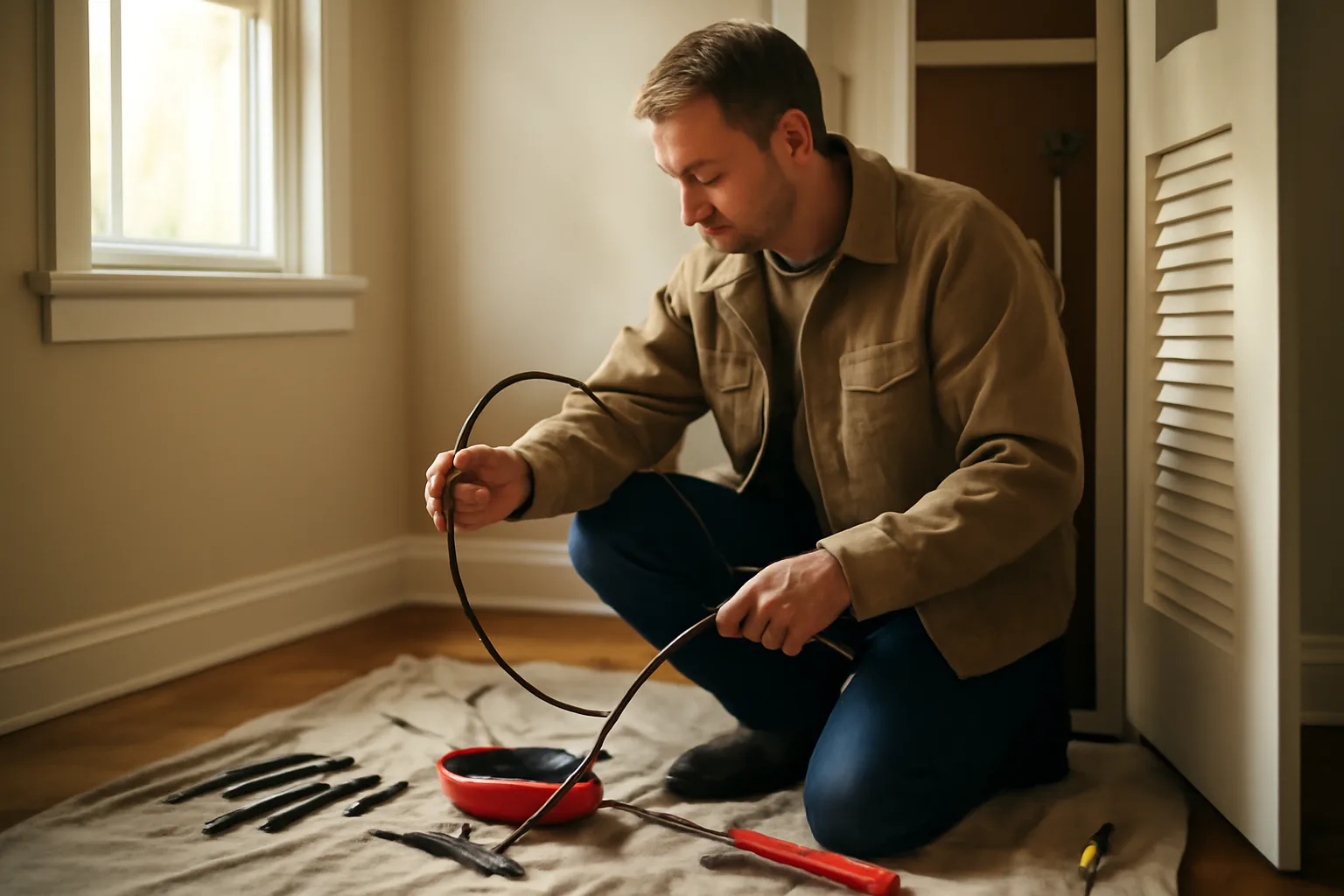
An "inspection camera" almost always means a sewer or pipe inspection camera: a waterproof lens on a flexible rod that you snake into a drain, sewer lateral, or crawlspace to see what's going on without tearing anything open. Home Depot rents these through its Tool Rental Centers, and general tool rental chains like Sunbelt Rentals and United Rentals carry similar borescope and sewer camera equipment [1]. If you searched "inspection camera rental near me" because your city sent you a rental registration or licensing notice, there's a good chance you don't need this tool at all. City rental inspectors doing a code compliance walk-through check things like smoke detectors, egress windows, electrical panels, and visible plumbing leaks. They're not scoping your sewer line with a camera. That's a separate, optional step homeowners and landlords take when they suspect a clog, root intrusion, or a broken clay pipe under the slab, usually before buying a property or after repeated backups. So before you rent anything, figure out which inspection you're actually facing. A municipal rental inspector visit for licensing is a different animal than a plumber's video sewer inspection, and they call for different prep entirely.
when does a landlord actually need a sewer or plumbing inspection camera?
You need one when you have a specific plumbing mystery: recurring drain backups, a sewer smell with no obvious source, tree roots you suspect are in the lateral line, or a pre-purchase inspection on an older property with clay or cast iron pipe. A camera lets a plumber (or you, if you're comfortable) see cracks, bellies, offset joints, and blockages without digging up the yard or opening walls. This is not a tool most landlords need on a routine basis. If you own one to three units and haven't had a drain problem, you almost certainly don't need to rent one for a rental license inspection. Save it for actual plumbing troubleshooting, or hire a licensed plumber to run the camera as part of a paid service call, which many plumbing companies include for a flat fee ($150 to $500 is a common range depending on market and pipe length, though nobody tracks a national average for this specific service). If you do rent the equipment yourself, know that reading sewer camera footage takes some experience. A crack that looks alarming to an untrained eye might be a normal pipe joint. If you're deciding whether to replace a sewer line based on camera footage, get a second opinion from a licensed plumber before you spend thousands.
how much does an inspection camera rental cost?
| Basic handheld borescope | $40-$60 | $25-$40 | |
|---|---|---|---|
| Drain/sewer camera (25-100 ft) | $75-$150 | $50-$90 | |
| Long-reach sewer camera (100+ ft, locator) | $125-$250 | $85-$150 | Most tool rental centers also require a deposit and proof of ID, and some require you to be 18 or older with a valid credit card on file. Call ahead and ask about locator/sonde add-ons if you need to mark the exact underground location of a problem, since that's usually a separate line item. Compare that to what you'd spend fixing an actual rental license violation. A missing smoke detector costs $10 to $30 to fix. A camera rental to diagnose a drain clog that a $99 plumber snake visit would have solved just as fast is money you probably didn't need to spend. |
Pricing varies by region and by camera length/reach, but rental tool centers typically price sewer and drain inspection cameras in the following ranges. These are typical retail tool-rental ranges, not fixed national prices; always confirm current pricing with the specific rental location. | Camera type | Typical daily rate | Typical 4-hour rate |
who is responsible for a rental property walk-through inspection in california?
In California, the landlord (or their designated agent) is responsible for conducting move-in and move-out walk-through inspections, and the landlord must give the tenant written notice of the right to be present. Under California Civil Code Section 1950.5(f), the landlord must notify the tenant in writing of their right to request an initial inspection before move-out, and if the tenant requests it, the landlord must conduct the inspection no earlier than two weeks before the tenancy ends [2]. The landlord (not the tenant, and not a third party) creates the itemized statement of repairs or cleaning needed after that initial inspection, and must give the tenant a copy along with the opportunity to fix issues themselves before move-out. This is separate from city rental licensing inspections, which are conducted by a municipal code enforcement or building department inspector, not the landlord. Some California cities also run their own rental inspection programs on top of state security deposit law. Los Angeles, for example, runs its Systematic Code Enforcement Program (SCEP) inspections for most rental units citywide [3]. If your city requires periodic inspections, that inspector is a government employee or contractor, and the walk-through described in Civil Code 1950.5 is a completely separate landlord-tenant process tied to the security deposit, not code compliance.
what can a landlord look at during a rental inspection?
During a city rental licensing inspection, the inspector typically checks life-safety and habitability items: smoke and carbon monoxide detectors, egress windows in bedrooms, electrical panel condition, visible plumbing leaks, water heater safety (temperature/pressure relief valve, strapping in earthquake zones), heating system function, handrails and guardrails, and general structural condition. They are not there to judge your decor or check personal belongings. During a landlord's own periodic or move-out inspection of an occupied unit, the scope is narrower and governed by your state's entry laws. A landlord can generally look at the condition of the unit: walls, floors, fixtures, appliances that came with the unit, signs of damage beyond normal wear and tear, unauthorized pets or occupants, and safety hazards. A landlord generally cannot search through a tenant's personal belongings, open locked containers, or use the inspection as a pretext to harass a tenant. Here's the overlap that trips people up: your city's rental inspector might flag an issue (like a missing GFCI outlet) that then becomes your job to fix and document, separate from any tenant-facing inspection you do yourself. Keep those two processes on separate calendars and separate paperwork.
how much notice does a landlord have to give before entering or inspecting?
Notice requirements vary by state, but 24 hours' written notice before entry is the most common standard. California requires "reasonable notice," which state law presumes to be 24 hours in writing for non-emergency entry, per Civil Code Section 1954 [4]. Many other states use a similar 24-hour or 24-to-48-hour written notice standard, though a handful of states don't set a specific number of hours in statute at all and instead just require "reasonable" notice, leaving it to case law or local custom. Emergencies are the exception everywhere: if there's a fire, flood, gas leak, or similar hazard, landlords can enter without advance notice. Routine inspections, repairs, and showings to prospective tenants or buyers all require standard advance notice in most states. City rental licensing inspections work differently. The inspection is usually scheduled directly with the landlord/owner, who then needs to give the tenant proper notice under state law before the inspector visits an occupied unit. Confirm your specific city's inspection scheduling process and your state's notice period with your local rental licensing office and your state's landlord-tenant statute before you schedule anything.
why do landlords require renters insurance?
Landlords require renters insurance mainly to shift liability risk off their own policy. A landlord's insurance covers the building structure, but it generally does not cover a tenant's personal belongings, and it may not fully cover liability if a guest is injured due to the tenant's actions or negligence (a candle fire, a dog bite, a bathtub overflow that damages the unit below). Requiring renters insurance, often with a minimum liability amount like $100,000, means the tenant's own policy pays out first when the tenant causes damage, instead of the landlord's insurer footing the bill and then raising the landlord's premium. It also protects the tenant: without it, a tenant whose apartment burns or floods has no coverage for their own furniture, electronics, or clothing. The Insurance Information Institute notes that the average renters insurance policy costs roughly $17 a month, or around $200 a year, though this varies significantly by state, coverage limit, and deductible [5]. That's cheap enough that most landlords who require it face little tenant pushback, and many states explicitly allow landlords to require it as a lease condition as long as it's disclosed clearly.
what is landlording, and what is a landlord?
A landlord is the owner of real property (or their authorized agent) who rents that property to a tenant in exchange for rent, under a lease or rental agreement. "Landlording" is the informal term for the ongoing job of managing that relationship and property: collecting rent, maintaining habitability, handling repairs, screening tenants, and staying compliant with local landlord-tenant law. It's more than a title, it's an operational role with legal duties attached. Most states impose an implied warranty of habitability on landlords, meaning the unit has to meet basic health and safety standards (working plumbing, heat, structural integrity) regardless of what the lease says. HUD and many state attorneys general publish landlord-tenant guides breaking down these baseline duties. Landlording ranges from a side hustle (one inherited duplex) to a full profession (dozens of units with a property manager on staff). The core job doesn't change with scale: keep the unit habitable, follow notice and entry rules, handle the security deposit correctly, and comply with any local licensing or registration ordinance your city has on the books.
how to become a landlord (and how to actually do it well)
Becoming a landlord legally usually takes four steps: acquire or already own a rental property, check your city and county for any landlord registration, business license, or rental license requirement, learn your state's landlord-tenant law (security deposits, notice periods, habitability), and set up a lease and a system for rent collection and maintenance requests. Many cities require you to register your rental property or obtain a rental license before you ever hand over keys. This is separate from any HOA rules or mortgage terms. Skipping it is one of the most common (and most expensive) landlord mistakes: cities routinely issue fines for operating an unlicensed rental, and some can order the unit vacated until you comply. Confirm registration and licensing requirements with your specific city's rental licensing office before you advertise a unit for rent. Good landlording also means treating it like a small business from day one: separate bank account, written lease, documented move-in condition (photos and a checklist), and a paper trail for every notice you send. If you're gearing up for a first-time rental license or inspection, our $79 City Rental License & Inspection Prep Packet gives you a structured checklist to walk through before the inspector shows up, built around the violations that actually cause landlords to fail on the first try.
what rights do tenants have without a lease?
A tenant without a written lease still has rights. If rent is paid and accepted regularly (say, monthly), most states treat this as a month-to-month tenancy at will, governed by the same landlord-tenant statutes that apply to written leases: habitability, proper notice before entry, proper notice before eviction, and return of any security deposit paid. The main practical difference is proof and notice periods. Without a written lease, the terms (rent amount, who's responsible for what) can be harder to establish if there's a dispute, and courts often look at payment history, texts, and emails to reconstruct the agreement. Termination notice periods for month-to-month tenancies without a lease are typically 30 days in most states, though some states and some lease durations require more, so check your specific state's statute. Even a handshake-only tenant can't be locked out, have utilities shut off, or have belongings removed without going through the formal eviction process in the tenant's state. "Self-help" evictions (changing locks, removing doors) are illegal nearly everywhere, lease or no lease.
what a landlord cannot do in ohio
Ohio landlord-tenant law, codified mainly in Ohio Revised Code Chapter 5321, restricts several things landlords might otherwise be tempted to do. A landlord cannot shut off utilities, change the locks, or remove a tenant's belongings to force them out; Ohio requires the formal eviction (forcible entry and detainer) process through the courts [6]. A landlord also cannot enter the unit without reasonable notice except in an emergency. Ohio courts and most practitioner guidance treat 24 hours as reasonable notice, though the statute itself uses the word "reasonable" rather than a specific hour count, so document your notice in writing regardless. Ohio law (ORC 5321.02) also prohibits retaliatory conduct: a landlord cannot raise rent, decrease services, or start eviction proceedings specifically because a tenant complained to a government agency about a code violation or exercised a legal right, within a certain window after that complaint . And under ORC 5321.04, the landlord has an affirmative duty to keep the premises in a fit and habitable condition, comply with building and housing codes, and keep common areas safe, so ignoring a legitimate repair request isn't just bad practice, it's a statutory violation.
inspection camera vs. hiring a plumber: which actually makes sense?
| DIY camera rental | $40-$250/day | Simple, visible clogs; landlords comfortable with plumbing | |
|---|---|---|---|
| Plumber-run camera inspection | $150-$500 | Diagnosing recurring backups, pre-purchase inspections, insurance claims | |
| City rental license inspection | Varies by city, often $0-$300 in fees | Mandatory compliance, not diagnostic troubleshooting | For most landlords with one to ten units, hiring the plumber wins on time and reduces the risk of misreading footage and making an expensive, unnecessary repair decision. Save the DIY camera rental for situations where you already know roughly what you're looking for, like confirming a specific clog location before a simple snake job. |
If you're facing a one-time drain mystery, renting a camera yourself only makes financial sense if you're comfortable interpreting what you see and you're saving real money versus a service call. Given that a plumber's diagnostic camera inspection often runs $150 to $500 and includes their expertise reading the footage, a $75 to $150 daily rental only wins if your time and confidence level make up the difference. | Approach | Typical cost | Best for |
how to actually prepare for a rental license or registration inspection
Start with your city's published checklist. Most municipal rental inspection programs post the exact items inspectors check, whether it's smoke detectors, window locks, or exterior maintenance. Pull that list first, before buying or renting anything. Walk the unit yourself with a flashlight and a notepad, testing every smoke and CO detector, checking every window for proper operation (especially bedroom egress windows), and looking at the electrical panel for double-tapped breakers or missing labels. Photograph anything questionable so you have a record of the condition before the inspector arrives. Fix the cheap, common stuff first: dead detector batteries, missing outlet covers, handrails that wiggle, exterior paint peeling near a porch. These are the violations that show up again and again across city inspection reports, and they're inexpensive compared to structural or plumbing repairs. If this is your first rental license inspection, or your third city with a different checklist, having an organized packet, deadlines, required documents, and a pre-inspection walk-through checklist tailored to what inspectors actually flag, saves real time. That's exactly what our $79 City Rental License & Inspection Prep Packet is built for: a one-time purchase that gets your paperwork and unit condition in order before the inspector's visit, not a subscription, not a guarantee, just a structured way to get ready. For tenant-facing rights questions that come up around inspection time, like what tenants can expect during notice periods or repair requests, see our guides on tenants rights and renters rights.
Frequently asked questions
Where can I rent an inspection camera near me?
Home Depot Tool Rental Centers, Sunbelt Rentals, and United Rentals all carry sewer and drain inspection cameras at many locations, typically for $40 to $250 a day depending on cable length and features. Call ahead to confirm availability, since not every location stocks camera equipment, and ask whether a deposit or credit card hold is required.
Do I need an inspection camera for a city rental license inspection?
No. City rental licensing inspections check life-safety items like smoke detectors, egress windows, and electrical panels through a visual walk-through, not sewer scoping. An inspection camera is a plumbing diagnostic tool for drain and sewer line problems, a completely separate process from municipal rental code compliance.
How to become a landlord?
Acquire a rental property, check your city and county for rental registration or licensing requirements, learn your state's landlord-tenant law on deposits and notice periods, and set up a written lease with a system for rent collection and maintenance. Many cities require registration before you can legally advertise or rent the unit.
Who is responsible for a rental property walk-through inspection in California?
The landlord is responsible. California Civil Code Section 1950.5(f) requires the landlord to notify the tenant in writing of the right to an initial move-out inspection, then conduct it (if requested) no earlier than two weeks before move-out and provide an itemized repair statement afterward.
What is landlording?
Landlording is the ongoing work of owning and managing rental property: collecting rent, maintaining habitability, screening tenants, handling repairs, and complying with landlord-tenant law and any local licensing rules. It applies whether you own one unit or a large portfolio; the core legal duties don't change with scale.
What is a landlord?
A landlord is the owner of real property, or their authorized agent, who rents that property to a tenant under a lease or rental agreement in exchange for rent. Landlords carry legal duties in every state, including habitability standards and proper notice before entry.
What rights do tenants have without a lease?
Tenants without a written lease who pay rent regularly are usually protected as month-to-month tenants under state law, with the same habitability rights, entry notice requirements, and formal eviction process as tenants with a written lease. Landlords cannot lock out or remove a no-lease tenant without going to court.
Why do landlords require renters insurance?
Renters insurance shifts liability for tenant-caused damage and injuries off the landlord's policy and onto the tenant's own coverage, and it protects the tenant's belongings, which a landlord's building policy doesn't cover. The Insurance Information Institute puts the average policy cost around $17 a month.
How much notice does a landlord have to give before entering?
Most states require 24 hours' written notice for non-emergency entry, including California under Civil Code Section 1954. Some states use 24-48 hours or a 'reasonable notice' standard without a fixed number. Emergencies like fire or flooding are exceptions everywhere and require no advance notice.
What can a landlord look at during an inspection?
A landlord can generally check the unit's condition, appliances, safety features, and signs of damage beyond normal wear, plus unauthorized occupants or pets. A landlord generally cannot search personal belongings or locked containers, or use an inspection as a pretext to harass a tenant.
What can a landlord not do in Ohio?
Under Ohio Revised Code Chapter 5321, a landlord cannot shut off utilities, change locks, or remove belongings to force out a tenant (self-help eviction is illegal), cannot enter without reasonable notice except in an emergency, and cannot retaliate against a tenant for reporting code violations.
How much does an inspection camera rental cost per day?
Basic handheld borescopes typically rent for $40 to $60 a day, standard drain/sewer cameras for $75 to $150 a day, and long-reach sewer cameras with a locator for $125 to $250 a day, based on typical tool rental center pricing. Confirm current rates with your local rental location.
Is a sewer camera inspection worth it before buying a rental property?
Often yes, especially for older homes with clay or cast iron sewer lines, since a camera can reveal cracks, root intrusion, or bellied pipe that a standard home inspection misses. A licensed plumber's camera inspection typically costs $150 to $500 and can prevent a costly surprise after closing.
Sources
- The Home Depot, Tool Rental Centers: Home Depot rents inspection/borescope cameras through its Tool Rental Centers
- California Legislative Information, Civil Code Section 1950.5: Landlord must notify tenant in writing of right to an initial move-out inspection and conduct it no earlier than two weeks before tenancy ends
- California Legislative Information, Civil Code Section 1954: California presumes 24 hours' written notice is reasonable notice for landlord entry
- Insurance Information Institute, Facts + Statistics: Renters insurance: Average renters insurance policy costs around $17 a month
- Ohio Laws and Rules, Ohio Revised Code Chapter 5321: Ohio requires formal eviction process rather than self-help eviction (lockouts, utility shutoffs)
- Ohio Laws and Rules, Ohio Revised Code Section 5321.02: Ohio law prohibits landlord retaliation against tenants who report code violations or exercise legal rights