Last updated 2026-07-26
TL;DR
A reasonable baseline is one full walkthrough every 6 to 12 months, on top of move-in and move-out inspections and any city-mandated rental license inspection. Notice requirements vary by state, commonly 24 to 48 hours, and some cities add their own inspection cycles (often every 1 to 3 years) regardless of what you do privately.
How often should I inspect my rental property?
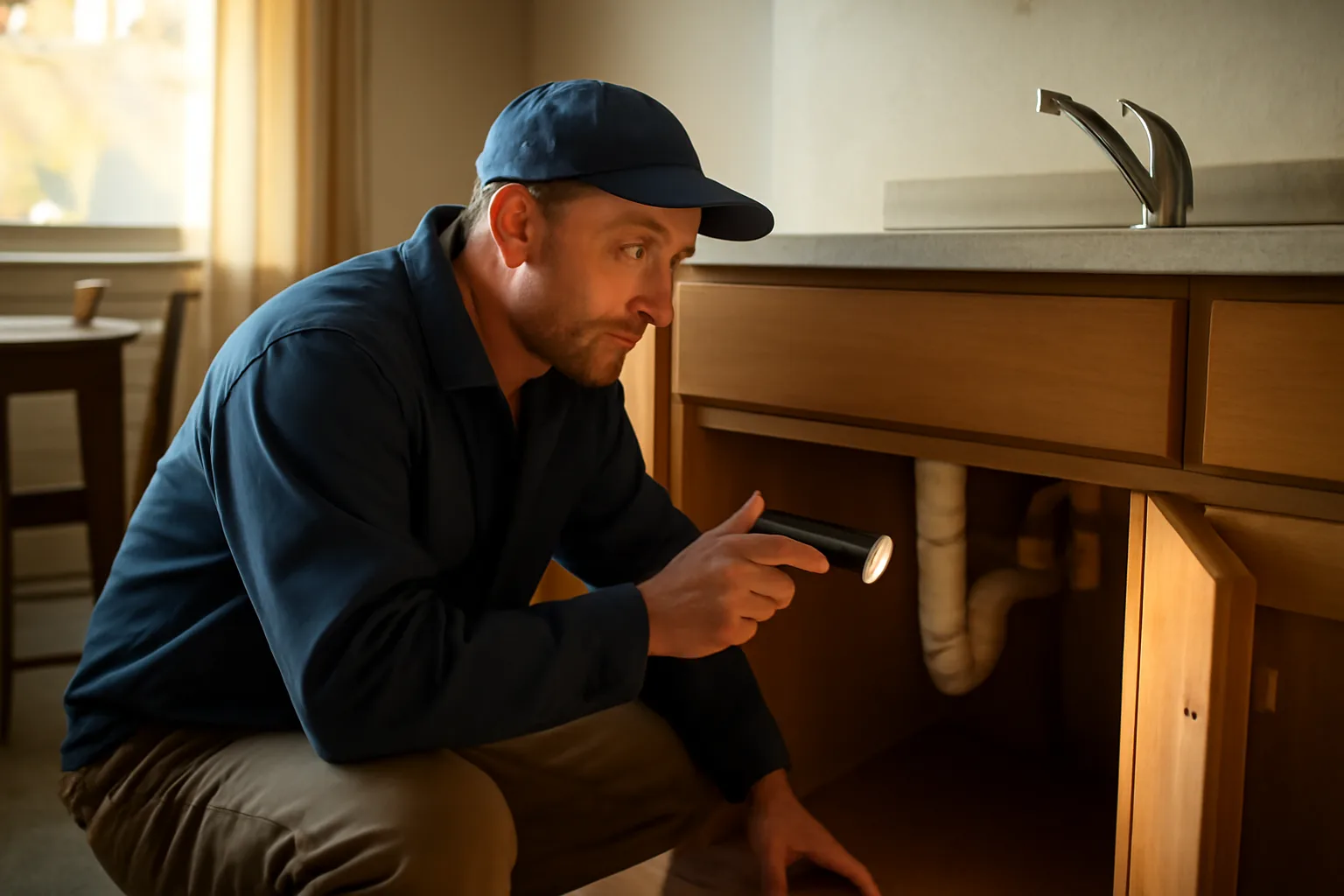
For most landlords with a handful of units, a full interior walkthrough every 6 to 12 months is the right rhythm. That's separate from the move-in inspection you do with a new tenant, the move-out inspection when they leave, and any exterior drive-by checks you do more casually in between. Think of it in three layers. Layer one is documentation-heavy inspections at move-in and move-out, where you're building a record for security deposit purposes. Layer two is a routine mid-lease inspection, once or twice a year, to catch maintenance issues before they become expensive ones (a slow leak under a sink, a smoke detector with a dead battery, signs of a pest problem). Layer three is whatever your city's rental licensing or inspection ordinance requires, which is a separate clock that runs on its own schedule and has nothing to do with your personal preference. There's no single federal or state law that tells landlords "inspect every X months." What you're balancing is habitability duties on one side (most states require landlords to maintain rental property in livable condition, often codified in state landlord-tenant statutes) and tenant privacy and quiet enjoyment on the other. Twice a year is a defensible middle ground that most property managers and legal aid guides land on. If your unit is older, has a history of moisture problems, or houses a tenant with pets, you might go quarterly. If it's a newer build with a stable long-term tenant, once a year plus move-in/move-out may be enough.
How much notice does a landlord have to give before an inspection?
Notice requirements are set by state law, not by the landlord, and they range from same-day to 48 hours depending on where the property sits. California requires landlords to give "reasonable notice," which state law defines as 24 hours in writing unless circumstances make that unreasonable [1]. Many other states use a similar 24-to-48-hour standard for non-emergency entry. The notice has to state a purpose. Inspection to check on the condition of the unit is a standard accepted purpose in states that spell this out, alongside repairs, showing the unit to prospective tenants or buyers, and providing agreed services. Emergencies are the one category where landlords in nearly every state can enter without advance notice. Fire, flooding, a gas leak, anything that threatens life or property right now. A few practical notes. Notice usually has to name a reasonable time window, more than a date, and "reasonable" generally means normal business hours, not 7 a.m. or 9 p.m. Text message notice is accepted in some states and disputed in others, so a written notice by email or a delivered paper notice is the safer bet if you want a paper trail. Always check your specific state's landlord-tenant statute or your city's tenant rights page before setting your notice policy, since a handful of states (and many local ordinances layered on top of state law) require more than 24 hours.
What can a landlord look at during an inspection?
| Safety | Smoke detectors, CO detectors, fire extinguisher (if provided), egress windows | |
|---|---|---|
| Plumbing | Leaks under sinks, toilet base, water heater, visible pipe corrosion | |
| Electrical | Working outlets, GFCI in kitchens/baths, no exposed wiring | |
| HVAC | Filter condition, thermostat function, visible mold near vents | |
| Structural | Ceiling stains, wall cracks, window and door seals | |
| Exterior | Steps, railings, gutters, siding, roof (visible only) | |
| Pests | Droppings, nests, gaps under doors | This lines up closely with what most city rental inspection checklists cover, which is worth knowing if you're prepping for a licensing inspection. Building a simple internal checklist that mirrors your city's official one saves a lot of back-and-forth on reinspection fees. |
A landlord can look at anything related to the condition, safety, and maintenance of the unit: smoke and carbon monoxide detectors, HVAC filters and vents, plumbing under sinks and around toilets, signs of leaks or water damage, window and door seals, electrical outlets and panels if accessible, and general cleanliness that could create a pest or safety issue. If your city requires a rental license inspection, the inspector will typically also check things like handrail stability, egress window sizes in bedrooms, working locks, and exterior conditions like peeling paint, broken steps, or trip hazards. What a landlord generally can't do is search through a tenant's personal belongings, closets, or drawers beyond what's needed to check the space itself, or use the inspection as a pretext to harass a tenant or retaliate for a complaint. Several states have anti-retaliation statutes that specifically bar landlords from using inspections, rent increases, or non-renewal as payback for a tenant reporting a code violation or requesting repairs. Here's a rough checklist landlords commonly use: | Area | What to check |
Who is responsible for a rental property walk-through inspection in California?
In California, the landlord is responsible for conducting the move-out walk-through inspection if the tenant requests it. California Civil Code Section 1950.5 gives tenants the right to request an "initial inspection" before they move out, so they get a chance to fix any deductible issues before the final deposit accounting [1]. The landlord (or their agent) has to give the tenant at least 48 hours' written notice of that initial inspection and provide an itemized statement of anything that would justify a deduction, giving the tenant a chance to remedy it before move-out [1]. Outside of that specific move-out process, day-to-day maintenance inspections are the landlord's responsibility to schedule. California's general entry notice rule, 24 hours, in writing, for a stated purpose like inspecting the premises, governs those under Civil Code Section 1954 [1]. Some California cities, like Los Angeles and San Francisco, layer additional rules and inspection programs on top of state law through their own rent stabilization or habitability ordinances, so a landlord in those cities should confirm with their city rental licensing office whether a separate inspection cycle applies. Tenants aren't required to be present for a routine inspection as long as proper notice was given, but many landlords schedule around the tenant's availability anyway, partly for goodwill and partly to avoid disputes about what was or wasn't accessible during the visit.
What is landlording, and what is a landlord?
A landlord is the owner (or their authorized agent) of a residential or commercial property who rents that property to another party, the tenant, in exchange for regular payment, usually monthly rent. Landlording is the informal term for the work of managing that relationship and the property itself: collecting rent, handling repairs, following state and local law, managing move-ins and move-outs, and keeping the unit habitable. Landlording covers a wide set of practical tasks that don't show up in most people's mental picture of "owning a rental." That includes screening tenants within fair housing law, drafting and enforcing lease terms, budgeting for maintenance and vacancy, understanding your state's security deposit rules, and, in a growing number of cities, registering or licensing the rental unit itself and passing a habitability inspection before you're legally allowed to rent it out. HUD's Office of Fair Housing enforces the federal Fair Housing Act, which bars discrimination based on race, color, national origin, religion, sex, familial status, and disability in any housing-related decision, including inspections and entry practices [2].
How do I become a landlord?
Becoming a landlord starts with acquiring property (buying it outright, inheriting it, or converting a property you already own into a rental), and from there the real work is compliance and systems, more than collecting a check. The rough sequence most first-time landlords follow: confirm zoning allows rental use, check whether your city requires a rental license or registration (many mid-size and large cities do), get the unit inspection-ready, set your lease terms in line with state law, screen tenants under fair housing rules, and set up a system for rent collection, maintenance requests, and record keeping. If your city has a mandatory rental licensing program, that step usually comes before you can legally advertise or rent the unit, not after. Programs vary widely. Some cities require registration only (a name and address on file, sometimes a small annual fee), others require a full inspection by a city inspector before issuing a license, and some require both plus periodic reinspection every 1 to 3 years. Confirm with your city rental licensing office exactly which category your property falls into and what the timeline and fee structure look like, since this differs city by city and changes over time. This is also where it's worth building your paperwork early rather than scrambling before an inspection date. A packet that has your lease, insurance proof, smoke detector certification, and prior inspection records organized in one place makes a licensing inspection go faster and reduces the odds of a reinspection fee for something you could have fixed ahead of time. That's the exact gap the $79 City Rental License & Inspection Prep Packet is built to close: a structured way to get your documentation and unit ready before the inspector shows up, for less than the cost of most reinspection fees.
Why do landlords require renters insurance?
Landlords require renters insurance mainly to cover the tenant's personal property and personal liability, since a landlord's own property insurance policy typically only covers the building structure and the landlord's own belongings or fixtures, not anything the tenant owns. If a fire, burst pipe, or theft damages a tenant's belongings, the landlord's policy generally won't pay for the tenant's furniture, electronics, or clothing, which leaves the tenant financially exposed and, in some cases, more likely to pursue a claim against the landlord instead. Renters insurance also typically includes liability coverage, which protects the tenant (and indirectly the landlord) if a guest is injured in the unit or if the tenant accidentally causes damage, like an overflowing bathtub that damages the unit below. Many landlords require proof of a renters insurance policy, often with a minimum liability limit like $100,000 or $300,000, as a lease condition, and some require the landlord to be listed as an "interested party" on the policy so they're notified if it lapses. There's no federal law requiring renters insurance, and requirements are set by lease terms, not statute, though a small number of states and cities have weighed in on how landlords can structure these requirements. If you require it, put it in writing in the lease and verify the policy at move-in. A verbal requirement is nearly impossible to enforce later.
What rights do tenants have without a lease?
Tenants without a written lease still have real legal protections, they just fall under different rules than a lease-based tenancy. A tenant who pays rent regularly without a written lease is typically classified as a month-to-month tenant (sometimes called a tenancy-at-will), and that classification is created by the act of paying and accepting rent, not by a signed document. Month-to-month tenants generally keep the same core protections as leased tenants: the right to a habitable unit, protection from illegal lockouts or utility shutoffs (self-help eviction is illegal in every state; landlords must go through the court eviction process), protection against housing discrimination under the federal Fair Housing Act [2], and, in states or cities with just-cause eviction laws, the right not to be evicted without a legally recognized reason. What changes without a lease is mostly around termination and notice. Month-to-month tenancies can usually be ended by either party with proper notice, commonly 30 days, though some states or cities with just-cause protections require more, and some rent-controlled cities restrict non-renewal entirely. Entry and inspection notice rules apply the same way to month-to-month tenants as they do to leased tenants, since those rules come from state landlord-tenant statutes, not from the lease itself. If you're unsure what protections apply, your state's attorney general or state bar association usually publishes a plain-language tenant rights guide worth reading before you set policy.
What can't a landlord do in Ohio?
Ohio's landlord-tenant law, codified in Ohio Revised Code Chapter 5321, bars landlords from several specific actions. A landlord in Ohio cannot use self-help eviction methods like changing the locks, removing the tenant's belongings, or shutting off utilities to force a tenant out; they have to go through the formal eviction (forcible entry and detainer) process in court [3]. Ohio Revised Code 5321.15 specifically makes it unlawful for a landlord to seize a tenant's possessions or interrupt utilities as a means of evicting a tenant, and a tenant harmed this way can recover damages, including in some cases attorney's fees [3]. Ohio landlords also can't retaliate against a tenant for legally reported code violations or for asserting rights under Chapter 5321. Ohio Revised Code 5321.02 lays out what counts as retaliatory conduct: raising rent, decreasing services, or threatening eviction because a tenant complained to a government agency [3]. Landlords must also maintain the unit in a habitable condition under Ohio Revised Code 5321.04, which requires compliance with building and housing codes, keeping common areas safe, and maintaining electrical, plumbing, and heating systems in good working order [3]. On entry, Ohio law doesn't set a specific numeric notice requirement in the statute, but courts and most lease templates treat 24 hours as the reasonable standard, and 5321.04 requires that entry happen at reasonable times and, except in emergencies, only after reasonable notice. Confirm your specific city's rules too, since some Ohio cities (including several with active rental registration programs) add their own layer of habitability and notice requirements on top of state law.
How does a mandatory rental inspection ordinance change my schedule?
If your city has a mandatory rental licensing or inspection ordinance, that schedule overrides your personal preference and usually runs independently of your own maintenance walkthroughs. Common patterns across U.S. cities with these programs: an initial inspection before the first rental license is issued, then a reinspection cycle of every 1, 2, or 3 years, with some cities inspecting more often for buildings with a history of violations and less often for owners with a clean record. The practical effect is that you're managing two separate calendars. One is your own routine, maybe every 6 to 12 months, aimed at catching problems early and protecting your investment. The other is the city's clock, which you don't control and which often comes with real deadlines and fines attached. Missing a scheduled city inspection, or failing one and not fixing the cited items by the reinspection date, is one of the more common ways landlords rack up violation fines that have nothing to do with the actual condition of the unit and everything to do with a missed appointment or paperwork gap. The fix is treating the city's inspection date as a hard deadline on your calendar, the same way you'd treat a tax filing date, and using your own routine inspections in the months before it to fix small things (a loose handrail, a missing detector, a cracked outlet cover) so the official inspection doesn't turn up surprises. Building a habit of documenting your own inspections with photos and dates also gives you something to show a city inspector or a tenant dispute board if a condition claim ever comes up later.
What should a landlord document at every inspection?
At minimum, document the date, who was present, the condition of each major system (plumbing, electrical, HVAC, safety devices), photos of anything noteworthy, and any items flagged for repair with a target fix date. This record matters for three separate reasons: it protects you in a security deposit dispute, it's your evidence if a tenant later claims a condition existed before you knew about it, and it's often exactly what a city inspector wants to see if your municipality asks for proof of regular maintenance as part of a rental license renewal. A simple habit that works well for small landlords: keep a folder (physical or digital) per unit, and drop in dated photos and a one-paragraph note after every inspection, every repair call, and every tenant communication about a maintenance issue. When license renewal time comes, or when a tenant moves out and a deposit dispute is brewing, having eighteen months of dated documentation beats trying to reconstruct a timeline from memory. This is also where a lot of landlords lose time and money unnecessarily. Reinspection fees, which many cities charge when a property fails its first inspection and needs a second visit, are avoidable in most cases by fixing common, cheap items (detector batteries, loose railings, missing outlet covers) before the inspector's first visit rather than after. If you're staring down an inspection date and don't have a system yet, that's exactly the gap a $79 City Rental License & Inspection Prep Packet is meant to close: a checklist and document organizer built around what city inspectors actually look for, so you walk in prepared instead of guessing.
Frequently asked questions
How often should a landlord inspect a rental property?
A common baseline is every 6 to 12 months for a routine walkthrough, on top of move-in and move-out inspections. Properties with a history of moisture problems, pets, or older systems often get quarterly checks. If your city runs a mandatory rental inspection program, that schedule (often every 1 to 3 years) applies regardless of your personal routine.
How much notice does a landlord have to give before entering for an inspection?
It depends on your state. California requires 24 hours' written notice for non-emergency entry under Civil Code Section 1954 [1]. Many states use a similar 24-to-48-hour standard, though exact rules and required notice methods vary, so check your state's landlord-tenant statute or your city's tenant rights page.
What can a landlord look at during an inspection?
Landlords can check the condition of plumbing, electrical systems, HVAC, smoke and CO detectors, structural issues, and signs of pests or damage. What they generally can't do is search a tenant's personal belongings beyond what's needed to inspect the space, or use the visit as pretext for harassment or retaliation.
Who is responsible for a rental property walk-through inspection in California?
The landlord is responsible for conducting the move-out walk-through if the tenant requests one, under California Civil Code Section 1950.5, which requires 48 hours' written notice and an itemized list of potential deductions before move-out [1]. Routine maintenance inspections are also scheduled by the landlord under the state's general 24-hour entry notice rule.
How do I become a landlord?
Acquire a property, confirm local zoning allows rental use, check whether your city requires rental registration or licensing, prepare the unit for any required inspection, set lease terms consistent with state law, screen tenants under fair housing rules, and build a system for rent collection and maintenance tracking before you advertise the unit.
What is landlording?
Landlording is the day-to-day work of owning and renting out residential property: collecting rent, handling repairs and inspections, following state and local landlord-tenant law, managing leases, and, in many cities, complying with rental registration or licensing requirements. It's the practical, ongoing management side of being a landlord, more than the ownership.
What is a landlord?
A landlord is the owner or authorized agent of residential or commercial property who rents it to a tenant in exchange for regular payment. Landlords take on legal duties under state law, including maintaining habitable conditions and following proper notice and eviction procedures.
What rights do tenants have without a lease?
A tenant paying rent without a written lease is usually a month-to-month tenant with the same core protections as a leased tenant: habitability, protection from illegal lockouts, fair housing protections under federal law [2], and, in many places, just-cause eviction protections. Notice to end the tenancy is typically 30 days, though this varies by state and city.
Why do landlords require renters insurance?
Landlords require renters insurance because their own property policy usually doesn't cover a tenant's belongings or personal liability. Requiring proof of renters insurance, often with a minimum liability limit, shifts that financial risk to the tenant's policy instead of leaving it as a potential dispute or lawsuit against the landlord.
What can't a landlord do in Ohio?
Under Ohio Revised Code Chapter 5321, landlords can't use self-help eviction (changing locks, removing belongings, cutting utilities), can't retaliate against tenants for reporting code violations, and must maintain the unit in compliance with building and housing codes [3]. Evictions must go through the formal court process.
Do I need to give notice before an emergency repair inspection?
No. Nearly every state allows landlords to enter without advance notice in a genuine emergency, such as a fire, gas leak, flooding, or another situation posing immediate risk to life or property. Outside of emergencies, standard notice rules (commonly 24 to 48 hours) apply.
Does the tenant have to be home for a rental inspection?
No, in most states the tenant doesn't have to be present as long as the landlord gave proper notice and is entering for a lawful purpose. Many landlords schedule around tenant availability anyway to reduce disputes about access or what was observed during the visit.
What happens if I fail my city's rental inspection?
Most cities give you a written list of violations and a deadline to fix them, then charge a reinspection fee for a follow-up visit. Exact fees, deadlines, and repeat-violation penalties vary by city, so confirm the specific numbers with your city rental licensing office rather than assuming a statewide standard.
Can a landlord inspect more often than once a year without a reason?
There's no fixed legal cap on how often a landlord can inspect, as long as each visit follows proper notice and has a legitimate purpose. But excessive or unpredictable entries can cross into harassment or violate the tenant's right to quiet enjoyment, which some states and courts have recognized as grounds for a legal claim.
Sources
- California Legislative Information, Civil Code Section 1954: California requires 24 hours written notice for landlord entry to make repairs or inspect the premises
- California Legislative Information, Civil Code Section 1950.5: California gives tenants the right to request an initial move-out inspection with 48 hours written notice and an itemized statement of possible deductions
- HUD, Fair Housing Act overview: The Fair Housing Act bars housing discrimination based on race, color, national origin, religion, sex, familial status, and disability
- Ohio Revised Code Section 5321.15: Ohio law bars landlords from seizing a tenant's possessions or interrupting utilities as a means of forcing eviction
- Ohio Revised Code Section 5321.04: Ohio landlords must maintain the unit in compliance with building and housing codes and keep systems in good working order
- Ohio Revised Code Section 5321.02: Ohio law prohibits landlords from retaliating against tenants who report code violations or assert rights under Chapter 5321