Last updated 2026-07-26
TL;DR
Most landlords should do a routine walk-through once or twice a year, beyond move-in and move-out inspections. But the real answer depends on your state's notice law and whether your city has mandatory rental inspection ordinances that set their own schedule, often every 1-3 years.
How often should you inspect your rental property?
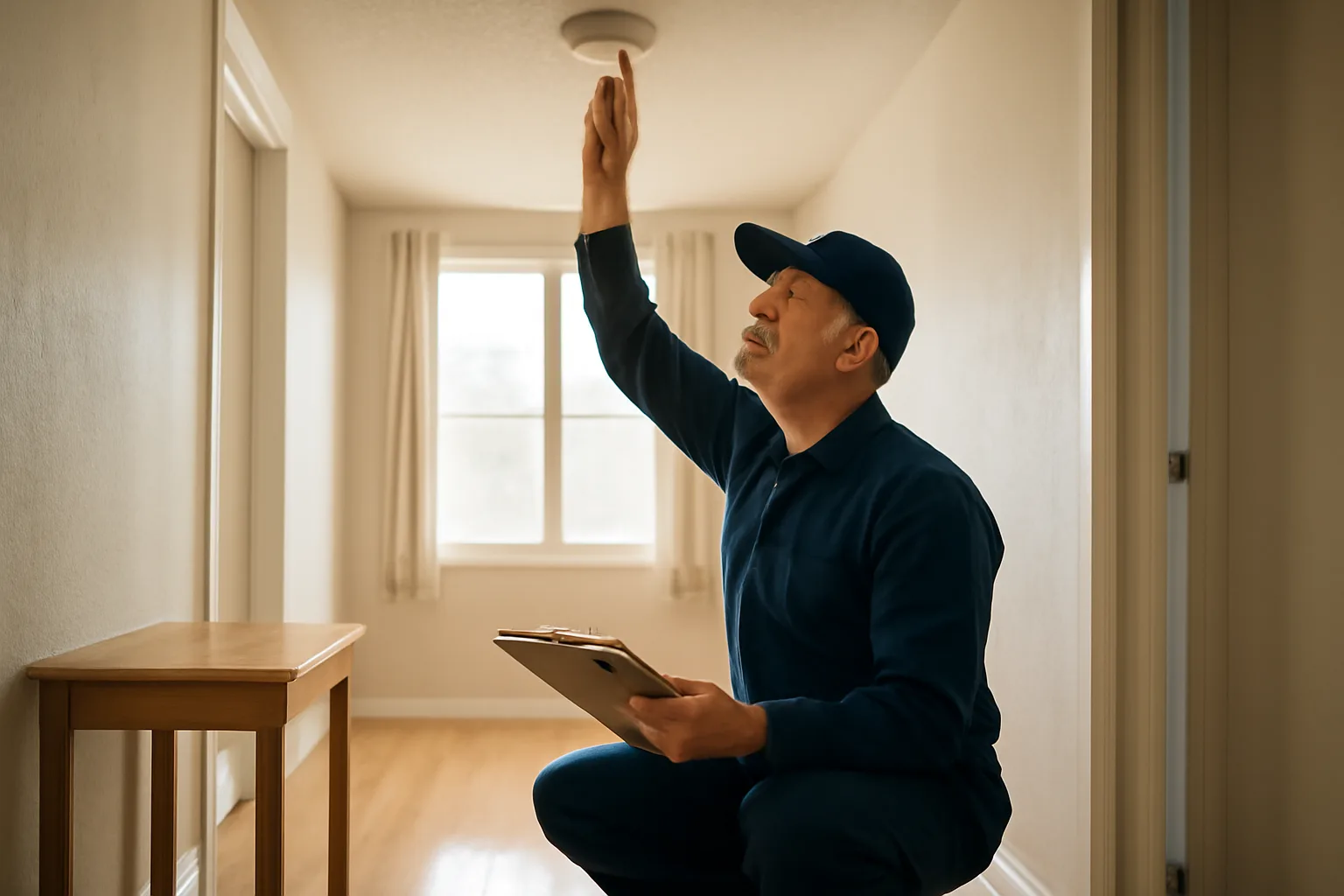
For most landlords with a normal residential lease, a reasonable inspection schedule is: a detailed move-in inspection, one or two routine interior walk-throughs a year, and a move-out inspection. That's the baseline nearly every property management guide and state landlord-tenant handbook lands on, and it balances catching maintenance problems early against a tenant's right to quiet enjoyment of the home they're paying for. But "how often" isn't really one answer. It splits into three separate questions: how often does the law let you enter, how often does your city require an inspection for licensing purposes, and how often does it actually make financial sense to check on the property. Those three numbers are frequently different, and mixing them up is where landlords get into trouble, either by over-entering (which can trigger harassment or quiet-enjoyment claims) or under-inspecting (which lets a slow leak turn into a mold remediation bill). If your city has mandatory rental licensing, that ordinance usually sets a hard floor. Some cities inspect every rental unit every 1 to 3 years as a condition of keeping the license current; others only inspect on complaint or turnover. Confirm the actual cycle with your city rental licensing office, because these intervals vary block by block in some metro areas and change when ordinances get amended. Separately from any city cycle, most experienced landlords still walk their own units once or twice a year for HVAC filters, smoke detector batteries, under-sink leaks, and general wear. That's not a legal requirement anywhere I've found; it's just good asset management, the same way you'd get an oil change on a schedule instead of waiting for the engine light.
What can a landlord look at during an inspection?
A landlord can generally look at anything related to the condition, safety, and maintenance of the unit: smoke and carbon monoxide detectors, HVAC filters, plumbing under sinks, signs of pest activity, window and door seals, electrical outlets, and whether the tenant is keeping the unit in a condition that doesn't violate the lease or local housing code. A routine inspection is not a general search of the tenant's belongings or a chance to go through drawers, closets, or personal property that isn't relevant to habitability or safety. City rental inspection programs, when they exist, usually check code compliance items specifically: working smoke alarms, no exposed wiring, functioning heat, no unpermitted structural changes, adequate egress from bedrooms, and pest or moisture conditions. These are the same categories most state housing codes reference when they define a "habitable" dwelling, echoing language in model codes like the International Property Maintenance Code that many cities adopt directly [1]. What a landlord should not do is treat an inspection as a pretext to inventory a tenant's possessions, take photos of personal items unrelated to condition, or show up unannounced and use the visit to pressure a tenant about something unrelated to the property. Courts and state attorneys general have been consistent that entry rights are tied to a specific, legitimate purpose (repairs, inspection, showing the unit to prospective tenants/buyers), not a blanket right to observe how someone lives [2].
How much notice does a landlord have to give before entering?
| California | 24 hours (reasonable notice) | Cal. Civ. Code § 1954 [3] | |
|---|---|---|---|
| Florida | 12 hours for repairs | Fla. Stat. § 83.53 [4] | |
| Texas | No statutory minimum; lease governs | Tex. Prop. Code Ch. 92 [5] | |
| Washington | 2 days (48 hours) | RCW 59.18.150 [6] | If your lease specifies a longer notice period than your state requires, the lease terms generally control, so don't rely on a state minimum if you signed a lease promising more notice. |
Most states that specify a notice period require 24 hours advance notice for non-emergency entry, though a handful specify 48 hours and a few states have no statute at all and rely on "reasonable notice" language instead. There is no single national number, so you have to check your own state's landlord-tenant statute. California requires "reasonable notice," which the statute defines as 24 hours in the absence of an agreement otherwise, under California Civil Code Section 1954 [3]. Florida's statute similarly sets 12 hours' notice for entry to repair, under Florida Statutes Section 83.53 [4]. Many other states, including Michigan case law and a range of state landlord handbooks, converge on 24 hours as the customary standard even without a hard statutory number. Emergency entry (fire, flooding, a gas leak, a tenant safety issue) is the one broadly recognized exception. Nearly every state statute that addresses entry carves out no-notice entry when there's an imminent threat to life or property, because waiting 24 hours in that situation isn't reasonable for anyone. Here's a rough comparison of common notice rules by state, though you should verify current text before relying on it: | State | Statutory notice for non-emergency entry | Source |
Who is responsible for a rental property walk-through inspection in California?
In California, the landlord is responsible for conducting the move-out inspection when requested, and state law gives tenants a specific right to an initial inspection before they move out. Under California Civil Code Section 1950.5, a tenant can request an initial inspection of the unit, and the landlord (or their agent) must give at least 48 hours' written notice of the date and time, then provide an itemized statement of anything that needs fixing to avoid a deduction from the security deposit [3]. That initial walk-through is optional for the tenant to request, but if requested, it's the landlord's job to schedule and perform it, then give the tenant a reasonable chance to fix any issues themselves before move-out. The final inspection, after the tenant has vacated, is also the landlord's responsibility, and that's when the itemized deduction list against the security deposit gets finalized under the same statute. For routine (non-move-out) inspections during a tenancy, responsibility works the same way everywhere: the landlord or their designated property manager schedules and conducts the inspection, following the state's notice rule. A tenant is not required to be present, but many leases and best practices call for at least offering the tenant the option to be there.
What a landlord cannot do in Ohio
Ohio's landlord-tenant law, codified at Ohio Revised Code Chapter 5321, prohibits several things landlords sometimes assume are fine. A landlord cannot enter the rental unit without giving "reasonable notice" of intent to enter and without entering at a reasonable time, except in an emergency, under R.C. 5321.04(A)(8) [7]. Ohio courts and legal aid guidance generally treat 24 hours as reasonable notice, though the statute itself doesn't pin an exact hour count. A landlord in Ohio also cannot shut off utilities, change the locks, or remove a tenant's belongings to force them out, sometimes called "self-help eviction." That's barred under R.C. 5321.15, which prohibits a landlord from using force or self-help to remove a tenant, requiring instead that they go through the formal eviction (forcible entry and detainer) process [8]. Ohio law also prohibits retaliatory conduct, meaning a landlord cannot raise rent, decrease services, or threaten eviction specifically because a tenant complained to a code enforcement agency or joined a tenant organization, under R.C. 5321.02 [9]. If a landlord tries to inspect right after a tenant files a habitability complaint, and that inspection is really cover for retaliation, that's the kind of pattern this statute is meant to catch. Finally, Ohio landlords cannot ignore their own maintenance duties. R.C. 5321.04 requires landlords to keep the premises in a fit and habitable condition, comply with health and safety codes, and keep common areas safe, so refusing to fix a reported problem uncovered during inspection isn't just bad practice, it can be a statutory violation.
What rights do tenants have without a lease?
A tenant without a written lease, sometimes called a tenant-at-will or a month-to-month tenant by operation of law, still has essentially the same habitability, entry-notice, and non-discrimination protections as a tenant with a signed lease. The lack of a written document doesn't strip away state statutory rights; it just means the terms (rent amount, notice to terminate) default to whatever state law says for an oral or month-to-month tenancy. Most states require the same notice to terminate a month-to-month tenancy as they'd require for a lease renewal decision, commonly 30 days, though some states specify 60 days for longer tenancies or under certain rent increase thresholds. California, for example, requires 60 days' notice to terminate a tenancy of one year or more under Civil Code Section 1946.1, regardless of whether there's a written lease [10]. Entry notice rules apply the same way to a no-lease tenant as to a leased tenant, because those rules attach to occupancy of a dwelling, not to a specific contract. Fair housing protections under the federal Fair Housing Act also apply regardless of lease status, since that law protects against discrimination in the "terms, conditions, or privileges" of rental housing, which covers oral and month-to-month arrangements too . What a no-lease tenant does not have is the fixed-term protection a written lease usually provides, meaning a landlord can generally end a month-to-month tenancy for any lawful, non-discriminatory, non-retaliatory reason with proper notice, without needing to prove "cause" the way many jurisdictions require for terminating a longer lease early.
Why do landlords require renters insurance?
Landlords require renters insurance mainly to shift liability risk for the tenant's personal property and for injuries or damage the tenant causes, away from the landlord's own policy. A standard landlord (dwelling) insurance policy covers the building structure and the landlord's liability, but it typically does not cover a tenant's furniture, electronics, or clothing, and it doesn't always cover damage the tenant's negligence causes to the unit itself. Renters insurance is genuinely cheap relative to the coverage. The Insurance Information Institute reports average renters insurance premiums are commonly in the range of roughly $15 to $30 a month depending on coverage limits and location , which is a small ask compared to the cost of a landlord eating a fire or water damage claim that a tenant's negligence caused. Requiring it also reduces disputes after a loss. If a tenant's space heater starts a fire, or a tenant's dog bites a visitor, the tenant's renters policy (specifically its liability coverage) is often the first line of defense before anyone even gets near the landlord's policy or personal assets. Many landlords set a minimum liability limit, commonly $100,000 to $300,000, as a lease condition, though there's no federal or state law mandating landlords do this; it's a risk-management choice, not a statutory requirement in most places.
How to become a landlord
Becoming a landlord, in the practical sense, means acquiring a rental property (or converting a property you own into a rental), understanding your state and local legal obligations, and setting up the systems to screen tenants, collect rent, and maintain the unit. There's no license required to simply own a rental in most of the country, but a growing number of cities require a rental registration or rental license before you can legally lease out a unit, separate from any state-level landlord-tenant law. The practical steps most first-time landlords go through: confirm zoning allows rental use, check whether your city or county requires rental registration or a business license (some cities require this even for a single unit), get proper landlord insurance (different from a standard homeowners policy), understand your state's security deposit and notice-to-enter rules, and set a fair-housing-compliant screening process before you ever list the unit. Many mandatory-licensing cities also require a passing safety inspection before or shortly after your first tenant moves in, covering smoke detectors, egress, electrical, and sometimes lead paint disclosure if the property was built before 1978 (a federal requirement under 42 U.S.C. § 4852d regardless of city, for pre-1978 housing) . If your city is one of these, get the inspection paperwork and code checklist together before you start marketing the unit, not after a tenant has already signed. Our rental packet builder is built for exactly that first-license crunch: a $79 one-time packet that organizes the common documents and checklist items cities ask for, though you should always confirm your specific city's requirements and fee with its rental licensing office since programs vary and change.
What is landlording, and what is a landlord?
A landlord is a person or entity that owns real property and rents it out to a tenant in exchange for regular payment, under a lease or rental agreement. "Landlording" is the informal term for the ongoing work of managing that relationship: collecting rent, handling repairs, following notice and entry rules, screening new tenants, and keeping the property compliant with local housing codes. Legally, a landlord's core obligations nearly everywhere include maintaining a habitable unit (the "implied warranty of habitability" recognized by nearly every state either by statute or case law), respecting the tenant's right to notice before entry, and following state-specific rules on security deposits, including timelines for returning them after move-out (commonly 14 to 30 days depending on the state). Landlording well is mostly about consistency: inspecting on a predictable schedule, giving proper notice every time (more than when convenient), documenting the condition of the unit at move-in and move-out, and responding to maintenance requests within whatever timeframe your state's habitability law implies as "reasonable." Landlords who skip the documentation step are the ones who lose security deposit disputes, not because the law is against them, but because they can't prove the unit's condition changed during the tenancy.
How to be a landlord day-to-day (and what to check on every visit)
Being a landlord day-to-day comes down to a short list repeated consistently: respond to maintenance requests fast, give proper notice before every entry, document everything in writing or photos, and keep your inspection cadence predictable so tenants aren't surprised. A reasonable annual or semi-annual inspection checklist covers: smoke detector and CO detector function (and battery dates), HVAC filter condition, visible signs of leaks under sinks and around water heaters, window and door seal integrity, exterior drainage and grading near the foundation, and any unauthorized alterations (like an unpermitted space heater setup or an added lock). This lines up closely with the categories most city rental inspection checklists use, since those checklists are usually built off the same property maintenance code framework [1]. A practical rhythm that works for most 1-10 unit landlords: move-in inspection with photos, a mid-lease check at 6 or 12 months (announced, with full notice), and a move-out inspection. If your city requires a licensing inspection on its own cycle, that becomes a fourth touchpoint layered on top, not a replacement for your own routine check, since city inspectors are checking code compliance for licensing purposes, not necessarily flagging every maintenance issue you'd want to know about as the owner. For readers dealing with related tenant-facing questions during this process, our guides on tenant rights and renters rights cover what tenants can expect from you during an inspection cycle, which is worth reading if you want to avoid disputes before they start.
Frequently asked questions
How often should a landlord inspect a rental property?
A reasonable baseline is once or twice a year for a routine walk-through, plus move-in and move-out inspections. If your city has a mandatory rental licensing ordinance, it may set its own inspection cycle, often every 1-3 years; confirm the exact interval with your city rental licensing office since it varies by jurisdiction.
How much notice does a landlord have to give before an inspection?
Most states require 24 hours notice for non-emergency entry, though Florida sets 12 hours (Fla. Stat. § 83.53) and Washington sets 48 hours (RCW 59.18.150). Some states, like Texas, have no statutory minimum and rely on lease terms. Always check your specific state's landlord-tenant statute rather than assuming 24 hours applies everywhere.
What can a landlord look at during an inspection?
A landlord can check condition and safety items: smoke and CO detectors, HVAC, plumbing, signs of pests or moisture, electrical outlets, and code compliance. An inspection isn't a general search of personal belongings; it should stay focused on habitability and lease compliance, not on inventorying what a tenant owns.
Who is responsible for a rental property walk-through inspection in California?
The landlord is responsible for scheduling and conducting it. Under Cal. Civ. Code § 1950.5, if a tenant requests an initial move-out inspection, the landlord must give at least 48 hours written notice of the date and time and then provide an itemized list of needed repairs before finalizing deposit deductions.
What can't a landlord do in Ohio?
Under Ohio Revised Code Chapter 5321, a landlord cannot enter without reasonable notice (R.C. 5321.04), cannot use self-help eviction like changing locks or shutting off utilities (R.C. 5321.15), and cannot retaliate against a tenant for a code complaint (R.C. 5321.02). Landlords also can't ignore statutory maintenance duties.
What rights do tenants have without a signed lease?
A tenant without a written lease still has the same habitability, entry-notice, and fair housing protections as a leased tenant, since those rights attach to occupancy, not to a contract. Termination generally requires the same notice as ending a month-to-month tenancy, commonly 30 to 60 days depending on the state.
Why do landlords require renters insurance?
Renters insurance covers the tenant's personal property and liability for damage or injury they cause, which a landlord's own dwelling policy usually doesn't cover. It's cheap, commonly around $15 to $30 a month per the Insurance Information Institute, and it reduces disputes after fires, water damage, or injury claims.
What is landlording?
Landlording is the ongoing work of owning and managing a rental property: collecting rent, handling repairs, screening tenants, following notice and entry laws, and keeping the unit compliant with local housing codes. It's the day-to-day verb form of being a landlord, not a legal term.
How do I become a landlord for the first time?
Confirm zoning allows rental use, check for a city rental registration or license requirement, get landlord insurance, learn your state's deposit and entry-notice rules, and set up fair-housing-compliant tenant screening. If your city requires a pre-lease safety inspection, get your checklist ready before marketing the unit.
Can a landlord inspect a rental property without notice?
Only in a genuine emergency, like a fire, gas leak, or active flooding. For routine inspections, nearly every state requires advance notice, commonly 24 hours, and entering without it can expose a landlord to a claim for violating the tenant's right to quiet enjoyment.
Does a city rental inspection replace my own routine inspection?
No. A city rental license inspection checks code compliance for licensing purposes on whatever cycle the city sets, often every 1-3 years, but it isn't a substitute for your own periodic maintenance check. Confirm your city's exact inspection interval and scope with its rental licensing office.
What happens if I skip inspecting my rental property for years?
You risk small problems (a slow leak, a failing smoke detector, a pest issue) turning into large repair bills or habitability violations before you notice. In mandatory-inspection cities, skipping your own checks doesn't remove the city's requirement either, and a failed licensing inspection can come with fines or a suspended rental license.
Sources
- California Legislative Information, Civil Code Section 1954: California requires reasonable notice, defined as 24 hours absent agreement otherwise, for landlord entry
- Online Sunshine (Florida Legislature), Florida Statutes Section 83.53: Florida requires 12 hours notice for entry to make repairs
- Texas Legislature, Texas Property Code Chapter 92: Texas has no statutory minimum notice period for landlord entry; lease terms govern
- Washington State Legislature, RCW 59.18.150: Washington requires two days notice before landlord entry in most cases
- Ohio Legislature, Ohio Revised Code Section 5321.04: Ohio requires reasonable notice and reasonable time for landlord entry except in emergencies, and sets landlord maintenance duties
- Ohio Legislature, Ohio Revised Code Section 5321.15: Ohio prohibits landlord self-help eviction such as lockouts or utility shutoffs
- Ohio Legislature, Ohio Revised Code Section 5321.02: Ohio prohibits landlord retaliation against tenants for code complaints or organizing
- California Legislative Information, Civil Code Section 1946.1: California requires 60 days notice to terminate a tenancy of one year or more, regardless of lease status
- U.S. Department of Housing and Urban Development, Fair Housing Act overview: Federal fair housing protections apply to terms, conditions, and privileges of rental housing regardless of lease type
- U.S. Code, 42 U.S.C. Section 4852d, Disclosure requirements for lead-based paint: Federal law requires lead-based paint disclosure for housing built before 1978, regardless of city rental licensing rules