Last updated 2026-07-26
TL;DR
A solid free rental inspection checklist PDF covers smoke/CO alarms, electrical, plumbing, egress windows, heating, exterior/structural items, and pest issues, since these are what most city inspectors flag first. Generic templates exist from HUD and some city housing departments, but they won't match your specific municipal code, so treat any free PDF as a starting point, not a pass guarantee.
what should a free rental inspection checklist pdf actually include
A checklist worth using covers the same categories every city and county housing inspector actually looks at, not a generic "is the paint fresh" list written by someone who's never sat through a rental inspection. At minimum, yours needs eight sections: smoke and carbon monoxide alarms, electrical systems, plumbing, heating and ventilation, windows and egress, structural and exterior conditions, pest evidence, and general safety hazards like exposed wiring or trip hazards. HUD's Housing Quality Standards, the framework used for Section 8 inspections and adapted by many local housing codes, breaks inspections into 13 categories covering the living unit, building exterior, and neighborhood [1]. Most city rental inspection checklists borrow heavily from this structure even when the property isn't in a voucher program. A usable PDF should have a checkbox or pass/fail column next to each item, space to note the specific defect (more than "bad," but "outlet cover missing, kitchen north wall"), and a re-inspection date field. If your free template doesn't have room to write specifics, it's not going to help you when you're standing in a unit trying to remember what the inspector flagged three weeks ago. One thing free generic templates almost never get right: local amendments. A city like Minneapolis or Rockford, Illinois runs inspections off its own municipal code sections, not a national standard, so a checklist built for HUD purposes might miss a local requirement like window screen condition or handrail height that your specific city enforces. Always confirm with your city rental licensing office before assuming a generic PDF covers everything on your jurisdiction's actual inspection form.
where can I find a free rental inspection checklist pdf
The most reliable free checklists come from three places: HUD's own inspection materials, your city or county's housing/code enforcement department, and university extension programs that publish landlord education materials. HUD publishes the Uniform Physical Condition Standards (UPCS) protocol and related inspection guidance that many local programs reference directly [2]. Search your city's website for terms like "rental registration inspection checklist" or "housing code inspection form," since cities with mandatory licensing programs (think Minneapolis, Rockford, Toledo, or any city requiring a rental license) typically post the exact form their inspectors use as a public PDF. That local government form is worth more than any third-party template, because it's literally what the inspector will bring with them. If your city doesn't post one publicly, call the rental licensing or code enforcement office and ask if they'll email you a copy of the inspection checklist before your appointment. Many will, since it helps them too: a landlord who's already fixed the obvious stuff means a faster inspection and fewer callbacks for the inspector. A few state and university extension offices also publish landlord-facing checklists as part of broader rental housing guides, though these tend to be general best-practice lists rather than code-specific pass/fail criteria.
what can a landlord look at during an inspection
During a routine rental license or registration inspection, the inspector can generally check anything related to health, safety, and code compliance: smoke and CO alarm placement and function, electrical panels and outlets, plumbing fixtures and water heater condition, furnace or boiler safety, window and door operation (especially bedroom egress windows), foundation and roof condition visible from inside or outside, and evidence of pests or moisture damage. What inspectors are not there for is judging your tenant's housekeeping or going through personal belongings. A city inspection is about the structure and systems, not whether the tenant did the dishes. Most municipal inspection ordinances specify the inspector needs reasonable notice before entering, typically 24 to 48 hours depending on the jurisdiction, and cannot show up unannounced except in emergencies (a suspected gas leak or fire hazard would count). California's Civil Code Section 1954 sets the baseline for landlord entry statewide: a landlord may enter to make repairs, show the unit, or in cases of emergency, generally with at least 24 hours' written notice for non-emergency entry [3]. Local rental inspection ordinances layer on top of this; a city program inspection still has to respect the state's basic entry-notice rules unless the ordinance itself creates a specific carve-out. A landlord doing their own pre-inspection walk-through under tenant rights obligations should stick to the same categories: systems and structure, not personal space.
who is responsible for a rental property walk-through inspection in california
In California, the landlord is responsible for scheduling and conducting move-in and move-out walk-through inspections, and state law gives tenants specific rights around that process. California Civil Code Section 1950.5 requires landlords who plan to make deductions from a security deposit to offer the tenant an initial inspection before move-out, so the tenant has a chance to fix issues themselves rather than lose deposit money [4]. The landlord must give the tenant at least 48 hours' written notice of this initial inspection unless the tenant waives that notice, and after the walk-through, the landlord has to provide an itemized statement of any recommended repairs or cleaning that could lead to deductions [4]. The tenant is allowed to be present for the inspection, and if repairs are needed, the tenant gets a reasonable chance to address them before move-out. Separately, for city rental licensing or registration inspections (the kind this article mostly covers), the responsibility shifts: the landlord/owner is the one required to schedule the inspection with the city, be present or have a representative present, and correct any violations found within the timeframe the city sets. That's a different animal from the deposit-related walk-through under 1950.5, and mixing the two up is a common landlord mistake. One is a tenant-protection statute about deposits; the other is a municipal code compliance requirement tied to your rental license.
what is landlording and what is a landlord, exactly
A landlord is the owner (or authorized agent of the owner) of residential or commercial property who rents that property to a tenant in exchange for payment, usually under a lease or rental agreement. Landlording is the ongoing work of managing that relationship and the property: collecting rent, handling maintenance and repairs, following state and local landlord-tenant law, managing habitability standards, and staying compliant with any city rental licensing or registration program. It sounds simple until you're doing it. Landlording in a city with mandatory rental licensing means you're more than collecting rent, you're also tracking renewal dates, inspection cycles, fee payments, and code updates that can change year to year. A landlord with one duplex in a licensing city still has to follow the same registration and inspection rules as someone with fifty units, just at smaller scale and usually with less time to figure it all out. The legal definition varies slightly by state landlord-tenant statute, but the core obligations are consistent nationally: provide a habitable unit, make required repairs, follow proper notice procedures for entry and termination, and return security deposits according to state timelines and itemization rules. If you're new to this, read your state's landlord-tenant act before you read anything else; most states publish a plain-language summary through their attorney general's office or state housing agency.
how to become a landlord and how to be a landlord day to day
Becoming a landlord legally starts with owning or having authority to rent a property, then meeting whatever local requirements apply before you can lawfully rent it out. In a mandatory rental-licensing city, that usually means: register the property with the city's rental licensing or housing office, pass an initial inspection (fees and cycles vary by city, so confirm with your city rental licensing office), obtain any required business license, and set up a compliant lease. Day to day, being a landlord means staying on top of a short list of recurring obligations: collecting rent and tracking payments, responding to repair requests within your state's required timeframe (many states use a "reasonable time" standard, some set specific day counts for urgent issues like no heat or no water), handling tenant turnover and deposit returns under your state's deposit statute, and renewing your rental license or registration before it lapses. The part new landlords underestimate is the paperwork cadence. A city rental license isn't a one-time thing; most programs require annual or biennial renewal, sometimes tied to a re-inspection. Miss a renewal deadline and you can end up with a lapsed-license violation even if the property itself is in perfect shape. This is exactly the kind of administrative miss that turns into an unnecessary fine, and it's worth building a simple calendar reminder system from day one rather than trying to remember dates in your head. If you're managing this across multiple units or just want a structured way to track license renewals, inspection prep, and required documentation, that's the specific gap the $79 City Rental License & Inspection Prep Packet is built to fill: a way to organize what your specific city requires instead of guessing from a generic template.
what rights do tenants have without a lease
A tenant without a written lease still has legal rights. Verbal rental agreements are generally enforceable, and even without any explicit agreement, someone who's been paying rent and living somewhere becomes a tenant-at-will or month-to-month tenant under most state law, with the same basic habitability and notice protections as someone with a signed lease. Without a written lease, a tenant is typically still entitled to: a habitable unit (working plumbing, heat, electrical, structural safety), proper notice before the landlord can raise rent or terminate the tenancy (usually 30 days for month-to-month arrangements, though this varies by state), protection from illegal lockouts or utility shutoffs used to force them out, and return of any security deposit paid, according to state deposit law. What a verbal or no-lease tenant loses is certainty: without terms in writing, disputes over what was agreed (rent amount, who pays for what, pet policies) come down to he-said-she-said, which is bad for both sides. A landlord operating without written leases is also at higher risk in a rental inspection city, because some licensing ordinances require proof of a written rental agreement as part of registration. Confirm with your city rental licensing office whether a written lease is a registration requirement where you operate; some cities do require it on file.
why do landlords require renters insurance
Landlords require renters insurance mainly to cover the tenant's personal property and liability, since a landlord's own property insurance policy almost never covers a tenant's belongings or a tenant-caused incident that injures someone else. If a tenant's cooking fire damages their furniture or a tenant's dog bites a visitor, the landlord's building policy doesn't pay for that; renters insurance does. It also shifts liability risk. Many renters insurance policies include personal liability coverage, often $100,000 or more depending on the policy, which protects the tenant (and indirectly the landlord, since it reduces the chance a judgment against the tenant turns into a drawn-out claim against the property owner too) [5]. Some landlords also like that a tenant with renters insurance is statistically a bit more organized and less likely to skip other financial obligations, though that's more of a soft signal than hard data. Requiring it is legal in most states as a lease condition, as long as it's applied consistently to all tenants and doesn't violate fair housing rules. It's not universally required by law the way a security deposit cap might be, so whether you can mandate it depends on your state and local landlord-tenant statute, and it has to be written clearly into the lease to be enforceable.
how much notice does a landlord have to give before entering or inspecting
| Non-emergency entry for repairs (California) | 24 hours, written [3] | |
|---|---|---|
| Non-emergency entry, general state landlord-tenant statutes | Commonly 24 to 48 hours depending on state | |
| Emergency entry (fire, flood, gas leak) | No notice required in most states | |
| City rental license inspection | Set by local ordinance; often scheduled with landlord in advance, confirm with your city rental licensing office | |
| Initial move-out inspection (California, security deposit related) | At least 48 hours' written notice [4] | Emergencies are the one universal exception: no state requires advance notice when there's an active safety threat like a gas leak, fire, or flooding. Outside of emergencies, a landlord who skips required notice risks a wrongful entry complaint even if the underlying reason for entering (like preparing for an inspection) was legitimate. |
Notice requirements vary by state, but 24 hours is the most common standard for non-emergency entry, including for maintenance, showings, and routine inspections. California requires "reasonable notice," which the statute defines as presumptively 24 hours for entry to make repairs and generally at least 24 hours in other non-emergency contexts under Civil Code 1954 [3]. Some states, like Delaware, set the standard at 48 hours; others don't set a specific number of hours in statute at all and instead just require "reasonable" notice, which creates gray area worth resolving in your lease. Here's a quick comparison of notice approaches, though you should always confirm the exact figure for your specific state or city, since some municipal inspection ordinances add their own separate notice requirement layered on top of state landlord-tenant law: | Situation | Typical notice standard |
what a landlord cannot do in ohio
Ohio landlord-tenant law, codified mainly in Ohio Revised Code Chapter 5321, sets clear limits on landlord conduct. A landlord in Ohio cannot shut off utilities, change the locks, or remove a tenant's belongings to force them out; these "self-help" eviction tactics are illegal, and a tenant can sue for actual damages plus reasonable attorney fees if a landlord does this [6]. Ohio landlords also cannot retaliate against a tenant for exercising a legal right, like reporting a code violation or joining a tenant organization; ORC 5321.02 specifically prohibits retaliatory conduct including eviction, rent increases, or service reduction taken because a tenant complained to a government agency about a building, housing, or health code violation [7]. A landlord also can't enter the rental unit without reasonable notice except in an emergency; Ohio's statute (ORC 5321.04) generally requires landlords to give reasonable notice, understood in practice as at least 24 hours, before entering for non-emergency purposes . Beyond entry and retaliation, Ohio landlords cannot ignore their maintenance obligations under ORC 5321.04, which requires landlords to keep the premises in a fit and habitable condition, comply with applicable building and housing codes, and keep common areas safe and sanitary . A landlord who fails to make required repairs after proper written notice from the tenant can face a tenant remedy under ORC 5321.07, including rent escrow through the local municipal or county court . What this means practically for licensing-city landlords: your rental inspection responsibilities under a local ordinance don't replace your state habitability duties, they run alongside them. Passing a city inspection doesn't shield you from an Ohio Revised Code 5321.04 habitability claim if something breaks between inspection cycles.
how to use a checklist to actually prepare for your city's inspection
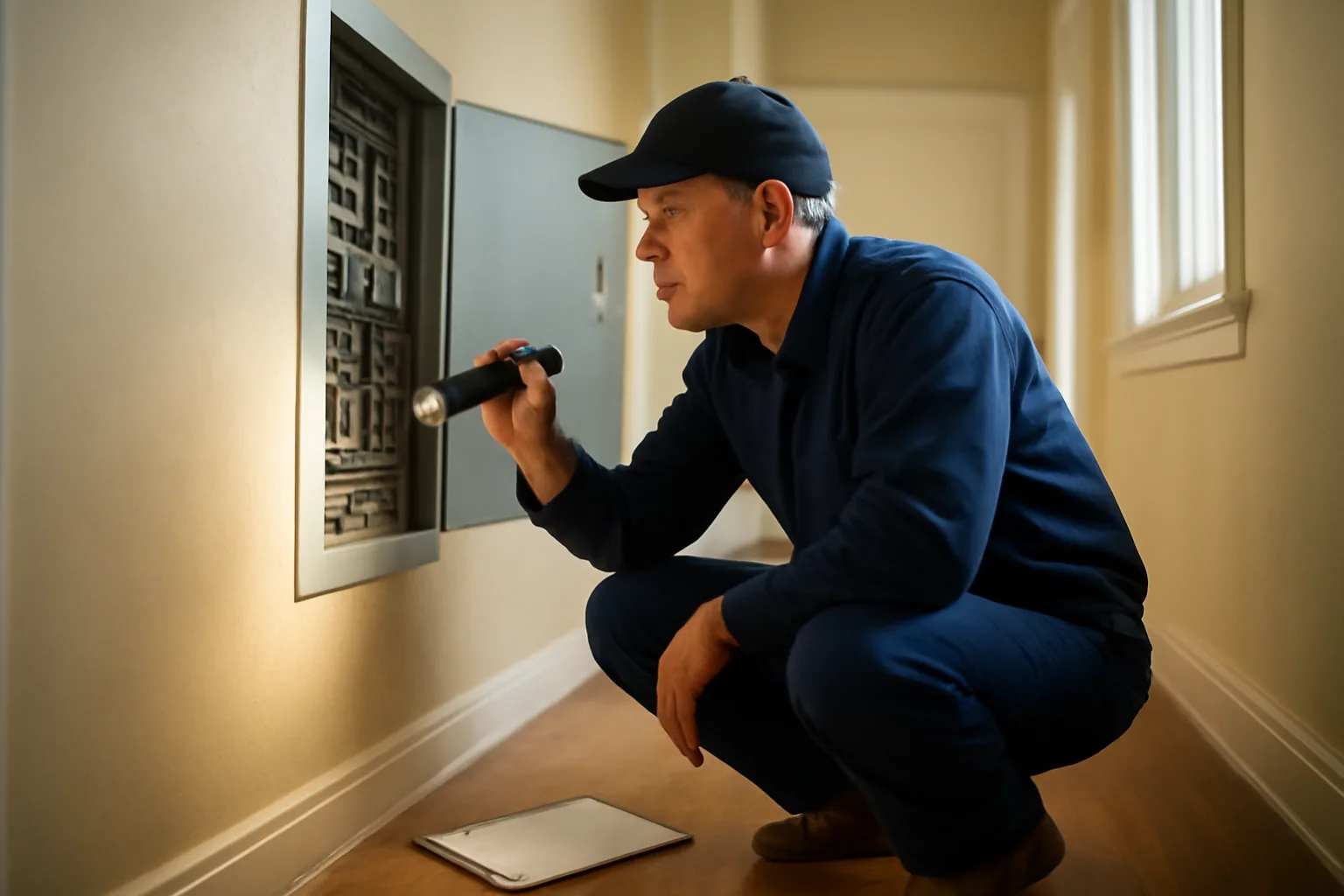
A checklist is only useful if you walk the property with it before the city inspector does. Print it, or load the PDF on a tablet, and go room by room the same way an inspector would: start at the exterior, work your way through common areas, then each unit. Check every smoke alarm and CO alarm for a solid battery or hardwired function and a valid manufacture date; most alarms have a 10-year lifespan printed on the back, and an expired alarm is one of the most common violations cited in rental inspections regardless of city [1]. Test every GFCI outlet in kitchens and bathrooms. Open every window that's supposed to open, especially bedroom windows that serve as fire egress. Run water at every fixture and check under sinks for active leaks or water staining, since mold and moisture issues are a frequent flag. Document what you fix along the way, ideally with a photo and date. If the city cites you for something you already corrected before the inspection date, having your own dated documentation makes the re-inspection or appeal conversation much shorter. This is the kind of organized record a $79 City Rental License & Inspection Prep Packet is designed to help you keep straight across renewal cycles, especially if you're managing more than one property with different inspection schedules. One honest caveat: no checklist, free or paid, guarantees you'll pass. Inspectors have discretion, cities update codes, and every jurisdiction has quirks a generic list won't predict. Treat any checklist as prep work that gets you 80 to 90 percent of the way there, then read your actual city ordinance for the last details.
Frequently asked questions
Is there a truly free rental inspection checklist pdf I can download today?
Yes. HUD publishes inspection standards and protocols online, and many cities with mandatory rental licensing post their actual inspection form as a free public PDF on the housing or code enforcement department's website. Search your city name plus 'rental inspection checklist' or call your city rental licensing office directly and ask them to email you the form they use.
How to become a landlord if I've never rented out property before?
Start by confirming your property meets local zoning and occupancy rules, then check whether your city requires rental registration or licensing before you can legally rent. Set up a written lease, understand your state's landlord-tenant statute on habitability and deposits, and get any required inspection scheduled before you advertise the unit.
Who is responsible for a rental property walk-through inspection in California?
The landlord is responsible for scheduling it. Under California Civil Code Section 1950.5, landlords must offer tenants an initial move-out inspection with at least 48 hours' written notice before making security deposit deductions, giving tenants a chance to fix issues first. City rental license inspections are a separate landlord obligation tied to municipal code.
What is landlording?
Landlording is the ongoing work of owning and managing rental property: collecting rent, handling repairs and maintenance, following state landlord-tenant law, maintaining habitability, and complying with any local rental licensing or registration program. It's distinct from simply owning property; landlording is the active management side.
What is a landlord, legally speaking?
A landlord is the owner or authorized agent of residential or commercial property who rents that property to a tenant under a lease or rental agreement, in exchange for rent. Legal definitions vary slightly by state statute, but landlords universally carry duties around habitability, notice, and deposit handling.
What rights do tenants have without a lease?
A tenant without a written lease still has rights: a habitable unit, proper notice before rent increases or termination (commonly 30 days for month-to-month tenancy), protection from illegal lockouts or utility shutoffs, and return of any deposit under state law. Verbal and implied rental agreements are generally enforceable, just harder to prove terms of.
Why do landlords require renters insurance?
Landlords require it mainly to cover the tenant's personal belongings and personal liability, since a landlord's building insurance doesn't cover tenant property damage or tenant-caused injuries to others. Many renters policies include liability coverage of $100,000 or more, which reduces the landlord's own exposure in a dispute.
How much notice does a landlord have to give before entering the unit?
Most states require 24 to 48 hours' notice for non-emergency entry. California's Civil Code 1954 presumes 24 hours is reasonable notice for entry to make repairs. Emergencies (fire, gas leak, flooding) never require advance notice. Check your specific state statute, since the exact number of hours varies.
What can a landlord look at during a rental inspection?
Inspectors and landlords conducting a compliance check can look at smoke/CO alarms, electrical systems, plumbing, heating, windows and egress points, structural and exterior conditions, and pest evidence. Inspections are about the structure and safety systems, not the tenant's personal belongings or housekeeping habits.
What can't a landlord do in Ohio?
Under Ohio Revised Code Chapter 5321, a landlord cannot shut off utilities or change locks to force a tenant out, cannot retaliate against a tenant for reporting code violations (ORC 5321.02), and cannot enter without reasonable notice except in emergencies. Landlords must also keep units habitable and code-compliant under ORC 5321.04.
Does a free checklist guarantee I'll pass my city's rental inspection?
No. A free or generic checklist gets you most of the way there by covering common categories like alarms, electrical, and plumbing, but it won't capture every local code amendment. Inspectors have discretion and codes change, so always confirm the specific requirements with your city rental licensing office before your scheduled inspection.
How often do rental licenses need to be renewed?
It varies widely by city; some require annual renewal, others every two or three years, often tied to a re-inspection cycle. There's no national standard. Confirm your specific renewal period and any associated re-inspection requirement with your city rental licensing office, since missing a renewal deadline can trigger violations on its own.
Sources
- California Legislative Information, Civil Code Section 1954: California requires reasonable notice, presumptively 24 hours, before landlord entry for repairs or inspections in non-emergency cases
- California Legislative Information, Civil Code Section 1950.5: California landlords must offer an initial move-out inspection with at least 48 hours' written notice before deposit deductions
- Insurance Information Institute, Renters Insurance: Renters insurance commonly includes personal liability coverage, often around $100,000 or more depending on the policy
- Ohio Revised Code, Chapter 5321 (Landlord and Tenant): Ohio law prohibits landlord self-help eviction tactics like shutting off utilities or changing locks
- Ohio Revised Code Section 5321.02, Retaliation Prohibited: Ohio prohibits landlord retaliation against tenants who report code violations to a government agency
- Ohio Revised Code Section 5321.04, Landlord Obligations: Ohio landlords must maintain habitable, code-compliant premises and give reasonable notice before non-emergency entry
- Ohio Revised Code Section 5321.07, Tenant Remedies: Ohio tenants can pursue rent escrow remedies through local courts when landlords fail required repairs after notice