Last updated 2026-07-26
TL;DR
There's no separate "event registration rental" category in landlord law; the phrase usually means confusion between rental registration (a city listing your unit) and a rental license (permission to rent, often tied to inspection). This guide untangles both and covers what new landlords, inspections, notice periods, and tenant rights actually require.
what is landlording, and what does a landlord actually do
Landlording is the ongoing job of owning and managing rental property: collecting rent, keeping the unit habitable, following state and local landlord-tenant law, and dealing with tenants when things go sideways. A landlord is the person or entity that owns the property and rents it to someone else under a lease or rental agreement. That's the whole legal definition, but the day-to-day job is bigger than that. Most new landlords underestimate how much of the work is paperwork and compliance, not fixing faucets. You're tracking security deposit rules, habitability standards, notice periods, and in a growing number of cities, rental registration or licensing deadlines tied to inspections. State landlord-tenant statutes generally frame the landlord's core duties around three things: keep the unit safe and habitable, follow the lease and state notice rules, and handle security deposits according to state law. If you're searching "event registration rental" because a city notice mentioned registering your rental and you're not sure what that means, you're not alone. The terminology varies by city. Some call it rental registration, some call it a rental license, some fold it into a housing or property maintenance code. They are related but not identical, and mixing them up is how landlords miss deadlines and get fined.
how to become a landlord (the real steps, not the theory)
Becoming a landlord takes five practical steps: buy or convert a property to a rental, check your state's landlord-tenant statute, register the unit with your city if required, get the right insurance, and write a lease that matches your state's rules. 1. Confirm the property can legally be rented. Some cities cap the number of rental units per block or require a certificate of occupancy before you can advertise a unit. Check with your local building or housing department before you list anything. 2. Learn your state's landlord-tenant act. Every state has one, and it governs security deposit limits, notice periods, habitability, and eviction procedure. These vary a lot: some states cap deposits at one or two months' rent, others have no cap at all. 3. Register or license the rental if your city requires it. This is the step people miss. A growing number of cities require landlords to register every rental unit, pay an annual or per-unit fee, and pass a habitability inspection before renting or renewing. Confirm with your city rental licensing office whether registration, a license, or both apply to your address, since program names and fees differ city to city. 4. Get landlord insurance (sometimes called a dwelling fire policy or landlord policy) separate from a standard homeowner's policy, and decide whether you'll require tenant renters insurance. 5. Use a lease that matches your state's required disclosures. Lead paint disclosure is federally required for homes built before 1978 under 42 U.S.C. § 4852d [1]. None of this happens in one sitting. Budget a few weeks if your city requires an inspection before your first tenant moves in, because inspection backlogs are common in spring and fall.
how to be a landlord day to day (more than at move-in)
Being a landlord day to day means responding to repair requests fast, documenting everything, and staying ahead of renewal deadlines, whether that's a lease renewal or a rental license renewal. Habitability is the daily obligation that matters most. Most states hold landlords to an implied warranty of habitability, meaning the unit has to have working heat, plumbing, electrical, and be free of serious safety hazards, regardless of what the lease says. This duty exists independent of any city inspection program; a city that doesn't require licensing still expects you to meet the state's habitability floor. The other daily reality is money tracking. Security deposits usually have to sit in a specific type of account (sometimes an interest-bearing one) and get returned within a set window after move-out, commonly 14 to 30 days depending on the state. Miss that window and some states impose penalties of two or three times the deposit amount. If your city has a rental registration or license program, add a calendar reminder well before the renewal date. Programs typically run one to three years before renewal is required, and letting it lapse can mean a late fee stacked on top of the original registration fee, confirm the exact cycle and amount with your city rental licensing office.
rental registration vs. rental license: what's the actual difference
| Rental registration | Owner/contact info on file with city | Any unit rented to a non-owner | |
|---|---|---|---|
| Rental license | Registration plus inspection and fee | Renting 1+ units, renewed periodically | |
| Certificate of occupancy | One-time or per-tenancy inspection | New tenancy or change of occupancy | The terminology genuinely differs by city, so don't assume your neighbor's city program matches yours. Confirm with your city rental licensing office which category your unit falls under before you assume a simple registration form is all that's needed. |
Rental registration is a city keeping a list of who owns and manages every rental unit in town, usually for code enforcement and emergency contact purposes. A rental license is permission to operate that rental, and it's often tied to a passed inspection and a fee. Some cities only require registration: you fill out a form, list the owner and a local contact, pay a modest fee, and that's it. Other cities require licensing, which usually means an inspection (interior and sometimes exterior) checking for things like working smoke detectors, adequate egress, no exposed wiring, and functioning heat, before the city issues or renews the license. A few cities require both, registration as the ongoing record and licensing as the gate you have to pass through periodically. | Program type | What it involves | Typical trigger |
who is responsible for the rental property walk-through inspection in california
In California, the landlord (or their agent) is responsible for conducting the pre-move-out inspection when a tenant requests one, under California Civil Code § 1950.5(f). The tenant has to request it, and the landlord then has to give at least 48 hours' written notice before entering to do it [2]. Here's how it actually works: California Civil Code § 1950.5(f)(1) gives tenants the right to request an initial inspection of the unit before they move out, specifically so they can fix any deductible issues before the final deposit accounting happens. The landlord conducts that walkthrough, gives the tenant an itemized statement of what needs fixing or cleaning, and the tenant gets a chance to address it before move-out. This is separate from any city-required rental inspection for licensing purposes; California doesn't have a single statewide rental licensing law, but individual cities (Los Angeles, San Francisco, Oakland, and others) run their own registration or inspection programs at the local level. So if you're a California landlord asking who does the walkthrough: you do, or whoever you've authorized to act as your agent (a property manager, for instance). The tenant doesn't inspect their own unit for deposit purposes; they can be present for yours, and they can request it, but the inspection and the resulting itemized list are the landlord's responsibility to produce.
what can a landlord look at during an inspection
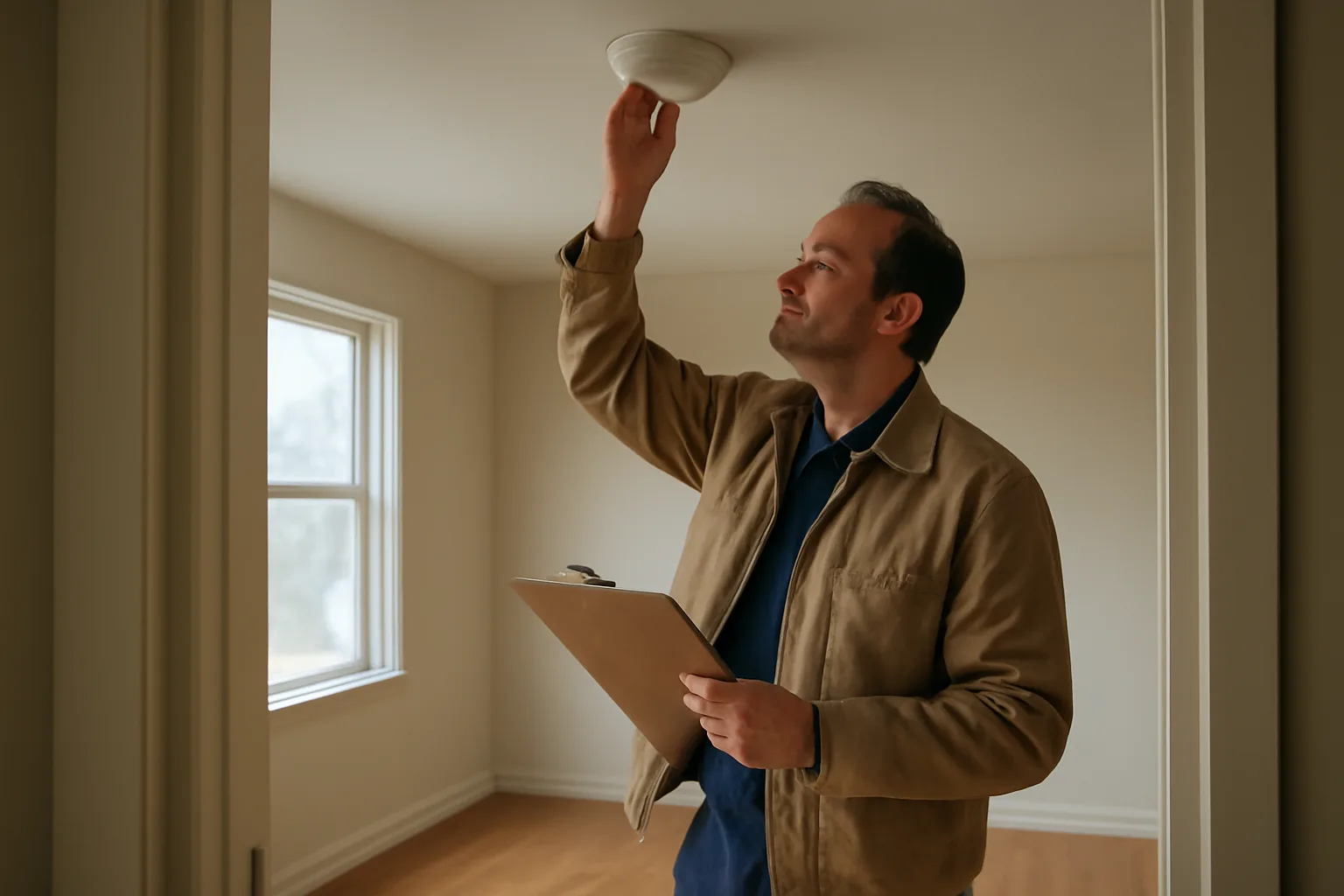
During a routine or move-out inspection, a landlord can check things directly related to the condition of the unit and lease compliance: cleanliness, damage beyond normal wear and tear, working smoke and carbon monoxide detectors, plumbing and electrical function, signs of unauthorized pets or occupants, and safety hazards. A landlord generally cannot search personal belongings, closets, or containers unrelated to the property's condition, and most states require advance notice before any non-emergency entry. For a city licensing inspection, the inspector is typically looking at code compliance items: smoke and carbon monoxide detector placement and function, egress windows in bedrooms, handrails and stair condition, electrical panel labeling, absence of visible mold or pest infestation, working heat source, and sometimes exterior items like peeling exterior paint (a lead hazard concern) or unsecured foundations. Federal lead-safe housing rules under 42 U.S.C. § 4852d outline disclosure obligations that inspectors and code officials commonly reference for pre-1978 housing [1]. HUD's lead-based paint regulations at 24 CFR Part 35 similarly require disclosure and a lead hazard information pamphlet at lease signing for pre-1978 units [3]. A landlord conducting their own periodic inspection (not a city inspector) is bound by the lease and state entry-notice law, and generally can't use the visit as a pretext to look through drawers, personal mail, or anything not related to property condition. If you're prepping for a city inspection specifically, our rental packet builder at RentalPermitPath is a $79 one-time packet built around the common inspection checklist items and registration forms cities ask for, useful if you'd rather not build the checklist from scratch.
how much notice does a landlord have to give before entering
Most states require 24 to 48 hours' written notice before a landlord enters an occupied rental for a non-emergency reason like a routine inspection or repair. Exact numbers vary: California requires "reasonable notice," which state law presumes to be 24 hours under Civil Code § 1954, while some states specify 24 hours flatly and others use 48 [4]. Emergency entry (fire, flooding, a gas leak) doesn't require advance notice in any state; the landlord can enter immediately to address the hazard. For anything else, routine maintenance, showing the unit to prospective tenants or buyers, a scheduled inspection, the notice period and the acceptable form of notice (written, posted, or verbal) depends entirely on your state statute. Some states also restrict the hours entry can occur, commonly requiring it fall within normal business hours absent an emergency or tenant agreement. If your city requires a licensing inspection, the notice for that inspection is often set by the local ordinance rather than the state entry statute, and it can run longer, sometimes a week or more advance notice by mail. Confirm with your city rental licensing office how much notice their inspectors give and whether you can reschedule if a tenant refuses access on the scheduled date.
why do landlords require renters insurance
Landlords require renters insurance mainly to shift liability for the tenant's personal property and personal liability away from the landlord's own policy. A landlord's dwelling policy typically covers the building structure, not the tenant's belongings, and it often doesn't cover a lawsuit stemming from the tenant's actions (a tenant's dog bite, a candle fire the tenant caused) the way a renters policy's liability coverage does. The Insurance Information Institute notes that a standard renters insurance policy covers a tenant's personal property, liability, and additional living expenses if the unit becomes uninhabitable, and that median renters insurance costs are relatively low, commonly cited in the range of $15 to $30 a month depending on coverage amount and location [5]. That low cost is part of why so many landlords now require it as a lease condition: it's a small ask that meaningfully reduces the landlord's own exposure if something in the tenant's unit causes damage or injury. Requiring it also protects the landlord's cash flow after a loss. If a tenant's cooking fire damages their own belongings and the landlord's structure, the landlord's insurer pays for the structure, but without tenant coverage, the tenant may have no way to replace their belongings, and disputes over who caused what tend to get uglier and slower without two separate policies involved.
what a landlord cannot do in ohio
In Ohio, a landlord cannot enter the rental unit without reasonable notice (Ohio law generally treats 24 hours as reasonable) except in an emergency, cannot shut off utilities or change the locks to force a tenant out (self-help eviction is illegal), cannot retaliate against a tenant for exercising a legal right like reporting a code violation, and cannot discriminate based on a protected class under fair housing law. Ohio Revised Code § 5321.04 lays out landlord obligations directly, including keeping the premises in compliance with building and housing codes, maintaining common areas, and keeping electrical, plumbing, heating, and appliances the landlord supplied in good working order [6]. Ohio Revised Code § 5321.05 lists tenant obligations, and § 5321.04(A)(8) specifically requires the landlord to give reasonable notice, at a reasonable time, before entering, except for emergencies. Self-help eviction (changing locks, removing a tenant's belongings, or shutting off utilities to force a move-out) is illegal in Ohio and in nearly every state; a landlord has to go through the court eviction process, called a forcible entry and detainer action in Ohio, even if the tenant is behind on rent or has clearly violated the lease. Retaliatory conduct, like refusing to renew a lease or raising rent specifically because a tenant complained to a code enforcement agency, is restricted under Ohio Revised Code § 5321.02 [7].
what rights do tenants have without a lease
A tenant without a written lease still has legal rights, typically as a month-to-month tenant under state law, including the right to habitable housing, the right to advance notice before eviction or rent increases, and protection from illegal lockouts, even if nothing was ever signed. Most states treat an oral or undocumented rental agreement as creating a month-to-month tenancy once rent has been accepted, which triggers the same state landlord-tenant protections that apply to written leases: habitability standards, entry notice requirements, and a required notice period (commonly 30 days, though it varies by state and sometimes by how long the tenant has lived there) before the landlord can end the tenancy or raise the rent. What a no-lease tenant doesn't have is the specific terms a written lease would have locked in, like a fixed rent amount for a defined term, specific pet or subletting rules, or an agreed maintenance responsibility split. Without those written terms, disputes fall back on state default rules, which are usually more tenant-protective than a landlord would choose if they'd written their own lease. This is one more reason a lease matters even for a relative or friend you trust: it takes the ambiguity out and replaces state defaults with terms you actually agreed to. For more on tenant protections generally, see our overview of tenants rights and how they interact with local rental licensing programs.
how city rental registration and inspection fees typically compare
| Typical cost driver | Administrative/list-keeping | Inspector time + admin | |
|---|---|---|---|
| Inspection required | No | Yes, on some cycle | |
| Renewal frequency | Often annual | Often 1-3 years | |
| Common violation for missing it | Fine, sometimes back-dated | Fine plus inspection order | Because every city sets its own numbers, don't rely on a number you saw for a different city. Confirm with your city rental licensing office for the actual fee schedule, renewal cycle, and late penalty that applies to your address. If you've gotten a notice and aren't sure which category (registration, license, or both) applies to your unit, that's the first call to make before you do anything else. |
Registration-only programs tend to charge a flat annual fee per unit, often in the range cities set locally, while licensing programs that include inspection usually cost more because they fund the inspector's time. Programs also differ in whether the fee is per building or per unit, and whether inspection happens every renewal cycle or only on a complaint or new-tenancy basis. | Program feature | Registration-only | License with inspection |
Frequently asked questions
What is landlording?
Landlording is the practice of owning residential property and renting it to tenants, covering everything from setting rent and screening tenants to handling repairs, security deposits, and legal compliance with state and local landlord-tenant law. It's an ongoing responsibility, not a one-time transaction, and includes both the legal duties and the day-to-day management work.
What is a landlord?
A landlord is the owner (or authorized agent of the owner) of a rental property who rents that property to a tenant under a lease or rental agreement, in exchange for rent. The landlord holds the legal obligations tied to habitability, deposit handling, and entry notice under state law.
How do I become a landlord?
Confirm the property can legally be rented, learn your state's landlord-tenant statute, register or license the unit with your city if required, get landlord insurance, and use a lease that meets your state's disclosure requirements (including federal lead paint disclosure for pre-1978 housing under 42 U.S.C. § 4852d).
Who does the rental walk-through inspection in California?
The landlord, or their authorized agent, conducts the pre-move-out walkthrough inspection when a tenant requests one under California Civil Code § 1950.5(f), giving at least 48 hours' written notice. This is separate from any city rental licensing inspection, which California cities run individually since there's no single statewide license law.
What can a landlord look at during an inspection?
A landlord can check for damage beyond normal wear, cleanliness, working smoke and carbon monoxide detectors, plumbing and electrical function, and signs of lease violations like unauthorized occupants or pets. A landlord generally cannot search personal belongings or containers unrelated to the unit's condition.
How much notice does a landlord have to give before entering?
Most states require 24 to 48 hours' notice for non-emergency entry; California presumes 24 hours is reasonable under Civil Code § 1954. Exact rules vary by state, and city licensing inspections may follow a separate notice rule set by local ordinance rather than the state entry statute.
Why do landlords require renters insurance?
Renters insurance covers the tenant's personal property and liability, which the landlord's own dwelling policy usually doesn't cover. Requiring it, often costing a tenant $15 to $30 a month per the Insurance Information Institute, reduces the landlord's exposure if the tenant causes damage or a liability claim.
What rights do tenants have without a lease?
A tenant without a written lease is typically treated as a month-to-month tenant under state law, with rights to habitable housing, advance notice before eviction or rent changes, and protection from illegal lockouts. They lack the specific fixed terms a written lease would provide.
What can't a landlord do in Ohio?
An Ohio landlord can't enter without reasonable notice except in an emergency, can't force a tenant out by changing locks or shutting off utilities, can't retaliate against a tenant for reporting a code violation, and can't discriminate based on a protected class, under Ohio Revised Code Chapter 5321.
Is rental registration the same as a rental license?
No. Registration is usually just listing the owner and unit with the city for record-keeping. A license typically requires that registration plus a passed inspection and fee before the unit can legally be rented or the license renewed. Some cities require both under different names.
What happens if I miss my city's rental registration deadline?
Consequences vary by city but commonly include a late fee added to the base registration or license fee, and in some cities a stop-rent order or fine that can escalate if the unit remains unregistered. Confirm with your city rental licensing office for the specific penalty schedule that applies.
Do all cities require a rental inspection?
No. Many cities only require registration with no inspection, others require inspection at every license renewal, and some inspect only when there's a tenant complaint or a change in occupancy. There's no national standard; program design is entirely local.
Can a landlord refuse to rent to someone without renters insurance?
Yes, in most jurisdictions a landlord can require renters insurance as a lease condition and decline an applicant who won't agree to it, as long as the requirement is applied consistently and doesn't function as a pretext for discrimination against a protected class.
Sources
- 42 U.S.C. § 4852d, Lead disclosure requirements: Federal lead paint disclosure requirement for housing built before 1978
- California Civil Code § 1950.5: Landlord responsibility for the pre-move-out inspection and 48-hour notice requirement in California
- California Civil Code § 1954: California's 24-hour presumption of reasonable notice for landlord entry
- Insurance Information Institute, Renters Insurance facts: Typical renters insurance cost range and coverage of personal property and liability
- Ohio Revised Code § 5321.04: Ohio landlord obligations including habitability, maintenance, and reasonable entry notice
- 24 CFR Part 35, Subpart A, Lead-based paint disclosure requirements: HUD lead-based paint disclosure and pamphlet requirement for pre-1978 rental housing
- Ohio Revised Code § 5321.02: Ohio's prohibition on landlord retaliation against tenants who exercise legal rights