Last updated 2026-07-26
TL;DR
Yes, in most cases. Property management companies and many individual landlords verify a driver's license or state ID to confirm identity, and some run background or credit checks that flag license or record issues. Separately, if you're a landlord operating in a city with mandatory rental licensing, your property (not your driver's license) needs its own registration or license, checked at inspection or lease-up.
do rental companies check your license when you apply to rent?
Most property management companies and individual landlords ask for a government-issued photo ID, usually a driver's license or state ID card, when you apply for an apartment. This isn't optional in practice. It's how they confirm you are who you say you are on the application, match your name to your credit and background check results, and prevent identity fraud. The check itself is usually simple: someone looks at the ID, compares the photo and name to the application, and sometimes photocopies it for the file. Some larger management companies use ID verification software that scans the license and cross-checks it against databases for tampering or fraud. This is separate from a criminal background check or credit check, though all three often happen in the same application process. What they are generally not doing is calling the DMV to check if your driver's license is suspended or checking your driving record, unless the rental specifically involves a vehicle (like a corporate housing deal with a parking agreement) or you're applying to rent from a company that also does auto leasing. A landlord's core interest is your identity, your ability to pay, and your rental history, not your driving record. If you're asking this question because you have a suspended license, a lapsed license, or an expired ID, know that most landlords will still accept an expired license within a reasonable window, or accept a passport or state ID as backup. Call the leasing office and ask directly what forms of ID they accept before you submit anything.
what is landlording, and what does it actually involve day to day?
Landlording is the business of owning residential property and renting it to tenants in exchange for regular payment, along with everything that comes with that: finding tenants, collecting rent, handling repairs, following state and local law, and managing the relationship when things go sideways. It's not passive income in the way people imagine. A landlord with even one or two units deals with maintenance calls, lease renewals, security deposit accounting, eviction procedures when rent doesn't get paid, and increasingly, city-level registration and inspection requirements. In cities with mandatory rental licensing, landlording also means keeping a license or registration current, scheduling inspections, and paying renewal fees on a schedule set by the local housing department. The legal side varies enormously by state and city. Some states, like California, have statewide landlord-tenant law covering habitability and notice periods under the California Civil Code [1]. Cities layer their own rules on top: Los Angeles, for example, has its own Rent Stabilization Ordinance and registration system separate from the state's habitability rules [2]. A landlord in one city can face rules that a landlord twenty miles away doesn't have to think about at all.
what is a landlord, legally speaking?
A landlord is the party who owns or controls residential real property and leases it to a tenant under a rental agreement, written or oral, in exchange for rent. Most state landlord-tenant statutes define the landlord as the owner, lessor, or the owner's authorized agent, which matters because it determines who is legally on the hook for repairs, habitability, and following notice rules. This matters more than it sounds like it should. If you hire a property manager, the property manager is usually acting as your agent, but you (the owner) are still the landlord of record for legal purposes in most states. That means license and registration obligations under city rental ordinances typically attach to the owner, not the management company, even when the management company is the one dealing with tenants day to day. Some cities require both the owner's name and the managing agent's name on the rental license application, specifically so code enforcement knows who to contact and who is liable for violations. Confirm with your city rental licensing office how they define 'responsible party' on the license application, because this varies.
who is responsible for the rental property walkthrough inspection in California?
In California, the landlord is responsible for arranging the move-in and move-out walkthrough inspection, but tenants have a specific legal right to request an initial inspection before move-out. Under California Civil Code Section 1950.5, if a landlord intends to withhold any part of a security deposit at move-out, the tenant has the right to request an inspection to occur no earlier than two weeks before the tenancy ends, giving the tenant a chance to fix issues before final deductions are made [1]. The landlord must give at least 48 hours' written notice before that initial inspection, and must provide an itemized statement of anything the tenant could still fix, so the tenant has a real opportunity to avoid deposit deductions [1]. After the tenant moves out, the landlord (or their agent) still does a final walkthrough and has 21 days to return the deposit along with an itemized list of any deductions [1]. This is a completely separate process from a city's rental unit inspection for licensing purposes. In cities like Los Angeles that have systematic rental unit inspection programs (through the Rent Escrow Account Program, or REAP, for substandard units), inspections are done by city housing inspectors checking code compliance, not by the landlord doing a tenant walkthrough [2]. Don't confuse the two: one is a lease-related deposit inspection, the other is a government habitability inspection tied to your rental license.
how does rental licensing differ from a tenant's ID or background check?
This is where people mix up two totally different systems. When a rental company checks your license as an applicant, they're verifying your personal identity. When a city requires a rental license, they're regulating the property itself, and the landlord (property owner) is the one who has to register or get licensed, not the tenant. Mandatory rental licensing programs exist in a lot of mid-size and large cities: Baltimore requires rental licenses for most residential rental units under the city's rental license law [3]. Minneapolis requires a rental license for every rental dwelling unit, renewed periodically, with inspections tied to the license [4]. Philadelphia requires landlords to get a Rental License from the Department of Licenses and Inspections before renting out a unit, and the license must be renewed annually [5]. These programs check the property's condition, the owner's registration status, and sometimes require a certificate of code compliance before a lease is legal to sign. None of that involves checking a tenant's driver's license. If you're a landlord getting a notice about a rental license renewal or an inspection deadline, that's about your property's compliance status with the city, not about vetting your tenants.
what can a landlord look at during a rental inspection?
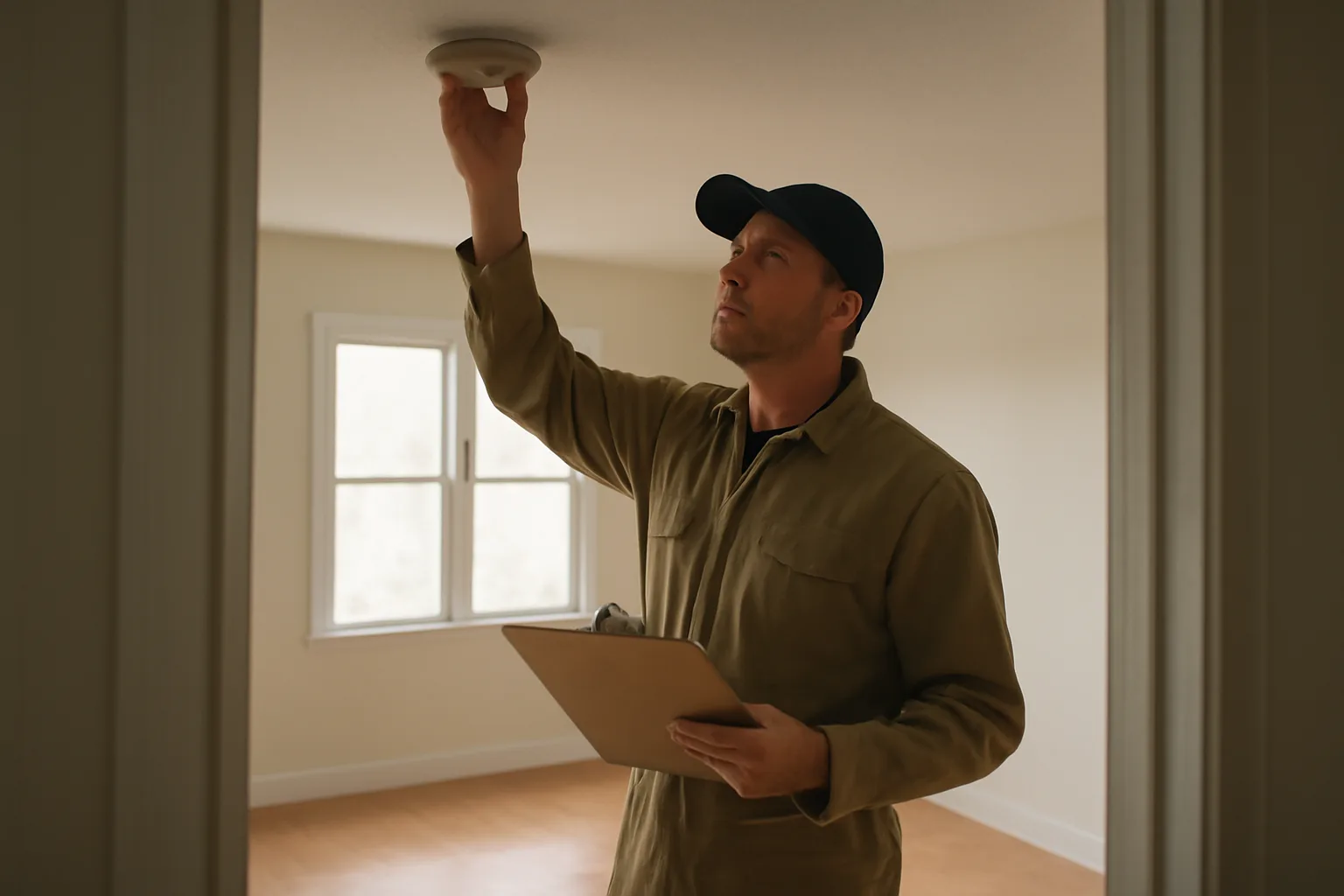
During a city rental licensing inspection, the inspector typically checks things tied directly to habitability and safety code: smoke detectors and carbon monoxide detectors, working plumbing and hot water, electrical system safety, structural integrity, pest infestation, adequate heat, and safe means of egress (exits, stairways, windows that open). Cities publish specific checklists; Minneapolis's rental inspection standards, for example, cover smoke alarm placement, egress window dimensions, and handrail requirements as part of its rental license inspection program [4]. What inspectors generally are not checking: your tenant's personal belongings, private documents, or anything unrelated to the physical condition and safety of the unit. A city rental inspection is not a search of tenant possessions; it's a code compliance check of the structure. During a lease-related landlord inspection (as opposed to a city inspection), a landlord can look at general condition, signs of damage beyond normal wear and tear, unauthorized occupants or pets, and safety hazards the tenant may have caused. Landlords generally cannot rummage through drawers, closets, or personal papers during a routine inspection; most state laws require reasonable notice and limit inspections to a reasonable purpose (habitability check, repairs, showing the unit to prospective renters or buyers), not open-ended searches. Check your state's specific notice-and-entry statute, because the required notice period and allowed purposes vary.
how much notice does a landlord have to give before entering or inspecting?
Notice requirements vary by state, and this is one of the most misunderstood parts of landlord-tenant law. California requires 'reasonable notice,' which the statute defines as 24 hours in writing unless circumstances make that impractical [1]. Many other states use a similar 24-hour standard, but not all: some default to 'reasonable notice' without a fixed number of hours, which leaves room for dispute. Emergency entry is the one carve-out almost every state allows without advance notice: fire, flooding, a gas leak, or another genuine emergency threatening life or property. Outside of emergencies, a landlord showing up unannounced to inspect a unit is very likely violating state law, even if the visit is well-intentioned. City rental licensing inspections work differently. Those are usually scheduled with the landlord directly, with the landlord responsible for coordinating access with the tenant, often requiring the same 24 to 48 hour tenant notice under state law before the city inspector can walk through occupied units. If you're a landlord prepping for a city inspection, build tenant notice into your timeline. Showing up with an inspector without proper notice to the tenant can create a legal problem on top of whatever the inspection itself turns up.
why do landlords require renters insurance?
Landlords require renters insurance mainly to shift liability risk away from themselves and their own property insurance policy. A landlord's insurance covers the building structure, but it typically does not cover a tenant's personal belongings, and it may not fully cover liability if a tenant's actions (a kitchen fire, an overflowing bathtub that damages a unit below) cause damage. Renters insurance usually costs relatively little, generally in the range of roughly $15 to $30 per month depending on coverage level, location, and deductible, though exact pricing varies by state and insurer [6]. For a landlord, requiring it as a lease condition is a cheap way to reduce the odds of an uninsured tenant dispute turning into the landlord's financial problem. It also protects the tenant, which is the part landlords sometimes undersell when explaining the requirement. Without renters insurance, a tenant whose belongings are destroyed in a fire or burst pipe has no coverage at all unless the landlord's policy happens to cover it (it usually doesn't for tenant property). Landlords who require proof of renters insurance at lease signing and renewal are managing their own risk, more than adding a hoop to jump through.
what a landlord cannot do in ohio
Ohio landlord-tenant law is set out in Ohio Revised Code Chapter 5321, and it restricts a landlord's behavior in specific, enforceable ways. A landlord cannot enter the rental unit without giving reasonable notice, generally interpreted as at least 24 hours, except in genuine emergencies, and cannot enter at unreasonable times [7]. A landlord in Ohio also cannot shut off utilities, change the locks, or remove a tenant's belongings to force them out, a practice known as 'self-help eviction.' Ohio law requires landlords to go through the courts (forcible entry and detainer action) to remove a tenant, even one who has clearly stopped paying rent [7]. Skipping the court process and just locking someone out is illegal, regardless of how far behind on rent the tenant is. Ohio Revised Code 5321.15 specifically prohibits a landlord from using 'self-help' remedies like lockouts, utility shutoffs, or seizing tenant property to force a vacancy, and allows a tenant to sue for actual damages plus reasonable attorney fees if a landlord does this [8]. A landlord also cannot retaliate against a tenant for exercising a legal right, like reporting a code violation to a city building department; Ohio's retaliation protections under R.C. 5321.02 bar landlords from raising rent, decreasing services, or trying to evict a tenant specifically because the tenant made a legitimate complaint [9].
what rights do tenants have without a signed lease?
Tenants without a written lease still have real legal rights in every state, because a tenancy can exist under an oral agreement or simply by the tenant paying rent and the landlord accepting it. This creates what's usually called a month-to-month tenancy, governed by the same state landlord-tenant statute that would apply if there were a written lease. Without a lease specifying otherwise, a month-to-month tenant is still entitled to habitability protections (working plumbing, heat, structural safety), protection from illegal lockouts or utility shutoffs, and advance notice before the landlord can raise rent or end the tenancy. The notice period to end a month-to-month tenancy is typically 30 days in most states, though some require more for longer-term tenants; California, for example, requires 60 days' notice to terminate a tenancy where the tenant has lived in the unit a year or more [1]. What a tenant without a lease does not automatically get is a fixed rent amount or fixed term protection. Because it's month-to-month, the landlord generally can raise rent or end the tenancy with proper notice, something a fixed-term lease would otherwise lock in for the lease period. Tenants relying on an oral agreement should still ask for something in writing (even a text message confirming rent amount and move-in date) because disputes without any documentation are harder to resolve.
how to become a landlord and how to be a landlord day to day
Becoming a landlord starts with the property, not a license exam. Unlike real estate agents, most states don't require a specific 'landlord license' to rent out property you own. What you do need, in a growing number of cities, is a local rental registration or rental license tied to that specific property, plus compliance with your state's landlord-tenant statute and your city's building and housing code. The practical steps: confirm the property is legally zoned and permitted for rental use, check whether your city requires rental registration or licensing (Minneapolis, Baltimore, and Philadelphia all do, for example [3][4][5]), get landlord insurance (different from a standard homeowner's policy), screen tenants consistently under Fair Housing Act rules, and draft a lease that complies with your state's required disclosures. Being a landlord day to day means responding to maintenance requests promptly (most states hold landlords to an 'implied warranty of habitability' that requires repairs within a reasonable time), keeping security deposit funds handled according to your state's specific rules on holding and returning them, and staying on top of any city rental license renewal deadline before it lapses into a fine. If your city sends an inspection notice or a violation letter, don't ignore it. Cities that run rental licensing programs generally escalate quickly from a warning letter to a fine schedule if a landlord doesn't respond or schedule the required inspection. A packet like the $79 City Rental License & Inspection Prep Packet can help you organize what a specific city's inspection checklist actually requires before the inspector shows up, though the core legal obligations always come from your city's ordinance and your state's landlord-tenant code, not from any prep material.
how city rental licensing interacts with tenant screening
It's worth separating two systems that often get bundled together in a landlord's head: tenant screening (credit checks, background checks, ID verification, which you as the landlord control) and city rental licensing (registration, fees, and inspections that the city controls and applies to your property). A tenant's driver's license check during screening tells you almost nothing about whether your rental unit is legally licensed to be rented at all. Some cities, including Los Angeles under its Rent Stabilization Ordinance, require landlords to register units and display registration numbers, and leasing an unregistered unit can create legal exposure for the landlord separate from anything related to the tenant's application [2]. If you're a landlord juggling both processes, keep them on separate checklists. Screening a tenant (verifying ID, running credit and background checks under the Fair Credit Reporting Act) is a per-applicant task. Licensing your rental (registering with the city, scheduling inspections, paying renewal fees) is a per-property, recurring obligation that exists whether or not you've found a tenant yet. Confusing the two is how landlords end up thinking they're compliant because they screened a tenant carefully, while an unlicensed unit sits exposed to a city fine.
Frequently asked questions
Do rental companies check your license when you apply for an apartment?
Yes, almost universally. Property management companies and individual landlords check a government-issued photo ID (usually a driver's license) to confirm your identity matches your rental application, credit check, and background check. This is separate from checking your driving record, which most residential landlords have no reason to look at.
Can a landlord check if my driver's license is suspended?
Standard residential landlords generally don't check driving records at all; they check that your ID is valid and matches your application. Some background check services can surface driving-related records if the landlord specifically orders that add-on, but it's not standard for apartment rentals unless a vehicle or parking agreement is part of the lease.
How to become a landlord?
Buy or already own residential property, confirm it's zoned and permitted for rental use, register or license it with your city if required (many cities mandate this), get landlord insurance, screen tenants under Fair Housing rules, and use a lease that meets your state's disclosure requirements. No state exam or personal license is typically required to rent out property you own.
Who is responsible for the rental property walkthrough inspection in California?
The landlord arranges it, but California Civil Code Section 1950.5 gives tenants the right to request an initial inspection up to two weeks before move-out, with 48 hours' written notice from the landlord, so tenants can fix issues before final deposit deductions are made [1].
What is landlording?
Landlording is the ongoing business of owning residential rental property: finding tenants, collecting rent, maintaining habitability, following state landlord-tenant law, and in many cities, keeping a rental license or registration current with scheduled inspections and renewal fees.
What is a landlord, legally?
A landlord is the property owner or their authorized agent who leases residential property to a tenant for rent. Most state statutes hold the owner legally responsible for license compliance and habitability even if a property management company handles daily operations.
What rights do tenants have without a lease?
Tenants without a written lease still have a legal month-to-month tenancy in every state, with full habitability protections, protection against illegal lockouts, and required advance notice (commonly 30 days, sometimes 60) before a landlord can raise rent or end the tenancy.
How to be a landlord day to day?
Respond to maintenance requests within a reasonable time under your state's implied warranty of habitability, handle security deposits according to your state's specific rules, keep your city rental license current if one is required, and screen tenants consistently to stay compliant with Fair Housing law.
Why do landlords require renters insurance?
It shifts liability risk away from the landlord's own policy, which usually doesn't cover a tenant's belongings or all liability scenarios. Renters insurance typically costs around $15 to $30 a month [6] and protects both the tenant's property and the landlord from disputes over uninsured damage.
How much notice does a landlord have to give before entering a unit?
Most states require 24 hours' written notice for non-emergency entry; California specifically defines 24 hours as presumptively reasonable [1]. Emergencies (fire, flooding, gas leaks) are the main exception allowing entry without advance notice. Always check your specific state's statute, since exact language varies.
What can a landlord look at during an inspection?
In a lease-related inspection, a landlord can check general condition, damage beyond normal wear, unauthorized occupants, and safety hazards. In a city licensing inspection, inspectors check code items like smoke detectors, plumbing, electrical safety, and exits [4]. Neither type allows searching personal belongings or private documents.
What a landlord cannot do in Ohio?
Under Ohio Revised Code 5321.15, a landlord cannot use self-help eviction: no lockouts, utility shutoffs, or seizing tenant belongings to force someone out [8]. Ohio law also bars retaliation against tenants who report code violations, under R.C. 5321.02 [9]. Evictions must go through the courts.
Does a rental license check my personal driver's license as a landlord?
No. A city rental license or registration applies to your property, not your personal ID. It's a separate system from tenant screening. Cities like Minneapolis and Philadelphia require landlords to register and license each rental unit, with inspections tied to the property, not the landlord's driving record [4][5].
Sources
- California Civil Code Section 1950.5: California security deposit and pre-move-out inspection rights, 48-hour notice, 21-day deposit return, 24-hour reasonable entry notice standard, and 60-day notice for tenancies over one year
- Los Angeles Municipal Code, Rent Stabilization Ordinance, Chapter XV, Article 4.02: Los Angeles requires rental unit registration under its Rent Stabilization Ordinance, separate from tenant screening
- Baltimore City Code, Article 13, Subtitle 4 (Rental Dwelling Licenses): Baltimore requires rental licenses for most residential rental units
- Minneapolis Code of Ordinances, Chapter 244 (Rental Dwelling Licenses): Minneapolis requires a rental license for every rental dwelling unit with inspections tied to the license, and its code sets inspection standards like smoke alarms and egress windows
- Philadelphia Code Section 9-3902 (Rental License Requirement): Philadelphia requires an annually renewed Rental License before a unit can legally be rented
- National Association of Insurance Commissioners, Renters Insurance Fact Sheet (Insurance Information Institute cost data reprinted in NAIC consumer guidance): Renters insurance premium ranges and general cost guidance
- Ohio Revised Code Chapter 5321: Ohio landlord-tenant law governs entry notice, obligations, and prohibited landlord actions
- Ohio Revised Code Section 5321.15: Ohio prohibits landlord self-help eviction including lockouts, utility shutoffs, and seizing tenant property
- Ohio Revised Code Section 5321.02: Ohio bars landlord retaliation against tenants who report code violations or exercise legal rights