Last updated 2026-07-25
TL;DR
During a rental inspection, a landlord (or the city inspector) can generally look at smoke detectors, plumbing, electrical, windows, and general safety conditions, and photograph problem areas. They usually cannot search your personal belongings, open locked drawers or closets without cause, or enter without proper notice, which most states set at 24 to 48 hours for non-emergency visits.
What can a landlord look at during an inspection?
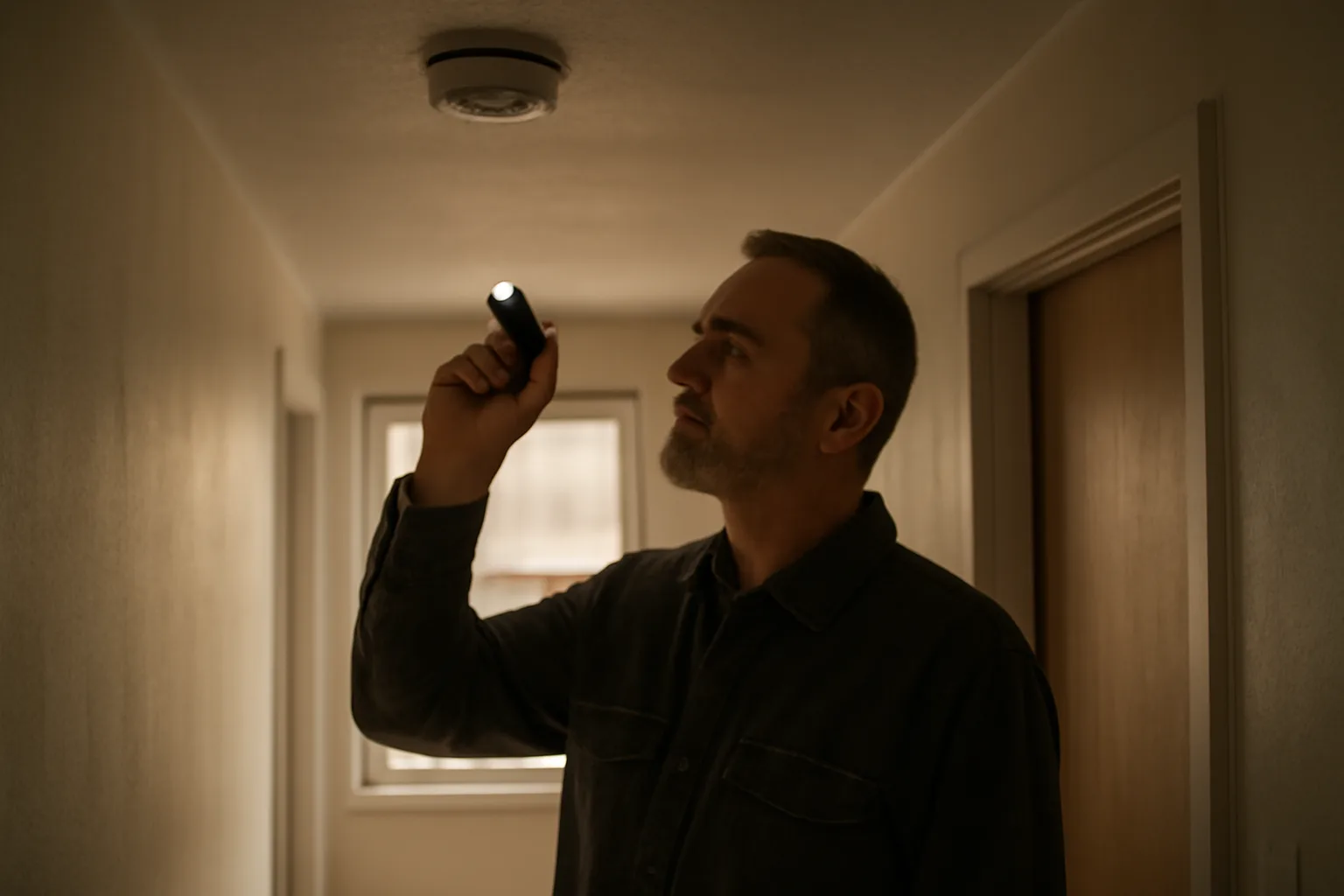
A landlord or city inspector doing a routine rental inspection can look at anything tied to the stated purpose of the visit. That usually means checking smoke and carbon monoxide detectors, testing plumbing fixtures for leaks, looking at electrical outlets and panels, checking windows and doors for proper operation, and scanning for obvious safety hazards like exposed wiring, mold, or pest infestation. What they generally cannot do is open your closets, dresser drawers, medicine cabinets, or personal storage boxes unless there's a specific, disclosed reason (a suspected leak behind a wall, for example, or a code violation that requires opening a cabinet to check plumbing). Some city rental inspection checklists are public documents. Many cities that require rental licensing publish their inspection checklist in advance, covering things like egress windows, handrails, GFCI outlets near water sources, and functioning heat sources [1]. The scope of the inspection should match the notice you got. If the notice says 'annual rental licensing inspection, exterior and interior safety systems,' that's the boundary. An inspector wandering into your bedroom to look through your closet during a smoke-detector check is outside scope, and you can (politely) say so. Photographs are common and generally allowed for documentation of violations, but a landlord photographing your personal items unrelated to the inspection purpose is a gray area that has led to tenant complaints in several cities. If you're unsure what's coming, look up your city's specific checklist. For city-specific detail, see our tenant rights overview and check your local rental licensing office's published inspection checklist.
How much notice does a landlord have to give before an inspection?
Most states require 24 to 48 hours advance written notice for a non-emergency entry, though the exact number and the required form of notice (written, posted, verbal) varies significantly by state. California's Civil Code Section 1954 sets 24 hours as 'presumed to be reasonable notice in absence of evidence to the contrary' [2]. Other states use 24 hours, some use 48, and a handful don't specify a number at all, just 'reasonable notice.' Emergencies are the big exception everywhere. If there's a fire, flood, gas leak, or other situation threatening health or safety, a landlord (or fire department, or code inspector) can enter without any advance notice. That exception is narrow. A landlord suspecting a lease violation is not an emergency, and using that excuse to walk in unannounced is a common source of tenant complaints and, in some states, statutory penalties. City-mandated rental license inspections are a separate track from lease-based entry rights. Even where your lease is silent, a city ordinance requiring periodic inspections still has to follow the state's landlord entry statute for notice, unless the ordinance itself sets a different (usually longer, tenant-protective) notice period. When in doubt, ask your city's rental licensing office directly what notice period applies to city-mandated inspections in your address's jurisdiction.
What can a landlord not do during an inspection (using Ohio as an example)?
Ohio's landlord-tenant statute, Ohio Revised Code 5321.04, requires landlords to give 'reasonable notice' and to enter 'only at reasonable times' for inspections, repairs, or showing the unit to prospective tenants or buyers [3]. Ohio courts and tenant guidance generally treat 24 hours as reasonable notice absent an emergency, though the statute itself doesn't pin an exact number. What a landlord cannot do in Ohio: enter without notice for a routine inspection, enter at an unreasonable hour (say, 6 a.m. or 11 p.m.) without agreement, use entry as a form of harassment (repeated unnecessary visits), or retaliate against a tenant for requesting repairs or reporting code violations. Ohio's landlord-tenant law also prohibits self-help eviction, meaning a landlord can't change locks, remove doors, shut off utilities, or remove belongings to force a tenant out, even during a dispute over an inspection. This pattern (notice requirement, reasonable-hours requirement, no self-help removal) repeats across most states with only the specific hour count and enforcement mechanism changing. If you're in a different state, look up your own landlord-tenant statute by name; most state legislature websites host the text for free. Our tenants rights and tenant rights guides link out to several state statute pages.
Who is responsible for the rental property walk-through inspection in California?
In California, the move-out walk-through inspection responsibility sits with the landlord, but the tenant has a specific statutory right to request it. California Civil Code Section 1950.5 gives tenants the right to request an initial inspection before move-out, done 'no earlier than two weeks before the termination... of the tenancy,' with the landlord required to give the tenant at least 48 hours written notice of the date and time [4]. The point of that pre-move-out inspection is to let the tenant fix problems (a hole in the wall, a stain on the carpet) before the landlord assesses deductions from the security deposit. The landlord has to give the tenant an itemized statement of anything found deficient, so there are no surprises at final move-out. That statement isn't a bill, it's a heads-up. For the separate category of city-mandated rental inspections (the kind tied to a rental license or registration program, common in cities like Los Angeles, Oakland, and San Francisco under their respective rental housing programs), the responsible party is usually the city's building or housing department, working from the landlord's registration. The landlord typically has to schedule access with the tenant and can face licensing penalties if they can't get the unit inspected, so landlords have a strong practical incentive to coordinate with tenants well ahead of the deadline. Confirm the exact program name and inspection cycle with your city's rental licensing office, since California cities each run their own separate registration and inspection systems on top of state law.
How to become a landlord: what does the role actually require?
Becoming a landlord, in the basic legal sense, requires owning or controlling a rental property, screening and selecting a tenant, and entering a lease agreement. There's no federal license requirement to be a landlord. Most of the requirements are local: business licenses, rental registration, and (in mandatory-inspection cities) a rental license tied to passing a habitability inspection. Practically, becoming a landlord means learning your state's landlord-tenant statute (security deposit limits and return deadlines, notice periods, habitability duties), learning your city's specific rental registration or licensing rules if your city has them, and setting up basic systems: a lease, a way to collect rent, a maintenance response process, and insurance. Fair housing law applies from your very first tenant. The federal Fair Housing Act (42 U.S.C. Section 3601 et seq.) bars discrimination based on race, color, religion, sex, national origin, disability, and familial status in any rental transaction, and HUD enforces it [5]. Many states and cities add protected classes on top of that (source of income, sexual orientation, gender identity), so check your state's fair housing statute too, more than the federal one. For city-specific licensing steps, our landlord landlords hub breaks down what different cities actually require to register a unit.
What is landlording, and what is a landlord?
A landlord is the owner (or the owner's authorized agent) of a rental property who leases it to a tenant in exchange for rent. Legally, the landlord holds title or a controlling interest, and the tenant holds a 'leasehold' right to occupy and use the space under the lease terms. 'Landlording' is the informal term for the ongoing work of operating rental property: collecting rent, handling maintenance requests, managing turnover, staying current on local ordinance changes, and dealing with the periodic paperwork of licensing and inspection. It's a mix of property management and small-business administration. A single-unit landlord with a full-time job elsewhere is still legally a landlord under most state statutes; the size of your portfolio doesn't change your basic legal duties, though it may change which local ordinances apply to you (some cities exempt owner-occupied duplexes or very small portfolios from licensing, others don't).
How to be a landlord day to day: what's actually involved?
Day to day, being a landlord means responding to maintenance requests within a reasonable time (many states specify a number of days for urgent issues like no heat or no water), keeping the unit compliant with local housing codes, handling rent collection and late payments according to your lease and state law, and preparing for whatever inspection cycle your city runs if you're in a mandatory rental licensing municipality. The biggest time sink for new landlords is usually paperwork: renewing the rental license, scheduling the inspection, responding to any violation notices, and keeping records of repairs. A lot of first-time violations aren't from bad landlords, they're from landlords who missed a renewal deadline or didn't know their city added a new inspection requirement. This is the exact gap our $79 City Rental License & Inspection Prep Packet is built for: a one-time reference to walk through your city's licensing and inspection requirements before an ordinance notice turns into a fine. It's not legal advice and it doesn't replace checking with your city's rental licensing office directly, but it saves the hours of digging through a municipal code page to figure out what's actually required.
What rights do tenants have without a lease?
A tenant without a written lease still has real rights. If rent is being paid and accepted on a regular schedule, most states treat that as a month-to-month tenancy by operation of law, governed by the same state landlord-tenant statute that would apply with a written lease. That means the tenant still gets the state's required notice period before entry (the same 24-to-48-hour range discussed above), the same protection against illegal lockouts and utility shutoffs, and the same habitability guarantee (the landlord still has to keep the unit livable: working plumbing, heat, and structural safety) that applies to written leases. What changes without a written lease is mostly the notice period to end the tenancy; many states require 30 days' notice to terminate a month-to-month tenancy with no written lease, though some require more for longer-term tenants. No lease does not mean no rights. It means the tenancy defaults to whatever your state's statute says a periodic tenancy looks like. See our renters rights page for more on how default tenancy rules work without a signed agreement.
Why do landlords require renters insurance?
Landlords require renters insurance mainly to shift liability and personal-property risk away from themselves. A landlord's own property insurance covers the building and the landlord's own losses (fire damage to the structure, for example), but it generally does not cover a tenant's personal belongings or a tenant's liability if they cause a fire or a guest gets injured in the unit. Requiring renters insurance (commonly with a modest liability minimum, often in the range of $100,000, though this varies by lease and landlord) means if a tenant's space heater starts a fire, or a guest slips and sues, the tenant's own policy is the first line of defense rather than the landlord's policy or the landlord's own pocket. It also protects the tenant: without it, a tenant who loses everything in a fire has no coverage for their own replacement costs, since the landlord's policy won't pay for the tenant's furniture or electronics. Requiring it is legal in nearly every state as a lease condition, as long as it's disclosed in the lease and applied consistently to all tenants (a landlord who requires it selectively by tenant category could run into fair housing problems).
What should you do if you get an inspection notice or violation fine right now?
What should you do if you get an inspection notice or violation fine right now?
First, read the notice carefully for three things: the exact scope of the inspection, the deadline or scheduled date, and whether it's a routine licensing inspection or a response to a specific complaint. Those three details change your prep completely; a routine annual inspection under a city rental licensing program is a different animal than a complaint-driven inspection targeting one specific unit. Second, check your notice period rights. If the notice gives you less time than your state statute allows for entry, you can (and generally should) ask for rescheduling to the legally required window, in writing. Third, walk your own unit against your city's published checklist if one exists, fixing the obvious stuff (dead smoke detector batteries, a loose handrail, a leaking faucet) before the inspector arrives. Cities that run mandatory rental licensing programs typically publish the checklist their inspectors use, and it's usually available on the housing or code enforcement department's website [1]. If you can't find yours, calling the rental licensing office directly and asking for the checklist is a completely normal, low-friction request; that's literally what the office is there for. If you already have a violation notice with a fine attached, most cities have a cure period, a window to fix the problem before the fine becomes final or before it escalates. Ask specifically about the cure period and whether a re-inspection fee applies (some cities charge a separate fee for the follow-up inspection after a failed one, confirm the exact amount with your city's rental licensing office).
Frequently asked questions
Can a landlord enter without notice for a routine inspection?
No, not for a routine inspection. Nearly every state requires advance notice for non-emergency entry, typically 24 to 48 hours in writing. The only broadly recognized exception is a genuine emergency (fire, flood, gas leak) threatening health or safety, where notice isn't legally required.
Can a landlord look through my closets and drawers during an inspection?
Generally no, unless there's a specific, disclosed reason tied to the inspection's purpose (checking for a leak behind a closet wall, for example). A landlord's search should match the stated scope of the inspection notice; searching personal storage without cause goes beyond that scope in most jurisdictions.
How much notice does a landlord have to give before entering for an inspection?
Most states require 24 to 48 hours written notice for non-emergency entry. California treats 24 hours as presumptively reasonable under Civil Code Section 1954. The exact number, and whether it must be written or can be verbal, varies by state, so check your specific state statute.
What can a landlord not do during an inspection in Ohio?
Under Ohio Revised Code 5321.04, a landlord can't enter without reasonable notice or at unreasonable hours for a routine inspection, can't use entry to harass a tenant, and can't retaliate against a tenant for requesting repairs. Ohio also bars self-help eviction tactics like lockouts during any inspection-related dispute.
Who is responsible for the rental property walk-through inspection in California?
The landlord conducts the walk-through, but tenants have the right to request an initial pre-move-out inspection under California Civil Code Section 1950.5, with at least 48 hours notice, so they can fix issues before final deposit deductions are assessed.
What can a landlord look at during an inspection?
Typically smoke and CO detectors, plumbing, electrical systems, windows and doors, heating, and general safety hazards, matching whatever the inspection notice states as its purpose. Photos of problem areas are common. Personal belongings unrelated to the stated purpose are generally off-limits.
What rights do tenants have without a written lease?
A tenant paying rent regularly without a written lease is usually treated as a month-to-month tenant under state law, with the same entry notice, habitability, and anti-lockout protections as a written lease. The main difference is often a longer notice period (commonly 30 days) required to end the tenancy.
Why do landlords require renters insurance?
Mainly to cover tenant liability and personal property risk that the landlord's own building insurance doesn't touch. It protects the landlord from lawsuits over tenant-caused damage or injury, and it protects the tenant's own belongings, which the landlord's policy never covers.
How do I become a landlord?
Own or control a rental property, learn your state's landlord-tenant statute, register or license the unit if your city requires it, screen tenants under fair housing law, and set up a lease, rent collection, and maintenance process. There's no federal license required, but local rules vary a lot.
What is landlording?
Landlording is the everyday work of operating rental property: collecting rent, handling repairs, managing tenant turnover, and keeping up with local licensing, registration, and inspection requirements. It applies the same whether you own one unit or fifty, though local ordinances may treat portfolio size differently.
Can a landlord take photos during an inspection?
Usually yes, for documenting maintenance issues or code violations tied to the inspection's purpose. Photographing unrelated personal items or areas outside the inspection's scope is a common source of tenant complaints and, in some cities, considered an overreach beyond the landlord's inspection rights.
What happens if I miss my city's rental inspection deadline?
Consequences vary by city but often include a missed-inspection fee, a rescheduling fee, or an escalation toward license suspension if repeated. Confirm the specific fee schedule and cure period with your city's rental licensing office, since these details differ significantly between municipalities.
Sources
- Example city rental inspection checklist pattern (varies by city; confirm locally): Cities running mandatory rental licensing programs typically publish an inspection checklist covering safety systems like smoke detectors and egress windows
- California Legislative Information, Civil Code Section 1954: 24 hours is presumed reasonable notice for landlord entry in California absent contrary evidence
- Ohio Laws, Ohio Revised Code Section 5321.04: Ohio landlords must give reasonable notice and enter only at reasonable times for inspections and repairs
- California Legislative Information, Civil Code Section 1950.5: Tenants can request a pre-move-out inspection with at least 48 hours notice before final deposit deductions
- U.S. Department of Housing and Urban Development, Fair Housing Act overview: The federal Fair Housing Act bars rental discrimination based on race, color, religion, sex, national origin, disability, and familial status