Last updated 2026-07-26
TL;DR
A 6-month rental inspection checklist covers HVAC filters, smoke/CO alarms, plumbing leaks, exterior grounds, and safety hazards. Most states require 24-48 hours written notice before entry. This routine walk-through is separate from city rental license inspections, but doing both keeps you ahead of violations, fine deadlines, and tenant complaints.
What is a 6-month rental inspection and why do landlords do them?
A 6-month rental inspection is a routine, non-emergency walk-through a landlord (or property manager) does twice a year to check the condition of a rental unit. It's not the same thing as a city rental licensing inspection, which is done by a government inspector checking code compliance tied to your license or registration. Think of the 6-month check as your own maintenance and liability audit, done on your schedule, before a small problem becomes a violation, a mold claim, or a habitability lawsuit. Most landlords who skip these checks find out about a slow leak, a dead smoke alarm, or a hoarding situation only when something breaks badly, a tenant complains to the city, or an inspector shows up for the license renewal and flags something you had no idea existed. Twice a year (spring and fall works for most climates) is a reasonable cadence. It's frequent enough to catch seasonal issues like HVAC filters and gutter debris, but not so often that it feels like harassment to a tenant. Some landlords do this quarterly for older buildings or high-turnover units, others stretch to annually if the unit is new construction with a stable, long-term tenant. There's no state law mandating a '6-month inspection' by that name. This is a best-practice interval that most property management and housing authority guidance recommends for preventive maintenance, separate from statutory habitability inspections.
What can a landlord look at during an inspection?
| Smoke/CO alarm function and battery | Search drawers, closets, or personal items | |
|---|---|---|
| HVAC filter, vents, thermostat | Photograph personal belongings unnecessarily | |
| Plumbing fixtures, visible leaks | Enter without required notice (absent emergency) | |
| Electrical outlets, panel access, exposed wiring | Show up repeatedly to pressure a tenant | |
| Window/door locks and screens | Inspect at unreasonable hours | |
| Signs of pests, mold, water damage | Enter for reasons unrelated to lease terms | |
| General structural condition, exterior grounds | Retaliate for a habitability complaint | This table is a practical guide, not a legal one. Your state's landlord-tenant statute is the actual authority, and it's worth reading before you do your first inspection. |
A landlord can generally inspect anything related to the physical condition of the unit and life-safety systems: smoke and carbon monoxide alarms, HVAC and water heater condition, visible plumbing leaks, electrical outlets and panels, window and door locks, signs of pests or mold, and general wear that could turn into a maintenance or code problem. Inspectors, and landlords doing their own walk-through, are checking for hazards. Not judging your housekeeping style. What a landlord generally cannot do is search through personal belongings, open closed drawers or containers, or use the inspection as a pretext to harass a tenant or retaliate for a complaint. State landlord-tenant statutes generally frame the right of entry around repairs, inspection, and showing the unit, not general surveillance. Here's a simple breakdown of what's fair game versus what's off-limits during a routine inspection: | Landlord can check | Landlord generally cannot do |
How much notice does a landlord have to give before an inspection?
Most states require landlords to give 24 to 48 hours written notice before entering an occupied rental unit for a non-emergency inspection or repair. California, for instance, presumes 24 hours notice is reasonable under Civil Code Section 1954, though the statute allows for a different reasonable period depending on circumstances [1]. Many other states set a similar 24-48 hour bar, though a few (and many local ordinances) require notice in writing delivered a specific way, like posting on the door plus mail. There's no single federal notice law. It's state-by-state, and sometimes city-by-city on top of that. Emergency entry (a burst pipe, a gas leak, fire) is the one broad exception nearly every state carves out: no advance notice required when there's an immediate threat to health, safety, or property. Before you schedule any 6-month inspection, confirm your state's specific notice period and delivery method requirement. If your rental is in a city with its own rental licensing program, check whether that city's ordinance also specifies notice requirements for the government inspection itself, since those can differ from your state's general entry statute. If you're prepping for a city compliance inspection specifically (versus your own routine check), the tenant rights and tenants rights resources are worth a read to understand what tenants are told to expect, so you're not caught off guard by a disagreement about scope.
Who is responsible for a rental property walk-through inspection in California?
In California, the landlord is responsible for arranging and conducting move-in and move-out walk-through inspections, and for giving proper notice before any mid-tenancy inspection. California Civil Code Section 1950.5 requires landlords to offer tenants an initial (pre-move-out) inspection if the tenant is vacating, giving the tenant a chance to fix deficiencies before the final move-out inspection and security deposit deduction [2]. The landlord (or their authorized agent, like a property manager) does the inspection; the tenant has the right to be present. For a routine mid-tenancy inspection unrelated to move-out, California Civil Code Section 1954 governs entry: the landlord must give reasonable written notice, presumed to be 24 hours, and can only enter for specific purposes, including to make repairs, show the unit to prospective tenants or buyers, or in an emergency [1]. There's no separate 'inspection right' beyond what's listed in the statute; a landlord doing a 6-month maintenance check is entering under the 'necessary repairs' or agreed-upon inspection clause in the lease, if one exists. If your rental is in a California city with its own rental registration or inspection program (many cities in the state require this), the local housing or code enforcement department, not the landlord, conducts that compliance inspection. The landlord's job there is to schedule access, be present or arrange access, and fix cited violations by the deadline given.
Your 6-month rental inspection checklist
Here's a practical, room-by-room checklist you can run every 6 months. It's built to catch the issues that turn into tenant complaints, code violations, or expensive repairs if they sit too long. Life safety (check first, every time):
- Smoke alarms: test each one, check battery or hardwired backup, confirm placement per manufacturer/code requirements
- Carbon monoxide alarms: test function, confirm presence near sleeping areas and any fuel-burning appliance
- Fire extinguisher (if provided): check gauge, expiration
- Egress: windows in bedrooms open freely, no security bars without a quick-release HVAC and utilities:
- Replace or check furnace/AC filter
- Test thermostat operation
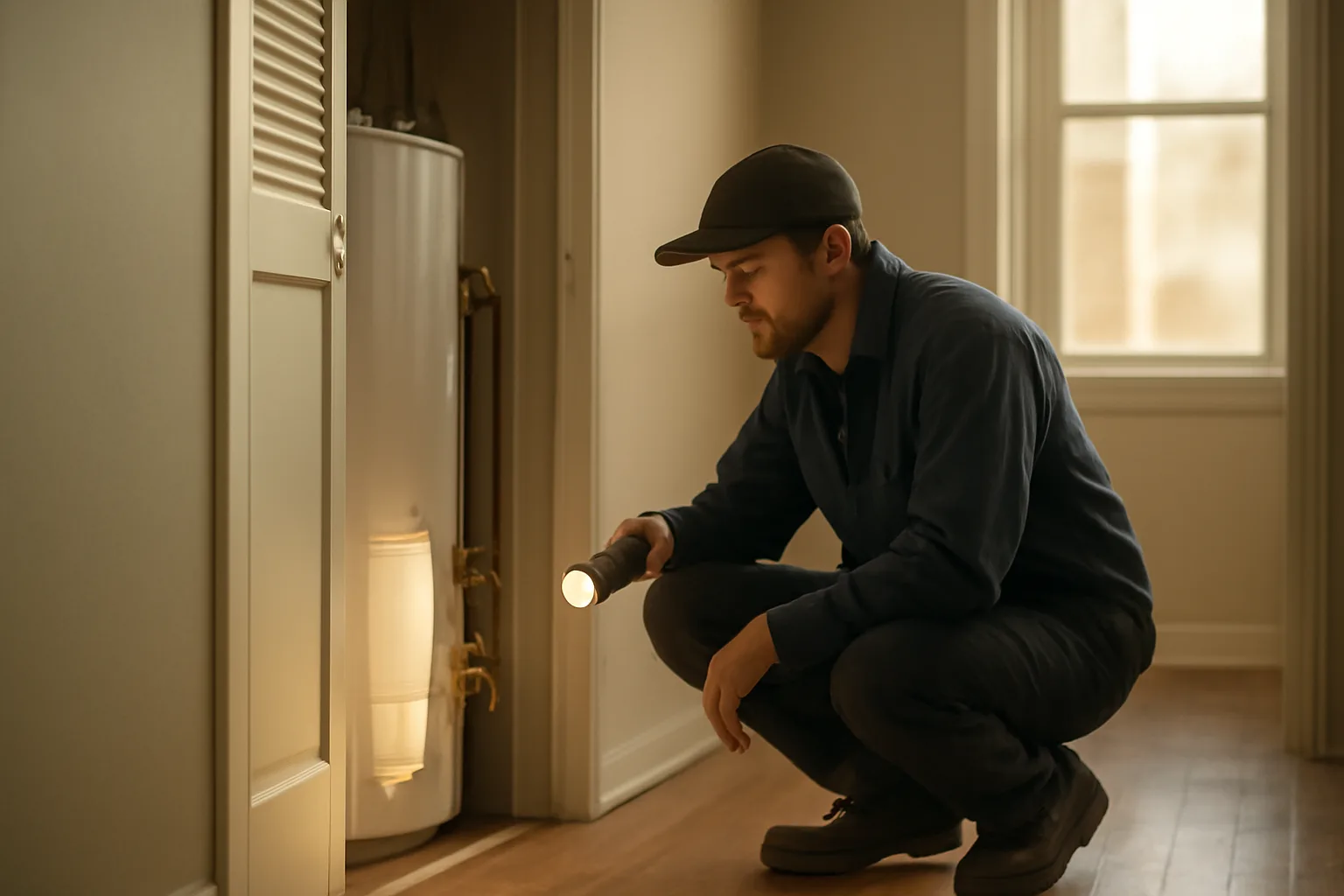
- Water heater: check for rust, leaks, temperature setting (most codes cap at 120°F for scald prevention)
- Check visible gas lines and connections for damage Plumbing:
- Under sinks: check for leaks, water stains, mold
- Toilets: check for running water, base seal
- Water pressure at faucets and shower
- Exterior spigots and hose bibs Electrical:
- Test GFCI outlets in kitchen, bath, exterior
- Check for exposed wiring, overloaded outlets, missing cover plates
- Confirm panel is accessible and labeled Structural and exterior:
- Roof, gutters (clear debris, check for sagging)
- Foundation cracks, drainage away from the structure
- Windows and doors: seal condition, lock function
- Decks, stairs, railings: check for rot, looseness Pests and moisture:
- Signs of rodents, insects, termites
- Mold or mildew in bathrooms, basements, closets
- Standing water anywhere on the property General condition:
- Paint condition, especially in pre-1978 units (lead paint disclosure and maintenance rules apply under federal law, see EPA's Renovation, Repair and Painting rule) [3]
- Flooring wear, trip hazards
- Appliance function if provided Doing this checklist consistently, and keeping dated photos each time, gives you a paper trail. That matters if a tenant later disputes a deposit deduction or claims you ignored a known hazard.
How do I become a landlord and what does 'landlording' actually mean?
Becoming a landlord starts with owning or controlling a property you rent out, but doing it well (and legally) means understanding your state's landlord-tenant law, your city's rental licensing or registration requirements if any, fair housing law, and basic property maintenance obligations. There's no license required to be a landlord in most of the U.S. at the state level. What requires licensing is often specific to the city, and only in municipalities that run a mandatory rental registration or inspection program. 'Landlording' is the day-to-day work of being a landlord: screening tenants, collecting rent, handling repairs, doing inspections, managing lease renewals and terminations, and staying compliant with local ordinances. It's part administrative job, part maintenance job, part legal compliance job. A landlord, in the plain legal sense, is the party who owns or leases property and grants a tenant the right to occupy it in exchange for rent, under a lease or rental agreement. If you're just starting out, the practical steps are: confirm your local rules (does your city require a rental license, registration, or periodic inspection? city-guides is a good starting point to check), get proper landlord insurance (different from a standard homeowner's policy), understand your state's security deposit and notice-to-enter laws, and set up a system for collecting rent and documenting repairs. Many new landlords underestimate the record-keeping load; a simple spreadsheet or property management app for tracking inspections, repairs, and communications saves real headaches later.
What rights do tenants have without a lease?
A tenant without a written lease still has real legal rights, most importantly the right to a habitable unit, protection from illegal lockout or 'self-help' eviction, and (in most states) the right to proper written notice before the tenancy ends. Without a written lease, the tenancy is generally treated as month-to-month, governed by the state's default statutory rules rather than lease terms. A tenant paying rent regularly, even with no signed paperwork, is typically considered a tenant-at-will or periodic tenant under state law, and the landlord must still follow the state's notice-to-quit and habitability rules exactly as if a lease existed. Landlords cannot shut off utilities, change the locks, or remove a tenant's belongings to force them out, regardless of whether there's a written lease. That's illegal self-help eviction in essentially every state, and it can expose the landlord to significant statutory damages. The habitability obligation (working plumbing, heat, structural safety, no serious code violations) exists independent of any lease; it typically comes from the state's implied warranty of habitability, established through case law and statute. Tenants without a lease should still get proper written notice (again, the period varies by state and often by how long they've lived there) before a landlord can require them to move out. If you're renting without a written lease, it's worth reading up on tenant rights and renters rights basics specific to your state, since assumptions here vary widely.
Why do landlords require renters insurance?
Landlords require renters insurance mainly to shift liability risk off themselves: it covers the tenant's personal belongings and liability for accidents (like a kitchen fire or a dog bite) that the landlord's own property insurance won't cover. A standard landlord/property insurance policy covers the building structure, not the tenant's stuff, and it typically doesn't cover a tenant being sued for causing damage or injury. Requiring renters insurance is legal in nearly every state as a lease condition, and it's become common practice, especially for landlords managing multiple units, because it reduces disputes over who pays when a tenant's negligence causes damage (a candle fire, an overflowing tub) that spreads to the building itself. Renters insurance is commonly cheap, often in the range of $15 to $30 a month depending on coverage and location, which is part of why more landlords are comfortable making it a lease requirement. The other reason: it protects the landlord's bottom line indirectly. If a tenant's belongings are destroyed in a fire the landlord didn't cause, and the tenant has no insurance, some tenants (unfairly or not) look to the landlord to make them whole, or at minimum it creates a messy, expensive dispute. Requiring proof of a renters policy at move-in, and keeping it current, closes that gap cheaply.
What can't a landlord do in Ohio?
In Ohio, a landlord cannot enter a rental unit without reasonable notice (Ohio law generally treats 24 hours as reasonable, though the statute itself says 'reasonable notice' rather than naming a fixed number), cannot shut off utilities or change locks to force a tenant out, cannot retaliate against a tenant for reporting code violations, and cannot discriminate based on any federal or state protected class. Ohio Revised Code Section 5321.04 lays out the landlord's core obligations: keeping the premises fit and habitable, complying with building and health codes, and maintaining common areas [4]. Ohio Revised Code Section 5321.05 covers the tenant's obligations, and the reciprocal protections: a landlord who wants to enter for inspection, repair, or showing has to give reasonable notice and enter at reasonable times, except in an emergency [5]. A landlord who violates the entry rules repeatedly can face a tenant lawsuit for actual damages, and Ohio law also lets tenants sue for a landlord's failure to maintain the property once the tenant has given proper written notice of the problem and a reasonable time to fix it has passed. Retaliation is explicitly restricted too. A landlord can't raise rent, decrease services, or start eviction proceedings specifically because a tenant complained to a government agency about a code violation, joined a tenant union, or asserted rights under Chapter 5321. If you're a landlord in Ohio doing a 6-month inspection, stick to reasonable notice, reasonable hours, and a stated purpose tied to maintenance or lease compliance. Anything that looks like harassment or retaliation is where landlords get into real legal trouble.
How does a 6-month inspection connect to my city's rental license or registration inspection?
Your own 6-month inspection and your city's official rental license inspection are related but different things, and mixing them up costs landlords money. The city inspection (required in mandatory rental-licensing municipalities) checks code compliance tied to your license or registration renewal, usually on a set cycle your city defines, commonly annual, biennial, or triennial, and it's conducted by a city inspector, not you. Your own 6-month check is where you catch and fix problems before that official inspection happens, so you're not blindsided by a violation notice with a short cure deadline and a fine attached. Cities vary enormously on fee structure and cycle. Some charge a flat annual registration fee in the range of $50 to $150 per unit. Others tier fees by number of units or inspection frequency. Violation fines for uncorrected code issues can run from a couple hundred dollars up to daily accruing penalties in some jurisdictions. Because this varies so much, confirm your city's specific fee schedule, inspection cycle, and violation fine structure with your city rental licensing office directly; don't rely on a generic number. Doing your own thorough 6-month walk-through, using the checklist above, means you walk into the official city inspection already knowing what's likely to get flagged: a dead smoke alarm, a missing GFCI, a water heater without proper strapping or temperature/pressure relief valve routing. If you want a structured way to organize everything a specific city's program requires (documents, prior violation history, inspection prep steps) before the inspector's actual visit, that's exactly the gap the $79 one-time City Rental License & Inspection Prep Packet is built to fill. It won't guarantee a passed inspection since every city's checklist and inspector judgment differ, but it organizes the paperwork and prep steps so you're not scrambling.
What should I do if the inspection turns up a problem I can't fix right away?
Document it, get a repair estimate or contractor scheduled, and communicate the timeline to your tenant in writing. Most habitability statutes give landlords a 'reasonable time' to fix a reported issue once notice is given, and what counts as reasonable depends on severity: a lack of heat in winter typically needs same-day or next-day response, while a cosmetic issue can reasonably wait weeks. If the issue is something a city inspector would likely flag (exposed wiring, no working smoke alarm, a structural issue), prioritize it before anything cosmetic. Cities that run mandatory inspection programs generally give a cure period after a violation notice, often 30 days for standard violations, though this varies significantly by jurisdiction and severity of the issue, sometimes shorter for emergency hazards. Confirm the specific cure period with your city rental licensing office; don't assume a number that applies elsewhere applies to you. Keep records of the date you found the issue, the date you scheduled the repair, the date it's fixed, and any tenant communication about it. That paper trail matters if there's ever a dispute about whether you responded promptly, and it's exactly the kind of documentation a city inspector or a small claims judge wants to see if a habitability question comes up later.
Frequently asked questions
How often should a landlord inspect a rental property?
Every 6 months is a common, reasonable interval for a routine maintenance and safety check, done by the landlord, not to be confused with your city's official license or registration inspection cycle, which is often annual, biennial, or set by local ordinance. Confirm your specific city's required inspection frequency with its rental licensing office.
How much notice does a landlord have to give before entering a rental unit?
Most states require 24 to 48 hours written notice before non-emergency entry. California presumes 24 hours is reasonable under Civil Code Section 1954 [1]. Ohio requires 'reasonable notice' without naming a fixed number in the statute itself [5]. Always confirm your specific state's rule; some cities layer additional notice requirements on top.
What can a landlord look at during an inspection?
A landlord can check smoke and CO alarms, HVAC condition, plumbing for leaks, electrical outlets and panels, window and door locks, and signs of pests or mold. A landlord generally cannot search personal belongings, open closed drawers, or use the inspection to harass or retaliate against a tenant.
Who is responsible for a rental property walk-through inspection in California?
The landlord (or their authorized agent) is responsible for scheduling and conducting walk-through inspections, including the pre-move-out inspection required under California Civil Code Section 1950.5, and for giving proper notice before any mid-tenancy inspection under Civil Code Section 1954 [1][2].
What rights do tenants have without a lease?
A tenant without a written lease is generally treated as a month-to-month tenant under state default rules, still entitled to a habitable unit, protection from illegal lockout, and proper written notice before the tenancy ends. Habitability and notice obligations come from state statute, not from lease paperwork.
Why do landlords require renters insurance?
It shifts liability off the landlord: renters insurance covers the tenant's belongings and liability for accidents the landlord's own property policy won't cover. It's commonly cheap (roughly $15 to $30 a month) and reduces disputes over who pays after fire, water damage, or an injury caused by tenant negligence.
What can't a landlord do in Ohio?
Under Ohio Revised Code Chapter 5321, a landlord can't enter without reasonable notice, shut off utilities to force a move-out, retaliate against a tenant for reporting code violations, or fail to maintain the property once given proper notice of a problem [4][5].
How do I become a landlord?
Own or control a rental property, learn your state's landlord-tenant law and your city's rental licensing or registration rules if any apply, get proper landlord insurance, and set up systems for rent collection, maintenance, and inspection documentation. No state license is required in most places; city-level licensing varies widely.
What is landlording?
Landlording is the ongoing work of operating a rental property: screening tenants, collecting rent, scheduling repairs and inspections, managing lease terms, and staying compliant with state and local landlord-tenant law and any city rental licensing requirements.
What is a landlord?
A landlord is the owner or lawful controller of a property who grants a tenant the right to occupy it in exchange for rent, under a lease or rental agreement, and who takes on legal obligations for habitability, repairs, and proper notice under state law.
Do I need to give my tenant notice before a routine 6-month inspection?
Yes. A routine landlord-scheduled inspection is still subject to your state's entry notice law, typically 24 to 48 hours written notice. There's no exception for 'just checking on things'; the same notice rules that apply to repair visits apply here.
What's the difference between my own inspection and the city's rental license inspection?
Your own 6-month inspection is a self-scheduled maintenance and liability check. The city's rental license inspection is a government-conducted code compliance check tied to your license or registration renewal cycle, with its own notice rules, fee schedule, and violation cure periods set by your specific city.
Can a landlord check a tenant's closets or drawers during an inspection?
Generally no. Inspections are meant to check the physical condition and life-safety systems of the unit, not to search personal belongings. Opening closed drawers or containers without a specific, justified reason can cross into an unreasonable or harassing entry under most state landlord-tenant law.
Sources
- California Civil Code Section 1954: California presumes 24 hours notice is reasonable before landlord entry for repairs or inspection
- California Civil Code Section 1950.5: California landlords must offer an initial pre-move-out inspection before final deposit deductions
- EPA, Renovation, Repair and Painting Program: Federal lead paint rules apply to maintenance and repair work in pre-1978 rental units
- Ohio Revised Code Section 5321.04: Ohio landlords must keep premises fit and habitable and comply with building and health codes
- Ohio Revised Code Section 5321.05: Ohio tenants and landlords have reciprocal obligations including reasonable notice before landlord entry
- 42 U.S.C. Section 4852d (Disclosure of Lead-Based Paint Hazards Upon Sale or Lease of Residential Property): Federal law requires landlords of pre-1978 housing to disclose known lead-based paint hazards to tenants