Last updated 2026-07-26
TL;DR
Landlording means renting out property you own and managing tenants, repairs, rent collection, and legal compliance. Key basics: most states require 24 to 48 hours notice before entry, tenants without a lease still have rights under state landlord-tenant law, and cities with rental licensing programs often add inspection and registration steps on top of state rules.
What is landlording, and what does a landlord actually do?
Landlording is the business of owning residential or commercial property and renting it to tenants in exchange for regular payment. A landlord is the person or entity that holds legal title (or a master lease) and takes on the legal duties that come with it: collecting rent, maintaining the unit in habitable condition, handling repairs, following state and local notice rules, and complying with any local licensing or registration ordinance. That last part trips people up. Owning a rental property and being a landlord in the legal sense aren't quite the same thing once a city has a rental licensing program. In places like tenants rights jurisdictions with mandatory registration, you're a landlord under state law the moment you rent out a unit, but you may also be an unlicensed operator under city law until you register and pass inspection. Fines for operating without a required rental license can run from roughly $100 to several hundred dollars per violation per day in cities that enforce this way, though the exact number always depends on the local ordinance, so confirm with your city rental licensing office before assuming a figure. Day to day, landlording covers four buckets: legal compliance (leases, notices, fair housing law), financial management (rent collection, security deposits, expense tracking), physical maintenance (repairs, code compliance, habitability), and tenant relations (communication, dispute handling, turnover). Landlords with 1 to 10 units usually do all four themselves without a property manager, which is exactly why licensing notices and inspection deadlines catch so many small owners off guard. Nobody sends you a syllabus when you buy your first rental house.
How do you become a landlord, step by step?
Becoming a landlord is mostly a legal and financial checklist, not a mysterious skill. Here's the realistic sequence for a first-time owner of 1 to 10 units. 1. Buy or convert a property, and confirm zoning allows rental use. Some single-family zones restrict rentals or cap the number of unrelated occupants; check with your local planning or zoning office before you list anything. 2. Register the rental with your city or county if required. Many cities with population growth pressure and older housing stock (think Rochester NY, Baltimore MD, Minneapolis MN, and dozens of mid-size cities) require a rental registration or license before you can legally lease the unit. This is separate from your state business license. 3. Get the required inspection done, if your city mandates one. Some cities inspect every unit before initial licensing and then on a renewal cycle (often 1 to 3 years); others inspect only on complaint. 4. Get landlord insurance (sometimes called a dwelling fire policy or DP-3), not a standard homeowners policy. Homeowners insurance typically excludes rental use as a business activity, and a claim can get denied if the carrier learns the unit was tenant-occupied and you didn't disclose it. 5. Write or buy a lease that matches your state's landlord-tenant statute, covering rent amount, due date, security deposit terms, and maintenance responsibilities. This isn't the place to reuse a template from another state; security deposit caps and notice periods vary widely. 6. Screen tenants consistently and follow the Fair Housing Act, 42 U.S.C. § 3601 et seq., which bars discrimination based on race, color, national origin, religion, sex, familial status, and disability [1]. State and local laws often add categories like source of income or sexual orientation. 7. Set up rent collection, bookkeeping, and a maintenance response system before your first tenant moves in, not after the first leaky faucet call at 11 p.m. Most of the actual friction, complaints, fines, re-inspection fees, comes from skipping step 2 or step 3. If your city has a rental registry, get on it before you list the unit, not after a neighbor complaint triggers a code enforcement visit.
Who is responsible for a rental property walk-through inspection in California?
In California, the landlord is generally responsible for arranging and paying for any required move-in and move-out walk-through inspections, and California Civil Code § 1950.5(f) gives tenants the right to request an initial inspection before move-out specifically to identify deductions the landlord plans to make from the security deposit [2]. The landlord must notify the tenant of that right and, if the tenant requests it, do the inspection no earlier than two weeks before the end of the tenancy, then give the tenant an itemized statement of anything that needs fixing to avoid a deposit deduction. Beyond the security-deposit walk-through, cities in California with their own rental inspection or registration programs (several use Rental Housing Inspection Programs, sometimes called RHIP or proactive rental inspection) assign responsibility to the property owner to schedule the inspection with the city's code enforcement or housing department, usually on a cycle set by local ordinance, commonly every 3 to 5 years depending on the city. The owner pays the inspection fee, schedules access with the tenant, and is on the hook if the unit fails and isn't fixed by the reinspection deadline. So to be precise: the state-level move-out walk-through is a landlord obligation triggered by a tenant request under Civil Code § 1950.5. The proactive rental-unit inspection tied to a city license is a separate landlord obligation created by local ordinance, and the specific inspection interval, fee, and inspecting department name vary by city, so confirm with your city rental licensing office rather than assuming your neighbor's city rules apply to yours.
What can a landlord look at during a rental inspection?
| Life safety | Smoke detectors, CO detectors, fire extinguishers, egress windows | |
|---|---|---|
| Electrical | GFCI outlets near water, exposed wiring, panel labeling | |
| Plumbing | Leaks, water heater temperature/pressure relief valve, working toilets | |
| Structural | Stairs, railings, foundation cracks, roof condition | |
| Pest/sanitation | Evidence of infestation, trash accumulation, mold | |
| Occupancy | Bedroom egress, smoke alarm placement per room count | Before any inspection, whether it's your own pre-tenancy walk-through or a city code inspection, landlords should give proper notice (see the notice section below) and document the unit's condition with photos or video, dated and time-stamped. If you're prepping for a first-time city inspection, a City Rental License & Inspection Prep Packet built around your city's actual checklist can save a failed first pass, which usually costs you a reinspection fee and a delay in getting your license issued. |
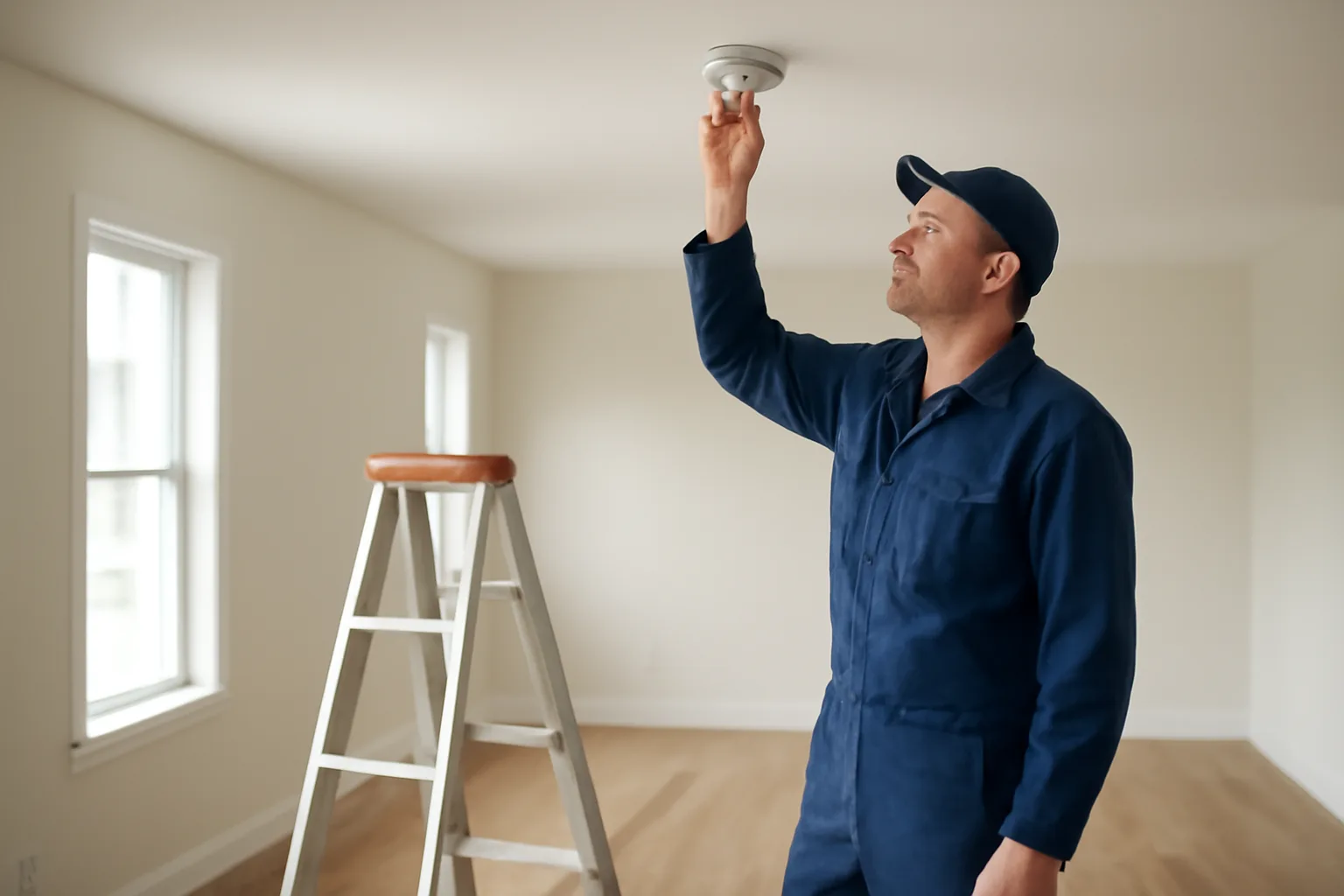
A landlord or a city inspector can generally check anything related to habitability, safety, and code compliance: smoke and carbon monoxide detectors, electrical outlets and panels, plumbing fixtures and water heaters, HVAC function, window and door locks, structural issues (cracked foundations, unsafe stairs, damaged railings), pest evidence, mold, and general cleanliness that could point to a lease violation or health hazard. What an inspector or landlord generally cannot do is search through personal belongings, closets, drawers, or private files as part of a routine or city-mandated habitability inspection. The inspection is about the condition of the structure and its systems, not an audit of the tenant's possessions. If a city inspector needs deeper access (say, investigating a specific complaint), that's typically still limited to the areas relevant to the complaint. Common inspection checklist items across cities with rental licensing programs include: | Category | Typical items checked |
How much notice does a landlord have to give before entering a rental?
Most states require 24 to 48 hours advance notice before a landlord enters an occupied rental unit for non-emergency purposes like inspections, repairs, or showings. California requires "reasonable notice," which state law presumes to be 24 hours under Civil Code § 1954, and entry must happen during normal business hours unless the tenant agrees otherwise [3]. Some states, like Massachusetts, don't set a specific statutory number of hours but require notice at a "reasonable time." Here's the catch: notice rules are set by state law first, and then a city's rental inspection ordinance layers its own requirements on top for the specific inspection tied to licensing. A city might require the landlord to give tenants written notice of the scheduled inspection date, sometimes 48 hours, sometimes more, and the landlord is usually the one responsible for coordinating access, not the city. Emergencies are the standard exception nationwide: a burst pipe, fire, gas leak, or immediate safety hazard lets a landlord enter without advance notice under most state statutes. Outside of an emergency, entering without proper notice, or entering repeatedly for no real reason, can expose a landlord to a claim for violation of the tenant's right to quiet enjoyment, which most states recognize as an implied lease term. Because notice periods differ by state (and sometimes by city ordinance for licensing-related inspections specifically), always check your state's landlord-tenant statute and your city's ordinance text rather than assuming a blanket 24-hour rule applies everywhere.
What rights do tenants have without a lease?
A tenant without a signed lease still has real legal rights, they're just governed by state landlord-tenant law and the terms of a month-to-month or oral tenancy rather than a written contract. Every state's landlord-tenant statute creates a baseline: the right to a habitable unit, the right to advance notice before entry, protection from certain kinds of retaliation and discrimination, and defined notice periods before the landlord can end the tenancy or raise the rent. Without a written lease, the arrangement is usually treated as a month-to-month tenancy, meaning either party can end it with proper notice (commonly 30 days, though some states or cities require more, especially for tenants who've lived there a long time). The absence of a lease does not mean the tenant has no rights or that the landlord can set arbitrary rules; implied warranty of habitability, security deposit handling laws, and anti-discrimination protections under the Fair Housing Act still apply regardless of whether anything is in writing [1]. Oral agreements about rent amount and due date are generally enforceable too, though proving the exact terms gets harder without paperwork, which is exactly why relying on a handshake deal is a bad idea for both sides. If a landlord wants to change terms, raise rent, or end a no-lease tenancy, state law dictates the required notice period, and local rent control or just-cause eviction ordinances (common in cities like Los Angeles, Oakland, and increasingly others) can further restrict how and when a landlord can terminate a month-to-month tenant, even without a written lease in place.
Why do landlords require renters insurance?
Landlords require renters insurance mainly to shift liability for the tenant's personal property and personal liability claims away from the landlord's own policy. A landlord's dwelling policy typically covers the building structure and the landlord's own liability, but it does not cover a tenant's furniture, electronics, or clothing if there's a fire, burst pipe, or theft, and it often won't cover a liability claim if the tenant's guest is injured inside the unit due to the tenant's own negligence (an unsecured dog, a tripping hazard the tenant created, and so on). Requiring renters insurance, commonly $100,000 to $300,000 in liability coverage, also protects the landlord indirectly: if a tenant's negligence causes damage (a kitchen fire, an overflowing bathtub that damages the unit below), the tenant's renters insurance can cover the landlord's repair costs through a liability claim instead of the landlord's own insurance taking the hit and raising the landlord's premiums. Many landlords also like that renters insurance policies typically include some coverage for temporary relocation costs if the unit becomes uninhabitable, which reduces the odds a displaced tenant asks the landlord to cover a hotel stay. There's no federal renters insurance mandate, but landlords can require it as a lease condition in nearly every state, as long as the requirement is disclosed in the lease and applied consistently to all tenants (inconsistent application can raise fair housing concerns). Typical renters insurance policies cost somewhere in the range of $15 to $30 per month depending on coverage amount and location, according to general insurance industry cost surveys, though landlords should not require a specific carrier, only a minimum coverage level and proof of an active policy.
What can't a landlord do in Ohio?
Ohio landlord-tenant law, primarily Ohio Revised Code Chapter 5321, sets specific limits on landlord conduct. A landlord in Ohio cannot shut off utilities, change the locks, or remove a tenant's belongings to force them out, a practice generally called self-help eviction; Ohio requires landlords to go through the court eviction (forcible entry and detainer) process instead [4]. Locking a tenant out or seizing property outside of a court order can expose a landlord to statutory damages. Ohio landlords also cannot retaliate against a tenant for exercising a legal right, such as reporting a code violation or requesting repairs; ORC § 5321.02 specifically prohibits retaliatory conduct including raising rent, decreasing services, or threatening eviction because the tenant complained to a government agency or joined a tenants' union [5]. A landlord in Ohio must also give reasonable notice, generally 24 hours under ORC § 5321.04, before entering the rental unit for repairs or inspection, except in an emergency [6]. Ohio landlords cannot ignore the state's implied warranty of habitability either. ORC § 5321.04 requires landlords to keep the premises in a safe and sanitary condition, comply with building and housing codes materially affecting health and safety, and keep common areas safe and clean [6]. And like every state, Ohio landlords cannot discriminate based on the categories protected under the Fair Housing Act [1], and many Ohio cities layer on their own rental registration or licensing ordinance, so a landlord operating in, say, Cleveland, Columbus, or Cincinnati should check the specific municipal code for registration deadlines and inspection cycles on top of the state rules above.
What is a landlord, legally speaking?
Legally, a landlord is the party who owns or controls real property and grants a tenant the right to occupy it in exchange for rent, under a lease or rental agreement that creates a landlord-tenant relationship governed by state statute. The landlord holds the underlying property interest (ownership, or sometimes a master lease the landlord subleases from), while the tenant holds a possessory interest limited by the lease terms. This legal relationship comes with statutory duties that exist whether or not the lease mentions them: the implied warranty of habitability (most states), the duty to give notice before entry, the duty to return security deposits within a set timeframe (often 14 to 45 days depending on the state), and the duty to comply with fair housing law. A landlord cannot contract out of these duties just by putting a waiver clause in the lease; most states declare such waivers void as against public policy. In cities with mandatory rental registration or licensing, the legal definition of "landlord" for city purposes often extends to include property managers, LLC members, or anyone with a controlling ownership interest, meaning the license and any code violations attach to more than just the name on the deed. If you're structuring ownership through an LLC for liability protection, check whether your city's rental ordinance requires the LLC itself to hold the license or requires a designated local agent or responsible person to be listed, since requirements vary and getting this wrong is a common reason first-time LLC landlords get their license application bounced back.
How do rental licensing and inspection programs fit into becoming a landlord?
Once you own rental property in a city with a mandatory rental licensing ordinance, becoming a fully compliant landlord means clearing three layers at once: state landlord-tenant law, local business/rental licensing, and any physical inspection requirement tied to that license. Skipping the local layer is the single most common compliance gap for small landlords with 1 to 10 units, because state law (leases, notice, deposits) tends to get more attention in general landlord guides than city-specific registration steps. A typical mandatory rental licensing city, common patterns include (again, specifics vary by city, so confirm with your local rental licensing office): an initial registration or license application with a fee often in the range of $50 to $300 per unit or per building, a required inspection before the first license is issued, a renewal cycle of 1 to 3 years with a follow-up inspection, and fines for operating unlicensed that can add up daily until the owner registers. For landlords managing this for the first time, or catching up after a violation notice, the practical order of operations is: pull the actual ordinance text or call the rental licensing office, get the registration paperwork filed immediately (even if the inspection is weeks out, since fines often start from the date the unit was first rented, not the date you found out), then prep the unit against the local inspection checklist before the inspector shows up. That's the exact gap the $79 City Rental License & Inspection Prep Packet is built to close: a one-time reference packet mapped to what cities with these programs typically check, so a first inspection doesn't turn into a second reinspection fee. It's not legal advice and it doesn't guarantee a pass, since every city's checklist and inspector discretion differ, but it saves the guesswork of walking in blind. For more on tenant-facing rights that intersect with your licensing obligations, see renters rights and tenant rights.
Frequently asked questions
How do you become a landlord with no experience?
Start by confirming zoning allows rental use, then check whether your city requires rental registration or licensing before you can legally rent the unit. Get a landlord insurance policy (not standard homeowners), write a lease matching your state's landlord-tenant statute, screen tenants consistently under Fair Housing Act rules, and set up a maintenance response system before your first move-in day.
Who pays for a rental walk-through inspection in California?
The landlord pays for and arranges the walk-through inspection. Under California Civil Code § 1950.5(f), tenants can request an initial move-out inspection to identify potential security deposit deductions, and the landlord must accommodate that request and provide an itemized list of needed repairs, at no cost to the tenant.
What is landlording as a profession or side business?
Landlording is the ongoing work of owning and managing rental property: collecting rent, maintaining habitability, following notice and eviction laws, handling tenant turnover, and complying with any local rental registration or inspection ordinance. Most owners with 1 to 10 units handle this themselves rather than hiring a property manager.
What is a landlord, in one sentence?
A landlord is the person or entity that owns or controls rental property and grants a tenant the legal right to occupy it in exchange for rent, taking on statutory duties around habitability, notice, deposits, and fair housing in the process.
What rights does a tenant have without a signed lease?
Tenants without a lease are typically treated as month-to-month tenants under state law and keep the same core protections: right to habitable housing, advance notice before entry (commonly 24 to 48 hours), protection from discrimination under the Fair Housing Act, and defined notice periods before the landlord can end the tenancy or change terms.
Why do most landlords require renters insurance?
Renters insurance shifts liability for the tenant's belongings and certain injury claims away from the landlord's own policy, and it can cover repair costs when tenant negligence causes damage. Most landlords require $100,000 to $300,000 in liability coverage as a lease condition, applied consistently to every tenant to avoid fair housing issues.
How much notice does a landlord have to give before entering the unit?
Most states require 24 to 48 hours notice for non-emergency entry. California presumes 24 hours is reasonable under Civil Code § 1954. Emergencies (fire, flooding, gas leaks) are an exception in virtually every state, allowing entry without advance notice.
What can a landlord check during a rental inspection?
Inspectors and landlords can check life safety equipment (smoke and CO detectors), electrical and plumbing systems, structural condition, pest and sanitation issues, and code-required occupancy features. They generally cannot search personal belongings, closets, or private files as part of a routine habitability or licensing inspection.
What can't a landlord do in Ohio specifically?
Ohio landlords cannot use self-help eviction (changing locks, shutting off utilities, removing belongings) under Ohio Revised Code Chapter 5321; they must use the court eviction process. They also cannot retaliate against tenants for reporting code violations (ORC § 5321.02) and must give 24 hours notice before entry except in emergencies (ORC § 5321.04).
What happens if I rent out a unit without registering it with the city?
Cities with mandatory rental licensing programs can issue fines for operating unlicensed, sometimes calculated per day or per violation, and may bar you from pursuing an eviction in court until the property is properly licensed. Exact fines and consequences vary by city, so confirm current rules with your local rental licensing office.
Do all cities require a rental license or inspection?
No. Rental licensing and inspection requirements are set city by city or county by county, not nationwide. Many mid-size and older cities with aging housing stock have adopted mandatory registration, but plenty of jurisdictions have no such requirement. Always check your specific city's municipal code rather than assuming a rule applies everywhere.
How often do rental units typically get re-inspected under a city license program?
Renewal and re-inspection cycles commonly run every 1 to 3 years in cities with mandatory rental licensing, though some use longer cycles (3 to 5 years) or inspect only on tenant complaint. The specific interval, fee, and inspecting department name are set locally, so confirm with your city's rental licensing office.
Sources
- U.S. Department of Justice, Fair Housing Act overview: Fair Housing Act prohibits discrimination based on race, color, national origin, religion, sex, familial status, and disability
- California Legislative Information, Civil Code Section 1950.5: Tenants can request an initial move-out inspection to identify security deposit deductions, and landlord must provide itemized statement
- California Legislative Information, Civil Code Section 1954: California presumes 24 hours is reasonable notice before landlord entry, generally during normal business hours
- Ohio Legislature, Ohio Revised Code Chapter 5321: Ohio landlord-tenant law governs rights and duties including prohibition on self-help eviction
- Ohio Legislature, Ohio Revised Code Section 5321.02: Ohio prohibits landlord retaliation against tenants who report code violations or exercise legal rights
- Ohio Legislature, Ohio Revised Code Section 5321.04: Ohio requires landlords to maintain habitable premises and give reasonable (24 hour) notice before entry except in emergencies