Last updated 2026-07-26
TL;DR
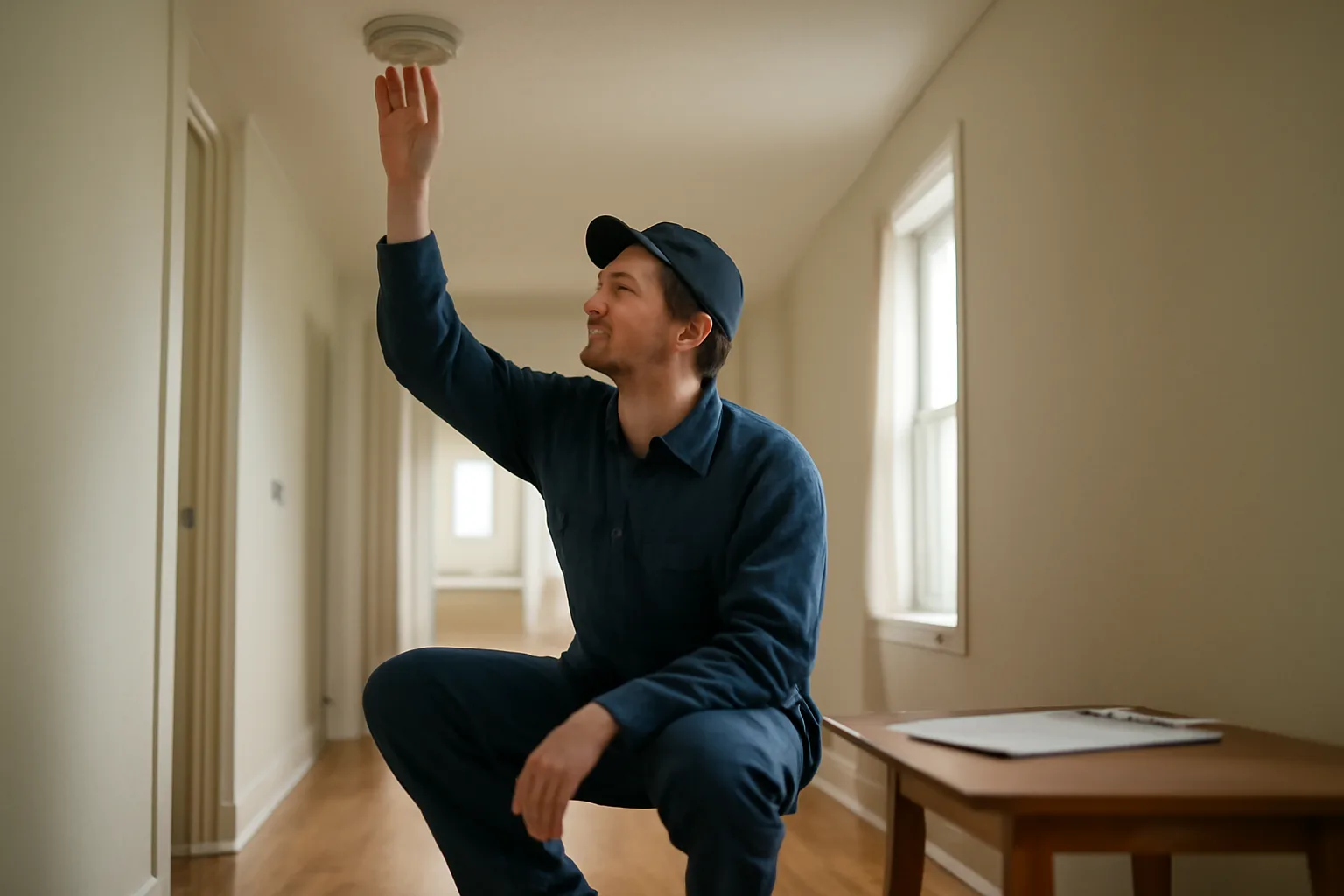
A rental property inspection checks that a unit is safe and habitable, covering things like smoke detectors, plumbing, electrical, and structural issues. Most states require 24 to 48 hours notice before a landlord or city inspector enters. Rules vary by city and state, so always confirm specifics with your local rental licensing office before scheduling.
what is a rental property inspection and why does it happen
A rental property inspection is a walkthrough, usually done by a landlord, a city code inspector, or both, to confirm a unit meets basic safety and habitability standards. These aren't pop quizzes. Most cities with mandatory rental licensing require an inspection before they'll issue or renew a rental license, and the inspector is checking against a specific local housing code, more than eyeballing things. The inspection usually happens for one of three reasons. First, a city requires it as part of licensing or registration, common in places like Minneapolis, Rochester NY, and dozens of mid-size cities that run proactive rental inspection programs. Second, a landlord does a routine or move-in/move-out inspection to document condition and catch maintenance issues early. Third, a tenant complaint triggers a code enforcement inspection, sometimes with no notice requirement at all if there's an emergency. HUD's own guidance on the Uniform Physical Condition Standards notes that inspections are meant to confirm housing is "decent, safe, and sanitary" for the people living there [1]. That's the baseline standard most city rental codes borrow from, even if the specific checklist differs city to city. If you're a landlord with 1 to 10 units in a city that requires this, don't treat the inspection as a formality. Cities that run these programs, like Minneapolis's rental licensing program under Chapter 244 of its housing code [2], can and do fail units on things landlords assume are fine, like a missing GFCI outlet near a sink or a smoke detector that's more than 10 years old.
what can a landlord look at during an inspection
A landlord doing a routine inspection can generally check anything related to the condition of the property: smoke and carbon monoxide detectors, plumbing leaks, electrical outlets, HVAC function, signs of pest infestation, mold, structural damage, and whether the tenant is violating lease terms (unauthorized pets, unauthorized occupants, or blocked exits). What a landlord cannot do is use the inspection as a pretext to search personal belongings, open drawers, or rummage through closets beyond what's needed to confirm safety and maintenance. Most state landlord-tenant statutes limit inspections to "reasonable purposes," which typically means: making repairs, showing the unit to prospective tenants or buyers, verifying lease compliance, or complying with a court order or city inspection requirement. California's Civil Code Section 1954, for example, lists the specific reasons a landlord may enter, including to make necessary or agreed repairs and to exhibit the unit to prospective tenants, buyers, or contractors [3]. A city code inspector's scope is usually narrower and more formal. They're checking against the exact line items in the local housing code: functioning smoke alarms, adequate egress from bedrooms, no exposed wiring, working heat, no active leaks, secure handrails, and so on. Some cities post their inspection checklist publicly. If yours does, print it and walk your own unit against it before the city ever shows up, that alone catches most of the easy fails.
who is responsible for rental property walk-through inspections in california
In California, the landlord is generally responsible for arranging move-in and move-out walkthrough inspections, and state law gives tenants specific rights around the move-out version. Under California Civil Code Section 1950.5, a landlord who intends to withhold any part of a security deposit for repairs must, upon request, give the tenant a reasonable opportunity to fix problems before move-out, which practically requires an initial inspection [4]. The statute requires that if a tenant requests it, the landlord "shall notify the tenant in writing of his or her option to request an initial inspection" and must conduct the walkthrough no earlier than two weeks before the tenancy ends [4]. The landlord (or their agent) does the actual walking, but the tenant has the right to be present. After the inspection, the landlord has to give the tenant an itemized statement of anything that needs fixing or cleaning to avoid deposit deductions. This is separate from city-level rental inspection programs. Some California cities, including Los Angeles under its Systematic Code Enforcement Program (SCEP), run their own proactive inspections on a cycle, and those are handled by city housing inspectors, not the landlord [5]. If you own in one of these cities, you're dealing with two different inspection tracks: your own move-in/move-out walkthrough under state law, and the city's periodic code inspection under local ordinance. Confirm which applies to your property with your city rental licensing office.
how much notice does a landlord have to give before an inspection
Most states require landlords to give 24 to 48 hours notice before entering a rental unit for a non-emergency inspection, though the exact number and what counts as "proper notice" varies by state. California requires "reasonable notice," which the statute defines as 24 hours in most cases, delivered in writing unless the tenant agrees otherwise [3]. Other states set their own standard: for example, some require notice by mail with a longer lead time. There's no single national rule here, which is exactly why it trips landlords up when they own property in more than one state or assume their old city's rule still applies. The general pattern nationally: - Routine inspection or repair: 24 to 48 hours written notice, entry during normal business hours
- Showing the unit to prospective tenants or buyers: notice still generally required, though some states allow shorter windows if it's in the lease
- Emergency (fire, flood, gas leak): no notice required at all
- City code enforcement inspection: notice requirements are set by the local ordinance, often mailed 7 to 30 days ahead for scheduled inspections, but complaint-driven inspections can happen with far less warning Always check your specific state's landlord-tenant statute and your city's rental inspection ordinance before scheduling. Notice rules are one of the few areas where getting it wrong can actually cost you in a dispute, since improper entry can be used as evidence against a landlord in a tenant complaint.
what a landlord cannot do in ohio
Ohio landlords cannot enter a rental unit without giving reasonable notice, generally interpreted as 24 hours, except in genuine emergencies. Ohio Revised Code Section 5321.04 requires landlords to keep the premises fit and habitable, and Section 5321.05 sets tenant obligations, but the entry restriction specifically lives in Ohio Revised Code Section 5321.04(A)(8), which requires landlords to give reasonable notice and enter only at reasonable times [6]. Ohio landlords also cannot shut off utilities to force a tenant out, change the locks without a court order (a "self-help" eviction), or retaliate against a tenant for reporting a code violation or joining a tenant organization. Ohio Revised Code Section 5321.02 specifically prohibits retaliatory conduct, including raising rent or ending a tenancy in response to a tenant's good-faith complaint to a government agency about code violations [7]. Beyond entry and retaliation, Ohio landlords cannot ignore their own maintenance obligations. Section 5321.04 requires landlords to comply with building, housing, and health codes, keep common areas safe, maintain electrical, plumbing, and heating systems in good working order, and provide running water and reasonable amounts of hot water [6]. If a landlord fails these duties and a tenant sues, Ohio courts have allowed rent escrow remedies under Section 5321.07, so ignoring the inspection findings isn't just a licensing risk, it's a legal one.
what is landlording and what is a landlord
A landlord is a person or entity that owns residential or commercial property and rents it to someone else, called a tenant, in exchange for periodic payment. "Landlording" is the informal term for the day-to-day work of managing that relationship: collecting rent, handling maintenance requests, screening tenants, staying current on local housing codes, and making sure the property passes whatever licensing or inspection requirements the city imposes. It sounds simple until you're the one holding the bag on a failed inspection or a tenant complaint. Landlording covers a mix of skills that don't always come naturally to first-time owners: basic accounting (security deposit tracking, rent ledgers), light legal literacy (knowing your state's notice and eviction rules), and property maintenance triage (deciding what's a $50 fix versus a $5,000 problem). The U.S. Census Bureau's Rental Housing Finance Survey found that individual investors, meaning landlords who own between 1 and 4 units, own a substantial share of the rental housing stock nationally, and these are exactly the owners who tend to get caught off guard by a city's rental licensing notice, since larger property management companies usually have compliance staff who track this for a living [8]. If you're managing 1 to 10 units yourself, you're doing the work a compliance department would do at a bigger operation, just without the department.
how to become a landlord and how to be a landlord
Becoming a landlord legally starts with three things: owning or having legal authority over a rental property, complying with your city's or county's rental registration or licensing requirements (if any), and understanding your state's landlord-tenant law well enough to write a lease that doesn't violate it. There's no national landlord license. Requirements are set city by city and state by state, so what you need in Minneapolis is nothing like what you need in a town with no rental ordinance at all. Practically, here's the order most people go through it in: 1. Confirm the property is zoned for rental use and check whether your city requires a rental license or registration (many cities with 3+ units triggered, some starting at just 1 unit) 2. Get a certificate of occupancy or rental inspection scheduled if your city requires one before you can legally rent 3. Understand your state's security deposit limits, notice requirements, and habitability statute 4. Get landlord insurance, and understand that most mortgage lenders and many cities require you to carry it 5. Screen tenants consistently and in compliance with the Fair Housing Act, which prohibits discrimination based on race, color, national origin, religion, sex, familial status, or disability 6. Set up a system for collecting rent, tracking maintenance requests, and documenting communications Being a good landlord day to day is mostly about responsiveness and paperwork discipline. Answer maintenance requests quickly (many states set a legal timeline for urgent repairs, often 24 to 48 hours for things like no heat or no water), keep records of every inspection and repair, and don't skip the annual license renewal deadline your city sets. If you're just starting out, our landlord guide walks through the basics city rental licensing offices expect from new owners.
why do landlords require renters insurance
Landlords require renters insurance mainly to protect against liability and loss that their own landlord insurance policy doesn't cover, specifically the tenant's personal belongings and the tenant's liability for accidents that happen inside the unit. A landlord's own dwelling policy typically covers the building structure, not the tenant's furniture, electronics, or clothes, and it generally doesn't cover a lawsuit if the tenant's dog bites a visitor or the tenant accidentally starts a kitchen fire that damages a neighboring unit. Requiring renters insurance shifts that risk to the tenant's policy instead of leaving the landlord's policy, or the landlord personally, exposed. It's become common enough that many state landlord-tenant statutes explicitly allow landlords to require it as a lease condition, as long as the requirement is disclosed and reasonable. Costs are low relative to the protection: renters insurance nationally averages around $15 to $30 a month depending on coverage limits and location, according to insurance industry rate surveys, though landlords should never quote a tenant a specific number since rates vary by state, credit, and coverage. If you require it, put the minimum coverage amount in the lease and ask for proof of a current policy at move-in and renewal, since an expired policy is functionally the same as no policy at all.
what rights do tenants have without a lease
Tenants without a written lease, often called month-to-month tenants or tenants-at-will, still have nearly all the same legal protections as tenants with a signed lease. Every state's landlord-tenant law applies regardless of whether there's a written agreement, covering habitability, the right to notice before entry, protection from retaliation, and the right to proper notice before eviction. What changes without a lease is mainly the certainty around rent amount and lease term. Without a written lease, the tenancy is generally presumed to be month-to-month, meaning either party can end it with proper notice (commonly 30 days, though some states and situations require more, especially for longer-term tenants). Terms like rent amount can typically be changed by the landlord with proper written notice, again usually 30 days in most states, rather than being locked in for a fixed period. Habitability rights don't disappear without a lease. A landlord still has to maintain the unit as legally required under state and local housing codes, still has to make timely repairs to essential systems, and still can't retaliate against a tenant for reporting a code violation, exactly the protections Ohio's Revised Code Section 5321.02 spells out regardless of lease status [7]. Tenants without a lease also generally retain the right to a formal eviction process; a landlord can't simply change the locks or remove belongings without a court order, even if there was never a signed lease. Renters looking for a plain breakdown of these protections can check our tenants rights and renters rights resources.
how to prepare a rental unit for a city inspection
| Smoke detectors | Missing, dead battery, or over 10 years old | $15-$30 per unit | |
|---|---|---|---|
| Carbon monoxide detectors | Missing near sleeping areas or fuel-burning appliances | $20-$40 per unit | |
| GFCI outlets | Missing near sinks, bathrooms, exterior | $15-$25 per outlet | |
| Egress windows | Painted shut, broken hardware, undersized | $50-$300+ depending on repair | |
| Handrails/guardrails | Loose, missing, wrong height | $30-$150 | |
| Water heater | Missing temperature/pressure relief valve or discharge pipe | $50-$150 | |
| Exterior | Peeling paint (pre-1978 lead paint rules), broken steps, unsecured trash | Varies widely | The pre-1978 paint issue deserves its own mention: EPA's Renovation, Repair, and Painting Rule requires lead-safe work practices on pre-1978 housing, and many local inspectors specifically check for peeling or chipping paint as a lead hazard indicator . If your building was built before 1978, budget extra time to address any deteriorated paint before the inspection date. This is the exact category of prep work our rental packet builder was built around: a one-time $79 packet that walks a landlord through their specific city's rental license and inspection requirements so you're not guessing at what the inspector will check. It's not a substitute for confirming your city's actual current checklist, but it saves the hours of digging through a municipal code PDF. |
Preparing for a city rental inspection mostly comes down to fixing the things inspectors flag most often: smoke and CO detectors, egress windows, handrails, and basic electrical safety. These are the items that fail units repeatedly across cities with proactive rental inspection programs, and most of them cost under $50 each to fix if you catch them before inspection day. A reasonable pre-inspection checklist for a 1 to 10 unit landlord: | Item | Common issue found | Typical fix cost |
what happens if a rental property fails inspection
If a rental unit fails a city inspection, the landlord typically gets a written notice listing every violation, along with a deadline (often 30 to 90 days depending on the city and severity) to fix them and schedule a re-inspection. Minor items like a dead smoke detector battery might get an immediate on-the-spot fix option in some cities; structural or major life-safety issues usually get a firmer deadline and sometimes a partial license hold until they're resolved. Failing to fix flagged items by the deadline typically escalates to fines, which vary enormously by city, from under $100 for a first minor violation to several hundred dollars per day for repeated or serious non-compliance in cities with aggressive code enforcement. Some cities can also revoke or refuse to renew a rental license entirely if violations aren't addressed, which technically makes renting the unit illegal until it's resolved, exposing the landlord to further fines and potential liability if something goes wrong with a tenant living there. Re-inspection fees are common too. Many cities charge a separate fee, often $50 to $200, confirm the actual number with your city rental licensing office, for a follow-up inspection after a failed first attempt. This is one of the more avoidable costs in landlording: a careful self-inspection before the city ever shows up almost always costs less than a re-inspection fee plus the fine.
how often are rental inspections required
Inspection frequency depends entirely on the city's rental licensing ordinance, ranging from a one-time inspection at initial licensing to mandatory re-inspections every 1 to 3 years, and there's no federal or state standard that applies everywhere. Some cities inspect every rental unit on a fixed cycle regardless of complaints; others only inspect in response to a tenant complaint or a change in ownership. Cities with high-volume proactive inspection programs, common in the Midwest and parts of the Northeast, often set tiers based on a property's inspection history: a unit that passes clean might move to a longer inspection cycle (say, every 2 to 3 years), while a unit with repeat violations gets inspected annually or even more often. This tiered approach is meant to focus inspector time on the properties that actually need it. Because this varies so much, the only reliable answer for your specific property is to check your city rental licensing office's current ordinance or call them directly. Don't assume your neighbor's inspection cycle applies to you, since it can differ by property type, unit count, or even which inspector last handled your file.
Frequently asked questions
How to become a landlord if I've never rented out property before?
Start by confirming your property's zoning allows rental use and checking whether your city requires rental registration or licensing. Then learn your state's landlord-tenant statute for security deposits and notice requirements, get landlord insurance, and set up a system for rent collection and maintenance tracking before advertising the unit.
Who is responsible for rental property walk-through inspections in California?
The landlord arranges and conducts move-in and move-out walkthroughs, but under California Civil Code Section 1950.5, tenants can request an initial inspection before move-out so they have a chance to fix issues before the landlord withholds any deposit money. City-run code inspections, where they exist, are handled by municipal inspectors separately.
What is landlording, exactly?
Landlording is the everyday work of owning and managing rental property: collecting rent, handling repairs, screening tenants, staying current on local housing codes, and keeping the property compliant with any rental licensing or inspection requirements your city imposes.
What is a landlord in simple terms?
A landlord is the owner of a residential or commercial property who rents it to another person or business, called a tenant, in exchange for regular payment, usually under a lease or rental agreement governed by state landlord-tenant law.
What rights do tenants have without a signed lease?
Tenants without a lease still have habitability rights, protection from retaliation, and the right to proper notice before rent changes or eviction under their state's landlord-tenant statute. The tenancy is typically treated as month-to-month, but a landlord still can't change locks or remove belongings without going through the legal eviction process.
Why do landlords require renters insurance?
Landlords require renters insurance because their own property insurance usually doesn't cover the tenant's belongings or liability for accidents inside the unit. Requiring a policy shifts that financial risk to the tenant instead of leaving the landlord exposed to an uninsured loss or lawsuit.
How much notice does a landlord have to give before entering the unit?
Most states require 24 to 48 hours written notice before non-emergency entry, though the exact standard varies. California defines reasonable notice as 24 hours in most circumstances under Civil Code Section 1954. Always check your specific state's statute since the number and delivery method differ.
What can a landlord look at during a rental inspection?
A landlord can check anything tied to safety, maintenance, or lease compliance: smoke detectors, plumbing, electrical systems, HVAC, pest issues, and unauthorized occupants or pets. A landlord generally cannot search personal belongings or use the inspection as a pretext to go through drawers or closets.
What can a landlord not do in Ohio specifically?
Under Ohio Revised Code Section 5321.04, landlords cannot enter without reasonable notice except in emergencies, and under Section 5321.02, they cannot retaliate against a tenant for reporting a code violation. Ohio landlords also cannot shut off utilities or change locks to force a tenant out without a court order.
Does a landlord have to give notice for a city code inspection?
Usually yes, but the timeline is set by the city's ordinance, not state landlord-tenant law, and can range from a mailed notice weeks in advance to very little warning for a complaint-driven inspection. Confirm the specific notice period with your city's rental licensing or code enforcement office.
What happens if my rental property fails a city inspection?
You typically get a written list of violations and a deadline, often 30 to 90 days, to fix them before a re-inspection. Unresolved violations can lead to fines and, in some cities, a hold or denial of your rental license, meaning you technically can't legally rent the unit until it's fixed.
How often do cities require rental inspections?
It ranges from a one-time inspection at initial licensing to mandatory re-inspections every 1 to 3 years, and some cities only inspect after a tenant complaint. There's no national standard, so check your city rental licensing office for the exact cycle that applies to your property.
Can a tenant refuse to let a landlord in for an inspection?
Generally not if the landlord has given proper notice and the reason for entry is legally valid (repairs, showing the unit, or a required inspection). But a landlord still can't force entry; if a tenant refuses, the landlord's remedy is usually a notice or, in repeated cases, legal action, not physically entering anyway.
Sources
- Minneapolis City Code, Chapter 244 (Housing Maintenance Code): Minneapolis rental licensing program is governed by its housing maintenance code
- California Civil Code Section 1954: California limits landlord entry to specific reasonable purposes and requires 24-hour notice
- California Civil Code Section 1950.5: California tenants can request an initial move-out inspection two weeks before tenancy ends
- Ohio Revised Code Section 5321.04: Ohio landlords must give reasonable notice before entry and maintain code-compliant systems
- Ohio Revised Code Section 5321.02: Ohio law prohibits landlord retaliation against tenants who report code violations
- U.S. Census Bureau, Rental Housing Finance Survey: Individual investors owning small numbers of units make up a large share of rental housing stock
- HUD, Fair Housing Act overview: Federal law prohibits rental discrimination based on race, color, national origin, religion, sex, familial status, or disability
- EPA, Renovation, Repair and Painting Rule: Pre-1978 housing is subject to lead-safe work practice requirements during repairs