Last updated 2026-07-25
TL;DR
A rental inspection checklist covers working smoke and CO detectors, secure locks, functioning heat, no exposed wiring, proper egress from bedrooms, and pest-free conditions. Cities enforce their own versions under local housing codes, so the exact checklist, fee, and notice period varies. Most jurisdictions require 24 to 48 hours notice before entry, and landlords should walk every unit themselves before the official inspection.
what does a rental inspection checklist actually cover?
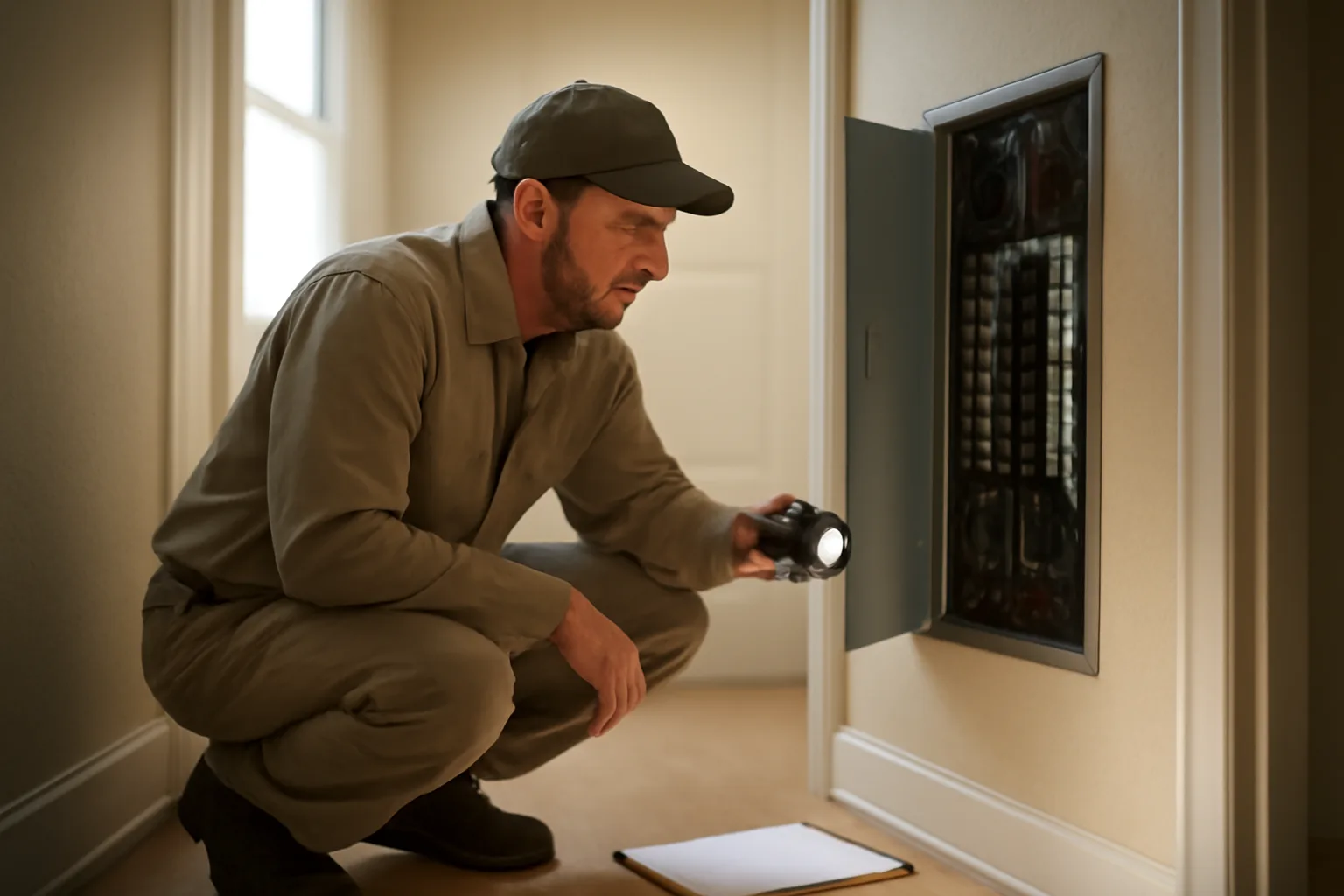
A rental inspection checklist is the list of physical conditions a city inspector checks against local housing and property maintenance code before issuing or renewing a rental license. Most cities that require rental licensing base their checklist on some version of the International Property Maintenance Code (IPMC), which many states and cities adopt directly or adapt into their own municipal code [1]. The core categories repeat across almost every city program, even though the fine print differs. Expect an inspector to check: smoke alarms and carbon monoxide detectors (working, correctly placed, often within 10 feet of bedroom doors), electrical (no exposed wiring, no overloaded panels, GFCI outlets near water sources), plumbing (no active leaks, water heater has a working temperature-pressure relief valve, adequate water pressure), heating (a working permanent heat source, sometimes with a minimum temperature standard like 68°F), structural items (handrails on stairs with more than a few steps, secure railings, no rotted decking), egress (every bedroom needs a window or door that opens directly to the outside, meeting minimum size requirements), and general sanitation (no pest infestation, no accumulated trash, functioning locks on all exterior doors). Some cities add extras: window screens in warm months, a minimum number of electrical outlets per room, exterior paint condition, or proof that a lead-based paint disclosure was given if the building predates 1978 (this is a federal requirement, more than a local one, under 42 U.S.C. § 4852d) [2]. Here's the thing nobody tells first-time landlords: the checklist that actually gets used on inspection day is rarely a state-level document. It is your specific city's adapted version. Milwaukee's list is not Minneapolis's list. Both borrow structure from IPMC but tweak details, fees, and cycle length. Always pull the current checklist PDF or form from your own city's rental licensing office before the inspector shows up, because relying on a generic list found online is how people get flagged for something they never expected.
how do i find my city's actual inspection checklist?
Start with your city's rental licensing, code enforcement, or building inspections department page, since that is where the current checklist form usually lives as a downloadable PDF. Search '[your city name] rental license inspection checklist' and look for a .gov or city domain result rather than a third-party blog. If you can't find one online, call the code enforcement or rental licensing office directly and ask for the checklist used for your property's occupancy type (single-family, duplex, multi-unit). Some cities use different checklists for owner-occupied duplexes versus fully rented buildings, and some have a shorter form for properties that passed cleanly on the last two cycles. Once you have the real checklist, walk the unit yourself using it, room by room, before the official date. This single habit prevents most failed inspections. If you want a structured starting point while you track down your specific city's document, a City Rental License & Inspection Prep Packet built around common IPMC-based categories can save you the first few hours of guessing, though it's still a supplement to, not a replacement for, your city's actual checklist.
what can a landlord look at during an inspection?
A landlord conducting a routine walkthrough (as opposed to the city's official inspector) can generally look at the same physical condition items: smoke detector function, visible leaks, appliance condition, signs of unauthorized occupants or pets, and obvious lease violations like unapproved modifications. What a landlord cannot do is use the inspection as cover to search personal belongings, open closed drawers or containers, or photograph the tenant's possessions beyond what's needed to document a maintenance issue. The legal boundary comes from each state's landlord-tenant statute governing entry, not from a national standard. California, for example, allows landlord entry for specific purposes including 'to make necessary or agreed repairs' and requires 'reasonable notice in writing,' which the statute presumes is 24 hours unless circumstances indicate otherwise (California Civil Code § 1954) [3]. During a compliance-driven inspection tied to a rental license renewal, the landlord's job is narrower: confirm the items the city checklist covers are in working order, not conduct a general search. If a tenant has personal clutter blocking an outlet or window, the landlord can ask them to clear it before the inspection date but can't move or handle personal property without permission in most states.
who is responsible for a rental property walk-through inspection in california?
In California, the landlord is responsible for arranging entry inspections, but state law puts a specific process around one type: the pre-move-out inspection. Under California Civil Code § 1950.5(f), a landlord must, upon request or per the statute's default, offer the tenant an initial inspection before the tenant moves out, giving the tenant a chance to fix deficiencies before the final deposit deduction happens [4]. The landlord must give at least 48 hours' written notice before that initial inspection, and the tenant has the right to be present. After the walkthrough, the landlord provides an itemized statement of any needed repairs or cleaning that could affect the security deposit. This is separate from any city or county rental licensing inspection some California jurisdictions require. Los Angeles, Oakland, and Berkeley all run their own rental registration and habitability inspection programs on top of state deposit law. So the honest answer is: the landlord holds responsibility for scheduling and documenting the walkthrough, but California law builds in specific tenant rights around timing and presence that don't exist in every state. If your property sits in a California city with its own licensing program, check that city's rental registry rules separately, since the pre-move-out inspection statute and the city inspection are two different obligations running in parallel.
how much notice does a landlord have to give before an inspection?
Most states require somewhere between 24 and 48 hours written notice before a landlord or their agent enters an occupied unit for a non-emergency reason, including a routine inspection. California defaults to 24 hours under Civil Code § 1954, unless the entry is for the pre-move-out inspection, which requires 48 hours under § 1950.5(f) [3][4]. Florida requires landlords to give tenants 'reasonable notice,' and the statute treats 12 hours as presumptively reasonable for the purpose of repairs (Florida Statutes § 83.53) [5]. There is real variation here, and no single federal rule sets entry notice nationally. Some states don't specify a number of hours at all and simply require 'reasonable notice,' leaving the term open to dispute. Emergencies are the universal exception: fire, flooding, gas leak, or immediate safety hazard lets a landlord enter without advance notice in essentially every state. For a city-mandated rental licensing inspection specifically, the notice requirement usually comes from two overlapping sources: your state's general landlord-entry statute, and the city's own inspection scheduling process (which typically mails or emails a scheduled date weeks in advance, giving far more than the statutory minimum). Always send inspection notice in writing, keep a copy or a timestamped email, and never rely on a verbal heads-up if you can help it. If a tenant disputes access later, the written notice is your only real proof.
what a landlord cannot do in ohio
Ohio landlord-tenant law, under Ohio Revised Code § 5321.04, requires landlords to keep the premises fit and habitable, but it also limits how and when they can enter. Ohio Revised Code § 5321.05 sets tenant obligations while § 5321.04 lays out landlord duties; the entry rules come primarily from case law and lease terms since Ohio's statute does not spell out a specific notice-hours number the way California's does [6]. What an Ohio landlord cannot do: enter without reasonable notice except in an emergency, use entry as harassment (repeated unnecessary visits can constitute a violation of the covenant of quiet enjoyment), shut off utilities to force a tenant out, remove a tenant's belongings or change the locks without a court order (Ohio requires a formal eviction process through municipal or county court, not self-help eviction), or retaliate against a tenant for reporting a code violation. Ohio Revised Code § 5321.02 specifically prohibits retaliatory conduct, including raising rent or terminating a tenancy, within a defined period after a tenant complains to a government agency about a housing code violation [7]. Ohio also does not let a landlord skip habitability repairs and instead simply not renew a lease as retaliation once a formal complaint or inspection request is on record, within the statute's protected window. If you're a landlord in an Ohio city with its own rental registration program, this applies to you directly: Cincinnati and Cleveland both have local rental registration and inspection requirements layered on top of state law, and the city's checklist and notice rules apply in addition to, not instead of, the state statute.
why do landlords require renters insurance?
Landlords require renters insurance mainly to shift liability and personal property risk away from the landlord's own policy. A landlord's dwelling insurance covers the building structure, but it generally does not cover a tenant's personal belongings if there's a fire, burst pipe, or theft, and it may not adequately cover a liability claim if a tenant's guest is injured inside the unit. Requiring renters insurance, often with a minimum liability coverage amount (commonly $100,000, sometimes higher) and the landlord named as an 'interested party' or additional insured, gives the landlord a documented layer of protection if a tenant's negligence causes damage, like an unattended stove fire or an overflowing bathtub that damages the unit below. The Insurance Information Institute notes that the average renters insurance policy costs a few hundred dollars a year, making it a low-friction lease requirement for most tenants [8]. This isn't universal law. Whether a landlord can require renters insurance as a lease condition depends on the state and, in rent-controlled or rent-stabilized jurisdictions, sometimes on local rules about what can be added to a lease. Most states do allow it as a standard lease term. It's not something a rental licensing inspection checks directly, but plenty of landlords fold the requirement into their lease alongside compliance items because it reduces the landlord's own financial exposure between inspection cycles.
how to become a landlord (and what licensing actually requires)
Becoming a landlord legally means more than buying a property and finding a tenant. In any city with mandatory rental licensing, you need to register the property with the city (sometimes called rental registration, sometimes a rental license), pay an initial fee, pass an inspection on the schedule the city sets (commonly every one to three years, though this varies widely), and keep the registration current whenever ownership or occupancy changes. Before you list a unit, check whether your city or county has a rental licensing program at all. Not every city does. Where a program exists, expect a process roughly like this: submit an application (often online) with property details and owner contact information, pay a fee that can run anywhere from under $50 to several hundred dollars depending on the city and number of units (confirm with your city rental licensing office for your exact fee), schedule and pass an initial inspection, and then renew on the city's set cycle. Beyond the licensing step, becoming a landlord practically means understanding your state's landlord-tenant statute (security deposit limits and return timelines, notice-to-enter rules, habitability duties), getting proper insurance (a landlord/dwelling policy, distinct from a homeowner's policy), screening tenants within Fair Housing Act limits (42 U.S.C. § 3601 et seq., which prohibits discrimination based on race, color, national origin, religion, sex, familial status, or disability) , and setting up a system for rent collection, maintenance requests, and recordkeeping. A lot of new landlords skip the licensing step entirely because they don't know it exists in their city until a neighbor complaint or a routine city sweep triggers a notice. That notice often comes with a fine already attached. If you're just starting out, check your city's rental licensing requirement before you ever advertise the unit, not after.
what is landlording, and what is a landlord, exactly?
Landlording is the ongoing work of owning and managing rental property: finding tenants, maintaining habitability, collecting rent, handling repairs, keeping up with local licensing, and managing the legal relationship defined by a lease. It is distinct from simply owning real estate, because a landlord takes on active statutory duties the moment a tenant moves in. A landlord, legally, is the party who owns or controls a rental property and leases it to a tenant in exchange for rent, taking on the duties set by state landlord-tenant law and, often, local housing code. Most state statutes define the landlord's core duties around habitability (keeping the unit fit to live in), and Ohio's version is fairly typical: Ohio Revised Code § 5321.04 requires the landlord to 'comply with the requirements of all applicable building, housing, health, and safety codes' and to 'keep all common areas of the premises in a safe and sanitary condition' [6]. A single-property owner renting out a former primary residence and someone managing ten units across a city are both landlords under the same legal definition. Size doesn't change your statutory duties, though it often changes which local licensing tier you fall into, since many cities tier fees or inspection frequency by unit count.
what rights do tenants have without a lease?
A tenant without a written lease still has rights, because most landlord-tenant protections come from state statute, not from the lease document itself. Someone renting month-to-month without a signed lease, or living somewhere on a verbal agreement, is generally treated as a periodic tenant (usually month-to-month) under state law, and that status carries real protections. A tenant without a lease typically still has the right to: habitable living conditions (heat, water, working plumbing, no serious code violations), advance notice before the landlord can enter for non-emergency reasons, a formal eviction process rather than a lockout or utility shutoff (nearly every state prohibits self-help eviction), and, in many states, a defined notice period before the tenancy can be ended (commonly 30 days for month-to-month, though this varies by state and sometimes by how long the tenant has lived there). What a tenant without a lease usually loses is the certainty a lease term provides: a landlord can typically end a month-to-month tenancy with proper notice for almost any non-discriminatory reason, whereas a fixed-term lease locks in the rent and terms until the lease expires. If you're operating with verbal agreements only, understand that you still owe the tenant every habitability and notice right your state statute requires. Lack of a written lease doesn't reduce a landlord's legal obligations; it just makes the terms harder to prove if there's a dispute. For readers researching tenant rights or renters rights more broadly, the absence of a written lease is rarely the deciding factor in what protections apply.
sample inspection checklist by category
| Category | Common check items | Typical code basis | |
|---|---|---|---|
| Smoke/CO alarms | Present in each bedroom and hallway, tested working, battery or hardwired per local rule | IPMC-based city code [1] | |
| Egress | Bedroom window opens to outside, meets minimum opening size, no security bars without release mechanism | IPMC-based city code [1] | |
| Electrical | No exposed wiring, GFCI near water sources, no overloaded extension cord use as permanent wiring | IPMC-based city code [1] | |
| Plumbing | No active leaks, water heater relief valve present, adequate hot water | IPMC-based city code [1] | |
| Heating | Permanent heat source functional, minimum indoor temperature standard | Local housing code, varies by city | |
| Structural | Handrails on stairs, secure railings, no rot or collapse risk on decks/porches | IPMC-based city code [1] | |
| Pest/sanitation | No active infestation, no accumulated trash, working exterior door locks | Local housing code, varies by city | |
| Lead paint disclosure | Disclosure form on file for pre-1978 buildings | 42 U.S.C. § 4852d [2] | This table reflects the categories that recur across most city checklists, but treat it as a starting map, not your final answer. Confirm the exact checklist, fee, and notice period with your city rental licensing office, since line items, thresholds (like the minimum indoor temperature standard, which can range from 65°F to 68°F depending on the city), and required documentation differ by jurisdiction. |
how to be a landlord day to day (beyond the inspection)
Passing the inspection is a milestone, not the whole job. Day-to-day landlording means responding to maintenance requests promptly (many states set a reasonable timeframe for urgent repairs like no heat or no water, sometimes codified, sometimes left to 'reasonable' standards), keeping the security deposit in whatever form your state requires (some states mandate a separate escrow account and interest payment), and documenting everything: repair requests, entry notices, inspection results, and communications with the tenant. Recordkeeping matters more than most new landlords expect. If a tenant disputes a deposit deduction, a habitability complaint escalates to code enforcement, or your city's inspection turns up a violation, your paper trail (photos with timestamps, written notices, repair invoices) is what protects you. A single missed smoke detector at inspection is a fix. A pattern of undocumented neglect is a liability problem. Budget for the licensing cycle itself, too. Beyond the inspection fee, factor in the cost of fixing whatever the inspector flags (a broken GFCI outlet or a missing handrail is cheap; egress window retrofits or electrical panel upgrades are not), and the time cost of scheduling reinspections if you fail the first pass. If you're managing this process for the first time in a new city, a City Rental License & Inspection Prep Packet can help you organize the paperwork and pre-check the common failure points before your city's inspector arrives, though it doesn't replace confirming your specific city's requirements directly.
Frequently asked questions
What is the most common reason rental inspections fail?
Missing or non-functional smoke detectors is one of the most frequently cited failure points across city rental inspection programs, along with plumbing leaks, blocked egress windows, and non-functioning locks on exterior doors. Most of these are quick, inexpensive fixes if caught during a landlord's own pre-inspection walkthrough using the city's actual checklist.
How often do cities require rental inspections?
It varies widely: some cities inspect every year, others every two or three years, and some only inspect on a complaint basis or when ownership changes. Confirm your city's specific inspection cycle with its rental licensing office, since there is no single national standard and cycles can also depend on a property's pass/fail history.
Can a landlord enter without notice for an inspection?
Generally no, except in a genuine emergency like fire, flooding, or a gas leak. Most states require 24 to 48 hours written notice for routine entry, including landlord walkthroughs (California defaults to 24 hours under Civil Code § 1954, and 48 hours for the pre-move-out inspection under § 1950.5(f)).
Do tenants have to be present for a rental license inspection?
It depends on the city and the type of inspection. Some cities inspect vacant units between tenancies without any tenant present, while occupied-unit inspections often happen with the tenant home, though some cities allow the landlord to grant access if the tenant can't attend. Check your city's specific policy.
What happens if a rental property fails inspection?
Most cities issue a list of violations with a deadline (often 30 to 90 days) to fix them, followed by a reinspection, sometimes for an additional fee. Unresolved violations can lead to fines, a suspended or denied rental license, and in serious habitability cases, formal code enforcement action.
How much does a rental inspection cost?
Fees vary enormously by city, from under $50 to several hundred dollars per unit, and some cities charge separately for the initial inspection versus reinspections after a failed visit. There is no national average worth quoting; confirm the fee schedule with your specific city's rental licensing office.
What can a landlord look at during an inspection?
A landlord can check the same physical safety and maintenance conditions a city inspector checks: smoke detectors, leaks, appliance condition, and signs of lease violations. A landlord generally cannot search personal belongings, open closed containers, or use the inspection to conduct a broader search unrelated to habitability or maintenance.
What a landlord cannot do in Ohio during an inspection or entry?
Ohio landlords cannot enter without reasonable notice except in an emergency, cannot use entry to harass a tenant, cannot shut off utilities or change locks to force someone out, and cannot retaliate against a tenant for reporting a code violation, per Ohio Revised Code §§ 5321.02 and 5321.04.
Who is responsible for the rental property walk-through inspection in California?
The landlord is responsible for scheduling it, but California Civil Code § 1950.5(f) gives tenants the right to request a pre-move-out inspection with at least 48 hours notice, and to be present. Separately, some California cities run their own rental registration and inspection programs on top of this state deposit law.
Why do landlords require renters insurance if the building is already insured?
A landlord's own dwelling policy typically doesn't cover a tenant's personal belongings or certain liability claims arising from the tenant's own negligence. Requiring renters insurance, often with a minimum liability amount, shifts that risk to the tenant's policy instead of exposing the landlord's coverage or out-of-pocket funds.
How much notice does a landlord have to give before an inspection or entry?
Typically 24 to 48 hours written notice for non-emergency entry, though the exact number depends on your state statute. California requires 24 hours generally and 48 hours for the pre-move-out inspection; Florida treats 12 hours as reasonable for repair-related entry under Florida Statutes § 83.53.
What rights do tenants have without a lease?
A tenant without a written lease is usually treated as a month-to-month tenant under state law and keeps core protections: habitable conditions, advance notice before entry, a formal eviction process instead of a lockout, and typically a defined notice period (often 30 days) before the tenancy can end.
How to become a landlord if my city requires rental licensing?
Register the property with your city's rental licensing office, pay the required fee, pass the initial inspection, and understand your state's landlord-tenant statute on deposits, notice, and habitability before you list the unit. Skipping the licensing step is one of the most common ways new landlords end up with an unexpected fine.
Sources
- U.S. Code, 42 U.S.C. § 4852d: Federal law requires lead-based paint disclosure for pre-1978 housing
- California Legislative Information, Civil Code § 1954: California requires reasonable written notice, presumed 24 hours, before landlord entry
- California Legislative Information, Civil Code § 1950.5: California requires a pre-move-out inspection with at least 48 hours notice upon tenant request
- Florida Legislature, Florida Statutes § 83.53: Florida treats 12 hours notice as reasonable for landlord entry to make repairs
- Ohio Legislature, Ohio Revised Code § 5321.04: Ohio landlords must comply with applicable housing codes and keep common areas safe and sanitary
- Ohio Legislature, Ohio Revised Code § 5321.02: Ohio prohibits landlord retaliation against tenants who report code violations
- Insurance Information Institute, Renters Insurance facts and statistics: Average renters insurance policy costs a few hundred dollars per year
- U.S. Department of Justice, Fair Housing Act overview: The Fair Housing Act prohibits discrimination based on race, color, national origin, religion, sex, familial status, or disability