Last updated 2026-07-26
TL;DR
Port Huron requires landlords to register rental property and pass a city inspection to get a Certificate of Compliance before renting. Inspections typically check smoke and CO detectors, electrical, plumbing, egress windows, and structural safety. Confirm current fees, cycle length, and application forms with the Port Huron rental inspection or code enforcement office directly, since these details change.
Does the city of Port Huron require rental inspections?
Yes. Port Huron runs a rental housing inspection program under its property maintenance and housing code, and landlords generally need a Certificate of Compliance (sometimes called a rental certificate or rental license) before a unit can be legally occupied by a tenant. This is standard practice across Michigan municipalities that have opted into local rental regulation on top of the statewide Housing Law of Michigan (MCL 125.401 et seq.), which lets cities adopt and enforce housing and property maintenance codes [1]. The exact mechanics, which department handles it, what the fee is, how often re-inspection happens, vary by ordinance and get updated periodically. Don't rely on a blog post or an old PDF you found through search. Call the city's code enforcement or building department and ask directly what applies to your address today. Ordinances get amended, fee schedules get revised, and enforcement priorities shift with staffing and budget. What you can count on: if Port Huron has a mandatory rental registration or licensing program, renting out a unit without going through it typically exposes you to fines, and in some cases can complicate eviction proceedings if a judge asks whether the rental was properly licensed. That's true in a lot of Michigan cities with rental codes on the books.
What does the Port Huron rental inspection actually check?
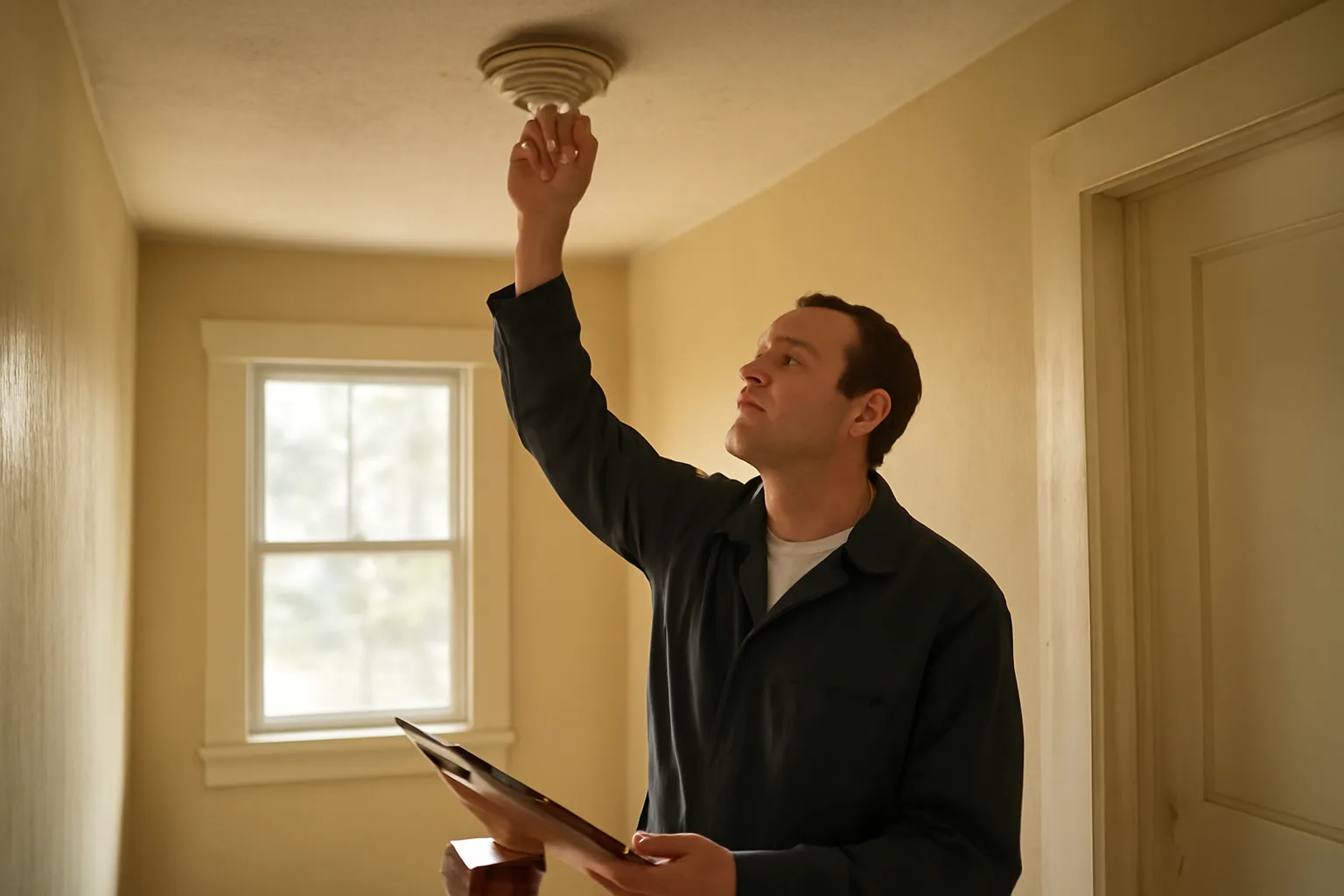
Most Michigan municipal rental inspections, including programs modeled on the state's adopted property maintenance code, focus on life safety and basic habitability rather than cosmetic condition. Expect the inspector to look at: - Working smoke alarms in the right locations (typically outside sleeping areas and on every level), and carbon monoxide alarms near fuel-burning appliances or attached garages, consistent with Michigan's smoke alarm requirements under MCL 125.1504a [2]
- Electrical panels, exposed wiring, and outlet condition, checking for overloaded circuits or unsafe DIY work
- Plumbing function, water heater venting and temperature/pressure relief valve, and visible leaks
- Furnace and venting condition, since carbon monoxide risk is a top inspection priority in Michigan winters
- Egress windows in bedrooms, meeting minimum size and operability standards so occupants can escape a fire
- Structural items: stair railings, guardrails, porch and deck condition, foundation issues
- Exterior conditions: roof condition, peeling exterior paint (especially relevant for pre-1978 housing due to lead paint rules), gutters, and general property maintenance
- Interior general condition: working locks, no significant pest evidence, functioning heat source Inspectors are generally not grading your paint job or judging your décor. They're checking whether the unit is safe to occupy. That said, standards do vary by inspector and by city, and Port Huron's own checklist may have items specific to its adopted code. Ask the rental inspection office for their actual checklist before your appointment. Most cities will hand it over or post it, and walking in blind is how people fail avoidable items.
How do I register a rental property in Port Huron?
The general pattern in Michigan cities with rental programs looks like this: you file a rental registration or license application (often per property or per unit), pay a fee, and the city schedules an inspection, sometimes on request, sometimes on a rotating cycle. Some cities require a local point of contact or property manager if you live out of the area. Because Port Huron's specific application, portal, and fee amount can change year to year, confirm with your city rental licensing office for the current application form, whether it's submitted online or in person, and what the fee is before you plan a budget. Don't guess at a number and put it in a lease or a spreadsheet; call and get it in writing. If you own multiple units in Port Huron, ask whether the city licenses per-property or per-building, because that affects your total fee and paperwork load. Also ask about the renewal cycle: many Michigan cities issue certificates for one to three years, with re-inspection required at each renewal. If you're building a compliance file to speed up your own registration and inspection prep, our $79 Rental License & Inspection Prep Packet gives you a walkthrough checklist and document organizer built around what most city inspection programs ask for, so you're not scrambling the week before your appointment.
What happens if I skip the rental inspection or let my license lapse?
Cities enforce mandatory rental programs mainly through fines and, in worse cases, orders to vacate a non-compliant unit. Under Michigan's Housing Law framework, municipalities can issue civil infraction citations for property maintenance code violations, and repeated or serious violations can escalate to municipal civil infraction fines set by local ordinance [1]. The real cost isn't usually the first ticket. It's the compounding effect: a stop-rent order, a delayed lease renewal, or a judge in an eviction case asking your attorney whether the unit was licensed at all. In several Michigan jurisdictions, courts have looked skeptically at eviction actions brought against tenants in unlicensed rental units, since local ordinances sometimes tie code compliance to a landlord's standing to collect rent or evict. Whether that applies in Port Huron specifically depends on the current local ordinance language, so this is exactly the kind of thing to ask the city attorney's office or your own attorney about before you're in a dispute. If your inspection turns up violations, most cities give a correction period, often 30 to 90 days depending on severity, life-safety items usually get shorter windows, before assessing fines or scheduling a re-inspection fee. Ask what Port Huron's specific correction and re-inspection fee structure looks like, since that's another detail that shifts with ordinance updates.
What can a landlord look at during an inspection?
A landlord conducting their own routine inspection (separate from the city's compliance inspection) can generally check anything related to the unit's condition and the tenant's compliance with the lease: general cleanliness and maintenance, evidence of unauthorized pets, unauthorized occupants, safety hazards, signs of damage beyond normal wear and tear, smoke detector function, and filter or HVAC maintenance. A landlord generally cannot use a routine inspection as a pretext to search through personal belongings, open drawers or closets unrelated to a maintenance issue, or show up without proper notice except in a genuine emergency. Michigan law doesn't have one single statute spelling out a notice period for routine landlord entry the way some states do (see below on notice), so this mostly comes down to lease terms and general reasonableness standards, plus any local ordinance requirements. Good practice, regardless of what the lease technically allows: give written notice, state the purpose, keep the visit during reasonable daytime hours, and don't linger longer than the stated purpose requires. If you're inspecting because of a maintenance complaint, document what you see with photos and timestamps. If you're inspecting for a city compliance check, the tenant should still get notice, and in most cities the city inspector, not the landlord, actually enters and evaluates the unit.
How much notice does a landlord have to give before entering a unit?
This depends heavily on your state and even your city. Michigan doesn't have a single statewide statute mandating a specific number of hours or days of notice for landlord entry into an occupied rental for non-emergency purposes; instead, it's typically governed by the lease agreement and general common-law reasonableness. Many Michigan leases specify 24 hours' written notice as a standard, and that's a reasonable default if your lease is silent, but it's a contractual convention, not a hard statutory floor in every case. Other states are much more explicit. California, for example, requires "reasonable notice," which state law presumes to be 24 hours in writing for most non-emergency entries, under California Civil Code Section 1954 [3]. If you own property in more than one state, don't assume the rule that applies in one place applies in another; check the specific statute or your specific city's ordinance. Emergencies are the standard exception everywhere: fire, flooding, gas leak, or another situation threatening life or property generally lets a landlord enter without advance notice. But "I wanted to check on things" or "I was in the neighborhood" isn't an emergency, and using that logic to justify a surprise visit is a fast way to damage trust with a tenant and potentially violate your own lease terms.
Who is responsible for the rental property walkthrough inspection in California?
This question comes up a lot because California has one of the more detailed statutory frameworks for move-in and move-out inspections, and landlords elsewhere sometimes assume it's the national standard. It isn't, but it's worth understanding since it shows how much more explicit some states are than Michigan. Under California Civil Code Section 1950.5, the landlord is responsible for offering the tenant an initial move-out inspection before the tenant vacates, generally described as occurring "at a time no earlier than two weeks before the termination" of the tenancy, to give the tenant a chance to fix deficiencies before final deposit deductions [4]. The landlord (or their agent) actually conducts the inspection, documents findings, and gives the tenant an itemized statement of proposed deductions. That's a very different structure from a city rental license inspection, which is done by a government building or code inspector, not the landlord, and is about code compliance, not deposit deductions. If you're operating in a mandatory rental licensing city like Port Huron, you're dealing with both types potentially: your own lease-related walkthroughs, and the separate compliance inspection the city itself performs.
What is landlording, and what is a landlord?
A landlord is a person or entity that owns residential or commercial property and rents it to another party (the tenant) in exchange for regular payment, usually under a lease agreement. "Landlording" is the informal term for the actual work of managing that relationship and the property: collecting rent, handling maintenance requests, following local housing codes, managing turnover, and staying compliant with landlord-tenant law. It's a real skill set, even for someone with one unit. You're part property manager, part bookkeeper, part compliance officer. The compliance side is where a lot of small landlords get tripped up, not because they're careless, but because nobody hands you a manual when you buy your first rental. City rental registration and inspection requirements, like Port Huron's, are one of the more concrete, deadline-driven pieces of that compliance load, which is why missing a notice or a renewal date is one of the most common (and avoidable) landlord mistakes. If you're renting out property for the first time, understanding your state's landlord-tenant statute is the starting point. Michigan's framework sits mainly in the Truth in Renting Act (MCL 554.634) and related landlord-tenant provisions, alongside local housing and property maintenance ordinances like Port Huron's [5].
How do you become a landlord, step by step?
There's no license required to simply be a landlord in most states, but there's a real checklist if you want to do it correctly and avoid fines or lawsuits. 1. Confirm zoning allows rental use for your property type (single-family vs. multi-family rules differ). 2. Register the property with your city if required. In Port Huron and similar Michigan municipalities, this usually means applying for a rental certificate before you can legally rent. 3. Pass the required inspection, or schedule and complete any corrections flagged. 4. Get landlord liability insurance (a standard homeowner's policy usually won't cover a tenanted rental; you need a dwelling/landlord policy). 5. Draft or obtain a lease compliant with your state's landlord-tenant law, covering security deposit limits, notice periods, and disclosures (lead paint disclosure is federally required for pre-1978 housing under 42 U.S.C. § 4852d [6]). 6. Screen tenants consistently and legally under the Fair Housing Act, avoiding any criteria tied to protected classes . 7. Set up rent collection, a maintenance request process, and a system for tracking your license renewal and inspection dates going forward. Step 2 and 3 are exactly where a city like Port Huron's program comes in, and they're also the two steps first-time landlords most often underestimate on time. Inspection scheduling can take weeks, not days, especially in cities with a backlog or a small inspection staff.
Why do landlords require renters insurance?
Renters insurance covers the tenant's personal belongings and provides liability coverage if the tenant causes damage or an injury happens in the unit that isn't the landlord's fault. A landlord's own property insurance covers the building structure, not the tenant's furniture, electronics, or clothing, and it generally doesn't cover a tenant's personal liability if, say, their dog bites a visitor or they accidentally start a stovetop fire that damages a neighboring unit. Requiring renters insurance, when your lease and state law allow it, shifts some financial risk away from the landlord. If a tenant's negligence causes damage, having their own liability policy in place means their insurer, more than your landlord policy (and your deductible), absorbs part of the cost. Many landlords set a minimum liability coverage amount, commonly in the $100,000 range, though there's no single national standard figure and it's ultimately a business decision, not a legal mandate in most states. This isn't a substitute for your own landlord/dwelling policy. You still need coverage for the structure itself, loss of rental income, and your own liability exposure as the property owner.
What rights do tenants have without a lease?
A tenant without a written lease, often called a tenant-at-will or month-to-month tenant depending on the state, still has real legal protections. They generally retain the right to a habitable unit, protection from illegal lockouts or utility shutoffs, and the right to proper notice before the landlord can end the tenancy or raise rent, even though the specific terms weren't written down. In most states, an oral or implied rental agreement is still legally binding, it's just harder to prove specific terms in a dispute. Notice requirements for ending a no-lease tenancy typically follow default state statute rather than a written agreement; many states require 30 days' notice for month-to-month tenancies without a lease, though some require less or more depending on how long the tenant has lived there. What a tenant without a lease does NOT automatically have: guaranteed renewal, a locked-in rent amount, or protection from a landlord ending the tenancy with proper notice for no stated reason (in states that allow no-cause terminations for month-to-month tenants). If you're a landlord operating without written leases, that's a risk on your side too. Verbal agreements are harder for you to enforce as well, and most attorneys will tell you a written lease protects both parties better than relying on state default rules alone.
What can't a landlord do in Ohio?
Ohio's landlord-tenant law, primarily Ohio Revised Code Chapter 5321, sets specific limits on landlord conduct. A landlord in Ohio cannot shut off utilities, change locks, or remove a tenant's belongings to force them out without going through the formal eviction process in court, this is commonly called a "self-help eviction" and it's illegal in Ohio as in most states . Ohio law also requires landlords to give reasonable notice, generally 24 hours, before entering an occupied unit for non-emergency purposes, per ORC 5321.04's requirement that tenants have the right to expect their landlord will provide reasonable notice before entry, except in emergencies . A landlord also cannot retaliate against a tenant for reporting code violations or exercising a legal right, and cannot discriminate based on the protected classes covered by the federal Fair Housing Act . Ohio landlords are also bound by security deposit rules: under ORC 5321.16, a landlord who fails to return a deposit or provide an itemized list of deductions within 30 days of move-out, when required, can be liable for damages including the amount wrongfully withheld . This is one of the more litigated areas of Ohio landlord-tenant law, and it's a good example of why small landlords in any state should read their own state statute directly instead of relying on general advice, since deposit timelines and penalty structures vary widely state to state.
How does Port Huron's program compare to other Michigan cities?
| Initial registration fee | Roughly $25 to $150 per unit, varies widely by city | |
|---|---|---|
| Inspection cycle | Every 1 to 3 years, or on tenant turnover | |
| Re-inspection fee (after failed inspection) | Often $25 to $100 | |
| Correction period for violations | Commonly 30 to 90 days, shorter for life-safety issues | |
| Smoke/CO alarm requirement | Statewide baseline under MCL 125.1504a [2] | If you own units in more than one Michigan city, don't assume the rules transfer. A certificate from one city doesn't cover a property in another, and fee schedules are set locally, not by the state. |
Mandatory rental registration and inspection is common across Michigan's larger and mid-size cities, not unique to Port Huron. Detroit, Lansing, Grand Rapids, Kalamazoo, and Ann Arbor all run some version of a rental certification or inspection program, generally under authority granted by the state Housing Law and each city's own housing or property maintenance ordinance [1]. What varies most from city to city: inspection frequency (some cities inspect every unit before initial rental and then every 1-3 years; others inspect on complaint or turnover), fee structure (flat per-unit fees are common, but some cities scale by number of bedrooms or building size), and whether a self-certification option exists for owner-occupied duplexes or small buildings. Here's a general comparison of what to expect across typical Michigan rental inspection programs, though you should confirm Port Huron's actual figures with the city directly: | Feature | Typical range across Michigan cities |
How should I prepare for a Port Huron rental inspection appointment?
Walk the unit yourself first, ideally a week or two before the scheduled inspection, using whatever checklist the city provides. Test every smoke and CO alarm, check that windows in bedrooms actually open and aren't painted shut, and look at your electrical panel for anything an inspector would flag, double-tapped breakers, missing panel covers, exposed splices. Check your water heater's temperature and pressure relief valve and its discharge pipe, confirm the furnace has been serviced recently (some cities want to see a receipt), and look at exterior paint condition if the property was built before 1978, since chipping or peeling paint on older housing raises lead paint concerns under federal disclosure and abatement rules [6]. Give your tenant proper notice before the inspection date, and be upfront that a city inspector, not you, will be walking through. If your tenant has pets, unauthorized occupants, or a cluttered unit, address what you reasonably can beforehand, since a chaotic unit can also slow down or complicate an inspection even when the underlying safety items are fine. If you want a structured way to get all of this organized before your appointment, especially if you're juggling multiple properties or you're new to a mandatory-inspection city, our $79 Rental License & Inspection Prep Packet walks through the standard checklist categories and helps you build a document file (insurance, lease, prior inspection reports) that a lot of city inspection offices ask to see anyway.
Frequently asked questions
Does Port Huron require a rental license for a single-family home?
Most Michigan cities with rental inspection programs, including those modeled on the state Housing Law, apply the requirement to any residential unit rented to a non-owner, single-family included. Whether Port Huron currently exempts owner-occupied duplexes or small properties changes by ordinance, so confirm directly with the city's rental licensing or code enforcement office before assuming an exemption applies to you.
How long does a Port Huron rental certificate stay valid?
Michigan cities typically issue rental certificates for one to three years before requiring renewal and re-inspection, but the exact cycle is set locally and gets updated by ordinance amendment. Ask the city's rental inspection office for the current renewal period tied to your specific certificate or property type.
What happens if my rental fails the city inspection?
You'll typically get a written list of violations and a correction period, often 30 to 90 days depending on severity, with life-safety issues like missing smoke alarms given shorter deadlines. After corrections, the city usually schedules a re-inspection, sometimes for an added fee. Confirm Port Huron's specific correction window and re-inspection fee with the code enforcement office.
Can I rent my unit while waiting for the inspection to be scheduled?
In most mandatory-licensing cities, no. You generally need the Certificate of Compliance in hand, meaning the inspection passed, before legally occupying the unit with a tenant. Renting before certification typically violates the local ordinance and can expose you to fines. Ask the city directly whether provisional occupancy is ever allowed.
How to become a landlord if I've never rented property before?
Confirm zoning allows rental use, register with your city if required (as Port Huron does), pass any required inspection, get landlord/dwelling insurance, use a lease compliant with your state's landlord-tenant statute, screen tenants under Fair Housing Act standards, and set up a system to track renewal and inspection deadlines going forward.
What is a landlord, legally speaking?
A landlord is the owner of real property who leases it to a tenant in exchange for rent, taking on legal obligations around habitability, notice, security deposits, and fair housing compliance defined by state statute and, in cities like Port Huron, local rental licensing ordinances.
Who is responsible for the rental walkthrough inspection in California?
The landlord is responsible for offering an initial move-out inspection under California Civil Code Section 1950.5, generally conducted no earlier than two weeks before the tenancy ends, so the tenant can address issues before final deposit deductions. The landlord or their agent performs it, not a government inspector.
How much notice does a landlord have to give before entering a rental unit?
It depends on the state. Michigan generally defers to lease terms and reasonableness rather than a fixed statutory number, though 24 hours' written notice is a common lease standard. Ohio requires reasonable notice, generally treated as 24 hours, under ORC 5321.04. California presumes 24 hours' written notice under Civil Code Section 1954.
What can a landlord look at during a routine inspection?
A landlord can generally check for maintenance issues, safety hazards, smoke alarm function, unauthorized pets or occupants, and lease compliance. A landlord generally should not search personal belongings unrelated to a maintenance concern or enter without proper notice outside a genuine emergency.
What can't a landlord do in Ohio?
Under Ohio Revised Code Chapter 5321, a landlord can't perform a self-help eviction (shutting off utilities, changing locks, removing belongings without a court order), can't skip reasonable entry notice, can't retaliate against a tenant for reporting violations, and can't withhold a security deposit itemization beyond 30 days without facing potential liability.
Do I need renters insurance requirements written into my lease?
It's a common and reasonable landlord practice, though not a legal requirement in most states. Requiring renters insurance shifts liability and personal property risk to the tenant's policy rather than leaving it entirely on your landlord/dwelling coverage. Check your state and local rules before setting a specific required coverage amount.
What rights does a tenant have without a signed lease?
A tenant without a written lease still generally has the right to a habitable unit, protection from illegal lockouts, and proper notice before eviction or rent increases under state default landlord-tenant law. They typically don't have guaranteed renewal or a locked rent amount the way a written lease term would provide.
Sources
- California Legislative Information, Civil Code Section 1954: California presumes 24 hours' written notice as reasonable for landlord entry
- California Legislative Information, Civil Code Section 1950.5: Landlord must offer initial move-out inspection no earlier than two weeks before tenancy termination
- U.S. Code, 42 U.S.C. 4852d: Federal lead paint disclosure requirement for pre-1978 housing
- U.S. Department of Housing and Urban Development, Fair Housing Act overview: Federal protected classes under the Fair Housing Act for tenant screening
- Ohio Legislature, Ohio Revised Code 5321.04: Ohio landlord obligations including reasonable entry notice and prohibition on self-help eviction
- Ohio Legislature, Ohio Revised Code 5321.16: Ohio security deposit itemization and 30-day return requirement with penalty for noncompliance