Last updated 2026-07-25
TL;DR
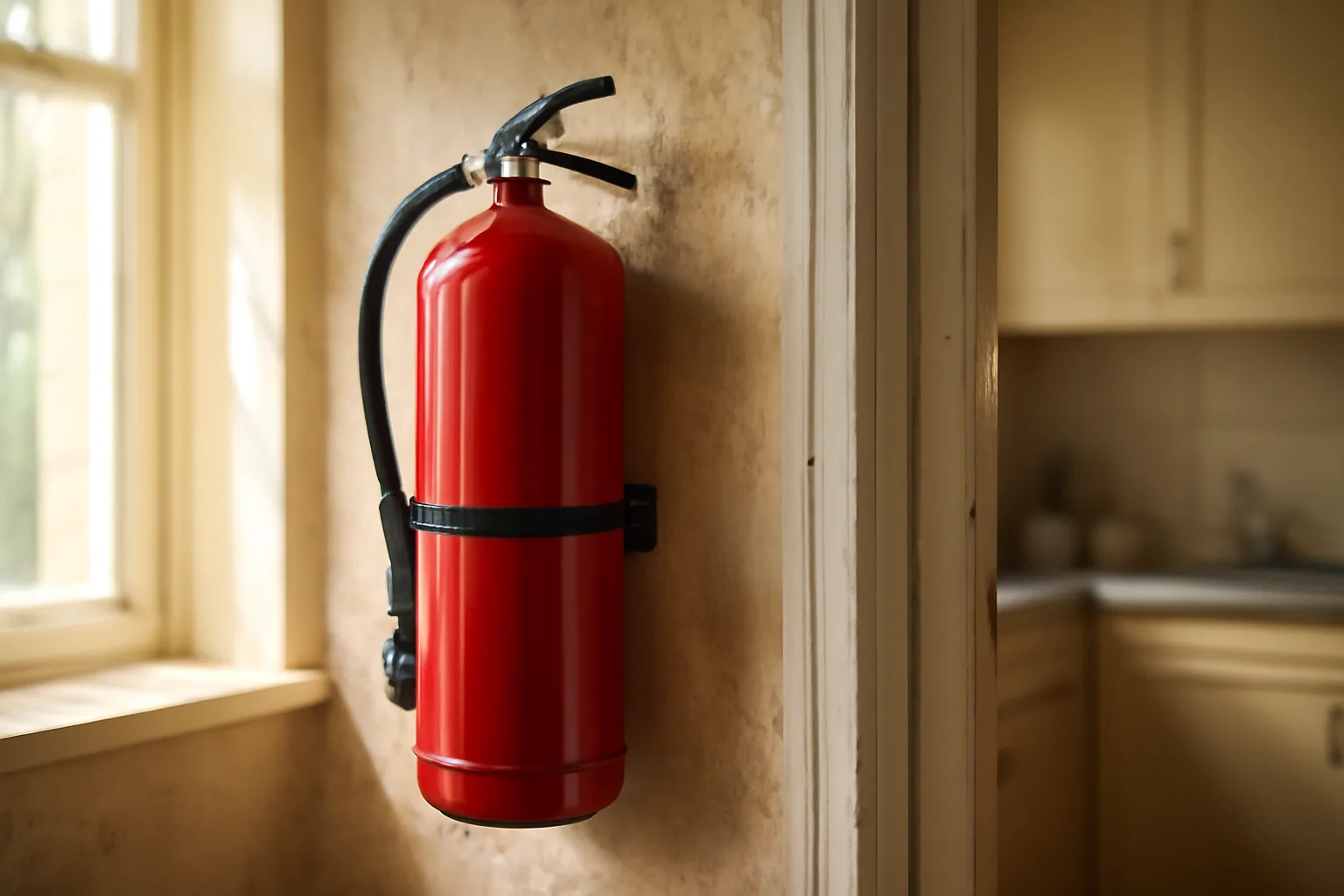
There's no single federal answer. Many local and state fire codes (often built on the International Fire Code) require a portable fire extinguisher in common areas, and some cities require one inside each rental unit, especially near the kitchen. Check your state building code and city rental inspection checklist, because requirements and placement rules differ a lot city to city.
are landlords required to provide fire extinguishers?
It depends on where the property sits, not on any single nationwide rule. There is no federal statute telling a landlord to put a fire extinguisher in every rental unit. What actually controls this is a mix of state building/fire codes, local fire codes, and your city's rental licensing or inspection ordinance, and those three don't always say the same thing. Most states adopt some version of the International Fire Code (IFC) or the National Fire Protection Association's NFPA 1 Fire Code, sometimes with state-specific amendments. The IFC generally requires portable fire extinguishers in specific occupancy types and common areas, like hallways, laundry rooms, and mechanical rooms, based on travel distance and hazard class [1]. Whether that requirement reaches inside an individual apartment or single-family rental unit depends on how your state or city amended the base code. Some cities go further and require an extinguisher inside each unit, often mounted in or near the kitchen. Others only require them in common areas of multi-unit buildings and leave single-family and duplex units alone. A landlord in a mandatory rental licensing city should treat the local fire marshal's checklist, not general assumptions, as the real answer. If your city sent an inspection notice, that document usually lists exactly what the inspector will check, extinguishers included. Because this varies so much, the honest starting point is: confirm with your city rental licensing office or fire prevention bureau before you assume you're covered or exposed.
what do fire codes actually say about extinguishers in rental units?
Fire code language usually ties extinguisher requirements to occupancy classification, building height, and hazard type, not simply to the word 'rental.' The 2021 International Fire Code, Section 906, requires portable fire extinguishers to be installed in specific occupancies, and Table 906.3(1) sets minimum ratings and travel distances based on hazard level (low, ordinary, or extra) [1]. Many states adopt the IFC by reference through their state fire marshal's office, then layer amendments on top. A handful of states also fold fire-safety requirements into their state building code or a dedicated fire prevention code administered separately from the building code. That means two neighboring states can have meaningfully different rules for the same triplex. NFPA 1, the Fire Code, is the other model code many jurisdictions use instead of or alongside the IFC, and it also addresses portable extinguisher placement, inspection intervals, and maintenance tagging [2]. If your city cites 'NFPA 1' or 'NFPA 10' (the standard specifically covering portable fire extinguishers, including mounting height and monthly inspection expectations) in its municipal code, that's the document worth pulling before you argue with an inspector [3]. Bottom line on codes: extinguisher requirements almost always exist somewhere in the code stack that applies to your property. The open question is whether the requirement reaches inside a small rental unit or stops at common areas, and that's a local amendment question, not a universal one.
does the requirement change for single-family rentals versus multi-unit buildings?
Yes, often significantly. Fire codes frequently apply extinguisher and common-area requirements more heavily to multi-family buildings (three units and up) than to single-family homes or duplexes, because the base occupancy classifications treat them differently. In a lot of jurisdictions, a single-family rental home is treated close to how an owner-occupied home would be treated under the fire code, meaning the state or city may not mandate an extinguisher inside the unit at all. Multi-unit buildings, by contrast, often trigger requirements for extinguishers in hallways, stairwells, and near exits because those areas count as means of egress serving multiple households, and the IFC ties extinguisher placement to those shared paths [1]. City rental licensing ordinances sometimes add their own layer on top of the fire code regardless of building size. A city that runs a mandatory rental registration and inspection program may require every licensed unit, single-family included, to have a working smoke alarm and a fire extinguisher as a condition of the rental license itself, separate from what the state fire code technically demands. That's a policy choice by the city council, not a fire code default, so it shows up in the municipal code or the housing/rental licensing chapter rather than the fire prevention chapter. The practical move: pull both your state fire code adoption and your city's rental licensing ordinance. If they conflict or one is silent, the stricter one usually wins in practice, because that's what the inspector will cite.
what can a landlord look at during an inspection?
A rental inspector generally checks life-safety items first: smoke alarms, carbon monoxide alarms where required, secondary means of egress, electrical hazards, water heater venting and temperature-pressure relief valves, and yes, fire extinguishers where the local code requires them. Most city rental inspection checklists are published in advance, and that document is the most reliable list of what will actually get checked. Beyond fire safety, inspectors commonly look at plumbing (active leaks, functioning fixtures), heating system condition, window and door operability, handrails and guardrails on stairs, interior lighting, and general structural condition (peeling lead paint in pre-1978 units is a frequent flag under federal disclosure rules, separate from local code) [4]. Pest evidence, mold, and broken locks on exterior doors show up on most municipal checklists too. What inspectors are not typically there to do is evaluate your tenant's housekeeping or personal property, unless clutter creates an actual egress or fire hazard. The inspection is about the condition of the structure and its systems, not a judgment of how someone lives. If you got a notice listing a specific violation code section, look that section up directly in your city's municipal code before you assume what it means. Violation notices usually cite a code number precisely so you can look it up.
who is responsible for a rental property walk-through inspection in california?
In California, responsibility splits based on the type of inspection. For move-in and move-out condition documentation, California Civil Code Section 1950.5 gives tenants the right to request an initial inspection before move-out specifically tied to the security deposit, and the landlord (or their agent) conducts that walk-through, then must give the tenant an itemized statement of proposed deductions [5]. For code compliance and habitability inspections, that's typically the city or county's building/housing department, or in some cities a dedicated rental housing inspection program (Los Angeles' Systematic Code Enforcement Program is one well-known example, inspecting units on a periodic cycle) [6]. Those inspections are conducted by government inspectors, not the landlord, though the landlord is responsible for arranging tenant access and fixing anything flagged. Separately, California Civil Code Section 1954 sets the rules for a landlord's routine entry into an occupied unit, generally requiring reasonable notice, presumed to be 24 hours in writing, and only for specified purposes like repairs, showings, or agreed inspections [7]. So 'who's responsible' depends on which inspection you mean: security deposit walk-through is the landlord's job under 1950.5, code inspections are the city's job, and routine access during tenancy runs through 1954's notice rules.
how much notice does a landlord have to give before entering or inspecting?
This is state-specific, and the range across the country is wide, so don't assume your neighbor state's rule applies to you. California's Civil Code Section 1954 presumes 24 hours' written notice is reasonable for most non-emergency entries, including inspections and repairs [7]. Many other states use a similar 24-hour standard by statute, though the exact wording (calendar hours versus business hours, verbal versus written) varies. Some states set a different number entirely. Florida's landlord-tenant statute, for instance, addresses a landlord's right of access and reasonable notice for non-emergency entries under Florida Statutes Section 83.53 [8]. Other states don't set a fixed number at all and instead rely on a 'reasonable notice' standard that gets interpreted case by case. Emergencies are the universal exception. No state requires advance notice when there's an immediate threat like a fire, a burst pipe actively flooding a unit, or a gas leak. Beyond emergencies, most states also allow entry with the tenant's consent given at the time, no advance notice needed if the tenant agrees in the moment. Because the notice period, the allowed reasons for entry, and whether it must be in writing all vary by state, check your specific state's landlord-tenant statute before scheduling an inspection, rather than relying on a general '24 hours' assumption.
what a landlord cannot do in ohio
Ohio's landlord-tenant law is codified primarily in Ohio Revised Code Chapter 5321. A few restrictions come up constantly for landlords managing rentals there. Ohio Revised Code Section 5321.15 prohibits a landlord from using 'self-help' eviction methods, meaning a landlord cannot lock a tenant out, remove doors or windows, shut off utilities, or seize a tenant's belongings to force them out, even if the tenant is behind on rent [9]. Eviction has to go through the court process (forcible entry and detainer action), not through the landlord unilaterally changing locks or cutting off power. Ohio Revised Code Section 5321.04 lays out the landlord's affirmative duties, including keeping the premises in a fit and habitable condition, maintaining common areas, keeping electrical, plumbing, and HVAC systems in good working order, and complying with applicable building, housing, and health codes . A landlord who ignores these duties is exposed to a tenant's remedies under the statute, which can include rent escrow or repair-and-deduct actions depending on the specific facts. Retaliation is also restricted. Ohio law generally prohibits a landlord from raising rent, reducing services, or attempting eviction specifically because a tenant complained to a code enforcement agency or asserted rights under the landlord-tenant statute, though the specifics of what counts as retaliation and how it's proven come from case law interpreting Chapter 5321 alongside the statute itself. None of this is legal advice, and Ohio case law adds detail to each of these rules that a bare statute citation won't capture, so a landlord facing an actual dispute in Ohio should read the specific code sections in full or talk to a local attorney.
what rights do tenants have without a lease?
A tenant without a signed lease usually still has real legal protections, they just fall under different rules than a fixed-term lease would give them. Most states treat an unwritten rental arrangement as a 'tenancy at will' or, once rent has been paid and accepted a few times, a periodic tenancy (commonly month-to-month), governed by that state's landlord-tenant statute rather than by contract terms. That means the tenant is still entitled to a habitable unit under the state's implied warranty of habitability (working plumbing, heat, structural safety, and so on), still protected from illegal lockouts or utility shutoffs in states that ban self-help eviction (Ohio's ban under Section 5321.15 is one concrete example) [9], and still entitled to whatever notice period the state requires before the tenancy can be ended. Without a lease, ending the tenancy usually requires the notice period a month-to-month tenancy demands under that state's statute, commonly 30 days, though some states use 60 days or tie it to how long the tenant has lived there. What a tenant without a lease typically does not have is the certainty a fixed term gives them, meaning the landlord can generally raise rent or end the tenancy at the end of a notice period without needing 'cause,' in states that don't require just-cause eviction. Rent control or just-cause eviction cities are the exception, since those local ordinances can require a specific reason to end even a month-to-month tenancy regardless of lease status.
why do landlords require renters insurance?
Landlords require renters insurance mainly to shift liability and property-loss risk off the landlord's own policy and onto the tenant's coverage. A standard renters policy covers the tenant's personal belongings, provides liability coverage if the tenant accidentally causes damage or someone is injured in the unit, and often covers additional living expenses if the unit becomes temporarily uninhabitable. Without renters insurance, if a tenant's negligence causes a fire or a water leak that damages the building, the landlord's own property insurance may cover the structure, but the landlord's insurer will often pursue subrogation against the tenant to recover costs, a process that's a lot smoother and more collectible if the tenant actually has a policy. A landlord's own dwelling policy generally does not cover a tenant's personal belongings at all, so requiring renters insurance also reduces the odds of a tenant suing the landlord after a loss for property the landlord's policy was never meant to cover. Requiring it is legal in most states as a lease condition, though the details of how it must be disclosed and enforced vary locally, and a handful of cities or states have specific rules about how much coverage a landlord can require or how proof must be documented. This is a business risk-management decision more than a code requirement, unlike fire extinguishers or smoke alarms, which can be mandated directly by fire code or rental ordinance.
what is landlording and what is a landlord?
A landlord is the owner (or an authorized agent of the owner) of real property who rents that property to another person, the tenant, in exchange for regular payment, typically under a lease or rental agreement. The relationship is defined legally by state landlord-tenant statutes, which set out each side's rights and duties, habitability standards, notice requirements, and remedies when either party breaks the deal. 'Landlording' is the informal term for the ongoing work of owning and operating that rental relationship: screening tenants, collecting rent, handling maintenance requests, complying with local licensing and inspection rules, managing lease renewals or terminations, and keeping the property in a condition that meets state and local code. It covers both the business side (cash flow, taxes, insurance) and the compliance side (fire code, habitability law, fair housing law) of running a rental. A small landlord with one to ten units generally does this work personally rather than through a property management company, which means they're also the one who has to track city-specific rental registration deadlines, inspection notices, and violation fines directly. That's a meaningfully different job than owning shares in a large apartment REIT, closer to running a small service business than to passive investing, even though people sometimes talk about the two as if they're the same thing.
how to become a landlord (and how to be a landlord day to day)
Becoming a landlord starts with acquiring a property (purchase, inheritance, or converting a former primary residence), then handling the compliance steps most new owners underestimate. Depending on your city, that can include registering the rental with the city, obtaining a rental license or certificate of occupancy, and scheduling an initial fire and safety inspection before you're legally allowed to rent it out. Skipping this step is one of the most common (and expensive) mistakes new landlords make, since operating an unregistered rental in a mandatory-licensing city can draw fines even before a tenant complaint triggers an inspection. Practically, the sequence usually looks like this: confirm your city's rental licensing requirement and fee with your city rental licensing office, get the property inspection-ready (smoke alarms, CO alarms where required, extinguishers if your local code calls for them, working locks, no active code violations), screen tenants consistent with fair housing law, and put a written lease in place that matches your state's landlord-tenant statute on notice periods, security deposit handling, and entry rules. Being a landlord day to day is mostly maintenance response, rent collection, and paperwork, punctuated by periodic city inspections or renewal deadlines. If you're prepping for a first inspection or a renewal cycle, tenant rights and tenants rights resources are worth reviewing alongside your city's checklist so you understand what a tenant can legally expect from you, more than what the inspector will check. If you'd rather not build the compliance checklist from scratch every time your city sends a renewal or violation notice, RentalPermitPath's $79 City Rental License & Inspection Prep Packet walks through the common documentation an inspection or license renewal asks for, organized so you're not hunting through old notices at 11pm the night before.
how do you know if your city requires a fire extinguisher, specifically?
Three places to check, in order. First, your city's rental licensing or housing inspection checklist, usually published as a PDF or webpage tied to the licensing program, and often the exact document referenced in whatever notice prompted you to ask this question. Second, your city's municipal code, fire prevention chapter, searchable through most city clerk or municode.com hosted sites, where you can search for 'fire extinguisher' directly and see the exact adopted code section. Third, your state fire marshal's office, which will tell you which base code (IFC, NFPA 1, or a state-specific fire code) your state has adopted and whether it's been amended for residential rentals. If you find the requirement, pay attention to more than just 'yes or no.' Requirements typically specify extinguisher rating (commonly a 2-A:10-B:C multipurpose extinguisher for ordinary hazard occupancies under IFC Table 906.3(1)) [1], mounting height, and inspection or recharge intervals, often annual, sometimes tagged by a licensed inspection company. NFPA 10 specifically sets monthly visual inspection expectations and periodic maintenance/recharge schedules that many local codes incorporate by reference [3]. If you can't find a clear answer after checking those three sources, call the fire marshal's office directly and ask. That's a five-minute phone call that beats guessing wrong on an inspection day.
Frequently asked questions
Are landlords legally required to provide a fire extinguisher in every rental unit?
Not universally. Some cities and states require one per unit, especially near the kitchen; others only require extinguishers in common areas of multi-unit buildings. Check your city's rental inspection checklist and your state's adopted fire code (IFC or NFPA 1) before assuming either way [1][2].
Do single-family rental homes need a fire extinguisher?
Often less strictly regulated than multi-unit buildings under the base fire code, but a city's rental licensing ordinance can still require one as a condition of the license, independent of what the fire code says. Confirm with your city rental licensing office directly.
How to become a landlord?
Acquire a rental property, then check your city's rental registration or licensing requirement, get the unit inspection-ready (smoke alarms, locks, no active code violations), screen tenants under fair housing law, and use a written lease matching your state's landlord-tenant statute on notice and deposits.
Who is responsible for a rental property walk-through inspection in California?
For move-out deposit inspections, the landlord conducts the walk-through under California Civil Code Section 1950.5. For code compliance inspections, the city or county housing department handles it, sometimes through a dedicated program like Los Angeles' Systematic Code Enforcement Program [5][6].
What is landlording?
Landlording is the day-to-day work of owning and operating a rental: collecting rent, maintaining the property, complying with local licensing and fire/safety code, screening tenants, and handling lease renewals or terminations under state landlord-tenant law.
What is a landlord?
A landlord is the owner, or an authorized agent of the owner, of real property that's rented to a tenant in exchange for payment, with rights and duties defined by state landlord-tenant statutes and local housing codes.
What rights do tenants have without a lease?
A tenant without a written lease usually still gets habitability protections, protection from illegal lockouts in states that ban self-help eviction, and whatever notice period the state requires to end a month-to-month tenancy, commonly 30 days, though it varies by state.
How to be a landlord without breaking local code?
Track your city's rental license renewal date, respond to maintenance requests promptly, keep smoke/CO alarms and any required fire extinguishers current, and read every inspection or violation notice's cited code section directly rather than guessing what it means.
Why do landlords require renters insurance?
It shifts liability and personal-property risk to the tenant's own policy, makes it easier for the landlord's insurer to recover costs after tenant-caused damage, and reduces the odds a tenant sues the landlord over belongings the landlord's dwelling policy never covered.
How much notice does a landlord have to give before entering the unit?
It varies by state. California presumes 24 hours' written notice is reasonable under Civil Code Section 1954 [7]; Florida's statute addresses reasonable notice for non-emergency entries under Florida Statutes Section 83.53 [8]. Check your specific state's statute.
What can a landlord look at during an inspection?
Typically life-safety items (smoke/CO alarms, egress, electrical hazards, extinguishers where required), plus plumbing, heating, window/door function, and structural condition. Inspectors generally aren't there to judge housekeeping unless clutter blocks an exit or creates a hazard.
What a landlord cannot do in Ohio
Ohio Revised Code Section 5321.15 bans self-help eviction: no lockouts, utility shutoffs, or seizing a tenant's belongings to force them out. Ohio Revised Code Section 5321.04 requires the landlord to keep the unit habitable and code-compliant [9][10].
What size fire extinguisher rating do rentals typically need?
Where required, a common minimum under the International Fire Code's Table 906.3(1) for ordinary hazard occupancies is a 2-A:10-B:C multipurpose extinguisher, though the exact rating depends on hazard classification and travel distance set locally [1].
Who inspects and maintains a required fire extinguisher?
The landlord is generally responsible for keeping it charged and accessible. NFPA 10 sets common maintenance expectations including monthly visual checks and periodic professional recharge or replacement, often referenced directly in local fire codes [3].
Sources
- International Code Council, 2021 International Fire Code Section 906 and Table 906.3(1): Portable fire extinguisher installation requirements and rating tables tied to hazard classification
- National Fire Protection Association, NFPA 1 Fire Code: NFPA 1 is a model fire code addressing portable extinguisher placement, an alternative many states/cities adopt
- National Fire Protection Association, NFPA 10 Standard for Portable Fire Extinguishers: NFPA 10 sets maintenance, inspection interval, and mounting requirements for portable fire extinguishers
- U.S. EPA/HUD, Lead-Based Paint Disclosure Rule (40 CFR Part 745): Federal disclosure requirements for lead paint hazards in pre-1978 rental units
- California Legislative Information, Civil Code Section 1950.5: Tenant's right to an initial move-out inspection and landlord's itemized deduction statement requirement
- California Legislative Information, Civil Code Section 1954: 24-hour notice presumption for landlord entry into an occupied California rental unit
- Online Sunshine (Florida Legislature), Florida Statutes Section 83.53: Florida's landlord right-of-access and notice standard for non-emergency entry
- Ohio Legislative Service Commission, Ohio Revised Code Section 5321.15: Ohio's prohibition on self-help eviction methods like lockouts and utility shutoffs
- Ohio Legislative Service Commission, Ohio Revised Code Section 5321.04: Ohio landlord's statutory duties to maintain a fit and habitable rental unit