Last updated 2026-07-26
TL;DR
Pontiac, Michigan requires rental property owners to register and pass a habitability inspection to get a Certificate of Compliance before renting a unit. Confirm current fees, cycle length, and inspection checklist with the City of Pontiac rental licensing or code enforcement office, since these details change and aren't published in one stable source.
Does the City of Pontiac require a rental inspection?
Yes. Michigan cities have broad authority under the Housing Law of Michigan (MCL 125.401 et seq.) to adopt local housing codes and require inspection of rental dwellings before occupancy, and many Michigan cities, Pontiac included, run their own rental registration and inspection program layered on top of the state housing code [1]. The exact mechanics (how often units get inspected, what triggers a re-inspection, how the certificate gets renewed) live in Pontiac's local ordinance and its code enforcement department's operating procedures, not in the state statute itself. Because city ordinances get amended, fee schedules change, and departments sometimes get renamed or restructured, the safest move for any Pontiac landlord is to call or visit the City of Pontiac's rental licensing or code enforcement office directly and ask for the current ordinance number, fee amount, and inspection cycle in writing. Don't rely on a blog post, including this one, for the exact dollar figure or deadline. Confirm with your city rental licensing office before you budget or schedule. What we can tell you with confidence: if you own a rental unit in Pontiac and you haven't registered it or gotten it inspected, you're very likely out of compliance with a local ordinance that carries real fines. Cities that run these programs typically issue civil infraction tickets for unregistered or uninspected rentals, and repeat violations can escalate quickly.
What is landlording, and what does a Pontiac landlord actually have to do?
Landlording is the business of owning residential property and renting it out in exchange for regular payment, along with the legal and practical duties that come with it: maintaining the unit, handling repairs, following state and local landlord-tenant law, and managing the tenant relationship. It sounds simple until you're the one fielding a 10pm call about a broken furnace in January. In a city like Pontiac that runs a mandatory rental inspection program, landlording adds a layer most single-family homeowners never think about: paperwork with the city itself, more than the tenant. That typically means registering each rental address, paying an annual or per-cycle fee, scheduling and passing a habitability inspection, and keeping the resulting certificate current. Miss a step and you're more than risking a tenant complaint, you're risking a municipal fine or, in some cities, a restriction on your ability to legally collect rent or evict for nonpayment until you're compliant. Michigan's Housing Law also gives cities the power to order repairs and, in serious cases, restrict occupancy of a dwelling found to be a substantial hazard to health or safety [1]. That's the backstop behind every local inspection program: it's more than red tape, it's the mechanism cities use to keep housing stock from deteriorating into something dangerous.
What is a landlord, legally speaking?
A landlord is the owner (or the owner's authorized agent) of a residential rental property who leases it to a tenant in exchange for rent, and who takes on the legal obligations that come with that role: providing a habitable unit, following the terms of the lease, and complying with state and local law governing rental housing. In Michigan, the landlord-tenant relationship is shaped by the state's Truth in Renting Act (MCL 554.631 et seq.) and by common-law and statutory habitability obligations, on top of whatever a specific city's rental ordinance adds [2]. For a city inspection program specifically, "landlord" usually means whoever is named on the property deed or whoever registered as the responsible party with the city. If you own through an LLC, most cities want a registered agent or local contact person listed too, someone reachable if there's an emergency at the property. Skipping that step is a common reason registrations get rejected or flagged.
How to become a landlord in a city that requires rental licensing
Becoming a landlord in any mandatory-licensing city, Pontiac included, generally follows the same sequence, even though the specific forms and fees differ by city: 1. Buy or already own the property, and confirm it's zoned for the rental use you intend (single-family, duplex, multi-unit). 2. Register the rental with the city's rental licensing or code enforcement office, providing owner contact information and, often, a local property manager or agent if you live out of state or out of the county. 3. Pay the registration or licensing fee. Confirm with your city rental licensing office for the current amount, since fee schedules get revised through city council action and aren't always reflected in older documents online. 4. Schedule the required inspection. Some cities inspect before the first tenant moves in; others inspect on a rolling multi-year cycle regardless of turnover. 5. Fix anything flagged, get a re-inspection if needed, and receive your Certificate of Compliance or equivalent. 6. Renew on whatever cycle the city sets, typically annually or every one to three years, and re-inspect when required. If you're doing this for the first time, budget more time than you think you need. First-time registrants often get tripped up by a lead paint disclosure requirement, an unpermitted bedroom conversion, or a smoke detector placement issue that wasn't on their radar.
What can a landlord look at during an inspection, and what does the inspector look at?
| Life safety | Smoke detectors, carbon monoxide detectors, fire extinguishers, egress windows in bedrooms | |
|---|---|---|
| Electrical | Exposed wiring, overloaded panels, GFCI outlets near water sources | |
| Plumbing | Leaks, working hot water, proper drainage, no illegal connections | |
| Structural | Foundation issues, roof leaks, unsafe stairs or railings | |
| Heating | Working furnace or heat source adequate for the climate | |
| Occupancy | Overcrowding, illegal room conversions, unpermitted units | |
| Exterior | Peeling exterior paint (especially pre-1978 homes, tied to lead paint rules), pest entry points, unsafe porches | The state Housing Law of Michigan gives municipal inspectors authority to enter and inspect dwellings for compliance with local housing codes, and to order repairs where conditions are found unsafe or unsanitary [1]. What's actually on Pontiac's specific checklist, and how strictly each item gets enforced, is something to get directly from the city's code enforcement office before your inspection date. Ask if they'll send or point you to a written checklist in advance. Many cities will, and it's the single best prep document you can get for free. |
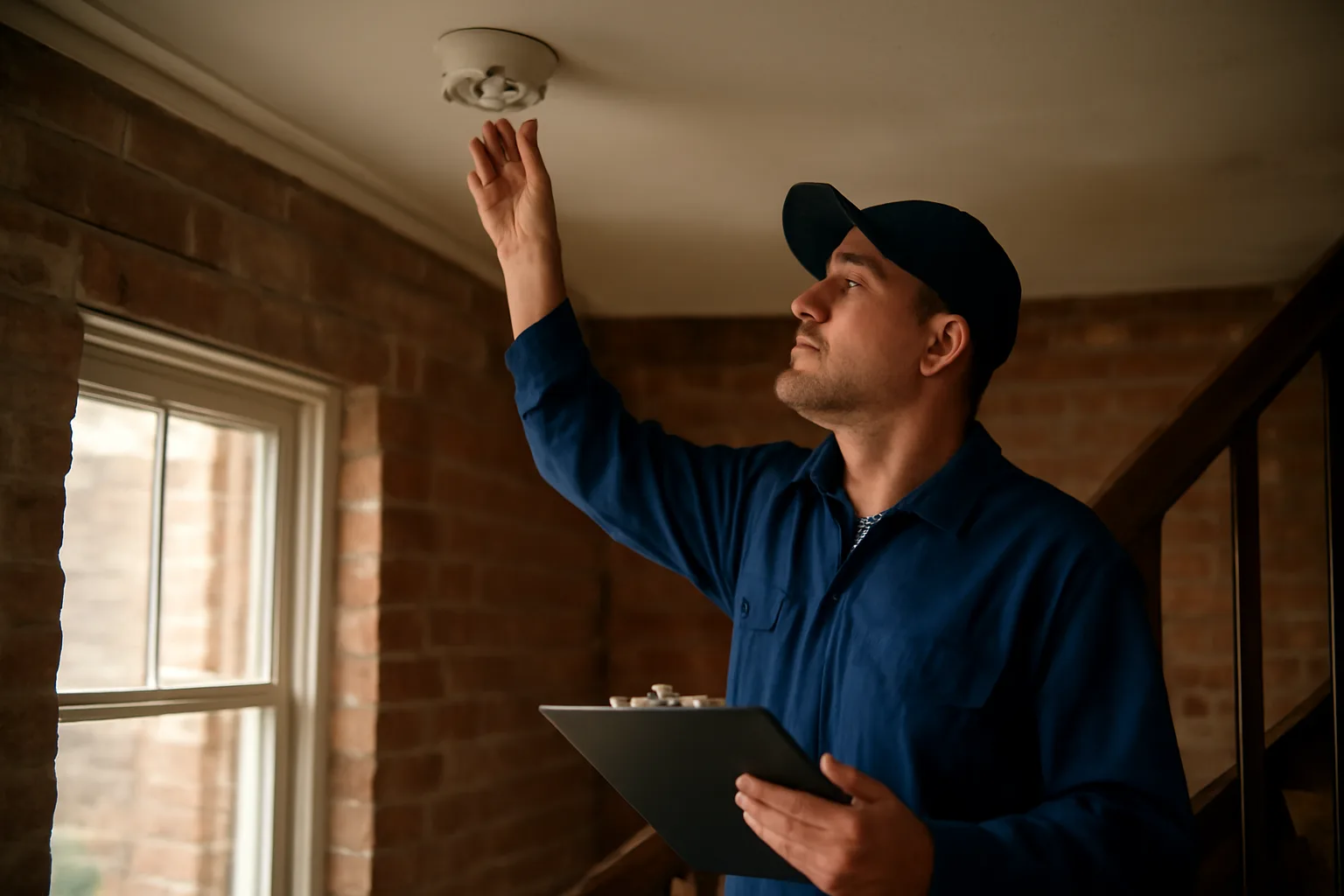
Two different inspections get confused here, and it's worth separating them clearly. A landlord's own walkthrough inspection of their unit (move-in, move-out, or periodic) is about documenting condition, confirming the tenant's care of the property, and identifying maintenance needs. A landlord can typically look at general condition of walls, floors, fixtures, appliances, and check for lease violations like unauthorized pets or unregistered occupants, but must give proper notice first (see below) and generally cannot search personal belongings, open closed containers, or use the visit as a pretext to harass a tenant. A city rental inspection, by contrast, is a code compliance check done by a municipal inspector, and it usually covers: | Area | Typical inspection points |
Who is responsible for a rental property walkthrough inspection?
This question comes up a lot from landlords who split time between states or manage remotely, and the answer depends on which "inspection" you mean. For a landlord's own move-in/move-out or periodic condition walkthrough, responsibility sits with the landlord or their designated property manager. It's not something a tenant can be forced to do themselves, though many landlords use a checklist the tenant reviews and signs alongside the landlord's own documentation, which helps a lot if there's a security deposit dispute later. For California specifically, since that's a common search variant of this question: California Civil Code section 1950.5 gives tenants the right to request a pre-move-out inspection roughly two weeks before they vacate, so the landlord can point out deficiencies the tenant could still fix before the final walkthrough and deposit deduction [3]. That inspection right and process belongs to the landlord to schedule and conduct, with the tenant given notice and the opportunity to attend. For a city rental compliance inspection (the Pontiac-type inspection this article is mainly about), responsibility for scheduling sits with the property owner or registered agent, but the inspection itself is conducted by a city or township code enforcement officer, not the landlord. The landlord's job is to register, pay the fee, make the unit available on the scheduled date, and fix anything flagged.
How much notice does a landlord have to give before entering a rental unit?
Notice requirements vary significantly by state, and there's no single national rule, so treat any number you see online as a starting point to verify against your own state's statute. Michigan doesn't have a single statewide statute spelling out a specific number of hours or days of notice for routine landlord entry the way some states do; instead, lease terms, local ordinance, and general reasonableness standards under the Truth in Renting Act framework tend to govern practice [2]. Many other states do set a specific number: California requires "reasonable notice," which the state Civil Code defines as presumptively 24 hours in most circumstances (Cal. Civ. Code section 1954) [4]. Other states range from 24 to 48 hours for non-emergency entry. Because this varies so much, and because a city rental inspection is a separate legal event from a landlord's own entry, don't assume the notice rule for one covers the other. For a city compliance inspection, notice is typically handled through the city's own scheduling letter or portal, sent directly to the registered owner, often with a window of several days to a few weeks before the inspection date. For your own entry as landlord (repairs, showings, routine walkthroughs), check your specific state's statute and your lease language, and when in doubt, give more notice than the legal minimum. It costs you nothing and it keeps the relationship civil.
What rights do tenants have without a lease?
A tenant without a written lease, sometimes called a tenant-at-will or a month-to-month tenant by verbal agreement, still has real legal protections. Occupying a unit and paying rent, even without signed paperwork, generally creates a tenancy under state law, and that tenancy carries habitability rights, protection from illegal lockouts, and a right to proper notice before eviction. Michigan law does not require a written lease for a tenancy to exist or for tenant protections to apply. What changes without a written lease is mainly the term: verbal agreements are generally treated as month-to-month tenancies, meaning either party can end the arrangement with proper notice (commonly 30 days, though this should be confirmed against current Michigan statute and any local variation), rather than being locked into a fixed term. The landlord still cannot shut off utilities, change the locks, or physically remove a tenant's belongings to force them out. That kind of self-help eviction is illegal in essentially every state, lease or no lease, and can expose the landlord to statutory damages. Without a lease, a tenant also still benefits from the implied warranty of habitability that most states recognize by law or common law precedent, meaning the landlord must keep the unit safe and livable regardless of whether that promise is written down anywhere.
Why do landlords require renters insurance?
Landlords require renters insurance mainly to shift liability and reduce their own financial exposure when something goes wrong in the unit. A tenant's renters insurance policy typically covers the tenant's personal belongings and provides liability coverage if the tenant accidentally causes damage (a kitchen fire, an overflowing tub that damages the unit below), which means the landlord's own property insurance and legal defense costs are less likely to get pulled into a claim caused by tenant negligence. It's also just cheap for what it does. Renters insurance policies commonly run in the range of $15 to $30 a month depending on coverage limits, location, and personal property value, according to typical industry quote ranges cited by state insurance departments and consumer guides, though your actual quote will vary by carrier and state. Requiring it as a lease condition is legal in most states and is one of the lowest-cost risk-reduction moves a small landlord can make. If you self-manage 1 to 10 units, the math is straightforward: one plumbing incident traced to tenant negligence, without renters insurance in place, can turn into a fight over who pays for it. With a policy in place, that fight mostly disappears.
What can a landlord not do in Ohio?
Ohio landlord-tenant law, codified mainly in Ohio Revised Code Chapter 5321, sets out specific prohibitions alongside the affirmative duties. Under ORC 5321.15, a landlord cannot use self-help to remove a tenant: no shutting off utilities like water, electricity, or gas to force a tenant out, and no changing the locks or removing a tenant's belongings without going through the formal eviction process [5]. The statute is direct about it: a landlord "shall not... interrupt, or knowingly cause the interruption of, the utility services" or seize a tenant's possessions to enforce a lease term. Ohio landlords also cannot retaliate against a tenant for lawfully exercising their rights, such as filing a code complaint or joining a tenant organization, under ORC 5321.02, and cannot discriminate on protected bases as covered under state and federal fair housing law. A landlord in Ohio also can't skip the habitability duties laid out under ORC 5321.04, which require keeping the premises in a fit and habitable condition, complying with applicable housing codes, and maintaining electrical, plumbing, and heating systems in good working order [6]. Even if you're not in Ohio, the pattern holds across most states: no self-help eviction, no retaliation, no discrimination, no ignoring the housing code. Those four rules cover the majority of "what can't a landlord do" questions regardless of jurisdiction.
What happens if a Pontiac rental fails inspection, or you skip registration entirely?
If a unit fails a Pontiac rental compliance inspection, the city will typically issue a written list of violations with a deadline to correct them, followed by a re-inspection, sometimes for an additional fee. Common failure points in older housing stock (and Pontiac has a lot of pre-1960s housing) include missing or improperly located smoke detectors, exposed knob-and-tube or otherwise outdated wiring, peeling exterior paint on structures built before 1978 (a lead paint concern under federal disclosure rules, 42 U.S.C. section 4852d), and structural deferred maintenance like rotted porch framing or unsafe stairways [7]. Skipping registration entirely is the more expensive mistake long-term. Cities that run mandatory rental programs typically enforce them through civil infraction citations, and unlike a one-time inspection fee, an ongoing failure to register can accumulate fines month over month or trigger a court date. Some cities also restrict a landlord's ability to pursue eviction for nonpayment of rent while the property is unregistered or uncertified, though whether Pontiac applies that specific restriction is something to confirm directly with the city, since it's a meaningful enough consequence that you don't want to guess. If you already got a violation notice or a fine, don't ignore it hoping it resolves itself. Call the office listed on the notice, ask what's needed to cure the violation, and get the corrected timeline in writing. Cities are generally more flexible with landlords who show up and engage than with ones who go silent.
How to get ready for a Pontiac rental inspection without wasting a trip
The landlords who breeze through inspection day are almost always the ones who did a dry run first. Walk the unit yourself using a general habitability checklist before the city inspector shows up: test every smoke and CO detector, check that every bedroom has a working egress window, run the water at every fixture and look under sinks for slow leaks, check the furnace filter and confirm it fires up properly, and look at exterior paint condition if the home predates 1978. Grab your prior year's inspection report if you have one; repeat violations from a previous cycle are the first thing most inspectors check. If you've done any work since the last inspection (a water heater swap, an electrical panel upgrade), have the permit paperwork ready, since unpermitted work is its own separate violation even if the work itself is done correctly. This is the exact gap our $79 one-time City Rental License & Inspection Prep Packet is built to close: a structured, city-agnostic checklist and document tracker so you walk into inspection day with your smoke detectors, egress, and paperwork already confirmed, rather than finding out what's wrong from the inspector's clipboard. It's not a substitute for calling Pontiac's code office to confirm current fees and forms, but it saves you from the most common, avoidable re-inspection triggers. If you manage more than one unit, keep a simple spreadsheet with each address's registration date, last inspection date, next renewal due date, and any open violations. It sounds basic, and it is, but missed renewal deadlines are one of the most common (and most preventable) reasons landlords end up with a fine instead of a clean certificate.
Where to get the exact Pontiac rules, fees, and forms
This article gives you the structure and the state-law backdrop, but the specific numbers for Pontiac (registration fee, inspection cycle length, which department handles it, current ordinance number) need to come from the City of Pontiac directly. Ordinances get amended, fee schedules get updated by city council resolution, and departments occasionally get reorganized, so a number that was accurate two years ago might not be accurate today. Call or visit the City of Pontiac's code enforcement or rental licensing office and ask for: the current rental registration ordinance section number, the registration and inspection fee schedule, the inspection cycle (annual, biennial, or triennial), and a copy of the inspection checklist if one exists in writing. Get the answer in an email or a printed handout if you can, more than a verbal answer, so you have something to reference later. For general Michigan landlord-tenant background beyond the city-specific rules, the Housing Law of Michigan [1] and the Truth in Renting Act [2] are the two statutes worth reading directly if you want the underlying legal framework rather than a summary of it.
Frequently asked questions
How do I become a landlord for the first time?
Buy or already own a property zoned for rental use, understand your state's landlord-tenant law and any city rental registration ordinance, get proper insurance, prepare a lease that complies with local law, and register with your city's rental licensing office if one exists. Cities with mandatory programs, like many Michigan cities, require registration and inspection before you can legally rent the unit.
Who is responsible for a rental property walkthrough inspection in California?
The landlord is responsible for scheduling and conducting move-in, move-out, and pre-move-out inspections. California Civil Code section 1950.5 specifically gives tenants the right to request a pre-move-out inspection about two weeks before vacating, which the landlord must then perform and document, giving the tenant a chance to fix issues before final deposit deductions.
What is landlording?
Landlording is the ongoing work of owning and renting out residential property, including maintaining habitability, collecting rent, following state and local landlord-tenant law, handling repairs, and, in cities with mandatory rental programs, registering the property and passing periodic city inspections to keep a rental license or certificate current.
What is a landlord?
A landlord is the owner or authorized agent of a residential rental property who leases it to a tenant for rent and takes on the legal duties that come with that, including habitability, lease compliance, and, in cities like Pontiac, registration and inspection requirements under local rental ordinances.
What rights do tenants have without a lease?
A tenant without a written lease still has a legal tenancy, usually treated as month-to-month, and keeps rights to habitability, protection from illegal lockouts or utility shutoffs, and proper notice before eviction. The landlord cannot use self-help methods to force them out; a formal eviction process is still required regardless of whether anything was signed.
How do I become a good landlord day to day?
Respond to repair requests quickly, document everything (move-in condition, communications, inspections), keep your rental registration and city inspections current, screen tenants consistently and legally, and know your state's specific notice and entry rules. Most landlord-tenant disputes trace back to poor documentation or slow repairs, not malice.
Why do landlords require renters insurance?
Renters insurance shifts liability for tenant-caused damage and covers the tenant's own belongings, which reduces the chance the landlord's insurance or wallet absorbs costs from a tenant's accident. Policies commonly run $15 to $30 a month, making it one of the cheapest risk-reduction requirements a landlord can put in a lease.
How much notice does a landlord have to give before entering a unit?
It depends entirely on your state. California presumes 24 hours is reasonable notice under Civil Code section 1954. Michigan doesn't set one specific statewide number for routine entry, relying instead on lease terms and reasonableness. Always check your specific state's statute, and separately confirm any notice process for a city compliance inspection with your city's office.
What can a landlord look at during an inspection?
During a landlord's own walkthrough, they can assess general condition, cleanliness, and lease compliance (unauthorized pets, unregistered occupants) but generally can't search personal belongings or closed containers. A city compliance inspector checks smoke and CO detectors, electrical and plumbing safety, structural condition, heating, egress windows, and occupancy limits.
What can a landlord not do in Ohio?
Under Ohio Revised Code 5321.15, a landlord cannot shut off utilities or change locks to force a tenant out without a formal eviction. ORC 5321.02 bars retaliation against tenants who exercise legal rights, and ORC 5321.04 requires landlords to maintain habitability and keep systems like plumbing, heating, and electrical in good working order.
Does Pontiac, Michigan require a rental certificate of compliance?
Pontiac operates a rental registration and inspection program requiring property owners to register rentals and pass a habitability inspection to obtain a compliance certificate, consistent with authority Michigan cities have under the Housing Law of Michigan. Confirm the current ordinance number, fee, and inspection cycle directly with Pontiac's code enforcement or rental licensing office.
What happens if my Pontiac rental fails inspection?
You'll typically get a written violation list and a deadline to fix the issues, followed by a re-inspection, sometimes at an added fee. Common failures involve smoke detectors, outdated wiring, peeling exterior paint on pre-1978 homes, and structural deferred maintenance. Confirm Pontiac's specific re-inspection fee and timeline with the city office.
Can I rent out my Pontiac property while registration is pending?
This depends on Pontiac's specific ordinance language and how strictly the city enforces it, so you should confirm directly with the rental licensing office before assuming you can. Many cities with mandatory programs prohibit occupancy or rent collection until registration and inspection are complete, and treat unregistered rentals as an ongoing violation.
Sources
- Michigan Legislature, Housing Law of Michigan, MCL 125.401: Michigan cities have authority to adopt housing codes, inspect rental dwellings, order repairs, and restrict occupancy of unsafe dwellings
- Michigan Legislature, Truth in Renting Act, MCL 554.633: Michigan's Truth in Renting Act shapes landlord-tenant rights and prohibited lease clauses
- California Legislative Information, Civil Code Section 1950.5: Tenants have the right to request a pre-move-out inspection about two weeks before vacating in California
- California Legislative Information, Civil Code Section 1954: California presumes 24 hours is reasonable notice for landlord entry in most circumstances
- Ohio Legislature, Ohio Revised Code 5321.15: Ohio landlords cannot shut off utilities or seize possessions to force a tenant out without formal eviction
- Ohio Legislature, Ohio Revised Code 5321.04: Ohio landlords must maintain habitability and keep electrical, plumbing, and heating systems in good working order
- U.S. Code, 42 U.S.C. Section 4852d: Federal law requires lead paint disclosure for housing built before 1978