Last updated 2026-07-26
TL;DR
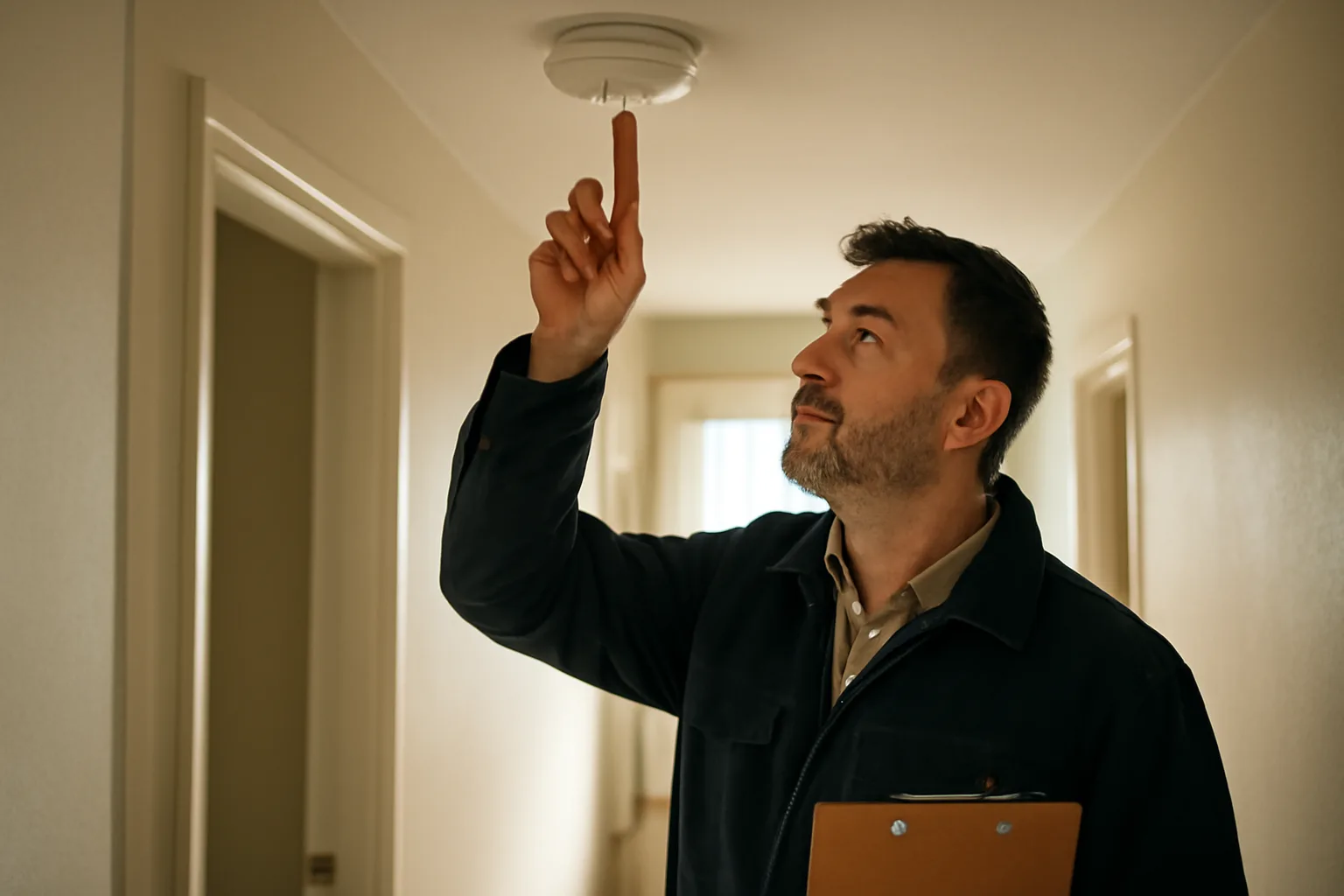
A city rental inspection is a code-compliance check tied to your rental license or registration. Inspectors typically look at smoke and CO alarms, egress windows, electrical panels, plumbing, heat, and pest or mold issues. Notice requirements vary by city and state (often 24 to 48 hours), and failing items usually means a re-inspection window, not an automatic fine.
What is a city rental inspection and why does my property need one?
A city rental inspection is a walkthrough done by a code enforcement officer, fire inspector, or building department staffer to confirm your rental unit meets local housing and safety codes. It's tied to whatever licensing or registration program your city runs. Some cities inspect every unit before issuing a license. Others inspect on a rotating cycle (every 2 to 3 years is common) or only after a complaint. The legal basis is usually a municipal housing code, sometimes built on a model code like the International Property Maintenance Code (IPMC), which many cities adopt with local amendments [1]. The IPMC's stated purpose is to establish "minimum requirements and standards for premises, structures, equipment and facilities for light, ventilation, space, heating, sanitation, protection from the elements, life safety, safety from fire and other hazards" [1]. Your city's actual ordinance is what governs, though, not the model code itself, so the specifics (fees, cycle length, appeal process) come from your municipal code section, not a national standard. If you're just getting the notice for the first time, don't panic. Most cities give you a scheduled date, a checklist or at least a general list of what's covered, and some grace period to fix minor items. Read the notice carefully for the specific ordinance number cited; that's the fastest way to find the exact rules for [confirm with your city rental licensing office].
What can a landlord look at during an inspection?
Wait, flip that question. During a *city* inspection, it's the inspector who's looking, and they're checking specific safety and habitability items, not your tenant's belongings or how tidy the unit is. Typical checklist items across most municipal housing codes include: - Working smoke alarms in every bedroom and on every level, plus carbon monoxide alarms if there's fuel-burning equipment or an attached garage
- Two means of egress from sleeping rooms (a window that opens to the required size, or a second door)
- Functioning heat source capable of maintaining a minimum temperature, often 65 to 68°F depending on the city's code
- Electrical panel condition, no exposed wiring, working outlets, GFCI protection near water sources
- Plumbing: no active leaks, functioning water heater with a temperature/pressure relief valve, adequate water pressure
- Structural issues: peeling paint (especially in pre-1978 buildings, tied to federal lead paint disclosure rules), rot, foundation cracks
- Pest and rodent evidence
- Handrails and guardrails on stairs above a certain height
- Proper address numbering visible from the street (a surprisingly common fail item) Inspectors generally do not open drawers, closets, or personal storage unless there's a specific safety reason (like checking for a blocked window as a second exit). They're not grading your décor. If you want a walkthrough of what a landlord (not the city) can look at during a routine tenant-occupied inspection, that's a separate topic covered on our landlord page.
Who is responsible for a rental property walkthrough inspection in California?
In California, responsibility splits by context, and this trips people up constantly. For move-in and move-out condition documentation, California Civil Code section 1950.5 puts the burden on the landlord to do an initial move-out inspection if the tenant requests one, and to provide an itemized statement of any deductions from the security deposit [2]. That's a landlord-tenant matter, not a city code inspection. For city-mandated rental housing inspections, it depends entirely on whether your city has a Rental Housing Inspection Program (sometimes called Proactive Rental Inspection or a Systematic Code Enforcement program). Los Angeles runs a Systematic Code Enforcement Program (SCEP) administered by the Los Angeles Housing Department, funded through an annual per-unit fee charged to property owners [3]. Other California cities (Oakland, San Jose, Sacramento) run their own versions with different names, fee schedules, and inspection cycles. There is no single statewide mandatory rental inspection law in California; it's a patchwork of local ordinances. So: for the city compliance inspection itself, the city's code enforcement or housing department is responsible for conducting it, and the property owner is responsible for scheduling it, paying the fee, and fixing violations. For the tenant move-out walkthrough, that's on the landlord under Civil Code 1950.5. Two different "inspections," two different rulebooks. Confirm which program applies to your address with your city rental licensing office.
How much notice does a landlord have to give before an inspection?
Two separate notice clocks matter here, and mixing them up causes real problems. First, landlord-to-tenant notice for entering the unit is governed by state law, not city code. California requires "reasonable notice," and Civil Code 1954 presumes 24 hours is reasonable for non-emergency entry [4]. Other states set their own defaults: many use 24 hours, some use 48 hours, and a few don't specify a number at all, just "reasonable notice." You need to check your specific state's landlord-tenant statute, because this is not a place to guess. Second, the city's notice to the landlord about a scheduled municipal inspection is a completely different thing, set by local ordinance, and it's often longer: many cities give 7 to 14 days' written notice before a scheduled licensing inspection, sometimes with a scheduling window so you can request a reschedule. If the city inspector needs to enter a tenant-occupied unit, the landlord typically still needs to pass along proper entry notice to the tenant per state law, on top of whatever notice the city gave the landlord. Bottom line: don't assume the city's notice period covers your legal obligation to notify your tenant. Handle both, separately, in writing.
What happens if my rental fails inspection or I get a violation notice?
A failed inspection almost never means an instant fine. Most cities issue a notice of violation listing each failed item with a re-inspection deadline, commonly 30 to 90 days depending on severity. Life-safety items (no smoke alarm, blocked egress, exposed live wiring) sometimes get a much shorter window, occasionally 24 to 72 hours, because they're treated as immediate hazards. Fines typically kick in only if you miss the re-inspection deadline or ignore the notice entirely. Amounts vary wildly by city: some charge a flat re-inspection fee (commonly $50 to $200), others escalate daily for uncorrected violations. A few cities can suspend or revoke your rental license for repeated or unaddressed violations, which then blocks you from legally renting the unit until it's reinstated. If you get a violation notice, the smart move is to document each item with photos, get repair estimates immediately, and call the inspector's office to ask about the appeal or reconsideration process before the deadline, not after. Most inspectors would rather see progress than punish you for asking questions.
How to become a landlord: what you actually need before you rent out a unit
Becoming a landlord is mostly paperwork and math, not a license exam in most places (a handful of cities do require landlord training or certification, but it's not universal). Here's the realistic checklist: 1. Confirm the property is legally rentable: zoning, occupancy limits, and whether your city requires a rental license or registration before you can advertise the unit at all. 2. Run the numbers: mortgage or ownership costs, property tax, insurance, expected maintenance reserve (a commonly cited rule of thumb is budgeting 1% of the property's value per year for maintenance, though this varies by property age and condition). 3. Get landlord insurance (a dwelling/fire policy, sometimes called a DP-3 or a landlord package policy), not a standard homeowners policy, since most homeowners policies exclude tenant-occupied properties. 4. Register or license the property with your city if required. This is the step people skip and then get hit with back fees or fines when the city finds out through a complaint or a routine sweep. 5. Draft a lease that complies with your state's landlord-tenant law (security deposit limits, disclosures, notice periods). 6. Screen tenants consistently and legally under the Fair Housing Act, which prohibits discrimination based on race, color, national origin, religion, sex, familial status, or disability [5]. 7. Set up a system for repairs, rent collection, and inspections before your first tenant moves in. If your city requires licensing, get that piece sorted first. Advertising or renting a unit without a required license can trigger fines even before you have a tenant.
What is landlording and what does the job actually involve day to day?
"Landlording" is the ongoing work of owning and managing a rental property: collecting rent, handling repairs, responding to tenant issues, staying on top of local code compliance, and keeping the numbers straight. It's part property manager, part bookkeeper, part contractor-coordinator. Day to day, that means: responding to maintenance requests (often within a legally required window, commonly 24 to 48 hours for urgent issues like no heat or no water, longer for cosmetic stuff), keeping smoke and CO alarms tested, budgeting for turnover costs between tenants, tracking lease renewal and rent increase timing under any local rent control rules, and staying current on whatever your city's rental license or registration renewal cycle requires. A lot of new landlords underestimate the compliance side specifically. If your city runs a mandatory rental inspection program, "landlording" now includes tracking your license expiration date, budgeting for the inspection fee, and scheduling repairs proactively instead of reactively. That's really the core difference between landlording in a licensed city versus an unregulated one: you've got a recurring administrative deadline, more than a maintenance to-do list.
What is a landlord? Legal definition and basic responsibilities
A landlord is the owner (or the owner's authorized agent) who rents real property to a tenant in exchange for rent, under a lease or rental agreement. Legally, a landlord takes on specific duties that vary by state but generally include: maintaining the property in habitable condition (the "implied warranty of habitability" recognized in most U.S. states), making timely repairs, providing proper notice before entry, and returning security deposits according to state timelines and itemization rules. In a city with mandatory rental licensing, being a landlord also means you're the responsible party the city holds accountable for the unit's condition, regardless of what your tenant does or doesn't report. If an inspector finds a violation, the notice goes to the property owner or the license holder, not the tenant, even if the tenant caused the damage. One distinction worth knowing: some cities define "landlord" broadly enough to include property managers or authorized agents for license and inspection purposes, meaning the person who has to be present for or respond to the inspection isn't always the property's legal owner. Check your city's ordinance definitions section if you use a management company; the license may need to list both the owner and the manager.
What rights do tenants have without a lease?
Tenants without a written lease still have legal rights. In every U.S. state, a tenant paying rent without a signed lease is generally considered a "tenant at will" or month-to-month tenant, and state landlord-tenant law still applies in full: habitability standards, proper notice before entry, proper notice before eviction, and (in many states) written notice requirements before a rent increase. What changes without a written lease is mostly the notice period for ending the tenancy. Month-to-month tenants typically get a 30-day notice to vacate in most states, though some require 60 days for longer tenancies, and local rent control ordinances sometimes extend that further. A landlord generally can't just lock a tenant out or shut off utilities to force them out (this is illegal "self-help eviction" in essentially every state); a formal court eviction process is required even without a written lease. City rental licensing rules apply regardless of lease status too. If your city requires a rental license and you're renting month-to-month without a lease, the unit still needs to be licensed and pass any required inspection. "No written lease" doesn't mean "no rules." For a deeper look at tenant protections generally, see tenants rights and renters rights.
Why do landlords require renters insurance?
Landlords require renters insurance mainly to cover liability and the tenant's personal property, since a standard landlord policy covers the building structure but not the tenant's belongings and often doesn't cover liability if a guest gets hurt inside the tenant's unit due to something the tenant did. The Insurance Information Institute notes that renters insurance typically covers personal property, liability, and additional living expenses if the unit becomes uninhabitable, and that the average cost is relatively low compared to homeowners coverage [6]. Requiring it shifts risk: if a tenant's space heater causes a fire, or their dog bites a visitor, the tenant's policy is the first line of defense instead of the landlord's policy (or the landlord's out-of-pocket costs) absorbing the claim. Many landlords also like that renters insurance policies typically include liability coverage that can extend to the landlord if the tenant is named responsible for damage they caused, like a bathtub overflow that damages the unit below. It's not a legal requirement in most places, but it's an extremely common lease clause, and it's cheap enough (often in the range of $15 to $30 a month depending on coverage and location) that most tenants don't push back on it.
What can't a landlord do in Ohio?
Ohio's landlord-tenant law is codified primarily in Ohio Revised Code Chapter 5321. A few specific things Ohio landlords are barred from doing: Ohio landlords cannot shut off utilities, change locks, or remove a tenant's belongings to force them out without a court order; this is illegal self-help eviction. Ohio law also requires landlords to give reasonable notice, and Ohio Revised Code 5321.04 specifies that a landlord "shall not abuse the right of access" and must give "reasonable notice of his intent to enter" except in emergencies, with entry limited to "reasonable times" [7]. Ohio landlords also can't retaliate against a tenant for reporting a code violation or joining a tenant organization; Ohio Revised Code 5321.02 specifically prohibits a landlord from increasing rent, decreasing services, or bringing eviction action as retaliation for a tenant's good-faith complaint to a government agency about a building or health code violation . Landlords in Ohio also cannot discriminate under fair housing law, cannot fail to maintain the property in a fit and habitable condition (a duty spelled out under ORC 5321.04's landlord obligations), and, in cities like Cleveland or Columbus that run their own rental registration or inspection programs, cannot legally rent a unit that hasn't been registered or licensed as required by that specific city's ordinance.
How do I prepare for a city rental inspection without wasting money?
Most failed inspections come down to a short, predictable list of cheap fixes, not expensive renovations. Before your scheduled date, walk the unit yourself with the city's checklist (most inspection departments post one, or you can call and ask for it) and check: every smoke alarm has a working battery or isn't past its 10-year replacement date, every bedroom has a compliant egress window, GFCI outlets work near sinks, the water heater has a proper temperature/pressure relief valve with a discharge pipe, handrails are secure, and exterior address numbers are visible from the street. Don't hire a contractor for a full walkthrough unless you already suspect a structural issue. For a first-time inspection in a new city program, the cheaper move is usually to get the actual ordinance and checklist first, fix the obvious stuff yourself or with a handyman, and only call in a licensed electrician or plumber for anything involving the panel, wiring, or gas lines. If you manage this across multiple units or multiple cities and want a structured starting point (which forms to expect, a general prep checklist, and what documentation cities commonly ask for), our $79 one-time City Rental License & Inspection Prep Packet is built for exactly that first-inspection scramble. It's a reference tool, not a substitute for your city's actual checklist, since every program is different.
Where to find your city's specific rental licensing and inspection rules
Every city ordinance is different, and there's genuinely no way around checking your specific municipality's rules directly. Start with your city's building department, code enforcement division, or housing department website (search "[your city] rental license" or "[your city] rental registration"). Look specifically for the ordinance number, the fee schedule, the inspection cycle length, and the appeal process for violations. If your city's site is thin on detail, call the department directly and ask for the specific municipal code chapter covering rental housing. Many cities will also mail or email a checklist ahead of a scheduled inspection if you ask. If you're new to a market or scaling past your first rental, it's worth reading up on landlord basics and tenant rights broadly too, since inspection compliance is really just one piece of a bigger legal picture. See landlord landlords and tenant rights for more context, and confirm every fee, deadline, and form name directly with your city rental licensing office before you budget or schedule around it.
Frequently asked questions
How to become a landlord in a city with mandatory rental licensing?
Confirm zoning allows the rental use, get landlord/dwelling-fire insurance, register or license the property with your city before advertising it, and draft a lease compliant with your state's landlord-tenant law. Check with your city rental licensing office early, since some cities require the license before you can legally list the unit for rent, more than before a tenant moves in.
Who is responsible for a rental property walkthrough inspection in California?
It depends on the type of inspection. Move-out condition inspections are the landlord's responsibility under California Civil Code 1950.5. City-mandated rental housing inspections are conducted by the local housing or code enforcement department under that city's own ordinance (like Los Angeles's Systematic Code Enforcement Program), with the owner responsible for scheduling and fixing violations.
What is landlording?
Landlording is the ongoing work of owning and managing a rental property: collecting rent, handling repairs, staying current on local code and licensing requirements, and managing tenant relationships. In cities with mandatory rental inspections, it also includes tracking license renewal dates and budgeting for periodic inspection fees.
What is a landlord?
A landlord is the property owner (or authorized agent) who rents real property to a tenant for rent payment under a lease or rental agreement, and who's legally responsible for maintaining habitability, giving proper entry notice, and complying with local licensing and inspection requirements.
What rights do tenants have without a lease?
Tenants without a written lease are generally treated as month-to-month tenants and keep full state landlord-tenant protections: habitability standards, entry notice rules, and formal eviction procedures (no lockouts or utility shutoffs). The main practical difference is the notice period for ending the tenancy, often 30 days, though this varies by state.
How to be a landlord day to day?
Respond to maintenance requests promptly (urgent issues like no heat typically need same-day or next-day attention), keep smoke and CO alarms tested, track your city's rental license renewal date, budget for repairs and inspection fees, and follow your state's notice and deposit rules consistently.
Why do landlords require renters insurance?
Renters insurance covers the tenant's personal property and adds a layer of liability coverage that protects the landlord from claims caused by the tenant, like a kitchen fire or a bathtub overflow. It's usually cheap (often $15 to $30 a month) and shifts risk away from the landlord's own policy.
How much notice does a landlord have to give before entering a rental?
This is set by state law and varies. Many states, including California, treat 24 hours as reasonable notice for non-emergency entry under statutes like Civil Code 1954. Some states require 48 hours, others just say reasonable notice without a number. This is separate from the notice a city gives before a licensing inspection, which is often longer, commonly 7 to 14 days.
What can a landlord look at during an inspection?
During a city compliance inspection, the inspector (not the landlord) checks smoke and CO alarms, egress windows, electrical panels, plumbing and water heater safety devices, heat source function, structural condition, and pest evidence. They generally don't look inside personal drawers or closets unless there's a specific safety concern.
What can't a landlord do in Ohio?
Ohio landlords can't shut off utilities or change locks to force a tenant out without a court order, can't retaliate against a tenant for reporting a code violation (Ohio Revised Code 5321.02), and must give reasonable notice before entering under Ohio Revised Code 5321.04. They also can't legally rent an unlicensed unit in cities that require rental registration.
What happens if my rental property fails a city inspection?
You typically get a written violation notice listing failed items and a re-inspection deadline, commonly 30 to 90 days for standard issues and much shorter for life-safety hazards like a missing smoke alarm. Fines usually apply only if you miss the deadline; contact the inspector's office right away if you need more time or want to appeal an item.
Do I need a rental license if I don't have a written lease with my tenant?
Yes. City rental licensing and inspection requirements apply based on the property's use as a rental, not on whether you have a signed lease. A month-to-month tenant paying rent without paperwork still means the unit needs to comply with your city's licensing ordinance if one applies.
How often do cities re-inspect a rental property?
It varies by program. Some cities inspect every unit annually, others run a 2 to 3 year rotating cycle, and some only inspect after a tenant complaint or a change in ownership. Confirm your specific cycle length with your city rental licensing office, since it's set locally, not by any national standard.
Sources
- International Code Council, International Property Maintenance Code: Model housing code establishing minimum requirements for light, ventilation, sanitation, and fire/life safety that many cities adopt as the basis for rental inspection standards
- California Legislature, California Civil Code Section 1950.5: Landlord responsibility for initial move-out inspection and itemized security deposit deductions in California
- California Legislature, California Civil Code Section 1954: California presumes 24 hours notice is reasonable for landlord entry into a rental unit
- U.S. Department of Housing and Urban Development, Fair Housing Act overview: Federal Fair Housing Act prohibits discrimination based on race, color, national origin, religion, sex, familial status, or disability in rental housing
- Insurance Information Institute, Renters Insurance: Renters insurance typically covers personal property, liability, and additional living expenses, and costs are relatively low
- Ohio Legislature, Ohio Revised Code Section 5321.04: Ohio landlords must give reasonable notice of intent to enter and cannot abuse the right of access
- Ohio Legislature, Ohio Revised Code Section 5321.02: Ohio law prohibits landlord retaliation against tenants who file good-faith complaints about code violations