Last updated 2026-07-26
TL;DR
Ames, Iowa requires a rental housing permit and inspection under its Rental Housing Code before you can legally rent out a unit. Landlords apply through the city, pay a permit fee, schedule an inspection covering health and safety items, and renew periodically. Confirm current fees, cycle length, and office contact with the City of Ames rental housing program directly, since these details change.
Does the City of Ames require a rental license or permit?
Yes. Ames has operated a rental housing code enforcement program for years, and if you own a unit you rent out (single family, duplex, apartment, or a room in a house you don't occupy), the city generally expects you to hold a rental permit and pass a health and safety inspection before tenants move in. The exact ordinance language, fee schedule, and inspection cycle live in the Ames Municipal Code and the city's rental housing program materials, and both get updated periodically. Don't rely on a blog post (including this one) for the current fee number. Call or check the city's rental housing office page before you budget or apply, because permit fees, per-unit charges, and reinspection fees in small and mid-size college towns like Ames tend to shift every few years as councils adjust budgets. What stays fairly constant across Iowa college towns with mandatory rental programs is the basic structure: register the property, pay a fee, get inspected, fix anything that fails, get a certificate, then renew on a cycle (commonly every one to three years depending on the city and the property's compliance history). Ames fits that general pattern, even though the specific numbers are something you need to confirm with the city itself.
How do I register a rental property in Ames?
You typically start by contacting the City of Ames rental housing program (housed under the city's building or inspections department) and filing an application that identifies the property address, owner name and mailing address, number of units, and a local contact person if you don't live in Ames yourself. Many college-town rental codes, Ames included historically, require an in-state or local property manager contact if the owner lives out of the area, so the city has someone to reach quickly if a tenant reports no heat in January. Confirm with your city rental licensing office whether this applies to your situation and what documentation they want. After you submit the application and pay the initial fee, the city schedules an inspection. New rentals usually can't legally lease to a tenant until that first inspection is done and the permit issued, so build inspection lead time into your leasing calendar. If you're renovating a property you plan to rent for the first time, apply for the permit well before your target move-in date, not the week before. If you're building your paperwork packet from scratch, our rental-packet-builder tool assembles a $79 one-time City Rental License & Inspection Prep Packet covering the common documents and pre-inspection checklist items landlords need, though it doesn't replace confirming Ames' specific form requirements with the city.
What does a rental inspector actually check?
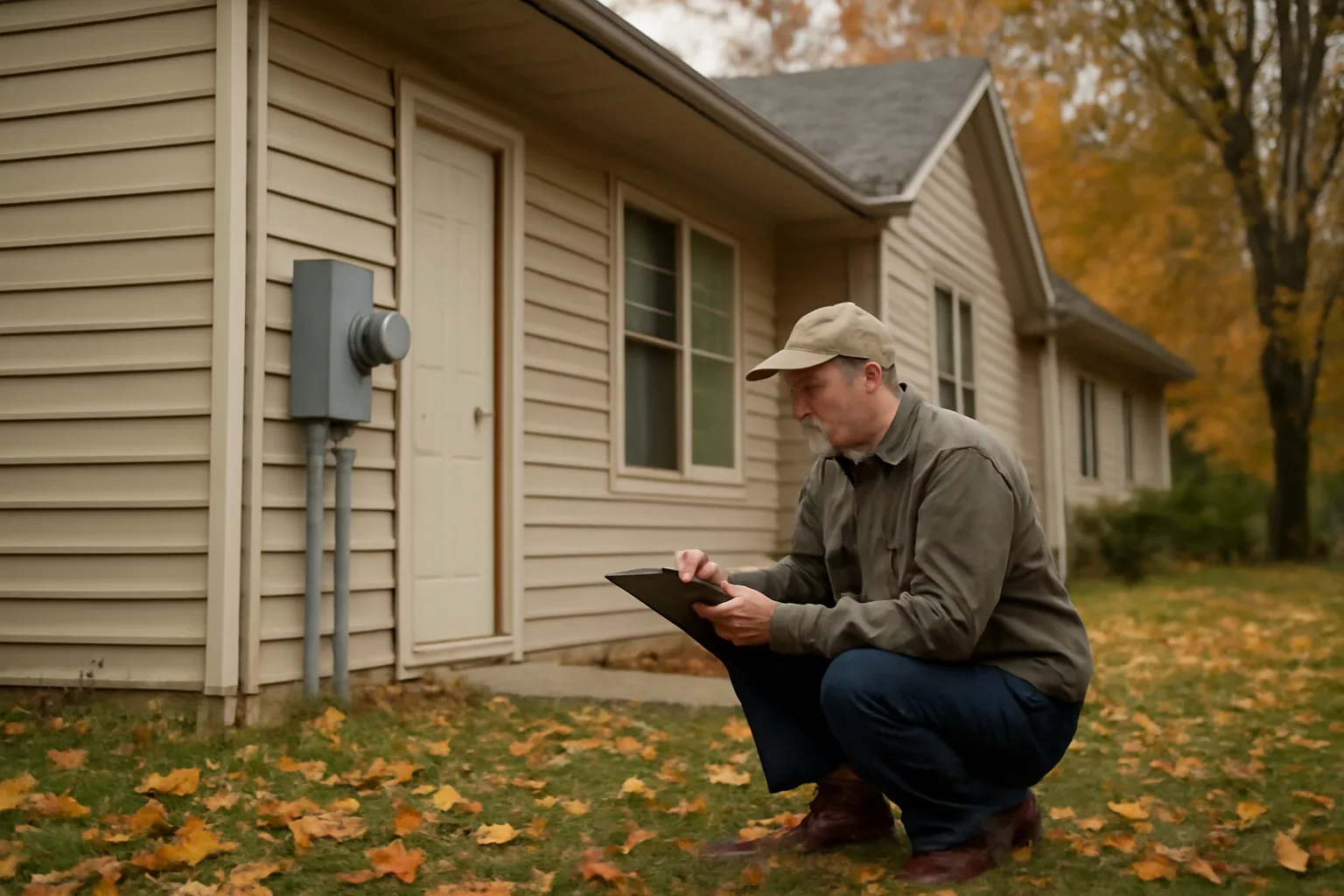
Rental housing inspections generally focus on life-safety and basic habitability items, not cosmetic condition. Expect the inspector to check smoke alarms and carbon monoxide detectors (placement and function), electrical outlets and panel condition, plumbing for leaks and functioning fixtures, water heater safety (temperature/pressure relief valve, proper venting), furnace and heating system condition, window and door locks, means of egress (a second way out of bedrooms, especially basement bedrooms), handrails and guardrails on stairs, and general structural and exterior conditions like roof, siding, and foundation. Many cities, and this is consistent with general model housing code practice reflected in HUD's Housing Quality Standards, treat things like working locks on entry doors, unobstructed emergency exits, and functioning heat as non-negotiable pass/fail items. HUD's HQS regulations at 24 CFR 982.401 list performance requirements covering space and security, thermal environment, sanitary facilities, and electrical safety as core habitability checks for federally assisted housing, a framework many local code officials reference when building their own inspection checklists [1]. Local codes like Ames' rental ordinance layer city-specific requirements on top of that general framework, like local egress window sizing or handrail height rules, so ask the city for their specific inspection checklist rather than assuming a generic list covers everything they'll look at. Basement bedrooms get extra scrutiny almost everywhere rental inspection programs exist, because egress window size and window well dimensions are a common fail point. If you're converting a basement room into a bedroom to add rental income, check the egress requirement before you advertise the unit, not after a failed inspection delays your first tenant.
How much does an Ames rental inspection cost?
Ames charges permit and inspection fees that vary by number of units and whether it's an initial inspection or a reinspection after a failed first attempt. These fees change over budget cycles, so the specific dollar amount isn't something we'll guess at here. Confirm the current fee schedule with the City of Ames rental housing program directly, ideally in writing (email) so you have a record of what you were quoted. As a budgeting reference point, many mid-size U.S. cities with mandatory rental inspection programs charge somewhere in the range of $25 to $150 per unit for initial or renewal permits, with reinspection fees (for a failed first inspection) often running an additional flat fee. That's a general range across cities with similar programs, not an Ames-specific number, so treat it as a rough planning anchor only. Beyond the city fee, budget for your own time and any repair costs surfaced by the inspection. A cracked GFCI outlet or a missing smoke detector costs very little to fix. A furnace that fails a safety check or an electrical panel that needs an electrician's sign-off costs a lot more and can push your move-in date back weeks if you don't plan for it.
What happens if my rental fails inspection or I get a violation notice?
If a unit fails, you typically get a written list of violations and a deadline to correct them, then the city reinspects. Miss the deadline or fail again and most municipal rental codes allow escalating fines, and in serious cases (unresolved life-safety hazards), an order that the unit not be occupied until compliance is met. If you received a notice with a fine attached, don't ignore it hoping it goes away. Rental code violations in most Iowa municipalities are enforceable through municipal infraction procedures, which can mean court costs on top of the original fine if it goes unaddressed. Call the inspector or the office listed on the notice, ask exactly what needs fixing and by when, and ask whether a reinspection fee applies. Most inspectors would rather help you get to compliance than escalate to fines, and being upfront about a repair timeline (especially if you need a licensed contractor for electrical or gas work) often buys you reasonable flexibility. If you disagree with a violation finding, ask about the city's appeal process. Most municipal codes include one, usually through a board of appeals or the city council, with a filing deadline measured in days, so don't sit on it.
How often do I need to renew my Ames rental permit?
Rental permits in mandatory inspection cities typically renew on a fixed cycle, commonly annually or every two to three years, sometimes with a longer interval for properties with a clean inspection history and a shorter interval (or more frequent spot checks) for properties with repeat violations. Ames' specific renewal cycle and any compliance-based tiering should be confirmed directly with the rental housing office, since programs like this get adjusted by city council periodically. Mark your renewal date somewhere you'll actually see it (calendar reminder, not a sticky note on a filing cabinet), because a lapsed permit can mean you're technically renting without a valid license, which reopens you to the same fines and enforcement track as a landlord who never registered at all.
What can a landlord look at during a rental inspection?
During a routine or move-in/move-out unit inspection (separate from the city's licensing inspection), a landlord can generally check the condition of walls, floors, fixtures, appliances, smoke detectors, and general cleanliness, and document damage against the security deposit. A landlord generally cannot search personal belongings, go through drawers or closets beyond a visual check for damage, or use the inspection as a pretext to harass a tenant or retaliate for a complaint. Most states require advance notice before a landlord enters an occupied unit for a non-emergency inspection, commonly 24 to 48 hours, though the exact number and whether it must be written notice varies by state statute. Iowa's landlord-tenant law, chapter 562A of the Iowa Code, addresses landlord entry and requires reasonable notice with specifics that can differ from another state's rule, so check your state's specific landlord-tenant chapter rather than assuming a number from a different state applies [2]. Emergencies (a burst pipe, a reported gas smell, fire) are the standard exception where landlords can enter without advance notice, because delaying entry could cause property damage or a safety risk.
Who is responsible for a rental property walk-through inspection in California?
This comes up often because California has specific statutory language on move-out inspections that other states don't. Under California Civil Code section 1950.5, a landlord must, if the tenant requests, conduct an initial inspection before the tenant moves out, give the tenant an itemized list of deficiencies, and an opportunity to fix them before the final move-out deposit deduction happens [3]. The landlord (or their authorized agent, like a property manager) is responsible for conducting that walk-through and providing the required written notice, generally within a reasonable time before the lease ends. California's statute specifically states the landlord must give the tenant "reasonable notice of no less than 48 hours" prior to either inspection unless the tenant waives that notice requirement [3]. If you manage property in California, this pre-move-out inspection right is a distinct legal requirement from a city rental licensing inspection like Ames', and the two shouldn't be confused. Ames' program is a health and safety compliance check tied to permitting; California's move-out walk-through is a tenant protection tied to security deposit handling.
What is landlording, and what is a landlord?
A landlord is a person or entity that owns residential or commercial property and rents it to another party (the tenant) in exchange for regular payment, usually under a lease agreement. Landlording is the informal term for the ongoing work of owning and managing rental property: finding tenants, collecting rent, handling maintenance and repairs, following local and state landlord-tenant law, and keeping the property compliant with codes like Ames' rental housing ordinance. It's part landlord-tenant law, part maintenance contractor, part bookkeeper. Small landlords with one to ten units, which is exactly who mandatory rental licensing programs like Ames' are built around, often underestimate the compliance side until an inspection notice or a violation fine shows up in the mail. That's usually the moment people start actually reading their city's rental code instead of assuming it doesn't apply to them because they only own one duplex.
How do you become a landlord, and how do you actually do the job well?
Becoming a landlord legally starts with owning (or having authority to lease) residential property, then complying with whatever your city and state require before you rent it out: business licensing if your city requires one, a rental permit and inspection if your city mandates that (as Ames does), insurance, and a written lease that complies with your state's landlord-tenant statute. Beyond the legal minimum, being a landlord that doesn't generate constant headaches means: screening tenants consistently (same criteria for every applicant, documented), keeping a maintenance response system so repair requests don't sit for weeks, understanding your state's notice-to-enter and eviction procedure rules before you need them in a crisis, and keeping your rental license or permit current so an expired registration doesn't become a legal problem layered on top of whatever else is going wrong. A lot of first-time landlords learn the compliance side reactively, meaning a fine or an inspection failure teaches them what the rules actually are. Reading your city's rental code and your state's landlord-tenant statute before you list the unit saves that lesson. For background on landlord obligations and tenant protections generally, see our guides on tenant rights and tenants rights.
What rights do tenants have without a lease?
A tenant without a written lease, often called a tenant at will or a month-to-month tenant depending on state law, still has legal rights. Most states treat an oral or implied rental agreement as creating a periodic tenancy (commonly month-to-month), which means the tenant is entitled to habitability protections, proper notice before eviction, and (in most states) advance notice before the landlord enters, even without paper signed. What a tenant without a lease typically does NOT have is a fixed term of guaranteed tenancy. Either party can usually end a month-to-month arrangement with proper notice, commonly 30 days, though some states and cities (especially those with just-cause eviction ordinances) require more and limit the landlord's reasons for ending the tenancy. State law, not the absence of a written lease, controls what protections apply, so a tenant without paperwork isn't a tenant without rights. See our related guides on tenant and tenant relationships and renters rights for more on this.
Why do landlords require renters insurance?
Landlords require renters insurance mainly to shift liability and personal property risk off the landlord's own policy. A landlord's property insurance typically covers the building structure, not the tenant's belongings, and it often doesn't fully cover a tenant's liability if the tenant causes damage (a kitchen fire, an overflowing tub that damages the unit below). Requiring renters insurance, commonly a policy with liability coverage in the $100,000 range and some level of personal property coverage, means if a tenant's negligence causes damage, there's an insurance policy to pursue instead of the landlord absorbing the cost or suing a tenant directly for money they may not have. It's a cheap risk-management requirement for the landlord (tenant policies are commonly in the range of $15 to $30 a month depending on coverage and location) that meaningfully lowers the landlord's own exposure.
How much notice does a landlord have to give before entering or ending a tenancy?
This depends entirely on your state, and the answer is genuinely different in Iowa versus California versus Ohio versus everywhere else, so treat any specific number as a starting point to verify against your state's statute, not a universal rule. For routine, non-emergency entry (like a maintenance visit or inspection), many states require 24 to 48 hours advance notice. Iowa's landlord-tenant law addresses reasonable notice for entry under Iowa Code chapter 562A [2]. California requires no less than 48 hours before the specific move-out walk-through inspection under Civil Code 1950.5, and separately requires reasonable notice, generally interpreted as 24 hours, for other non-emergency entries under Civil Code 1954 [4]. For ending a month-to-month tenancy, 30 days notice is common across many states, though some require 60 days for longer tenancies or add just-cause requirements limiting why a landlord can end the tenancy at all. Always confirm the specific notice period and format (written vs. verbal, delivery method) required in your state before serving any notice, since getting this step wrong can invalidate the entire notice and restart your timeline.
What can't a landlord do in Ohio?
Ohio's landlord-tenant law, chapter 5321 of the Ohio Revised Code, sets out specific landlord obligations and prohibitions. Ohio Revised Code section 5321.04 requires landlords to keep the premises in a fit and habitable condition, comply with building and housing codes, keep common areas safe, and maintain electrical, plumbing, heating, and other systems in good working order [5]. Ohio law also prohibits landlords from shutting off utilities, changing locks, or removing a tenant's belongings as a way to force them out (a "self-help eviction"), a landlord in Ohio has to go through the formal eviction process in court instead. Ohio Revised Code section 5321.02 also protects tenants from retaliation, meaning a landlord generally can't raise rent, reduce services, or try to evict a tenant specifically because that tenant complained to a housing authority or joined a tenants' union [6]. This is Ohio-specific statutory language, and if you're a landlord in Ames, Iowa, Ohio's rules don't apply to you directly, but the underlying pattern (habitability duty, no self-help eviction, no retaliation) is close to universal across state landlord-tenant law, including Iowa's chapter 562A.
Frequently asked questions
Does every rental unit in Ames need a license, or just multi-unit buildings?
Most rental housing codes structured like Ames' program cover single-family rentals, duplexes, and larger apartment buildings alike, more than multi-unit properties. Whether a specific arrangement (like renting a single room in an owner-occupied home) is exempt depends on Ames' exact ordinance definitions, so confirm your property type's status directly with the city's rental housing program.
Can I rent out my unit while waiting for the inspection to be scheduled?
Generally no. Most mandatory rental licensing cities, and this is consistent with Ames' general permitting approach, require the initial inspection to pass and the permit to be issued before a tenant legally moves in. Renting before that can expose you to fines and complicate any dispute if something goes wrong. Confirm timing rules with the city before signing a lease.
What happens if I buy a property in Ames that already has tenants and an expired rental permit?
You typically inherit the compliance obligation as the new owner. Contact the rental housing program promptly after closing to transfer or reapply for the permit and schedule an inspection, since an expired permit under new ownership is still treated as an unlicensed rental in most city codes.
Do out-of-state or out-of-town landlords need a local contact person in Ames?
Many rental housing codes in college towns require an in-area contact if the owner doesn't live locally, so the city and tenants have someone reachable for urgent issues. Confirm with the City of Ames rental housing office whether this applies and what qualifies as an acceptable local contact.
How long does a typical rental inspection appointment take?
Most single-unit rental housing inspections take somewhere between 20 and 60 minutes depending on the unit's size and condition, though this varies by city and inspector. Ames-specific timing isn't published in a way we can cite reliably, so ask the office when they schedule your appointment.
What is landlording, in simple terms?
Landlording is the everyday work of owning and renting out residential property: finding tenants, collecting rent, handling repairs, and following your state's landlord-tenant law and your city's rental licensing rules, if it has any, like Ames does.
What is a landlord, legally speaking?
A landlord is the party in a lease agreement who owns the property and grants a tenant the right to occupy it in exchange for rent. Landlords have obligations under state landlord-tenant law (habitability, notice requirements) and, in cities like Ames, additional local licensing and inspection obligations.
What rights do tenants have without a signed lease?
A tenant without a written lease generally still has a periodic tenancy (often month-to-month) under state law, with habitability rights and entry-notice protections intact. What they typically lack is a guaranteed fixed term; either party can usually end the arrangement with proper notice under state law.
Why do landlords require renters insurance if they already have their own policy?
A landlord's own property insurance usually covers the building, not the tenant's belongings or the tenant's liability for damage they cause. Requiring renters insurance shifts that risk to a separate, cheap policy (often $15 to $30 a month) instead of leaving the landlord to absorb the loss or chase the tenant for money.
How much notice does a landlord have to give before entering a rental unit?
It depends on the state. Many states require 24 to 48 hours advance notice for non-emergency entry. California requires at least 48 hours for the statutory pre-move-out inspection under Civil Code 1950.5. Iowa's notice rules fall under Iowa Code chapter 562A. Always check your specific state's statute.
What can a landlord look at during a rental inspection?
A landlord can generally inspect the unit's condition: walls, floors, appliances, fixtures, smoke detectors, and cleanliness. A landlord generally cannot search personal belongings or use an inspection as a pretext for harassment or retaliation, and most states require advance notice before entry.
What can't a landlord do in Ohio?
Under Ohio Revised Code 5321.04, landlords must keep units habitable and code-compliant. Ohio law also bars self-help evictions (shutting off utilities or changing locks to force a tenant out) and, under ORC 5321.02, bars retaliating against tenants who file complaints or join tenant organizations.
Who is responsible for a rental walk-through inspection in California?
The landlord (or their authorized agent) is responsible for conducting the pre-move-out inspection tenants can request under California Civil Code 1950.5, providing the tenant a written list of deficiencies and at least 48 hours notice before the walk-through happens.
Sources
- HUD, Housing Quality Standards performance requirements, 24 CFR 982.401: Core habitability categories checked in standardized rental inspections, including space/security, thermal environment, and electrical safety
- Iowa Legislature, Iowa Code Chapter 562A (Uniform Residential Landlord and Tenant Law): Iowa's landlord-tenant statute governs entry notice and landlord/tenant obligations for Ames rentals
- California Legislative Information, Civil Code Section 1950.5: California landlords must give tenants at least 48 hours notice and an itemized deficiency list before a move-out inspection
- Ohio Legislature, Ohio Revised Code Section 5321.04: Ohio landlords must keep rental premises in a fit and habitable condition and comply with housing codes
- Ohio Legislature, Ohio Revised Code Section 5321.02: Ohio law prohibits landlord retaliation against tenants who report code violations or join tenant organizations
- California Legislative Information, Civil Code Section 1954: California requires reasonable notice, generally 24 hours, before a landlord enters a unit for non-emergency purposes other than the statutory move-out inspection