Last updated 2026-07-26
TL;DR
Baltimore County requires a rental license for most non-owner-occupied units, renewed every two years, with an inspection checking smoke alarms, electrical, plumbing, egress windows, and general safety. There's no single official public PDF checklist, but the county publishes the code sections inspectors use. Confirm current fees and forms with the Baltimore County Department of Permits, Approvals and Inspections.
Does Baltimore County actually require a rental license?
Yes. Baltimore County requires a rental license for most residential rental units under its Property Rental Registration and Licensing law, codified in the Baltimore County Code. The law applies to landlords renting single-family homes, condos, and small multi-unit buildings that aren't owner-occupied. The county created this system through Bill 130-19, which amended the older rental registration rules and added a licensing and inspection requirement for most rental dwellings countywide [1]. There are some exemptions. Owner-occupied properties with a rented room, certain public housing units, and a few other narrow categories may not need a license. But if you're a landlord getting a notice, fine, or inspection deadline, the county has almost certainly already determined your property is covered. Don't assume you're exempt without confirming with the Department of Permits, Approvals and Inspections (PAI), which administers the program [2]. The license isn't a one-time thing. Baltimore County rental licenses require periodic renewal, and each renewal cycle typically triggers a new inspection unless the county's current rules allow a grace period for properties with a clean history. Confirm the current renewal interval and inspection frequency with PAI directly, because these details have shifted since the original 2019 bill and could shift again.
Is there an official Baltimore County rental license inspection sheet or checklist?
Baltimore County does not publish one single downloadable form called a "rental license inspection sheet" in the way some cities do. What exists instead is a set of code-based inspection standards that PAI inspectors use, tied to the county's building, electrical, and property maintenance codes, plus the rental licensing bill itself [1][2]. That means the actual "checklist" your inspector works from is really a combination of: - Baltimore County Code provisions on rental licensing and registration (Bill 130-19 and its codified sections) [1]
- The county's adopted property maintenance and building code standards, which set minimum requirements for smoke alarms, electrical systems, plumbing, and structural safety
- Any supplemental checklist PAI staff use internally for consistency across inspectors If you want the literal document an inspector carries, call or email PAI and ask for their current rental inspection checklist or pre-inspection guidance sheet. Programs like this get updated, and a third-party article (including this one) can't guarantee it matches what's in an inspector's hand next month. What we can tell you, based on the public code and typical property maintenance inspection practice, is what almost always gets checked.
What does a Baltimore County rental inspector actually check?
| Smoke alarms | Working alarm in each sleeping room, outside sleeping areas, and on each level | |
|---|---|---|
| Carbon monoxide alarms | Required near fuel-burning appliances or attached garages in most Maryland jurisdictions [4] | |
| Electrical | No exposed wiring, working outlets, GFCI near water sources, panel access clear | |
| Plumbing | No active leaks, functioning hot water, proper drainage, no cross-connections | |
| Egress | Windows in bedrooms must open and meet minimum size for emergency exit | |
| Structural | No rotted framing, stable stairs and railings, sound foundation visible signs | |
| Exterior | Roof condition, gutter drainage away from foundation, no trip hazards, working exterior lighting | |
| Pest and sanitation | No active infestation, trash properly contained | |
| Heating | Functioning heat source rated for the space, code often requires heat capable of maintaining a minimum indoor temperature in winter | Maryland's statewide smoke alarm law, tied to Public Safety Article 9-303, requires battery or hardwired alarms depending on when the structure was built or last had major renovation, and this baseline applies across the state including Baltimore County [4]. If your smoke alarms are more than 10 years old, replace them before the inspection. That's a common, easy fail. Inspectors are not grading your paint job or your decor. They're checking for things that could hurt someone or violate code. If you've kept up with basic maintenance, most single-family rentals pass with only minor corrections. |
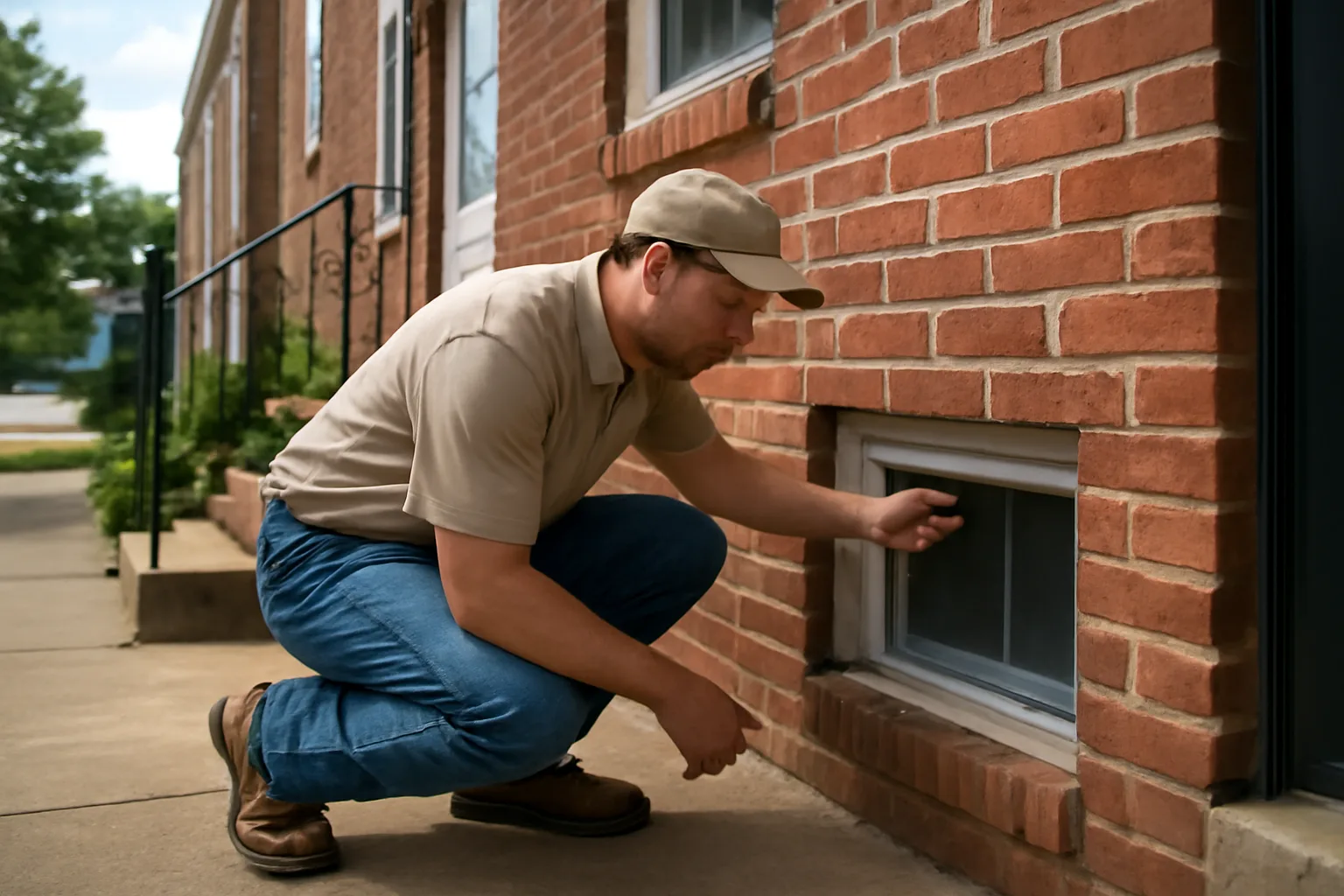
Inspectors are verifying that the unit meets basic health and safety code, not doing a design review. Expect them to walk every room, the exterior, and mechanical spaces. Common items on a rental safety inspection in a jurisdiction like Baltimore County, based on standard property maintenance code categories (International Property Maintenance Code, which many Maryland jurisdictions reference or adapt) [3]: | Category | What gets checked |
How much does a Baltimore County rental license cost?
Fees vary by unit count and have changed since the original 2019 ordinance. Rather than guess at a specific dollar figure that may be outdated by the time you read this, confirm the current fee schedule with Baltimore County PAI's rental licensing office before you budget or pay. Fee schedules for licensing programs like this typically get adjusted through county budget ordinances, more than the original licensing bill, so the number in Bill 130-19 may not be the number charged today [1][2]. What you should ask PAI directly: - The current per-unit license fee
- Whether there's a separate inspection fee
- Late fees or penalties if you're renewing after a notice
- Whether multi-unit owners get a reduced per-unit rate Budget for both the license fee itself and any cost to fix violations found at inspection. A failed smoke alarm or a missing GFCI outlet is cheap to fix, usually under $50 in parts. A structural or major electrical issue can run into the hundreds or thousands depending on scope.
What happens if I get a violation notice or miss my inspection deadline?
Baltimore County can issue citations and fines for operating a rental without a current license, and for failing to correct violations found during inspection within the timeframe given. Under the county's licensing bill, unlicensed rental operation is enforceable as a code violation, and repeat or uncorrected violations can escalate to civil penalties [1]. If you got a notice, the first move is simple: don't ignore it. Call PAI, confirm exactly what's cited, and get the reinspection or correction deadline in writing. Most property maintenance violations give you a defined window, often somewhere in the range of 30 days, though this can vary by violation type and severity. Confirm the specific deadline on your notice, because it governs your case, not a general rule. If you can't finish repairs by the deadline, ask PAI about an extension before the deadline passes, not after. Inspectors and code officials generally have more flexibility to work with a landlord who calls proactively than one who lets a deadline lapse silently. Fines for continued non-compliance in Maryland county code enforcement programs often stack per day the violation continues, which is why a $150 problem can turn into a $1,500 problem if you sit on it. Get ahead of it.
What can a landlord look at during an inspection, and what's off-limits?
For a government rental license inspection (as opposed to a landlord's own routine unit inspection), the county inspector can look at anything related to code compliance: structural components, electrical panels, smoke and CO alarms, plumbing fixtures, window operation, heating systems, and general sanitation. They generally are not there to inspect your tenant's personal belongings or search for unrelated issues. For a landlord's own periodic walk-through (separate from the county's licensing inspection), the scope is narrower and governed by your lease and Maryland law on landlord entry, not building code. A landlord doing their own inspection can check: smoke alarm function, visible water damage, HVAC filter condition, general upkeep, and confirm no unauthorized occupants or pets if the lease restricts them. A landlord should not go through drawers, closets, or personal storage beyond what's needed to check for a maintenance issue, and should not use a routine inspection as cover to harass a tenant. Maryland law requires reasonable notice for landlord entry in most cases, and many leases specify 24 to 48 hours' notice for non-emergency entry. Emergency situations (active leak, fire, gas smell) don't require advance notice. If you're unsure what your specific lease requires, that document controls in addition to any state minimum.
Who is responsible for a rental property walk-through inspection?
This depends on which inspection you mean. For the county's rental license inspection, PAI schedules and conducts it (or in some jurisdictions, contracts it to licensed home inspectors); the landlord is responsible for making the unit accessible and correcting anything cited. For a landlord's own move-in or move-out walk-through, responsibility sits with the landlord or their property manager, sometimes done jointly with the tenant present so both parties agree on the unit's condition. A note for readers outside Maryland: this question sometimes comes up in a California context specifically ('who is responsible for rental property walk through inspection california'). California doesn't have a single statewide rental licensing inspection program the way Baltimore County does; inspection and habitability responsibility there runs through California Civil Code Section 1941 and 1941.1, which put the duty to maintain habitable conditions on the landlord, with move-in/move-out inspection rights under Civil Code Section 1950.5 [5][6]. If you're operating in both Maryland and California, don't assume the rules transfer between states. They don't.
What is landlording, and what does it mean to be a landlord?
Landlording is the practice of owning residential or commercial property and renting it to tenants in exchange for regular payment, while handling the legal, financial, and maintenance responsibilities that come with it. A landlord is simply the person or entity that owns the rental property and enters into a lease agreement with a tenant, taking on the legal duties that come with that role: maintaining habitability, following fair housing law, handling security deposits correctly, and meeting local licensing requirements like Baltimore County's. The U.S. Department of Housing and Urban Development enforces the federal Fair Housing Act, which prohibits discrimination in rental housing based on race, color, national origin, religion, sex, familial status, or disability [7]. Every landlord, regardless of city or how many units they own, has to comply with this at the federal level in addition to whatever state and local licensing rules apply. Being a landlord in a licensing city like those in Baltimore County means your obligations are layered: federal fair housing law, Maryland landlord-tenant law, Baltimore County property maintenance code, and the specific rental licensing ordinance. Missing any one layer is how people end up with a violation notice they didn't see coming.
How do you become a landlord, and how do you actually do it well?
Becoming a landlord starts with owning or controlling a rental property, then meeting whatever registration, licensing, and tax obligations your city and state require before you can legally rent it out. In Baltimore County, that means registering the rental and getting a license through PAI before you sign a lease with a tenant, not after [1][2]. The practical steps, in rough order: 1. Confirm the property is zoned for rental use and check whether an HOA or condo association restricts renting 2. Register and license the rental with the county (or confirm you're exempt) before advertising it 3. Get the property inspection-ready: working smoke and CO alarms, no active leaks, functioning heat, clear egress windows 4. Set up a compliant lease, security deposit handling process, and a system for maintenance requests 5. Get landlord (dwelling fire or landlord-specific) insurance, separate from a standard homeowners policy, since most homeowner policies exclude rental use 6. Screen tenants consistently and legally, applying the same criteria to every applicant to avoid fair housing exposure Doing it well mostly comes down to treating it like a small business with legal exposure, not a side hobby. Landlords who get burned by fines and violations are almost always the ones who skip step 2 or step 3, either because they didn't know the rule existed or assumed a small property wouldn't get noticed. Counties like Baltimore have gotten more aggressive about identifying unlicensed rentals through utility records, tax filings, and tenant complaints, so 'nobody will check' is a bad bet.
Why do landlords require renters insurance, and what rights do tenants have without a lease?
Landlords require renters insurance mainly to cover the tenant's personal belongings and liability, since a landlord's own property insurance typically covers the building structure but not the tenant's furniture, electronics, or liability if a guest gets hurt in the unit. It also reduces the landlord's own liability exposure indirectly: if a tenant's negligence causes damage (a kitchen fire, an overflowing tub), renters insurance is often the first line of coverage before it becomes the landlord's insurance claim or a legal dispute. Requiring it is legal in most states, including Maryland, as long as it's applied consistently to all tenants and disclosed in the lease. On tenants without a lease: a tenant without a written lease, sometimes called a tenant-at-will or month-to-month tenant by default, still has real legal rights. In Maryland, a tenancy without a written lease is generally treated as a periodic tenancy (commonly month-to-month), and the landlord still owes the tenant a habitable unit, proper notice before entry, and a legal eviction process through the court, not a self-help eviction (changing locks, shutting off utilities, or removing belongings without a court order). Maryland's landlord-tenant law under the Real Property Article governs notice periods and the summary ejectment process regardless of whether a written lease exists [8]. Self-help eviction is illegal in essentially every U.S. state, including Maryland, and this is one of the most common ways landlords accidentally create serious legal liability. If a tenant has no lease and you want them out, you still need proper written notice and, if they don't leave, a court filing. There's no shortcut.
How much notice does a landlord have to give before entry or ending a tenancy?
Notice requirements split into two very different categories: notice to enter the unit, and notice to end a tenancy. Don't confuse them. For entry, Maryland doesn't have one single statewide statute mandating a specific number of hours' notice for routine landlord entry the way some states do, so the governing document is usually the lease itself. Many Maryland leases specify 24 to 48 hours' notice for non-emergency entry (repairs, inspections, showings). Emergencies (fire, flooding, gas leak) don't require advance notice under general legal principle, since the landlord is protecting the property and occupants from imminent harm. For ending a periodic (month-to-month) tenancy without cause, Maryland's Real Property Article generally requires the landlord to give written notice at least one full rental period in advance for month-to-month tenancies, commonly 60 days depending on the specific rental term and local jurisdiction rules; confirm the exact notice period and any Baltimore County-specific rules with the county's landlord-tenant office or a local attorney before sending a notice [8]. For eviction based on lease violation or nonpayment of rent, notice periods and the court process differ again, and getting this wrong is one of the fastest ways to lose a case in front of a Maryland District Court judge. Because notice periods vary by tenancy type, lease terms, and reason for the notice, this is one area where a landlord should double check the exact current statute language or talk to a local landlord-tenant attorney rather than rely on a general rule of thumb.
What can't a landlord do (and how does this differ state to state, like Ohio)?
Across pretty much every U.S. state, a landlord cannot discriminate based on a federally protected class, cannot retaliate against a tenant for making a legitimate complaint or repair request, cannot shut off utilities or change locks to force a tenant out (self-help eviction), and cannot enter without proper notice except in a genuine emergency. In Ohio specifically, landlord-tenant law is codified in Ohio Revised Code Chapter 5321. Under this chapter, a landlord in Ohio cannot retaliate against a tenant for exercising a legal right (like reporting a code violation), generally must give reasonable notice before entering (Ohio courts and the statute reference reasonable notice, with 24 hours commonly cited as a practical standard), and cannot use self-help eviction methods like removing a tenant's belongings or changing locks without a court order [9]. Ohio Revised Code Section 5321.04 specifically lays out landlord obligations including maintaining the premises in a fit and habitable condition [9]. The common thread across Maryland, Ohio, and basically every state: the eviction and entry process runs through statute and the courts, not through the landlord's own enforcement. If you're a landlord in one state trying to figure out the rule in another, don't assume they match. Even neighboring states can differ meaningfully on notice periods, security deposit handling timelines, and what counts as habitability.
How should a Baltimore County landlord prep before the inspector arrives?
Walk the property yourself first, ideally a week ahead, using the same categories an inspector uses: smoke and CO alarms, electrical, plumbing, egress, structural, exterior, heating. A practical pre-inspection walk-through: - Test every smoke alarm and CO alarm; replace batteries and any alarm older than 10 years
- Run every faucet and flush every toilet, checking for leaks or slow drainage
- Open every bedroom window to confirm it operates and meets egress size
- Check exposed electrical: no missing cover plates, no exposed wiring, GFCI outlets near sinks
- Confirm heat works and reaches a normal indoor temperature
- Clear access to the electrical panel and any mechanical equipment
- Look at exterior stairs, railings, and walkways for stability and trip hazards
- Confirm gutters and grading direct water away from the foundation If you manage the process yourself and want a structured way to organize the license application, required documents, and a pre-inspection checklist tailored to what these programs generally ask for, that's exactly the gap our $79 one-time City Rental License & Inspection Prep Packet is built to fill. It's not a substitute for confirming current Baltimore County fees and forms directly with PAI, but it saves you from starting from a blank page. For landlords managing multiple units or comparing how Baltimore County stacks up against other licensing cities, it's worth reading how tenants rights and landlord obligations interact once a unit is under an active lease, since inspection compliance and lease compliance often get tangled together in a violation dispute.
Where do I confirm the current Baltimore County rental license rules?
Contact the Baltimore County Department of Permits, Approvals and Inspections directly. They administer the rental licensing program established under Bill 130-19 and can confirm current fees, inspection scheduling, renewal cycles, and any recent code updates [1][2]. Ordinances get amended; a fee or interval that was accurate at publication may not be accurate by the time you're reading this. If you got a specific violation notice, the notice itself should list a case or reference number, the cited code section, and a contact person at PAI. Use that reference number every time you call, it moves things faster than starting from scratch with a general inquiry. One last practical note: keep copies of everything. Every inspection report, every correction you make (with dated photos), every fee receipt. If a dispute ever escalates, whether that's a fine appeal or a tenant complaint, a landlord with a clean paper trail is in a dramatically better position than one relying on memory.
Frequently asked questions
Does Baltimore County require a rental license for a single-family home I rent out?
In most cases, yes. Baltimore County's rental registration and licensing law, established under Bill 130-19, covers most non-owner-occupied residential rentals, including single-family homes, more than multi-unit buildings. Some owner-occupied or specific exempt categories may not need one. Confirm your property's status directly with the Baltimore County Department of Permits, Approvals and Inspections before renting or renewing [1][2].
What happens if I rent without a license in Baltimore County?
Operating an unlicensed rental in Baltimore County is a code violation and can result in citations and fines under the county's rental licensing ordinance. Enforcement can come from tenant complaints, utility record checks, or routine county sweeps. If you get a notice, contact PAI immediately rather than waiting, since penalties can escalate the longer the violation continues [1].
How often does Baltimore County inspect a licensed rental unit?
Inspection frequency is tied to the license renewal cycle, and the specifics have been adjusted since the original 2019 ordinance. Rather than rely on an outdated interval, confirm the current renewal and inspection schedule with Baltimore County's Department of Permits, Approvals and Inspections, since this is exactly the kind of detail that changes with code updates [1][2].
What is landlording as a job or role?
Landlording means owning rental property and managing the legal, financial, and maintenance responsibilities of renting it to tenants, including collecting rent, handling repairs, following fair housing law, and meeting local licensing rules. It's effectively running a small regulated business, even for someone with just one rental unit.
What is a landlord, legally speaking?
A landlord is the property owner (or authorized agent) who enters a lease agreement with a tenant and takes on the legal duties tied to that role: maintaining a habitable unit, following fair housing law under the federal Fair Housing Act, handling deposits correctly, and complying with local licensing and inspection rules like Baltimore County's [7].
What rights does a tenant have without a signed lease?
A tenant without a written lease typically still has a periodic (often month-to-month) tenancy under state law, with rights to habitable housing, proper notice before entry, and a formal court eviction process rather than self-help eviction. In Maryland, this falls under the Real Property Article's landlord-tenant provisions [8]. Verbal agreements still create real legal rights.
Why do landlords require tenants to carry renters insurance?
Renters insurance covers the tenant's personal belongings and liability, which a landlord's own property insurance usually doesn't cover. It also reduces disputes when a tenant's negligence causes damage, since the tenant's policy often responds first. Requiring it is legal if applied consistently and disclosed in the lease.
How much notice must a landlord give before entering a rental unit?
This depends on your state and lease. Maryland doesn't set one fixed statewide number of hours for routine entry, so most leases specify 24 to 48 hours' notice for non-emergency access. Emergencies like fire or flooding don't require advance notice. Check your specific lease language and, if unsure, ask a local landlord-tenant attorney.
What can a landlord look at during a rental license inspection?
A government rental license inspector can check anything tied to code compliance: smoke and CO alarms, electrical systems, plumbing, egress windows, heating, structural condition, and general sanitation. They're not there to inspect personal belongings or unrelated areas, just code-relevant safety items.
What can't a landlord do in Ohio specifically?
Under Ohio Revised Code Chapter 5321, an Ohio landlord cannot retaliate against a tenant for exercising a legal right, must give reasonable notice before entry, and cannot use self-help eviction methods like changing locks or removing belongings without a court order. Ohio Revised Code Section 5321.04 also requires landlords to keep the unit fit and habitable [9].
Who is responsible for a rental property walk-through inspection in California?
California doesn't run a countywide licensing inspection program like Baltimore County's. Habitability duties fall on the landlord under California Civil Code Section 1941 and 1941.1, and move-in/move-out inspection rights are governed by Civil Code Section 1950.5. The landlord or property manager typically conducts the walk-through, sometimes jointly with the tenant [5][6].
Is there a downloadable official Baltimore County rental inspection checklist PDF?
Baltimore County doesn't publish one single standardized public PDF called a rental inspection checklist. The inspection is based on the county's rental licensing ordinance and property maintenance code standards. Contact the Department of Permits, Approvals and Inspections directly and ask for their current internal checklist or pre-inspection guidance document [1][2].
How much does it cost to fix common Baltimore County rental inspection violations?
Minor items like smoke alarm replacement or a missing GFCI outlet often cost under $50 to $100 in parts. Bigger issues, like structural repairs or electrical panel upgrades, can run into the hundreds or thousands depending on scope. Fix easy items yourself before the inspection to avoid a reinspection fee and delay.
Sources
- Baltimore County Council, Bill 130-19: Baltimore County's rental registration and licensing law and its requirements
- Baltimore County Government, Department of Permits, Approvals and Inspections: PAI administers rental licensing and inspections in Baltimore County
- International Code Council, International Property Maintenance Code: Standard property maintenance code categories used as a baseline for rental safety inspections
- Maryland General Assembly, Public Safety Article Section 9-303: Maryland's statewide smoke alarm requirements for residential structures
- California Legislative Information, Civil Code Section 1941: California landlord duty to maintain habitable rental premises
- California Legislative Information, Civil Code Section 1950.5: California rules on move-in and move-out inspections and security deposits
- U.S. Department of Housing and Urban Development, Fair Housing Act overview: Federal Fair Housing Act protections landlords must comply with
- Maryland General Assembly, Real Property Article Title 8: Maryland notice requirements and landlord-tenant provisions for periodic tenancies
- Ohio Legislature, Ohio Revised Code Section 5321.04: Ohio landlord obligations including habitability and limits on landlord conduct