Last updated 2026-07-26
TL;DR
Baltimore County requires nearly all rental dwellings to have a rental license, renewed every two or three years depending on unit type, with a Code Enforcement inspection before license issuance. Owners apply through the county's permits portal, pay a per-unit fee, and schedule a walkthrough covering smoke alarms, egress, electrical, and structural condition. Confirm current fees and deadlines with Baltimore County's Department of Permits, Approvals and Inspections.
Does Baltimore County require a rental license for every rental unit?
Yes, with a short list of exceptions. Baltimore County Code requires anyone who rents out a dwelling unit, including single-family homes, condos, apartments, and accessory units, to hold a valid rental license before leasing it to a tenant. The county's rental licensing law is codified under Baltimore County Code, Article 35, Title 4 (Landlord-Tenant provisions and rental licensing) [1]. The most common exemptions are owner-occupied homes where the owner lives in one unit of a duplex, and certain properties already covered by a different regulatory scheme (some public housing, for example). If you're not sure your unit qualifies for an exemption, don't guess. Call the county's Department of Permits, Approvals and Inspections (PAI) and ask them to confirm your specific address and unit type, because exemption rules get interpreted narrowly and getting it wrong means fines, more than a warning. A lot of small landlords assume that renting to family, or renting a room in a house they don't live in, falls outside the licensing law. It usually doesn't. If money changes hands for occupancy and you're not living there yourself, assume you need a license until the county tells you otherwise.
How do I apply for a Baltimore County rental license?
You apply online through Baltimore County's permits and licensing portal, list every rental address and unit you own, and pay the per-unit fee before an inspection gets scheduled. The county has moved most rental licensing to its online system, and PAI's rental licensing page walks through the required documents, which typically include proof of ownership, a completed application, and payment [2]. For multi-unit owners, each unit generally needs its own license number, even if you're filing one application. That matters for record-keeping. If you own a duplex and only license one side because that's the side with a tenant, you'll get flagged the moment the second unit is occupied and PAI cross-checks utility or tax records, which the county does periodically. Expect the process to take a few weeks from application to inspection scheduling, longer during peak renewal season (many counties see a spring rush ahead of summer lease turnover). Confirm current processing times with PAI directly since staffing and volume shift year to year.
How much does a Baltimore County rental license cost?
Fees are charged per rental unit and get renewed on a set cycle rather than annually for most property types. Baltimore County's rental licensing fee schedule is set by county code and administrative fee resolutions, and PAI publishes the current fee amounts on its licensing pages [2]. Because fee schedules change through county budget action, don't rely on a number you saw in a forum post or an old blog: confirm the exact current per-unit fee and any late-application penalty directly with Baltimore County's Department of Permits, Approvals and Inspections before you budget for it. What you can plan around: license fees are per unit, not per property, so a landlord with a triplex pays three times what a landlord with a single-family rental pays. Late renewal typically triggers an additional fee on top of the base license cost, and operating without a license at all exposes you to civil citations under the county code enforcement process, which can run into real money fast if it drags on. Budget for the inspection reinspection fee too. If your unit fails the first inspection, most jurisdictions including Baltimore County charge a reinspection fee for the second visit. Ask PAI for that specific number when you apply so it's not a surprise.
What does the Baltimore County rental inspection actually check?
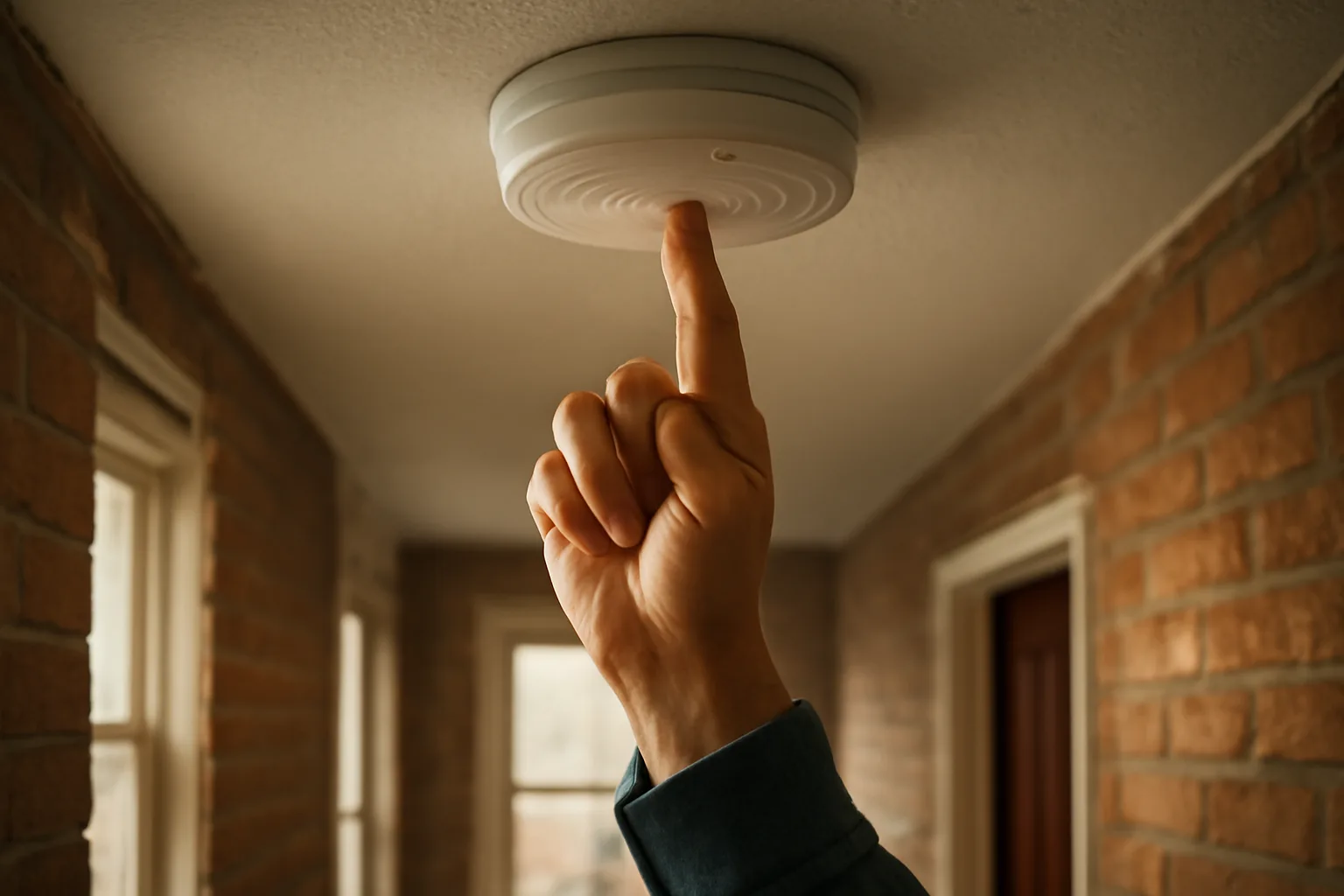
Inspectors are checking basic health and safety systems, not aesthetics. In Baltimore County, that generally means: working smoke alarms in the right locations, carbon monoxide alarms where fuel-burning appliances or attached garages exist, safe electrical panels and outlets, functioning heat, hot water, and plumbing, secure and code-compliant egress (windows and doors that open properly, especially in bedrooms), handrails on stairs, and no obvious structural hazards like rotted decking or unsafe foundations. Maryland state law separately requires working smoke alarms in rental housing, and Baltimore County's inspection checks for compliance with that requirement as part of the rental inspection [3]. If your smoke alarms are older than 10 years or are the old ionization-only type without a sealed 10-year battery, replace them before the inspection. That single item causes more failed inspections than almost anything else, based on what code enforcement offices across Maryland routinely report in public compliance guidance. Inspectors are not grading paint color, furniture, or whether the unit is nicely decorated. They are asking: if someone rented this today, would it be safe? That framing helps you walk your own property the way an inspector will. For a broader sense of what any landlord walkthrough typically covers, whether it's mandated by a city or done voluntarily between tenants, see our related piece on tenant rights around inspections and notice.
How often does Baltimore County require rental license renewal?
Renewal cycles in Baltimore County vary by rental type, and the county has adjusted these timelines through code amendments in recent years, so the safest move is confirming your specific renewal date with PAI rather than assuming a fixed number. Historically, Baltimore County licensed many rental units on a two-year cycle, with inspections tied to renewal rather than happening every single year [1]. What's consistent: license expiration is tied to a specific date printed on your license, not to your lease anniversary or your purchase date. Mark that date somewhere you'll actually see it (a calendar reminder 60 days out works better than a sticky note). Missing a renewal deadline doesn't just cost a late fee, it can put you in a position where you're legally renting without a valid license, which complicates eviction filings in Maryland courts if you ever need to remove a nonpaying tenant, since some Maryland district courts ask for proof of current rental licensing before hearing certain landlord-tenant cases. If you're buying a rental property that already has tenants, check whether the existing rental license transfers or whether you need to apply fresh under your own ownership. Licenses in most Maryland jurisdictions are tied to the owner of record, not the property address alone, so a change in ownership usually triggers a new application.
What happens if I get a violation notice or fail inspection?
You get a written notice describing the specific defect, a deadline to fix it, and a reinspection scheduled after that window. Most violations in Baltimore County rental inspections are minor and correctable within days: missing smoke alarms, a loose handrail, a broken window latch. Fix the item, request the reinspection, and pay whatever reinspection fee applies. If you ignore the notice, Baltimore County's code enforcement process can escalate to civil citations with monetary penalties, and in serious cases, an order preventing you from renting the unit until it's brought into compliance. Maryland also allows counties to pursue civil penalties through the circuit or district court for code violations that go unaddressed, which is a slower and more expensive path than just fixing the smoke alarm and calling for reinspection. Don't wait for a second notice to act. The fastest, cheapest path through any violation is fixing the item the same week you get the letter, documenting the fix with photos and receipts, and requesting reinspection promptly. If you're assembling documentation for multiple properties at once, a structured prep checklist saves real time; that's the gap our $79 City Rental License & Inspection Prep Packet is built to close, organizing what most inspection checklists require by category so you're not hunting through old emails the night before a scheduled visit.
How to become a landlord in Baltimore County (the practical steps)
Becoming a landlord is mostly a paperwork and compliance sequence, not a mysterious skill. Step one: confirm your property is legally allowed to be a rental under local zoning, since some residential zones restrict rentals or cap the number of unrelated occupants. Step two: register for and obtain your Baltimore County rental license before you sign any lease, since leasing an unlicensed unit puts you in violation from day one [1]. Step three: pass your inspection, or fix what fails and get reinspected. Step four: get landlord (more than homeowner) insurance, since a standard homeowner's policy typically excludes rental activity and won't pay out if a tenant's stove fire damages the unit while you're renting it out. Step five: understand Maryland's landlord-tenant law basics, including security deposit limits (Maryland caps security deposits at two months' rent under Md. Code, Real Property § 8-203) [4], notice requirements for entry and lease termination, and habitability obligations. Most new landlords underestimate the compliance side and overestimate the property management side. Screening a tenant and collecting rent is the easy part. Getting licensed, inspected, and legally compliant before you ever advertise the unit is where first-time landlords lose time and money, usually because they didn't know the license had to come before the first tenant, not after.
What is landlording and what does a landlord actually do?
Landlording is the ongoing work of owning and operating rental property: finding and screening tenants, maintaining the unit in habitable condition, collecting rent, handling repairs, complying with local licensing and inspection law, and managing the legal relationship defined by a lease. A landlord, legally, is the owner (or an authorized agent of the owner) who leases real property to a tenant in exchange for rent. In practice, landlording splits into two very different jobs. One is physical: keeping the furnace working, the roof dry, the smoke alarms current, and passing the inspections a jurisdiction like Baltimore County requires. The other is administrative and legal: leases, notices, security deposit handling, fair housing compliance, and record-keeping in case a dispute ends up in court. Small landlords with one to ten units often do both jobs themselves, which is fine, but it means the license and inspection side can't be an afterthought squeezed in after move-in. Treat licensing and inspection prep as a cost of doing business you plan for before you list the unit, the same way you'd plan for a vacancy period between tenants.
What can a landlord look at during an inspection, and who does the walkthrough?
Government rental inspections, like Baltimore County's, are conducted by a licensed county code inspector, not by the landlord, and they focus narrowly on health and safety code items: smoke and CO alarms, electrical panel condition, plumbing function, heating, structural soundness, egress windows, and stair or railing safety. The inspector documents the unit's condition against county code, not against a landlord's personal checklist. Separately, many landlords also do their own walkthrough before a new tenant moves in and again at move-out, to document condition for security deposit purposes. This landlord walkthrough is different from a government inspection: it's about establishing baseline condition (existing damage, wear, cleanliness) so any deposit deductions at move-out are defensible. A landlord can photograph and note the condition of walls, floors, appliances, fixtures, and any existing damage, but this walkthrough doesn't replace the county's licensing inspection. In states like California, a landlord (or their authorized property manager) is generally the party responsible for conducting the pre-move-in and move-out walkthrough with the tenant, and California law requires landlords to offer an initial move-out inspection before the tenant vacates if the tenant requests one, giving the tenant a chance to fix issues before final deductions (Cal. Civil Code § 1950.5) [5]. Baltimore County and Maryland don't have an identical statute mandating that specific move-out walkthrough offer, so Maryland landlords should rely on their lease terms and general security deposit law (Md. Code, Real Property § 8-203) [4] for their own walkthrough practices, while still complying separately with the county's licensing inspection.
What rights do tenants have without a signed lease?
A tenant without a written lease, sometimes called a tenant-at-will or month-to-month tenant depending on the arrangement, still has enforceable rights under Maryland law: the right to a habitable unit, the right to proper notice before eviction, and protection from illegal lockouts or utility shutoffs used to force them out. The absence of a written lease doesn't strip away statutory tenant protections. In Maryland, a periodic tenancy without a written lease is generally treated as a month-to-month arrangement, and ending it requires proper written notice, commonly at least one full rental period's notice (for example, a full calendar month) before termination, though specifics can vary by jurisdiction and lease history. Maryland law also prohibits self-help evictions: a landlord cannot change the locks, remove a tenant's belongings, or shut off utilities to force a tenant out, regardless of whether there's a written lease, and instead must go through the court eviction (failure to pay rent or breach of lease) process [6]. Tenants without leases also retain protection under Baltimore County's licensing scheme indirectly: if the rental unit isn't licensed and inspected as required, that's a landlord compliance failure, and it can affect a landlord's ability to pursue certain court remedies, not the tenant's underlying occupancy rights. For a broader look at what's protected regardless of lease status, see our guide on renters rights.
Why do landlords require renters insurance, and how much entry notice is required?
Landlords require renters insurance mainly to shift liability and personal property risk away from themselves. A landlord's own insurance covers the building structure, not a tenant's furniture, electronics, or personal belongings, and it typically doesn't cover a tenant's liability if the tenant's negligence (an unattended candle, an overflowing bathtub) causes damage. Requiring renters insurance, often with a modest liability minimum like $100,000, is a common and legal lease condition in most states, including Maryland, as long as it's applied consistently and disclosed in the lease. On entry notice: Maryland doesn't have a single statewide statute dictating a specific number of hours or days of notice before a landlord enters an occupied rental unit for non-emergency purposes, unlike some states that codify a specific number (California, for example, generally requires 24 hours' written notice under Cal. Civil Code § 1954) [7]. In Maryland, notice requirements are typically set by the lease itself and by general reasonableness standards, so landlords should specify entry notice terms clearly in the lease and give tenants advance notice, commonly 24 to 48 hours, for anything other than a genuine emergency. What a landlord cannot do, in Ohio and in most states including Maryland, is enter without notice for routine matters, retaliate against a tenant for reporting code violations or requesting repairs, or discriminate based on protected characteristics under the Fair Housing Act . Ohio's landlord-tenant law (Ohio Rev. Code § 5321.04) specifically requires landlords to give reasonable notice, generally at least 24 hours, before entering, except in emergencies . Baltimore County and Maryland landlords should treat that same 24-hour standard as a practical floor even where it's not spelled out in a single statute, because it's what most Maryland leases and courts treat as reasonable.
Frequently asked questions
Does Baltimore County require a rental license for a single-family home I rent out?
Yes. Baltimore County's rental licensing law applies to nearly all rental dwellings, including single-family homes, unless the owner occupies part of the property under a specific exemption. Confirm your property's exemption status directly with the county's Department of Permits, Approvals and Inspections before assuming you're excluded [1].
How long does a Baltimore County rental license last before renewal?
Renewal cycles have historically run on a two-year basis for many rental types in Baltimore County, but exact terms depend on unit type and have been adjusted through code amendments over time. Check the expiration date printed on your specific license and confirm the current cycle with PAI directly.
What happens if I rent out a unit in Baltimore County without a license?
You're in violation of county code from the day you lease it, which exposes you to civil citations and potential fines through code enforcement. It can also complicate eviction filings later, since Maryland courts sometimes require proof of a valid rental license before hearing certain landlord-tenant cases.
How much notice does a Baltimore County landlord have to give before entering a unit?
Maryland has no single statewide statute fixing an exact number of hours, so it depends on your lease terms and reasonableness standards. Most Maryland landlords use 24 to 48 hours' notice for non-emergency entry as a practical standard, similar to states with codified notice rules like Ohio's 24-hour requirement [9].
What can a landlord look at during a rental inspection?
A government code inspection covers safety systems: smoke and CO alarms, electrical, plumbing, heating, structural condition, egress, and stairs/railings. A landlord's own move-in/move-out walkthrough covers general unit condition for deposit purposes, but it's a separate, non-governmental process from the county's licensing inspection.
Who is responsible for the rental property walkthrough inspection in California?
In California, the landlord or their authorized agent conducts the walkthrough, and state law (Cal. Civil Code § 1950.5) requires landlords to offer tenants an initial move-out inspection before lease end if requested, giving tenants a chance to fix deficiencies before final deposit deductions [5].
What is landlording, in plain terms?
Landlording is the day-to-day work of owning and renting property: screening tenants, collecting rent, maintaining habitability, and staying compliant with local licensing and inspection law. It splits into physical upkeep and legal/administrative compliance, and both matter for passing a county inspection.
What rights does a tenant have without a signed lease?
A tenant without a written lease still has a right to a habitable unit, proper written notice before termination (commonly a full rental period in Maryland), and protection against illegal lockouts or utility shutoffs. Lack of a written lease doesn't remove statutory tenant protections.
Why do landlords require tenants to carry renters insurance?
Renters insurance protects the tenant's personal property and covers tenant liability for damage they cause, neither of which the landlord's own building insurance typically covers. Requiring it, often with a liability minimum, shifts risk away from the landlord and is a standard, legal lease condition in most states.
What can't a landlord do in Ohio regarding entry and retaliation?
Under Ohio Rev. Code § 5321.04, a landlord must give reasonable notice, generally at least 24 hours, before entering except in an emergency, and cannot retaliate against a tenant for reporting code violations or requesting repairs [9]. Similar principles apply in most states, including Maryland.
What fees does Baltimore County charge for a rental license?
Fees are charged per rental unit and set by county fee schedule, which changes periodically through county budget action. Confirm the current per-unit license fee, late fee, and reinspection fee directly with Baltimore County's Department of Permits, Approvals and Inspections rather than relying on an outdated figure.
What should I fix before a Baltimore County rental inspection?
Replace smoke alarms older than 10 years, test carbon monoxide alarms if you have fuel-burning appliances, check that bedroom windows open freely for egress, secure loose handrails, and confirm outlets and the electrical panel look code-compliant. These items cause most failed inspections statewide.
Can I transfer a Baltimore County rental license when I buy a rental property?
Generally no. Rental licenses are typically tied to the owner of record, so a change in ownership usually requires the new owner to apply for their own license rather than inheriting the seller's. Confirm this with PAI before closing so you're not renting unlicensed on day one.
Sources
- Baltimore County Code, Article 35, Landlord-Tenant Relations and Rental Licensing: Baltimore County requires most rental dwelling units to hold a valid rental license
- Baltimore County Department of Permits, Approvals and Inspections, Rental Licensing: Rental license application process, required documents, and fee schedule for Baltimore County
- Maryland Code, Real Property § 8-203: Maryland caps security deposits at two months' rent
- California Civil Code § 1950.5: California landlords must offer an initial move-out inspection before lease end if the tenant requests one
- California Civil Code § 1954: California generally requires 24 hours' written notice before landlord entry
- U.S. Department of Housing and Urban Development, Fair Housing Act Overview: Federal Fair Housing Act prohibits discrimination based on protected characteristics in rental housing
- Ohio Revised Code § 5321.04: Ohio landlords must give reasonable notice, generally at least 24 hours, before entering a rental unit except in an emergency