Last updated 2026-07-26
TL;DR
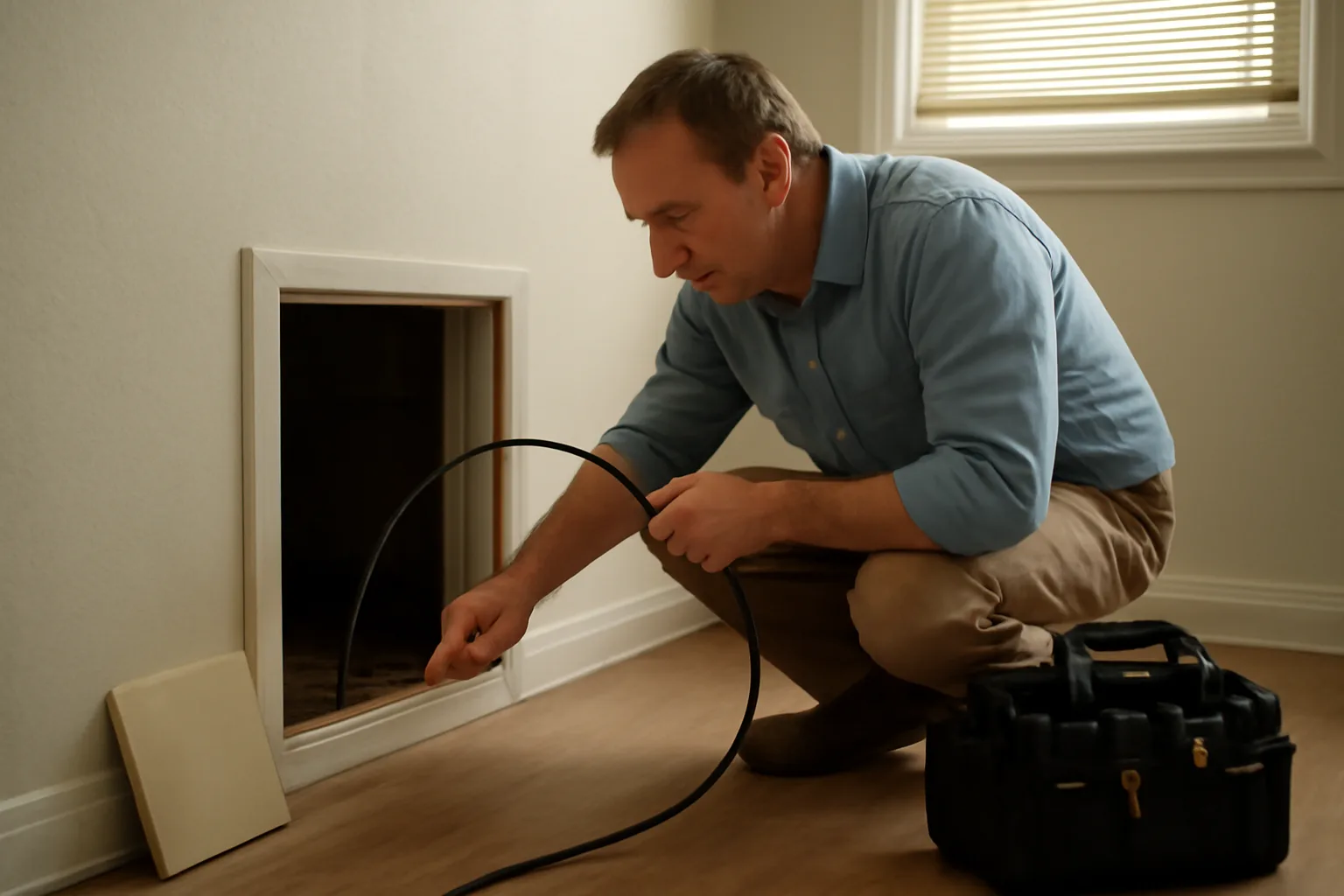
AutoZone's Loan-A-Tool program lets you borrow an inspection/borescope camera against a refundable deposit, no rental fee, at participating stores. It's built for checking engines and plumbing lines, not for passing a city rental housing inspection, but landlords sometimes use one to pre-check crawlspaces, ductwork, or pipe interiors before an official inspector shows up.
What is the AutoZone inspection camera rental program, exactly?
AutoZone doesn't technically "rent" tools. It runs something called Loan-A-Tool, where you put down a deposit equal to the tool's retail price, borrow it, and get your money back (minus nothing, if you return it) when you bring it back. AutoZone's own program page describes it as letting customers "borrow the tools you need for your at-home repairs" with the deposit refunded on return [1]. The tool selection leans automotive: code readers, brake tools, oil filter wrenches, and yes, inspection cameras (sometimes called borescopes or flexible inspection scopes). These are the same style of camera a mechanic snakes into an engine cylinder or a plumber runs down a drain line. Availability is store-by-store and inventory-dependent, so you'll want to call the specific AutoZone location and ask if they have an inspection camera in stock before you drive over. There's no fixed "rental period" advertised publicly by AutoZone corporate; return timing and deposit handling are set at the store level, so ask the counter staff directly what their policy is for your location. If you're a landlord searching for this term, you're probably trying to solve one of two problems: you want to look inside a wall, pipe, or duct before an inspector does, or you're trying to save money instead of buying or renting a proper home inspection camera. Both are reasonable instincts. Just know what this tool is actually built for.
Can I use an AutoZone inspection camera for a rental property inspection?
You can use one to look at things, but it won't substitute for what a city rental inspector actually checks, and it's not going to satisfy any code requirement on its own. Automotive borescope cameras are generally short (a few feet of cable), have limited lighting, and are optimized for tight metal spaces like engine bores, not for crawling 15 feet down a sewer lateral or through wall cavities. If you're trying to check a suspected plumbing leak inside a wall, or peek into a crawlspace before your city's inspector arrives, a basic borescope can genuinely help you spot obvious problems: a disconnected duct, a corroded pipe joint, rodent nesting material. What it won't do is check things a real rental inspection actually cares about, like smoke detector placement and function, GFCI outlets near water sources, egress window dimensions in bedrooms, handrail height and spacing, or working exhaust fans. Those need to be checked directly, often with basic tools (a tape measure, an outlet tester, a smoke detector tester) rather than a camera. If your goal is passing a mandatory rental inspection, the camera is a minor supporting tool at best. The real prep work is knowing your city's specific checklist ahead of time. Most cities publish an inspection checklist or code reference before your appointment; if yours does, get it and walk your unit against it item by item.
How much does it cost to rent an inspection camera, and are there alternatives?
| AutoZone Loan-A-Tool | $0 (refundable deposit only) [1] | Quick automotive-style borescope, short cable | |
|---|---|---|---|
| Home Depot / Lowe's tool rental | Varies by store and tool, often $20-$50/day for pro-grade inspection cameras | Longer cable runs, better lighting, plumbing-specific scopes | |
| Buying a basic Wi-Fi borescope | Roughly $25-$60 on the low end | Landlords who'll reuse it across units and years | |
| Hiring a plumber or inspector with a sewer camera | Often $150-$500+ depending on market and job | Actual sewer line diagnostics, insurance-grade documentation | Note: dollar figures for non-AutoZone options above are general market ranges, not sourced to a specific retailer program page, since rental tool pricing varies by store and changes often. Confirm current pricing directly with the store or rental company before you commit. If you only need to check something once, borrowing beats buying. If you're managing several units and expect to keep checking crawlspaces or attics over the years, a cheap Wi-Fi borescope you own outright often pays for itself after two or three uses. |
AutoZone's Loan-A-Tool has no rental fee itself; you pay a refundable deposit that matches the tool's full retail price, then get it back on return [1]. That means your actual out-of-pocket cost is $0 if you return the tool in working condition, though you're tying up cash (often $30 to $100+ depending on the specific camera model) for however long you have it. Other options exist and are worth comparing before you drive to AutoZone: | Option | Typical cost | Good for |
What can a landlord look at during an inspection?
During a routine rental housing inspection, a city inspector generally has the right to check life-safety and habitability items in common areas and, with proper notice, inside the unit: smoke and carbon monoxide detectors, electrical outlets and panels, plumbing fixtures and visible leaks, heating and ventilation, exit routes and window egress, handrails and stairs, and general structural condition of things like ceilings, floors, and walls. What inspectors generally are not there to do is rummage through your tenant's personal belongings, closets, or private papers. The inspection is about the condition of the housing structure and systems, not an audit of how the tenant lives. If you're the landlord doing your own pre-inspection walk-through, the same principle applies: you're checking the property's condition and systems, not searching the tenant's stuff. Many states also require the inspection purpose to be disclosed and limit inspections to reasonable hours and reasonable frequency, though these specifics vary heavily by state and city ordinance, so confirm with your city rental licensing office or your state's landlord-tenant statute for the exact scope allowed in your jurisdiction. For a deeper look at what tenants can push back on, see tenant rights and tenants rights.
Who is responsible for rental property walk-through inspections in California?
In California, the landlord (or their agent) is responsible for conducting move-in and move-out walk-through inspections, and state law gives tenants specific rights around that process. California Civil Code Section 1950.5 requires landlords to give tenants the opportunity for an initial move-out inspection, at the tenant's request, before the tenancy ends, so the tenant can fix any deficiencies that might otherwise cost them part of their security deposit [2]. The statute requires the landlord to give the tenant at least 48 hours' written notice of the date and time of that initial inspection unless the tenant waives that notice, and the tenant has the right to be present [2]. After the inspection, the landlord must provide an itemized statement of anything that needs fixing or cleaning to avoid a deduction [2]. This is separate from city-level rental licensing inspections (which check code compliance, not tenant belongings) and separate from routine maintenance access under Civil Code Section 1954, which generally requires reasonable notice, commonly cited as 24 hours, before a landlord enters for repairs, to show the unit, or for inspection purposes [3]. Bottom line for California landlords: you're on the hook for offering the move-out walk-through, giving proper written notice, and following through with an itemized list if you plan to withhold any deposit money.
How much notice does a landlord have to give before entering or inspecting?
There's no single national number, but California's default under Civil Code Section 1954 is reasonable notice, presumed to be 24 hours in most circumstances, for entry to make repairs, show the unit, or conduct an inspection [3]. Many other states use similar 24-hour or 24-to-48-hour standards, but the exact number, allowed purposes, and exceptions (emergencies, tenant consent, abandonment) vary by state statute. For security deposit move-out inspections specifically, California requires at least 48 hours' written notice for the optional initial inspection [2]. That's a different notice period than the general entry rule, which trips up a lot of landlords who assume one number covers everything. City rental licensing inspections are a third category again. Cities that require periodic rental inspections (for a license or registration renewal) typically set their own notice period and scheduling process in the local ordinance, and it may differ from state landlord-tenant law entirely. Always confirm the exact notice requirement with your city rental licensing office, since this is one of the most common sources of legitimate tenant complaints when landlords get it wrong. If you're unsure which notice rule applies to a given visit, ask yourself the purpose: repair or showing (state entry law), move-out deposit walk-through (state deposit law, e.g., Civ. Code 1950.5), or licensing/code inspection (local ordinance).
What a landlord cannot do in Ohio
Ohio's landlord-tenant law, largely codified in Ohio Revised Code Chapter 5321, sets out specific limits. Ohio Revised Code Section 5321.04 lists landlord obligations, and its companion sections restrict certain landlord conduct, including barring landlords from using "self-help" eviction methods like shutting off utilities, changing locks, or removing a tenant's belongings to force them out without going through the court eviction process [4]. Ohio Revised Code Section 5321.05 covers tenant obligations, and the statute overall builds in tenant remedies (like rent escrow) when a landlord fails to maintain the unit in a fit and habitable condition [5]. Ohio law also restricts retaliatory conduct under Ohio Revised Code Section 5321.02, meaning a landlord generally cannot raise rent, decrease services, or start eviction proceedings specifically because a tenant complained to a housing authority or asserted a legal right under the chapter [6]. On entry specifically, Ohio Revised Code Section 5321.04(A)(8) requires landlords to give reasonable notice before entering, except in emergencies, and to enter only at reasonable times [4]. Ohio courts and practitioners commonly treat 24 hours as a reasonable notice benchmark, though the statute itself uses the "reasonable" standard rather than a fixed number, so confirm current interpretation with an Ohio attorney or your local legal aid office if a dispute arises. So in short: no lockouts, no utility shutoffs, no seizing belongings, no retaliation for complaints, and no entering without reasonable notice outside emergencies.
What is landlording, and what is a landlord?
A landlord is the owner (or the owner's authorized agent) of a residential or commercial property who leases that property to another party, the tenant, in exchange for rent. Landlording is the informal term for the day-to-day work of being that landlord: collecting rent, maintaining the property, handling repairs, screening tenants, following notice and eviction procedures, and staying compliant with local rental licensing and habitability codes. It's more than a title on a lease. Being a landlord comes with legal duties in every state, generally centered on the "implied warranty of habitability," meaning the landlord has to keep the unit livable (working plumbing, heat, structural safety, and so on) regardless of what the lease says [5]. Landlording well means treating those duties as the floor, not the ceiling: responding to repair requests promptly, documenting condition at move-in and move-out, and knowing your city's specific rental registration or licensing rules before a notice or fine shows up in your mailbox. For a broader overview of what the role covers day to day, see landlord and landlord landlords.
How to become a landlord (and how to be a landlord well)
Becoming a landlord starts before you buy anything. You need financing (many lenders treat investment property loans differently from owner-occupied mortgages, often requiring larger down payments), a target market, and a clear read on local rules, because many cities require a rental license, registration, or inspection before you can legally lease a unit at all. The practical steps most first-time landlords go through: buy or convert a property, check whether your city requires rental registration or licensing (a growing number do, and fines for operating unregistered can run from a modest fee to hundreds of dollars depending on the city, so confirm with your city rental licensing office), get the unit inspection-ready (smoke detectors, GFCI outlets, egress windows, no obvious code violations), screen tenants consistently and legally, and use a written lease that matches your state's landlord-tenant law. Being a landlord well, long-term, comes down to a few habits: respond to maintenance requests fast, document everything (photos at move-in, written notices, repair records), give proper notice before entry every time, and treat your rental license renewal and inspection deadlines like a recurring bill, not a surprise. Missing a renewal deadline is one of the more common (and avoidable) ways landlords end up with fines. If you're getting ready for a first rental inspection or license renewal and want a structured way to walk through what your city likely checks, a resource like the $79 one-time City Rental License & Inspection Prep Packet (see /rental-packet-builder) can help you organize the paperwork and checklist items before your appointment. It's not a substitute for confirming your city's actual current requirements, but it's built to help you get organized fast.
Why do landlords require renters insurance?
Landlords require renters insurance mainly to cover the tenant's personal belongings and personal liability, not the building itself. The landlord's own property insurance covers the structure, but it typically does not cover a tenant's furniture, electronics, or clothing if there's a fire, burst pipe, or theft. Requiring renters insurance also protects the landlord indirectly. If a tenant accidentally causes damage (an overflowing tub, a kitchen fire) or a guest gets hurt in the unit, the tenant's renters insurance liability coverage can pick up costs that might otherwise turn into a dispute over the landlord's own policy or a lawsuit against the landlord directly. Many landlords set a minimum liability coverage amount (commonly $100,000, sometimes higher) as a lease condition for exactly this reason. There's no federal law requiring renters insurance, and whether a landlord can mandate it as a lease condition is generally a matter of state landlord-tenant law and standard lease practice rather than a specific statute, so if you're drafting this requirement, check that it's enforceable and reasonable under your state's rules before adding it to a lease.
What rights do tenants have without a lease?
Tenants without a written lease, sometimes called month-to-month or "tenants at will" depending on the state, still have real legal protections. They generally still get the implied warranty of habitability (a livable, code-compliant unit), protection from illegal lockouts or utility shutoffs, and the right to proper notice before the landlord can end the tenancy or raise rent, even though there's no written document spelling out specific terms [5]. Without a lease, the tenancy is usually treated as month-to-month under state law, meaning either party generally needs to give notice (commonly 30 days, though this varies by state and sometimes by how long the tenant has lived there) before ending the arrangement. Ohio's statute, for example, builds tenant protections into the landlord-tenant chapter regardless of lease status, covering habitability, notice for entry, and protection from retaliation [4]. What a tenant without a lease does not automatically get is a guarantee of a fixed rent amount or fixed term; without a written agreement locking those terms in, a landlord generally can propose a rent increase with proper notice, subject to any state or local rent control rules that might apply. For a deeper breakdown by situation, see tenant and tenant and renters rights.
Frequently asked questions
Does AutoZone actually rent inspection cameras, or just loan them?
Technically it's a loan, not a rental. AutoZone's Loan-A-Tool program has you pay a refundable deposit equal to the tool's retail price, then refunds it when you return the tool [1]. There's no separate rental fee charged by the program itself, but availability and exact store policy vary by location, so call ahead.
Is an AutoZone borescope good enough for a rental housing inspection?
It can help you spot obvious visible problems in tight spaces, but it won't substitute for checking the actual items a city rental inspector cares about: smoke detectors, GFCI outlets, egress windows, handrails, and code-compliant systems. Use it as a quick diagnostic tool, not a replacement for a real pre-inspection checklist walk-through.
Who is responsible for the rental property walk-through inspection in California?
The landlord is responsible for conducting it and must offer tenants an initial move-out inspection with at least 48 hours' written notice, per California Civil Code Section 1950.5, so the tenant can fix issues before facing security deposit deductions [2].
What is landlording?
Landlording is the practical work of owning and managing a rental property: collecting rent, handling repairs, maintaining habitability, screening tenants, giving proper notices, and staying compliant with local rental licensing and inspection rules. It's the day-to-day job behind the legal title of "landlord."
What is a landlord?
A landlord is the property owner, or their authorized agent, who leases residential or commercial space to a tenant in exchange for rent, and who takes on legal duties like maintaining habitability and following state and local landlord-tenant law.
What rights do tenants have without a lease?
Tenants without a written lease still generally keep habitability protections, protection from illegal lockouts or shutoffs, and the right to proper notice before the tenancy ends or rent changes, usually treated as a month-to-month arrangement under state law [4][5].
How to become a landlord?
Buy or convert a property, check whether your city requires rental registration or licensing before you can legally rent it out, get the unit inspection-ready (smoke detectors, safe electrical, working plumbing), screen tenants consistently, and use a lease that matches your state's landlord-tenant law.
Why do landlords require renters insurance?
Mainly to make sure the tenant's belongings and personal liability are covered separately from the landlord's building insurance, and to reduce the landlord's exposure if a tenant accidentally causes damage or a guest is injured in the unit.
How much notice does a landlord have to give before entering a rental unit?
It depends on the state and the reason for entry. California's default is reasonable notice, presumed to be 24 hours, for repairs or inspections under Civil Code Section 1954 [3], while the state's move-out deposit inspection requires 48 hours' written notice under Civil Code Section 1950.5 [2]. Always confirm your specific state's rule.
What can a landlord look at during an inspection?
Generally life-safety and habitability items: smoke and CO detectors, electrical panels and outlets, plumbing, heating and ventilation, structural condition, and egress routes. Inspectors and landlords conducting their own walk-throughs typically should not be searching a tenant's personal belongings or private items.
What can't a landlord do in Ohio?
Under Ohio Revised Code Chapter 5321, a landlord cannot use self-help eviction (shutting off utilities, changing locks, removing belongings), cannot retaliate against a tenant for complaining or asserting legal rights under Ohio Revised Code Section 5321.02, and must give reasonable notice before entering except in emergencies [4][6].
Can I use a borrowed inspection camera to check for plumbing leaks before my rental license inspection?
Yes, a basic borescope camera can help you spot visible leaks, corrosion, or disconnected pipes in accessible spaces before your official inspection. Just know it has a short cable and limited reach compared to a professional plumbing camera, so it works best for quick spot checks, not full diagnostic surveys.
Sources
- AutoZone, Loan-A-Tool program page: AutoZone's Loan-A-Tool program refunds the tool deposit when the tool is returned
- California Legislative Information, Civil Code Section 1950.5: California landlords must offer an initial move-out inspection with 48 hours' written notice and provide an itemized deduction statement
- California Legislative Information, Civil Code Section 1954: California landlords generally must give reasonable notice, presumed 24 hours, before entering for repairs, inspection, or showings
- Ohio Legislature, Ohio Revised Code Section 5321.04: Ohio landlord obligations include reasonable entry notice, prohibition on self-help eviction, and protection from retaliation
- Ohio Legislature, Ohio Revised Code Section 5321.05: Ohio tenant obligations and the implied habitability framework apply regardless of lease status
- Ohio Legislature, Ohio Revised Code Section 5321.02: Ohio law prohibits landlord retaliation against a tenant for complaining to authorities or asserting rights under the landlord-tenant chapter