Last updated 2026-07-26
TL;DR
An annual rental inspection is a city or county check (often tied to your rental license) confirming smoke/CO alarms, safe exits, working plumbing and heat, and no major code violations. Most cities require 24 to 48 hours notice. Landlords typically get a checklist ahead of time; failing items usually means a re-inspection window of 30 to 60 days, not instant fines.
What is an annual rental inspection, exactly?
An annual rental inspection is a scheduled visit by a city code inspector, fire marshal, or licensed third party, done once a year (or sometimes every two or three years) as a condition of holding a valid rental license or registration. It's not the same as a tenant move-in or move-out walkthrough. This one exists because the city, not you, decided your rental needs periodic proof it's safe to live in. Cities that run this program usually tie it to a rental license or certificate of occupancy that lapses if you skip the inspection. Miss the renewal and you can lose your legal right to collect rent in some jurisdictions, or face a fine that escalates the longer the unit goes unlicensed. The exact mechanics vary a lot: some cities inspect every unit every year, some inspect a random sample, some only trigger a visit after a complaint or a tenant-reported issue. If you own in a city you're not sure has this requirement, check with your city or county rental licensing office directly. Program names differ (rental registration, certificate of occupancy, crime-free rental inspection, systematic code enforcement) but the annual cadence and the checklist-based pass/fail structure are common threads across most of them.
What can a landlord look at during an inspection?
| Smoke and CO alarms | Paint color or wallpaper | |
|---|---|---|
| Secondary exit from bedrooms | Furniture condition | |
| Working heat and hot water | Landscaping style | |
| Electrical panel condition | Minor scuffs or nail holes | |
| Handrails and guardrails | Appliance brand or age (if working) | |
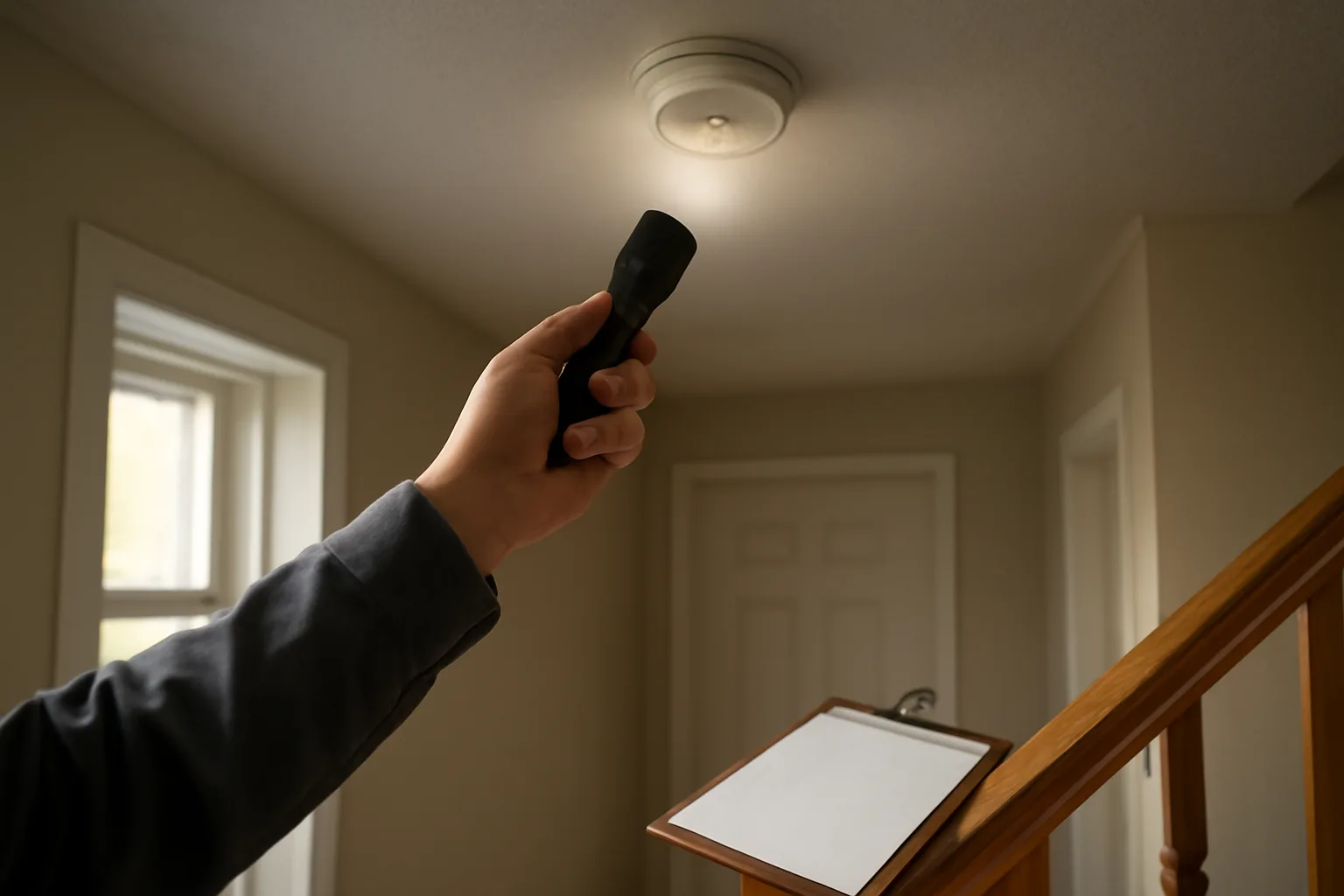
| Visible pest activity | Personal tenant belongings | Bring a flashlight and test every alarm yourself before the inspector arrives. It's the single fastest way to avoid a failed item you could have fixed for the cost of a nine-volt battery. |
Inspectors during an annual rental inspection generally check life-safety items first: working smoke alarms in every bedroom and hallway, carbon monoxide detectors near sleeping areas (required in many states when there's a fuel-burning appliance or attached garage), two ways out of every bedroom, and functioning locks on exterior doors and windows. After life-safety, they move to habitability: working heat, hot water, no active leaks, no exposed wiring, functioning smoke-free electrical panels, and no serious pest or mold problems. Many inspectors also check for peeling paint in pre-1978 buildings, since federal lead paint disclosure and hazard rules apply there under the Residential Lead-Based Paint Hazard Reduction Act, codified at 42 U.S.C. Section 4852d [1]. Exterior items often get checked too: handrails on stairs with more than a few risers, guardrails on decks, working exterior lighting, and general structural condition of roofs, foundations, and siding. What they are not there to do is judge your décor, count your furniture, or nitpick cosmetic wear that doesn't affect safety. A worn countertop or dated cabinets almost never fails an inspection. A missing smoke alarm, a blocked fire exit, or an inoperable furnace almost always does. Here's a rough comparison of what shows up on most municipal checklists versus what typically doesn't: | Usually checked | Usually not checked |
How much notice does a landlord have to give before an inspection?
Most states and cities require at least 24 hours notice before entering an occupied rental unit for a non-emergency inspection, though the exact number varies by jurisdiction. California law, for example, requires landlords give tenants "reasonable notice in writing," and the statute specifies that 24 hours notice is presumed reasonable in the absence of contrary evidence, under California Civil Code Section 1954 [2]. Some cities layer their own inspection-specific notice rules on top of state entry law. It's common to see municipal programs specify 48 hours notice for the city's own annual inspection visit, separate from the general landlord-entry notice period in state law. Always check both: your state's general entry statute, and your specific city's rental inspection ordinance, because the stricter one controls. As a practical matter, give tenants more notice than the legal minimum whenever you can. A week's notice with a specific two-hour window means tenants can actually be present, pets get put away, and you avoid the awkward scramble of an inspector standing outside a locked door because nobody expected them.
What happens if a rental fails inspection?
A failed rental inspection almost never means an immediate fine or an immediate loss of your license. Most cities issue a written notice of violation listing every failed item, along with a re-inspection deadline, commonly somewhere between 14 and 60 days depending on severity and the city's own code. Minor items (a missing alarm battery, a loose handrail) usually get a short window, sometimes as little as 10 to 15 days. Major structural or life-safety failures can trigger a much shorter compliance deadline, occasionally paired with an order to correct within days if the condition is considered an immediate hazard. If you don't fix the issues and don't request an extension, the city typically moves to fines, which can range from small daily accruals to flat penalties per violation per unit. Some cities also have escalating fine schedules, where a second offense in the same unit or the same year costs meaningfully more than the first. Confirm the specific fine schedule and cure period with your city rental licensing office, since these numbers are set locally and change often. The good news: almost every failed item on a first inspection is fixable cheaply and fast. Smoke alarms, GFCI outlets, handrail bolts, and weatherstripping are common failures and common $20-to-$200 fixes, not five-figure renovation problems.
Who is responsible for a rental property walkthrough inspection in California?
In California, the landlord is generally responsible for arranging and paying for any required rental inspection, whether it's a city-mandated rental housing inspection program (many California cities including Los Angeles, Oakland, and San Francisco run these) or a habitability walkthrough tied to a tenant complaint. California's Civil Code doesn't create one statewide rental licensing inspection program; instead, individual cities adopt their own rental inspection or Systematic Code Enforcement Program ordinances. Los Angeles, for instance, runs its Systematic Code Enforcement Program (SCEP) under Los Angeles Municipal Code Section 161.350, inspecting rental units on a periodic cycle and funding the program through an annual per-unit fee the landlord pays [3]. Because the program is citywide but locally administered, the specific inspection interval, fee, and enforcement process in your California city needs to be confirmed with that city's housing department, not assumed from a neighboring city's rules. Tenants don't arrange the inspection and generally can't be charged the inspection fee directly under most of these ordinances; it's structured as a landlord obligation, often recovered indirectly through rent in competitive markets but not billed as a separate pass-through charge in most California cities' programs.
What a landlord cannot do in Ohio (entry, retaliation, and inspection limits)
Ohio law under Revised Code Section 5321.04 requires landlords to give "reasonable notice" before entering a rental unit, and defines 24 hours as presumptively reasonable notice for entry to inspect the premises, make repairs, or show the unit, except in emergencies [4]. A landlord in Ohio cannot enter at unreasonable hours, cannot enter repeatedly or excessively in a way that amounts to harassment, and cannot retaliate against a tenant for reporting a code violation to a housing authority. Ohio Revised Code Section 5321.02 specifically bars retaliatory conduct, including refusing to renew a lease or raising rent, if the tenant has complained to a government agency about a building, housing, or safety code violation [5]. A landlord also cannot skip required safety equipment. Ohio Revised Code Section 5321.04 obligates landlords to keep the premises in a fit and habitable condition, maintain electrical, plumbing, and heating systems in good working order, and comply with local building and housing codes. If your city layers its own annual inspection ordinance on top of state law (several Ohio cities including Cleveland and Columbus run rental registration and inspection programs), that local ordinance's specific inspection notice period and fee schedule should be confirmed with your city rental licensing office.
How to become a landlord (the basics before your first inspection)
Becoming a landlord in most U.S. jurisdictions doesn't require a state license the way becoming a real estate agent does. What it requires is buying or converting a property into a legal rental, then complying with whatever local rental registration, licensing, or business tax requirements your city or county imposes. The practical steps: confirm your property is zoned for rental use, register with your city's rental licensing office if one exists (many mid-size and large cities require this before you can legally rent), get landlord liability insurance, understand your state's landlord-tenant law on security deposits, notice periods, and habitability, and set up a system for collecting rent and tracking maintenance requests. Many states also require landlords to register as a business entity or obtain a local business license even for a single rental unit, separate from any tenant-facing rental license. Check your state's department of revenue or your city clerk's office for that requirement specifically, since it's easy to miss if you're focused only on the tenant-side paperwork. If your city has a mandatory annual inspection program, build your habitability checklist around whatever documents the city sends you upon registration. That's the single most reliable source for what your specific inspector will check, more reliable than generic checklists you find online.
What is landlording, and what is a landlord?
A landlord is the legal owner (or authorized agent of the owner) of real property who rents that property to another person, called a tenant, in exchange for rent, typically under a written or oral lease agreement. Landlording is the ongoing work of managing that relationship: collecting rent, maintaining the property, responding to repair requests, following notice and entry rules, and keeping the unit compliant with local housing codes. Landlording is not a passive investment in the way owning stock is. It carries active legal duties in nearly every state, most centrally the implied warranty of habitability, which requires landlords keep rental units fit for human habitation, covering things like working plumbing, heat, and structural safety, regardless of what the lease says. Small landlords, meaning those with one to ten units, face the exact same annual inspection and licensing obligations as large property management companies in cities with mandatory rental programs. The city doesn't scale requirements down because you only own one duplex. That's the single biggest surprise for first-time landlords: a $79-a-month single-family rental can trigger the same inspection checklist as a 200-unit apartment complex.
What rights do tenants have without a lease?
A tenant without a written lease is not without rights. In most states, an unwritten or expired lease creates what's called a month-to-month tenancy at will, and the tenant retains the same basic habitability, privacy, and notice protections as a tenant with a signed lease. That means the tenant still has a right to a habitable unit, still has a right to reasonable notice before the landlord enters, and still has protection from illegal lockouts or utility shutoffs used to force them out (a practice called self-help eviction, which is illegal in every state). To end a month-to-month tenancy, the landlord generally has to give written notice, commonly 30 days, though some states and cities require 60 or even 90 days depending on how long the tenant has lived there or local rent control rules. Without a lease, both sides also lose some of the specificity a written agreement provides: the exact rent due date, whether pets are allowed, who pays which utilities. Verbal agreements on those terms are enforceable in many states but much harder to prove in a dispute, which is one of the strongest practical arguments for always using a written lease even for month-to-month terms.
Why do landlords require renters insurance?
Landlords require renters insurance mainly to shift financial risk for the tenant's own belongings and personal liability off the landlord's policy and onto the tenant's. A landlord's own property insurance covers the building structure, not the tenant's furniture, electronics, or clothing, and it typically doesn't cover a tenant's liability if the tenant accidentally causes a fire or a guest is injured inside the unit. Renters insurance is generally inexpensive, commonly in the range of $15 to $30 a month depending on coverage limits and location, though landlords should verify current local rates rather than assume a national average applies. Requiring it as a lease condition is legal in most states and is increasingly common in both large multifamily buildings and small landlord-owned rentals. For a landlord with just a handful of units, requiring renters insurance also reduces the odds you get pulled into a costly liability dispute after a tenant's guest slips on a wet floor or a tenant's space heater starts a fire. It's a cheap requirement for tenants that meaningfully lowers a landlord's exposure.
How to be a landlord (day-to-day, especially around inspections)
Being a landlord day-to-day means treating the property like a small business with recurring compliance deadlines, more than a rent check that shows up monthly. The core habits: respond to repair requests quickly (many states set specific deadlines, commonly 24 to 48 hours for emergency issues like no heat or no water, and longer for non-emergency repairs), keep a maintenance log, and track every notice you give tenants in writing with dates. Around inspection time specifically, the landlords who pass on the first try tend to do three things. They walk the unit themselves two to four weeks before the scheduled inspection. They fix small items immediately instead of waiting. They keep copies of past inspection reports so they can see what failed last time and confirm it's still fixed. This is where a lot of small landlords waste money. Hiring a general contractor to do a pre-inspection walkthrough can run $150 to $400 just for the visit, when most municipal checklists are public documents you can walk through yourself in under an hour with a flashlight and a phone camera. Save the contractor budget for the items you actually can't fix yourself, like an outdated electrical panel or a failing furnace. If your city's rental licensing paperwork itself is the confusing part (which forms, which fees, which deadlines apply to your specific address), a resource like the $79 City Rental License & Inspection Prep Packet exists specifically to walk small landlords through that municipal paperwork step by step, separate from the physical inspection prep itself.
Annual inspection frequency and fees by program type
Not every city inspects every year. Some run true annual programs, some inspect every two to four years, and some only inspect complaint-driven or a random percentage of units each cycle. Los Angeles's Systematic Code Enforcement Program, established under Los Angeles Municipal Code Section 161.350, inspects rental units on a periodic cycle rather than strictly annually, funded by a per-unit annual fee regardless of whether a physical inspection happens that specific year [3]. Fees for these programs are set locally and vary widely, commonly ranging from under $20 per unit per year in smaller programs to well over $100 per unit per year in large cities with dense inspection staffing. Confirm your specific city's current fee schedule and inspection interval with your city rental licensing office, since these numbers change with local budget cycles and city council votes. The bottom line for a small landlord: don't assume your city's program mirrors what you read about a different city online, even a nearby one. Two cities twenty miles apart can have completely different inspection intervals, fee structures, and appeal processes.
Frequently asked questions
How often does a rental property need an annual inspection?
It depends entirely on your city's ordinance. Some programs are truly annual, others inspect every two to four years (Los Angeles's SCEP program runs on a multi-year cycle), and some only trigger an inspection after a tenant complaint. Confirm the actual interval with your city rental licensing office rather than assuming "annual" always means every twelve months.
Who is responsible for a rental property walkthrough inspection in California?
The landlord is responsible for arranging and paying for a city-mandated rental inspection in California. There's no single statewide program; individual cities like Los Angeles, Oakland, and San Francisco run their own rental inspection ordinances, so the specific process and fee depend on your city's housing department, not state law directly.
What can a landlord look at during an inspection?
Inspectors focus on life-safety and habitability: smoke and CO alarms, secondary exits from bedrooms, working heat and hot water, electrical panel condition, handrails, structural soundness, and visible pest activity. They generally don't check cosmetic items like paint color, furniture, or minor wall scuffs.
How much notice does a landlord have to give before entering for inspection?
Most states require at least 24 hours notice for non-emergency entry; California Civil Code Section 1954 treats 24 hours written notice as presumptively reasonable. Many cities layer a separate 48-hour notice requirement specifically for the municipal rental inspection visit, so check both your state's entry statute and your city's inspection ordinance.
What happens if my rental fails the inspection?
You'll typically get a written notice of violation with a re-inspection deadline, often 14 to 60 days depending on severity. Minor issues like a dead smoke alarm battery get short, easy timelines. Major hazards can trigger faster deadlines. Fines usually only kick in if you miss the cure period or ignore the notice entirely.
What a landlord cannot do in Ohio?
Under Ohio Revised Code Section 5321.04, a landlord can't enter without reasonable notice (24 hours is presumed reasonable) except in emergencies. Ohio Revised Code Section 5321.02 also bars retaliation against a tenant who reports a code violation, meaning a landlord can't raise rent or refuse to renew specifically because of that complaint.
What rights do tenants have without a lease?
A tenant without a written lease usually has a month-to-month tenancy at will and keeps the same core protections as a leased tenant: habitability, notice before entry, and protection from illegal lockouts. Ending the tenancy generally requires written notice, commonly 30 days, though some cities require longer depending on local law.
Why do landlords require renters insurance?
Renters insurance covers the tenant's belongings and personal liability, which a landlord's own building insurance doesn't cover. It's typically $15 to $30 a month and meaningfully reduces a landlord's exposure if a tenant's negligence causes a fire, injury, or other liability claim inside the unit.
How do I become a landlord for the first time?
Confirm your property is zoned for rental use, register with your city's rental licensing office if one applies, get landlord liability insurance, and learn your state's rules on security deposits, notice periods, and habitability. Many cities also require a separate business license even for a single rental unit.
What is landlording?
Landlording is the ongoing work of managing a rental relationship: collecting rent, maintaining the property, handling repair requests, giving proper legal notices, and keeping the unit compliant with local housing and safety codes. It's an active legal responsibility, not a passive investment.
Do small landlords with one or two units really have to do annual inspections?
Yes, in cities with mandatory rental inspection programs, the requirement applies regardless of how many units you own. A single-family rental faces the same checklist as a large apartment building in that city's program. Owning fewer units doesn't exempt you from local rental licensing rules.
Can a landlord charge the tenant for the inspection fee?
In most city-run programs, no. The fee is structured as a landlord obligation tied to holding the rental license, and most municipal ordinances don't allow it to be billed to the tenant as a separate line-item charge. Some landlords factor the cost into rent broadly, but that's different from a direct pass-through fee.
What's the fastest way to prepare for a rental inspection?
Walk the unit yourself two to four weeks ahead using your city's own published checklist if one exists. Test every smoke and CO alarm, check exterior lighting and handrails, and fix small items immediately. Most failed items are $20 to $200 fixes, not major renovation problems.
Sources
- U.S. Code, Residential Lead-Based Paint Hazard Reduction Act, 42 U.S.C. Section 4852d: Federal lead paint disclosure and hazard rules apply to pre-1978 housing
- California Legislative Information, Civil Code Section 1954: California requires reasonable notice before entry, with 24 hours presumed reasonable
- Los Angeles Municipal Code Section 161.350, Systematic Code Enforcement Program: LA's SCEP inspects rental units on a periodic cycle funded by a per-unit annual fee
- Ohio Laws, Revised Code Section 5321.04: Ohio landlords must give reasonable notice (24 hours presumed reasonable) before entry and must maintain habitability
- Ohio Laws, Revised Code Section 5321.02: Ohio law prohibits landlord retaliation against tenants who report code violations
- California Department of Consumer Affairs, California Tenants: A Guide to Residential Tenants' and Landlords' Rights and Responsibilities: California's implied warranty of habitability and general landlord-tenant obligations